Best Chicken Waterers to Keep Your Flock Cool in Summer
The best chicken waterers for summer — the three I trust to keep cool, clean water in front of my flock when a Tennessee July turns brutal, plus how I shade them.
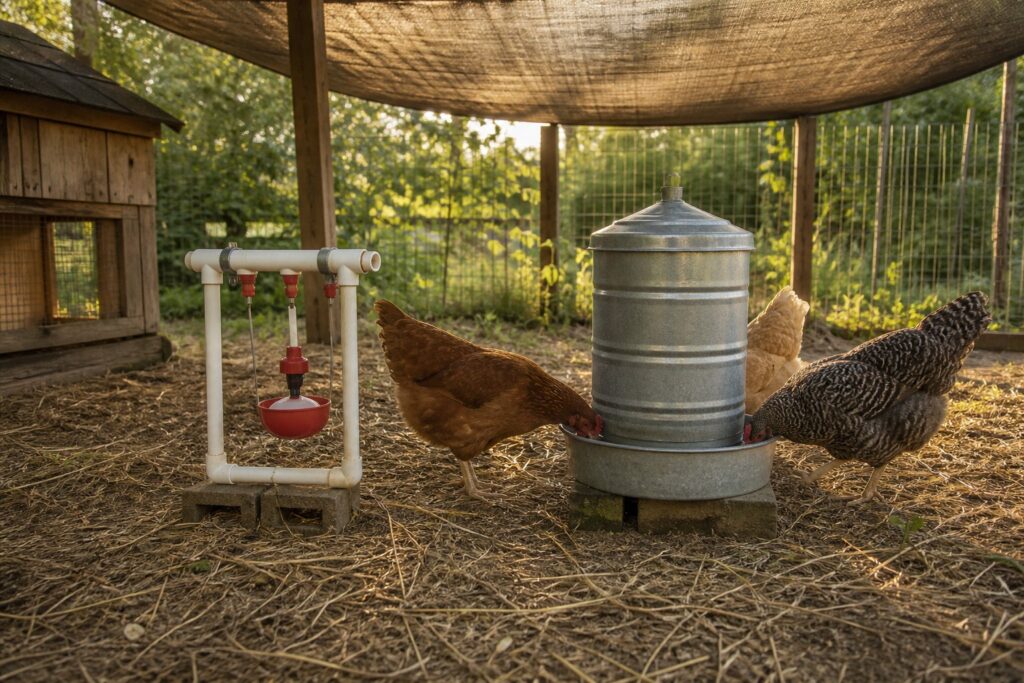
By the middle of July my run in Knox County sits in the low nineties most afternoons, and water becomes the single most important thing in my flock’s day. A hen can’t sweat. Drinking is most of how she sheds heat — and a hen who stops drinking in that kind of weather is a hen in real trouble, fast. The trouble is, chickens are picky about water in a way that catches new keepers off guard. They won’t drink water that’s gone warm, green, or fouled with droppings, and on a hot day that’s exactly what an open dish becomes within hours.
I’ve tried a lot of waterers in six years of keeping. Some of them I gave away. These are the three I actually trust when the heat is on, what each one does well, and where each one falls short — because none of them is perfect, and the keeper who tells you otherwise is selling something.
What actually matters in a summer waterer
Three things, in this order. Clean — water the girls will drink, not a warm soup of dirt and droppings. Cool — water that hasn’t been baking in the sun all afternoon. And enough of it — capacity to get through the hottest stretch without running dry, in more than one spot so a low hen on the pecking order isn’t shut out.
Everything below is me weighing those three against the bother of filling, cleaning, and keeping a thing from leaking. Capacity matters more in summer than any other season, because hens drink two to three times as much in heat as they do in spring.
1. The nipple-and-cup waterer (the clean one)
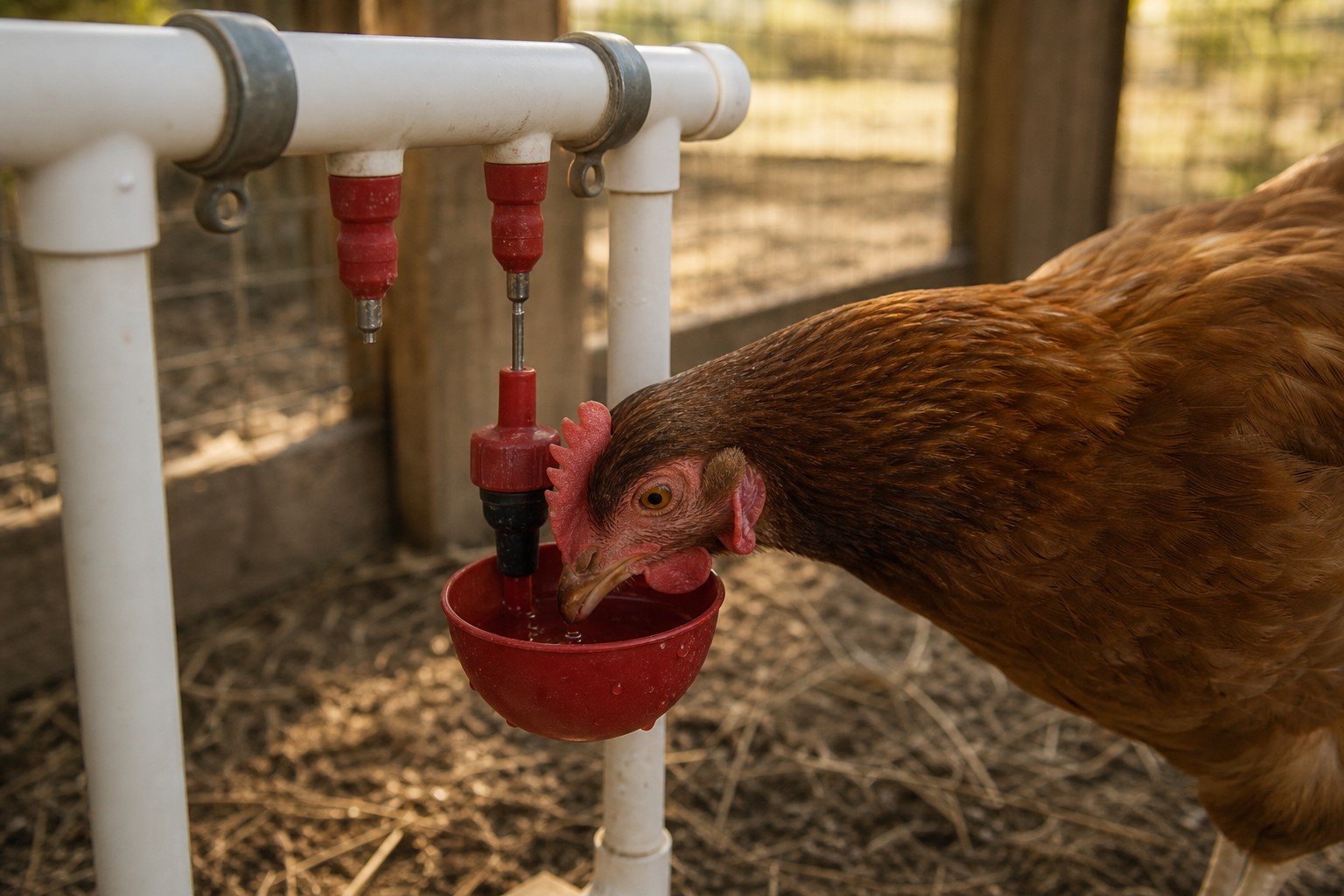
A closed waterer with horizontal nipples and little catch cups is what I reach for first in summer, and it’s what I’d put a brand-new keeper on. The water lives sealed inside the container, so it can’t grow algae, can’t fill with shavings, and can’t get pooped in. The hens peck the nipple, a few drops land in the cup, and they drink from that. It stays clean for days, which in July is the whole ballgame.
What I love: the water stays genuinely clean and, kept in shade, genuinely cool. Capacity is good, and refills are a once-a-day job instead of three.
Where it falls short: the cups can collect a little grit and need a wipe now and then, and birds raised on open founts take a day or two to figure out the nipples — tap one with your finger so it drips and they’ll catch on. It’s also not a winter waterer; nipples freeze, so this is a warm-season tool you swap out come cold.
2. The galvanized double-wall fount (the workhorse)
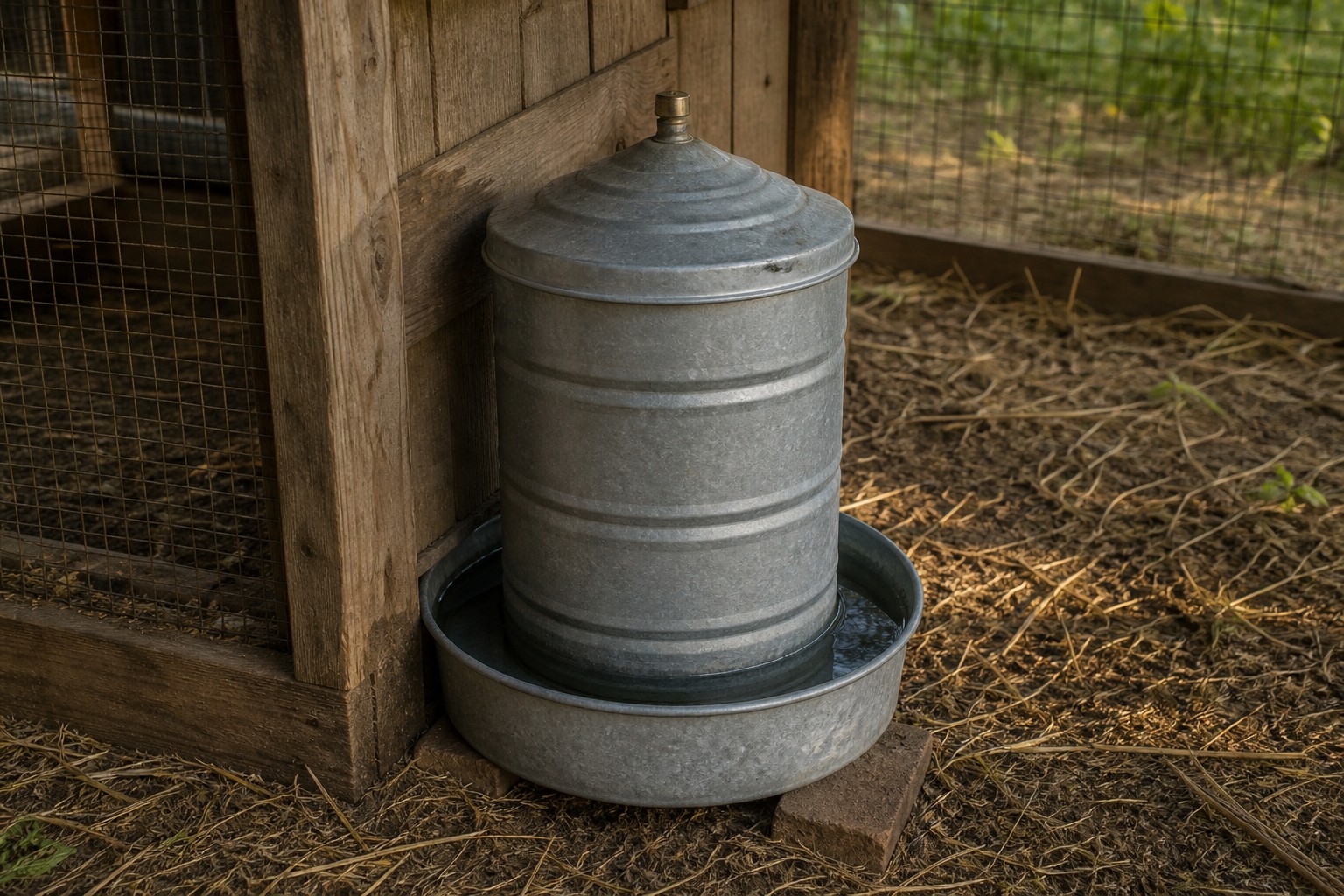
The classic metal galvanized double-wall fount is the waterer most of us picture, and there’s a reason it’s lasted generations. The double wall means it gravity-feeds a shallow trough as the girls drink, and — this is the summer part — sitting in shade, that mass of metal and water stays cooler longer than a thin plastic jug. Mine has taken six years of weather and shows no sign of quitting.
What I love: durable to the point of nearly indestructible, holds three gallons, and the open trough means every bird drinks easily, including the timid ones.
Where it falls short: it’s an open trough, so it does get dirty and needs rinsing every day or two in summer. It’s heavy to carry full. And here’s the one that catches people — set this thing in direct sun and the metal turns the water hot enough to put hens off it entirely. A galvanized fount is only a summer waterer if it lives in the shade. More on that below.
3. The DIY bucket build (the cheap, high-capacity one)
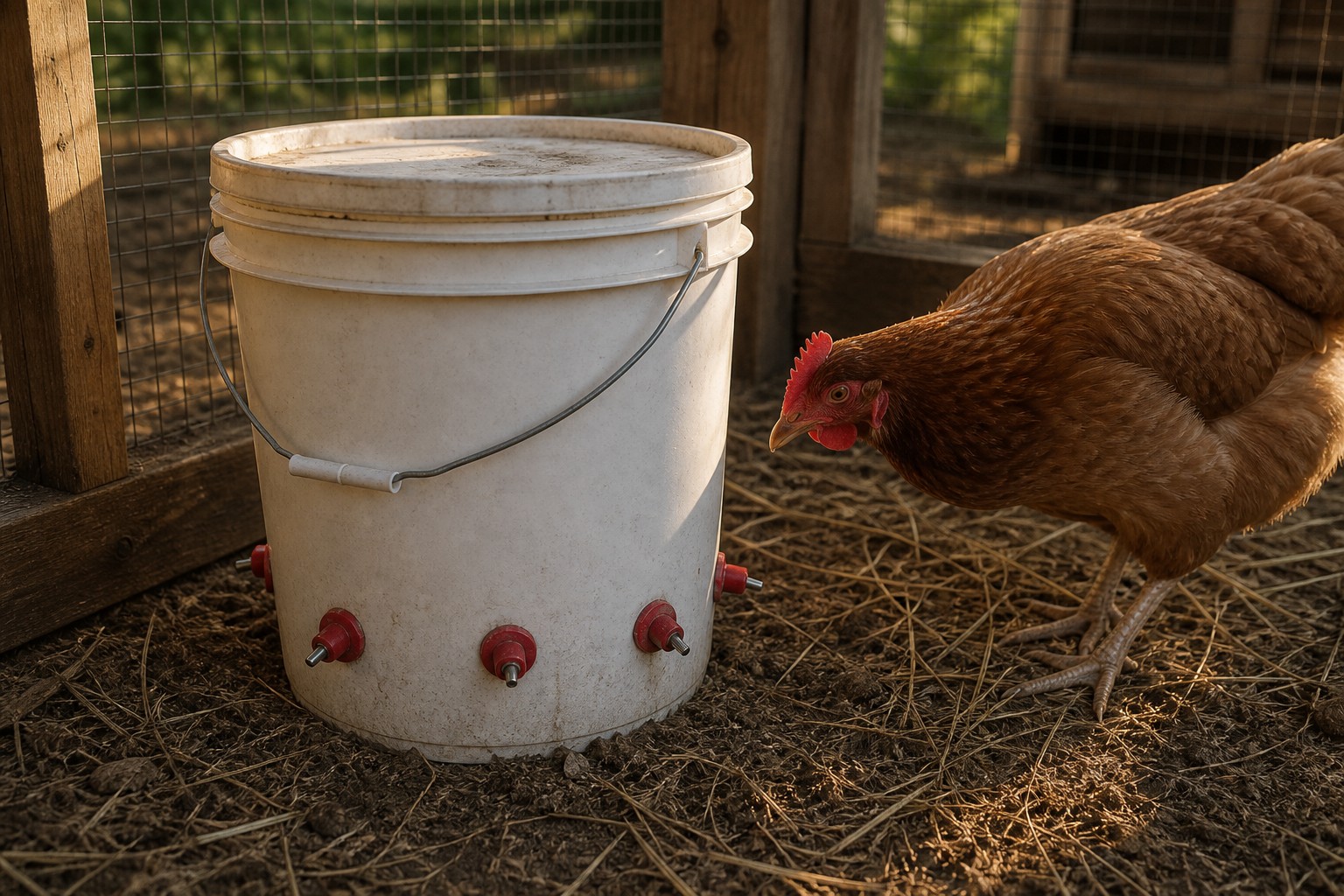
If you’ve got more than a few birds, the best value in hot weather is a horizontal-nipple kit screwed into a five-gallon bucket you already own. Twenty minutes with a drill and you’ve got a sealed five-gallon waterer that stays clean exactly like the store-bought nipple system, for a fraction of the cost — and an opaque bucket keeps the water shaded and cool by its own walls.
What I love: huge capacity for the money, clean closed water, and a lid you can pop to drop in a frozen jug or a handful of ice on the worst afternoons.
Where it falls short: it’s a project, not an out-of-the-box product. Drill the holes the size the kit specifies and seat the gaskets square or it’ll drip — every leaky bucket waterer I’ve seen was an install problem, not a part problem. And like all nipples, it’s warm-season only.
Keep whatever you choose cool
The best waterer in the world is no help if it’s cooking in the sun. Shade is the non-negotiable. I keep every water station out of direct afternoon sun, and over the run itself I string up shade cloth for the hottest stretch — it drops the temperature underneath noticeably and keeps the water drinkable.
A few more things that earn their keep in a Tennessee July:
– More than one station. Hens won’t cross a hot run to drink, and a bullied bird gets shut out of the only source. I run at least two, in different shaded spots.
– Refresh twice a day. Even a clean closed system drinks better cool. I dump and refill with cool water morning and mid-afternoon on the worst days.
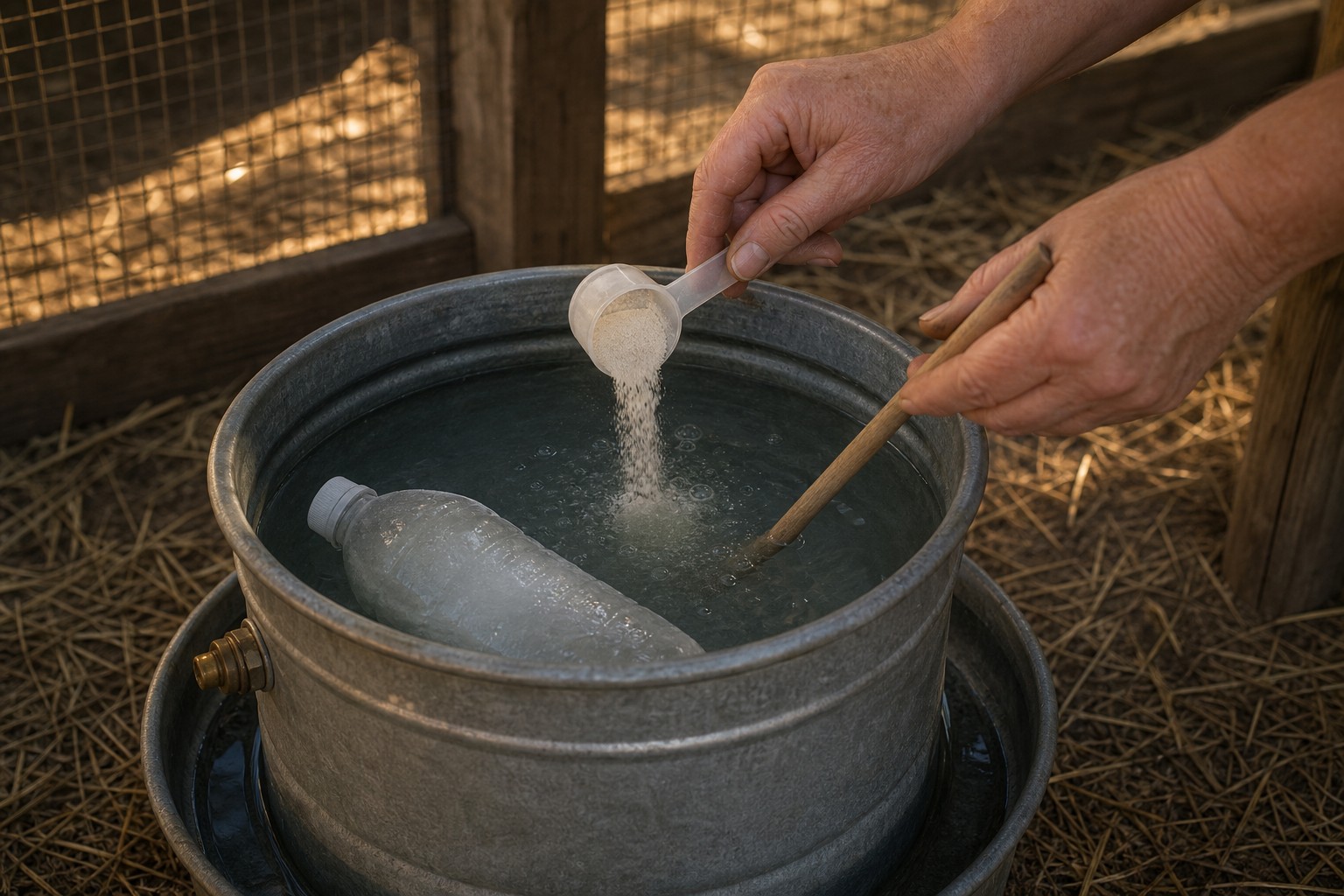
– Electrolytes on the dangerous days. When it’s truly brutal I add Sav-A-Chick electrolytes to one station — it helps the girls hold onto the fluids they’re losing to all that panting.
– Cool, not ice-cold. Drop a frozen water bottle in to take the edge off, but don’t shock them with ice water. You’re trying to help them, not jolt them.
Get the water right and you’ve solved the biggest single risk a summer flock faces. Everything else — the shade, the dust baths, the frozen watermelon they love — is a bonus on top of a flock that’s drinking well.
I go deep on heat care, cold care, and the whole stumbling first year in my book, Raising Backyard Chickens for Beginners. This is the waterer shortlist. The book is everything else I wish someone had handed me my first summer.
