How to Keep a Chicken Run from Turning to Mud
A muddy chicken run is a water problem, not a weather problem. Here's how I keep my run dry through a wet Tennessee spring — the fixes that actually worked.
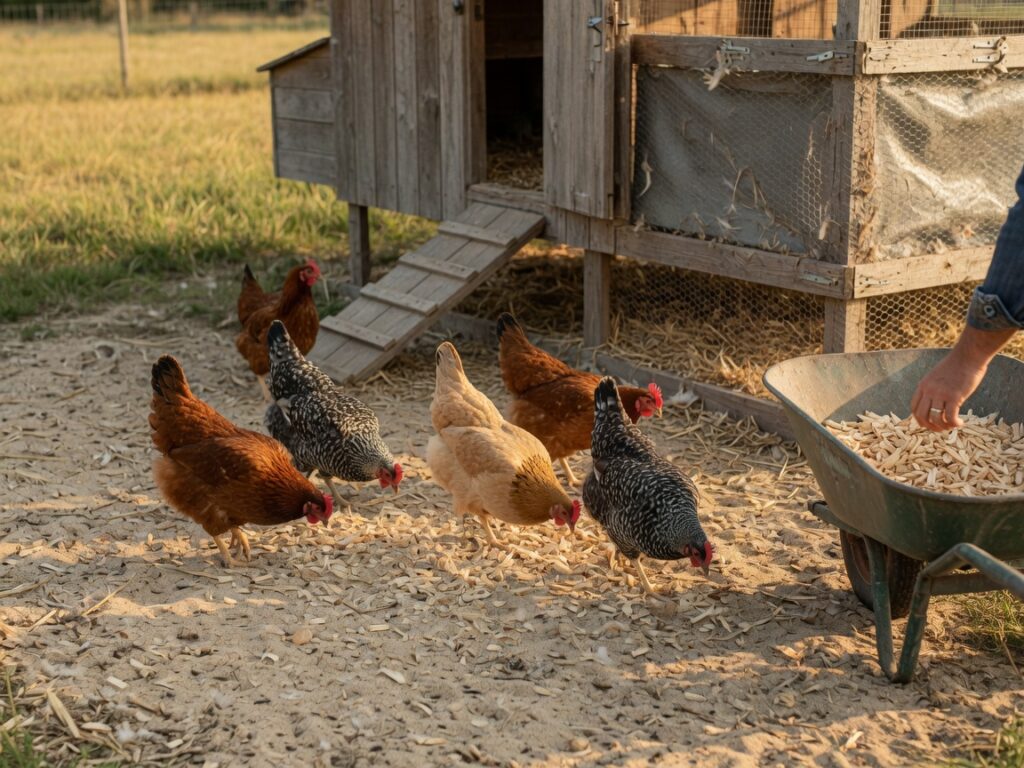
My first spring with chickens, my run turned into something you could lose a boot in. I blamed the rain. We get a wet March and April here in Middle Tennessee, and I figured a muddy run was just the price of it. Then a neighbor who’d kept chickens for twenty years walked over, looked at the swamp, looked at my waterer sitting in the middle of it, and said, “That’s not rain, honey. That’s your waterer.”
She was right. A muddy run is almost never a weather problem — it’s a water problem, and most of the water you’re standing in came from something you can fix. Once I sorted out where mine was actually coming from, the same run that used to reek and slop in April dried out and stayed walkable. Here’s the order I’d fix it in, and the pieces that made the difference.
Fix the water source first — it’s most of the mud
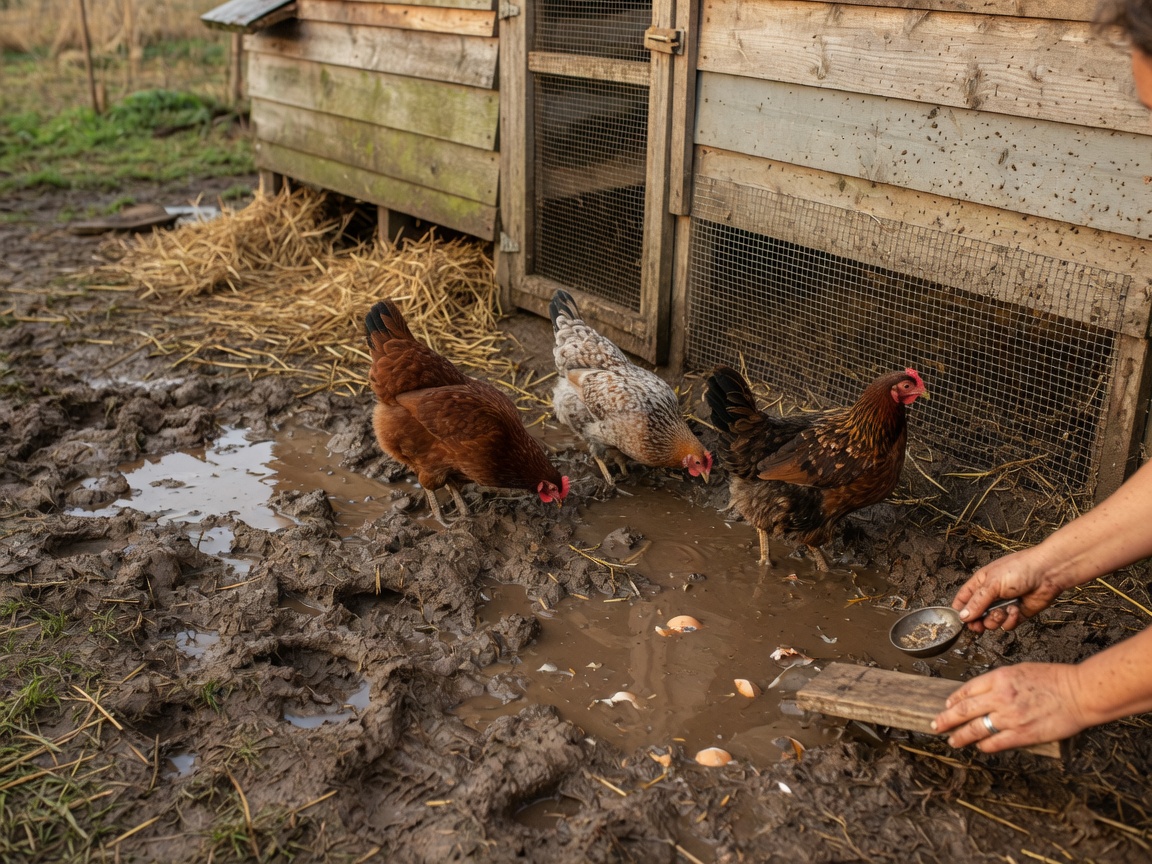
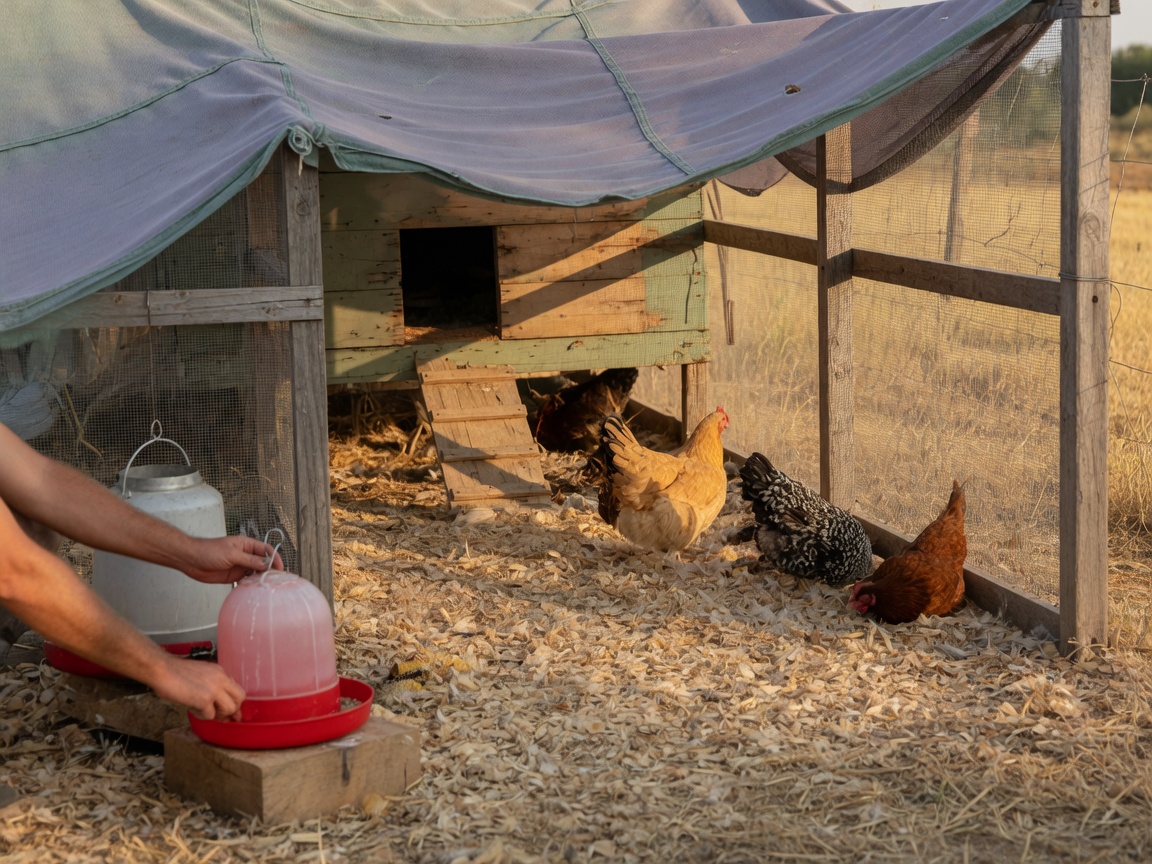
Before you haul in a single wheelbarrow of anything, look at your waterer. An open dish or a cheap gravity fount is a mud machine: the girls tip it, splash it, scratch dirt into it, and knock it over, and every drop ends up in the ground under their feet. I was refilling a spilled fount twice a day and never once connected that puddle to the water I kept pouring into it.
Switching to a nipple-and-cup waterer fixed more mud than everything else I tried combined. The birds peck the nipple, a little water sits in the cup, and almost none of it hits the ground. If you already have a five-gallon bucket, a horizontal-nipple kit turns it into the same thing for a few dollars — I’ve built three of them and they outlast the store waterers. Whichever you use, hang it or set it on a couple of blocks or a paver so it’s at the birds’ back height. Water that never touches the dirt can’t make mud. If you prefer an open fount for a small flock, a galvanized double-wall fount up on blocks spills far less than the flimsy plastic ones and won’t crack in a hard freeze.
Get the roof water out of the run
The second source is the water falling on your coop and run and running straight into it. A coop roof with no gutter dumps a surprising amount of water along its drip line, right where the birds walk. Mine had bare eaves the first year, and the wettest strip in the whole run was the line directly under the coop roof — not a coincidence.
Put a simple gutter on the coop, even a cheap vinyl one, and run the downspout to a bucket or well away from the run. Then look at your run’s grade with fresh eyes after the next real rain: water should sheet away from it, not pool in it. If your run sits in the low spot of the yard, you’re fighting every storm in the county. A shallow swale — just a scooped channel that carries runoff around the run instead of through it — does more than any amount of raking. This is the unglamorous work that actually keeps a run dry, and nobody sells it in a box.
Build the floor up with coarse carbon
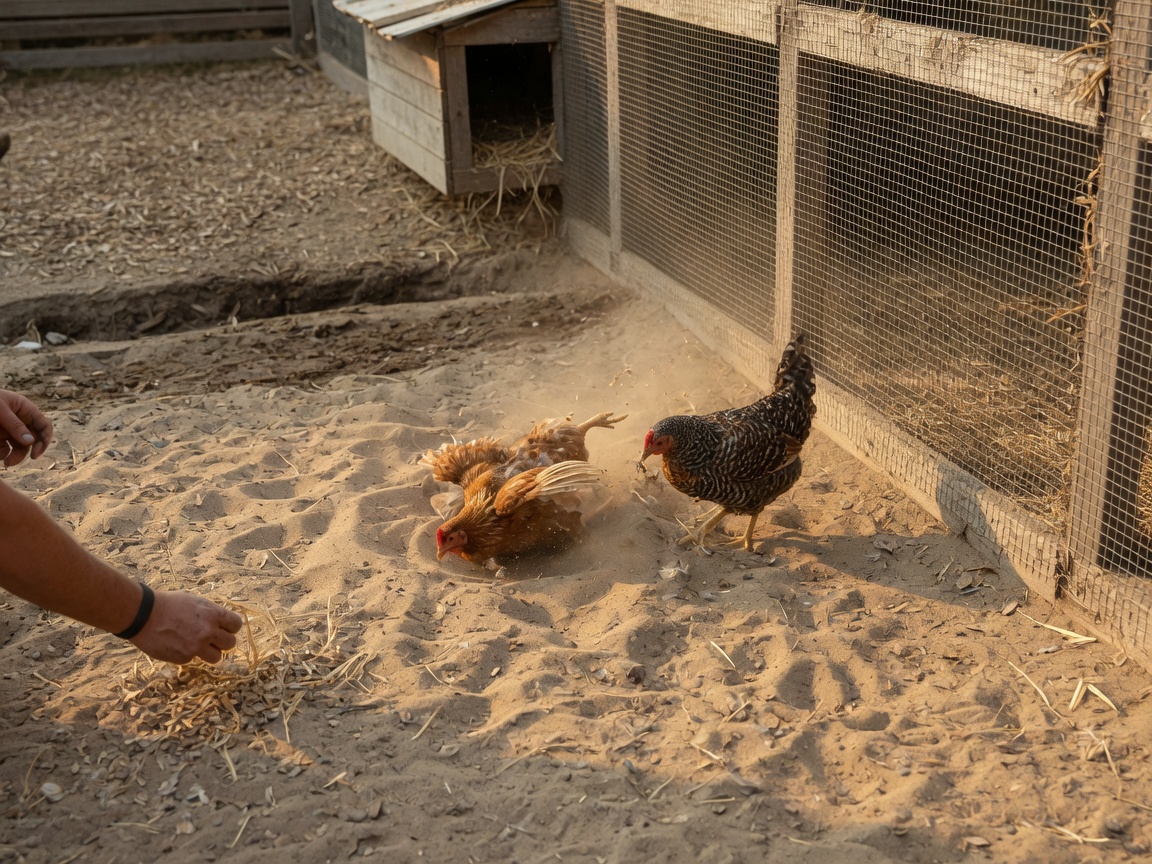
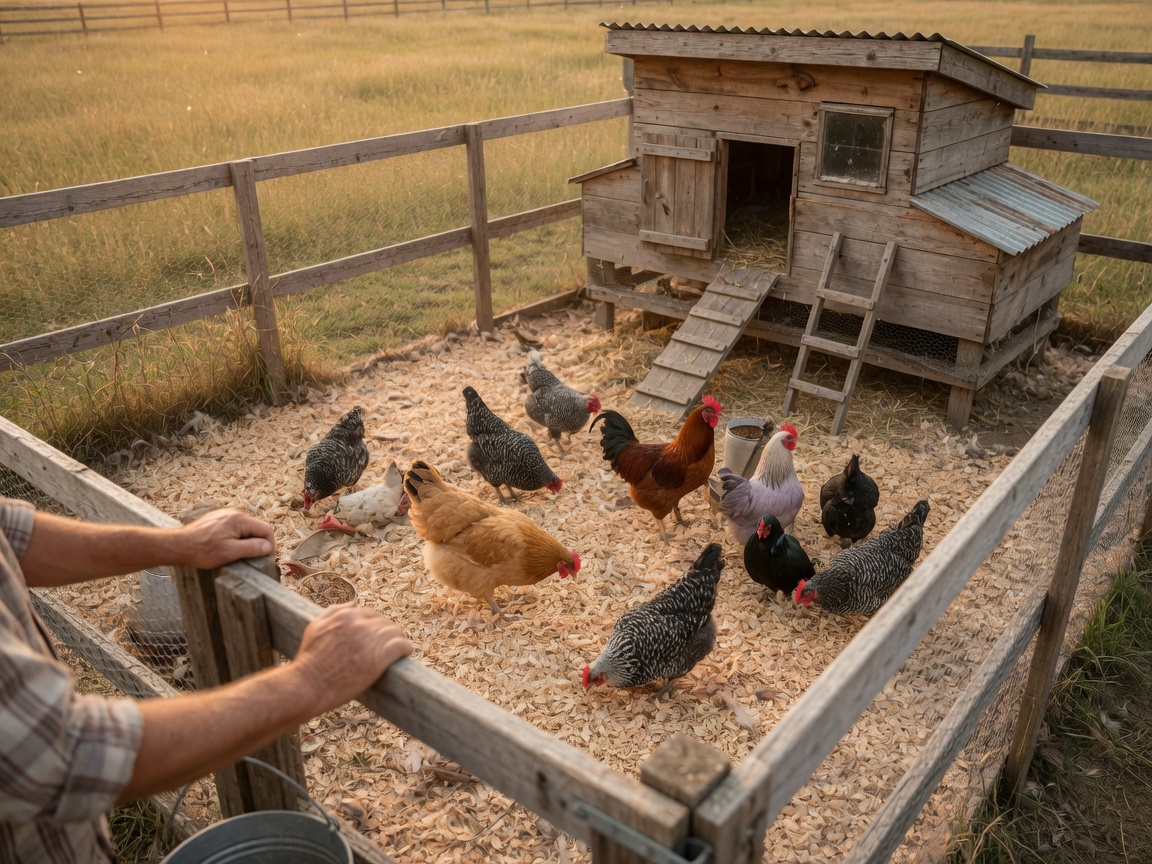
Once the water going in is under control, fix the floor itself. Bare dirt in a run compacts, stops draining, and stays wet for days. The answer is a thick layer of coarse organic material the birds can work — and coarse is the word that matters.
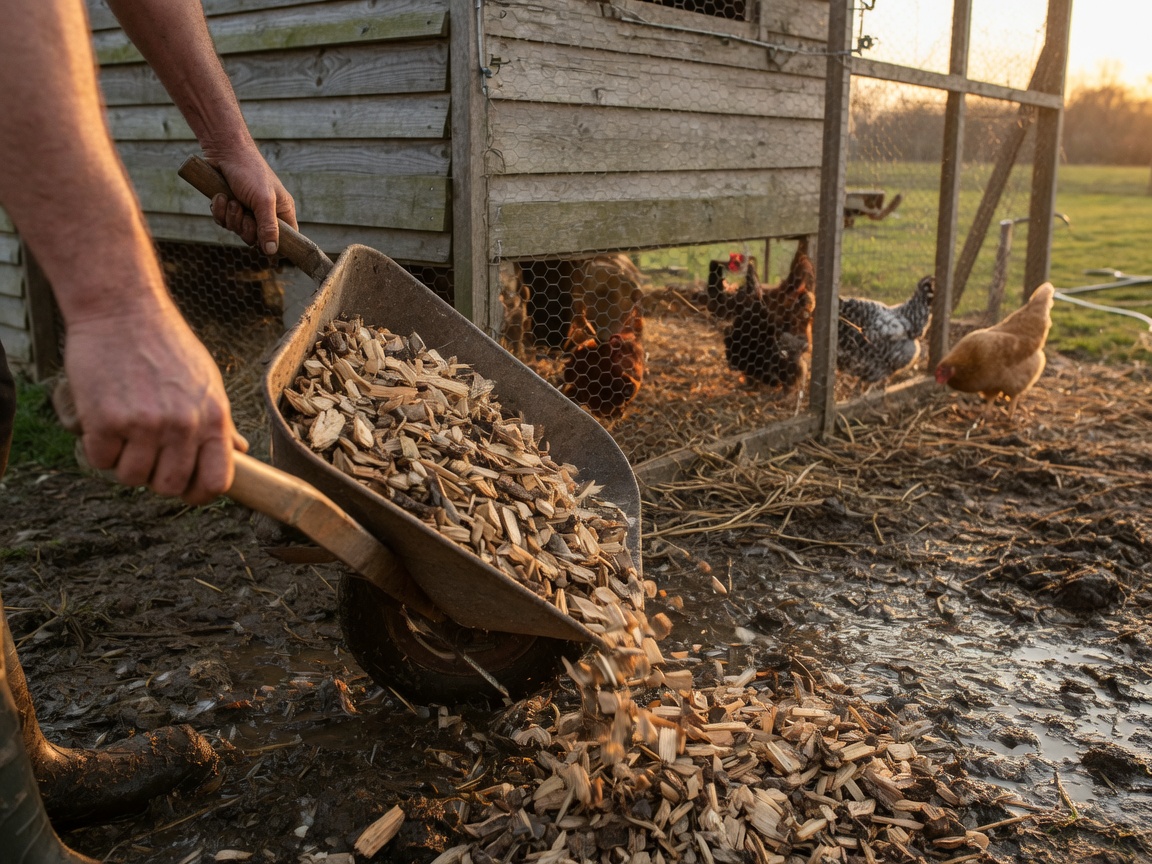
Big-flake pine or, better, arborist wood chips (call a local tree service — they’ll often drop a load cheap or free) are what I use. Coarse chips let water drain through and give the girls something to scratch and turn, which keeps it aerated instead of matting down. Steer clear of straw and fine bark: straw mats into a slick, sour layer, and fine mulch holds water like a sponge. I lay chips four to six inches deep, rake them level a couple of times a month, and top them off when they break down. A run built up this way drains after a rain instead of holding it. (I don’t have a specific product to point you to here — a truckload of local chips beats anything bagged, and it’s usually cheaper.)
Handle the one wet corner
Almost every run has a stubborn low corner that stays soggy no matter what. For that spot, a small rubble drain does the trick: dig out the wet area a foot or so deep, fill it with coarse gravel or old broken concrete, and top it with wood chips. It gives the water somewhere to go and disappear instead of sitting on the surface. If burrowing predators are a concern in your setup, line the pit with half-inch hardware cloth before you backfill — never chicken wire, which a raccoon peels open like foil. (I keep hardware cloth on hand for run repairs; it’s the same stuff you predator-proof with.)
Why a dry run is worth the trouble
This isn’t about a tidy-looking yard, though a dry run does stop reading as a junk pile to the neighbors — and in a suburban setup, a run that smells after every rain is exactly the kind of thing that turns into a complaint. It’s about the birds. Chickens standing in constant wet muck get manure caked on their feet, and that’s how bumblefoot and foot sores start. Warm, wet, dirty ground is also where coccidiosis thrives, and cocci is a real killer in a young flock. I’m not going to hand you drug dosages — if a bird goes lame or lethargic, that’s a call to your extension office or a poultry vet — but a dry run is the cheapest prevention there is.
The heavy breeds churn it up worse, too. My Buff Orpingtons and a big Australorp will pug a wet run into soup faster than a lighter bird would, so if you keep the big girls, staying ahead of the mud matters even more.
Getting a run right the first time — grade, drainage, roof water, floor, the whole setup a new keeper walks into — is the part I wish someone had walked me through before I built mine. I put all of it, step by step, into my book, Raising Backyard Chickens for Beginners: coop and run setup, the first-year timeline, and the mistakes I made so you don’t have to repeat them. A dry run is a healthier flock, and it starts with where the water goes.
