What to Forage in the Pacific Northwest in Spring
What to forage in the Pacific Northwest in spring — the medicinal plants I gather from March into May on the Olympic Peninsula, how to know them, and what I do with each.
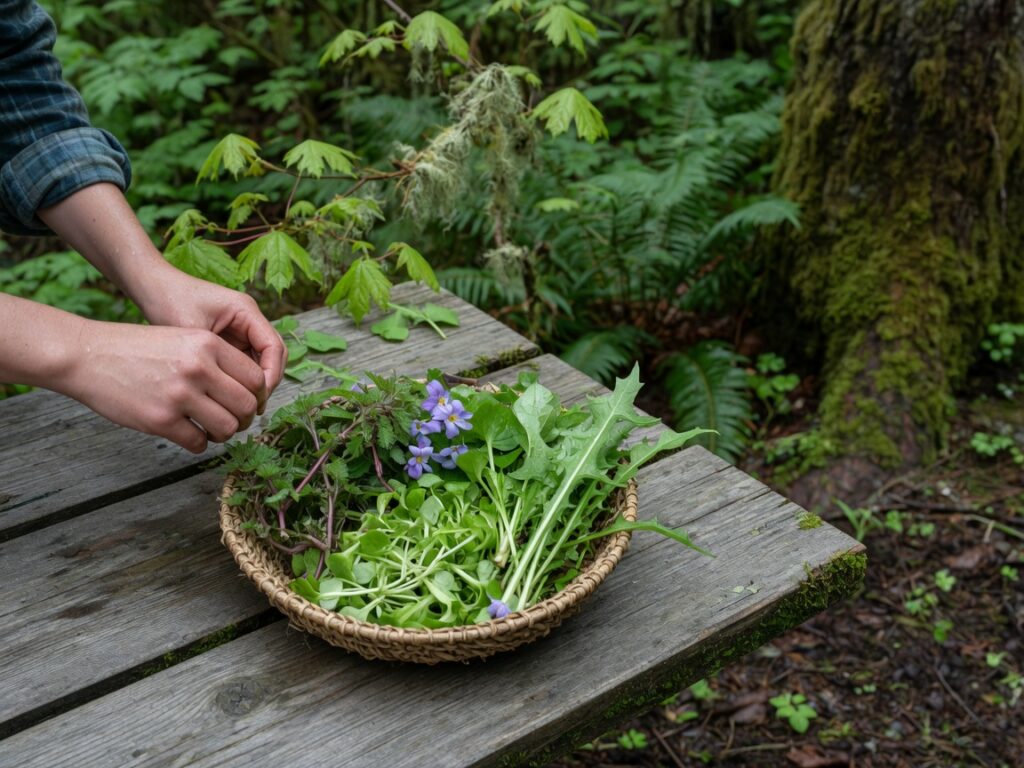
Everybody out here talks about spring foraging like it’s a single glorious weekend in April when the nettle comes up and the whole world turns green. It isn’t. Spring on the Olympic Peninsula runs long and cold and wet, and the good gathering is spread across three months, plant by plant, each on its own schedule. If you go out once, fill a bag with nettle, and call the season done, you’ve missed most of it.
What follows is what I actually gather in these weeks, on my acreage outside Sequim and along the wet ditches and forest-service roads on the rain-shadow side of the Peninsula. Not a botany course — a working list, the plants a beginner can learn to know with certainty this spring and turn into something useful. Each comes with how I recognize it and what I do with it once it’s home.
One rule before any of it, and I’ll say it once because you’re an adult: never eat or use a wild plant on the strength of a book, an app, or a single source. Confirm it against more than one reputable guide and, better, an experienced local who can put it in your hand. When in doubt, throw it out. Nobody has ever regretted skipping a plant.
Stinging nettle, the plant that starts the season
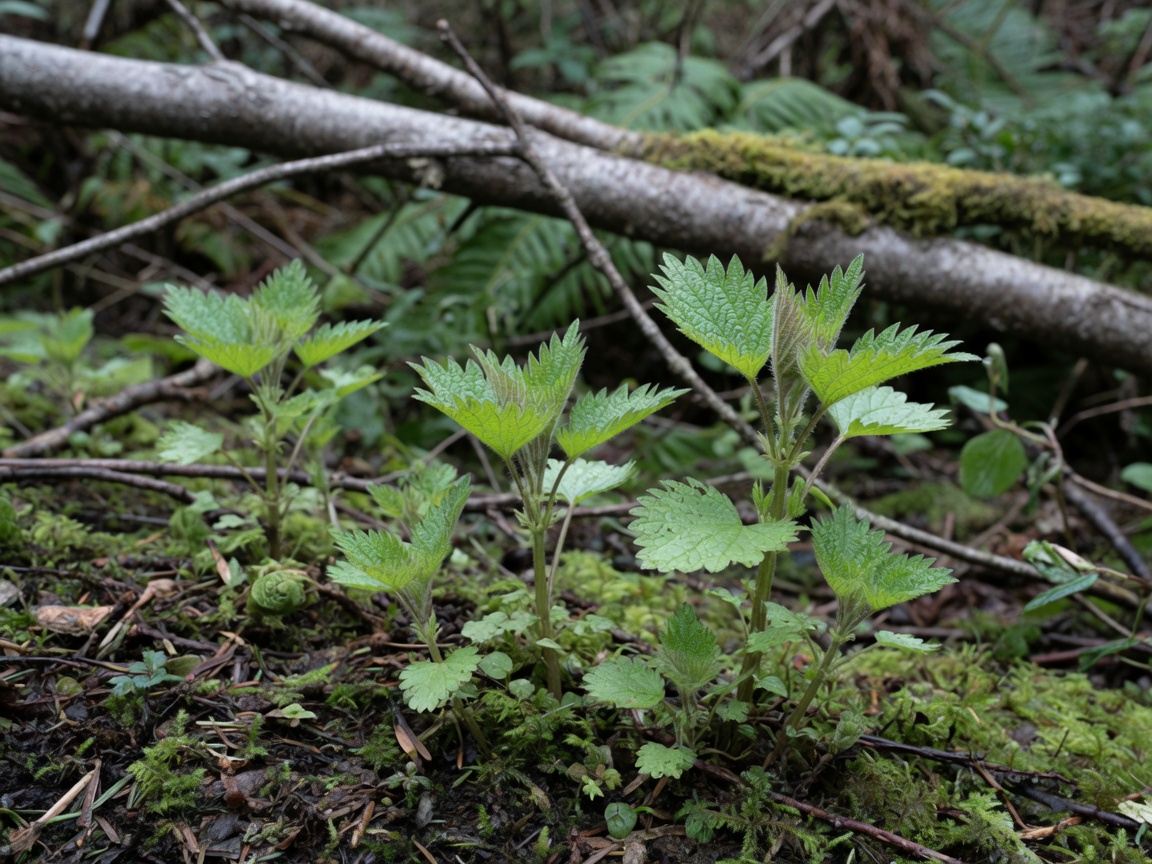
Nettle (Urtica dioica) is the one everybody knows about, and for once the hype is earned. It comes up along creek edges, ditch banks, and the damp margins of old pastures across the Peninsula from late February through April, and the young tops — the first six or eight inches, before it flowers — are what you want. Square stems, opposite toothed leaves that come to a drawn-out point, and the sting that tells you you’ve got the right plant the moment you forget your gloves. Which you will.
I cut the tops on a dry morning into a paper bag, wearing leather gloves, and dry them flat for tea or blanch them for the pot the same day. The sting cooks and dries out completely — a dried nettle leaf is harmless. Generations here drank spring nettle as a mineral-rich tonic tea after a long winter of stored food, and that’s still exactly how I use it. If you learn one spring plant, learn this one; I wrote out the whole identification and harvest in my nettle guide, because it’s worth doing right.
Cleavers, tangled in the spring hedge
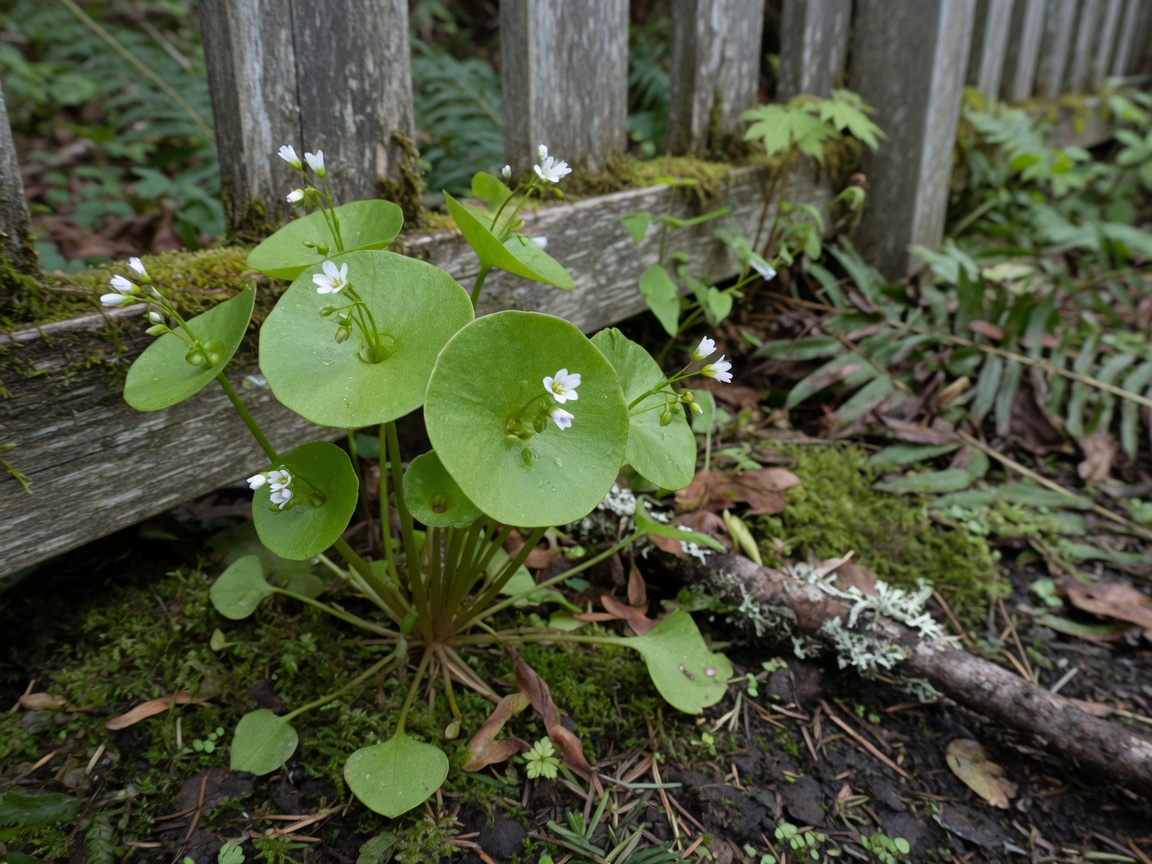
Cleavers (Galium aparine) is the sprawling, sticky spring green most people walk right past. It grows in a weak tangle over hedges, fence lines, and shady ditch banks from March into May, with narrow leaves in whorls of six to eight around a square stem — and the whole plant clings to your sleeve like Velcro when you brush it. That clinging is the surest field tell it has; nothing else of its size grabs on quite like it.
Cleavers is a mild plant with a long folk history as a spring tonic — the green was gathered and made into a cool water infusion or steeped into oil while it was young and tender. I pick it before it gets stringy, chop it fresh, and either cover it in jojoba oil for a gentle skin oil or bruise a handful into cold water overnight for a grassy spring drink. It doesn’t dry well — it loses most of itself — so cleavers is a fresh-only plant, gathered and used within the day.
Dandelion, roots in early spring and greens all season
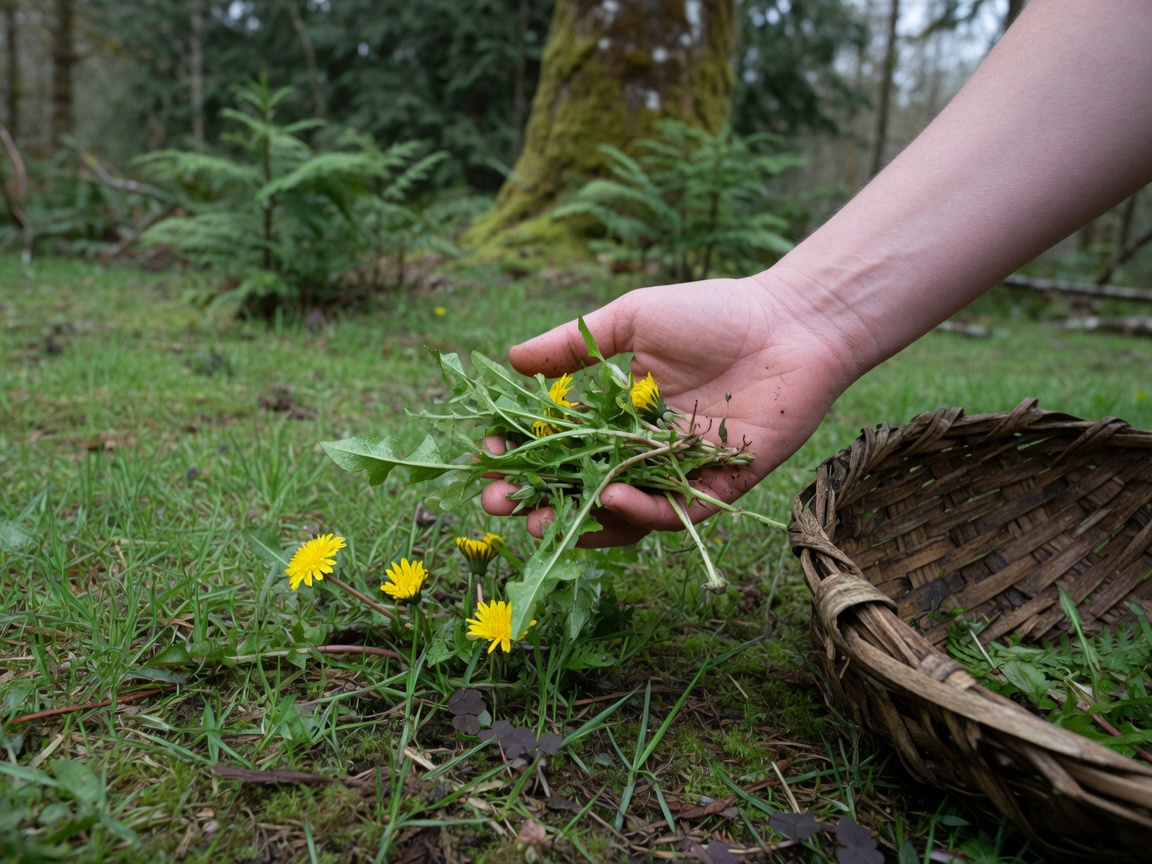
I know, I know — dandelion (Taraxacum officinale) grows in your driveway and you’ve spent money trying to kill it. That’s exactly why it’s a good beginner plant: you cannot mistake it, and there’s an endless supply. The tell nobody bothers with is the single hollow, leafless stem behind each flower, and milky sap when you break it; a few look-alikes have branching stems or hairy leaves, and those aren’t dandelion.
In very early spring, before the plant puts its energy up into the flower, I dig a few roots to dry and roast for a bitter, coffee-ish decoction. Through the rest of spring it’s the young leaves, before they turn truly bitter, that I’m after — a traditional spring bitter green that our grandparents ate on purpose. Gather only where you’re certain nothing’s been sprayed, which on most suburban grass is a real question worth asking out loud before you pick. I put more of what I do with the root and leaf in my dandelion write-up.
Douglas-fir spring tips, bright green on the branch ends
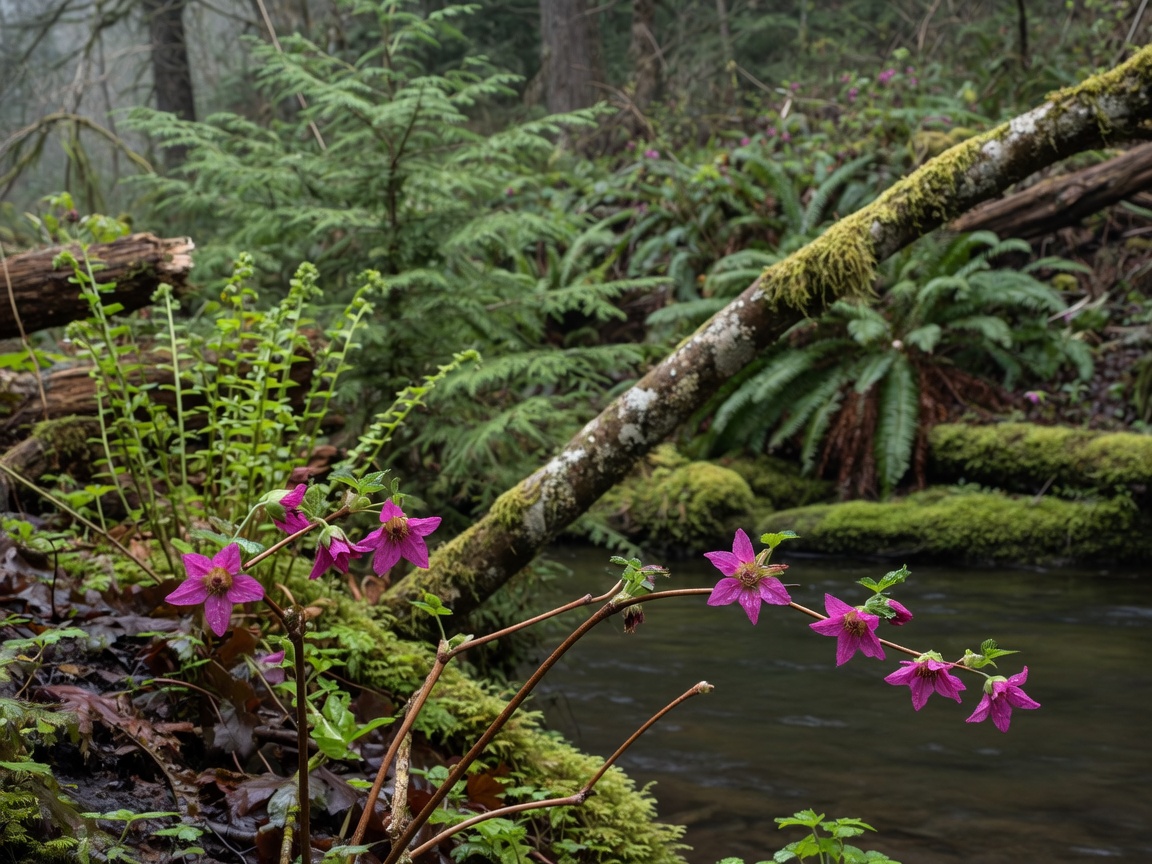
This is the spring plant most beginners don’t think of, and it’s one of the easiest to gather safely. In April and May, Douglas-fir (Pseudotsuga menziesii) and the true firs push out new growth at the tips of their branches — soft, bright chartreuse-green tufts, tender enough to pinch off with your fingers, smelling sharply of citrus and resin. They stand out vividly against the older dark needles, and you only take a few tips from any one branch.
The spring tips make a bright, lemony tea rich in the tradition of a late-winter vitamin source — Nancy Turner’s Food Plants of Coastal First Peoples documents conifer greens and inner bark among the spring foods of many Coastal First Nations, and the practice of steeping fresh needle growth for a restorative drink runs deep on this coast. I strain the brew through cheesecloth to catch the fine bits. One firm caution beginners skip: know your evergreen before you steep it — a couple of ornamental yews (Taxus) look superficially conifer-ish and are genuinely poisonous. Doug-fir’s soft, flat, single needles with two pale bands underneath are the plant; the yew’s flat dark needles and red berry-cups are not.
Violet and chickweed, right in the grass
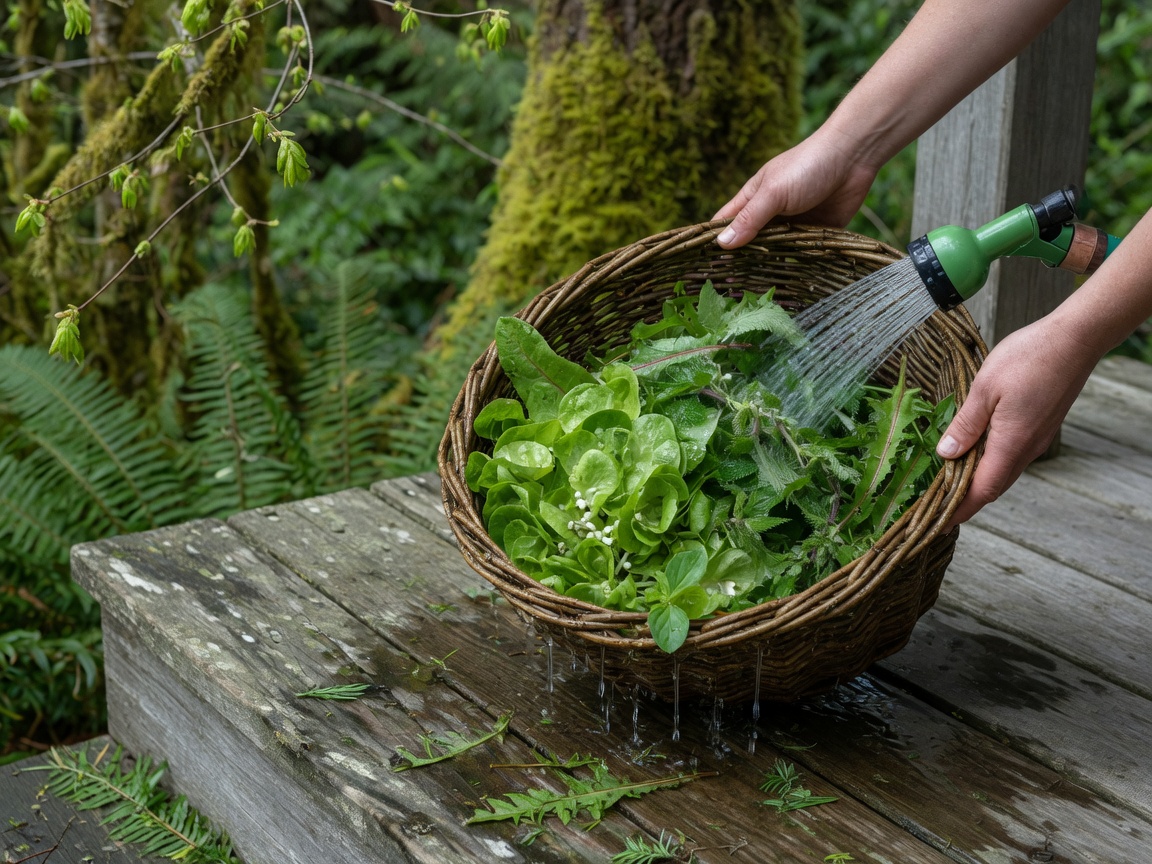
Two more that are almost too easy, because they’re likely in the untended grass around your own place. Wild violet (Viola species) — heart-shaped leaves and the small purple-blue five-petaled flower — comes up in shady lawn edges and woodland borders through spring, and the leaf and flower were long gathered fresh, eaten young or infused into a mild oil. Chickweed (Stellaria media) is the low, sprawling mat of tiny white star flowers and soft oval leaves that fills cool spring ground; the giveaway is a single line of fine hairs running up one side of the stem, switching sides at each leaf pair.
Both are tender, mild, spring-tonic plants with generations of traditional use as fresh greens and cooling skin infusions, and both dry poorly — use them fresh. I infuse a handful of violet leaf into oil and, when I’ve enough, warm it with a little beeswax into a salve. Both want the same caution as anything from a lawn: gather only where you know nothing has been sprayed. I’ll give each of these its own full write-up later in the year; for now, know them in the grass and gather a little.
Turning a spring’s gathering into something that keeps
The gathering is half of it. The other half is putting up what stores and using fresh what doesn’t, and spring makes you decide fast — nettle dries beautifully, cleavers and chickweed don’t keep at all. Dry your nettle and dandelion leaf in a single layer, out of the sun, until they’re crisp; thick damp bundles hung to dry are how you grow mold instead of tea. Store the dried leaf in clean jars in the dark.
For violet I go a step further and make a small batch of salve while the leaf is fresh. Warm the strained infused oil gently, melt in beeswax pellets at about an ounce of wax to a cup of oil, pour it into two-ounce tins, and label each with the plant and the date. You will not remember in six months — I promise you, I never do. And when summer comes and the roadsides fill in, the summer harvest is a different, more resinous afternoon.
Which plant, gathered when, and every honest caution about the ones that look alike — that’s the part that takes longer than one post, and it’s the part I care most about. I put all of it into my book, Pacific Northwest Medicinal Plants: 115 wild plants of this coast, how to know each one without guessing, when to gather it, and how the generations before us used it. Spring is short and it comes in pieces. The book is how you catch more of them next year.
