How to Tie Simple Fishing Knots for Beginners
The two fishing knots for beginners you really need — the Palomar and the improved clinch — tied step by step, plus how to attach a bobber and why knots fail.
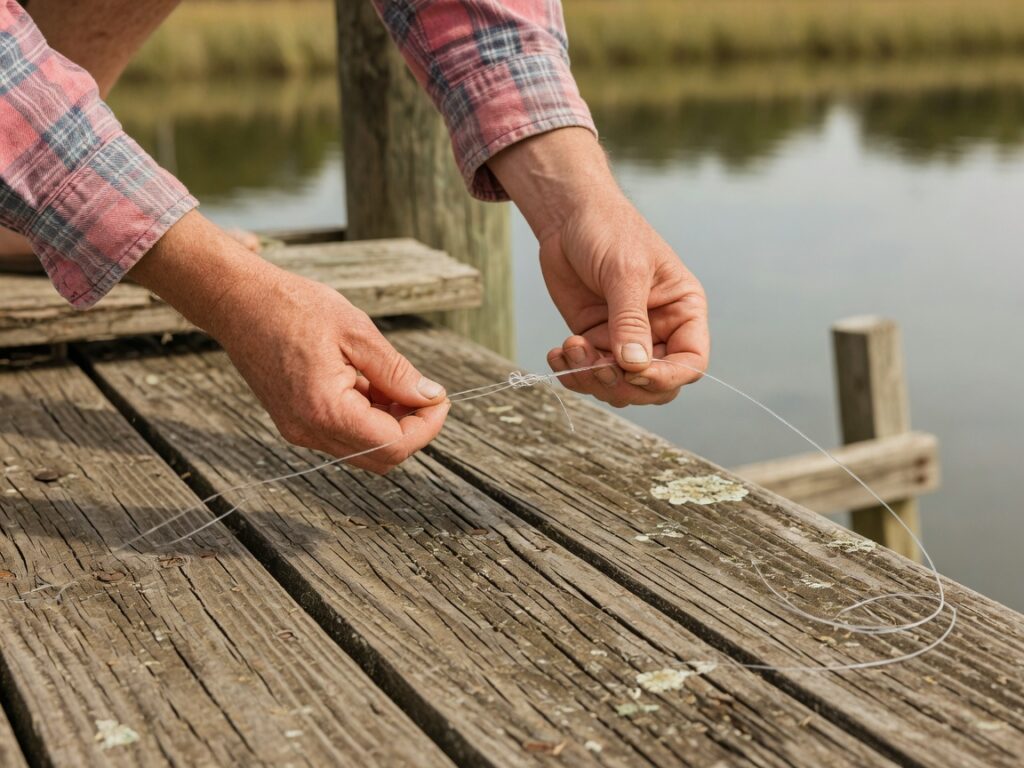
More fish are lost to a bad knot than to a bad hookset. I’ve seen it my whole life — a boy hooks the biggest bream of his day, the line goes tight, and then it goes slack, and there’s a little curled pigtail on the end where the knot pulled loose. That pigtail is the knot’s confession. It tells you it was never tied right to begin with.
My name is Silas Whitfield, and I’ve been tying line to hooks for the better part of seventy years. Here’s the good news I want to start with: you do not need to learn a book full of knots. Folks will try to sell you twenty. For bank and pond fishing — a hook, a bobber, a little weight — you need two knots you can tie well, and one you can tie in the near dark with cold fingers. Learn those, and you’ve closed the door on most of the fish you’d otherwise lose. Let me walk you through them the way I taught my own grandchildren, right off the dock.
First, the rule that makes every knot hold
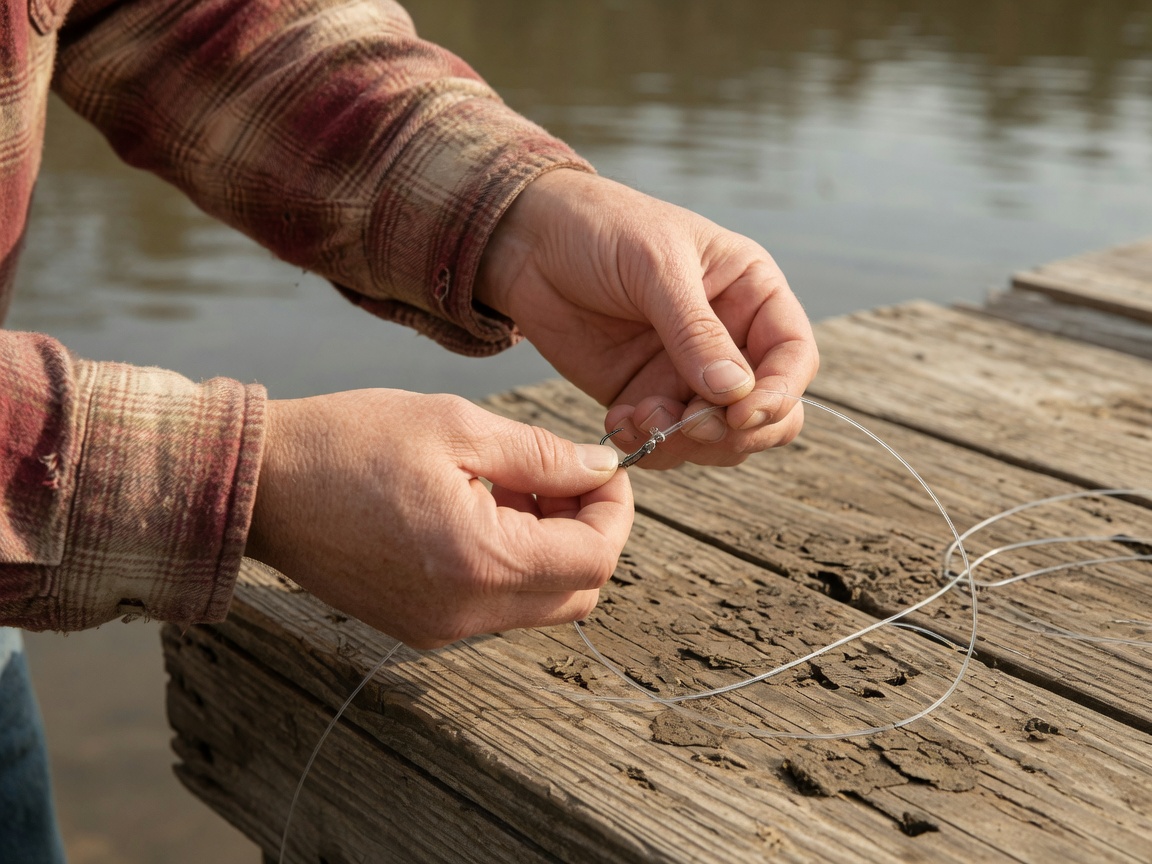
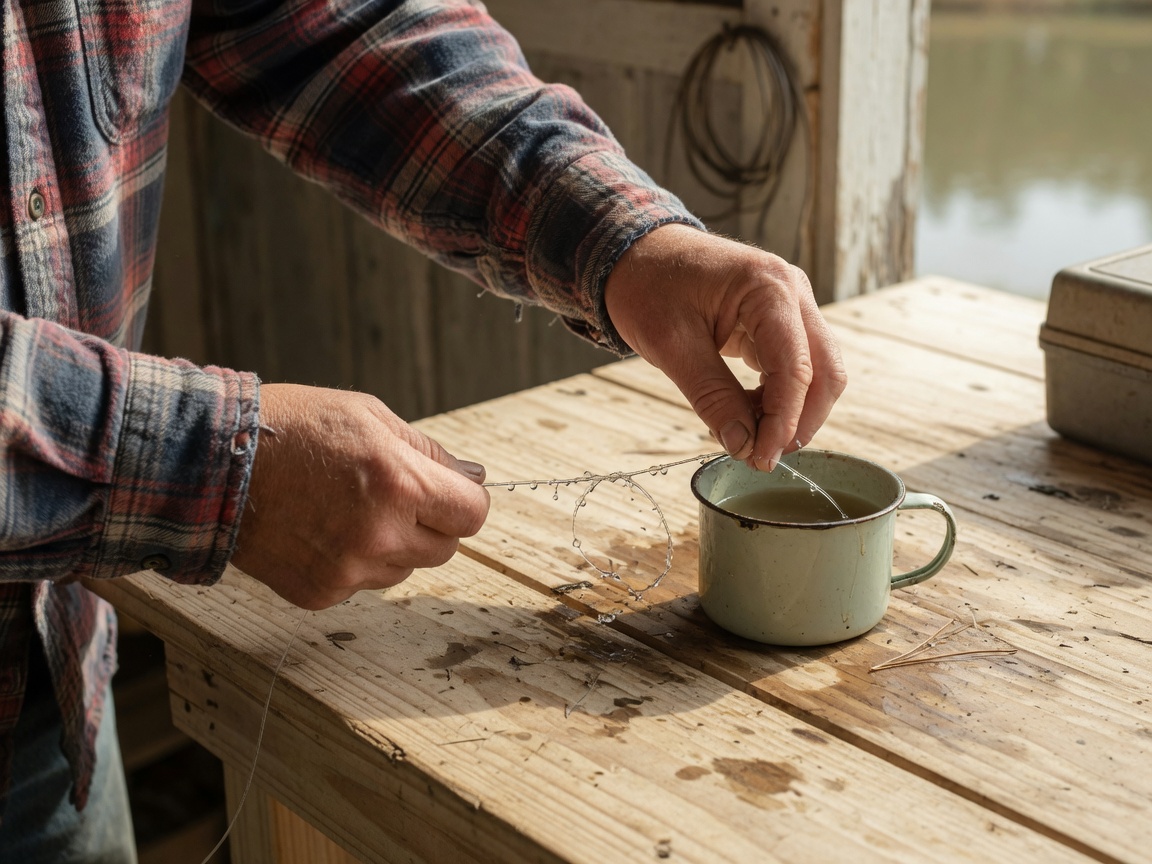
Before the knots themselves, one habit, because it matters more than which knot you pick: wet the line before you pull it tight.
When you cinch a knot down dry, the line drags against itself and the friction burns it — you weaken the very knot you’re tying. A drop of spit or a dip in the pond, and it slides closed smooth and keeps its strength. Every knot below, you wet before the final pull. My daddy told me that before he told me any knot, and I’m telling you first for the same reason.
Two more small things. Snug your knots down slow and steady, not with a hard jerk. And leave a little tag end when you trim — an eighth of an inch, not flush — so a knot that settles under pressure has a hair to give without slipping. Trim the rest close with clippers or nail clippers; don’t burn it.
The Palomar — the strong one, and the easiest
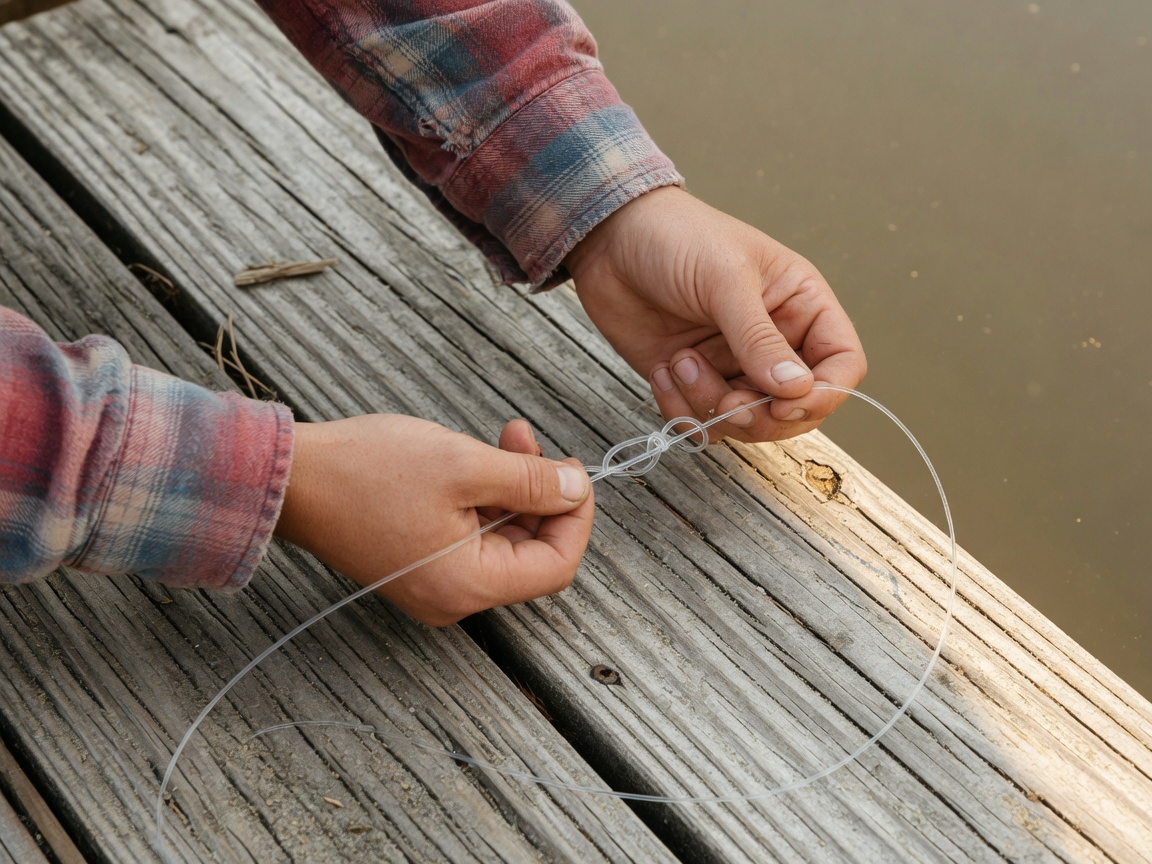
If you learn one knot, learn this one. The Palomar is about as strong as a knot in fishing line gets, it holds well in the cheap monofilament most of us start with, and — the part I like for a beginner — it’s hard to tie wrong. I use it to tie on most hooks and any lure with an eye you can pass a loop through.
Here’s how it goes:
1. Take the end of your line and double it into a loop about six inches long. You’re working with the doubled line now, two strands together.
2. Pass that loop through the eye of the hook.
3. Tie a simple overhand knot with the doubled line — the hook hanging loose in the middle — but don’t tighten it. Leave it loose and open.
4. Bring the loop down and pass it completely over the hook, so the hook passes through the loop.
5. Wet it, then pull on both the line and the tag to draw it snug down against the eye of the hook. Trim the tag.
That’s it. Five steps, and once your hands know it you’ll tie it without looking. The only place beginners go wrong is forgetting step four — you have to pass the loop all the way over the hook — so go slow the first few times and watch it seat down clean.
The improved clinch — the everyday knot
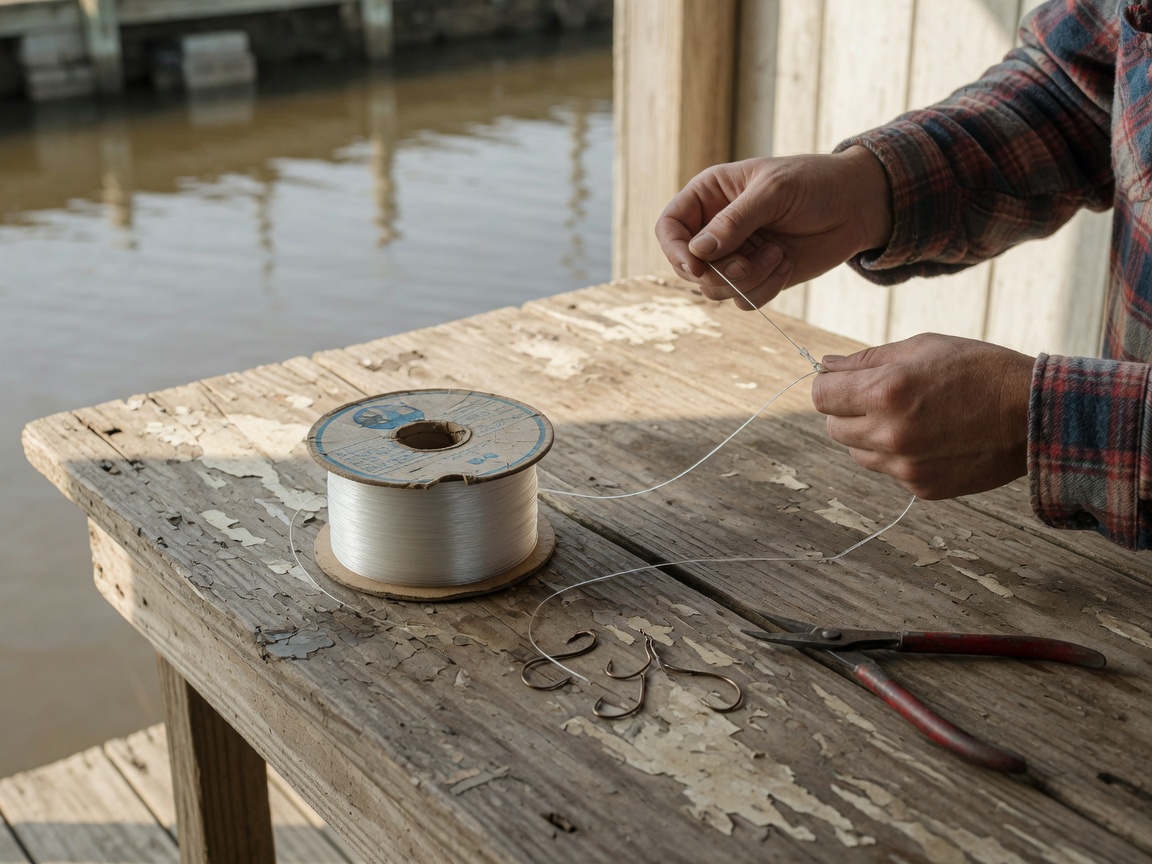
The improved clinch is the workhorse knot for tying a single line to a hook, a swivel, or a lure eye. It’s the one most old-timers tie by feel. It’s a hair fussier than the Palomar, but it’s worth knowing because it ties on a single strand and works where a doubled loop won’t pass.
1. Run the end of the line through the eye of the hook, and pull five or six inches through.
2. Twist the tag end around the standing line five or six times. Five wraps for heavier line, six or seven for light.
3. Take the tag end and pass it back through the small loop right up against the eye.
4. Then pass it through the big loop you just made.
5. Wet it, hold the tag so it doesn’t back out, and pull the standing line slow so the wraps stack up neat against the eye. Trim the tag.
The word improved is that last pass back through the big loop — the plain clinch skips it, and the plain clinch is the one that slips. Don’t skip it. If your wraps bunch up in a wad instead of stacking side by side, you pulled too fast or forgot to wet it. Cut it off and tie it again. Line is cheap; a lost fish stings longer.
Hanging a bobber, and a loop for a jig
Most beginners are fishing a bobber over a hook, and the good news is a bobber needs no fancy knot at all. The little red-and-white clip-on floats hang right on the line with the spring clips built into them — pinch the top, run the line under the hook, pinch the bottom, and it’s set. You slide it up or down to fish deeper or shallower. No knot to tie.
If you graduate to a small jig for crappie, you may want to give it a little freedom to swing, and for that there’s the loop knot — but don’t rush there. For your first season, the Palomar to the hook and a clip-on bobber up the line will catch you every bluegill and crappie in the pond. Keep it simple. My guide on catching bluegill for beginners shows exactly how that rig fishes.
Practice at the kitchen table, not at the water
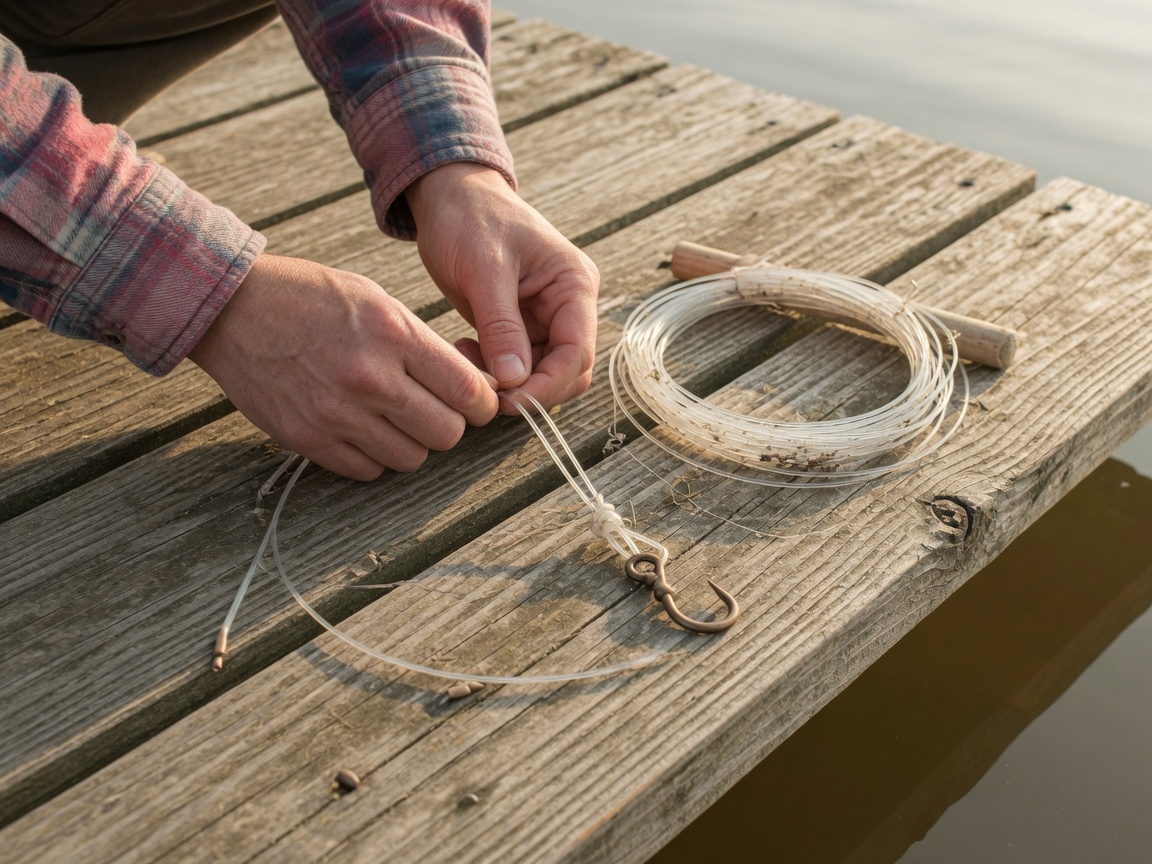
Here’s the habit most folks skip and everybody should keep: tie your knots at home first. Sit at the kitchen table some evening with a hook and a few feet of line and tie the Palomar ten times until your fingers know it. Do it again the next night. Then when you’re on the bank at first light with a fish feeding in front of you, your hands do the work while your eyes stay on the water.
I taught every one of my grandchildren their knots at the table before we ever wet a line. A child who can tie his own hook on is a child who can fish the rest of his life without needing anybody. That’s the whole point of teaching it — not this trip, but all the ones after.
If you’re just getting your first outfit together, I laid out the beginner gear you actually need — it’s a short list, and knots are the free part of it. And once you can tie on quick and sure, the next thing worth learning is when to go: I keep a simple almanac of the best days to fish each month by the moon and the weather, and I give it away free — you can pick up the Best Days to Fish starter kit here. Keep it by the door.
For the young angler you’re teaching, My First Catch — A Fishing Journal for Young Anglers gives a child a place to log every fish, tie in the memory alongside the knot, and want to come back. Teaching the knot and handing them the journal go together.
Learn these two knots, wet them before you pull, and you’ll bring home the fish you hook. The knot is the one part of fishing you can make perfect at your own kitchen table, long before you ever read the water.
Read the signs. Tight lines — and I’ll see you at the water.
