How to Catch Bluegill in the Spring, on the Beds
How to catch bluegill in spring, when they move up to spawn on the beds — the water temperature to watch, where to find them, and the simple rig from the bank.
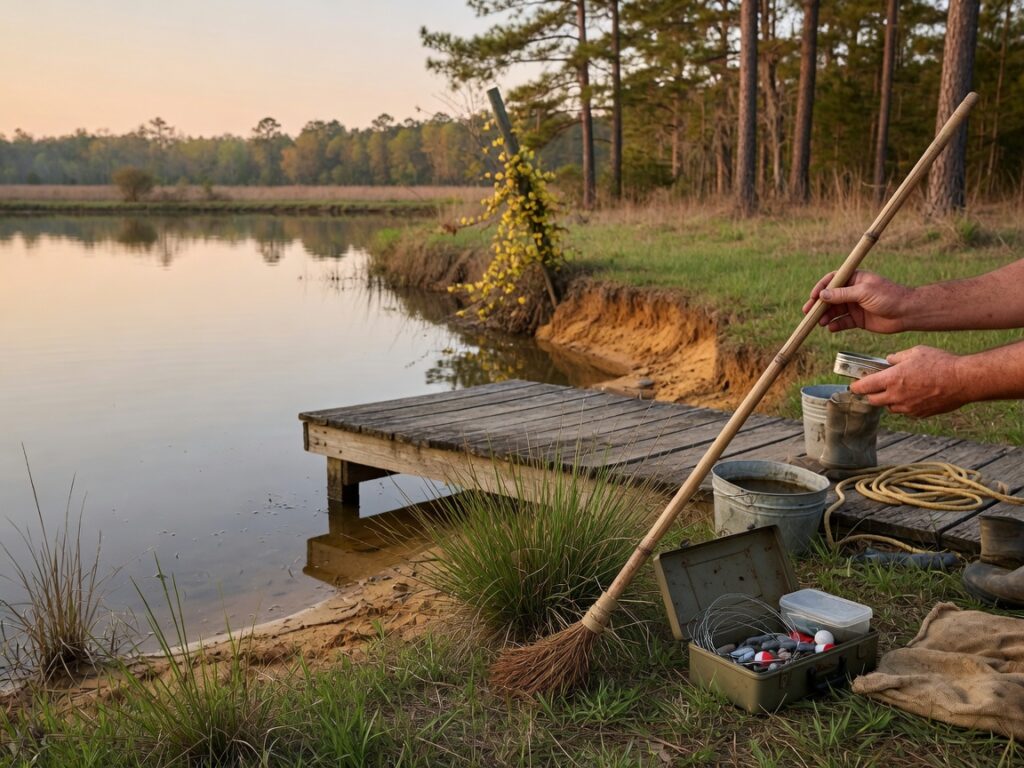
There is a stretch of the spring when a bluegill will about jump on the hook for you, and if you know when it comes, you can fill a cooler on an afternoon. It’s the spawn. The bream move up out of the deep water into the shallows to make their beds, and for those few weeks they are shallow, they are hungry, and they are mad at anything that comes near. I have fished my pond better than forty years, and there is no easier fishing all year than a bluegill bed in the spring.
The trick is timing it, and that’s a matter of reading the signs the way my granddaddy taught me. The spawn doesn’t run on the calendar. It runs on the water.
Wait for the water to warm
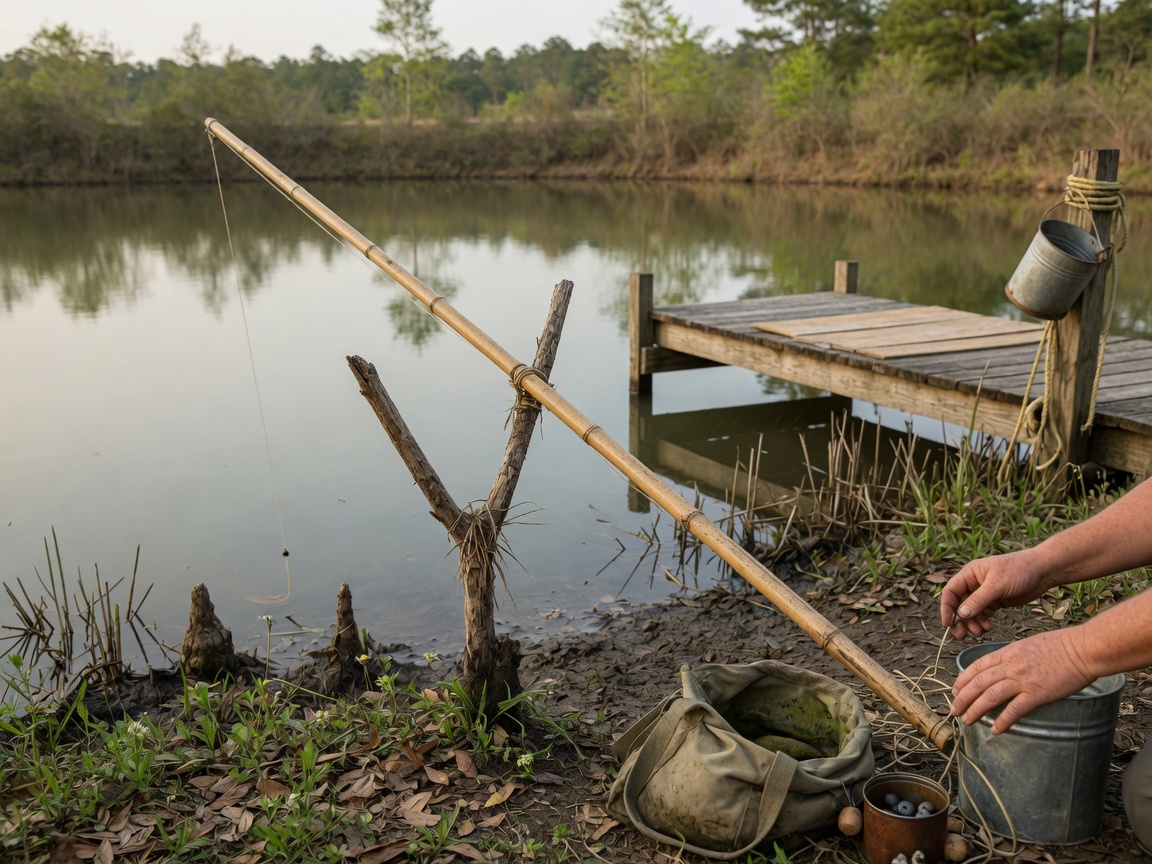
The whole thing keys on water temperature. Bluegill start thinking about the beds when the shallows climb up around sixty-five degrees, and they spawn hardest when the water sits in the low seventies. Down here in eastern North Carolina that’s usually along in May, but a warm spring pushes it early and a cold, wet one holds it back, so I trust the water over the month every time.
You don’t need a thermometer to read it, though one doesn’t hurt. Watch the shallows on the north side of the pond — that bank warms first because it catches the most sun — and pay attention to the first real run of warm, settled days after the dogwoods bloom. When the frogs get loud of an evening and the shad start flipping in the shallows, the bluegill are close behind. The moon plays into it too; the beds tend to fill up strongest around the full moons of late spring. That layering of signs — the water, the season, the moon — is the same reading I put in the three signs for any day on the water.
Find the beds
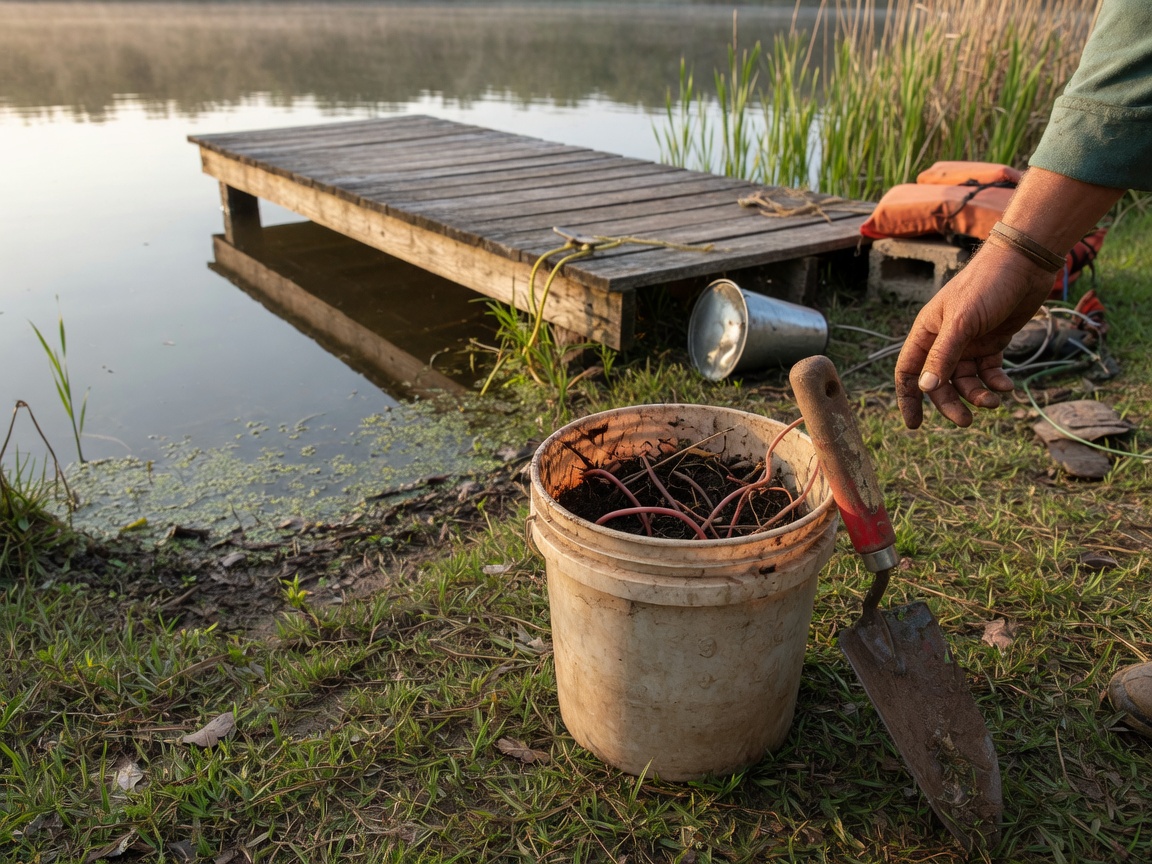
Once the spawn is on, a spring bluegill isn’t hard to find, because he tells you where he is. The males fan out saucer-shaped beds in the shallows, side by side, and a whole colony of them will hollow out a patch of bottom until it looks like somebody laid down a mess of dinner plates. In clear water you can stand on the bank and see them — pale round clearings in two or three feet of water, often over a firm sand or gravel bottom near cover.
If you can’t see them, you can sometimes smell them — a bedding colony of bluegill puts off a faint melon smell on a still day, and old pond hands have followed their nose to a bite more than once. Look for the beds up in the backs of coves, along shallow flats, and off any bank that’s out of the wind and getting sun. Find one bed and you’ve usually found twenty.
Fish it simple
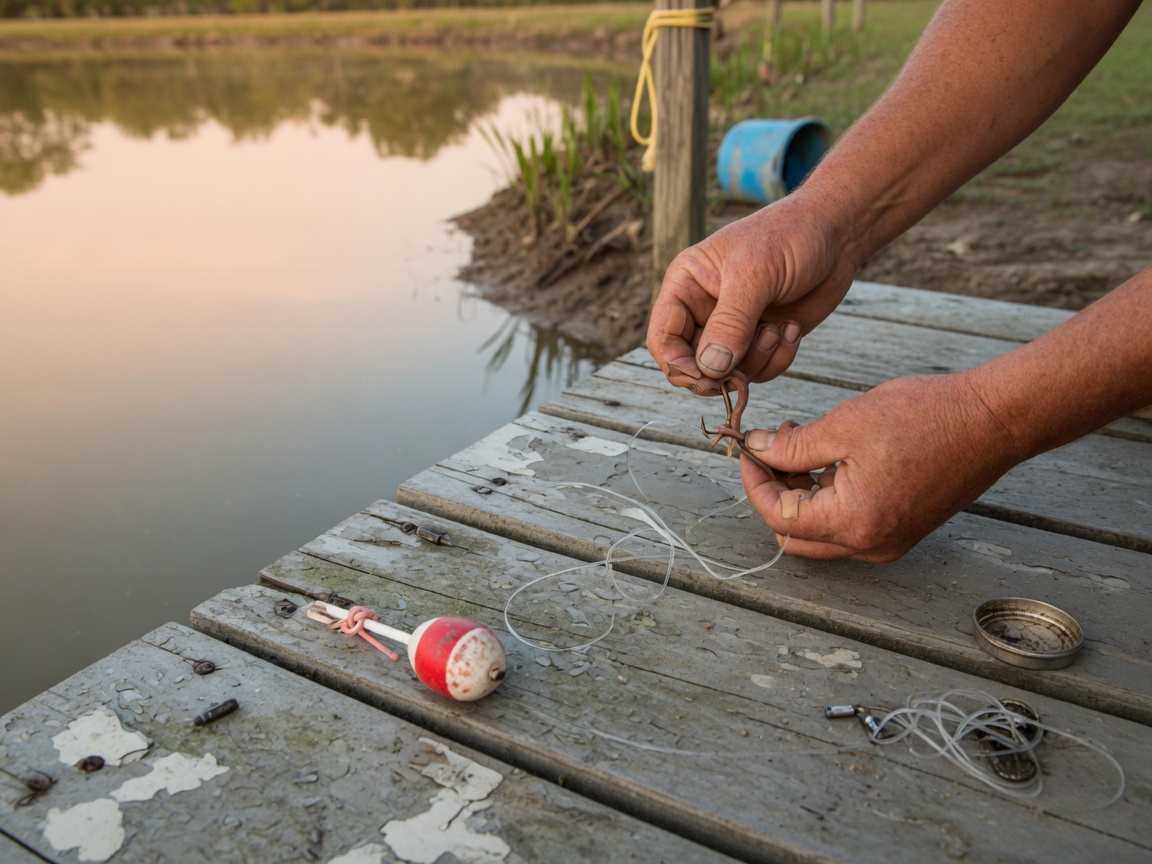
This is bank fishing at its plainest, and that’s the beauty of it. You do not need a boat or a tackle box full of anything. A live cricket or a red worm, fished a foot or so under a small bobber, set right at the edge of a bed, is all it takes. The bobber won’t sit long. When it goes under, don’t snatch it away — let him carry it down, then lift steady, and he’s yours.
A small piece of nightcrawler works just as well as a cricket, and on a slow minute a tiny jig eased through the beds will draw the bigger males that are guarding. Keep your bait shallow. In the spring the fish are up, so fishing deep just puts your hook below them. If you’re bringing a child along, this is the day to do it — a bed full of spawning bluegill is about the most willing fish that swims, and there is no faster way to keep a young one hooked on it than a bobber that keeps going down. I lay out the whole beginner setup, where to stand and how to rig, in my bluegill for beginners walkthrough if you’re just starting.
Keep a mess, and mind the beds
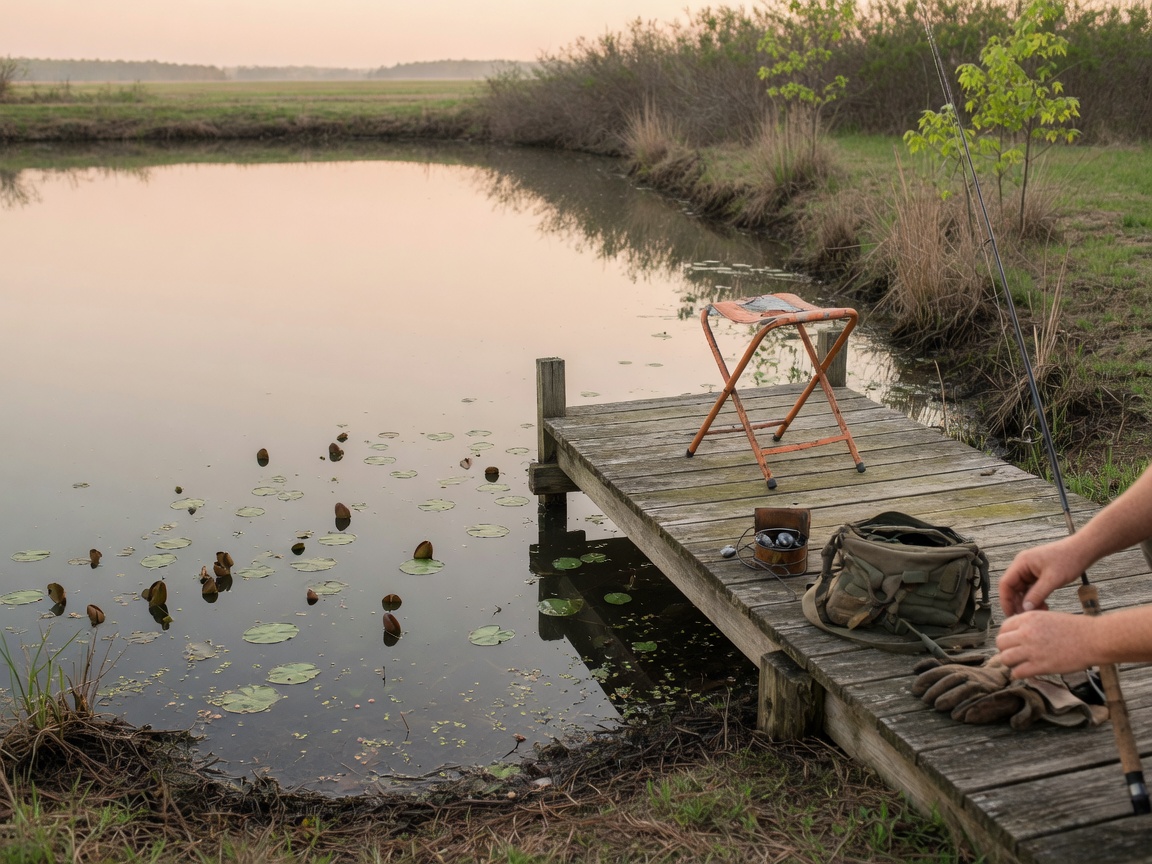
A spring bluegill is fine eating — firm and sweet, the way the cool water leaves them — and a pond is usually the better for having some kept, because bluegill will overpopulate and stunt themselves if nobody thins them. A mess of hand-sized bream, rolled in cornmeal and dropped in hot grease, is what my church has put on the table at the spring fish fry longer than I’ve been a deacon there. Audra runs that kitchen, and she does not suffer a poorly-cleaned fish.
I’ll say one plain thing, though: go easy on the biggest males on the beds. Those are the ones guarding the nest, and they’re the breeders that make next year’s fishing. Keep a good mess of the eating-size fish and turn the big bulls back, and your pond will pay you again every spring. That’s not a rule anybody made me follow. It’s just how you keep a good thing going.
Read your own water
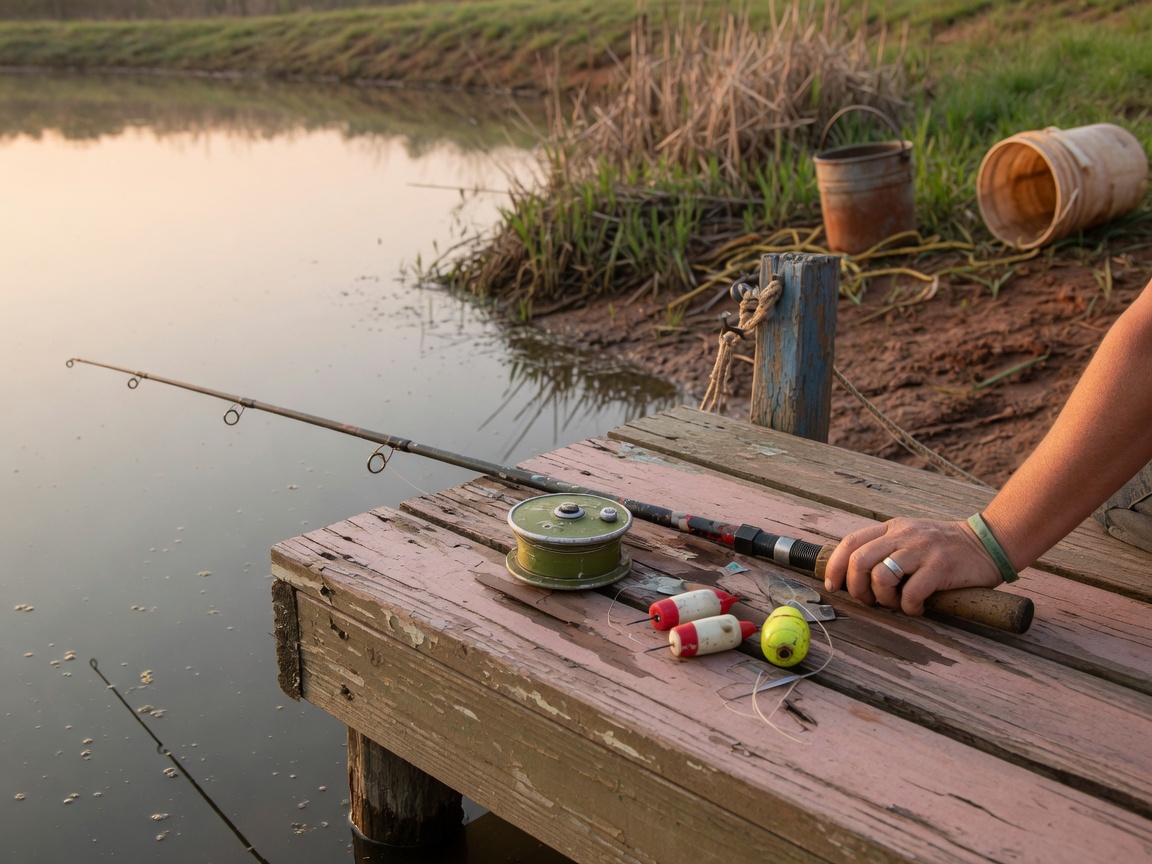
Every pond runs a little different. Mine spawns in a cove that catches the afternoon sun; yours may turn on a week sooner or later, off a bank I’ve never seen. The way you learn it is the way we all learned it — you go, you pay attention, and you write down what the water was doing when the fish were biting. I keep a little almanac from my own pond that marks the best days each month by the moon, with a plain checklist for the weather and the water, and I put together a simple one you can use for yours. I give it away free — you can pick up the Best Days to Fish starter kit here. Keep it by the door, mark your spring, and next year you’ll know your own pond’s spawn before it comes.
And if you’ve got a young one, a spring bluegill bed is where I’d start them. The fish are willing, the fishing is fast, and a full stringer keeps a child interested the way a slow day never will. Let them keep a record of it — the first fish, the pond, the day. I helped make a simple journal for exactly that, My First Catch — A Fishing Journal for Young Anglers, so a child can write down and draw what they caught and carry it with them. A bluegill and a bobber is how most of us started. It’s still the best way there is.
