How to Move Chicks From the Brooder to the Coop Safely
How to move chicks from the brooder to the coop without losing birds — when they're ready, weaning the heat, and the setup for the first cold night.
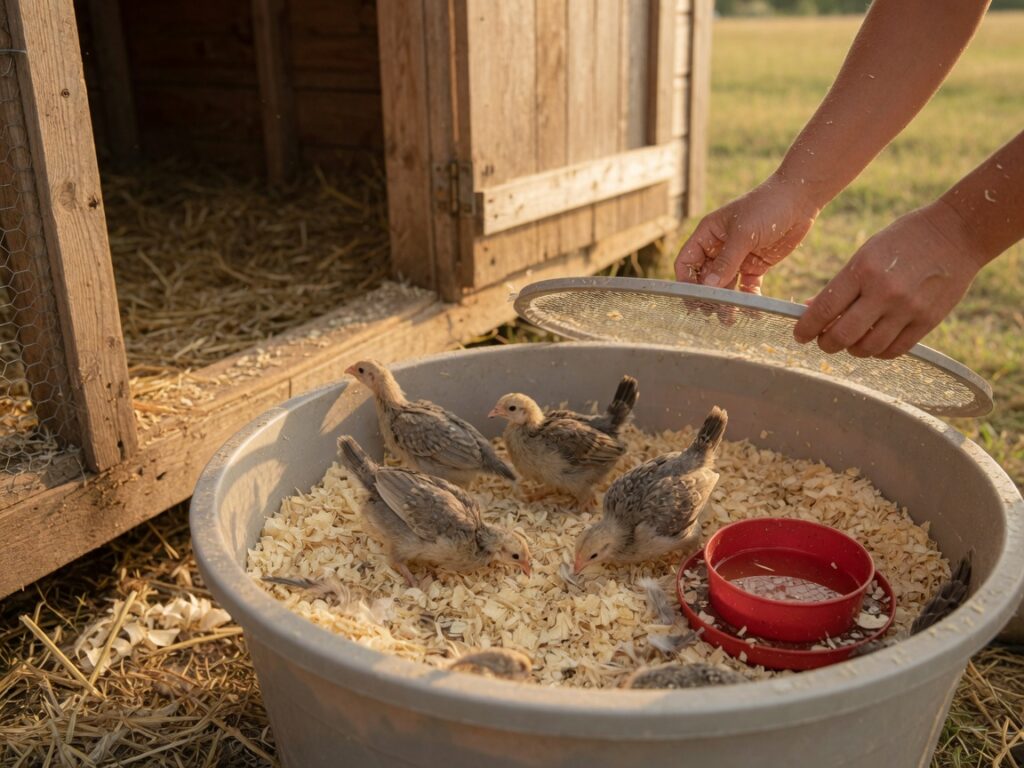
There’s a stretch every first-year flock owner hits where the chicks have outgrown the brooder — they’re roosting on the waterer, kicking pine shavings into the feed, and flapping up onto the rim of the tote every time you lift the lid — but the calendar still says it’s not warm out. That in-between is where people either move too early and lose a bird to a cold night, or wait too long and end up with half-wild teenagers crammed in a bin in the garage. I’ve been on both sides of it. Here’s how I move mine from the brooder to the coop now, and what I wish I’d known the first spring.
The move itself is simple. The mistakes are all in the timing and the setup, so that’s where I’ll spend your time.
When chicks are actually ready to move
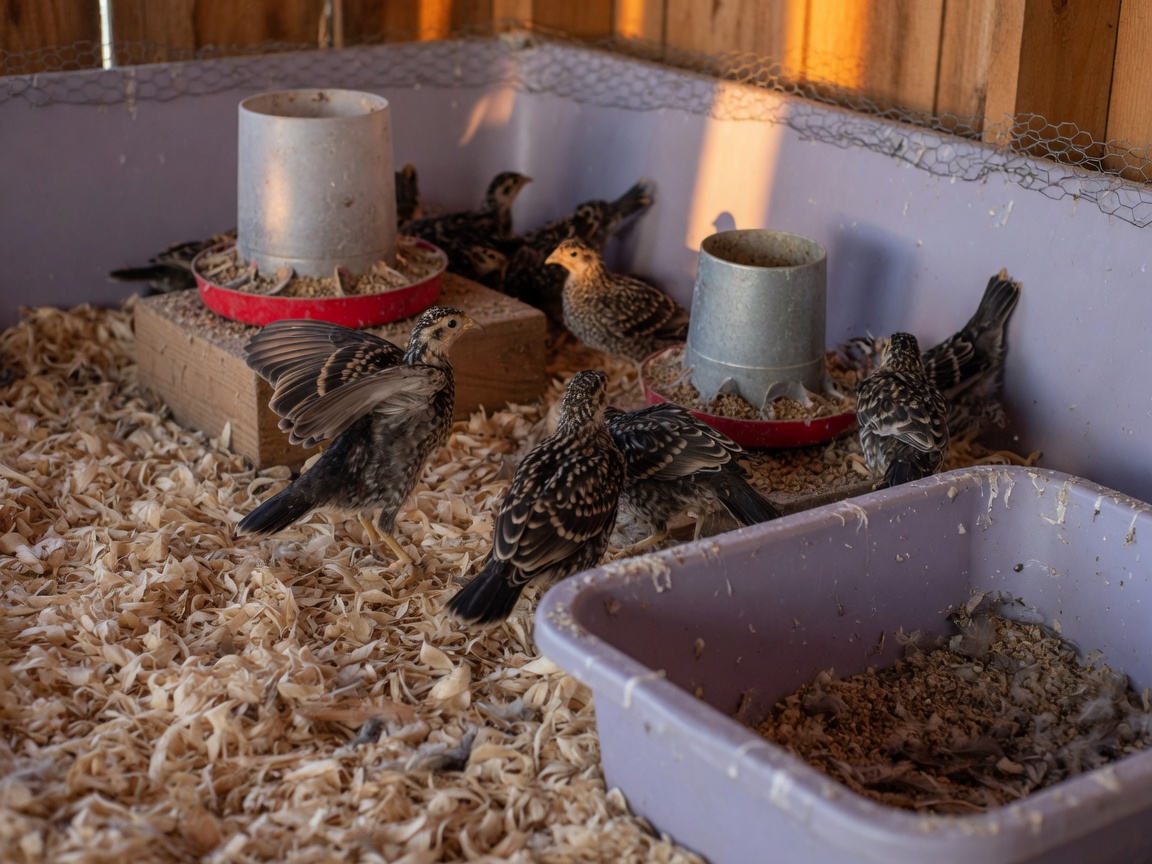
Age is a rough guide; feathers are the real one. Most chicks are ready for an unheated coop at five to six weeks, once they’re fully feathered — meaning the downy fluff is gone from the body and they’ve grown in real feathers, especially across the back and around the neck. Run your hand over one. If you feel feathers and not fuzz, the bird can hold its own body heat.
The other half of the question is the weather, not the age. A fully feathered six-week-old handles nighttime lows in the 50s and 40s without a problem. If your nights are still dropping near freezing, either wait, or plan to give them a little supplemental heat for the first week in the coop (more on that below). I move mine when the overnight low has settled reliably above the mid-40s and the birds are feathered — whichever comes second.
One thing that trips people up: chicks feather out at different rates, even in the same batch. Slower-feathering breeds and any bantams will still look fluffy when your Australorps are slick and ready. Go by the least-feathered bird in the group, not the most.
Harden them off first — don’t just make the jump
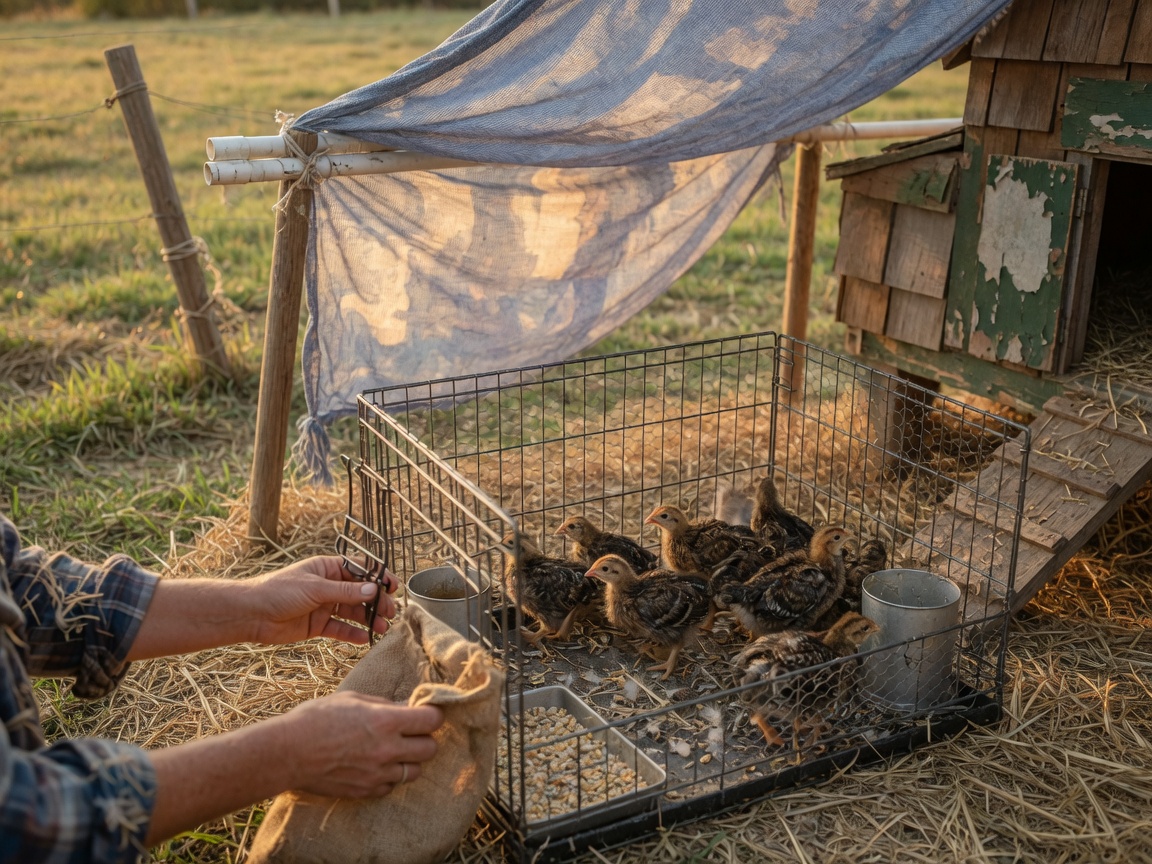
You don’t take a chick from a 70-degree garage straight to a 45-degree coop overnight. You step it down. This is the single change that dropped my losses to zero, and it costs nothing.
Two ways to do it, and I use both. First, wean the heat in the brooder over a week or so before the move — raise the heat plate or lamp a little every few days so the ambient temperature drops toward what the coop will be. Chicks are comfortable dropping about five degrees a week from that first-week 95, so by five weeks they should be sitting around 70 and by six around room temperature. Second, once they’re feathered, give them daytime field trips — a few hours outside in a secure run or a wire pen on a mild afternoon, brought back in at night for a few days. By the time they move out for good, the cold is nothing new.
If you’re weaning them off a heat lamp entirely, I wrote a whole piece on raising chicks without a heat lamp — a radiant heat plate makes this whole step easier and safer, and it’s what I switched to after a heat lamp nearly cost me a coop.
Set the coop up before the birds go in
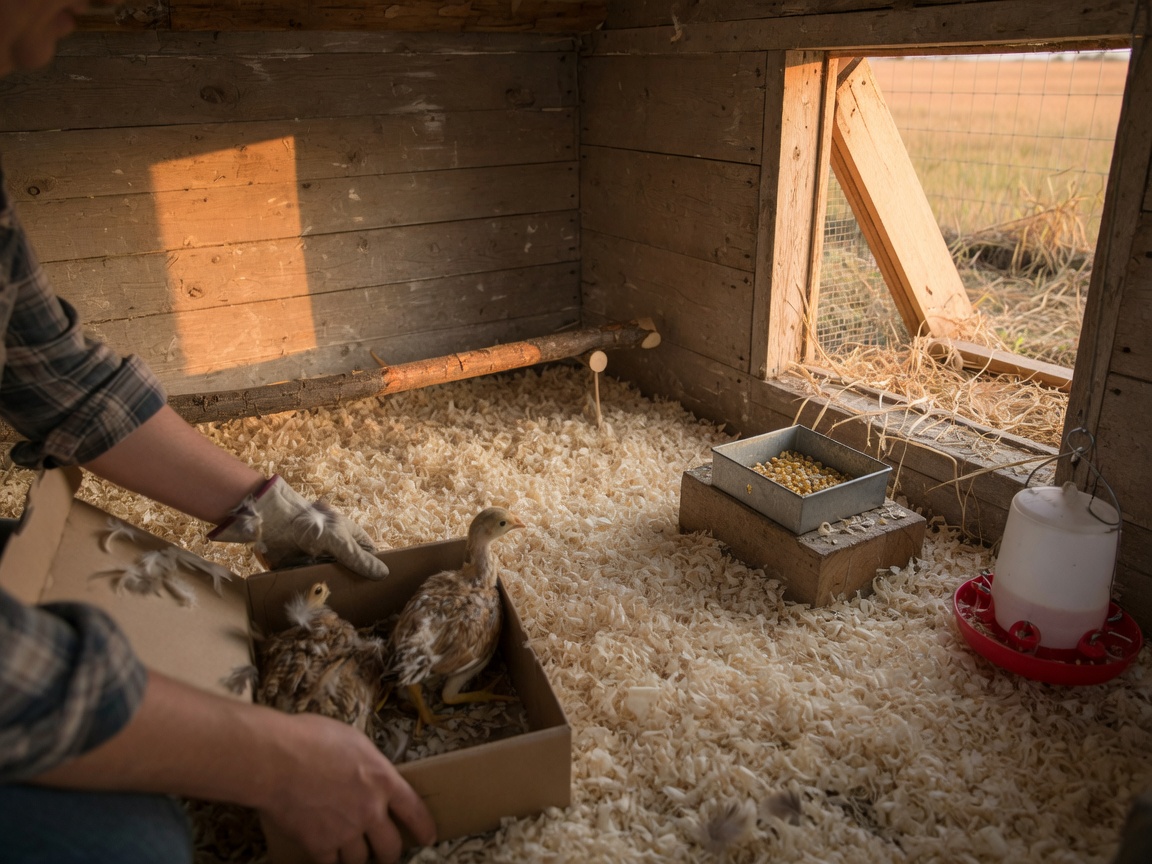
Get the coop ready a day ahead, not the same evening you’re carrying birds across the yard in the dark. Here’s what I check.
Predator-proofing comes first, and it’s the one you don’t get a second chance at. Young birds in a new coop are the most vulnerable they’ll ever be. Every opening bigger than a half-inch gets covered in hardware cloth — not chicken wire. I’ll say that the way it needs saying: a raccoon reaches through chicken wire and pulls a bird apart in pieces, and a weasel walks through a one-inch gap like a door. Hardware cloth over every vent and window, a predator apron or buried skirt around the run, and a latch a raccoon can’t work — cam-locks, not a simple slide bolt. I lost two pullets my first year to a raccoon that opened a spring latch in the night; everything on my coop closes with a cam-lock now. My full method is in predator-proofing the run with hardware cloth.
Water and feed at the right height. Chicks that just moved are stressed and won’t hunt for a waterer they don’t recognize. Set the water where they can’t miss it, low enough to reach and shallow enough that nobody drowns. I run a nipple-and-cup poultry waterer hung to about the height of their backs — it keeps the water clean of shavings and droppings, which matters more once they’re on coop bedding, and there’s nothing for a chick to fall into. For a bigger group or a walk-in coop, a galvanized double-wall fount holds enough that you’re not refilling twice a day. If you like to DIY, a horizontal-nipple kit turns any clean bucket into the same clean-water setup for a few dollars.
Bedding and a draft check. A few inches of pine shavings on the floor, and go in at night with a flashlight to find the drafts — you want ventilation up high, near the roof, but no cold air blowing across the birds where they’ll sleep. Ventilation without a draft is the whole trick to a healthy coop, and it’s what most first-timers get backwards.
The move, and the first few nights
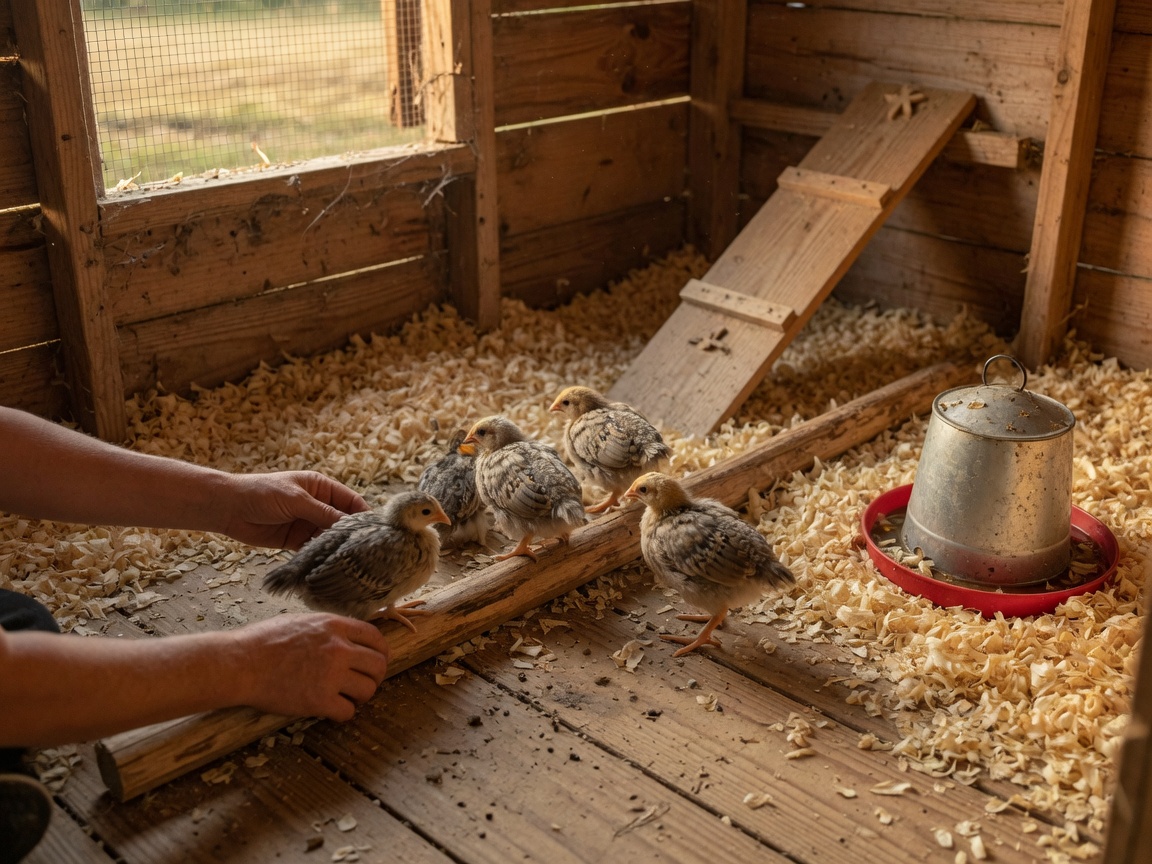
Do the actual move in the evening, after dark, and this is a genuine trick worth knowing: carry the chicks to the coop after they’ve settled for the night and set them gently on the roost or the floor. Chickens wake up believing they live wherever they woke up. Move them in daylight and they’ll mill at the door trying to go “home” to the brooder; move them at night and they wake up residents. It’s the same trick I use whenever I introduce new chickens to the flock.
The move is stressful even done right — new space, new smells, cooler air — so I give them a boost of electrolytes in the water for the first few days to take the edge off the transition. It’s a small thing that helps a stressed young bird eat and drink normally instead of sulking in a corner.
If your nights are still on the cold side, a radiant heat plate set low in one corner for the first week gives them somewhere to warm up while they adjust — and because they can move away from it, they self-regulate instead of overheating the way a lamp forces. Pull it once you see them ignoring it and sleeping in a loose pile instead of huddled tight.
Then watch them the first couple of mornings. Birds spread out, active, eating and drinking — that’s a flock that made the move fine. A tight, cheeping huddle that won’t break up means they’re cold, and you add a little heat back. Chickens tell you what they need if you read them.
Give it a few days and let them settle
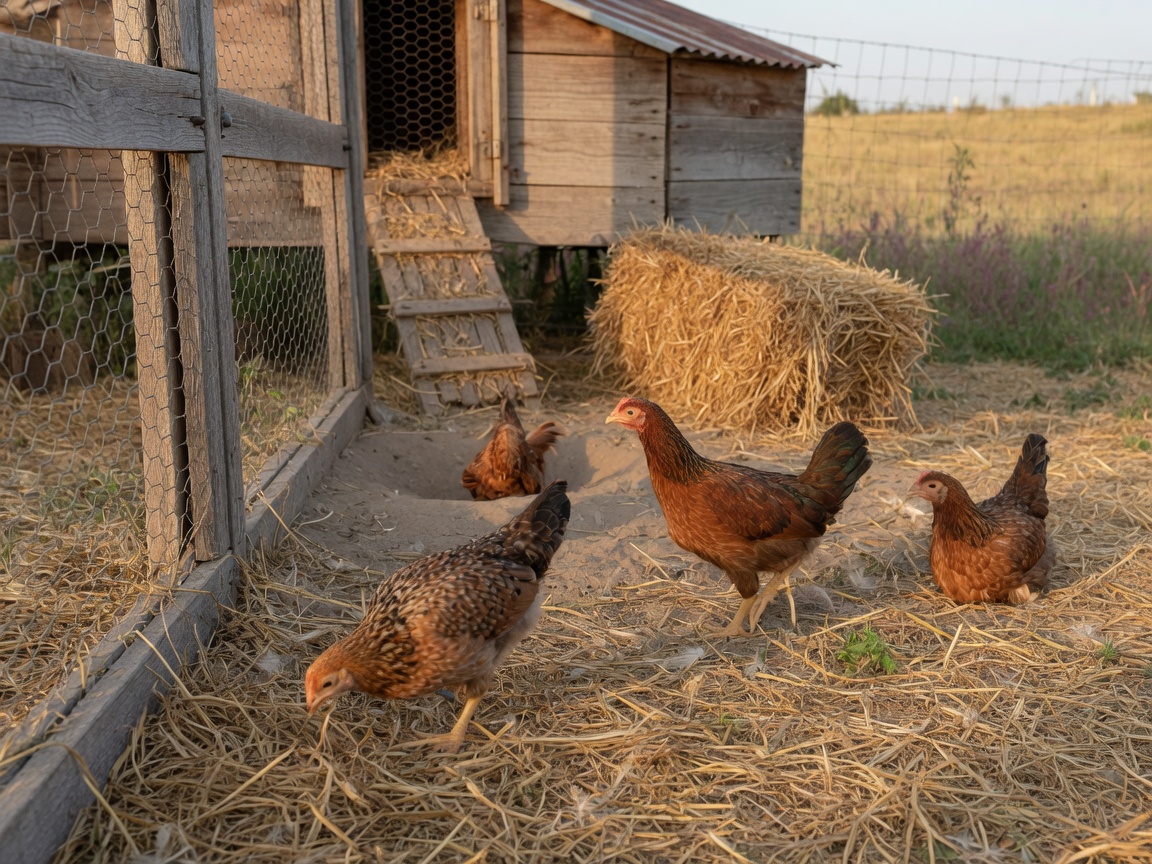
Expect them to be a little quiet and clingy the first day and back to normal chaos by the third. Don’t rush integration with any older birds yet — that’s its own project with its own rules, and a fresh-moved group needs to own their new coop first. Let them figure out the roost, the water, the pop door, and the yard on their own clock.
The brooder-to-coop move is one of those first-year milestones that feels bigger than it is. Get the timing right, harden them off, set the coop up safe before they go in, and move them after dark — do those four things and it’s a non-event, which is exactly what you want. I walk through the whole first year, from the brooder box to the first egg, in my book, Raising Backyard Chickens for Beginners — there’s a chapter on exactly this transition, with the heat-weaning schedule laid out week by week. Know your girls, set them up right, and they’ll practically raise themselves.
