The Best Days to Fish in Winter, by the Signs
The best days to fish in winter come when the cold water and the signs line up — the warm afternoons, the stable spells, and the moon. Here's how to read them.
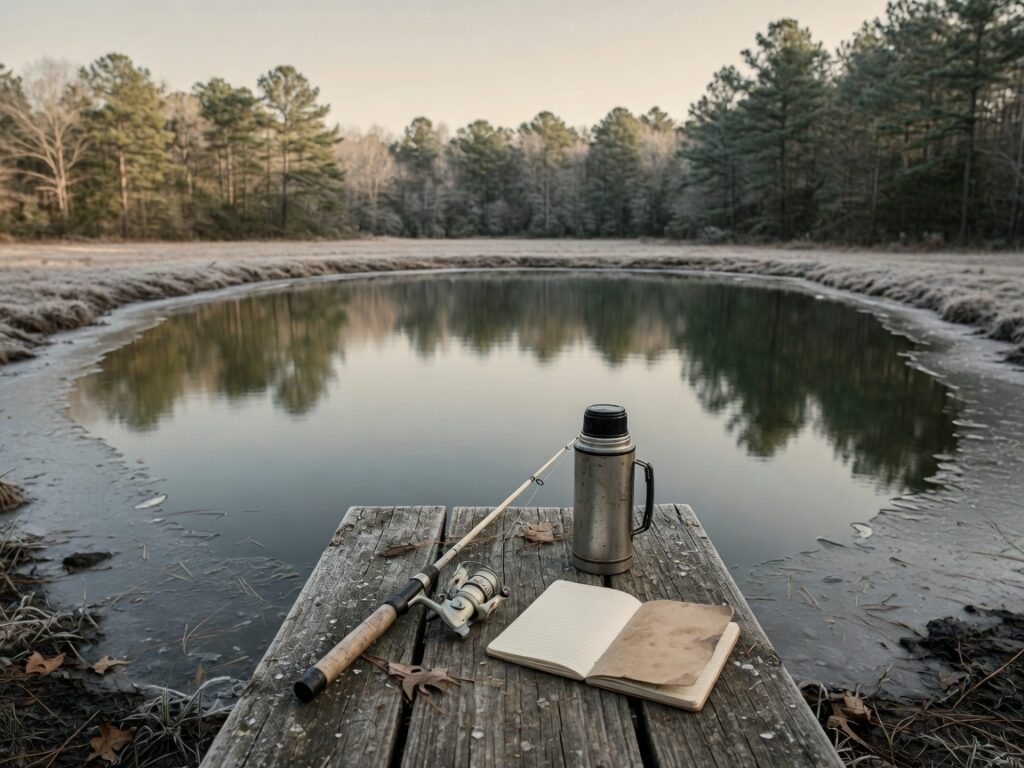
Most folks put the poles away when the weather turns, and I understand it. But the fish don’t leave. They slow down, they move, and they get particular about when they’ll eat — and if you learn to read the signs in cold water, you can still come home with a mess of crappie on a January afternoon while everybody else is inside.
My name is Silas Whitfield, and I’ve fished the same pond in eastern North Carolina for most of seventy years. My daddy fished it in winter and his daddy before him, back when a winter fish fry was how a family stretched the cold months. The signs are the same three I read all year — the weather, the water, and the moon — but winter turns two of them nearly upside down. Let me walk you through how they change, because winter fishing is mostly a matter of knowing when, not how.
In cold water, everything runs slow
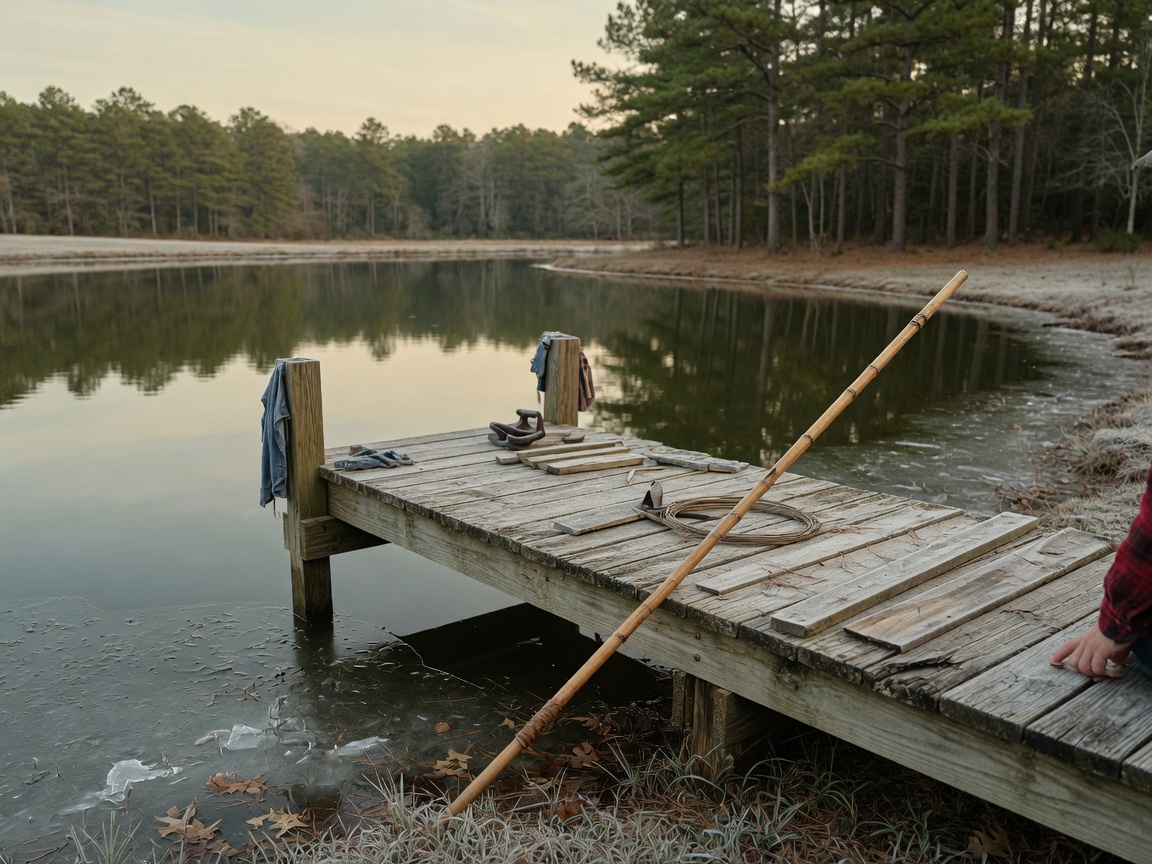
Start with the one thing that makes the rest make sense. A fish is cold-blooded — the water it lives in sets how fast its body runs. In summer that water is warm and the fish burn through food. In winter that water drops down into the forties and fifties, and everything about the fish slows with it. He doesn’t need to eat as often, he won’t chase a bait far, and he’ll only feed in the short window when conditions are right.
That’s not bad news. It just means the fish are picky about their hour instead of hungry all day. Your whole job in winter is to be on the water during that short window — and the signs tell you when it opens.
The water: find the warmest you can
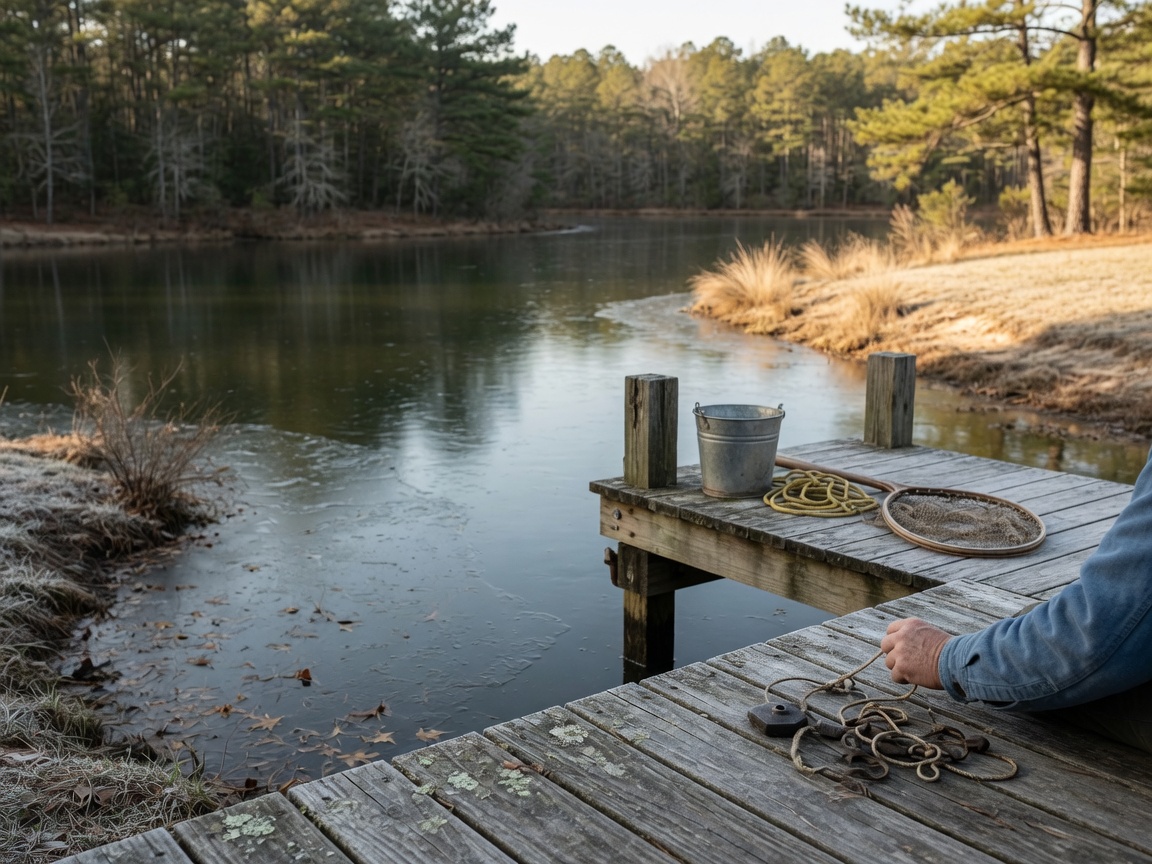
In summer I tell you sixty degrees is the line where panfish turn on. In winter you’re rarely going to see sixty, so the rule changes: you’re not looking for warm water, you’re looking for the warmest water available that day, and the fish will be stacked in it.
Two things follow from that. First, the fish move deep. Deep water holds a steadier, slightly warmer temperature through a cold snap than the shallows do, so in the dead of winter the crappie and bluegill pull off the banks and hold in the deeper holes — the old creek channel through a pond, the deep end by the dam. Fish slow and low, right down near the bottom.
Second, on a sunny afternoon, watch the shallows again. A few hours of winter sun will warm a shallow, dark-bottomed cove or the north bank that catches the low sun, and the fish will slide up into that warmth to feed for an hour or two. So in winter you fish deep on a gray day and check the sun-warmed shallows on a bright one. Read the water, and it tells you where.
The weather: the cold-front rule flips
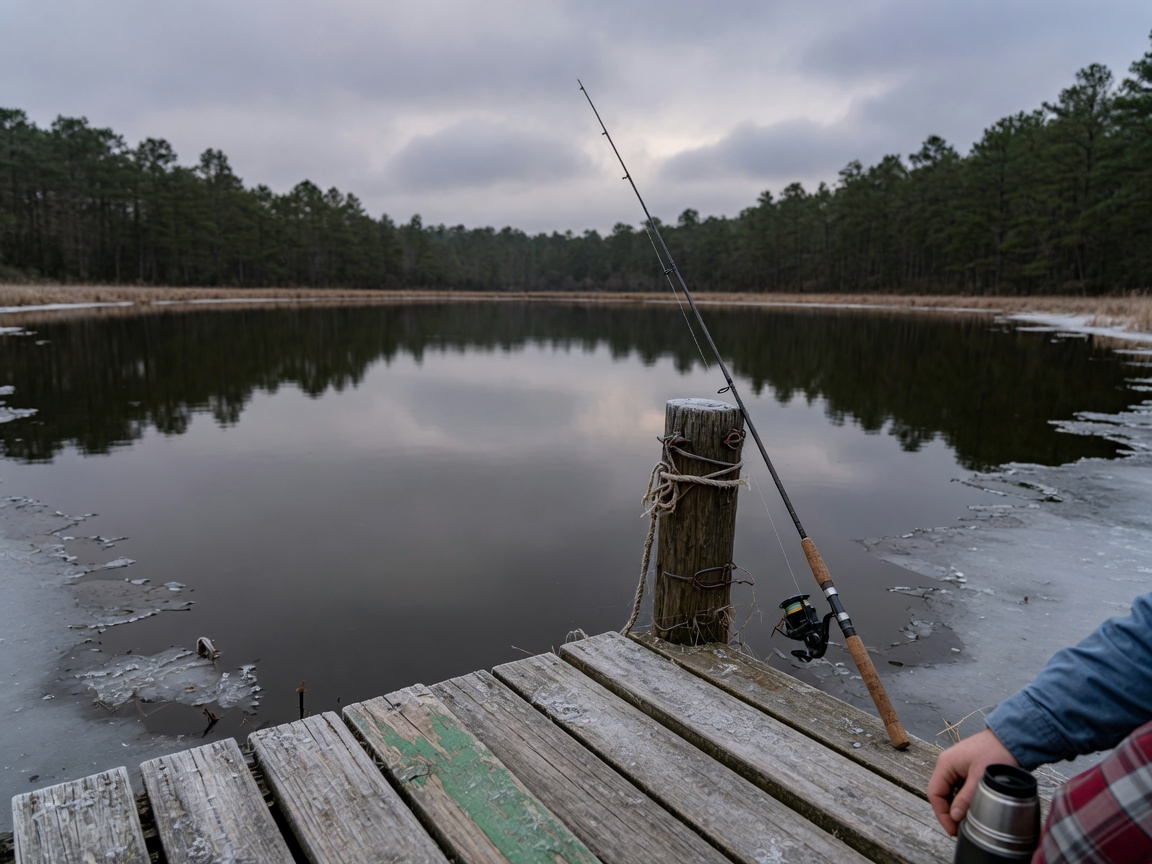
Here’s the sign that turns most fully around from summer, so pay attention to it. In warm weather I fish the falling barometer ahead of a storm and stay home on the bright bluebird day after the front. In deep winter, that bright, calm, warming day after a front is often the better day.
The reason is the sun and the stability. In summer the problem is too much heat; in winter the problem is too little. So a stretch of stable, mild weather — two or three days of the same, with afternoon sun to warm the water — is what turns winter fish on. A sharp cold front dropping the water another few degrees shuts them right down; give it a day or two to settle and warm back before you go.
So the winter weather sign is: fish the warm-up, not the front. A run of mild, stable days with sun on the water is your green light. The morning after the coldest night of the week is not.
The hour: midday, not first light
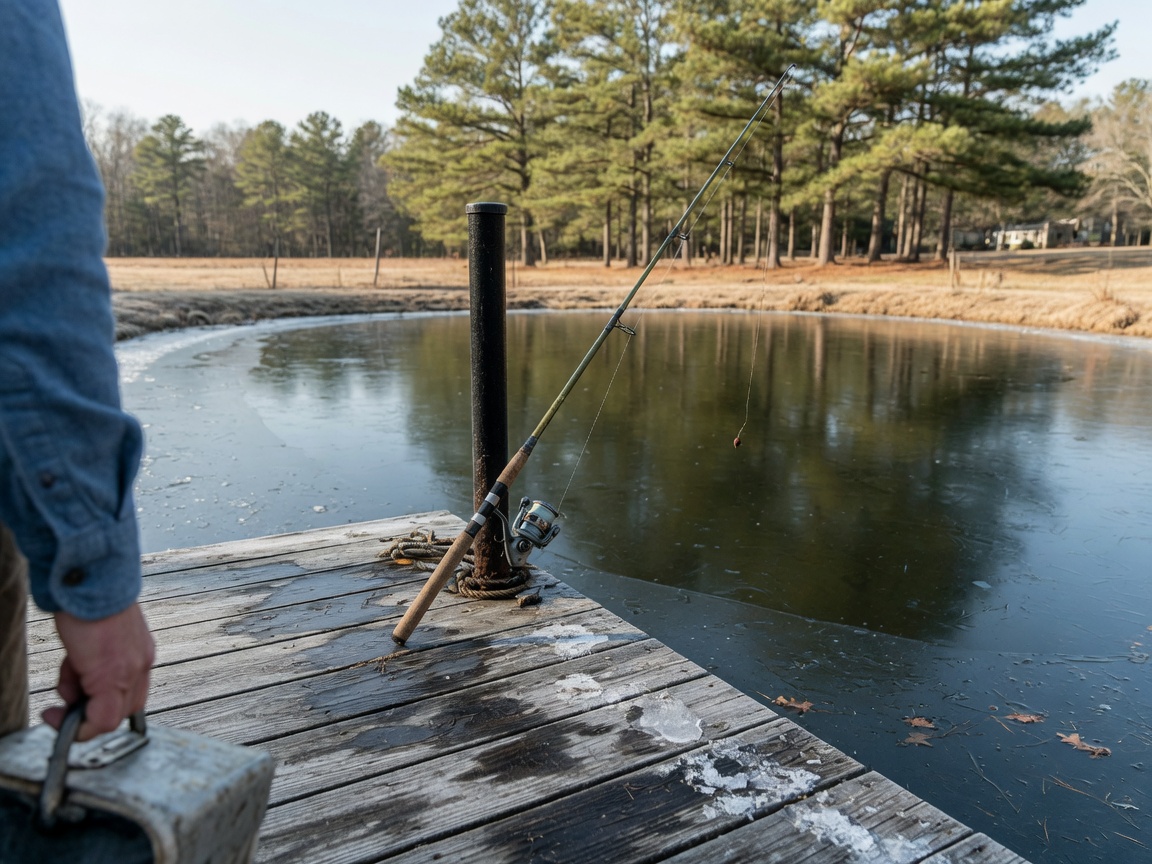
This one flips too, and it’s the easiest change to make. In summer I have you on the bank at first light, before the sun’s up, because the fish feed in the cool low-light hours. In winter, first light is the coldest, deadest part of the day, and the fish haven’t moved.
In winter you sleep in. You let the sun get up and do its work, and you fish the warmest part of the day — roughly ten in the morning to three or four in the afternoon, when the water’s taken on what little heat the day will give it. That midday window is when a winter fish will feed. I’ve had my best cold-weather crappie fishing at one o’clock on a sunny afternoon, which is a fine hour for an old man to be out anyway.
The moon: still the tiebreaker
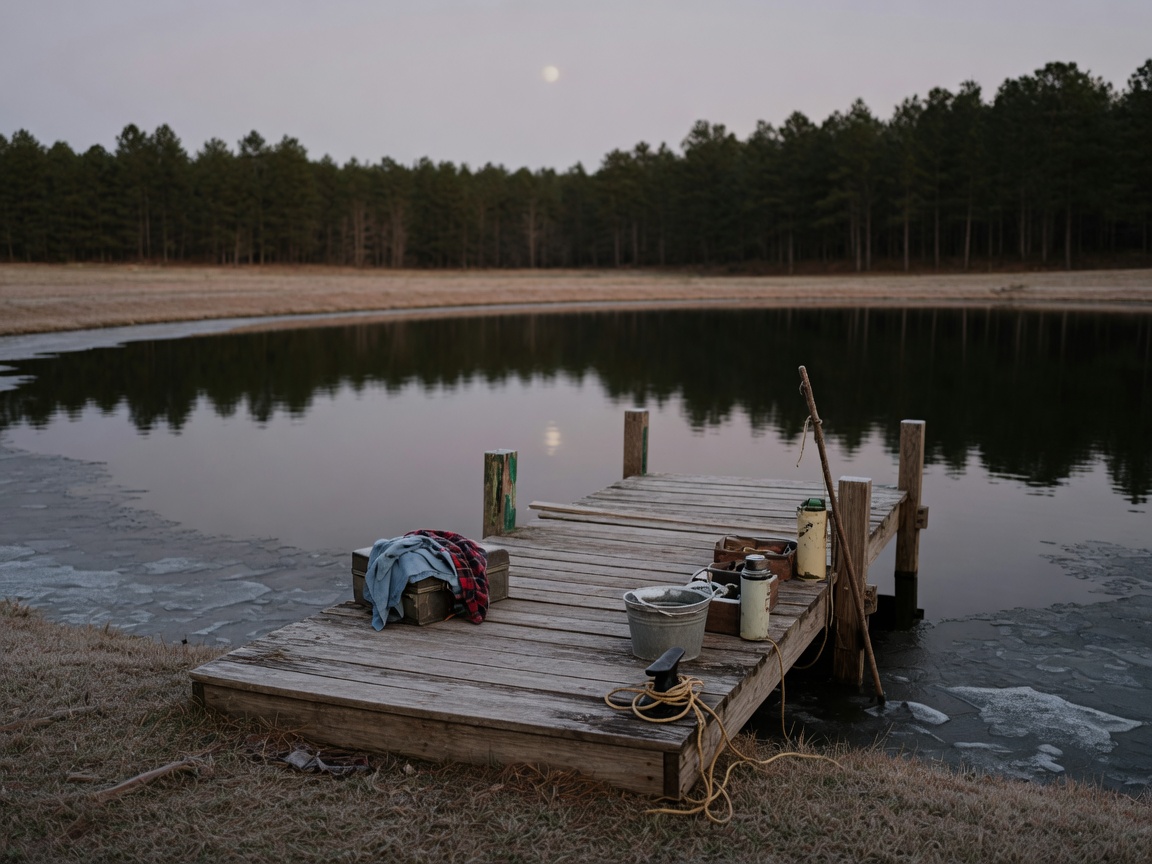
The third sign doesn’t change with the season. Folks have fished by the moon as long as folks have fished, and the old solunar idea — that fish feed heaviest around the new moon and the full, and at the hours the moon rides high or low — holds in winter the same as summer. The Old Farmer’s Almanac has printed best-fishing days off that notion longer than I’ve been alive.
I’ll be as honest with you about it in January as I am in June: it’s a tiebreaker, not gospel. When the water’s holding warm, the weather’s been mild and stable, and it’s a sunny afternoon — and the moon’s near full or new on top of all that — that’s the winter day I’d clear my whole afternoon for. When the moon’s the only thing in my favor and it’s bitter and dropping, I stay by the woodstove and tie rigs. Respect the moon; don’t worship it.
I lay out all three signs from the ground up, for every season, in my guide to reading the three signs — start there if this is new to you, and this winter piece will make more sense. And when you’re ready to put an afternoon on the water, how to fish a farm pond in winter and how to catch crappie in winter walk through the where and the how once you’ve picked your day.
One plain rule for cold water
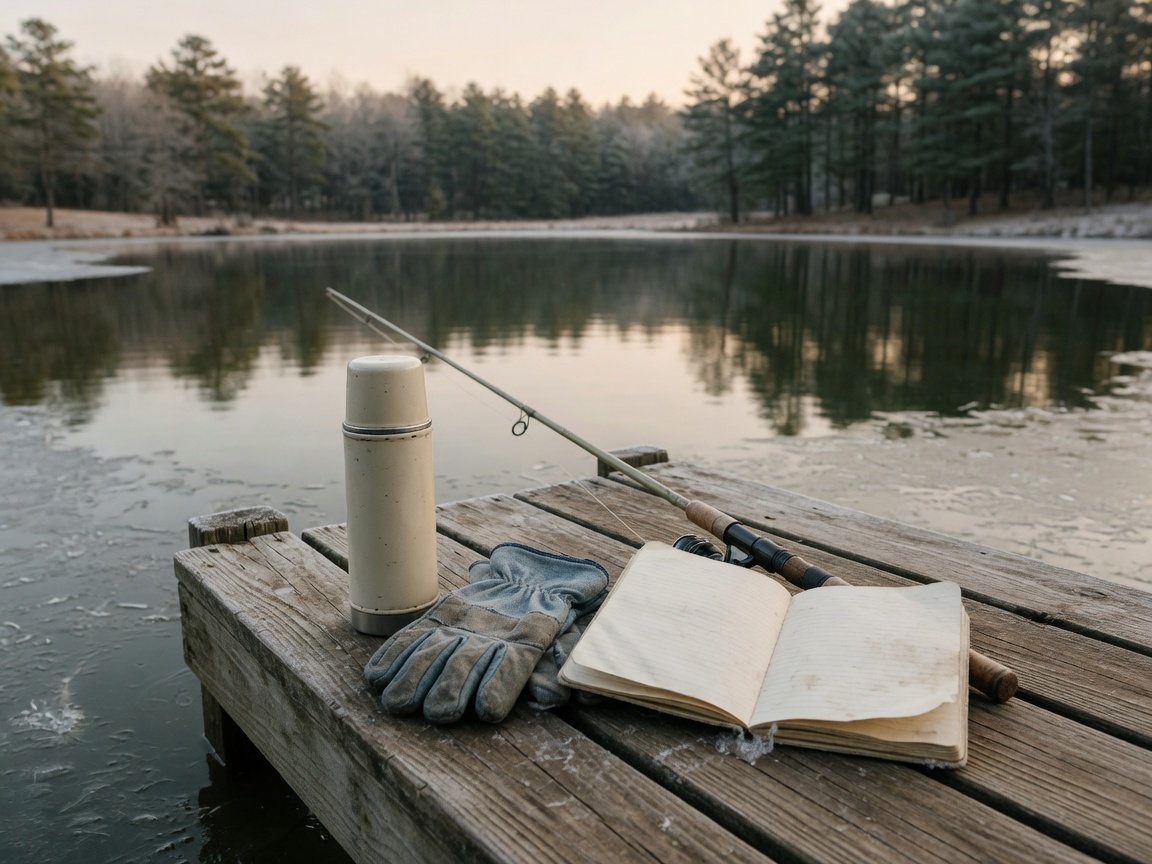
Let me put winter in one plain rule, the way I’d tell it to my grandson. In summer you fish the storm coming in, at first light. In winter you fish the sun warming up, at midday. Everything else is the same three signs — the weather, the water, and the moon — just read for the cold.
I keep a little almanac from my own pond that marks the best days to fish each month by the moon, with a plain checklist for the water and the weather so you can read your own pond the way my daddy read his. It runs right through the winter months. I give it away free — you can pick up the Best Days to Fish starter kit here. Keep it by the door.
And here’s the truth about a slow winter season: it’s the finest time there is to teach a young one. The fish are patient, the bank’s quiet, and there’s no rush. My grandson Isaiah caught his first winter crappie standing next to me on a cold sunny afternoon, and he still talks about it. If you’ve got a child coming along, let them keep a record of it — I helped put together a simple journal for exactly that, My First Catch — A Fishing Journal for Young Anglers, so they can write down and draw the fish they catch and carry the memory. A slow winter day and a patient teacher is how a whole lot of us started.
Read the signs. Tight lines — and I’ll see you at the water.
