The Best Terracotta Watering Spikes for Potted Plants
The best terracotta watering spikes for potted plants, from someone who's killed pots both ways. What they do well, where they fail, and how to use them right.
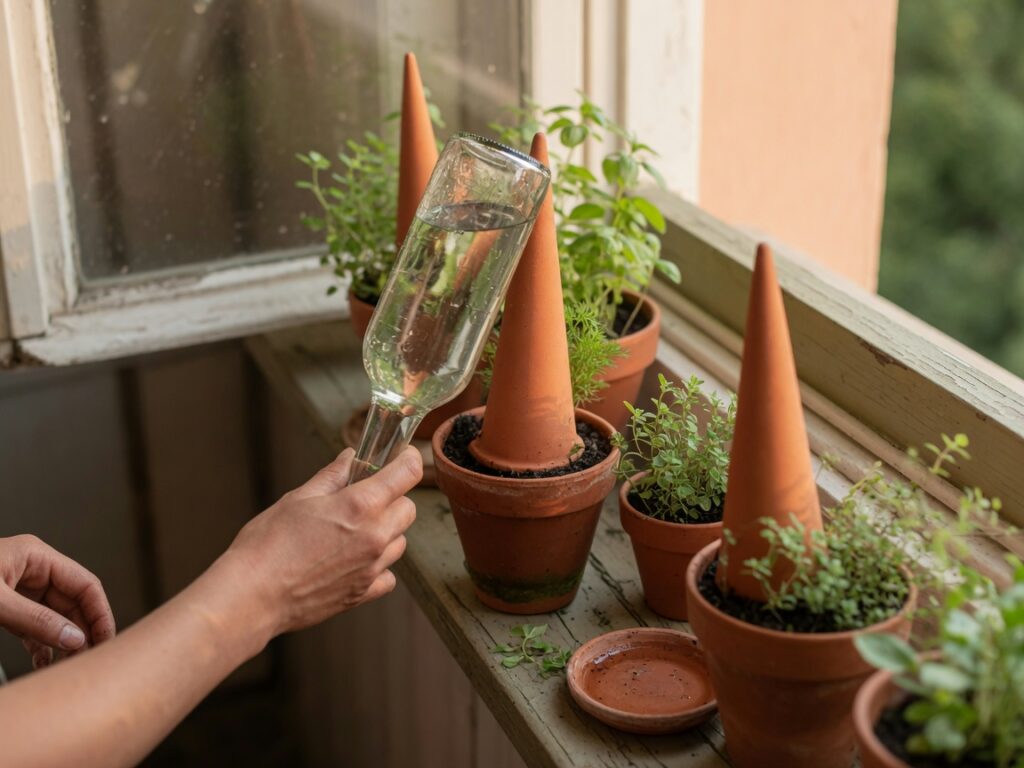
I killed a whole railing of basil the first summer I tried to leave town for a long weekend. Came back to crispy sticks in dry pots. The next summer I overcorrected, drowned a viola, and learned the other lesson: containers punish you in both directions.
Terracotta watering spikes are the thing that finally fixed my weekends. If you’ve never used one, the idea is simple. It’s an unglazed clay cone you push into the soil, filled from a reservoir — sometimes a bottle you screw on, sometimes a tube running to a jug. Because the clay is porous, water seeps out slowly, and here’s the part that makes them clever: they release faster when the soil around them is dry and slower when it’s damp. The pot pulls what it needs and mostly leaves the rest.
They’re not magic, and I’ll be honest about where they let me down. But for a renter with a balcony full of pots and a life that occasionally leaves for three days, they’ve earned their spot. Here’s what I actually reach for, and how I use it.
The terracotta spike I keep buying
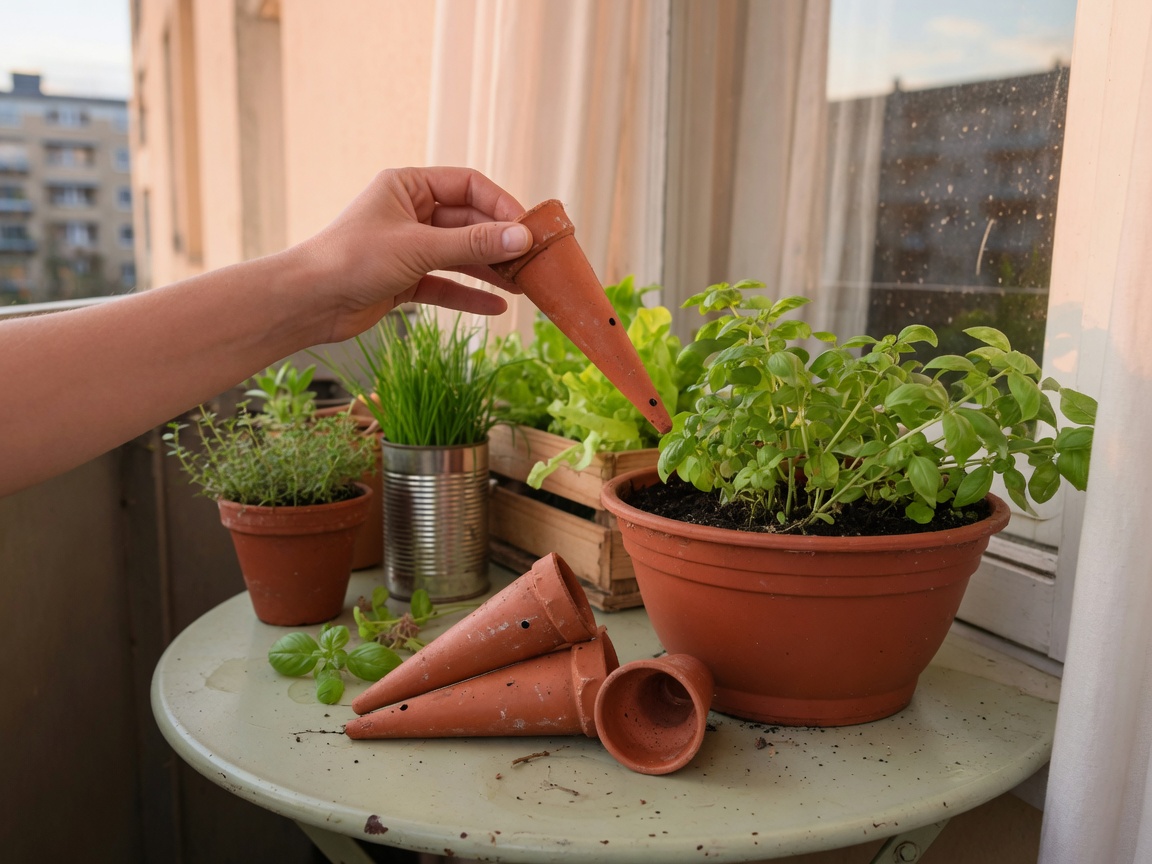
There are two shapes of these, and I’ve used both. One is a stake with a threaded top you screw a wine or soda bottle into. The other is a cone with a thin tube that runs off to a jug you set beside the pot. I like the terracotta spikes with a reservoir over the raw bottle-topper kind, and the reason is small but real: a bottle jammed into a pot is top-heavy, and one gust off the balcony knocks it over and empties into the drainage tray.
They shine on a specific job: keeping evenly-thirsty pots — basil, a patio tomato, anything that hates drying out — steady while you’re away for two or three days, or just steady through a hot week when you can’t get out there every evening. Push the cone all the way in so the clay sits down in the root zone, not perched at the surface, and fill the reservoir. That’s the whole setup.
Where they fail — the honest part
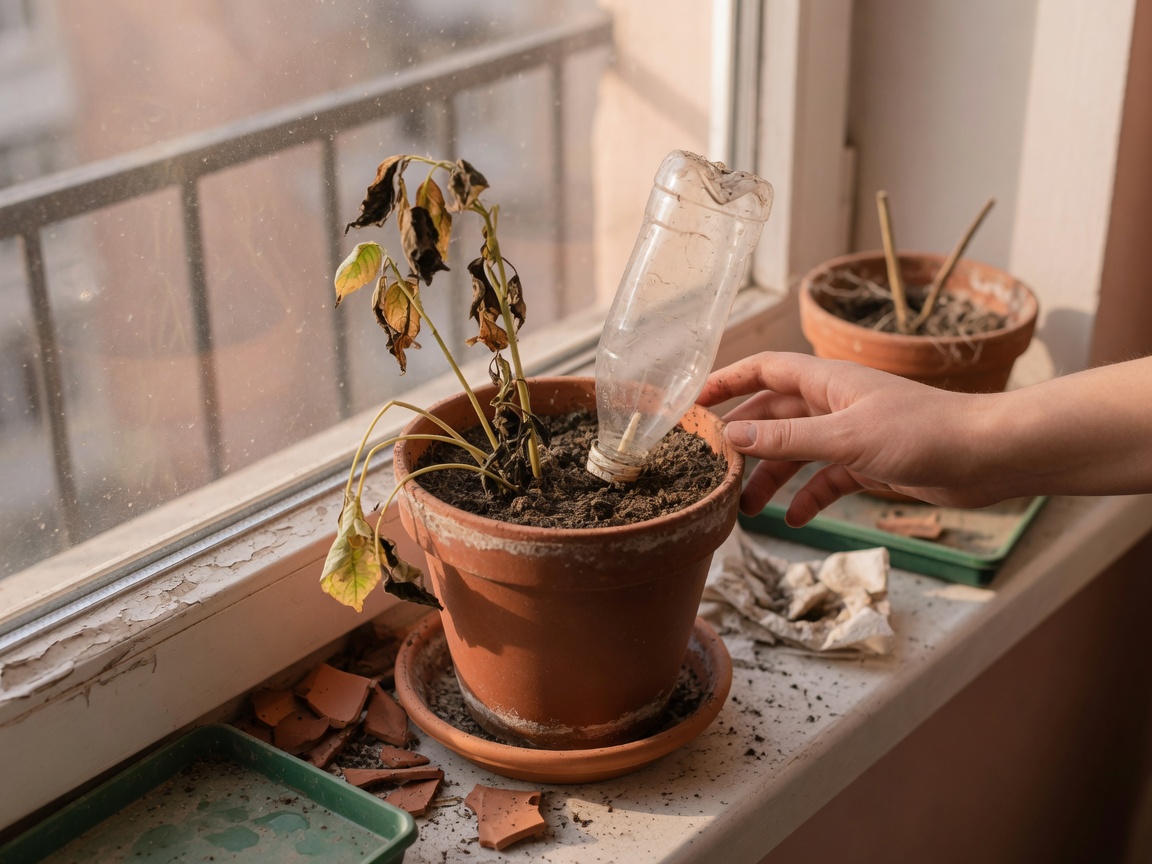
I promised honesty, so here it is. Terracotta spikes are not a set-it-and-forget-it system for a two-week vacation. A small reservoir empties in a couple of days in real heat, and once it’s dry the pot is on its own. For anything longer than a long weekend, they’re not enough on their own.
The clay cones also clog. If your tap water is hard, minerals build up in the pores over a season and the flow slows to nothing. The fix is easy — soak them in a cup of vinegar-water now and then to open the clay back up — but hardly anyone mentions it, so people toss “broken” spikes that just needed a bath. And skip the pretty glass globe versions if you can. I’ve shattered two pushing them into dense potting mix, and a glass shard in a pot you dig around in is exactly the wrong souvenir.
One more: a spike waters one small zone. In a big wide planter, the far side still dries out. They’re a pot tool, not a raised-bed tool.
Know if the pot is actually dry first
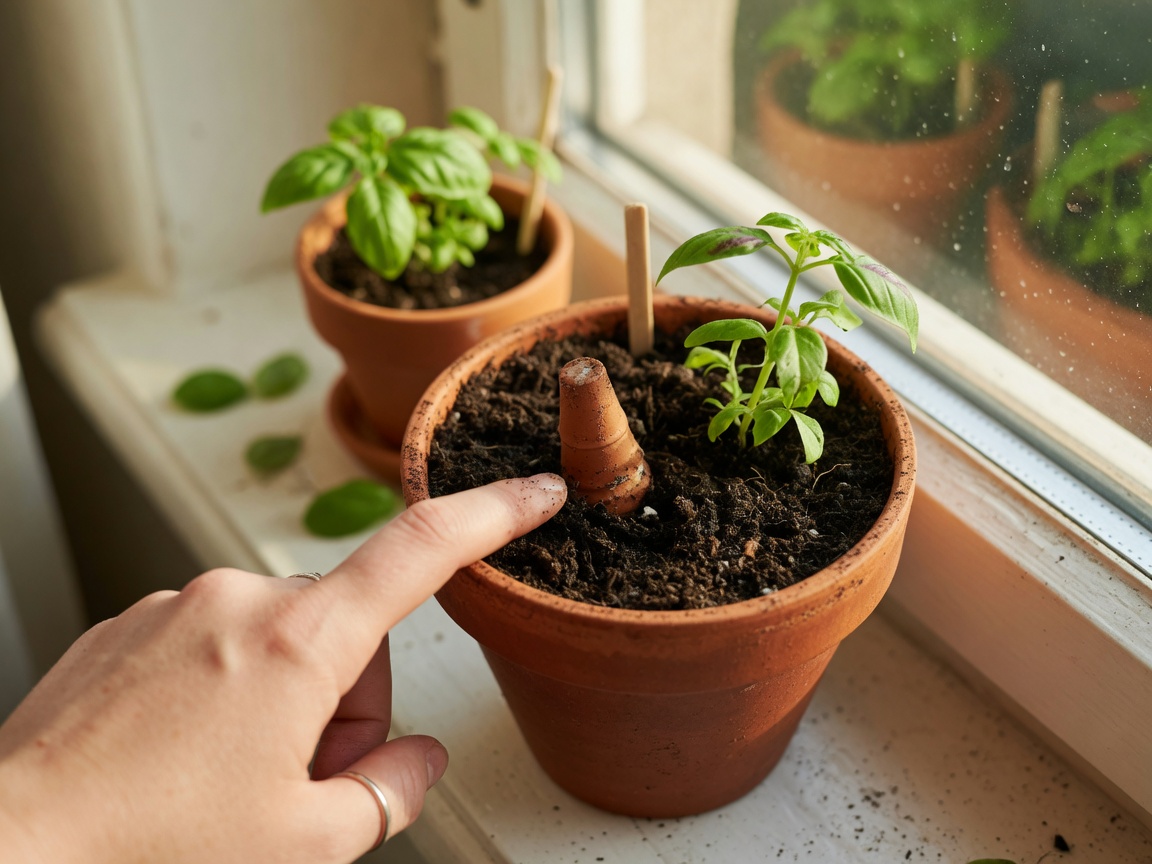
Here’s the thing that makes or breaks any watering setup, spike or not. Overwatering kills more container plants than forgetting to, and you cannot tell what’s happening four inches down by looking at the surface.
I keep a no-battery soil moisture meter stuck in my fussiest pots and I check it before I do anything. It’s saved me from “topping up” a spike reservoir into a pot that was already soaked — which is how you rot roots and then blame the spike. Push the probe down to the root zone, read wet-or-dry, act on that. It’s the cheapest peace of mind on my balcony. I go deeper on whether it’s worth it in my post on soil moisture meters.
When a spike isn’t the right tool
Spikes are one answer. Two others fit different problems, and I use all three depending on the pot.
For pots you never want to think about, a self-watering planter beats a spike. The reservoir is built into the base and holds far more than a little cone’s bottle, so a well-set self-watering pot can coast a week where a spike coasts three days. I use these for the plants I most hate to lose, and I wrote up how I set them up in my vacation watering guide. If you’re choosing between the two, I compared them head to head in my self-watering planter roundup.
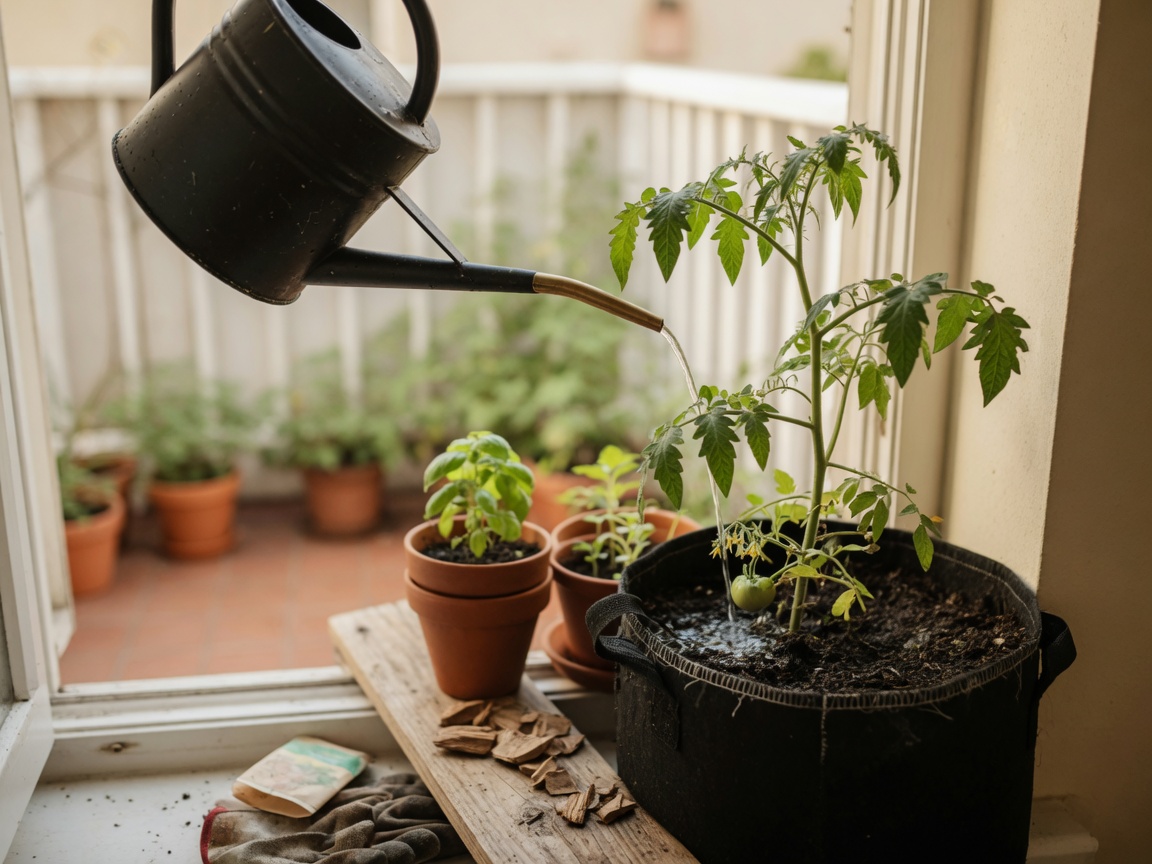
For everyday watering, nothing replaces a long-spout watering can. Spikes maintain; they don’t do the deep soak that pushes roots down and flushes the salts out of your mix. Once a week or so I water slow and deep by hand until it runs from the drainage holes, then let the spikes handle the days in between. The can reaches the back row of pots without me climbing over the front ones, which on a crowded balcony is the whole point.
So: spikes for the short away-days and the hot stretches, self-watering pots for the plants you can’t lose, a moisture meter so you’re watering on fact instead of guesswork, and a can for the real weekly soak. That’s the small system that keeps my pots alive through a Portland summer — even the year Otto decided the calendula was a salad bar and I had bigger problems than watering.
If you want the whole small-space setup — what to grow, in what size pot, and how to keep it all alive on fifteen minutes a day — it’s in Small-Space Big Harvest. The spikes buy you a weekend. The book buys you the season.
