How to Collect and Store Fresh Eggs From Your Flock
How to collect and store fresh eggs from your own flock — the bloom, whether to wash them, counter vs. fridge, how long they really keep, and the float test.
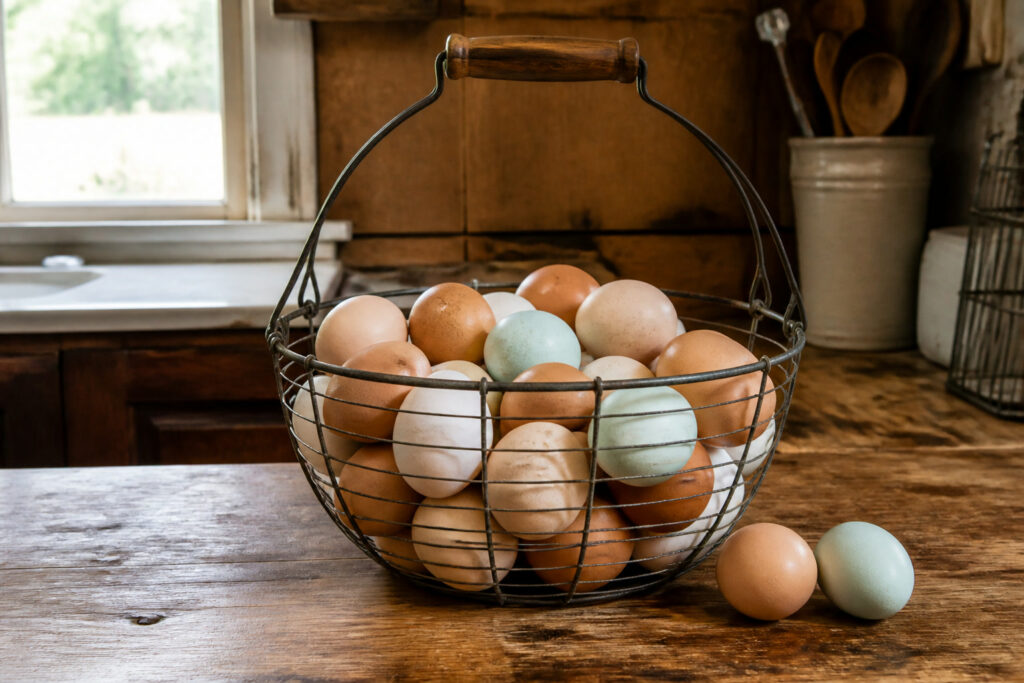
The first dozen eggs your own hens hand you is a genuinely exciting thing, and then about week three the practical questions start piling up. Do you wash them? Do they go in the fridge? How long are they good? I got three different answers from three different websites my first spring, and half of them were flat wrong. So here’s how I handle the eggs off my own flock, the way I wish somebody had just laid it out for me.
The short version: collect often, resist the urge to scrub, and let the egg’s own natural coating do the work it was built to do. The long version is worth your five minutes, because getting this right is the difference between eggs that keep for weeks and eggs that go off on you.
Collect early and collect often
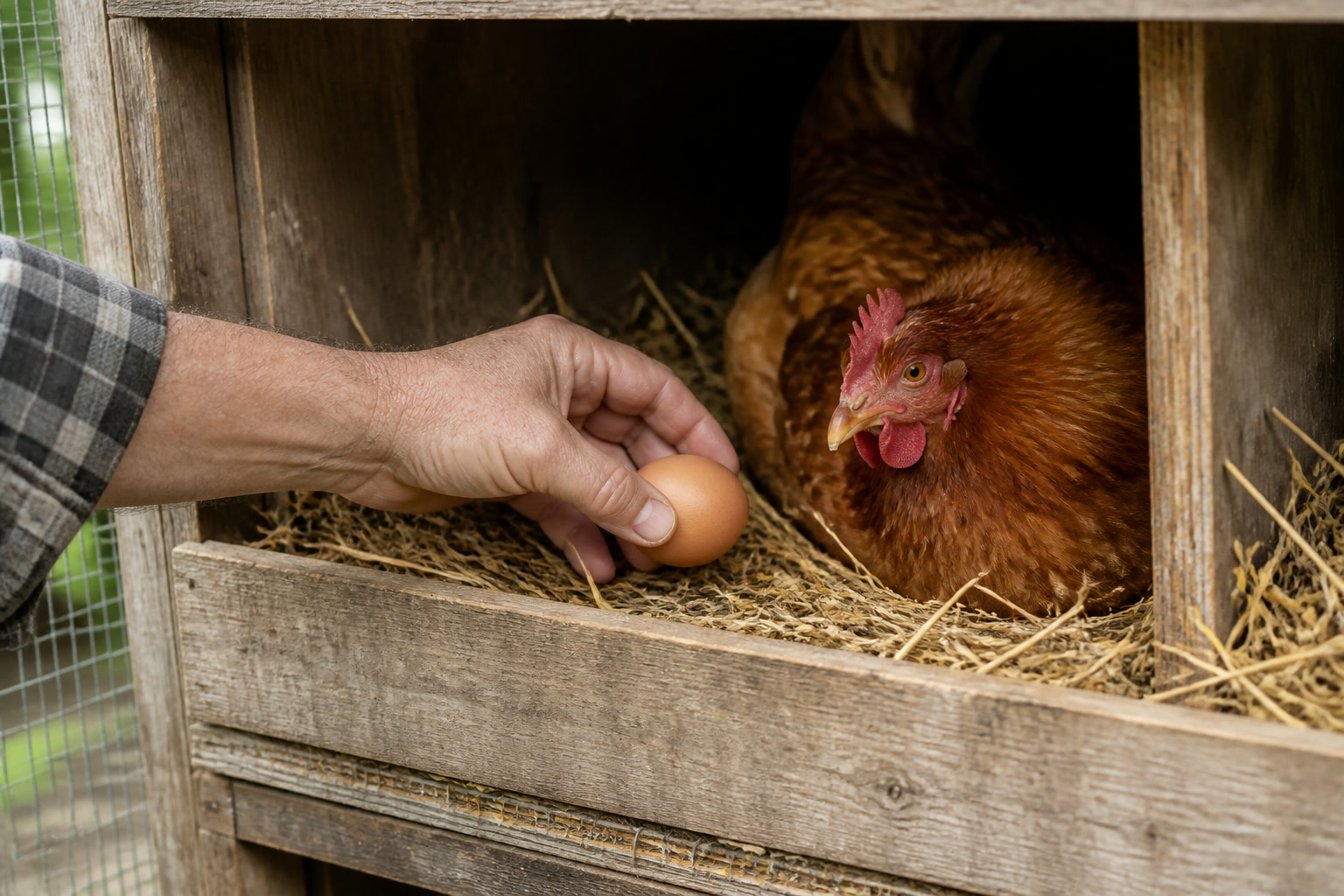
Get in the habit of gathering eggs at least once a day, and more than that when the weather’s working against you. In the July heat here in Tennessee I collect morning and evening, because a fresh egg left sitting in a hot nesting box all afternoon starts to lose quality fast. In the dead of winter I go out often for the opposite reason — an egg left out in a hard freeze will crack right through the shell, and a cracked egg is a ruined egg and an invitation to egg-eating.
Frequent collecting does one more thing: it keeps the eggs clean. An egg that gets gathered while it’s still nearly fresh-laid, before the next hen tracks in and stands on it, comes in with almost nothing on it. Half the battle with clean eggs is just beating the flock to them.
Understand the bloom — it’s the whole secret
Here’s the one piece of biology that makes everything else make sense. When a hen lays an egg, she coats it with a thin, invisible layer called the bloom, or the cuticle. That coating seals the thousands of tiny pores in the shell and keeps bacteria out and moisture in. It is the reason a fresh egg keeps as well as it does, and it’s the reason I’m about to tell you not to wash your eggs.
Scrub that bloom off under the tap and you’ve opened up the shell — every pore is now a door. That’s exactly why store eggs, which are commercially washed, have to be refrigerated and don’t last forever. Your backyard eggs still have their bloom on. Leave it there as long as you can.
To wash or not to wash
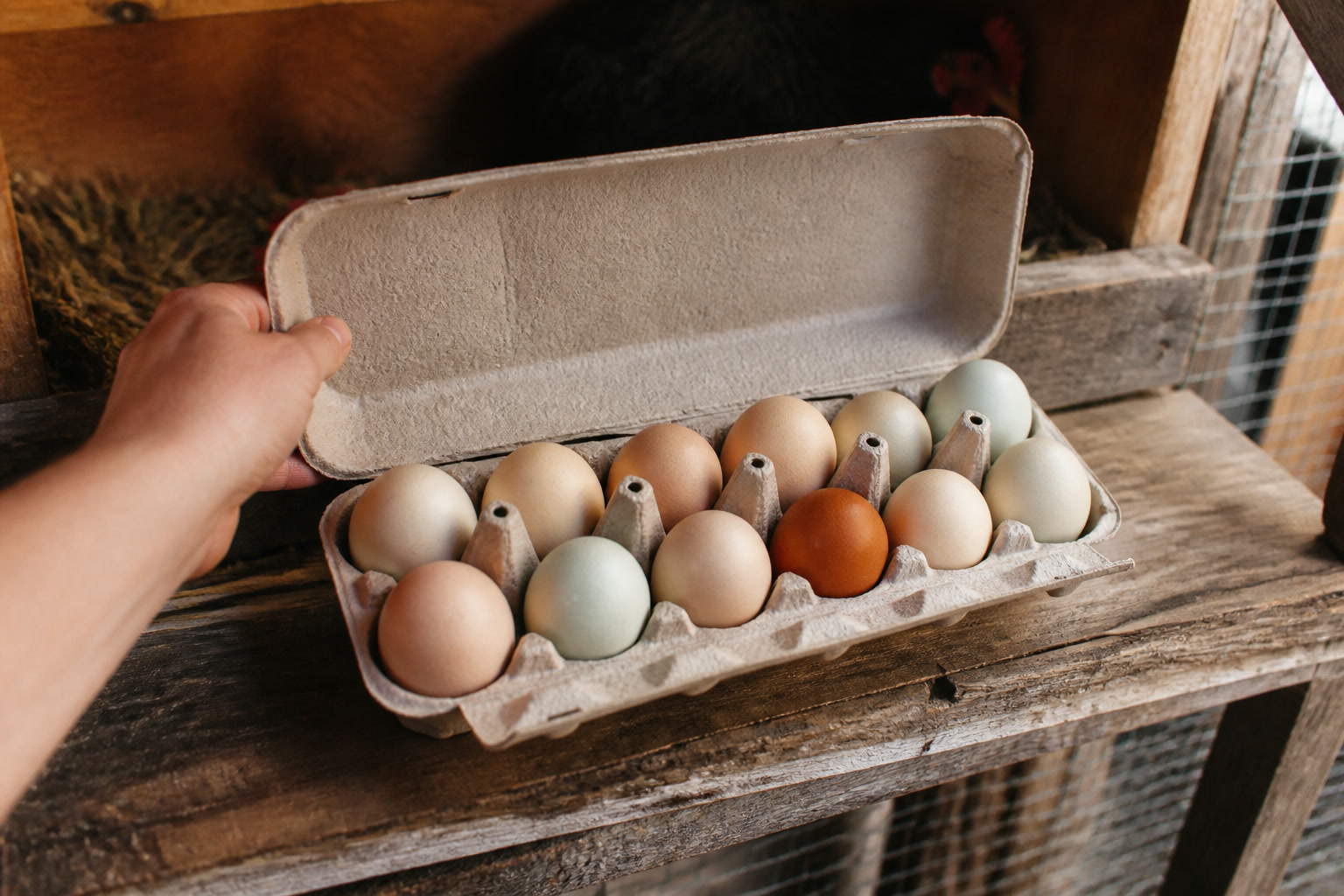
My rule is simple: don’t wash an egg until the moment you’re going to use it. A clean egg from a clean nest box doesn’t need washing at all — it goes straight into the carton with its bloom intact.
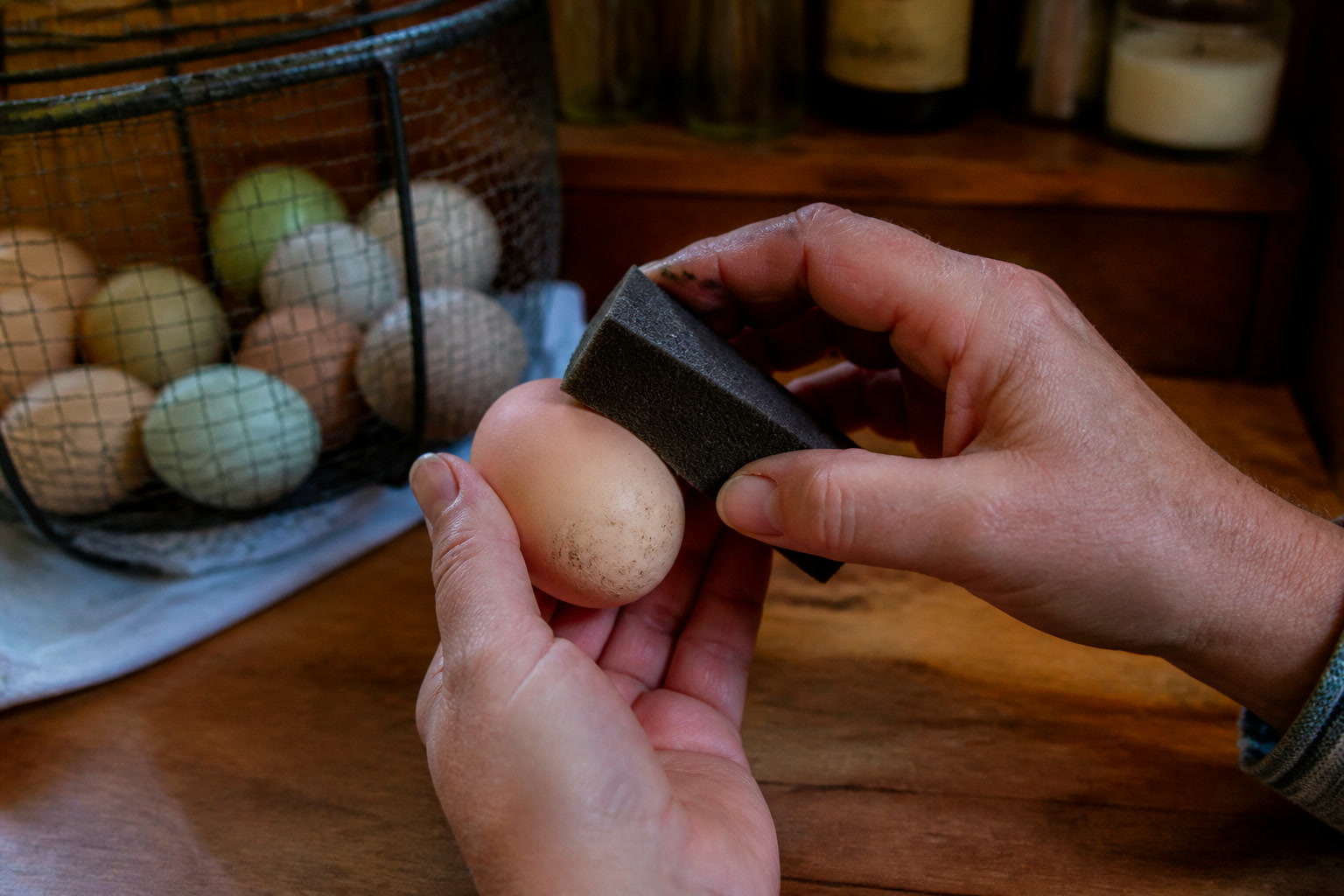
For an egg that comes in with a little dirt or a smudge of droppings, dry-clean it. A dry paper towel, a bit of fine sandpaper, or one of those loofah egg scrubbers takes the mark off without wetting the shell. I keep a little sanding sponge by the door for exactly this.
If an egg is genuinely filthy and you have to wet-wash it, follow the one rule that matters: use water that’s warmer than the egg, never colder. Warm water makes the contents expand slightly and push outward; cold water makes them contract and actively pulls bacteria in through those pores. Wash it warm, dry it right away, and use that egg soon rather than storing it — you’ve taken its bloom off. Honestly, the better fix is upstream: clean, dry nesting boxes and enough of them mean you’re barely washing eggs at all. If your girls are laying in filth, that’s the thing to solve.
Counter or fridge — both work, if you do them right
This trips people up because the answer is “it depends on whether the egg still has its bloom.”
Unwashed, on the counter. An unwashed egg with its bloom intact keeps at cool room temperature for a good couple of weeks — this is how much of the world stores eggs and it’s perfectly safe. A bowl of them on the counter is a fine thing.
In the refrigerator. Refrigerated, that same unwashed egg keeps for around three months. If you’ve got a heavy-laying flock in spring and more eggs than you can eat, the fridge is where the surplus goes. Store them pointed end down — it keeps the air cell and the yolk where they belong and helps them keep longer. And once an egg has been refrigerated, leave it there; a cold egg brought out to room temperature will sweat, and that condensation on the shell can pull bacteria in.
The one thing I don’t do is mix systems. Pick counter or fridge for a given egg and stick with it.
Rotate, date, and use the oldest first
I keep a pencil by the egg baskets and write the date right on the carton — or on the egg itself if I’m being tidy about it. Then I pull from the oldest carton first. It’s a small habit that means I’m never guessing, and I’m never the person who finds a forgotten carton from six weeks ago at the back of the fridge.
The float test, for when you’ve lost track
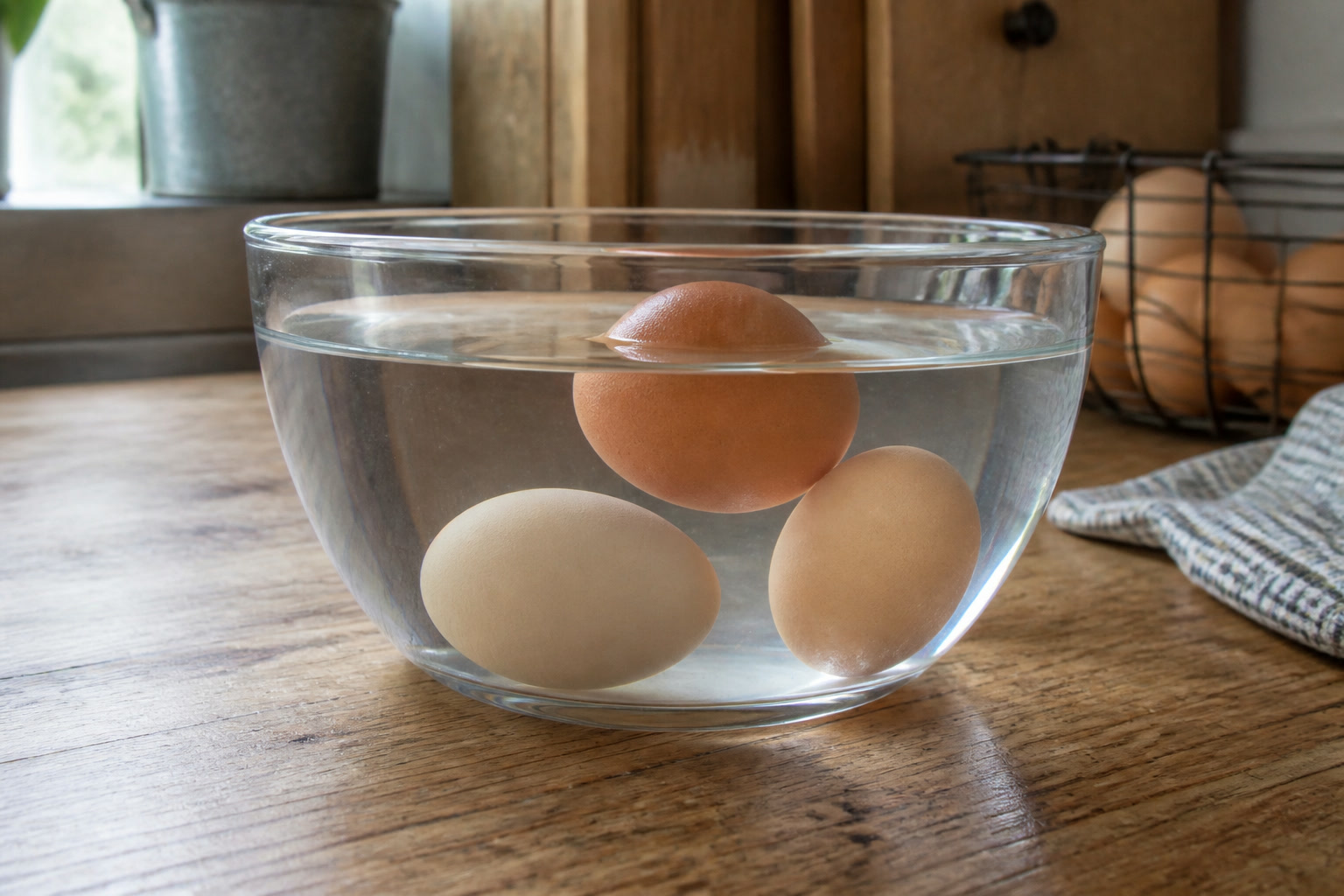
You will, eventually, end up with an egg of unknown age. When that happens, do the float test. Set the egg in a bowl of water. A fresh egg lies flat on the bottom. As an egg ages, its air cell grows, so an older-but-still-good egg stands up on end; and one that floats to the top has enough air in it that I toss it, or give it to the compost. It’s not a perfect science, but it’s a good, quick gut-check, and it’s saved me from cracking a bad one into the breakfast bowl more than once.
That’s really the whole of it: beat the flock to the nest, leave the bloom on, keep them clean at the source, and date what you store. Do that and your own eggs will keep beautifully — better than anything you’ll buy.
If you want the rest of the first-year picture — why the eggs slow down in winter, what to feed for strong shells, and the dozen other “is this normal?” moments a new flock throws at you — I lay it all out in Raising Backyard Chickens for Beginners. Collecting eggs is the fun part. The book is everything that keeps the basket full in the first place. And if your girls have started cracking and eating their own eggs before you get to them, my post on how to stop hens eating their eggs is the one to read next — right alongside why chickens stop laying in winter, so an empty basket in December doesn’t catch you off guard.
