How to Prevent Frostbite on Chickens Before It Starts
Frostbite in chickens comes from a damp coop, not just cold. Here's how to prevent chicken frostbite with ventilation, dry litter, and wide roosts.
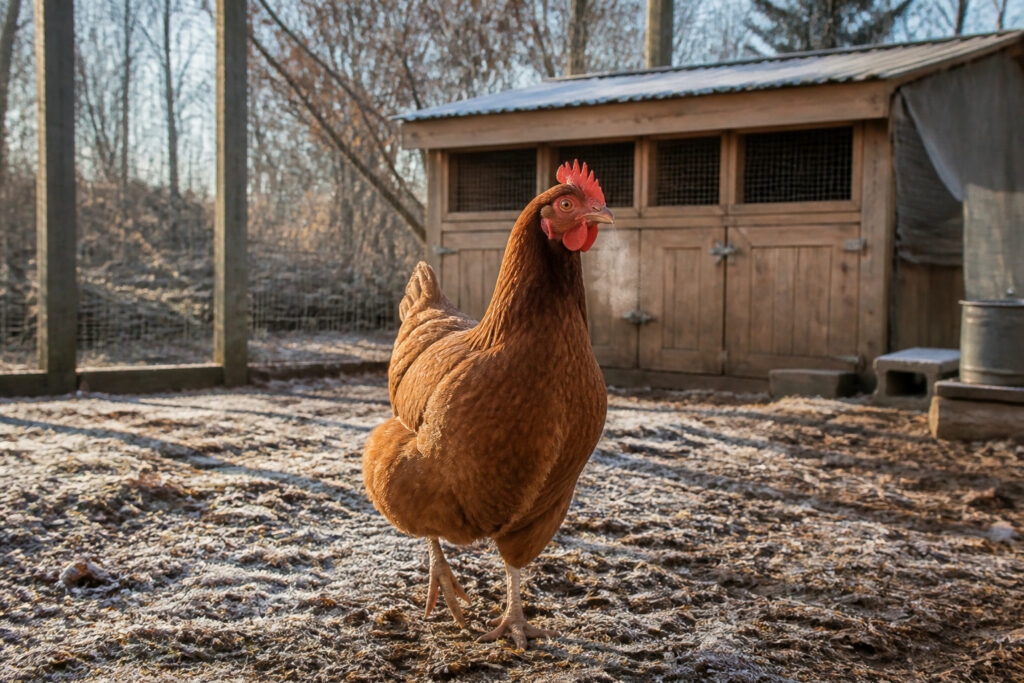
The first time I saw frostbite on one of my girls, it was on a Buff Orpington, and the tips of her comb had gone from red to a dull gray-black overnight. I felt terrible, because I thought I’d done everything right — the coop was shut up tight against a hard Tennessee cold snap, no drafts anywhere. And that, it turned out, was exactly the problem. I’d sealed the damp in with them. Frostbite isn’t really a cold story. It’s a moisture story, and once you understand that, you can head almost all of it off before it ever starts.
Your hens are wearing down coats. A dry, feathered bird handles cold far better than most new keepers believe. What she can’t handle is wet air freezing on the bare skin of her comb, wattles, and toes. So preventing frostbite comes down to four things: dry air moving through the coop, dry bedding underfoot, a roost that lets her cover her feet, and water that doesn’t turn your run into a skating rink. Here’s how I manage all four.
Two things I’d point you to but won’t link a listing for yet: half-inch hardware cloth for covering vents so air moves freely but wind and predators can’t get in, and a heated waterer base if your winters sit below freezing for days at a stretch. Both are worth owning, and I’ll add links here once I’ve got listings I actually stand behind. Skip the petroleum-jelly-on-the-comb trick, by the way — keepers argue about it every winter, and the honest answer is that a dry coop does far more than a greasy comb ever will.
Why frostbite happens: it’s the humidity, not the number
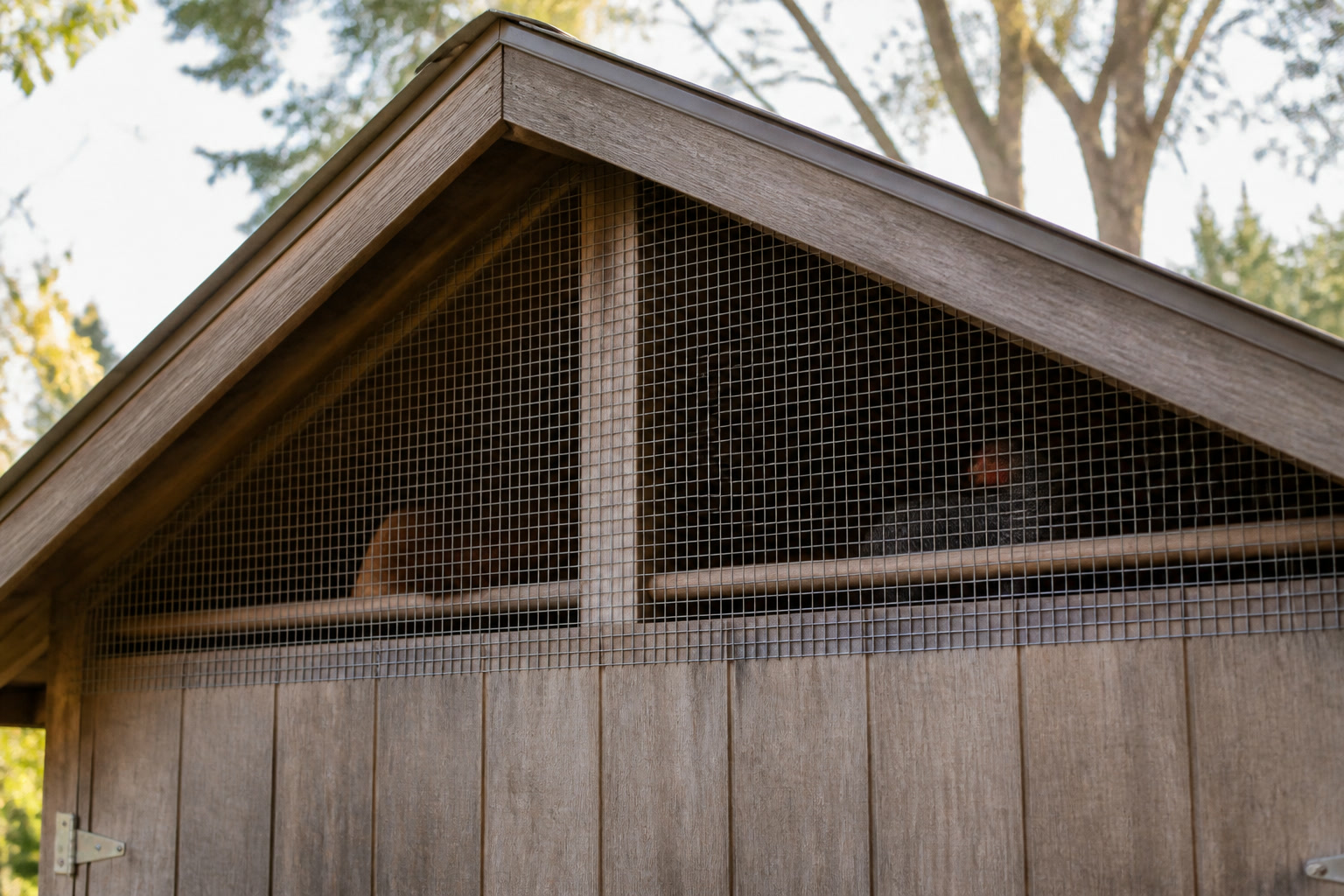
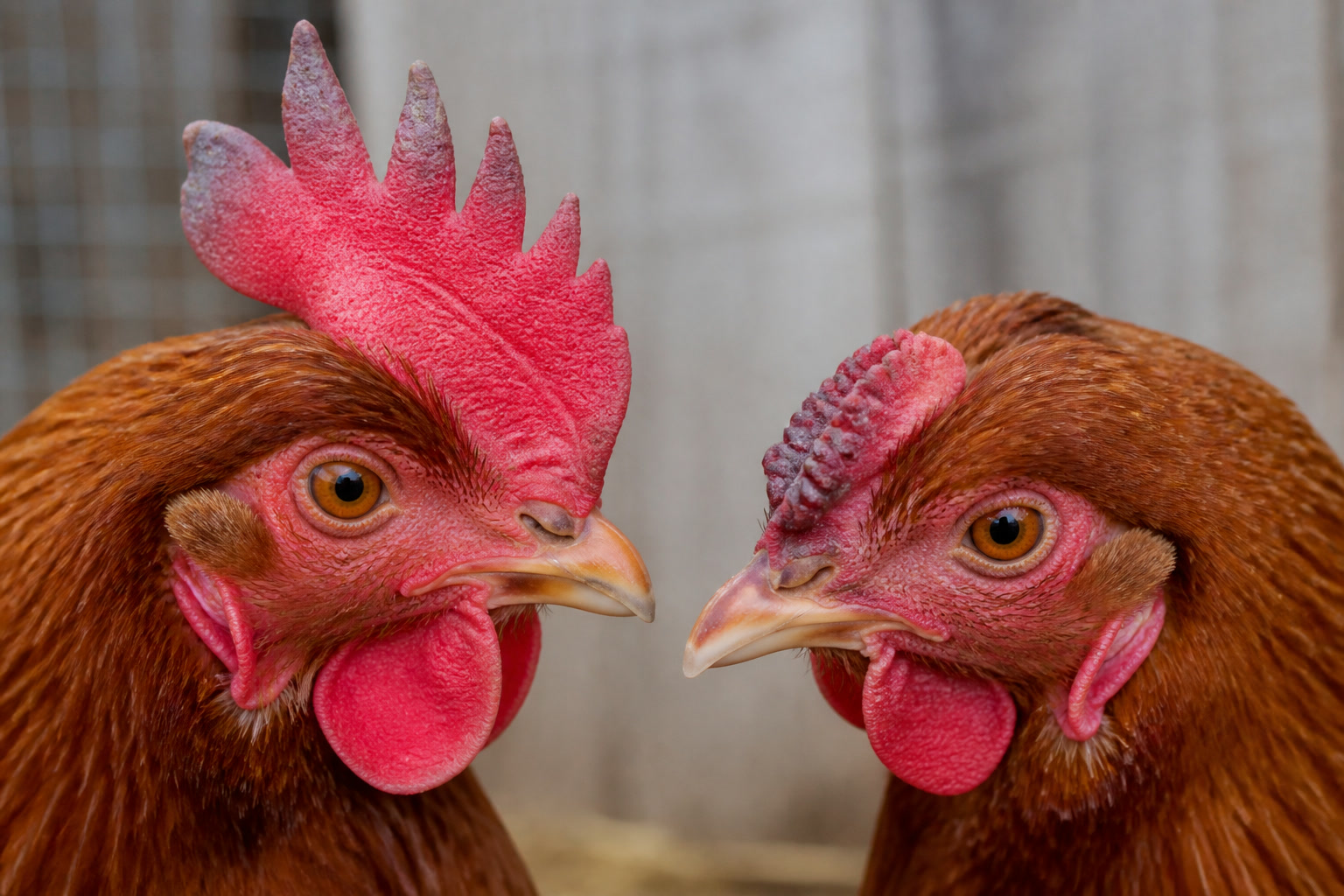
Let me say the thing plainly, because it’s the whole ballgame. Frostbite comes from moisture on bare skin freezing, not from cold air by itself. A hen roosting in dry, still, well-ventilated air is comfortable down into the teens and single digits. Put that same hen in a sealed, humid coop at twenty-five degrees and her comb is at more risk than it would be at five degrees in dry air.
And where does the moisture come from? The girls themselves. They breathe it out all night, it rises off their droppings, and it climbs off any spilled water. Seal the coop up tight to “keep them warm” and you trap every bit of that damp inside, where it settles on combs and wattles and freezes. That’s what got my Orpington. I was keeping the cold out and the wet in, which is exactly backward.
Ventilation is the fix — high and constant
The single best thing you can do to prevent frostbite is give that wet air somewhere to go. You want ventilation up high, above the roost — under the eaves, a gable vent, a covered strip near the roofline. Warm, moist air rises, and high vents carry it up and out over the birds’ heads while they sleep.
Down at roost level, where the girls actually sit all night, you want it still — no wind cutting across them. That’s the balance that trips up first-year keepers: solid walls low, open and covered high. Cover every vent with half-inch hardware cloth so it stays open to the air but closed to raccoons and cold gusts. Do not board the vents shut in a cold snap. I know it feels wrong to leave the coop open when it’s freezing. Leave it open anyway. The draft-free part protects the birds; the open-high part protects their combs.
Keep them dry underfoot
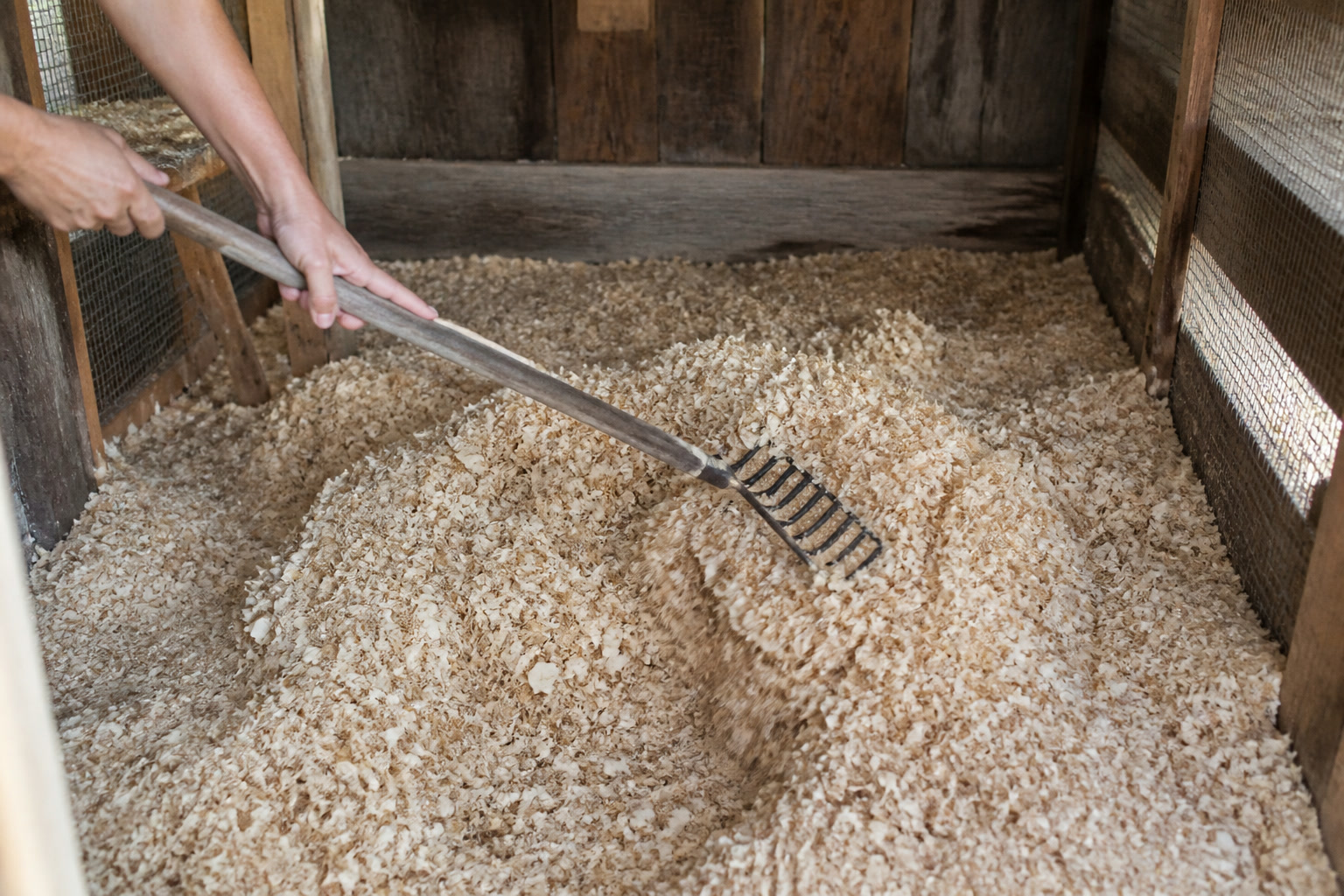
Wet bedding is the other half of the moisture problem. The fix is the deep litter method: instead of stripping the coop bare, let a base of pine shavings build up through the winter, turning it and tossing a fresh handful on top as it packs down. It composts slowly underneath, throws off a little gentle warmth, and — most importantly — keeps the birds up out of the wet.
The rule is simple. It has to stay dry. Dry deep litter is sweet-smelling and nearly no work. Wet litter is ammonia and frostbite waiting to happen. This is also why your waterer matters more in January than in July — every cup that sloshes onto the shavings is moisture you now have to ventilate back out, which is the whole reason I run low-spill nipple waterers in winter instead of an open dish the girls can knock into.
Fix the roost so they can cover their toes
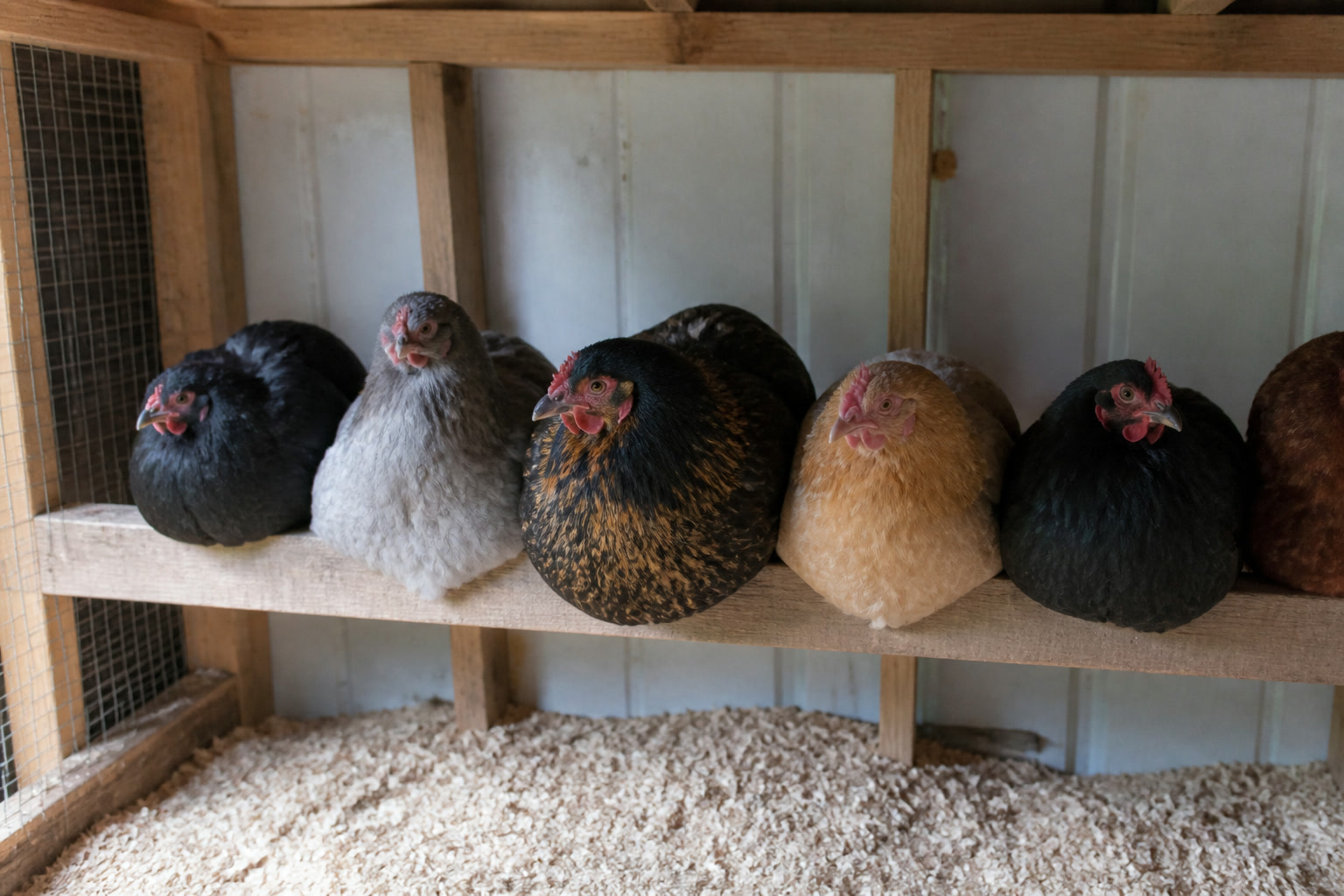
Combs and wattles get all the attention, but toes get frostbitten too, and the roost is where you prevent it. A hen keeps her feet warm by settling down over them, so she needs a wide, flat roost — a 2×4 with the broad side up, not a skinny round bar or a dowel. On a narrow perch her toes wrap the bar and hang out in the cold air all night. On a flat 2×4 she sits right down on top of her feet and covers them with her breast feathers, like she’s tucking them into bed.
Give every bird enough roost space to do that, and make sure the roost is well away from those high vents so no wind crosses the birds while they sleep.
Water that stays liquid
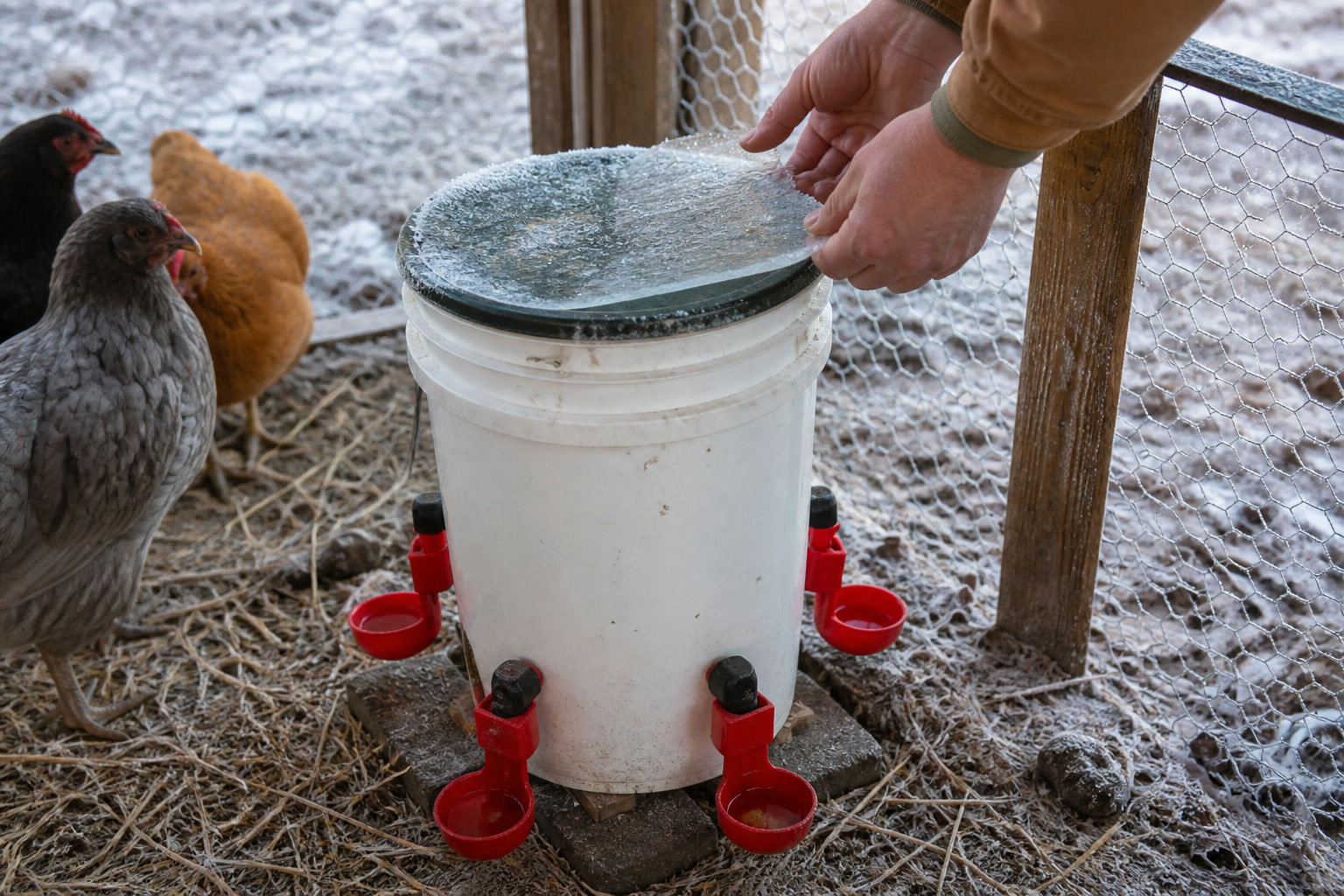
Chickens can’t peck ice, and a bird that can’t drink is a bird in trouble fast. Winter watering is just a daily chore with no shortcut — but a smart setup makes it a one-minute job instead of a battle. A covered horizontal-nipple bucket or a nipple-and-cup waterer ices over slower than an open metal fount, and when a thin skim does form you can usually pop it out and top off with warm water in about a minute. Just as importantly, the girls drink from the cups or nipples without dipping their wattles, so those wattles stay dry — and dry wattles don’t frostbite.
If your winters run truly hard, a heated base under the waterer is the real answer, and it’s the one piece of cold-climate gear I’d tell you to save up for. Short of that, I keep a second waterer by the kitchen door and swap the frozen one for the thawed one twice a day.
Know which birds to watch
Not every hen is equally at risk, and it pays to know your flock. Big single-combed breeds — Leghorns and a lot of the lighter Mediterranean layers — have tall combs and long wattles that catch the cold first. Rose-combed birds and the heavier cold-hardy breeds like Orpingtons, Australorps, Wyandottes, and Plymouth Rocks carry smaller combs and shrug off winter more easily. If you’re keeping big-combed birds in a cold climate, watch them closer and get the ventilation exactly right.
Do these things — dry moving air up high, still air on the roost, dry deep litter, a flat roost, and unfrozen water — and you’ll head off nearly all of it. Frostbite is the winter version of the same lesson I learned the hard way about damp: your hens can take the cold; it’s the wet that hurts them. If you want the whole first winter walked through step by step, along with everything else a new flock throws at you, it’s all in my book, Raising Backyard Chickens for Beginners. This post is the frostbite piece. The book is the whole cold season, and the three that follow it.
