How to Catch Crappie in the Fall
How to catch crappie in the fall, when the cooling water turns on the best bite of the year. Where they hold, what to fish, and how to read the day, from the bank.
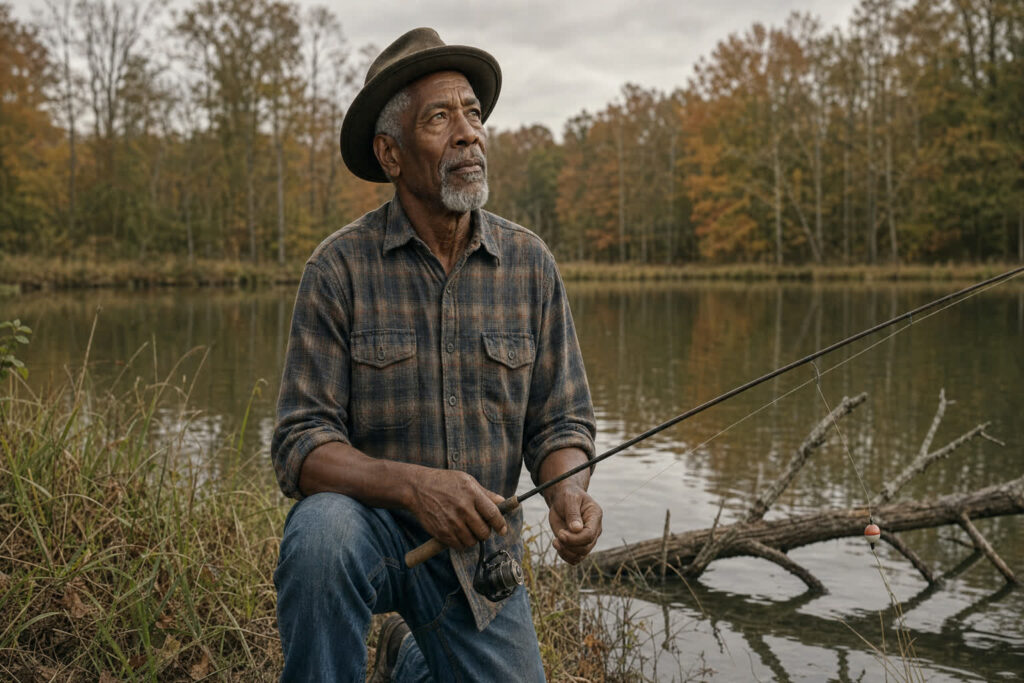
Most folks put the poles away when the leaves start to turn. That’s a shame, because fall is when the crappie feed like they mean it. My name is Silas Whitfield, and I’ve fished the same pond and the creeks around it most of my life. If you asked me to pick one month to fill a cooler with slab crappie, I’d take October over the whole rest of the year.
Here’s why, and here’s how to be there when it happens.
Why the fall bite is the best of the year
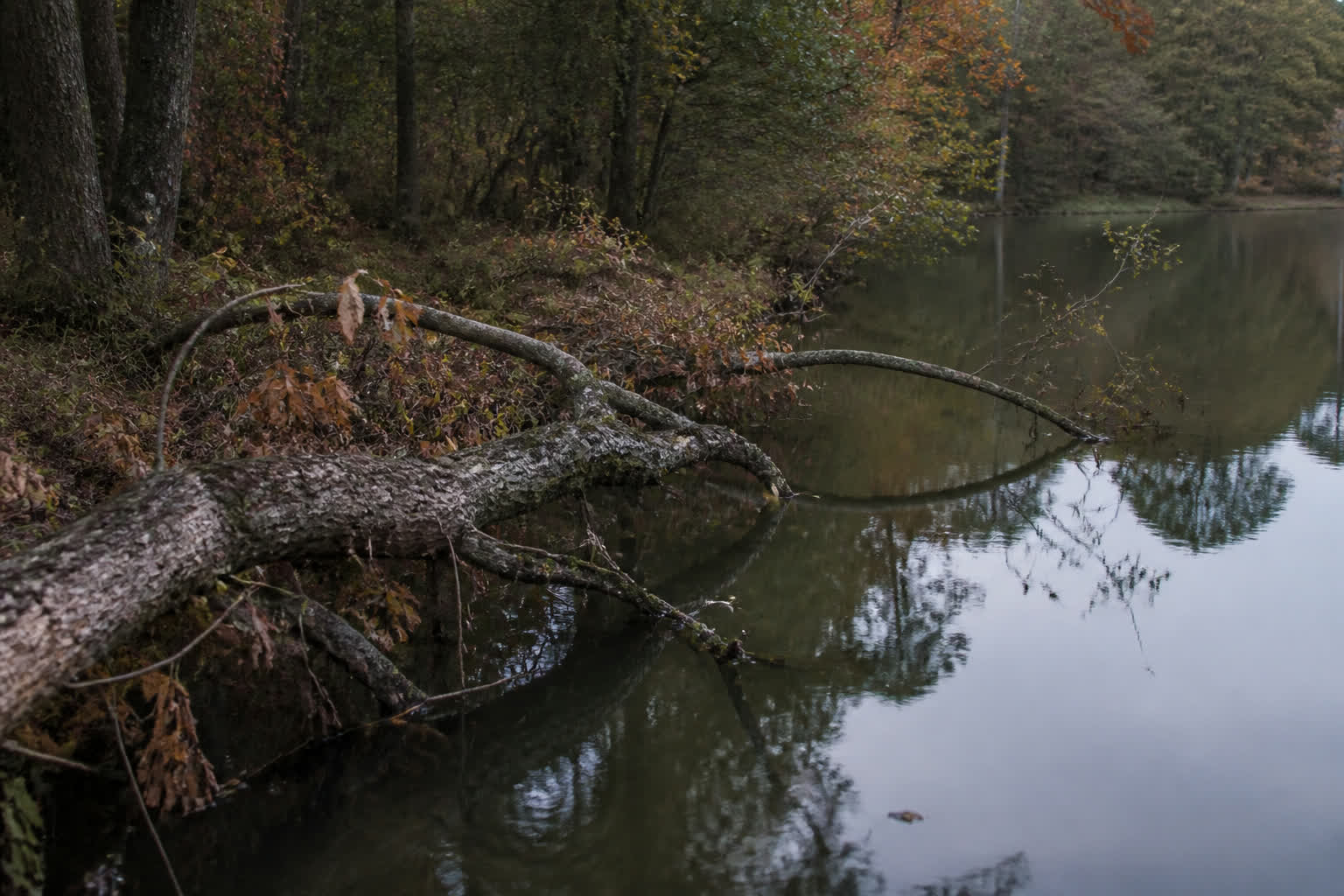
A crappie is cold-blooded, same as any fish. All summer the water sits warm, and the shad and minnows the crappie eat are scattered everywhere, so a crappie can pick and ease along without working. Then fall comes and the water starts to cool, a few degrees at a time. That cooling does two things at once.
First, it tells the fish that winter’s coming and lean months with it. So the crappie start feeding hard to put on weight while they can — they know, the way the whole natural world knows, that the table won’t always be set. Second, the cooling water pulls the baitfish together into tight schools. The crappie follow those schools like a man follows a full plate. Find the bait in the fall, and you’ve found the crappie right behind it.
That’s the whole of the fall bite, and there’s no secret to it. The fish are hungry and the food is bunched up. Your only real job is to go where the two of them come together.
Where the crappie hold as the water cools
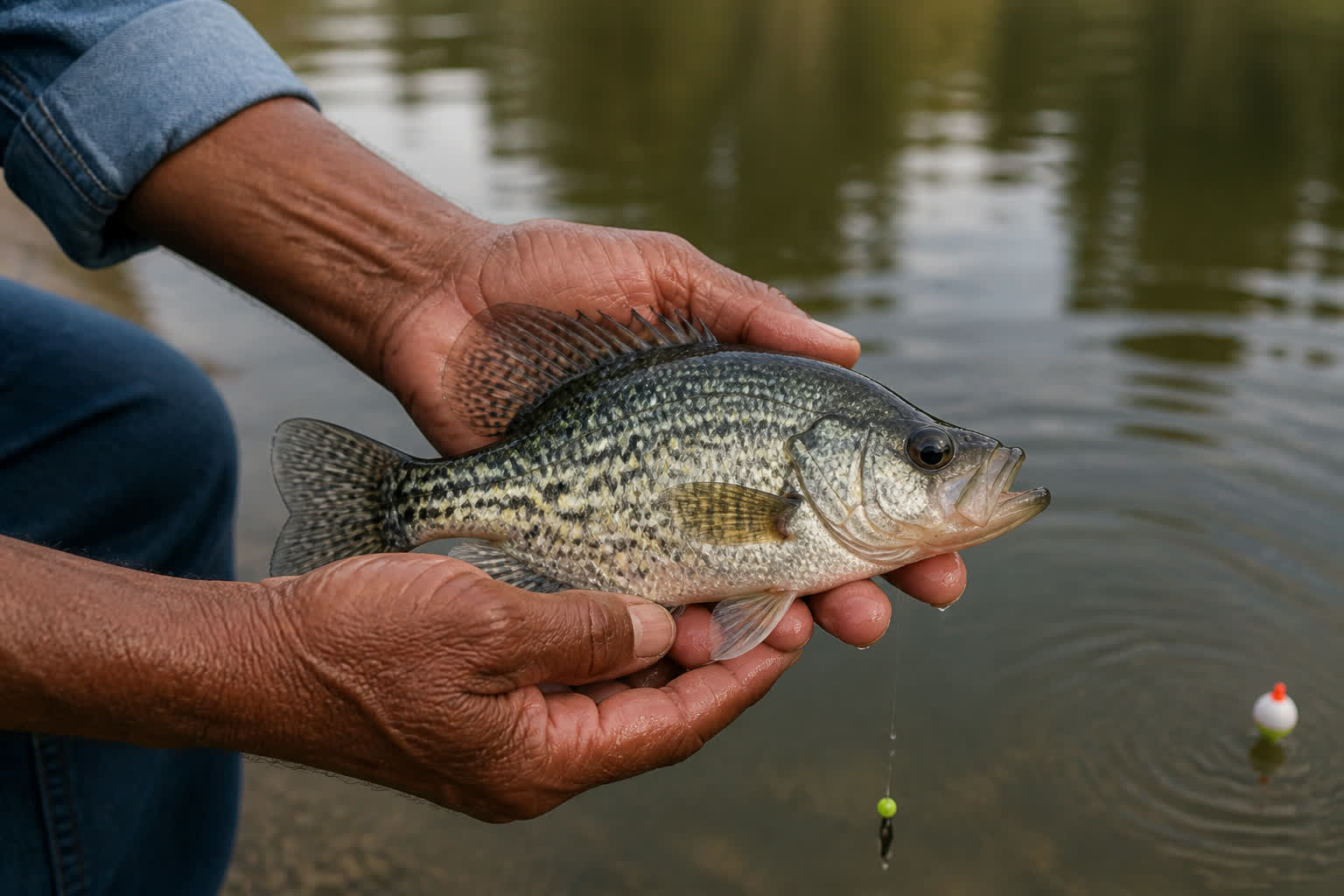
In the warm part of the year, crappie spread out and often hang deep where the water’s cooler. As fall comes on and the whole pond cools toward the fish’s liking, they move up and they move in, chasing that bait toward the creeks, the coves, and the shallower structure. That’s good news for a bank fisherman, because it brings them into reach.
What you’re looking for is cover with deep water close by. A brush pile, a laydown tree along the bank, the pilings under a dock, the edge of a creek channel where it swings in near the shore. Crappie are structure fish — they love to sit right up against something and wait for the bait to wash past. On my pond, the best fall spot I own is a big laydown oak that went into the water years back on the shady side; the crappie stack in that brush every October, and I’ve pulled a mess of them out of it more falls than I can count.
If you can fish a pond or a lake with standing timber or brush, fish the brush. If all you’ve got is a dock, fish the pilings and the shade under the boards. The fish want to be near something.
Find the depth, then stay on it
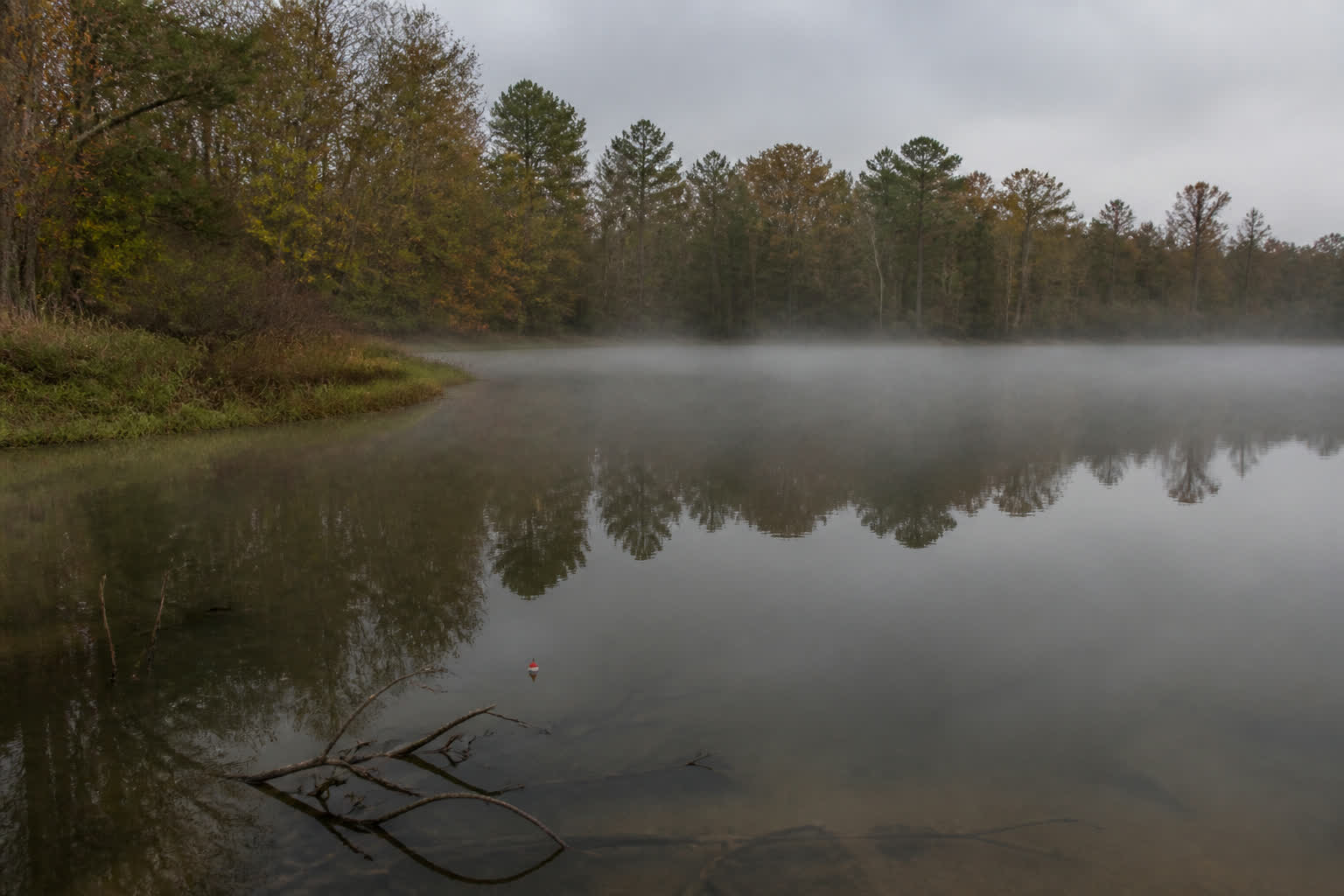
Here is the one thing that separates a slow fall day from a good one: crappie school tight in the fall, and they hold at a certain depth. When you find that depth, you catch one after another. When you’re a foot off it, you’ll swear there’s not a fish in the pond.
So I fish until I get a bite, and then I pay close attention to how deep my bait was sitting when that fish took it. Was it three feet down? Six? Once I know, I set every rig to that same depth and work it back along the cover. A little bobber is the easiest way to lock your bait at one depth and keep it there — slide it up or down the line until you find the fish, then leave it. When the bite slows, they’ve likely shifted a little deeper as the day warms or the sun climbs, so I’ll drop down a foot and check.
Fish tight to the cover, then a rod-length off it, then a little deeper. Let the fish tell you where they are, and once they’ve told you, listen.
What to put in front of them
You don’t need much, and you don’t need to spend much. Crappie in the fall will take two things about as well as anything.
A live minnow is the old dependable. Hook a small minnow through the back, set it under a bobber at the depth you found, and ease it up next to the brush. A crappie’s bite is soft — the bobber will often just lie over on its side or slide off slow, not plunge under. When it does anything that isn’t sitting still, lift into it gentle. Don’t snatch. A crappie’s got a paper-thin mouth, and a hard hook-set tears right through it.
A small jig is the other one, and it lets you cover water and find the school faster. A little soft-body jig on a light head, swum slow past the cover or hung under a bobber, does fine work. Fall crappie will chase a jig better than summer ones will, because they’re feeding, not just nibbling. Whatever you throw, keep it small — a crappie’s got a big appetite and a little mouth.
Read the day, same as always
The three signs I fish by year-round still hold in the fall. A gray, overcast day with a soft breeze beats a bright bluebird sky, because crappie hate bright light and will pull back tight into the shade when the sun’s glaring. A front rolling in, with the pressure falling ahead of it, will turn them on the same as it does any fish. And the low-light hours — that first hour after sunup and the last before dark — are when they slide up shallow and feed the hardest.
Put it together and a perfect fall crappie morning writes itself: a cool, gray day after a warm stretch, a front a day out, and you on the bank at first light next to a brush pile with deep water behind it. When the signs line up like that, clear your morning. That’s the day you don’t miss.
I keep a little almanac from my own pond that marks the best days to fish each month by the moon, with a plain checklist for the weather and the water, and I put together a simple one you can use for yours. I give it away free — you can pick up the Best Days to Fish starter kit here. Keep it by the door, and you’ll stop guessing at which mornings to go.
And if you’ve got a young one, fall crappie fishing is about the finest way there is to start a child. The bite is fast, the fish are willing, and a cooler that fills up keeps a little one interested in a way a slow day never will. My grandson Isaiah learned to watch a bobber on a fall crappie bite, and he’s kept a log of every fish since. I made a journal for exactly that — My First Catch, a place for a young angler to write down what they caught and where — and you can find My First Catch here. Teaching one to fish is how the whole thing gets passed on.
Read the signs. Tight lines — and I’ll see you at the water.
