How to Help Your Chickens Through the Fall Molt
The fall molt looks alarming the first time you see it. Here's what a chicken molt is, why the girls stop laying, and how I help my flock through it every fall.
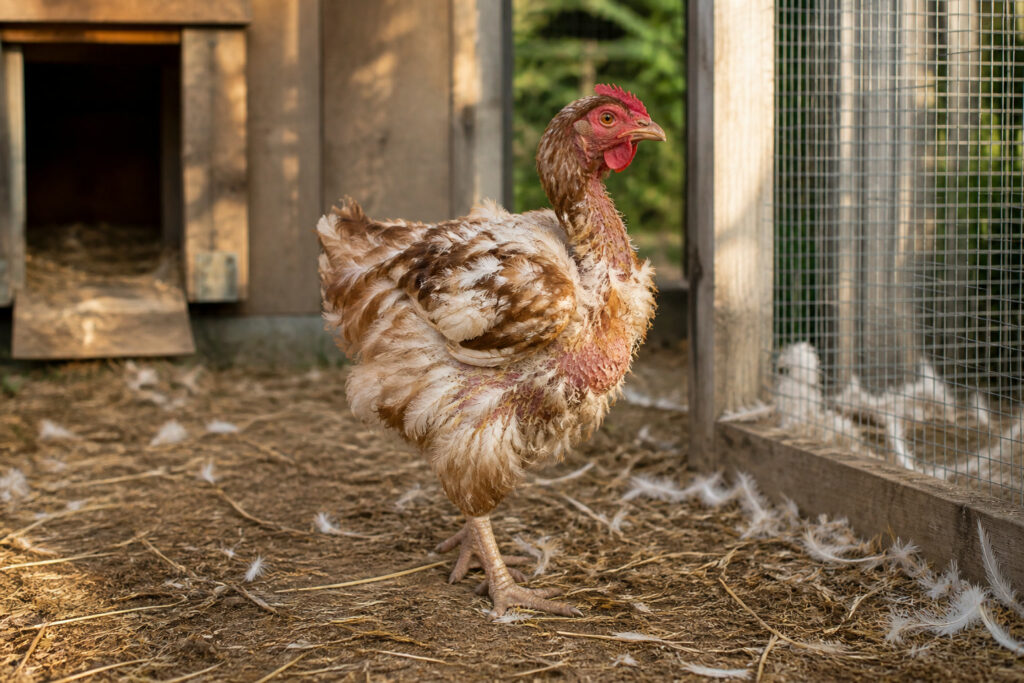
The first fall I kept chickens, I walked out to the run one October morning and thought a predator had gotten in overnight. There were feathers everywhere — piled in the corners, drifted against the fence, stuck to the waterer. My Buff Orpington looked like she’d lost a fight, half her neck feathers gone and pin feathers coming in ragged. I nearly called my dad in a panic.
Nobody had lost anything. That was my first molt, and I didn’t know what I was looking at. Six years later I expect it every fall, and I know how to make it easier on the girls. Here’s what’s actually happening, and what I do to help them through it.
The one thing I’d put at the very top of this list is a good high-protein feed, and I don’t have a bag in a listing I’d stand behind to link you to yet. So buy a quality feather-fixer or high-protein feed at your local feed store — I’ll add one here when I’ve found one I trust. More on why protein is the whole ballgame in a minute.
What a molt actually is
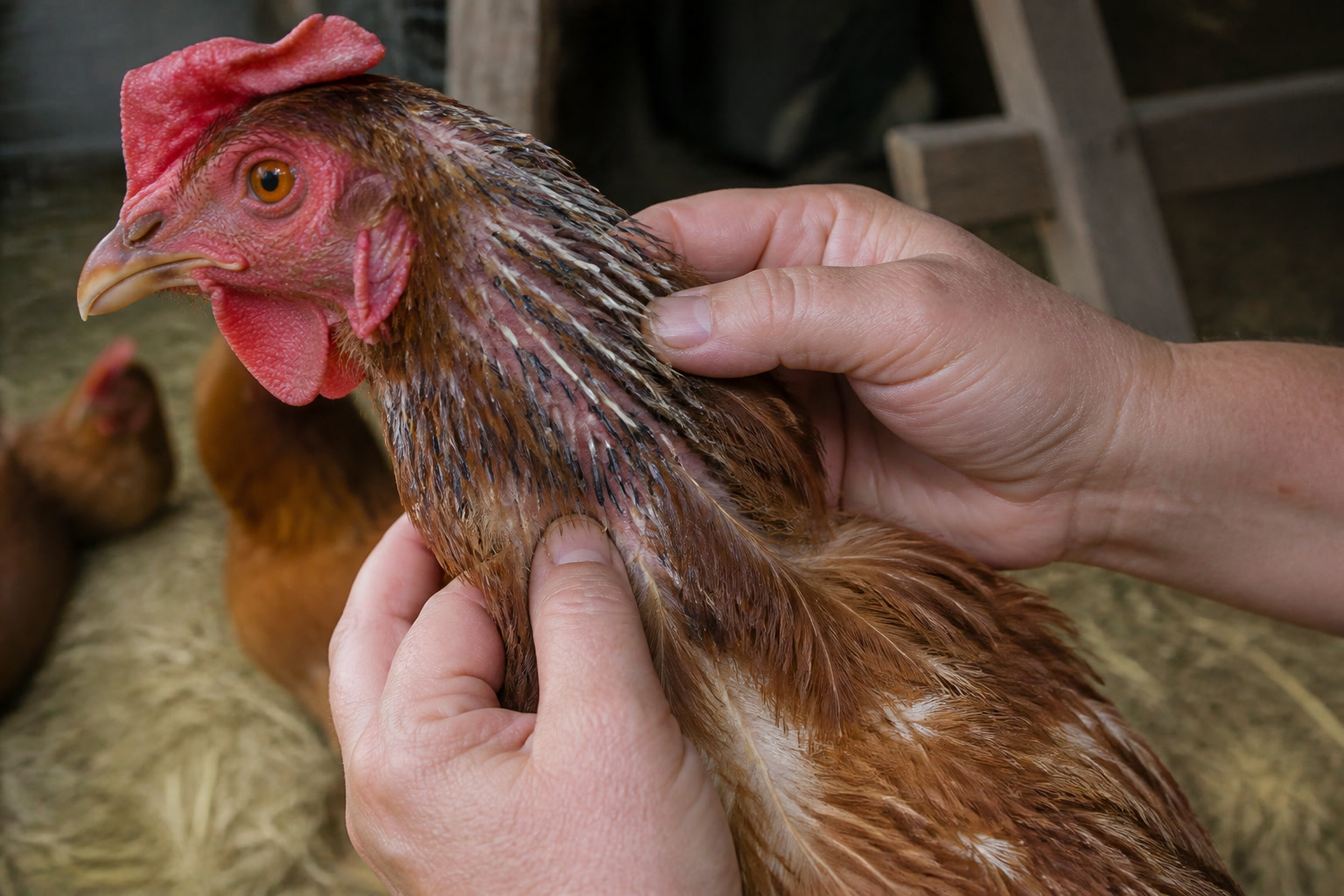
A molt is a chicken shedding her old, worn feathers and growing a fresh set. Feathers take a beating over a year — sun, dust, rain, roosting, the rooster if you have one — and by fall they’re frayed and faded. So the bird drops them, usually starting at the head and neck and working back toward the tail, and pushes out new ones.
Most hens go through their first big molt in their second fall, around 15 to 18 months old, and then once a year after that as the days get shorter. The shortening daylight is the trigger, which is why it lands in fall for most of us. Some birds do a “soft molt” you’d barely notice — a few feathers here and there. Others do a “hard molt” and look genuinely rough for a few weeks, nearly bald in patches with quills sticking out everywhere. Both are normal. My Australorps tend to molt hard and fast; my Easter Eggers take their sweet time.
Why the girls stop laying
Here’s the part that catches new keepers off guard: your egg basket empties out right when the feathers start flying.
That’s not a coincidence, and it’s not a problem. Growing a whole new coat of feathers takes an enormous amount of protein, because feathers are about 85 percent protein. A hen’s body cannot pour resources into eggshells and feathers at the same time, so it prioritizes the coat she needs to survive the winter. Laying slows way down or stops completely until the molt is finished. You’ll get your eggs back once she’s feathered out — sometimes not until the days lengthen again after the winter solstice. Plan for a lean egg stretch and you won’t be frustrated by it.
Protein is the whole ballgame
If you do one thing for a molting flock, do this: get more protein into them.
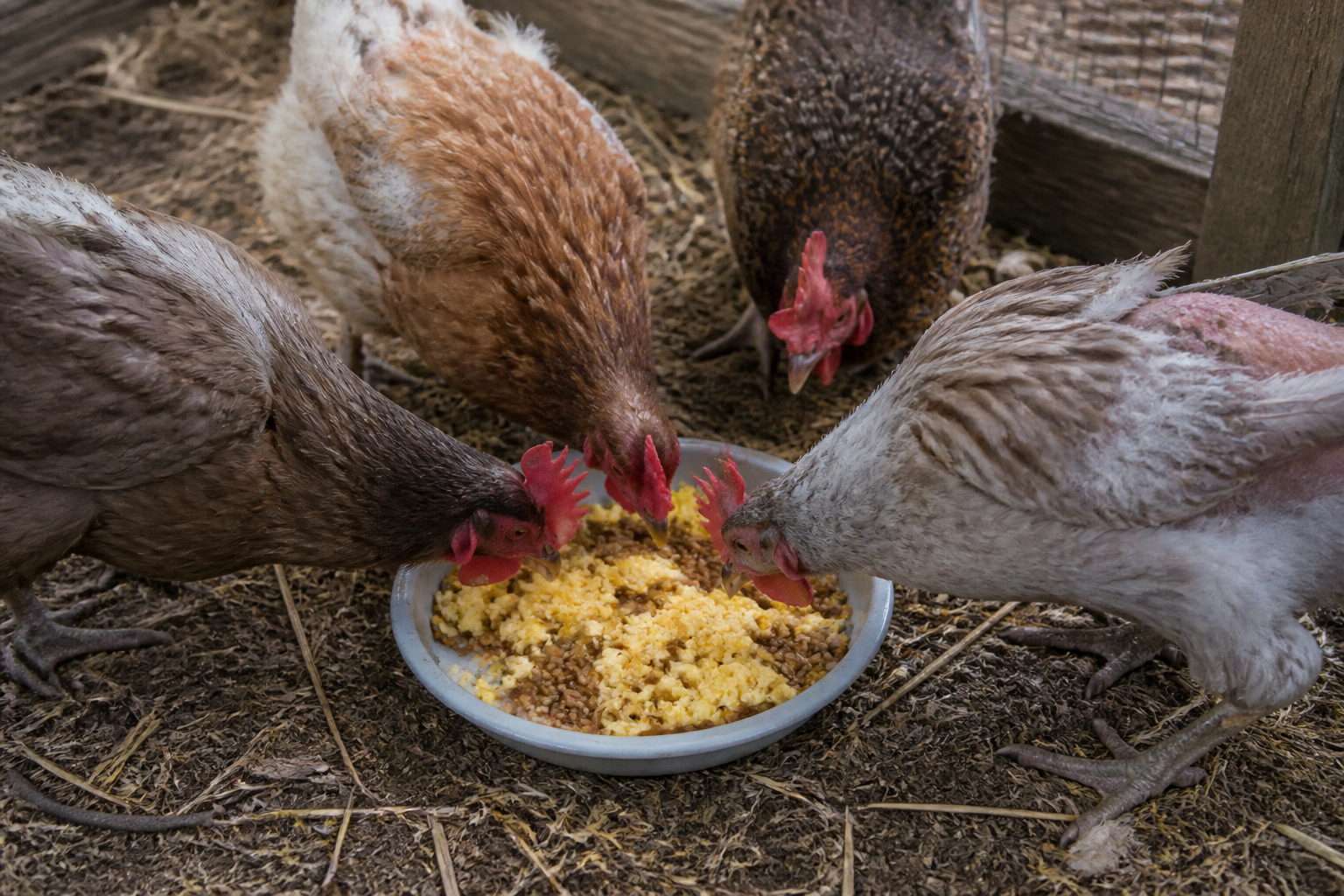
My layers eat a roughly 16 percent protein layer feed the rest of the year. During the molt I bump that up toward 18 to 20 percent, either by switching to a feather-fixer or grower-type feed or by adding high-protein treats on top of their usual ration. The feathers come in faster, fuller, and the birds bounce back quicker. This is the single biggest thing you can do for them, and it’s why I keep a bag of higher-protein feed on hand every fall.
You don’t have to buy anything special to help, either. Scrambled eggs are almost pure protein and molting hens go crazy for them — yes, you’re feeding chickens eggs, and no, it doesn’t turn them into egg-eaters. Dried mealworms, black soldier fly larvae, a little canned mackerel or tuna, sunflower seeds, a handful of cooked meat scraps — all of it helps. What I ease off during a molt is the scratch grain and the kitchen carbs, because those fill a bird up without giving her the protein she actually needs right now.
Keep the stress low and the water clean
A molting bird is running her body hard, and stress makes everything worse. This is the wrong season to add new chickens to the flock, rearrange the pecking order, or move the coop around. I try to keep everything boring and predictable while they’re molting — same routine, same feeding time, no surprises.
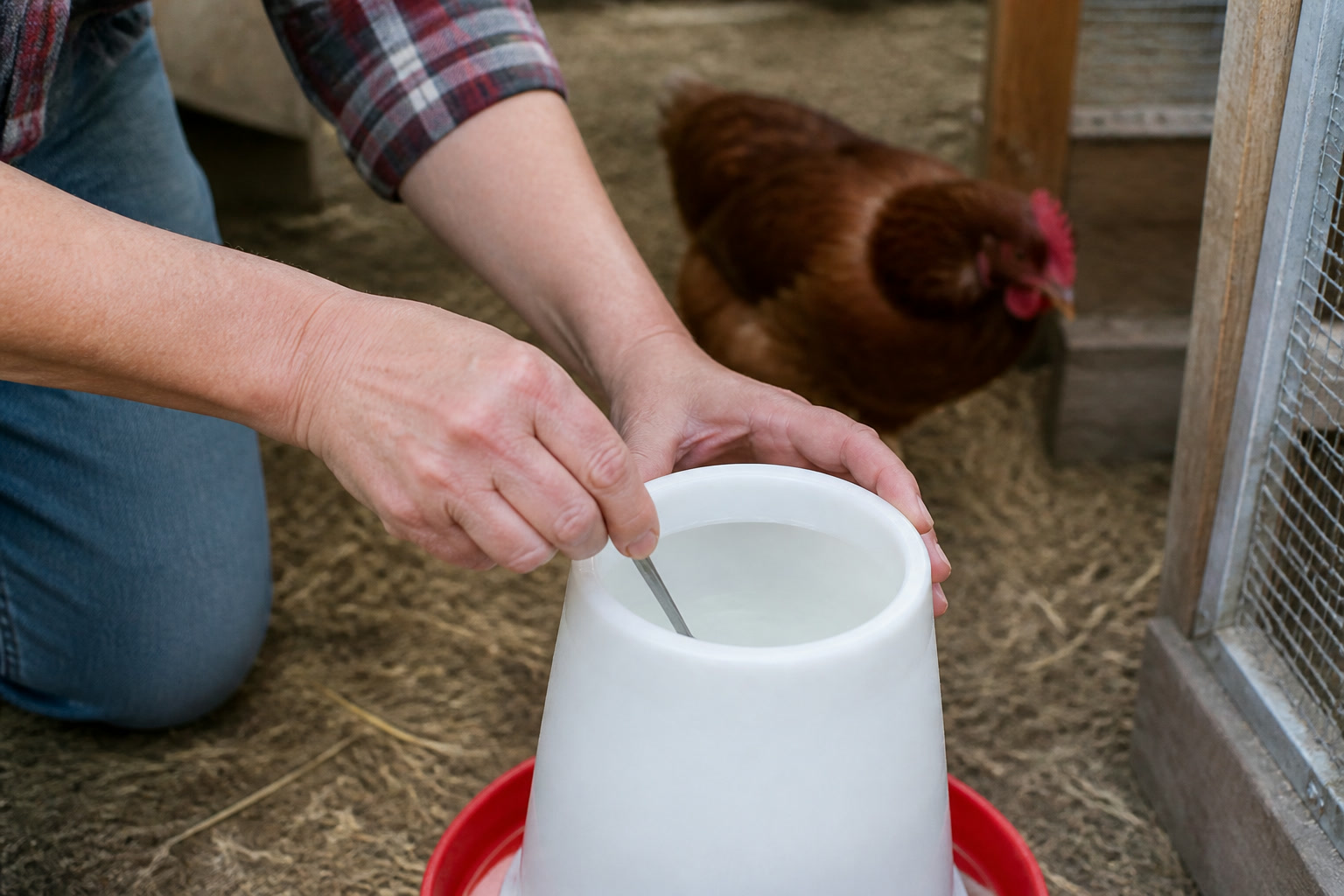
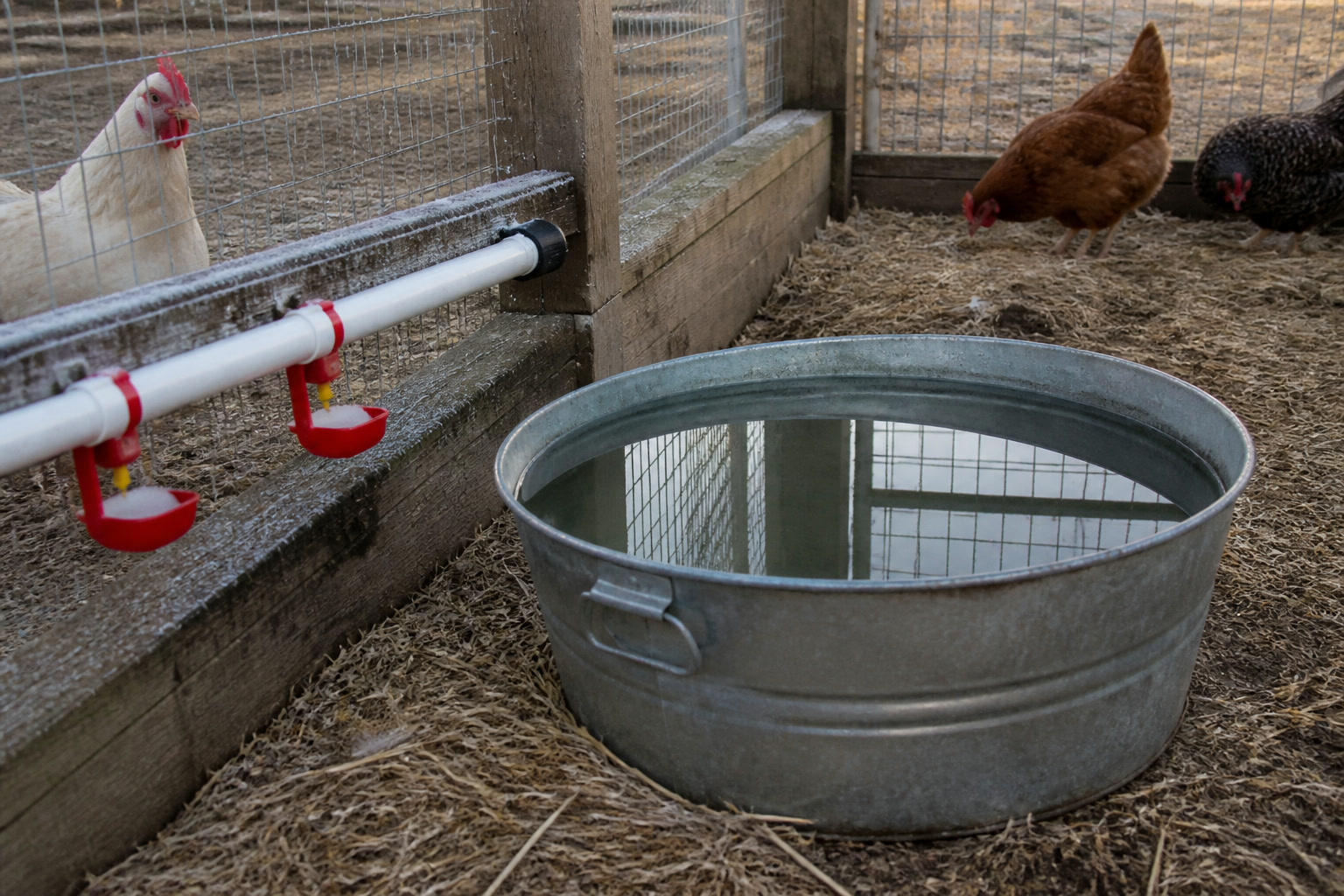
Fresh, clean water matters more during a molt than at almost any other time, because every bit of feather regrowth runs on hydration. I keep the nipple-and-cup waterer scrubbed and full, and as the nights cool I set out the galvanized fount as a second source so nobody has to wait in line. On the hardest weeks, when a lot of birds are molting at once, I’ll mix a dose of Sav-A-Chick electrolytes into one of the waterers a couple of times a week. It’s a small vitamin-and-electrolyte lift that helps them hold steady through a demanding stretch.
Handle them gently — those pins hurt
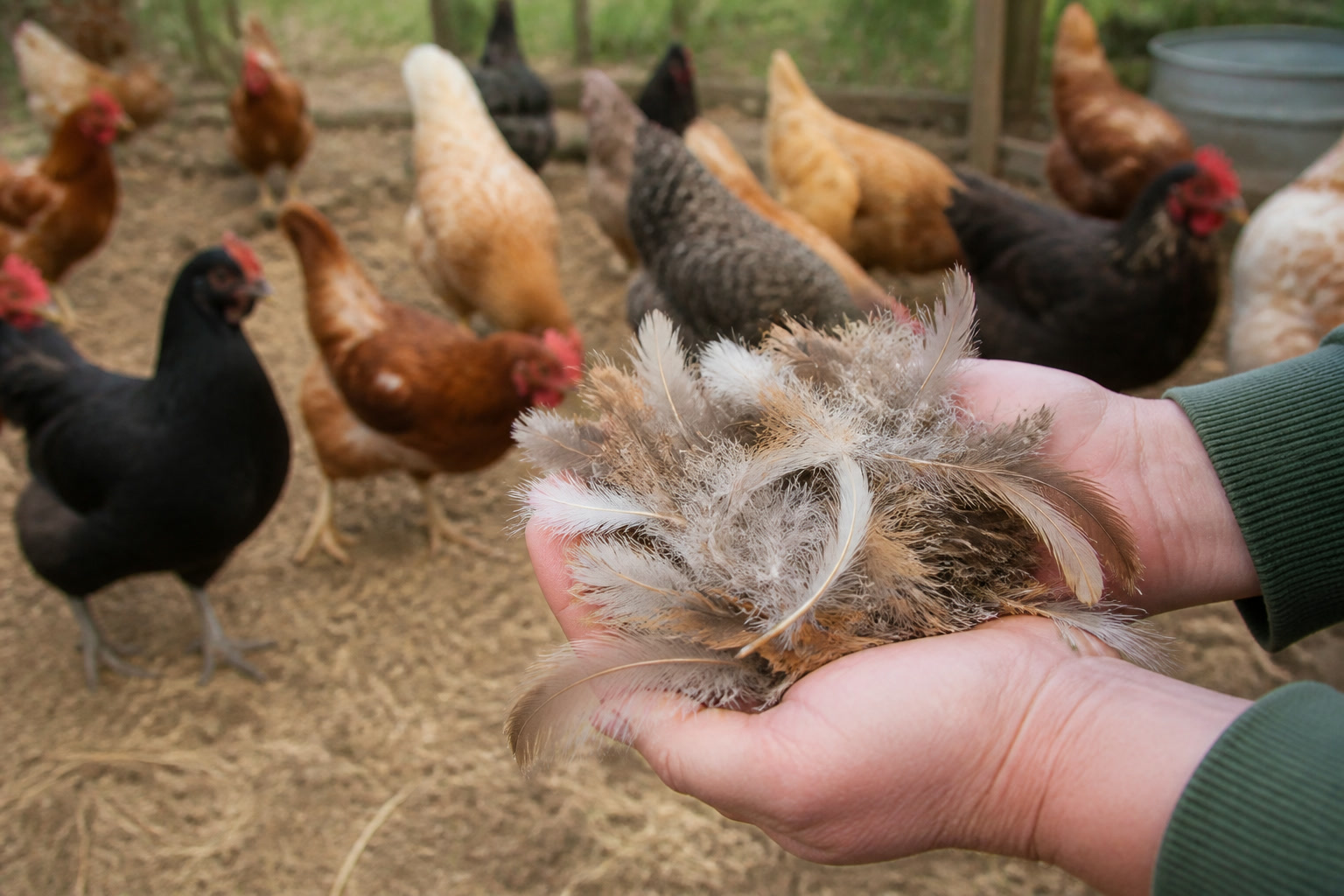
When new feathers first push through the skin, they come in as “pin feathers” — waxy little quills wrapped around a blood supply, which is why a heavy molt can look faintly bloody at the skin. Those pins are genuinely tender. A hen who normally loves to be picked up may not want to be touched at all right now, and I don’t take it personally.
If you crush or break a pin feather it can bleed, sometimes more than you’d expect. So I go easy on handling during the worst of it, and I keep an eye out for any bird getting picked on. A half-bald hen at the bottom of the pecking order can get her exposed skin pecked raw, so if I see feather-pulling starting, I separate the birds involved for a bit and make sure everyone has enough space and enough protein — bored, under-fed birds pick more.
When to actually worry
A molt looks alarming, but a healthy molting bird is bright-eyed, eating, drinking, and moving around normally — she just looks terrible doing it. What I watch for is anything that doesn’t fit that picture: a bird who’s gone quiet and puffed up, who won’t eat, who has pale skin plus lethargy, or who’s still ragged and bare well into winter. Molt is a fall event that wraps up in about four to eight weeks for most birds; a hen who looks sick, not just naked, is a different situation, and that’s when I’d look closer or call a vet who sees poultry.
I go deep on molting, the seasonal laying dips, and the whole rhythm of a flock’s year in my book, Raising Backyard Chickens for Beginners. Everything above is the quick version you can act on this fall. The book is the one I wish I’d had the October I thought a fox had gotten in.
