What to Forage in the Pacific Northwest This Fall
What to forage in the Pacific Northwest in fall — the rose hips, hawthorn, Oregon grape, elderberry, and usnea I gather from the first frost on, and how I put each one up.
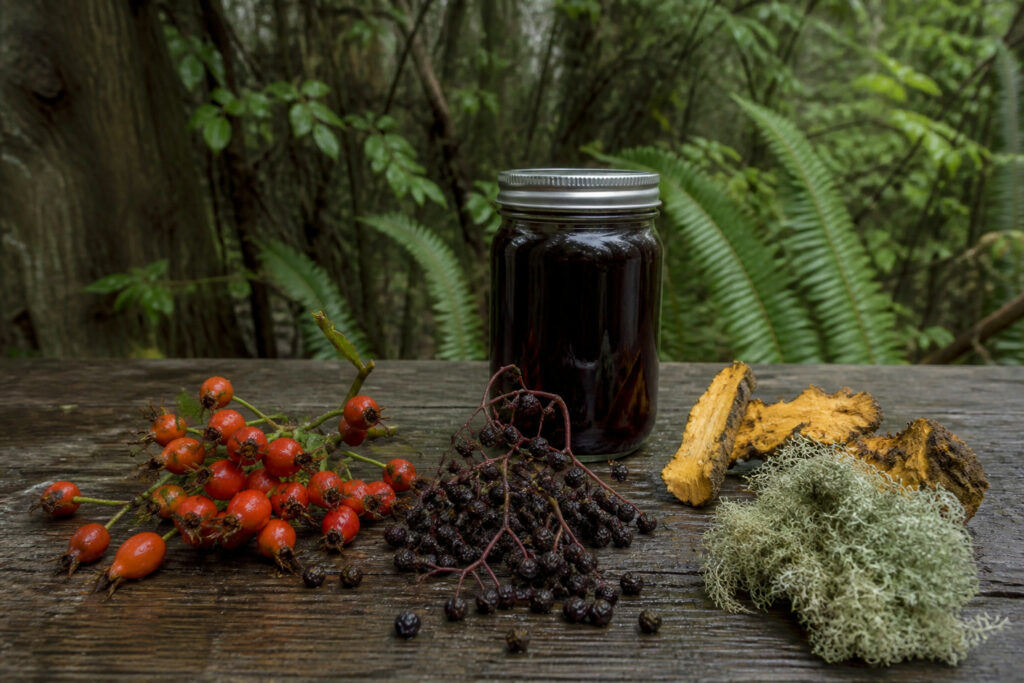
By the time the first real frost settles over the Peninsula, most people think the foraging year is done. The nettle went to seed months ago, the elderflower is a memory, and the trailheads empty out. But fall is the second harvest, and in some ways the more important one. The berries have ripened, the roots have pulled their strength down out of the leaves for the winter, and a good bit of what I put up for the cold months I gather in October, not April.
What follows is what I actually go out for in these weeks, on my own acreage outside Sequim and along the wet edges of the forest-service roads on the rain-shadow side. Not everything the woods offer — a working list a beginner can learn to know with certainty this fall and turn into something that keeps on a shelf. Each one comes with how I know it and what I do with it once it’s home.
One rule first, and I’ll say it once because you’re an adult: never eat or use a wild plant on the strength of a book, an app, or a single source. Confirm it against more than one reputable guide and, better, an experienced local who can put it in your hand. When in doubt, throw it out. Nobody has ever regretted skipping a plant.
You’ll also want clean glass jars for syrups and dried berries. I reuse wide-mouth canning jars I already have rather than buying new, so I won’t send you off for those — anything with a good lid that seals will do.
Rose hips, after the first frost
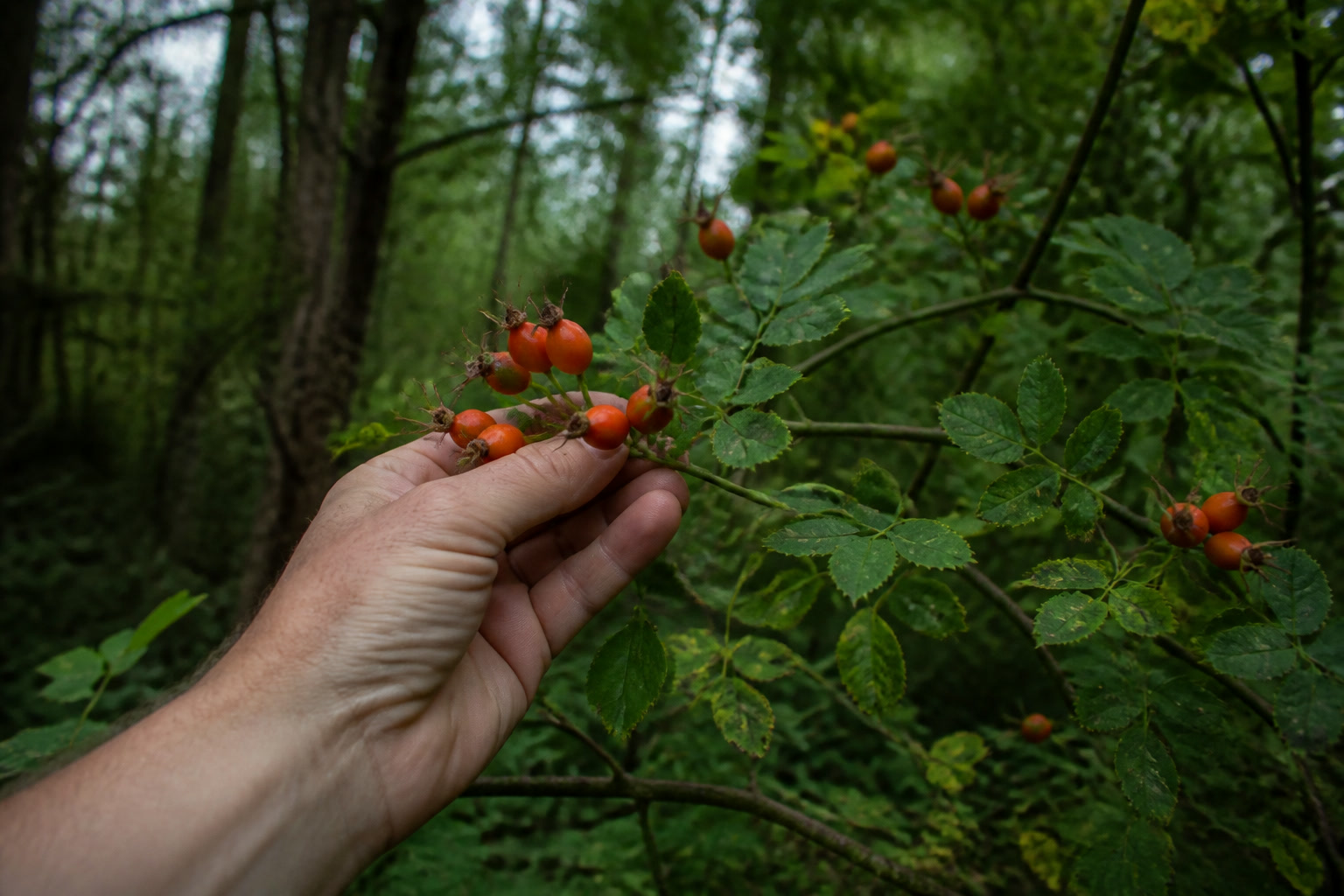
If you gather one thing this fall, make it rose hips. The native Nootka rose (Rosa nutkana) and the naturalized dog rose (Rosa canina) both leave behind fat red-orange hips once the petals drop, and they’re scattered along fence lines, forest edges, and old roadsides all over the Peninsula. The tell is simple: a firm red hip sitting where a wild rose flowered, with the dried remains of the sepals still clinging to the far end.
I wait until after the first frost, which softens them and sweetens them, then pick the reddest and firmest. Split each hip and scrape out the seeds and the fine hairs inside — that’s the fussy part, and it matters, because the hairs are an irritant you don’t want in your tea. What’s left dries beautifully for a winter tea, or cooks down with a little water into a tart syrup that generations here kept through the dark months. Strain that syrup through cheesecloth to catch the last of the seeds and pulp, and it’ll keep in the refrigerator for weeks.
Hawthorn berries, along the hedgerows
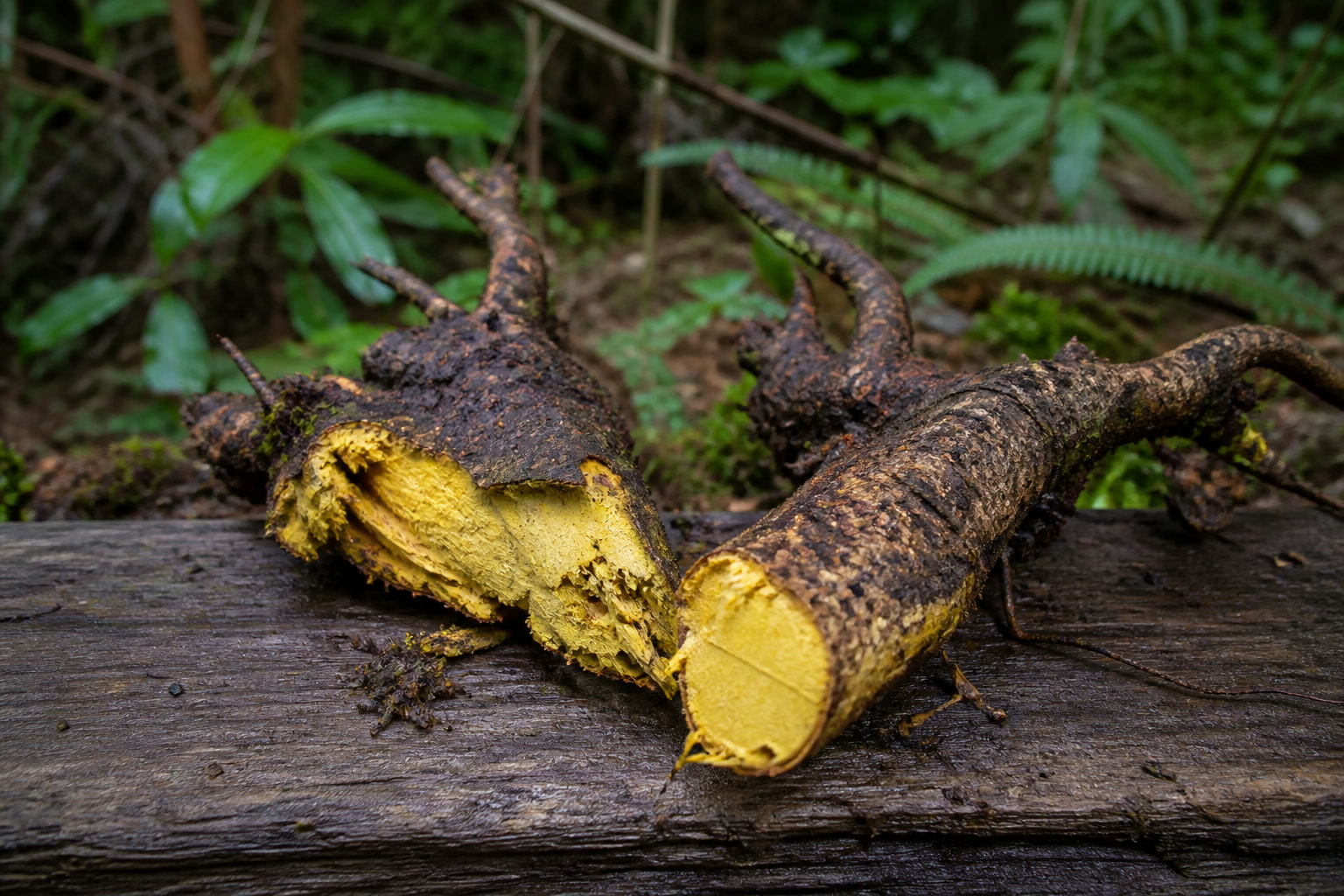
Black hawthorn (Crataegus douglasii) grows as a thorny small tree along creek bottoms and old field edges across the Peninsula, and by early fall it hangs with clusters of dark purple-black berries, each the size of a small pea with a little dried crown at the tip. The long, wicked thorns and the lobed leaves are the tell — and the thorns are the reason I gather hawthorn slowly and with respect for my hands.
Hawthorn has been gathered and put up in the fall for as long as people have lived alongside it, cooked down into a shelf syrup or a tart fruit leather. I make mine into a syrup the same way I do rose hips: simmer, mash, and strain. I’ll leave the traditional uses at that — hawthorn is one of those plants people have strong feelings about, and I’d rather you gather it, taste it, and read more before you lean on it for anything. As food off the hedgerow, it’s honest and it keeps.
Oregon grape, when the root is worth digging
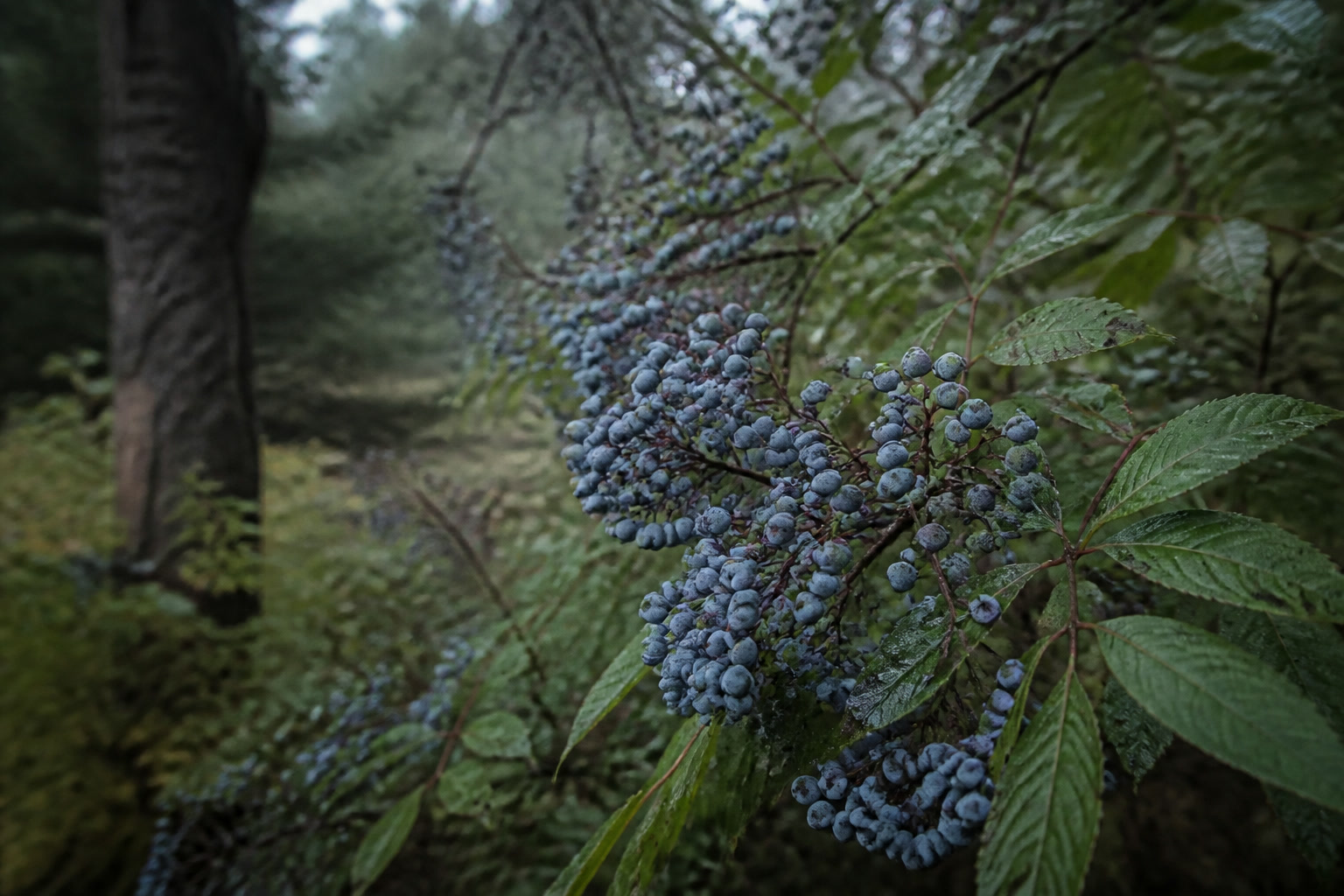
Oregon grape (Mahonia aquifolium, also written Berberis aquifolium) is the low holly-leaved evergreen shrub you’ve walked past a hundred times in the understory — spiny compound leaves, and in fall a scatter of dusty-blue berries. What I go to it for in the fall is the root, and you know you’ve found the right plant the moment you nick the root and see the shocking bright yellow wood underneath. Nothing else in these woods looks quite like that.
The Coast Salish peoples of this coast, including the S’Klallam, used Oregon grape root long before any settler wrote it down; I learned about it from books, and I credit Nancy Turner’s Food Plants of Coastal First Peoples as a careful, Tribe-collaborative source worth your time. Dig only where the plant is abundant, take a piece of root from the edge of a healthy stand rather than pulling the whole thing, and cover your hole back over. I chop the bright root small and infuse it in jojoba oil for the winter salve shelf, or dry it for later. Traditional use, gathered gently — that’s the whole of what I’ll say.
Elderberry, cooked and never raw
The blue elder (Sambucus cerulea) ripens its flat, drooping clusters of dusty-blue berries in late summer and into fall along roadsides and clearings, the same shrub whose creamy flower plates you may have gathered in June. Here is the one hard line with elder, and it’s not optional: the raw berries, and every green part of the plant, will make you sick. Elderberry is only ever used cooked, and the red elder (Sambucus racemosa), with its dome-shaped cluster of red berries, is one I leave alone entirely.
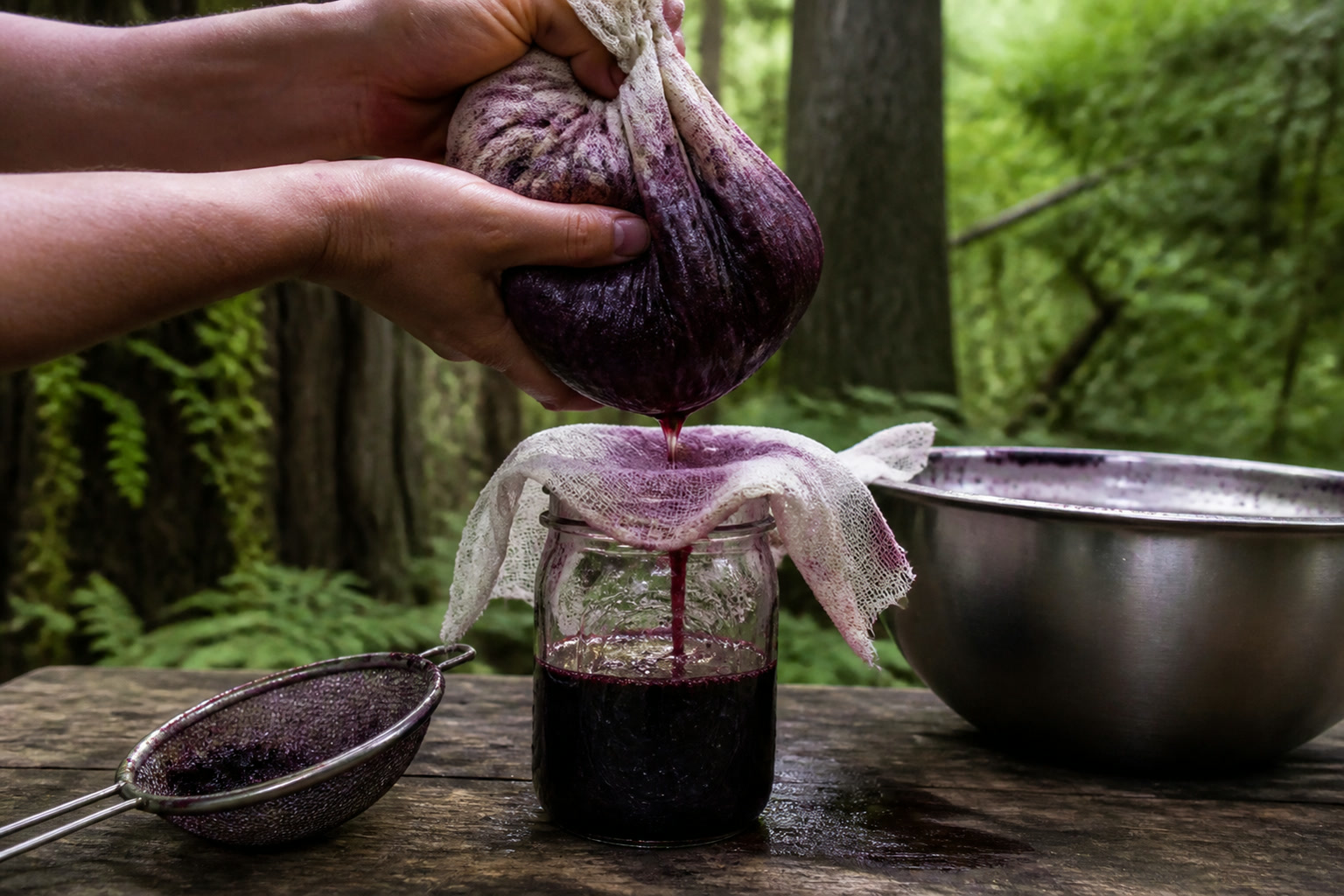
I strip the ripe blue berries off their stems with a fork — the stems are among the parts you don’t want — simmer them down with a little water, and strain the juice through cheesecloth into a clean jar. That cooked juice, sweetened and kept cold, is the elderberry syrup that has been a fall kitchen tradition across the North for generations. I make it because my grandmother made it, and because a jar of it is a good thing to have on the shelf in January — not for any promise beyond that.
Usnea, the tree’s beard, on a windy day
The last one is a lichen, not a plant, and fall is when I gather it because the wind does the work for me. Usnea (Usnea species) is the pale gray-green beard that hangs off the branches of firs and old apple trees, and after the first good autumn storms you’ll find it blown down all over the ground beneath them — no need to strip it from a living branch. The test is the tell: pull a strand slowly and you’ll see a fine white elastic thread stretch inside the gray sheath before it snaps. That white core is how you know usnea from the look-alike beard lichens.
I collect the cleanest fallen strands, pick out the twigs and bark, and dry it or tincture it for the shelf. Usnea has been used in folk practice for a very long time; I gather it, dry it, and keep it, and I’d point you to more than one good guide before you do anything more with it than that. Take only what’s already on the ground — the stuff still hanging is doing its slow work up in the canopy.
Turning a fall’s gathering into a winter’s shelf
The gathering is half of it. The other half is putting it up so it’s still good in February. Dry your hips and berries in a single layer, out of direct heat, until they’re truly hard — anything gathered damp and stored soft is how you grow mold instead of medicine. Store dried material in clean jars in the dark, and keep your syrups cold and used within a few weeks.
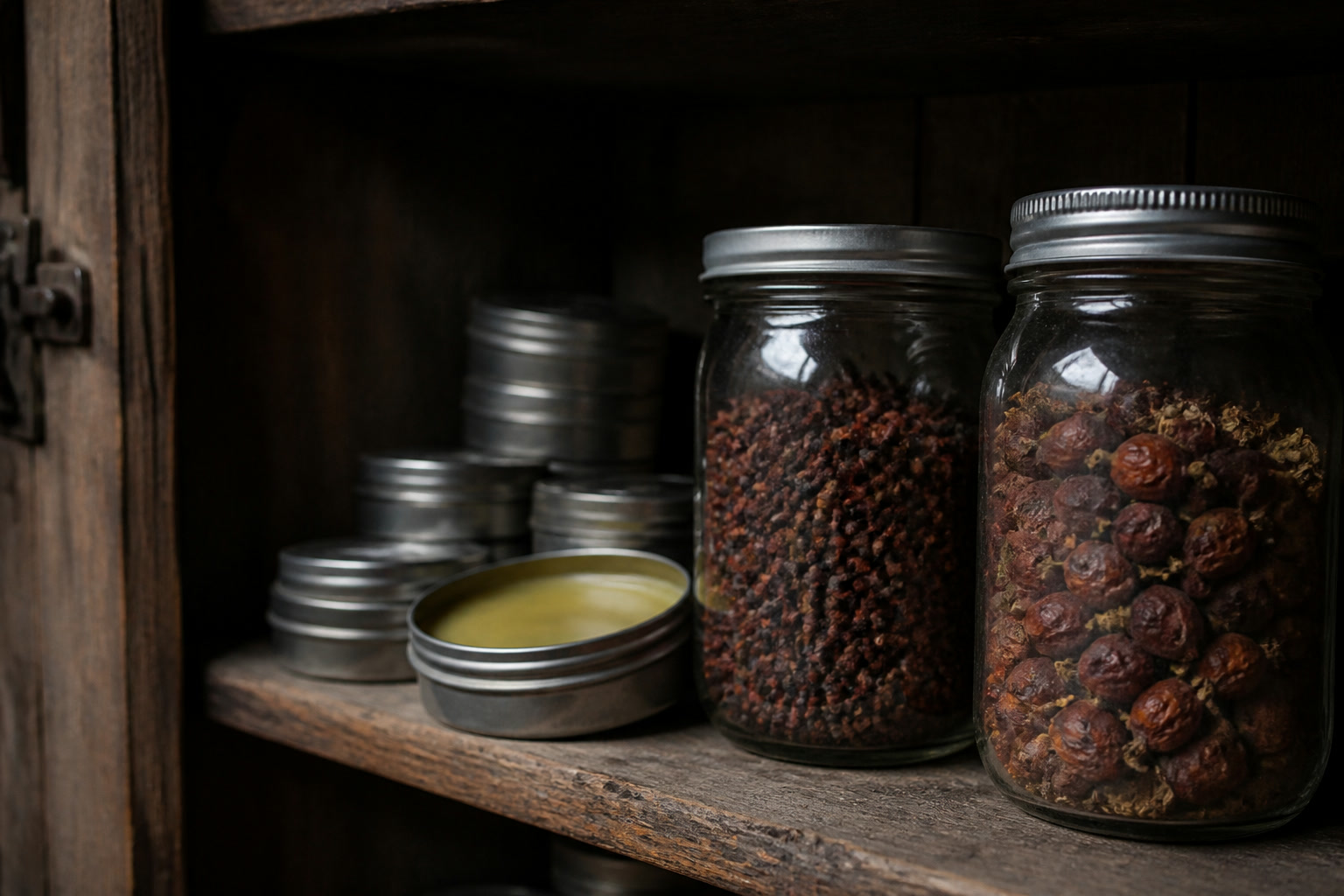
For the roots and the resinous bits, I go the salve route while the weather’s turning. Warm the strained infused jojoba oil gently, melt in beeswax pellets at about an ounce of wax to a cup of oil, pour it into two-ounce tins, and label each one with the plant and the date. You will not remember in six months — I promise you that. A row of fall tins and jars on a dark shelf is the quiet reason I still go out when everyone else has hung up the basket.
Which plant, gathered when, and every honest caution about the ones that look alike — that’s the part that takes longer than one post, and it’s the part I care most about. I put all of it into my book, Pacific Northwest Medicinal Plants: 115 wild plants of this coast, how to know each one without guessing, when to gather it, and how the generations before us used it. Fall is short, and the frost comes when it comes. The book is how you’re ready for the next one.
