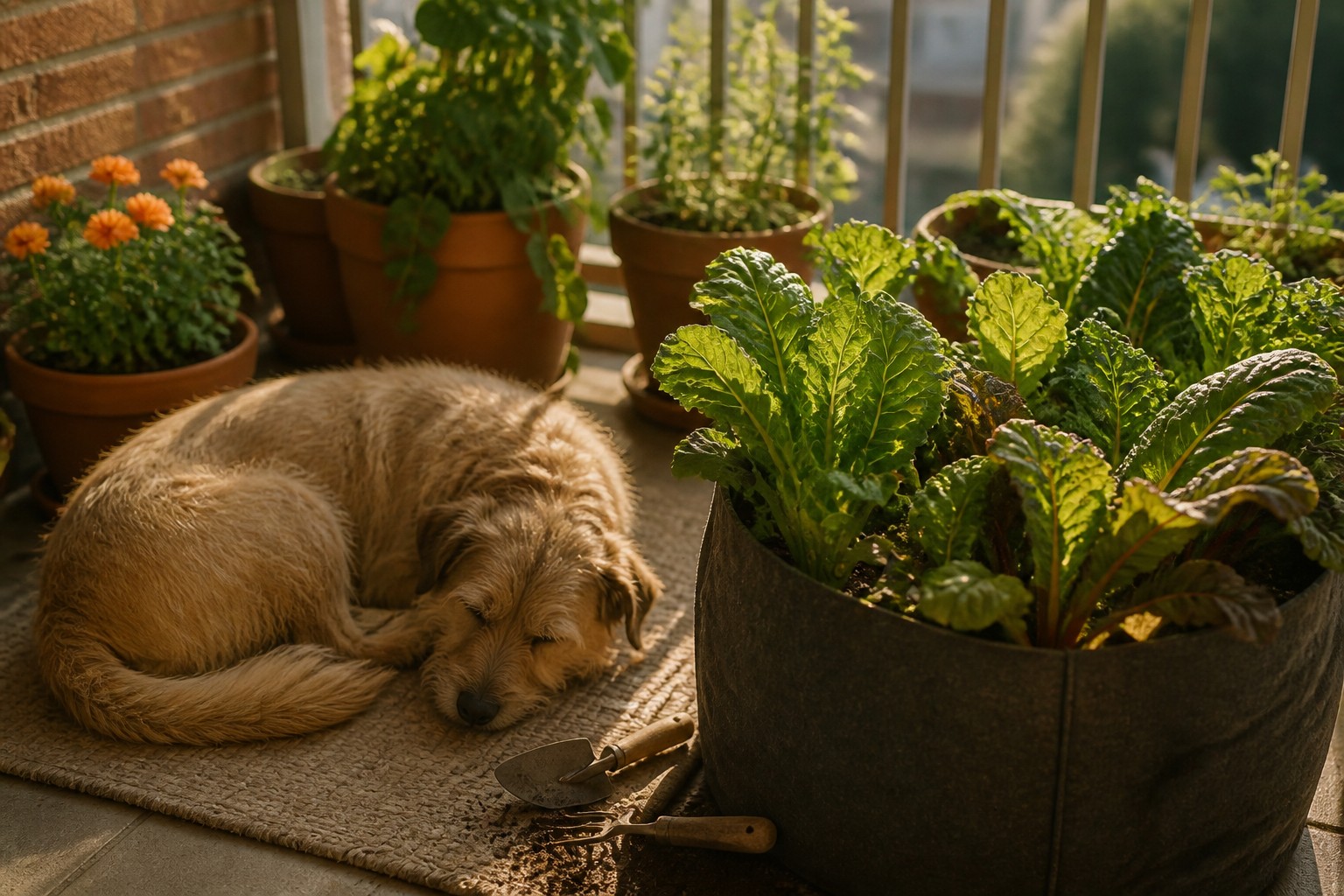
Best Cold-Hardy Vegetables for Fall Containers
The best cold-hardy container vegetables for a fall balcony — seven crops that shrug off frost in pots, when to sow them, and what keeps them alive.
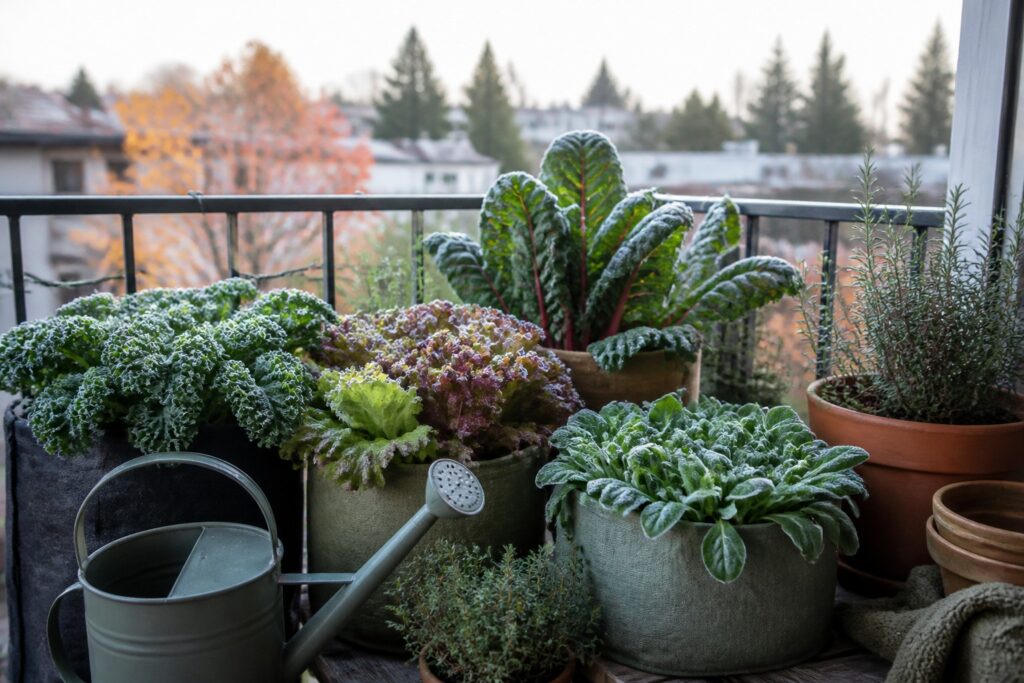
The season doesn’t end when summer does. That’s the thing I most want you to take from this. When the tomatoes give up and the basil sulks, a whole second garden opens up — one that actually prefers the cool, shrugs off a frost, and keeps handing you dinner well into the cold. And every bit of it grows in a pot on a balcony. You don’t need a yard, you don’t need a cold frame, and you don’t need to be an expert. You need the right plants and a couple of pots you already own.
I grow cold-hardy greens on my Portland balcony every fall, and honestly they’re less work than summer crops — they don’t wilt, they don’t bolt, and the pests have mostly packed up for the year. Here are the seven I’d start with, in rough order of how bulletproof they are, plus the small handful of things that keep container crops going once the nights turn.
First, a word on what “cold-hardy” really buys you
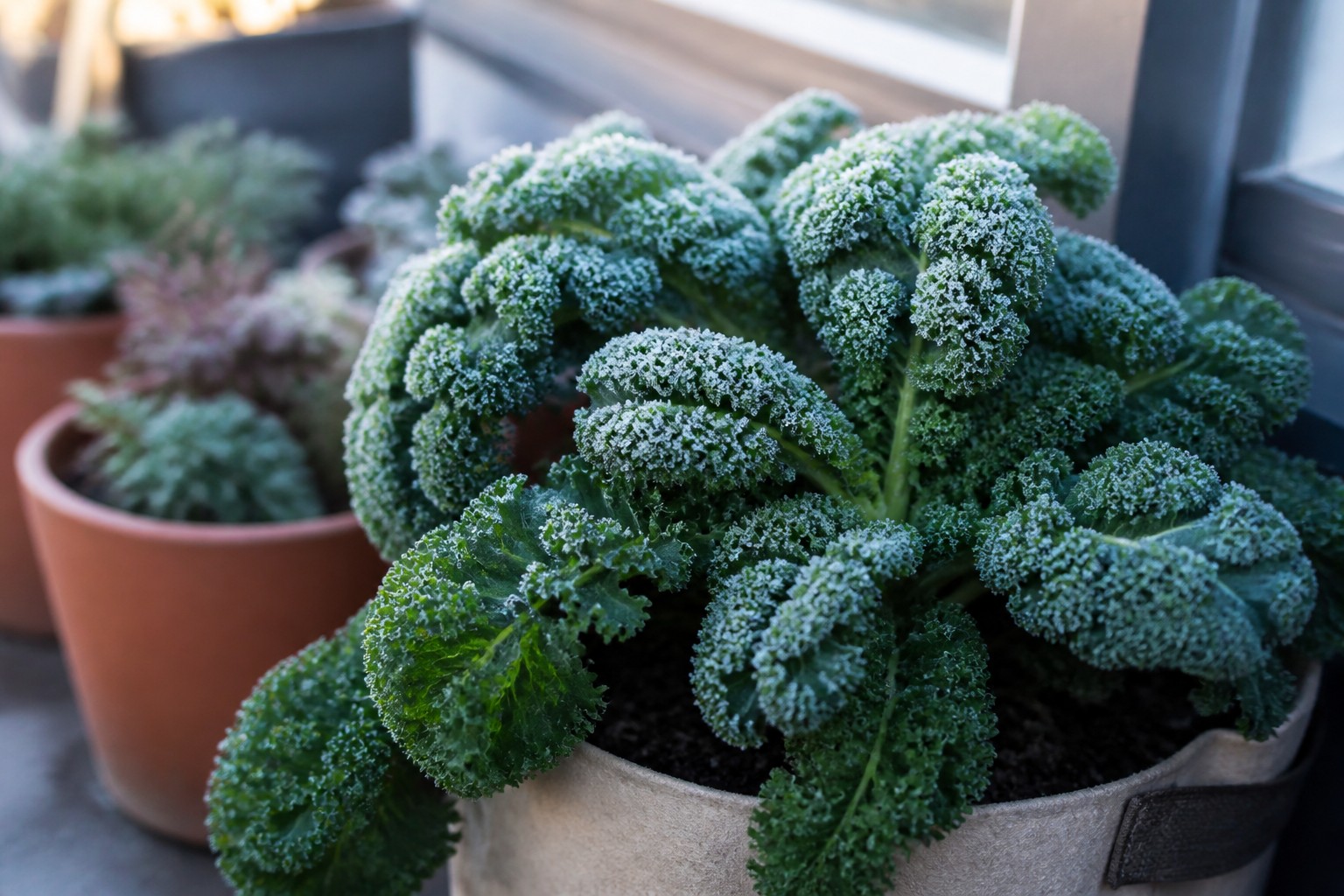
Cold-hardy doesn’t just mean “survives the cold.” For a lot of these crops, the cold makes them better. A light frost triggers many greens to convert starches to sugars as a kind of antifreeze, and the result on your plate is a spinach or a kale that’s noticeably sweeter than the summer version. Gardeners call it getting “frost-kissed,” and it’s real — the November spinach genuinely tastes better than the September spinach.
The other thing to know: in containers, roots are more exposed to cold than they’d be in the ground, so a pot crop is a touch less hardy than the seed packet promises. Grouping pots together against a wall and choosing a deep container both help. None of it is hard. Let’s get to the plants.
The seven I’d grow
Kale. If you grow one thing, grow kale. It’s the toughest leafy green there is — a mature plant takes a hard freeze in stride and keeps producing, and the flavor sweetens right through it. ‘Dwarf Blue Curled’ and ‘Red Russian’ both stay compact enough for a pot. Pick the outer leaves and leave the center to keep growing, and one plant feeds you for months.
Spinach. The cold-season classic, and the sweetest reward of the bunch after a frost. Spinach actually resents summer heat, so fall is its real season. Sow it thickly in a wide pot and cut it as baby leaves, or thin it and let some size up. ‘Bloomsdale’ is the reliable one.
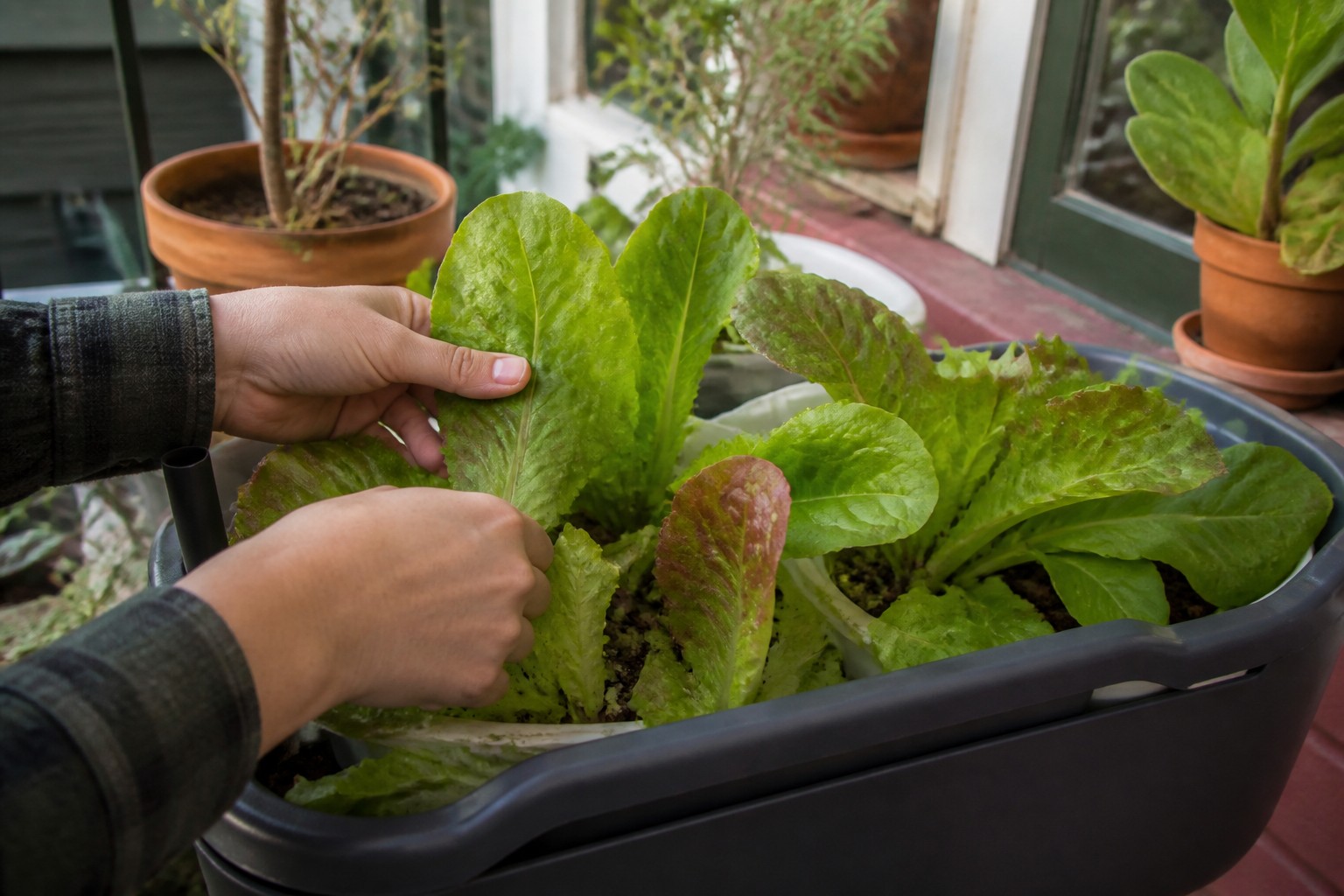
Leaf lettuce. Not the tender summer butterheads — the cold-tolerant loose-leaf and romaine types. ‘Winter Density’ and ‘Salad Bowl’ keep going well past the first frosts, and because you harvest outer leaves as you go, a single self-watering planter of lettuce can feed a salad habit for weeks.
Swiss chard. Chard is a workhorse that bridges the seasons — it soldiers on from summer straight through the cold, and the ‘Bright Lights’ mix throws stems in red, gold, and pink that look genuinely cheerful on a gray balcony. It’s a little less frost-proof than kale, but grouped against a wall it holds up.
Arugula. Fast, peppery, and happiest in cool weather, when it loses the harsh bite it gets in summer heat. You can go from seed to first cut in about three to four weeks, so it’s the one to sow if you want something quick before the deepest cold.
Mâche. Also called corn salad, and it’s the secret weapon of the cold-container garden — one of the most frost-hardy greens there is, forming little rosettes of mild, nutty leaves that survive temperatures that flatten everything else. Barely known, absurdly tough, worth seeking out the seed.
Radishes. The instant gratification of the fall pot. They germinate in days, size up in about a month, and the cool weather keeps them crisp and mild instead of woody and hot. Shallow-rooted, so they’re happy in a wide, not-deep container while your greens take the deep pots.
If you want to stretch to an eighth, scallions (bunching green onions) are nearly indestructible and take up almost no room tucked along the edge of another pot.
The three things that keep them going
You’ve got the plants. Here’s what actually keeps a fall container crop alive, and none of it is fancy.
Start with the right pot, and start deep. Roots need insulation from the cold, and cramped roots stall in cool weather. I grow most fall greens in fabric grow bags — they give roots room, and the breathable sides drain fast so the soil never sits cold and waterlogged, which is what actually kills more fall crops than frost does. For the leafy greens I don’t want to babysit, I use self-watering planters, which keep moisture steady from a reservoir so a busy week doesn’t cost me a crop.
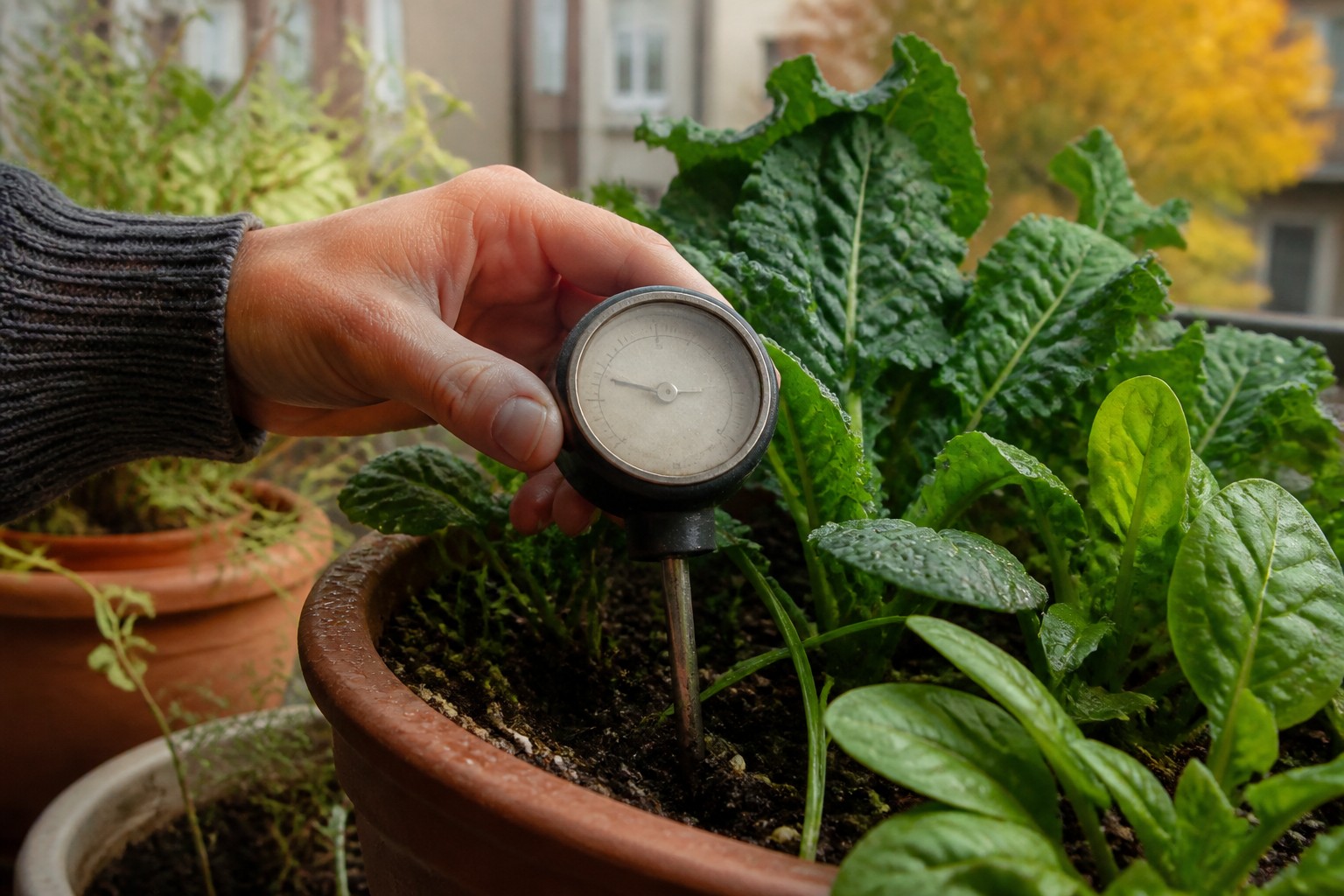
Water less than you think. This is the mistake I made for years. Cool soil dries out slowly, and a fall pot needs a fraction of the water a July one did — but the habit of daily watering is hard to break, and overwatering in cold weather rots roots fast. I check with a no-battery soil moisture meter before I reach for the can: probe to root level, and if it reads damp, walk away no matter what the surface looks like. When it does say dry, water the soil deeply with a long-spout watering can rather than splashing the leaves, which invites mildew in the cool, still air.
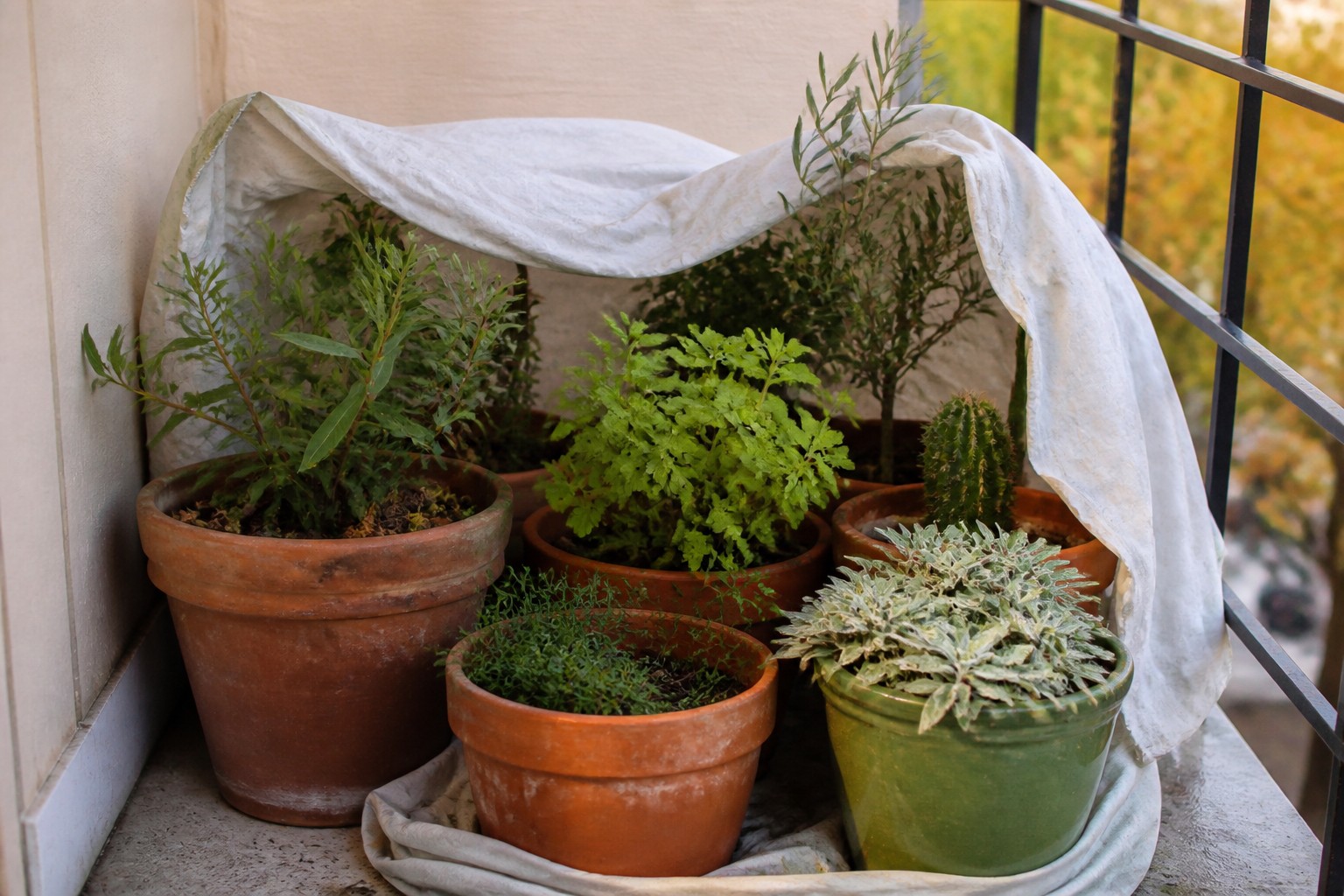
Group your pots and use the wall. Push your containers together against the warmest wall — usually the one the house heat leaks through — and you buy your plants a few degrees and a windbreak. On a night that threatens a hard freeze, an old bedsheet thrown over the cluster is enough to carry tender crops through. Take it off in the morning.
When to sow (do it sooner than feels right)
Here’s the one bit of timing that trips people up: you sow fall crops in the tail of summer, while it’s still warm, so they have time to size up before the light fades and growth crawls. Aim to get seed in six to eight weeks before your first expected frost. Miss that window and you can still sneak in fast crops — arugula and radishes and baby lettuce — right up until about a month before hard frost. After that, growth nearly stops, but a mature kale or mâche plant will simply hold in the cold, a living refrigerator you harvest from all winter.
Otto, I should say, considers the fall lettuce a personal salad bar set out at his exact nose height, so mine grows on a shelf bracket he can’t reach. Plan for your own version of Otto.
That’s the whole second season — seven forgiving crops and a few pots that don’t quit when the calendar says they should. If you want the full small-space system this fits into — pot sizes, mixes, how much sun each crop needs, and how to run a balcony right through the year — I lay it all out in Small-Space Big Harvest. This post is the fall shortlist. The book is the rest of the balcony.