How to Winterize a Chicken Coop for a Healthy Flock
How to winterize a chicken coop — why dry, draft-free ventilation matters more than heat, how I keep water thawed, and the winter prep that keeps hens healthy.
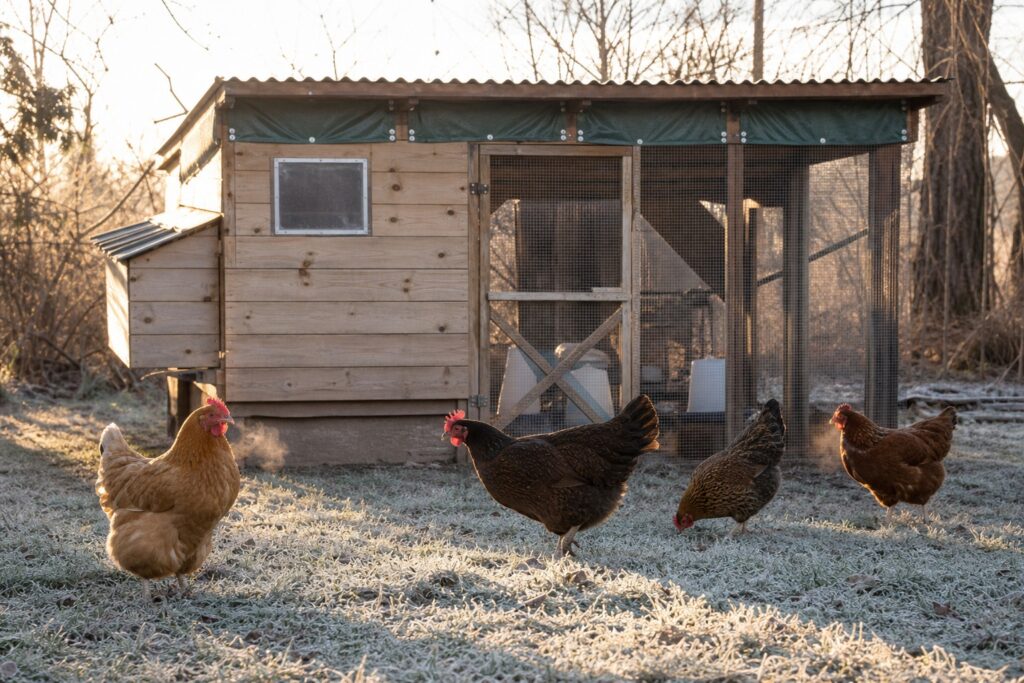
The first winter I kept chickens, I did the thing that feels like love and is actually a mistake: I wrapped the coop up tight. Plastic sheeting over the vents, every gap I could find stuffed with a rag, the whole thing sealed against the cold like a cooler. I was so proud of it. Then one morning in January I opened the pop door and it was raining inside — frost melting off the ceiling, damp shavings, and one of my Buff Orpingtons with the tips of her comb gone black. That was the winter I learned the thing nobody quite believes until they see it: your hens can handle the cold. What they can’t handle is damp.
A healthy flock gets through a Tennessee winter — and colder ones than mine — on feathers, dry bedding, and moving air. Cold-hardy breeds like Orpingtons, Australorps, and Plymouth Rocks are built for it. Winterizing a coop isn’t about sealing in heat. It’s about keeping the inside dry, keeping the drafts off the roost, and keeping the water from turning to a brick. Here’s how I do all three.
Two things I’d point you to but can’t link a listing for yet: half-inch hardware cloth for covering vents so air moves but raccoons and cold wind don’t get in, and a heated waterer base if your winters go well below freezing for days at a stretch. Both are worth owning. I’ll add links here once I’ve got listings I actually stand behind.
Cold isn’t the enemy — damp and draft are
This is the whole thing, so I’ll say it plainly. A dry, draft-free coop keeps hens comfortable well down into the teens and single digits. Frostbite doesn’t come from cold air alone — it comes from moisture in the air freezing on combs and wattles. And where does that moisture come from? Your hens. They breathe it out, and it rises off their droppings and any spilled water all night long. Seal the coop up tight and you trap all of it inside, which is exactly backward.
So the goal isn’t to keep air out. It’s to let the wet air escape while keeping cold wind off the birds on the roost. Warm, still, dry — not warm, sealed, and dripping.
And I don’t run a heat lamp, not in winter, not ever. I said my full piece about heat-lamp fires already, but the short version stands: an open heat source over dry bedding is how people lose coops and barns every winter, and birds that get used to added heat can’t cope if the power drops on the coldest night of the year. Let them acclimate. They’re wearing down coats.
Ventilation without a draft
Here’s the part most first-year keepers get backwards, because “ventilation” and “keeping them warm” sound like opposites. They aren’t.
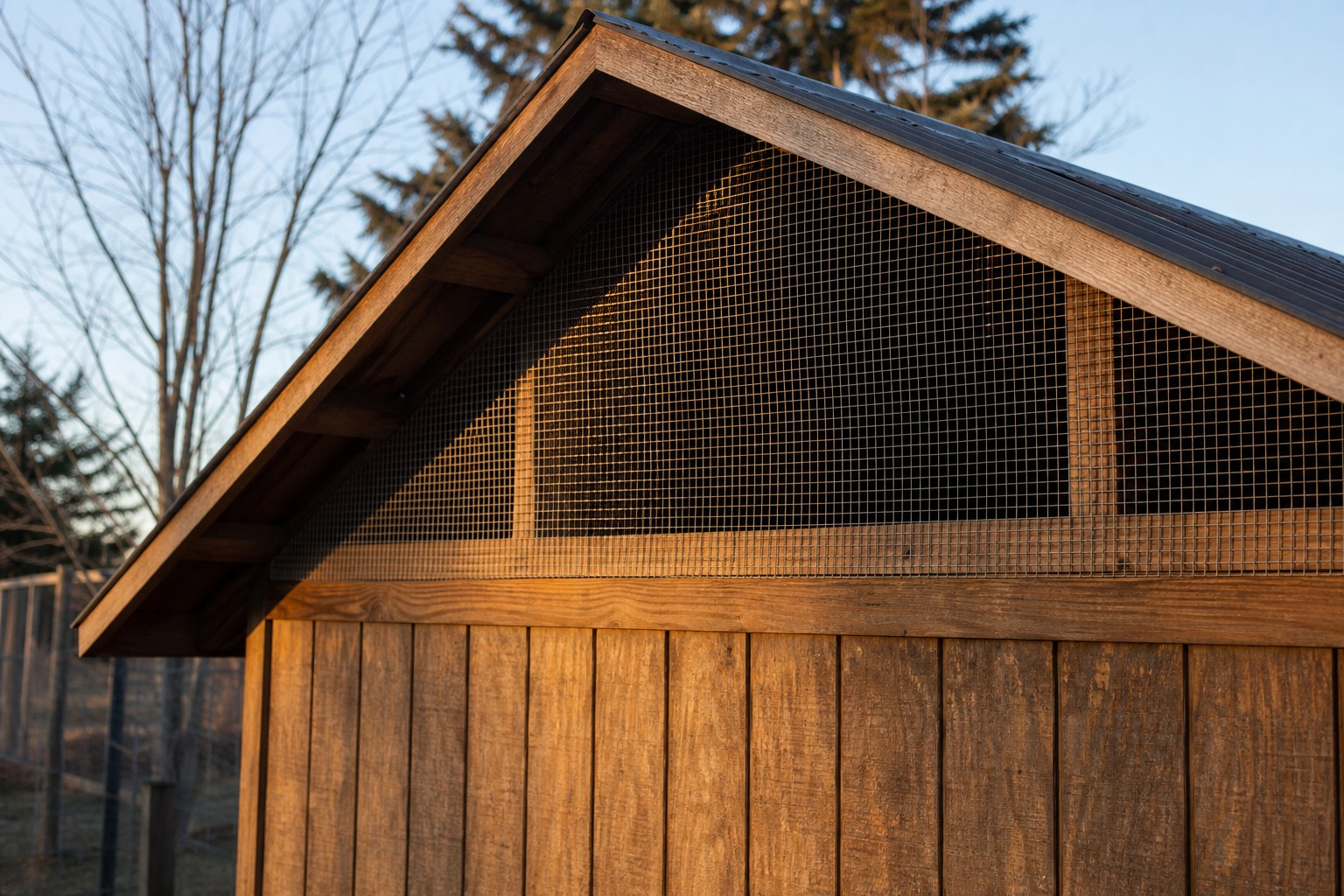
You want vents up high, above the height of the roost — under the eaves, a gable vent, a strip of covered opening near the roofline. Warm, moist air rises, and those high vents let it carry the damp up and out over the birds’ heads. Down at roost level, where the hens actually sit all night, you want it still — no wind cutting across them. Solid walls low, open and covered high. Cover every vent with half-inch hardware cloth so it stays open to the air but closed to predators; don’t ever board them shut to “keep the heat in.” That’s the mistake I made my first year, and my hen’s comb paid for it.
Keep them dry underfoot
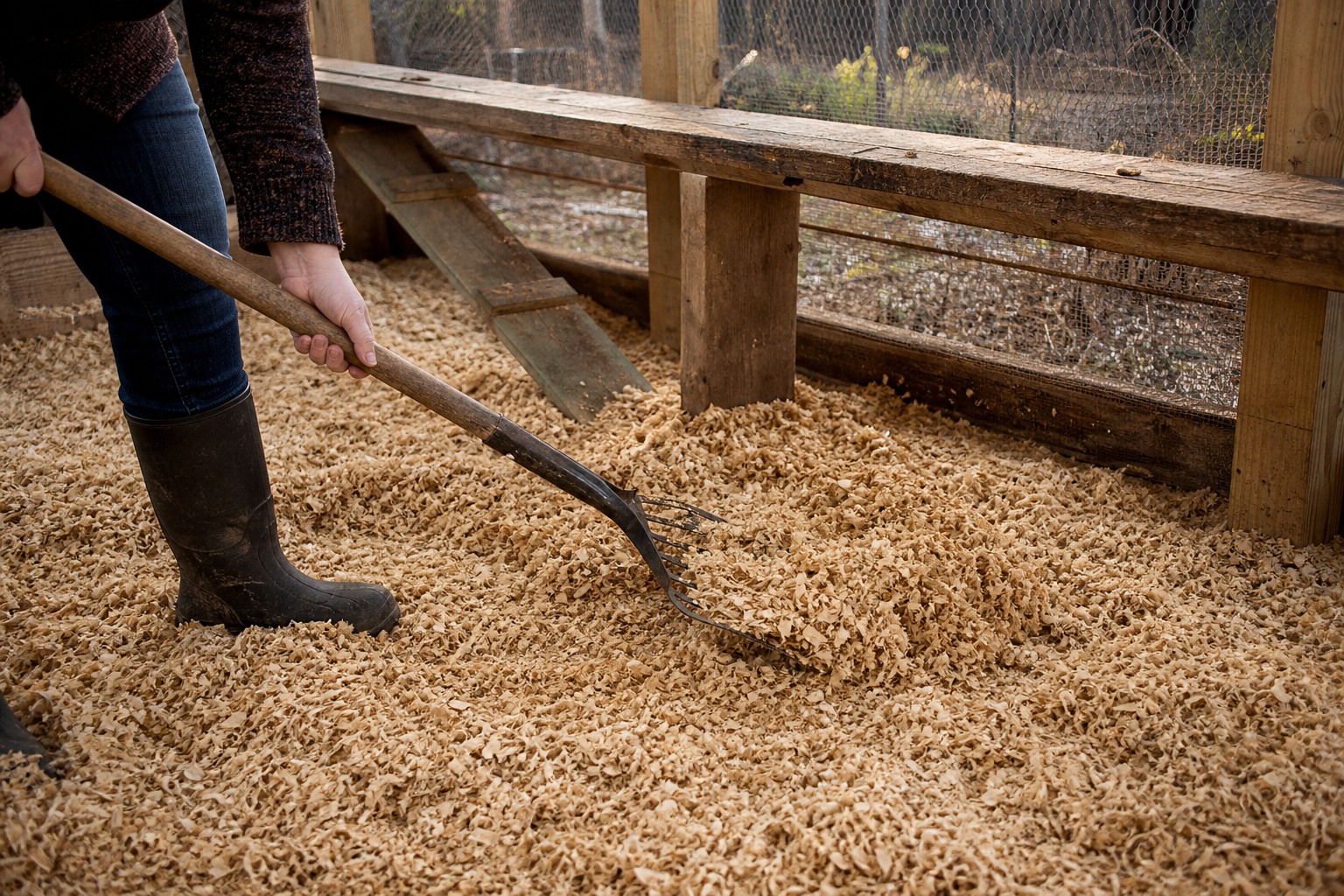
Wet bedding is the other half of the damp problem, and the fix is the deep litter method.
Instead of stripping the coop bare every week, you let a base of pine shavings build up over the winter, turning it and adding a fresh handful on top as it packs down. The bedding slowly composts underneath, which gives off a little gentle warmth and, more to the point, keeps the birds up out of the wet. The rule is simple: it has to stay dry. Dry deep litter is warm and sweet-smelling and takes almost no work. Wet litter is ammonia and frostbite waiting to happen.
That’s also why the waterer matters more in winter than summer. Every cup of water that sloshes onto the shavings is moisture you now have to ventilate back out — one reason I run low-spill nipple waterers instead of an open fount the girls can knock into.
Water that doesn’t turn to a brick
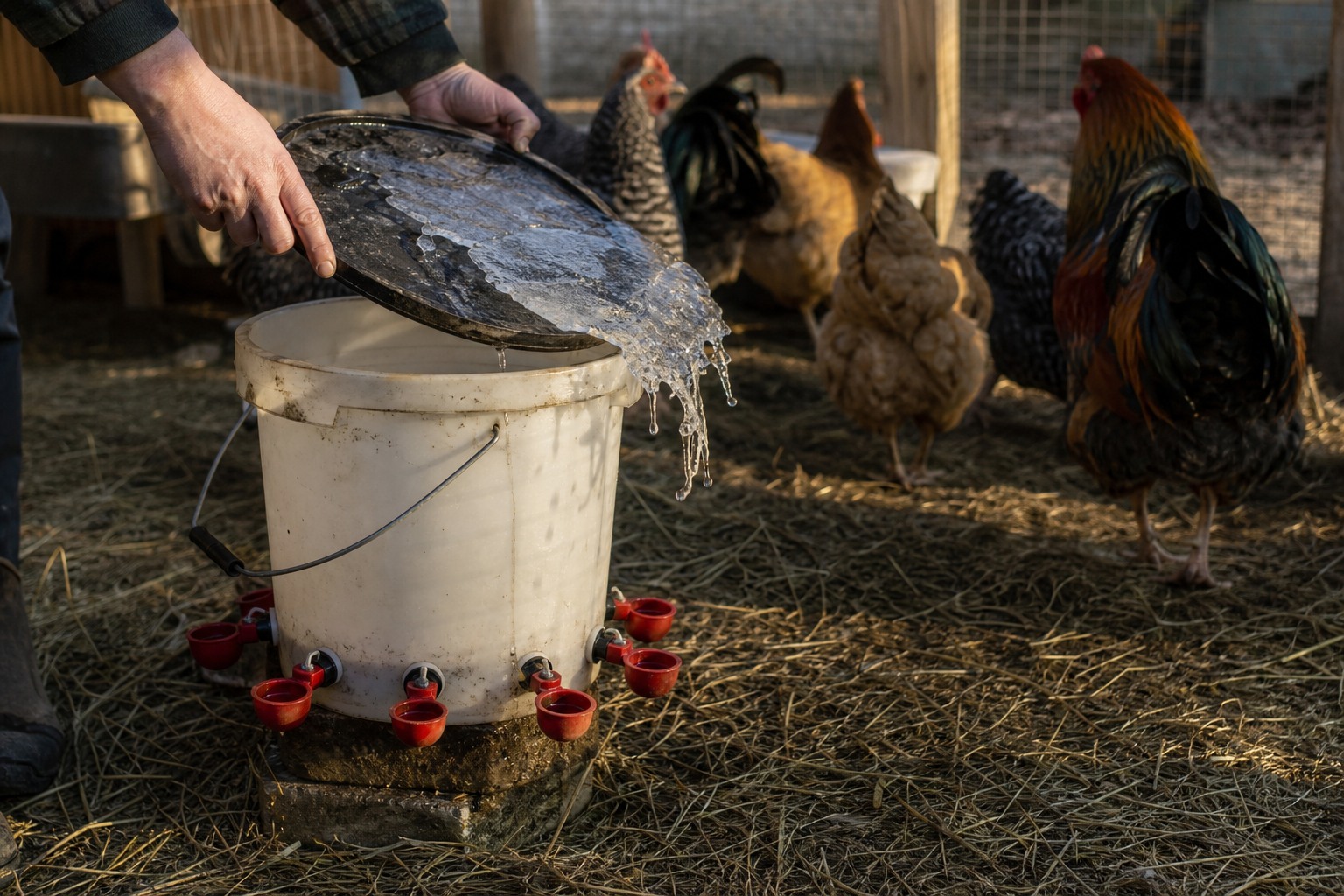
Winter watering is the daily chore, and there’s no magic that makes it disappear. Chickens need liquid water every day; they can’t peck ice.
An open metal fount freezes solid and fast. A covered horizontal-nipple bucket ices over slower, and when it does skin over, you can usually pop the lid, tip the thin ice out, and top it with warm water in about a minute. On the hardest stretches a heated base under the waterer is the real answer — it’s the one piece of winter gear I’d tell a keeper in a cold climate to save up for. Short of that, I keep a second waterer inside by the door, swap the frozen one for the thawed one twice a day, and bring the frozen one in to melt. It’s not elegant, but it works, and keeping the water flowing without freezing is a whole project of its own that’s worth reading up on before your first hard freeze.
A few last jobs before the first frost
The small stuff that saves you grief later:
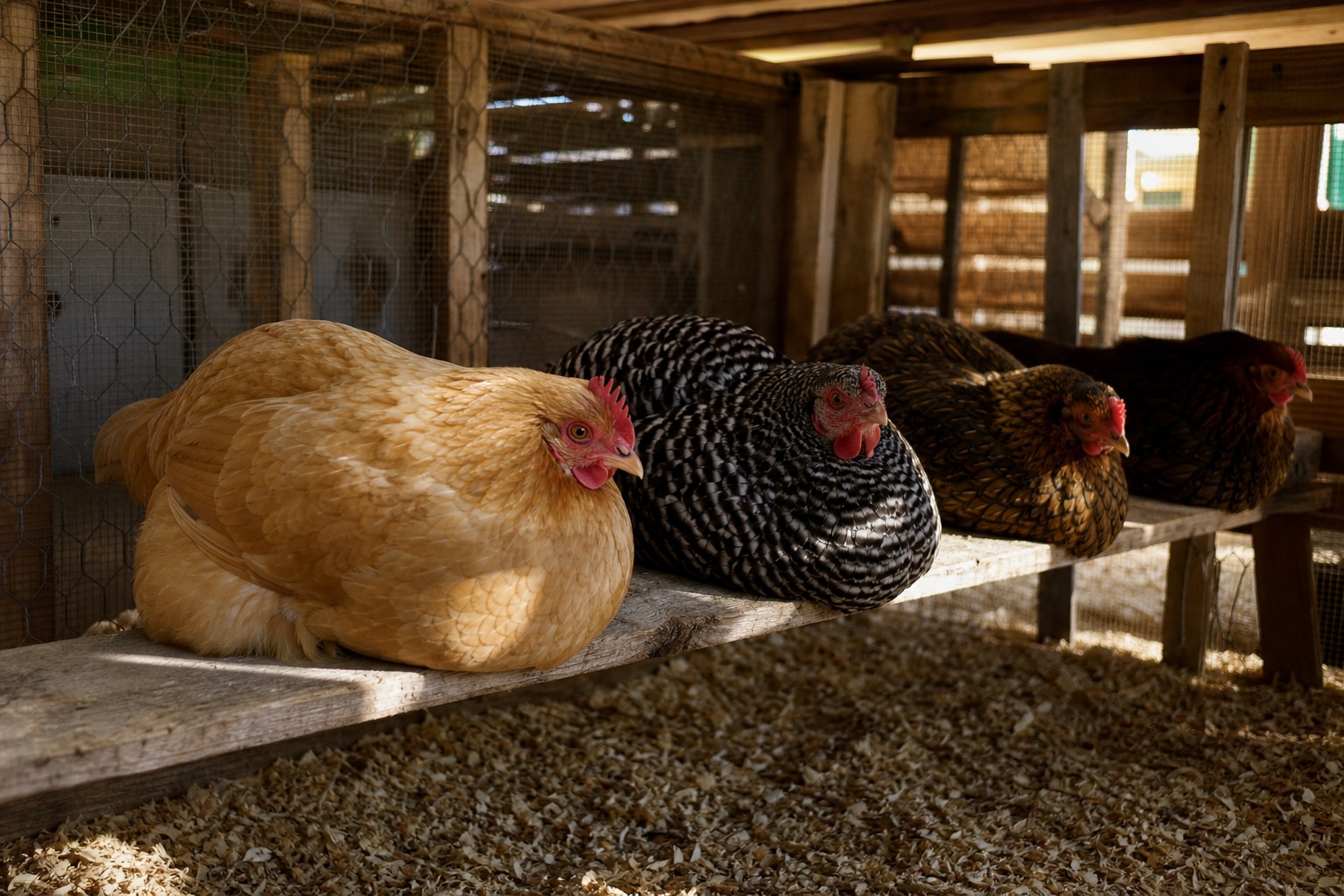
Fix the roost. Hens keep their toes from freezing by settling down over their feet, so a wide flat roost — a 2×4 with the broad side up — lets them cover their toes with feathers. A skinny round bar or a dowel leaves the toes wrapped and exposed, and that’s where toe frostbite starts.
Check for drafts at night. Go out after dark with the coop closed up and feel for wind coming across the roost. If you can feel it on your hand, they can feel it on their backs. Block it low, keep the vents open high.
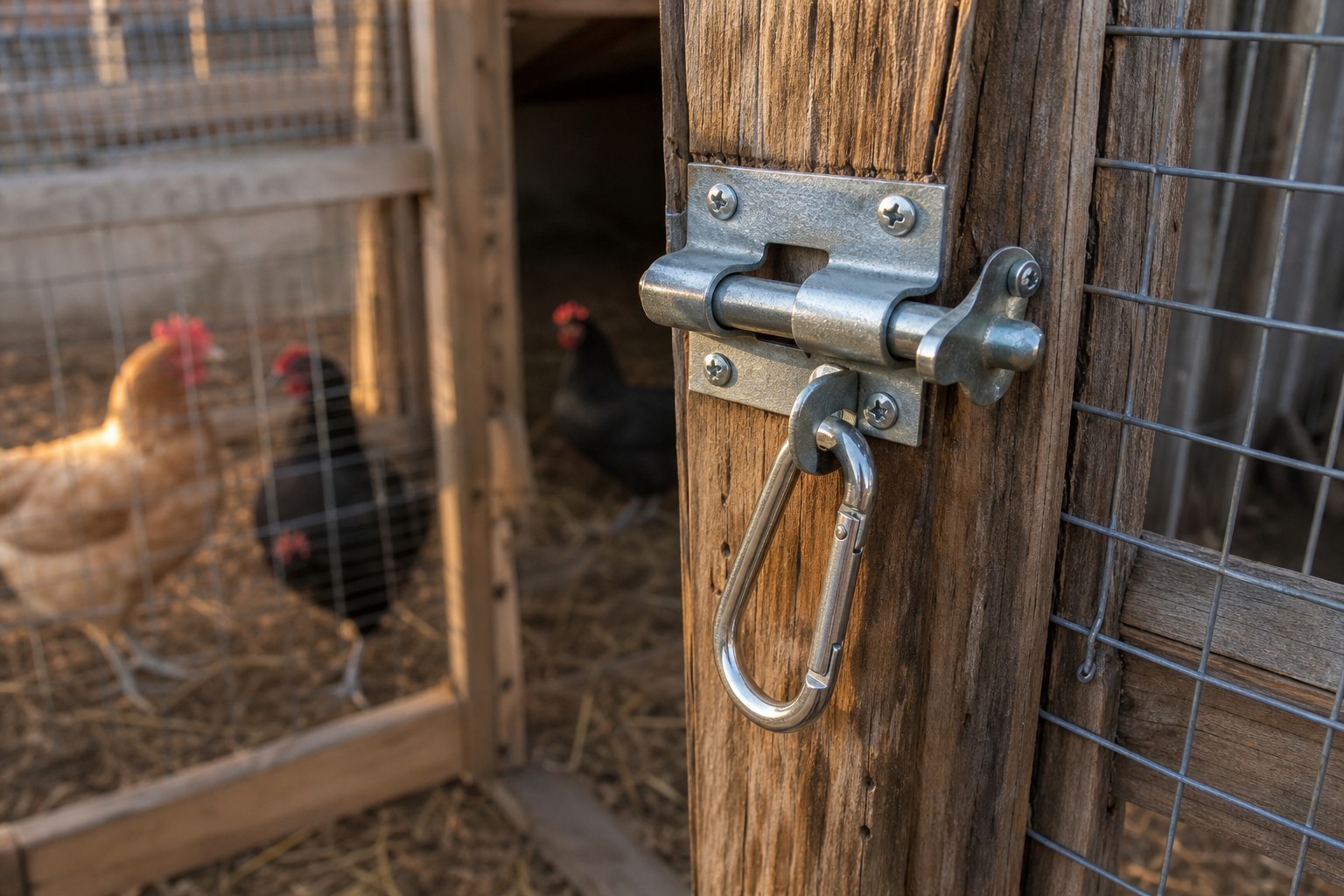
Tighten up against predators. Winter makes everything hungrier and bolder. Raccoons will work a weak latch harder when the woods are lean, so this is the season I double-check that every door has a proper cam-lock or a spring latch with a clip — a raccoon opened a simple slide latch on me in about thirty seconds once, and I’ve never trusted one since. Coyotes and stray dogs range wider in winter too. Hardware cloth, secure latches, no gaps.
And expect fewer eggs. Shorter days slow laying right down, and that’s normal — the girls are putting their energy into staying warm, not filling the nest boxes. You can add a light to push them, but I mostly let them rest through the dark months and take the eggs back in spring.
Do those things — dry, ventilated, unfrozen water, safe roost, tight latches — and your flock will walk out into the first warm spring morning healthy and none the worse for the cold. I walk through the whole first year, season by season, including everything that goes wrong in a coop and how to head it off, in my book, Raising Backyard Chickens for Beginners. This post is the winter piece. The book is all four seasons.
