How to Make Elderflower Cordial from Foraged Blossoms
How to make elderflower cordial from foraged blossoms — how I tell blue elder from red, when to gather, the one safety rule I never skip, and how I bottle it.
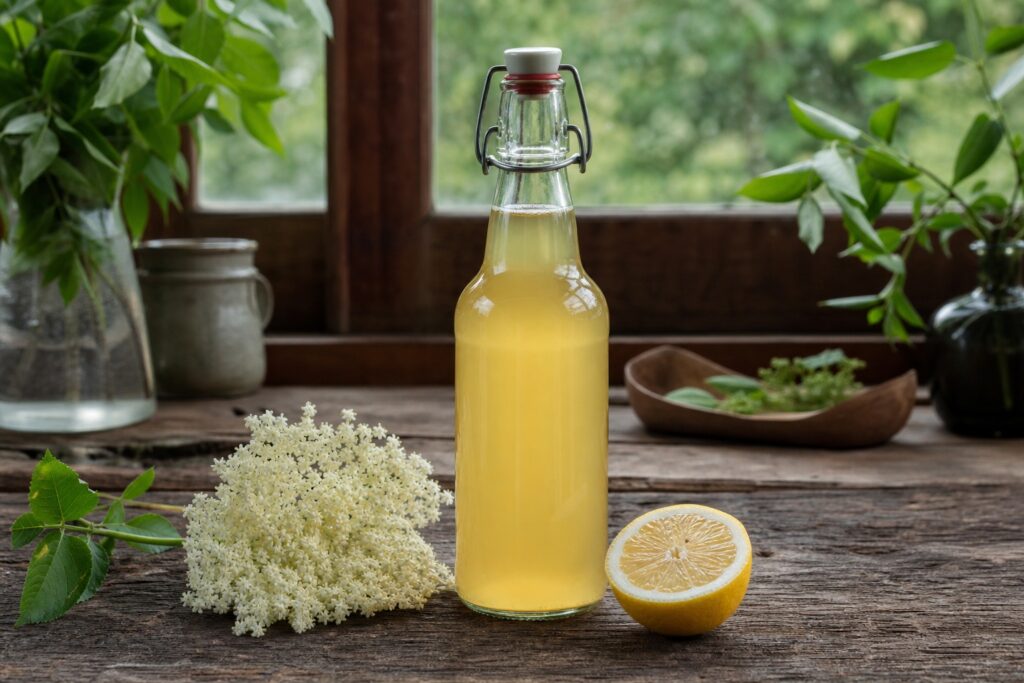
There’s a two-week window on this coast, usually the back half of June, when the blue elder comes into full flower along the field edges and the old logging roads, and the whole plant smells like muscat grapes and honey warmed in the sun. Miss it and you wait a year. I have made elderflower cordial every one of those Junes for longer than I can remember, and it is still the thing I look forward to most in early summer — a jar of concentrated blossom that carries the smell of the flowering into December, splashed into cold water or seltzer when the rain has been going for a week and you’ve forgotten what June felt like.
It’s an easy thing to make. It is also a plant you have to get right before you make anything, because “elder” on the Olympic Peninsula covers two different shrubs, and only one of them is what you want in the pot. So let me start where it matters — with telling them apart — and then walk you through exactly how I steep, strain, and bottle a batch.
You’ll also want a wide crock or a large glass jar to steep in, and clean swing-top or screw-cap bottles to store the finished cordial. I don’t have a specific listing I’d stand behind to point you to for either yet, so buy what you have room for — a big kitchen bowl and a couple of well-washed juice bottles will do the whole job.
First, know which elder you’re picking
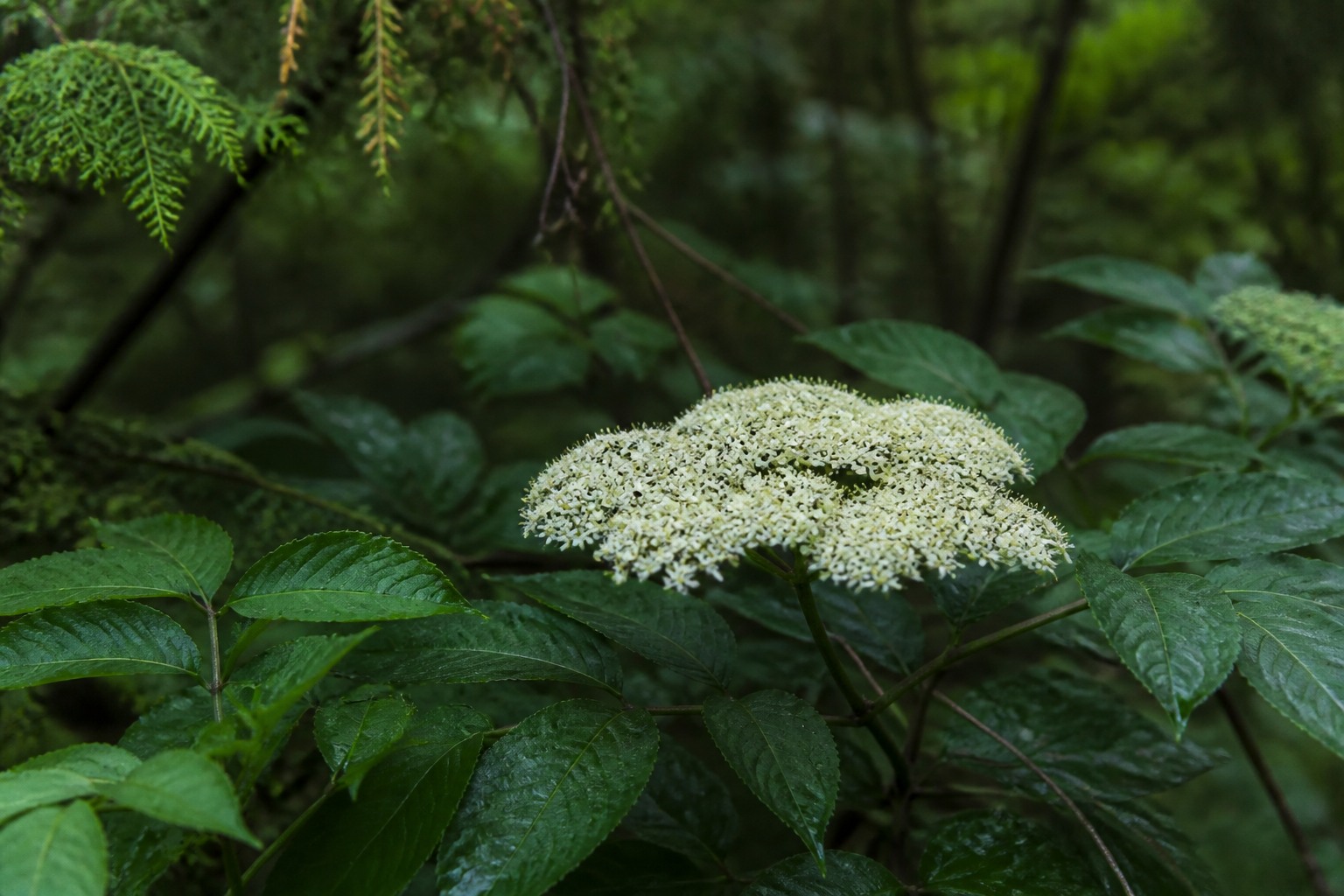
Two elders grow here, and the difference is not academic.
Blue elder (Sambucus cerulea, also filed as Sambucus nigra ssp. cerulea) is the one you want. Flat-topped creamy flower clusters held up like plates, a shrub or small tree of sunny edges and roadsides, and — later in the season — dusty powder-blue berries. This is the classic cordial and elderberry plant, the same species Europeans have used for centuries.
Red elder (Sambucus racemosa) is the one to leave alone for this. Its flower clusters are dome-shaped or cone-shaped rather than flat, it favors shadier damp woods, and it fruits bright red. Red elder carries more of the cyanogenic compounds that give the whole genus its cautions, and I don’t make cordial from it — the flat-topped blue elder is the safe, traditional choice, and there’s no reason to gamble when the good one grows right beside the road.
Learn the flat-plate flower shape and the powder-blue fruit and you’ll never mix them up. As with anything you gather to eat or drink, confirm your identification against more than one reliable source before you use it, and when it doubt, leave it be. Said once, and I’ll trust you with it.
Gather at the right moment, and handle the stems
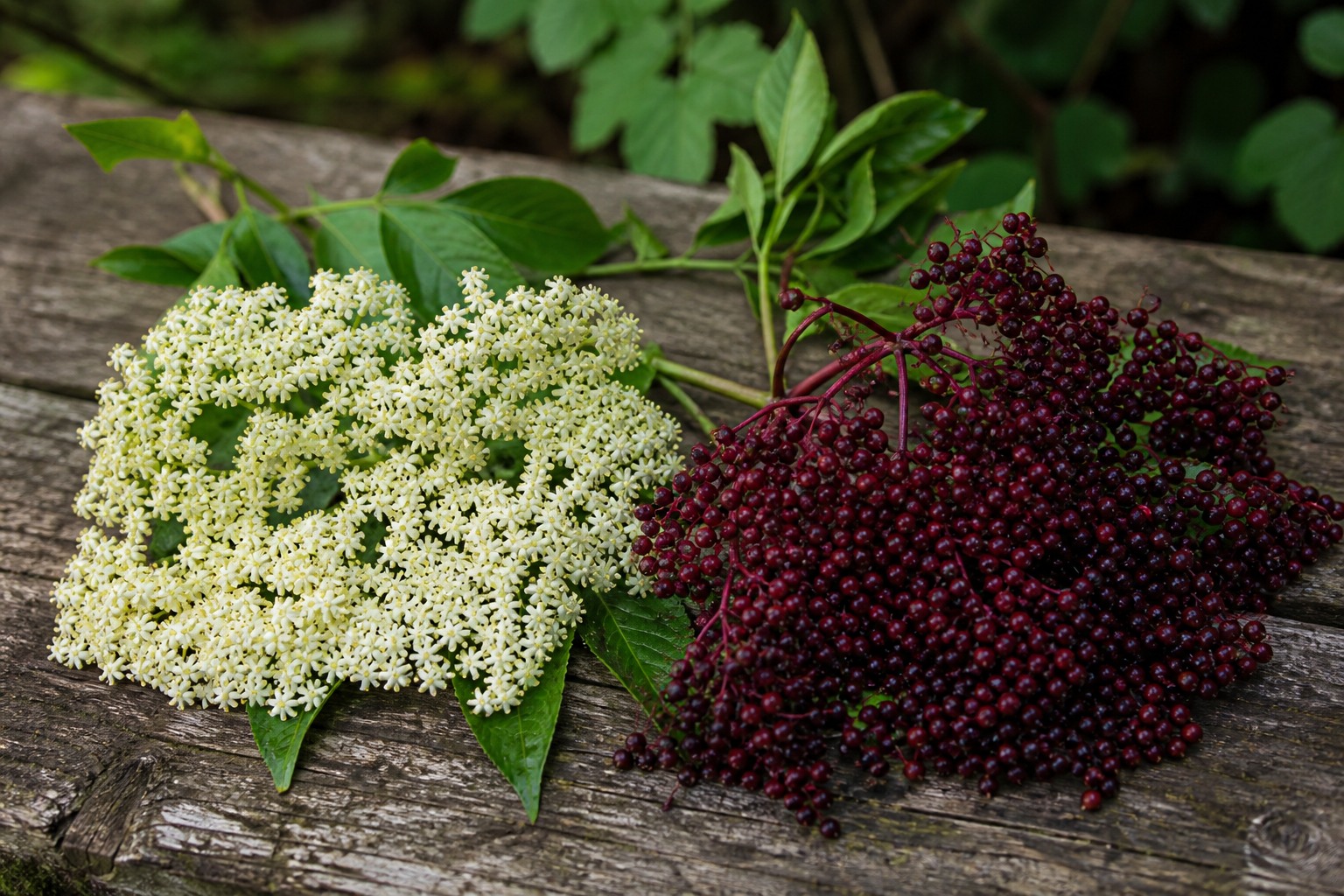
Pick on a dry, sunny morning after the dew has burned off, when the flowers are fully open and most of the tiny buds have opened but nothing has started to brown. That’s when the fragrance is at its peak. Snip whole heads into a basket — loosely, so they don’t sweat and bruise on the walk home — and use them the same day. Elderflower fades fast; a head that smelled of honey in the field can smell faintly of cat by the next morning if you leave it in a warm kitchen overnight.
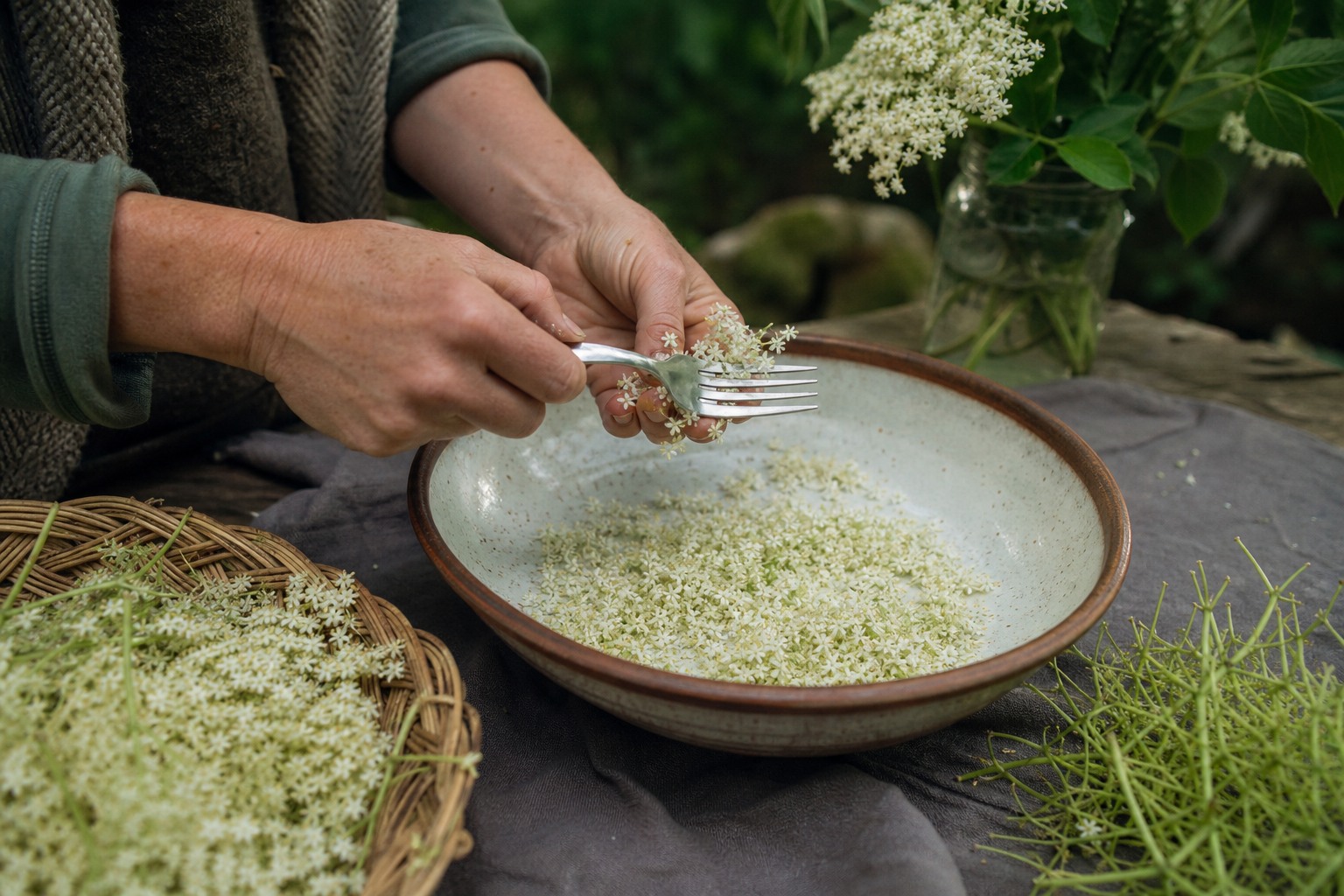
One handling rule that matters: use the flowers, not the green. Strip the little blossoms off the stems with a fork or your fingers and keep as much of the green stalk out of the pot as you reasonably can. The green parts of elder are the bitter, mildly toxic parts of the plant; the flowers are what you’re after. A few thin stalklets won’t hurt you, but don’t throw whole stems in — pick the blossoms off. Give each head a gentle shake first, too, to send the little residents back outside; you’re gathering a lot of tiny flowers and they come with tiny company.
Steep it — flowers, sugar, acid, water
My method is old and plain and doesn’t need a candy thermometer.
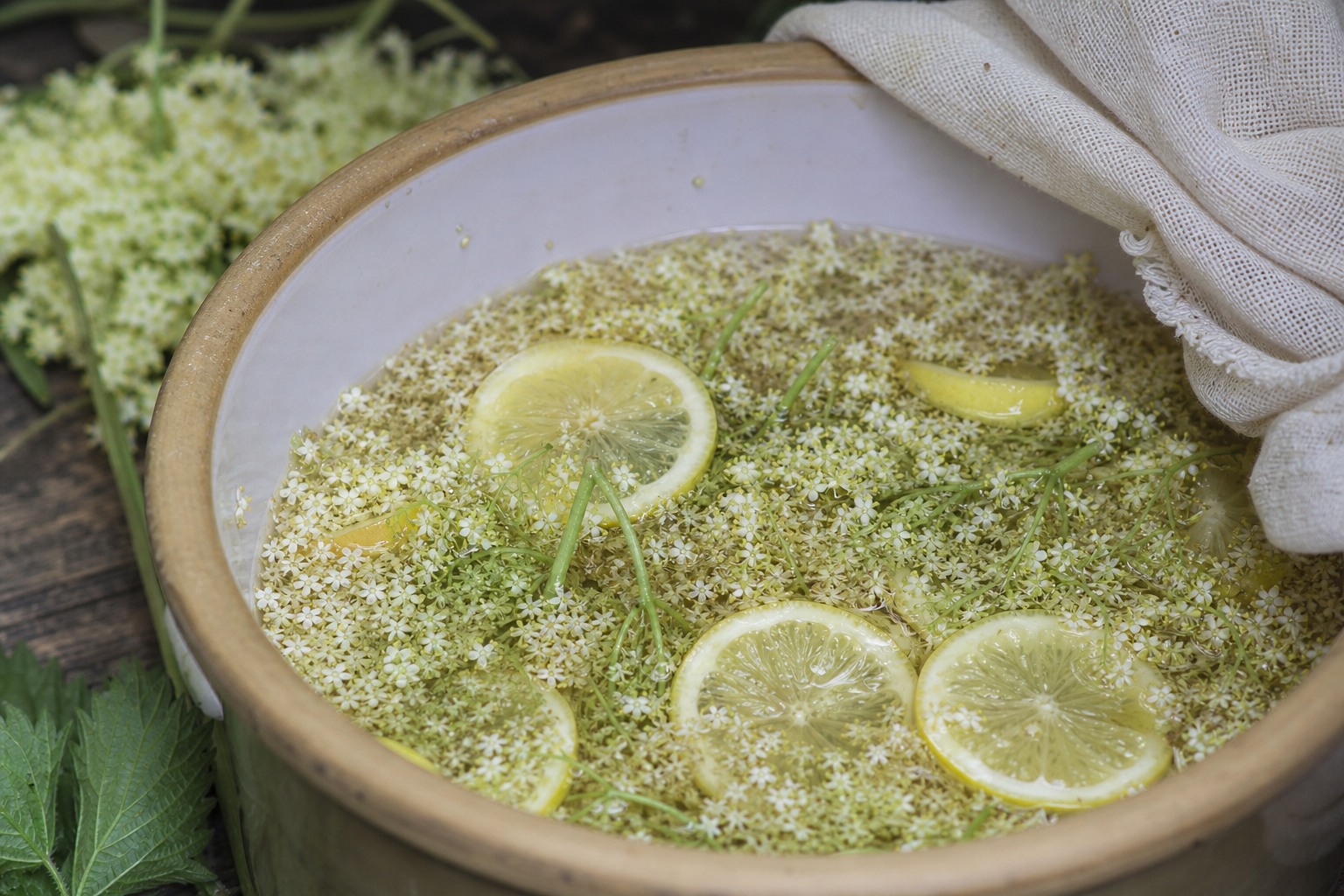
For a manageable batch: bring a good amount of water to a boil, stir in sugar until it dissolves into a clear syrup, and take it off the heat. While it cools to just-warm, strip enough elderflowers to fill a wide bowl or crock loosely — the more blossom, the more perfumed the cordial. Add a couple of sliced lemons for brightness, and here’s the piece people skip: a spoonful of citric acid. Citric acid does two jobs. It lifts the flavor and keeps the color pale and clean, and — more importantly — it’s the preservative that lets a cordial keep for months instead of turning in a week. You can find it near the canning supplies or the home-brew shelf. Pour the just-warm syrup over the flowers and lemon, stir, cover with a cloth, and leave it somewhere cool.
Now you wait. Steep it 24 to 48 hours, stirring once or twice a day. The longer end pulls more fragrance; much past two days and it can start to go flat and vegetal, so I taste at 24 hours and usually pull it between there and 36. You’re steeping a flavor, not fermenting — if you see bubbles or smell anything sharp and yeasty, it’s gone wild on you and it goes on the compost.
Strain it clean and bottle it
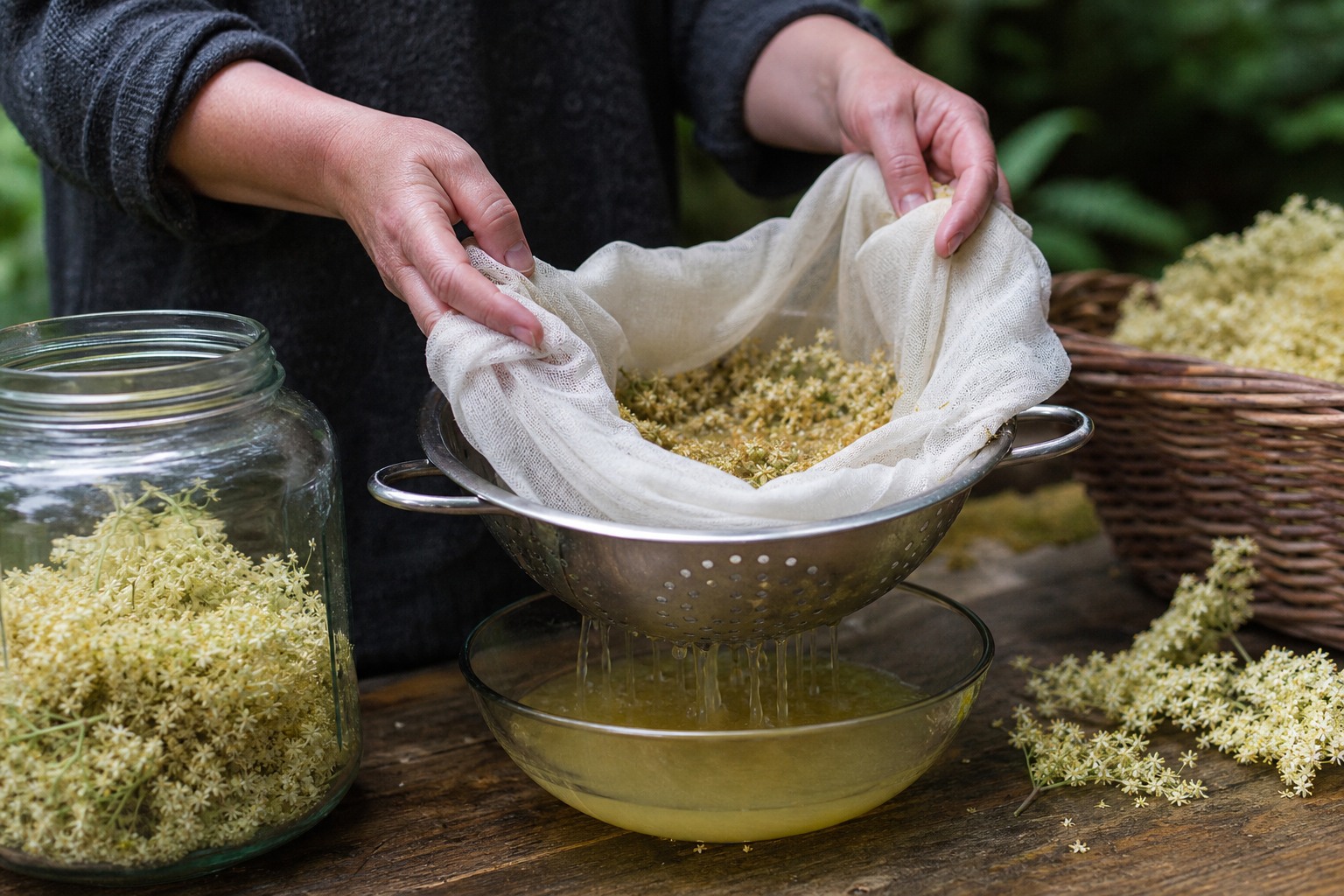
This is the step that separates a cordial you’re proud of from a cloudy one. Set a colander over a big bowl, line it with a doubled layer of grade-90 cheesecloth, and pour the whole steep through it. Let it drip on its own — squeeze the cloth and you push pollen and fine sediment straight through into the finished cordial, and you’ll have muddy syrup instead of clear. The tight grade-90 weave is what catches the fine stuff a looser cloth waves right through. Gather the corners, let it hang and drain a while, and leave the last cloudy bit behind.
Funnel the strained cordial into clean bottles and cap them. It keeps in the refrigerator for a month or two easily, and longer if your acid was generous. For a whole year of it, freeze some — I fill a few small bottles or even an ice-cube tray and pull out June in the middle of winter. Label and date whatever you make; you will not remember in November whether that bottle is this year’s or a survivor from last.
To use it, start with roughly one part cordial to eight or ten parts cold water or sparkling water and adjust to your taste. It’s a syrup, so a little goes a long way.
An honest word on what it is
Elder has a long history as a home remedy — the flowers were a fixture of the old cold-and-fever teas in more kitchens than just European ones, and people have leaned on them for generations. I’ll share that this is what the plant has traditionally been used for, and leave it there. A bottle of elderflower cordial is a beautiful, fragrant summer drink. It is not medicine, and I’m not going to tell you it is. Enjoy it as the small seasonal pleasure it is, and talk to a qualified practitioner for anything that actually needs one.
The rest of what the elder gives
The flowers are June. The berries are September, and they’re a different project — cooked, always, never raw, and worth their own afternoon. Elder is one of the most generous plants on this coast if you know it well, and one of the easiest to get slightly wrong if you don’t.
That’s the sort of thing I spend real time on in my book, Pacific Northwest Medicinal Plants: 115 wild plants of this region, how to tell each one from its look-alikes without guessing, when to gather it, and how the generations before us prepared it. The cordial is the easy June afternoon. The book is how you learn which elder is in front of you — and everything else growing along that same road.
