How to Grow Strawberries in Grow Bags on a Balcony
How to grow strawberries in grow bags on a balcony — the type to plant, the bag size that works, and how to water them so they fruit all summer in a small space.
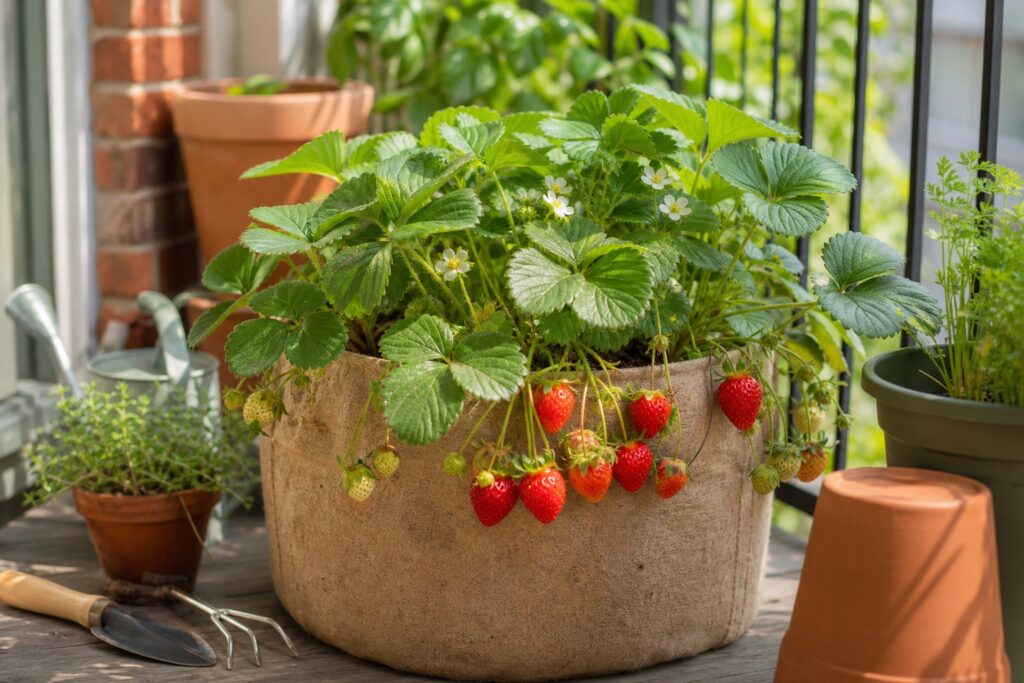
Strawberries were the first thing I grew on my balcony that made me feel like the whole small-space experiment was working. Herbs are lovely, but there’s something about walking out in a robe with your coffee and eating a warm strawberry off a plant on your own railing that lands differently. And of everything I grow, strawberries might be the best-matched to a grow bag. They have shallow roots, they don’t need much soil, and they actually prefer the sharp drainage a fabric bag gives them.
You don’t need a yard for this. You don’t need a raised bed. You need a bag, a sunny few feet, and the right kind of plant. Here’s how I do it.
Pick the right kind of strawberry first
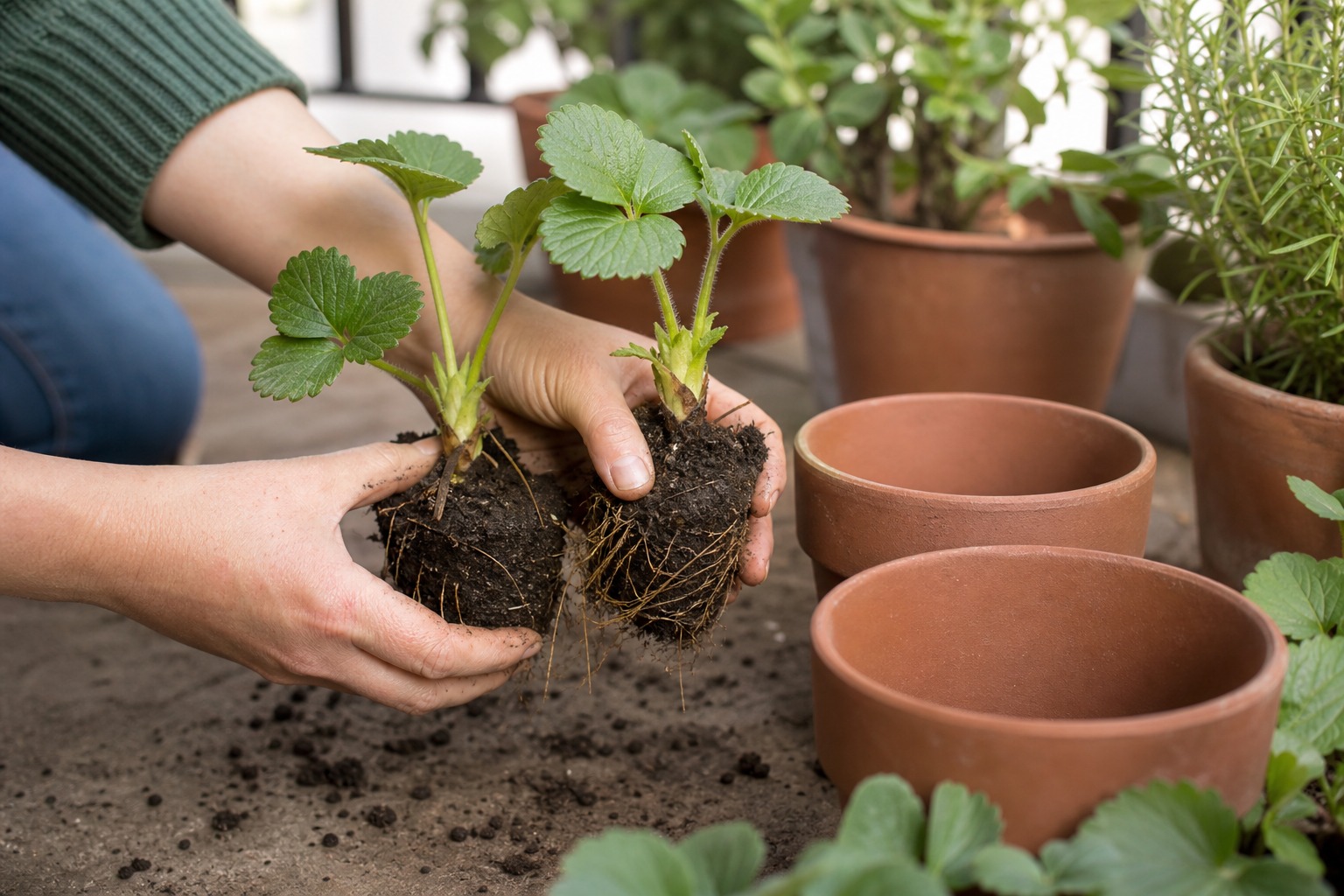
This is the choice that decides everything, and it’s the one most people skip. Strawberries come in three types, and for a balcony you want to be picky.
June-bearing strawberries give you one big flush in early summer and then they’re done. Beautiful, but a lot of pot for a two-week payoff. Everbearing and day-neutral types are the ones I grow, because they fruit in waves from summer into fall — a handful at a time, over and over, which is exactly what you want when you’ve only got a bag or two. Look for day-neutral varieties like ‘Albion’, ‘Seascape’, or ‘Tristan’ (a pretty one that fruits from seed and trails nicely over the edge of a bag). A dozen of those in a couple of bags will hand you berries most weekends all season instead of one glorious, brief avalanche.
Buy them as bare-root crowns or small plants from a garden center. One more honest note: a strawberry plant’s first year in a container is its best. I replace mine every couple of years because the yield drops off, and the runners they throw give me free replacements anyway. More on those below.
Fill the bag right
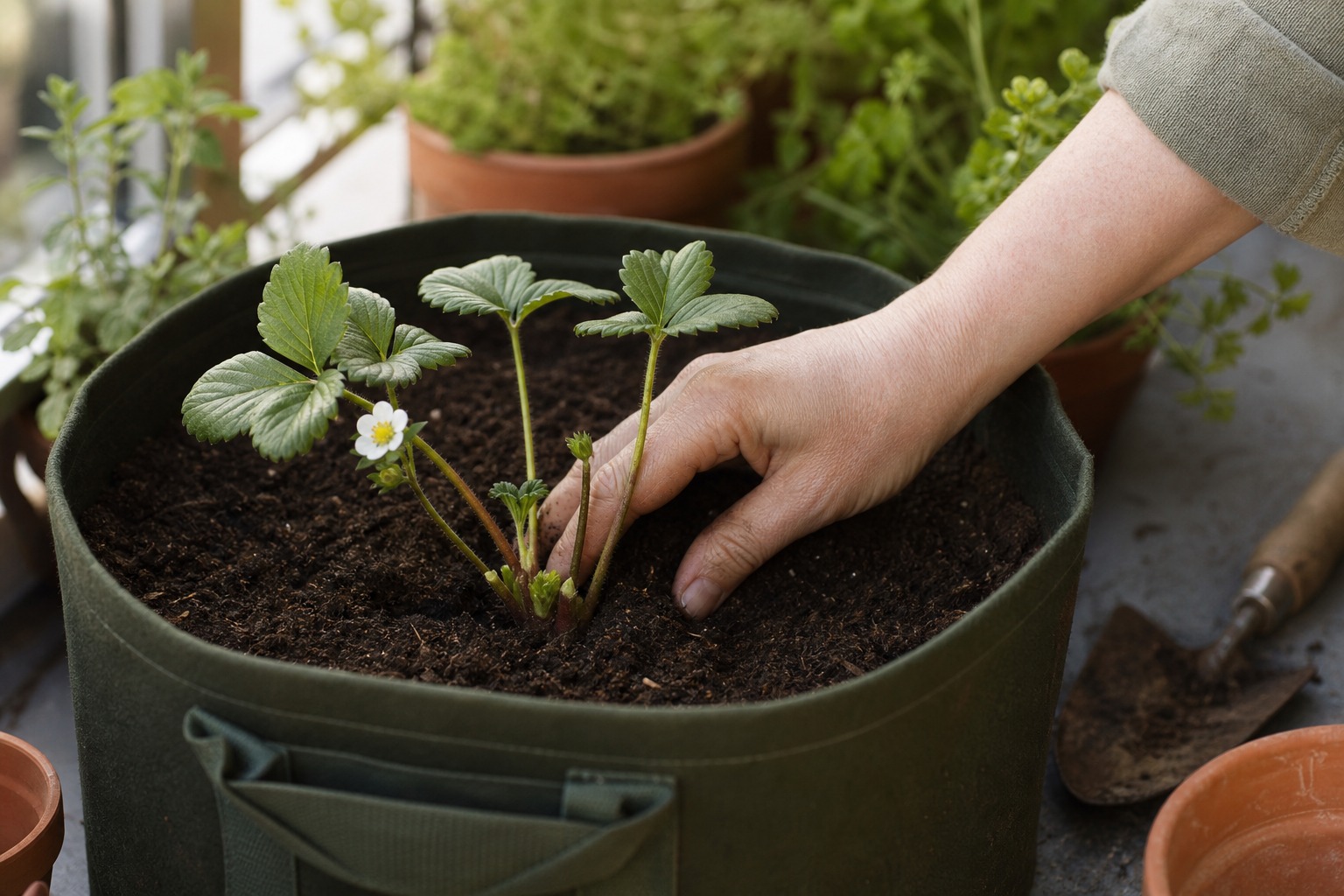
A fabric grow bag in the 5- to 7-gallon range holds three or four plants comfortably, and the breathable sides are genuinely better for strawberries than a solid pot — the roots stay cooler and never sit in a soggy bottom. If you find one of the tall bags with pockets down the sides, even better; strawberries are one of the few crops those actually work well for, since each plant is small and shallow-rooted.
Fill it with potting mix, not garden soil and not topsoil. Garden soil packs down hard in a container and drowns the roots; a light potting mix stays fluffy and drains. Set the crowns so the little growing point in the center — the crown itself — sits right at the soil surface. Bury it and it rots; plant it too high and it dries out. Right at the surface, and firm the mix gently around each one.
Sun and water are the whole game
Strawberries want sun — six hours minimum, eight is better. On my balcony that means the railing spots, not the shady corner by the door. If your space is genuinely shady, strawberries will be the crop that disappoints you, and I’d steer you to leafy greens instead. Be honest with yourself about the hours before you commit the bag.
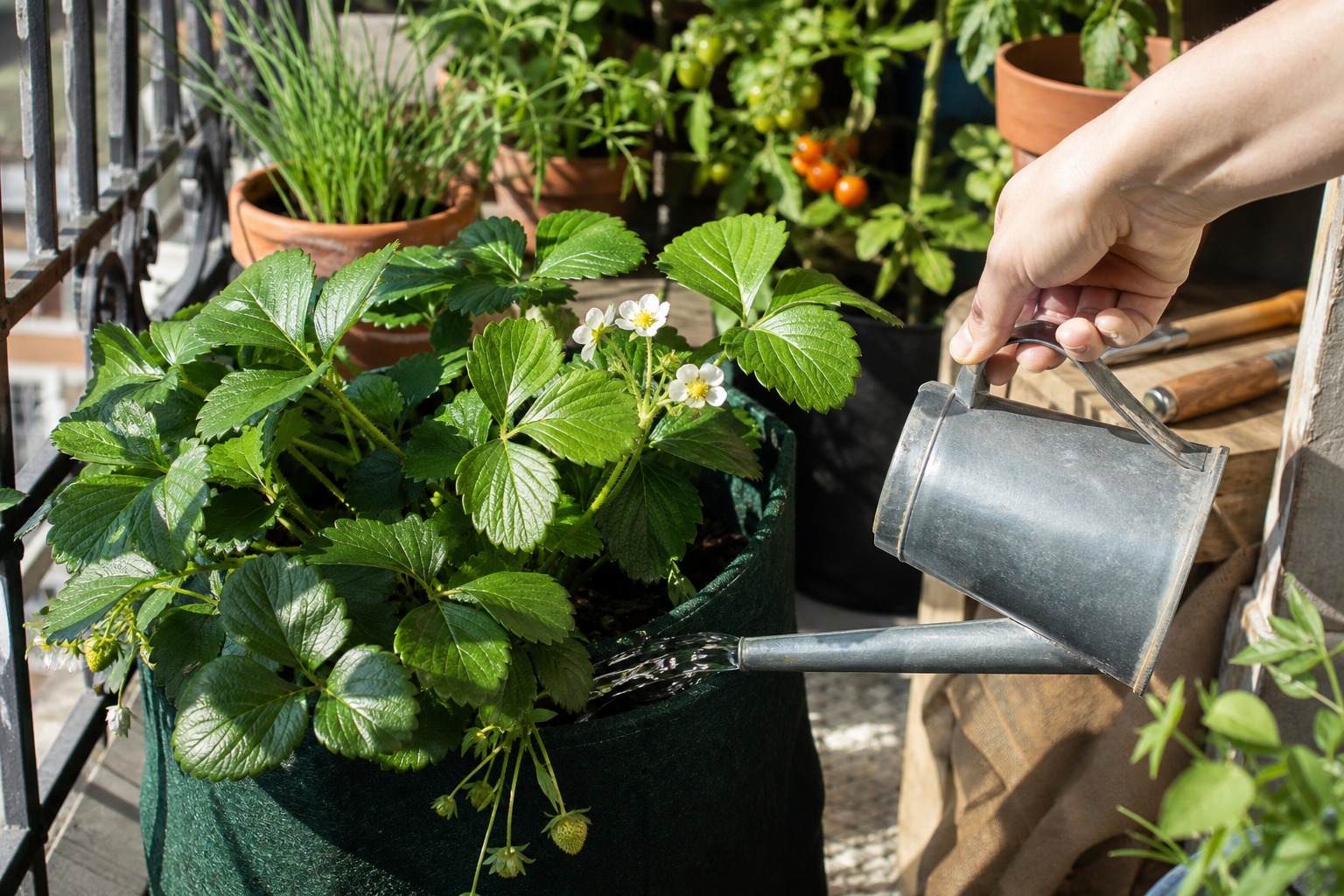
Water is where grow bags ask something of you. Those breathable sides that keep the roots happy also dry out faster than any solid pot — in July mine need water every single day, sometimes twice. I water in the morning with a long-spout can, aiming at the soil rather than over the leaves and fruit, because water sitting on ripening berries invites gray mold. When I can’t tell whether a bag is actually dry or just warm, I stop guessing and push a soil moisture meter down to root level — it’s saved me from both drowning and drought more times than I can count. And for a weekend away, I set up terracotta watering spikes with an inverted bottle in each bag the night before, so the plants sip while I’m gone instead of crisping in the sun.
Feed them, too. Strawberries in a bag run through the nutrients in that small volume of mix quickly, so I give them a diluted liquid feed every couple of weeks once they start flowering. Skip it and you’ll get plenty of leaves and disappointing fruit.
Runners, birds, and the little things
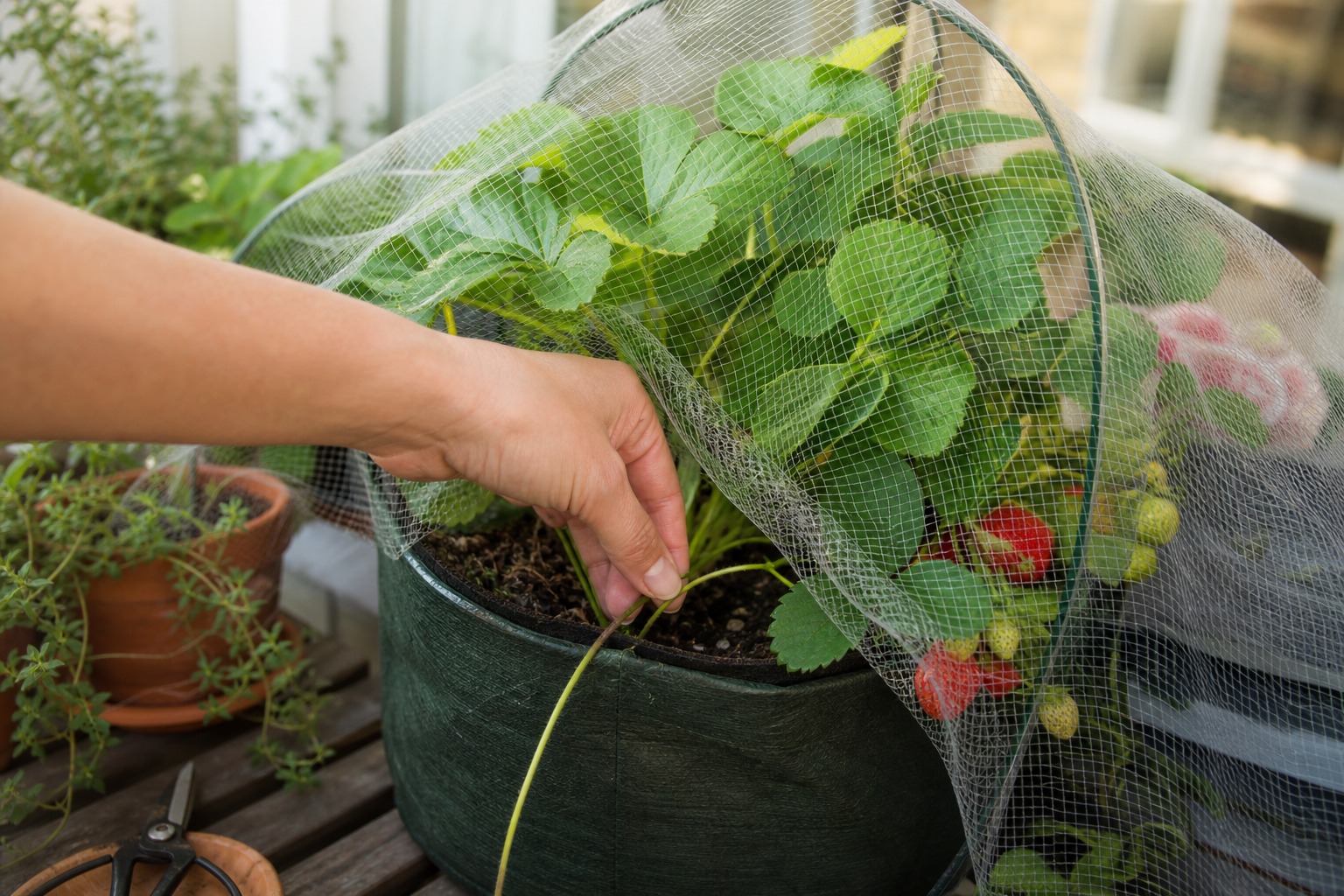
Through the season your plants will send out runners — long stems with a baby plantlet on the end. If you want more fruit this year, snip them off so the plant puts its energy into berries instead of babies. If you want free plants for next year, pin a couple of runners down into a small pot of mix, let them root, then cut them loose. I usually do a bit of both.
The other thing nobody on a balcony expects: birds find your strawberries the day before you were going to pick them. I lost most of a first ripe flush to a very pleased robin before I learned to drape a bit of netting over the bags as the fruit colors up. And down at ground level, Otto has strong opinions about anything red and low to the ground, so mine live up on the railing where his supervision can’t reach.
Pick the berries when they’re red all the way to the tip — strawberries don’t ripen further once they’re off the plant, so a pale-shouldered one picked early stays sour. Eat them warm off the bag if you can. That’s the whole reason to grow them.
I go deeper on choosing crops for containers, sizing your bags and pots, and keeping a small productive garden going all season in my book, Small-Space Big Harvest. This post gets you a bag of berries. The book is how you fill the whole balcony.
