How to Forage and Use Dandelion, Leaf, Flower, and Root
Forage dandelion the honest way — how I identify it without guessing, when to gather leaf, flower, and root, and how I turn each part into tea, oil, and salve.
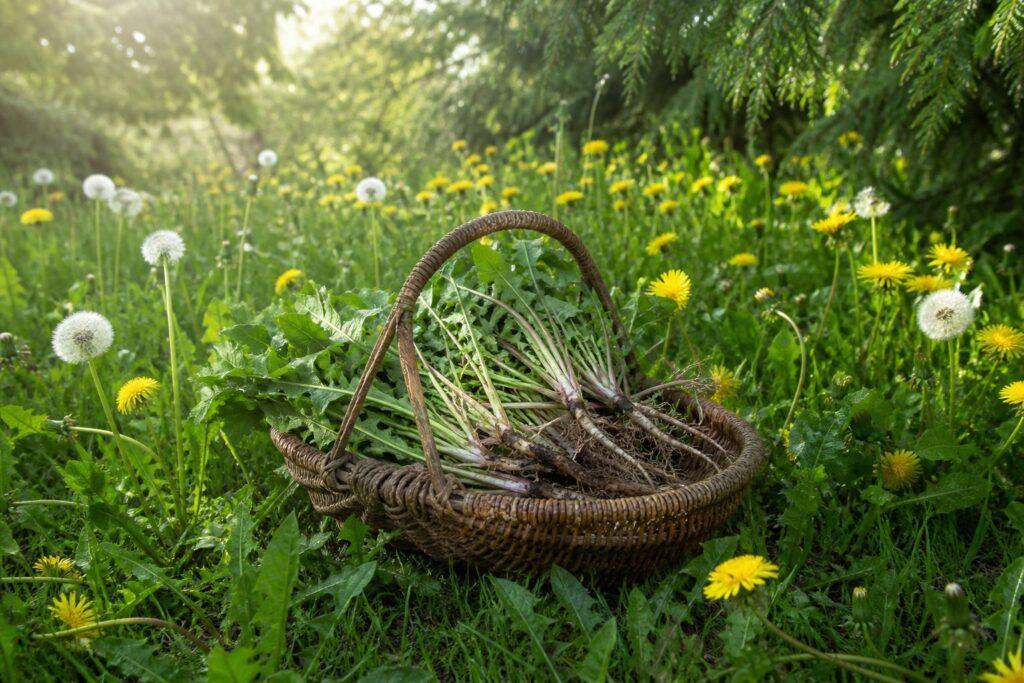
If I had to send a brand-new forager after one plant, it would be dandelion. Not because it’s glamorous — it isn’t — but because you already know where it grows, it’s hard to confuse with anything that will hurt you, and every part of it earns its keep. Leaf, flower, and root all do something useful, in the kitchen and on the shelf. I’ve been pulling dandelion out of the same gravel edges around this place outside Sequim for most of thirty years, and I still stop to gather it.
Common dandelion (Taraxacum officinale) is one of the few wild plants I’ll tell a beginner to harvest with real confidence. It’s abundant, it’s persistent, and it grows in exactly the disturbed, sunny, close-to-home ground that most of us have the easiest access to. That access is the whole reason it’s the right first plant.
Identify it before you trust it
Here is the rule I follow and won’t bend on: never eat or brew a wild plant you can’t name with certainty, confirmed against more than one reliable source and, when it matters, an experienced local forager. When in doubt, throw it out. Said once, plainly, and I’ll trust you to carry it like an adult.
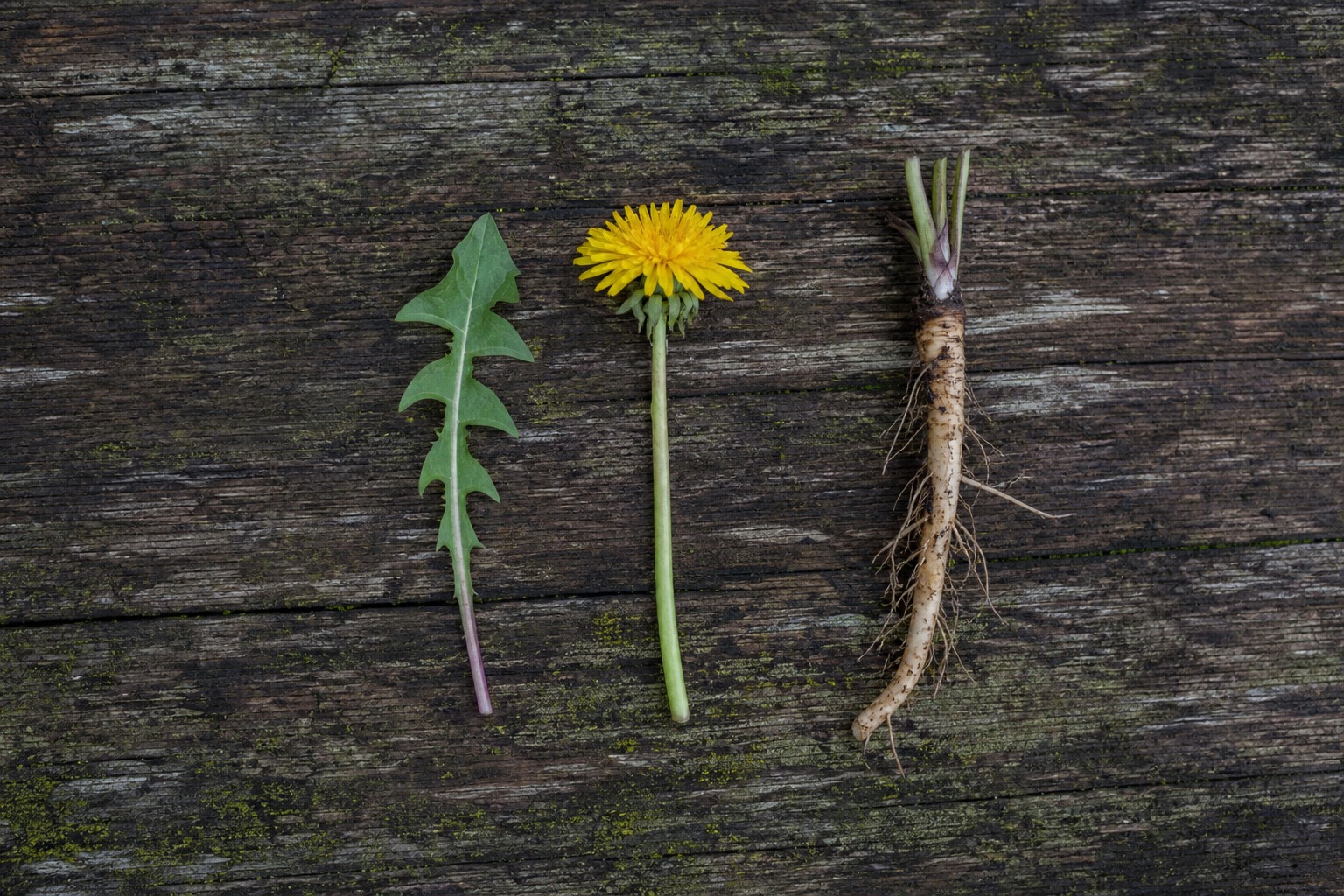
Dandelion makes that easy, because the real thing gives you clear, repeatable tells. The leaves grow in a flat rosette straight from the ground, deeply and irregularly toothed — the common name comes from dent de lion, lion’s tooth, and once you’ve seen it the shape is unmistakable. Each flower sits alone at the top of a single hollow, leafless stalk. Snap that stalk and it bleeds a white, milky sap. One flower, one hollow leafless stem, milky sap: that combination is your confirmation.
The plants people confuse with dandelion — cat’s ear and the various false dandelions — carry their flowers on branched, solid, sometimes hairy stems, and their leaves are usually softer and fuzzier. None of the common lookalikes on this coast are dangerous, which is part of why dandelion is such forgiving ground for a beginner. But learn the true-dandelion tells anyway. The habit of confirming before you harvest is worth far more than any single plant.
When and where to gather each part
Dandelion is generous all season, but each part has its window.
Leaves are best young and early — the first flush in spring, before the plant flowers, when they’re mildest. As the season goes on and the plant bolts, the leaves turn markedly more bitter. By high summer here I’m mostly taking small, young leaves from plants that keep throwing new growth in a bit of shade. Bitter isn’t bad — it’s the point of the plant, traditionally — but young leaves are the friendlier place to start.
Flowers open through late spring and summer on any sunny, warm afternoon. Gather them fully open and dry, mid-morning after the dew has burned off, and use them the same day — they close up and go over quickly once picked.
Roots are a fall crop. I dig them after the first frosts, once the plant has pulled its energy down and the taproot is at its fattest. A dandelion root can go down surprisingly far, so you’ll want to loosen the soil around it rather than yank; a broken-off root nub just regrows anyway, as anyone who has weeded a bed knows too well.
Wherever you gather, gather clean. Skip roadsides, sprayed lawns, and the strip along a driveway that somebody keeps tidy with a jug of weedkiller. I take mine from the untended edges of my own ground, where I know exactly what has and hasn’t been on the soil. That’s a rule that matters more than any harvesting technique.
The leaf: the simplest use is a cup of tea
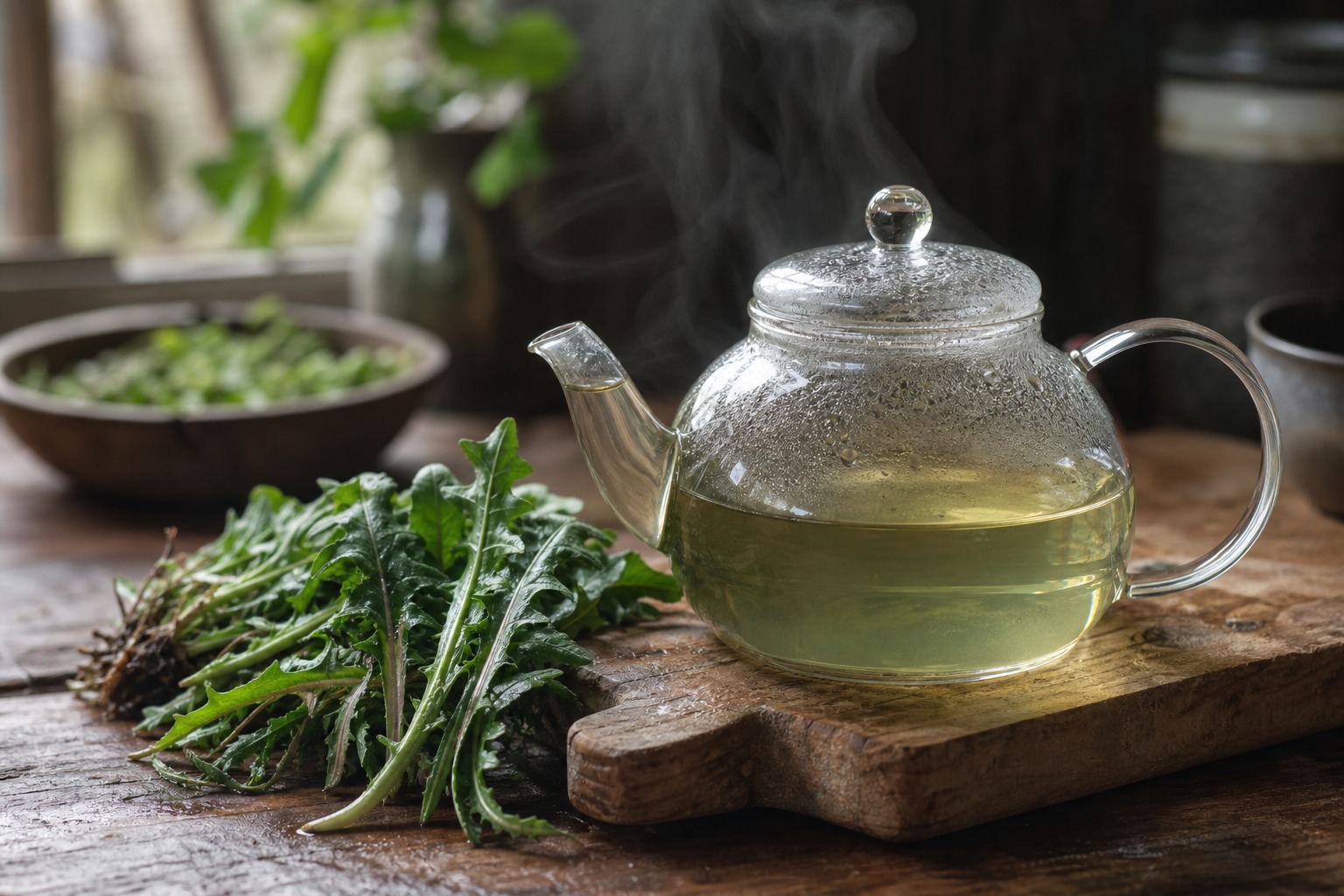
The gentlest thing you can do with a dandelion leaf is dry it and drink it. Spread young leaves in a single layer somewhere warm and airy out of direct sun until they crumble cleanly, then store them dark and dry. A rounded tablespoon of dried leaf in a mug, water just off the boil, covered for eight or ten minutes, gives you a green, grassy, faintly bitter tea. It’s an old spring-tonic drink, taken traditionally as the season turned — I’ll leave what it does for you between you and a qualified practitioner, but as a plain seasonal cup it’s an easy pleasure.
Young fresh leaves are also good food — a handful torn into a salad, or wilted in a hot pan with a little fat and salt the way you’d treat any bitter green. Pair the bitterness with something rich and it comes into balance. That’s kitchen work more than foraging, so I’ll keep to my lane and point you to a good greens cook for the rest.
The root: roast it, then simmer it
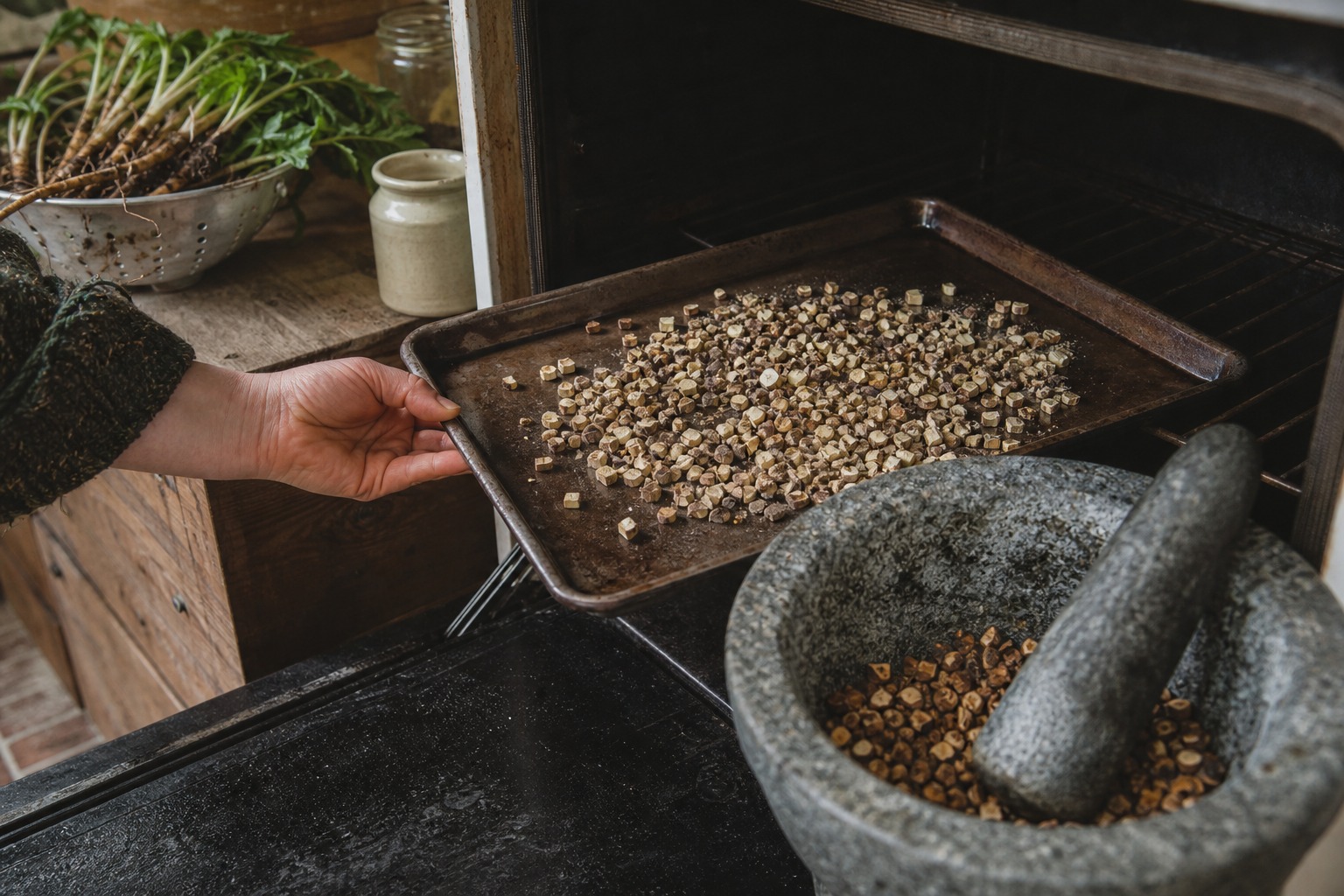
The root is where dandelion gets interesting on the shelf. Scrub the dug roots well, chop them small, and dry them thoroughly. For a deeper, less bitter flavor, roast the dried pieces in a low oven until they’re brown and fragrant — that roasting is what gives dandelion-root “coffee” its toasty character.
A root is a tough, woody thing, so it doesn’t want a quick steep. It wants a decoction: a low simmer, fifteen to twenty minutes, to draw out what hot water alone would leave behind. Simmer a good tablespoon of chopped roasted root per mug, then strain it. For a clean, grit-free cup I pour the whole pot through a doubled layer of grade-90 cheesecloth — the tight weave catches the fine sediment a looser cloth lets through. The result is dark, earthy, and pleasantly bitter, and it keeps well as dried root in a sealed jar for the year.
The flower: an infused oil and a simple salve
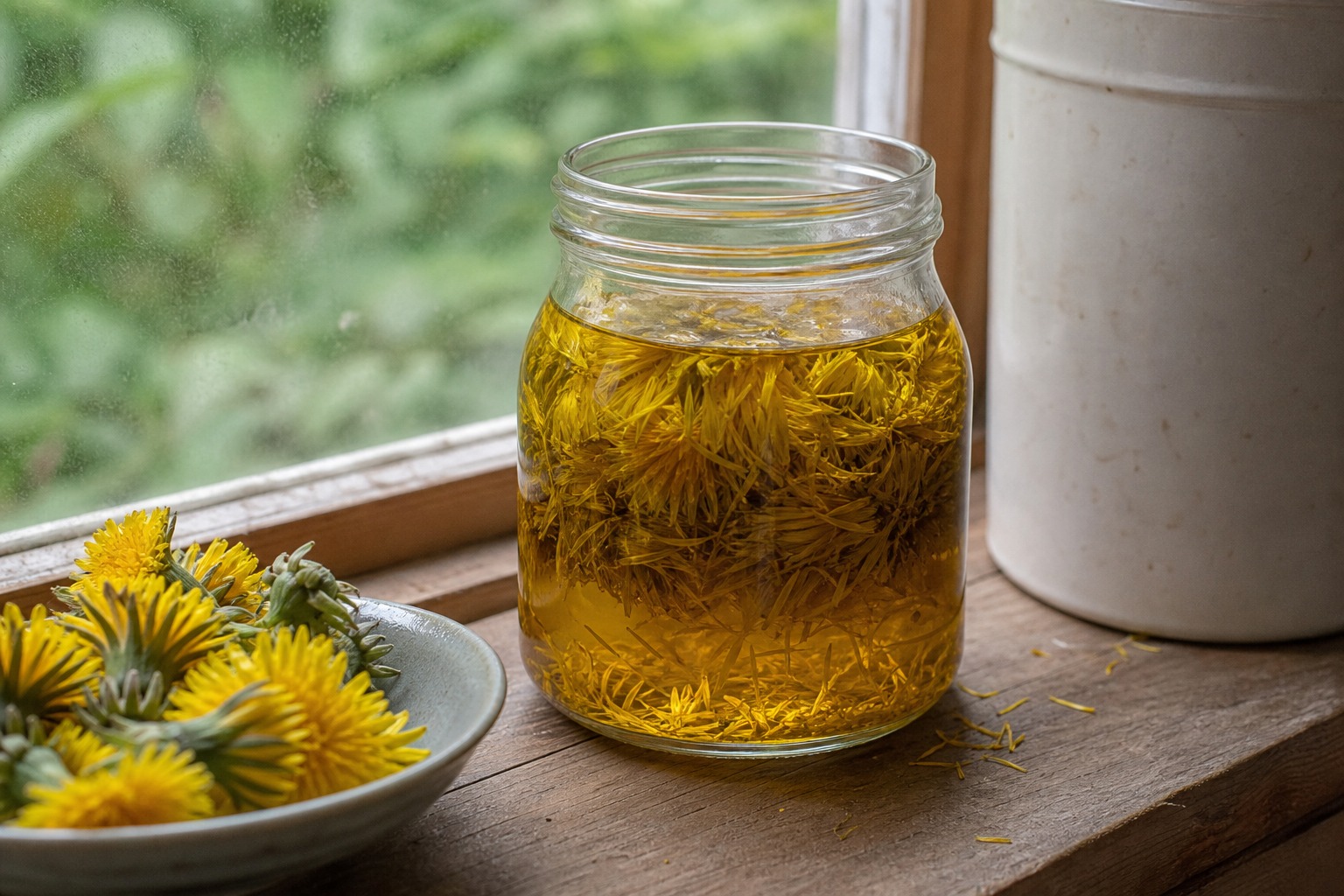
The flowers are my favorite part to put by, because they turn into something you can keep and use for months. Dandelion-flower oil is one of the classic beginner infusions, and it’s genuinely hard to get wrong.
Gather a jar of fully open flowers on a dry afternoon and let them wilt for a day — this is the step most people skip, and it matters, because fresh flowers carry water and water in an oil infusion is how you grow mold instead of medicine. Once they’ve wilted, pack them loosely in a clean dry jar and cover them completely with jojoba oil. I reach for jojoba because it’s shelf-stable and slow to go rancid, which matters for something you’ll keep on the counter. Set the jar somewhere warm out of direct sun for a few weeks, then strain the golden oil through cheesecloth, pressing the spent flowers to get the last of it.
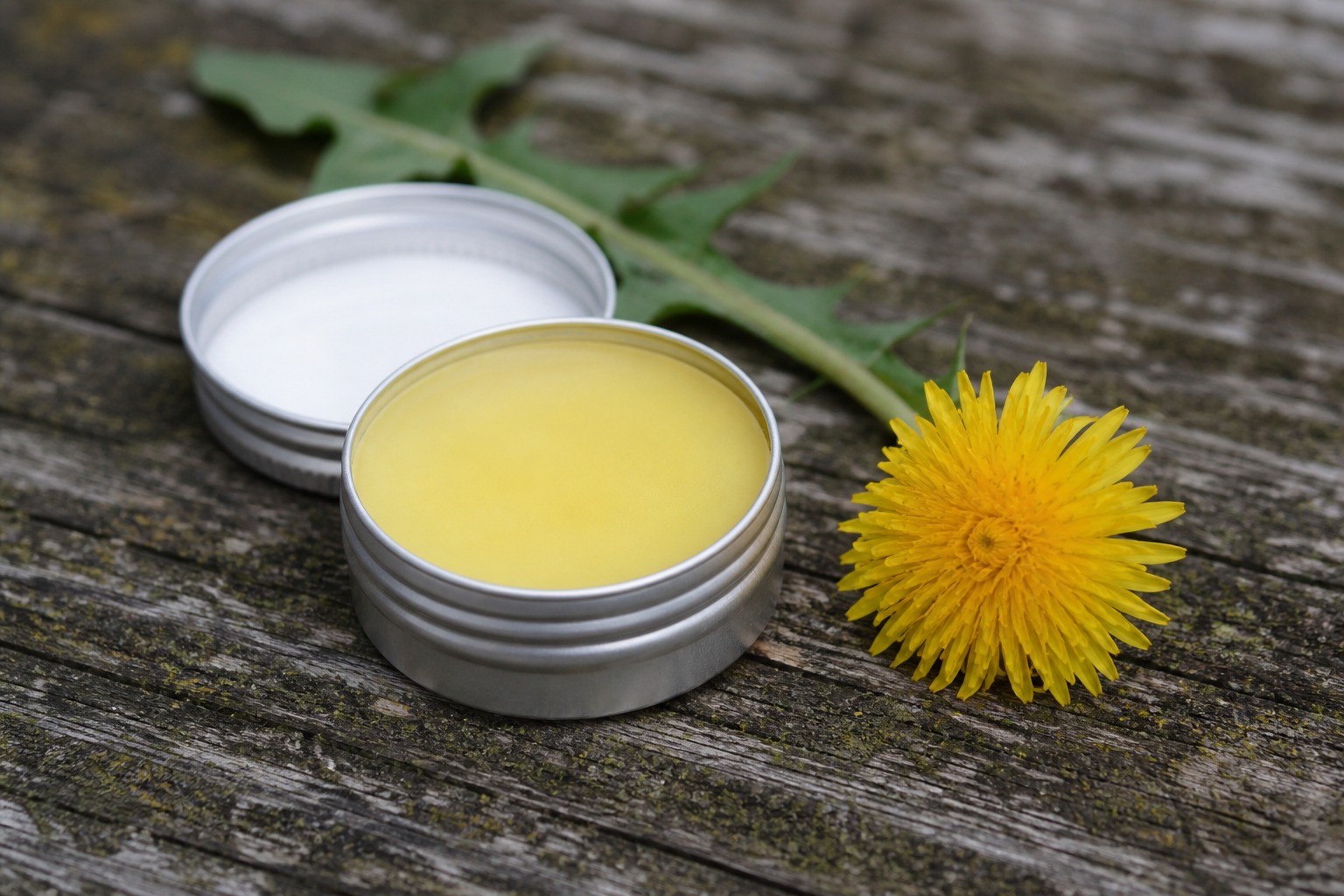
To turn that oil into a salve, warm it gently and melt in beeswax pellets — roughly one part wax to four parts oil by volume, adjusted to the firmness you like. Test the set on a cold spoon: too soft, add a little more wax; too hard, add a splash more oil. Pour the warm mix into small lidded tins and let it set. Those same tins are where I keep dried leaf and root too — they seal out light and damp better than anything, and they fit in a drawer. Keep the framing honest: this is a traditional skin salve people have made for generations, not a treatment for anything serious.
I’ve lost a batch or two over the years — one jar of flower oil went cloudy and musty on me because I packed the flowers in still damp, and there was nothing to do but pour it out and start over. Wilt the flowers. It’s the whole difference.
Learn one plant all the way through
Dandelion is worth this much attention precisely because it’s ordinary. Learn to gather and use one common plant completely — leaf, flower, and root, fresh and dried, in the kitchen and on the shelf — and you’ve learned the shape of the whole practice. Every other plant is a variation on what dandelion just taught you.
If you want to go further, that’s most of what I put into my book, Pacific Northwest Medicinal Plants: 115 wild plants of this region, how to identify each one without guessing, when to gather it, and how the generations before us prepared it. Dandelion is the easy first door. The book is how you learn which doors to walk through next — and which ones to leave shut.
