How to Fish With Waxworms for Late-Winter Bluegill and Crappie
How to fish with waxworms for cold-water panfish: keeping them alive, hooking them right, rigging a light bobber, and reading the soft late-winter bite.
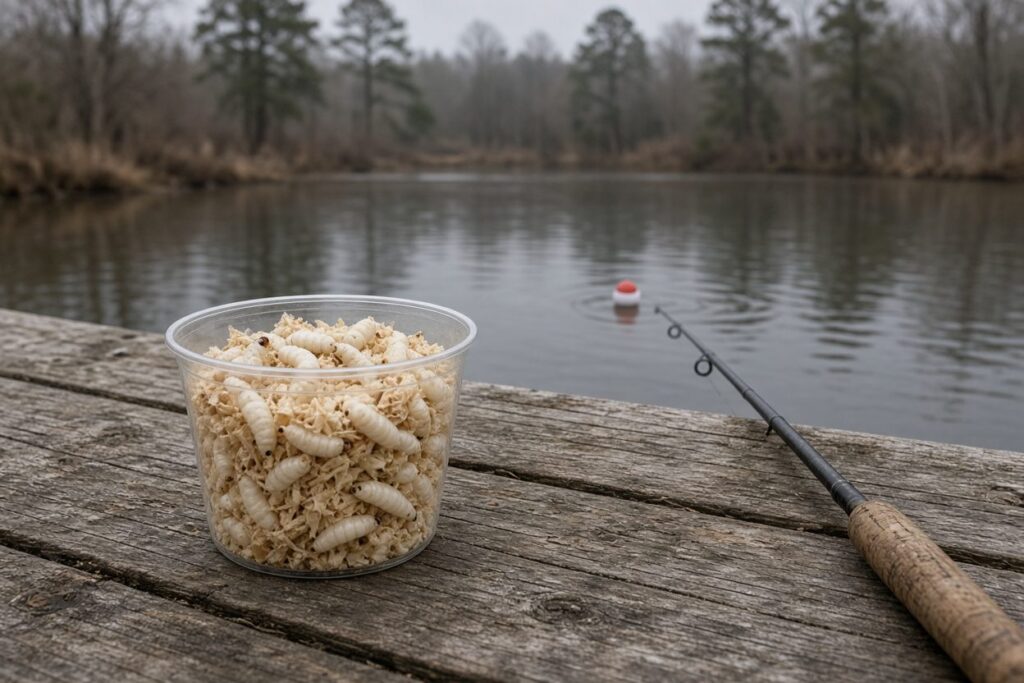
One gray afternoon last February my grandson Isaiah and I sat on the end of the dock with a little plastic cup of waxworms tucked in my coat, and the bluegill that had turned up their noses at nightcrawlers all winter came up out of the deep water and took those soft white grubs like they had been waiting on them. Isaiah caught eleven. I caught four and spent the rest of the time baiting his hook, which is the way it ought to be.
A waxworm is a small thing, but it has saved me a lot of cold, empty afternoons. When the water is cold and the fish are slow, it’s the bait I reach for. Here is how I keep them, hook them, and fish them.
Besides that, you’ll need a few small hooks, a couple of split shot, and a cup of waxworms from the bait shop. Tackle shops in our part of North Carolina keep them in the cooler next to the crickets.
What a waxworm is
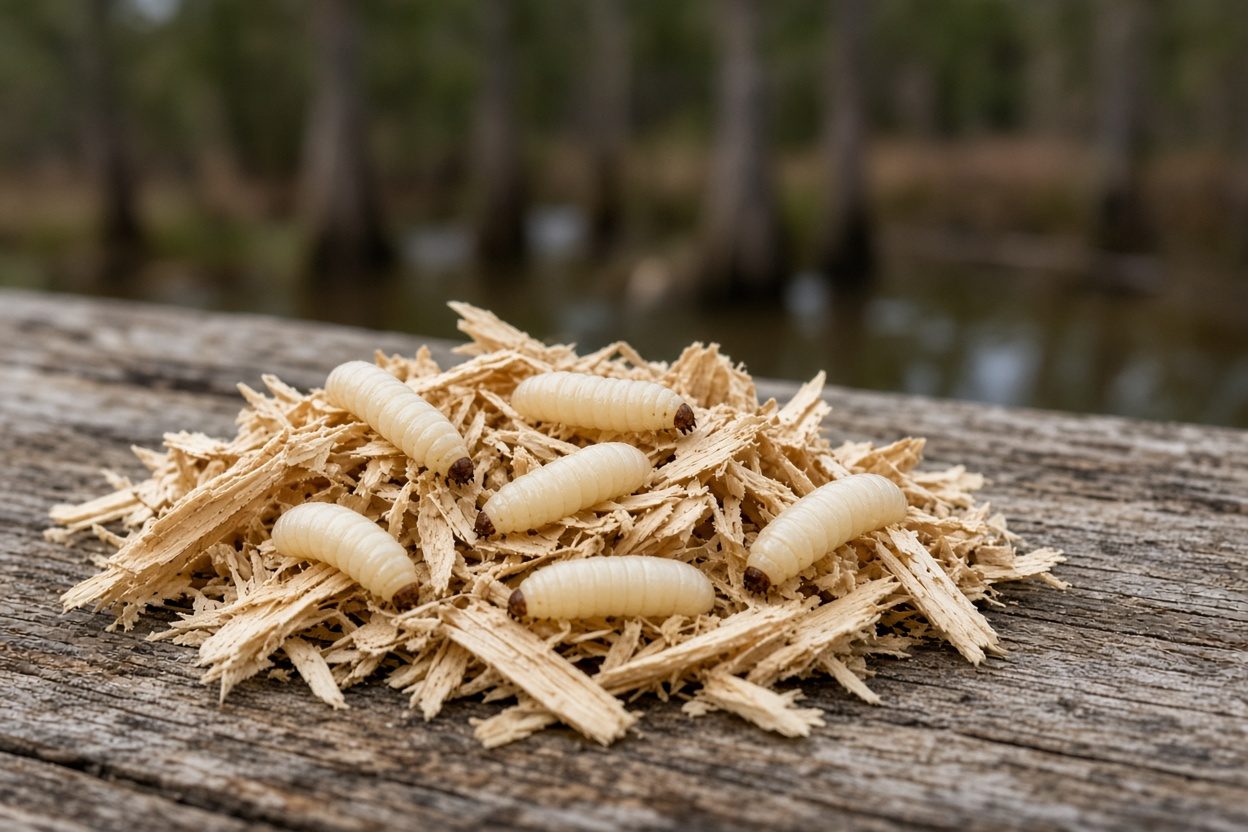
Waxworms are the larvae of a moth that lives in old beehives. They’re about an inch long, soft, plump, and creamy white with a small dark head. Bait shops sell them in cups of a couple dozen, packed in wood shavings.
Panfish love them for a few reasons. They’re rich and soft. They’re pale, so they show up in dim, cold water. And they’re small enough for a bluegill’s little mouth. Ice fishermen up north have known that for a long time. We don’t get ice on our pond most years, but our water still drops into the forties in January, and a fish in forty-degree water acts a whole lot like a fish under the ice.
Keeping them alive
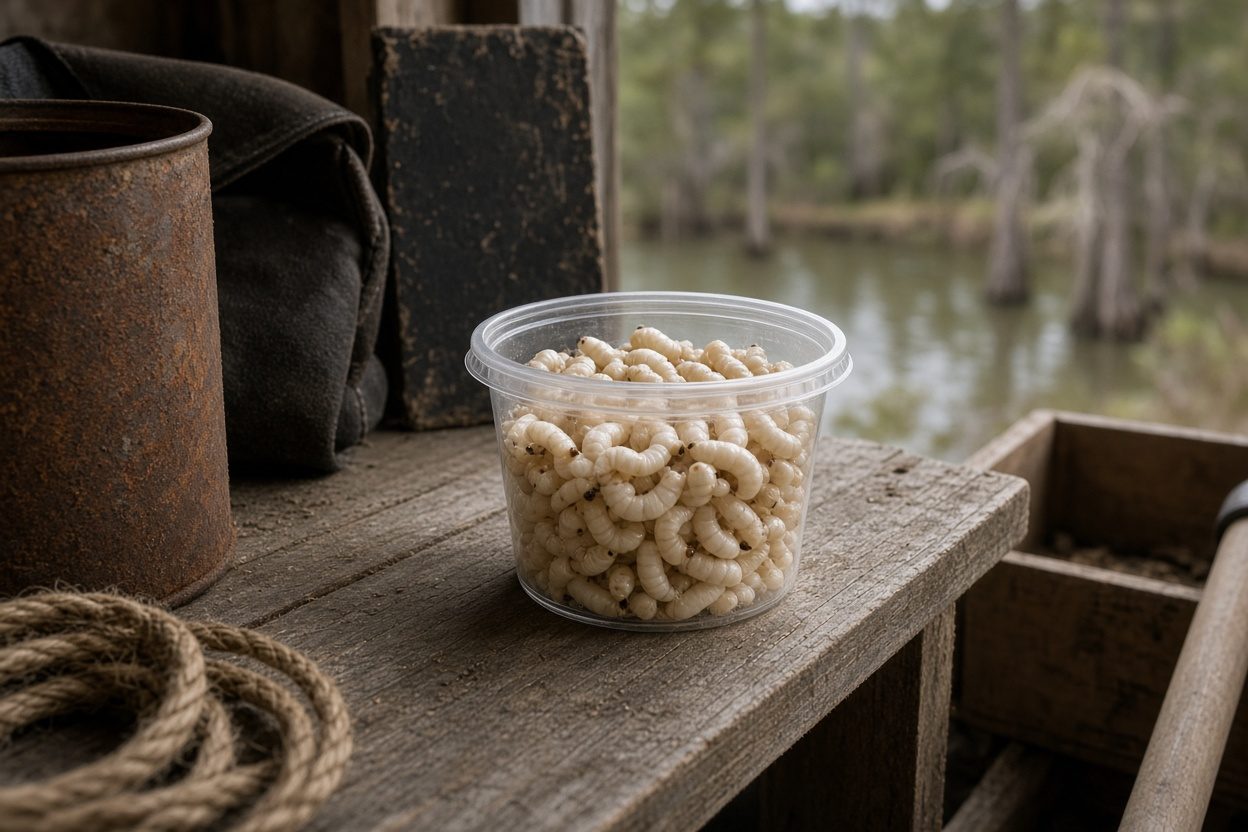
Waxworms are fussy about temperature. Too warm and they turn into moths or go soft and dark. Too cold and they die.
Keep the cup in the refrigerator door or a cool corner of the garage, somewhere around fifty to sixty degrees. Don’t freeze them, and don’t leave them on the dashboard of the truck. On the bank in cold weather, I keep the cup in an inside coat pocket. That keeps them lively without cooking them.
A fresh cup, kept right, lasts me two or three weeks. When they start turning brown or black, they’re past their best. They’ll still catch a fish, but not as well.
Hooking a waxworm
This is where most beginners go wrong, so take your time.
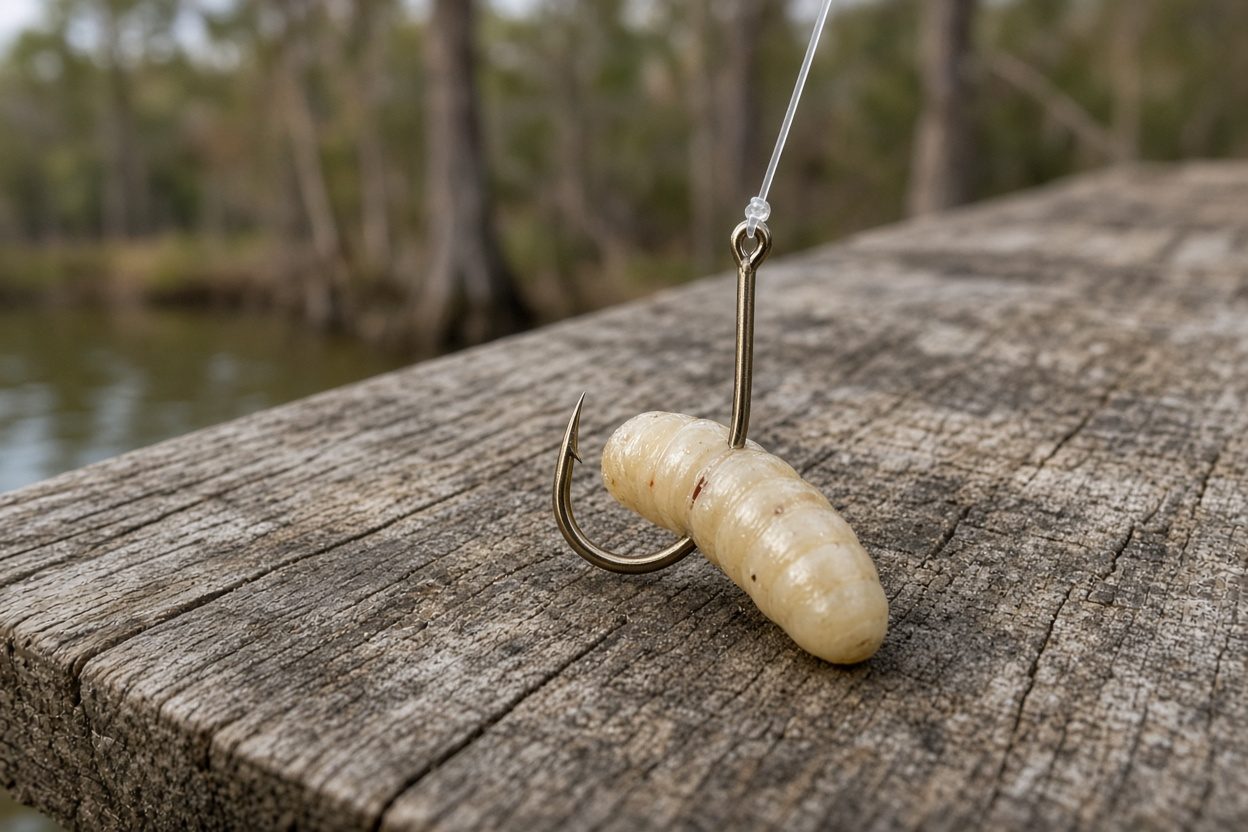
Use a small hook, a size 8 or 10, light wire. A big hook tears the waxworm and makes it hard for a little fish to get its mouth around. If you have a tiny panfish jig, the kind with a painted head, a waxworm on that hook works as well or better.
Hold the waxworm gently between your thumb and finger. Slide the point of the hook in just behind the dark head and run it a short way down the body, then bring the point out. You want the hook point showing. A waxworm squeezed onto a hook like a ball of dough doesn’t hold up, and it hides the point.
Some days one is enough. When the fish are picking at the bait and stealing it, I put on two, both hooked through near the head so the tails wiggle. That’s a habit my daddy taught me: give them something that moves.
Waxworms are softer than worms, so you’ll lose a few to small fish. That’s part of the cost of using them, and it’s why I buy a full cup.
Rigging for cold water

In late winter, panfish hold a little deeper and move less. I keep the rig light and slow.
Clip one of the small snap-on floats onto the line. Start with the bait about three to four feet below the bobber, and pinch one small split shot about six inches above the hook to carry it down. If you know where the drop-off is, set the depth so the bait hangs just above the bottom there. If you’re not getting bit, change the depth a foot at a time until you find them.
When the water is deeper than your rod is long, a regular bobber won’t let you reach them. I wrote down how I fish deeper water in winter in how to set up a deeper winter panfish rig with an adjustable bobber.
The spincast combo I start everybody on handles this fine. It isn’t a fancy rod, and the snap-on floats can slip on a hard cast, so give them a tug when you clip them on. A gentle lob is all you need on a pond bank anyway.
Where to fish them

Cold-water panfish gather where the water is a little deeper and a little warmer. Look for the deepest end of the pond, often by the dam. Look for a sunny bank on the north side, which gets the most winter sun and warms first. Look for brush piles, fallen limbs, and the end of a dock where the water drops off.
On a sunny afternoon after a few warm days, fish come up a little shallower. That’s when the bite is best. I wrote about those warm windows in how to catch bluegill in winter. Crappie will take a waxworm, too, especially around brush. Fish it a little deeper for them.
Reading the soft bite
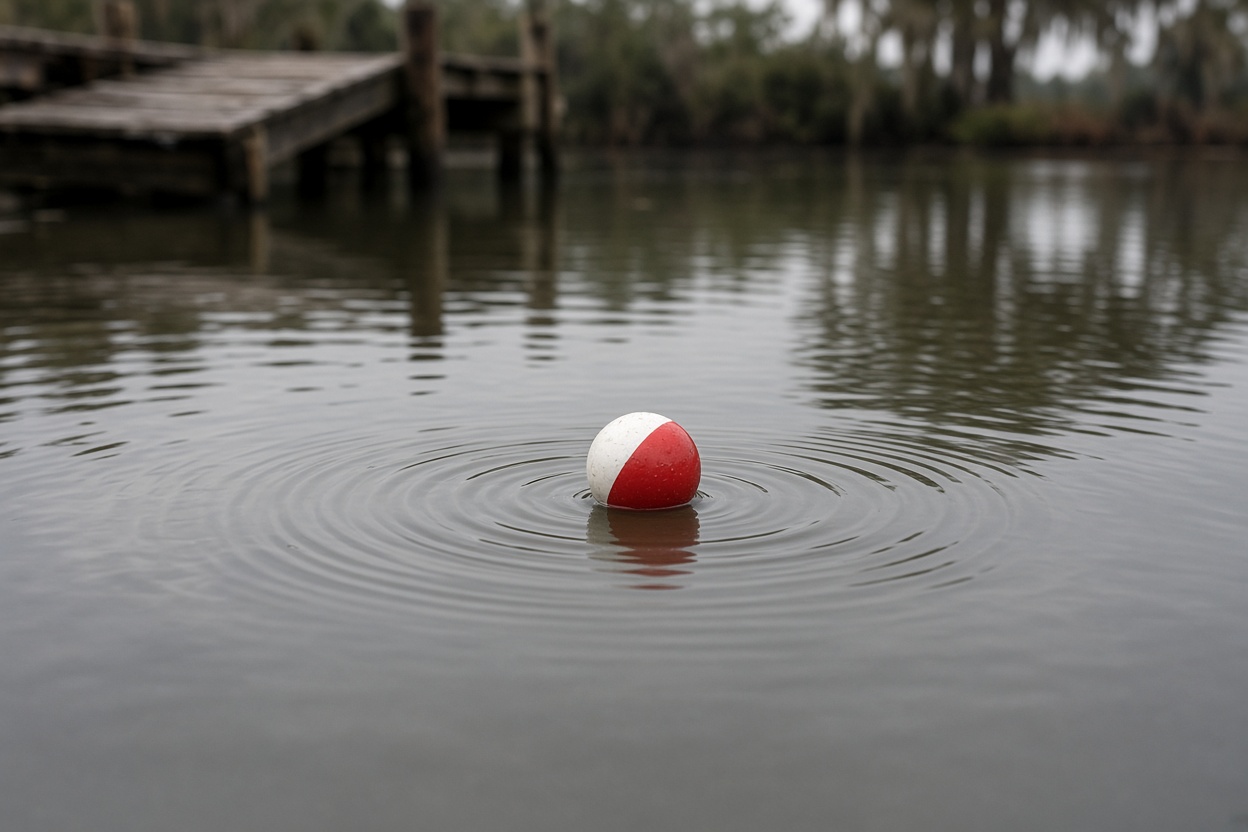
Here is the hard part for a beginner. A cold bluegill doesn’t run with the bait the way a summer fish does. Often the bobber just twitches, or lifts and lies down flat on the water, or slides an inch sideways. Each of those is a fish.
Watch the bobber close. When it moves at all, wait a breath. If it keeps moving or slips under, lift the rod tip smoothly and reel. Don’t jerk. A small hook in a soft mouth needs a steady lift, not a snatch.
If you keep missing them, go smaller: a smaller hook, a smaller bobber, one waxworm instead of two.
The honest pros and cons
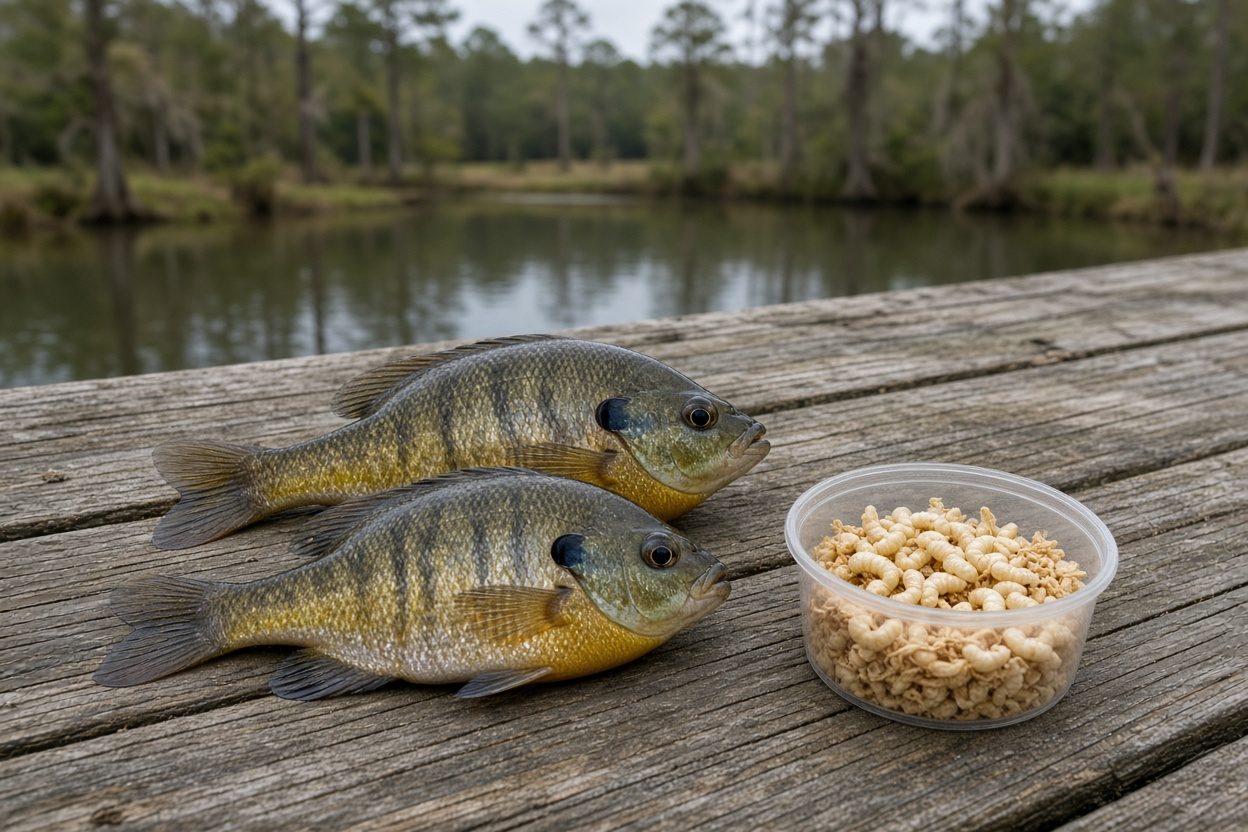
Waxworms catch fish when nothing else will in cold water, they’re clean to handle, and a child can bait one without much fuss. Isaiah prefers them to nightcrawlers for that reason alone.
But they’re not a summer bait. In warm water, small fish strip them off the hook so fast you’ll spend more time baiting than fishing, and worms or crickets serve better then. They won’t do much for catfish. They cost more per fish than digging your own worms. And if you forget the cup in a hot truck, you’ll have a cup of moths.
For a beginner’s take on the other bait I keep in the cooler, see how to bait a hook with nightcrawlers.
Keep the old ways going
Know your state’s fishing rules. Most require an adult license and set creel limits on panfish. Keep what you’ll eat and put the rest back gently. Cold-water panfish are firm and sweet on the table, and a sharp fillet knife is the one tool I’d spend a little more on. I walk through it in how to clean a fish for beginners.
My daddy timed his winter trips by the moon and the weather, and I still do. If you’d like to plan your days the same way, I put together a free guide: the Best Days to Fish starter kit. And if there’s a youngster in your life like Isaiah, my journal My First Catch gives them a place to write down every fish, the bait, and the weather that day.
Read the signs.
