How to Keep Rats Out of the Chicken Coop This Winter
How to keep rats out of the chicken coop: the signs to look for, how to cut off feed and water at night, seal gaps with hardware cloth, and trap without poison.
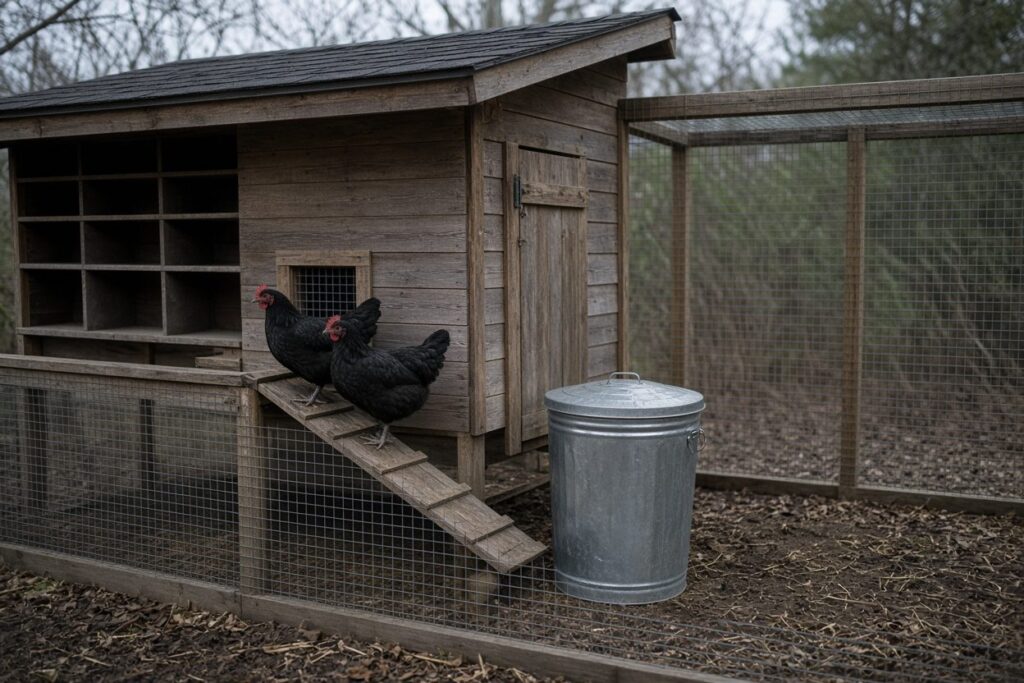
The first rat I ever saw in our coop was sitting on the lip of the hanging feeder at dusk one December, eating layer pellets like it had paid for them, while two of the Australorps watched it from the roost bar and did absolutely nothing. I had been blaming the feed bill on the girls for a month. It was not the girls.
Rats move toward coops when the weather turns cold, because a coop is the best deal in the neighborhood: warm bedding, dropped feed, and open water every night. If you keep chickens long enough, you will deal with them. Here is how I figured out what was going on, and what finally made our coop a bad deal for rats.
The rest of the job is hardware cloth, a metal trash can with a tight lid, and a couple of plain wooden snap traps. You can get all of that at Tractor Supply or the hardware store.
How to tell you have rats
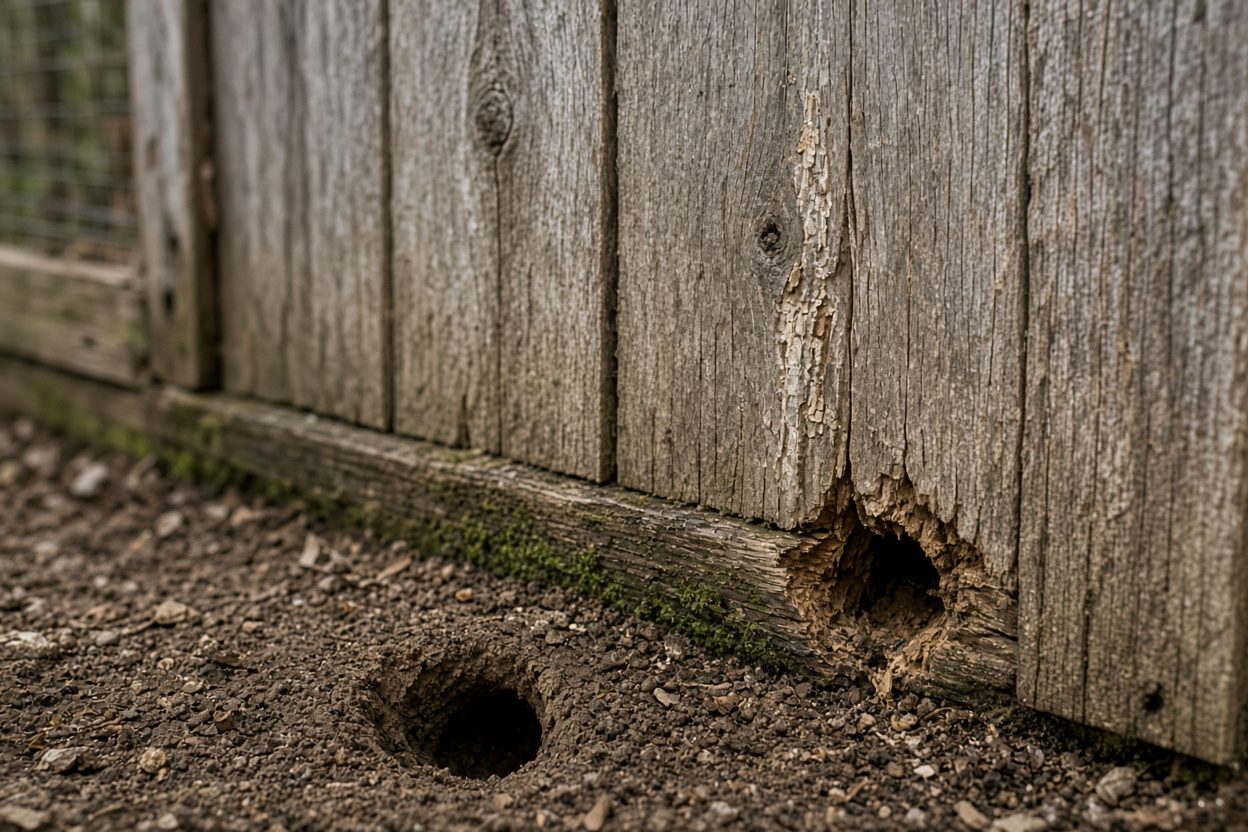
Rats are night workers, so you usually see the evidence before you see the animal. Here’s what I look for now on my morning walk-through.
Droppings. Dark, about the size of a fat grain of rice, often along the walls or under the feeder. Mice leave smaller, thinner ones.
Holes and runs. Rats burrow. Look for fist-sized holes along the outside of the coop footings, under the run edges, and beneath any pallets or boards lying around. A smooth, packed trail through the grass between the woodpile and the coop is a rat highway.
Disappearing feed. If you’re filling the feeder more often and nobody’s laying more, something else is eating.
Damaged eggs and nervous birds. Rats will eat eggs, and they’ll go after chicks and young pullets. If the girls are reluctant to go in at night or you find eggs chewed open in the nest box, take it seriously.
Gnaw marks. Chewed corners on the feed bin, the coop door, or plastic feeders.
I found all five in our coop that first winter. Kyle found the burrow under the old dog house we’d left beside the run, which was basically a free apartment.
Take away the food
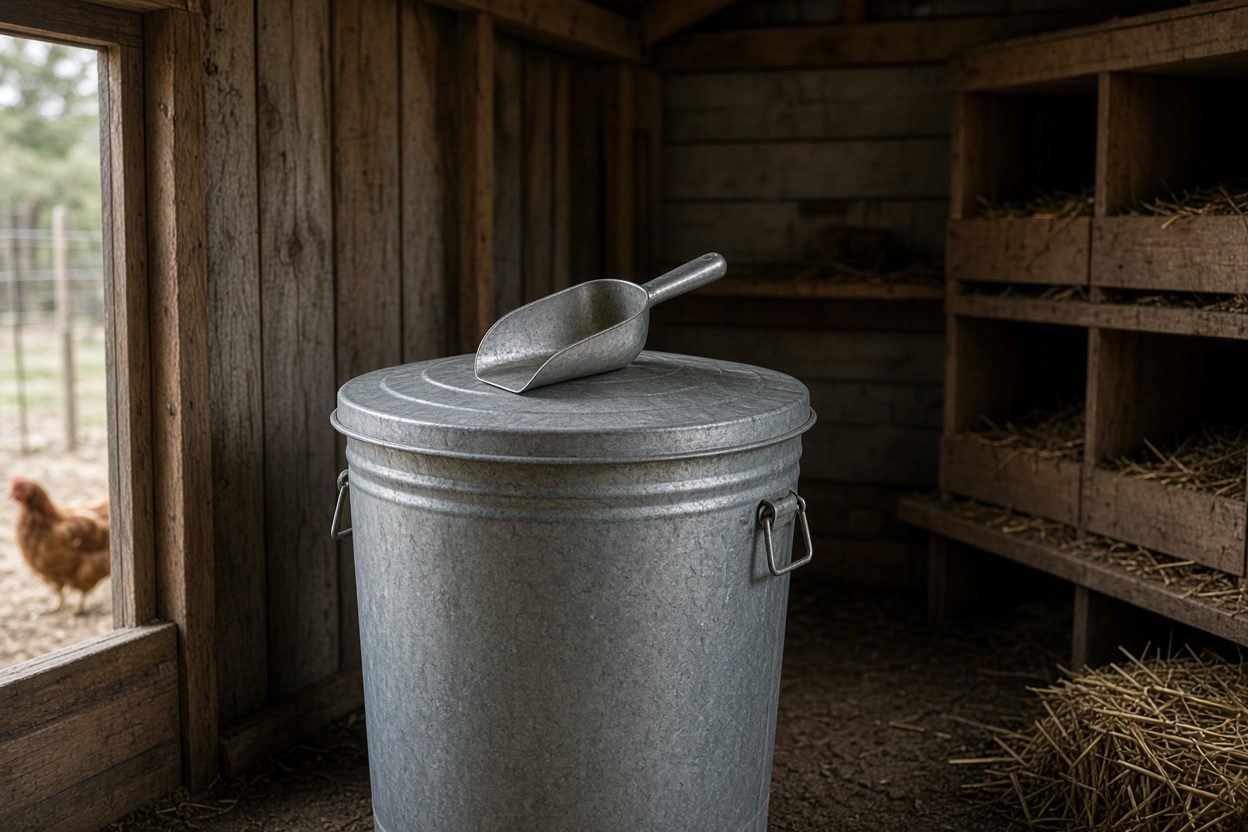
Rats come for feed first. Cut that off and you’ve done most of the work.
Store feed in metal. A galvanized trash can with a lid that clamps or fits tight. Rats chew through plastic bins and paper feed sacks in a night.
Bring the feeder in at night, or hang it high. I hang our feeder at about the height of a hen’s back and empty it into a metal can at dusk during rat season. Some keepers swear by treadle feeders that only open when a hen steps on the plate. They work well for some flocks and not for others. Mine learned them slowly.
Stop the spill. Chickens fling feed. Scattered pellets on the floor are an open buffet. Sweep or rake under the feeder and quit tossing scratch on the ground at bedtime. If you treat, treat in the morning and give them what they’ll clean up in ten minutes.
Close up the water
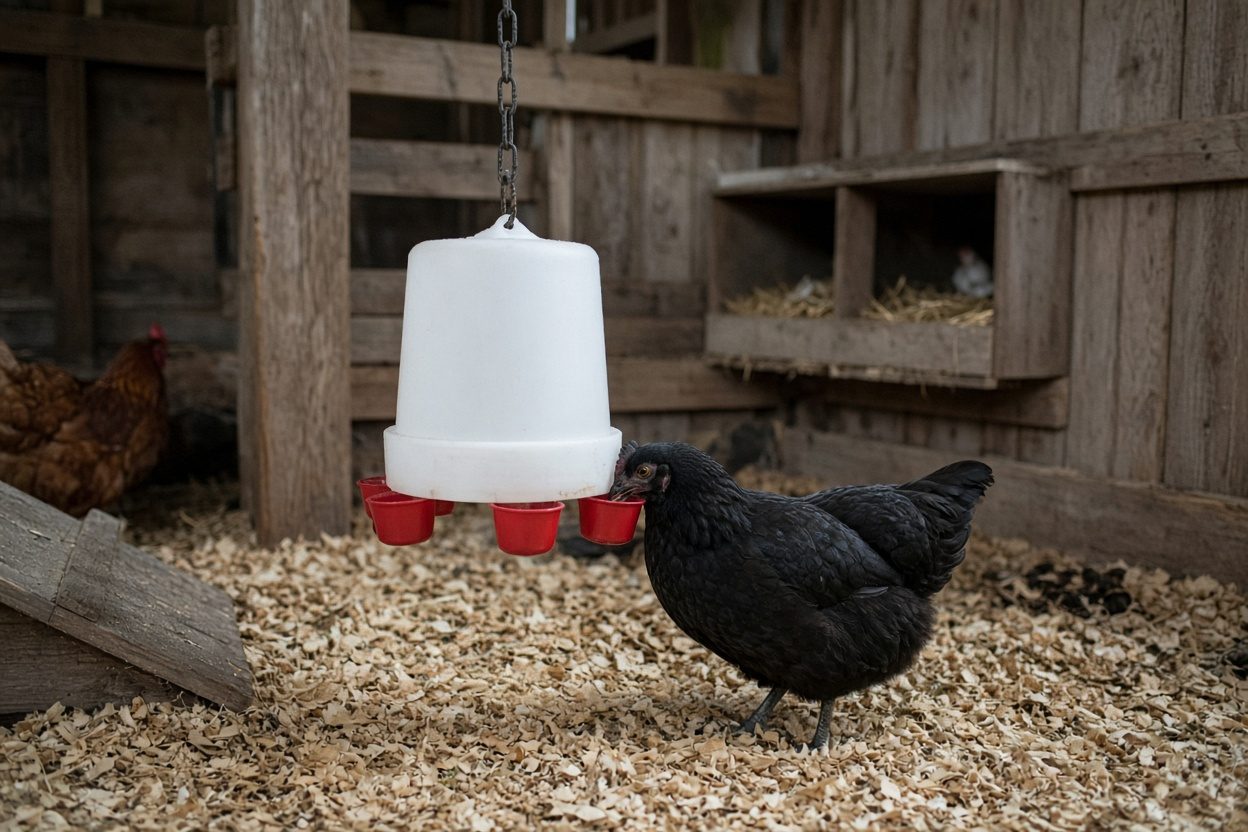
This was the part I didn’t think about. An open pan of water or a fount that’s been tipped into a puddle is exactly what a rat wants at two in the morning.
I switched to a closed nipple-and-cup waterer. The water stays inside the container, the cups only fill when a hen pecks the valve, and there’s no wet patch under it. I hang it at about chicken head height, so it isn’t easy to reach from the floor. If you’d rather build your own, the DIY nipple kit screws into a food-grade bucket in a few minutes. I walk through the bucket build in how to make a DIY chicken bucket waterer.
The honest downside is the switch itself. Some hens figure out nipples in an afternoon and some take a week. Keep the old waterer out next to the new one until you’ve seen everyone drink. My notes on how to train chickens to use a nipple waterer cover the transition.
Seal the coop
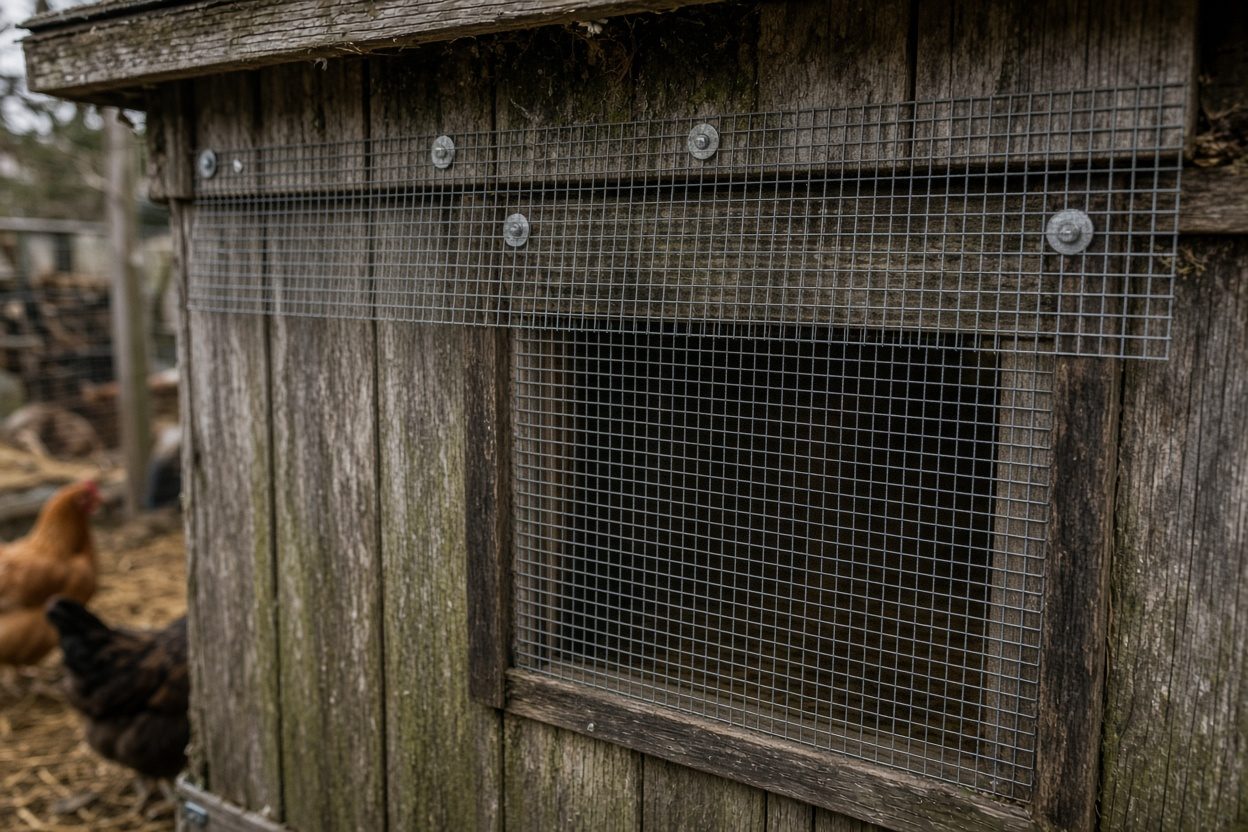
A young rat can squeeze through a hole about the size of a quarter. Chicken wire won’t stop it, and neither will most “rodent-proof” claims on a prefab coop.
Use half-inch hardware cloth over vents, windows, and any gaps under the eaves. Quarter-inch is even better if you have a serious problem. Fasten it with screws and washers, not staples, because rats and raccoons both pull staples.
Block the floor. If your coop sits on the ground, either put down a hardware cloth floor under the bedding or bury a hardware cloth apron a foot out around the base so burrowers hit wire when they dig. A coop raised a foot or more off the ground leaves rats nowhere to hide under it.
Close the pop door at dusk. Every night. It’s the one habit that keeps out rats, raccoons, and possums all at once.
I go deeper on wire and latches in predator-proofing the run with hardware cloth, and the same rules apply here.
Clean up the yard
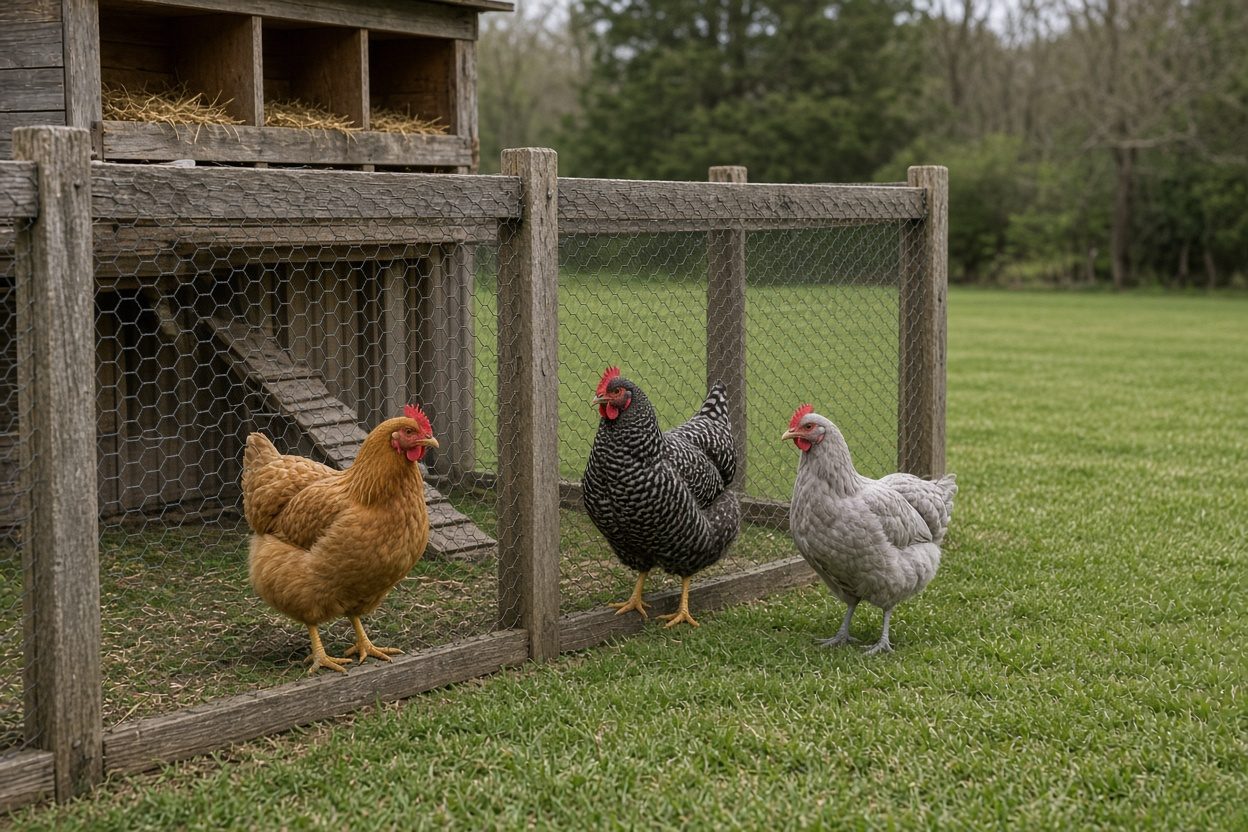
Rats need cover between their burrow and your feed. Take that away. Move woodpiles, pallets, and old lumber away from the coop. Mow the grass along the run. Haul off anything they can live under, like the dog house we finally got rid of. Keep the compost pile well away from the coop and don’t toss kitchen scraps in the open.
Keep the bedding dry and turn it regularly, too. A deep, damp, packed litter can become warm nesting material. I like hemp bedding because it stays drier than straw and is light enough that fresh droppings or a new tunnel stand out right away.
Trapping, and why I don’t use poison
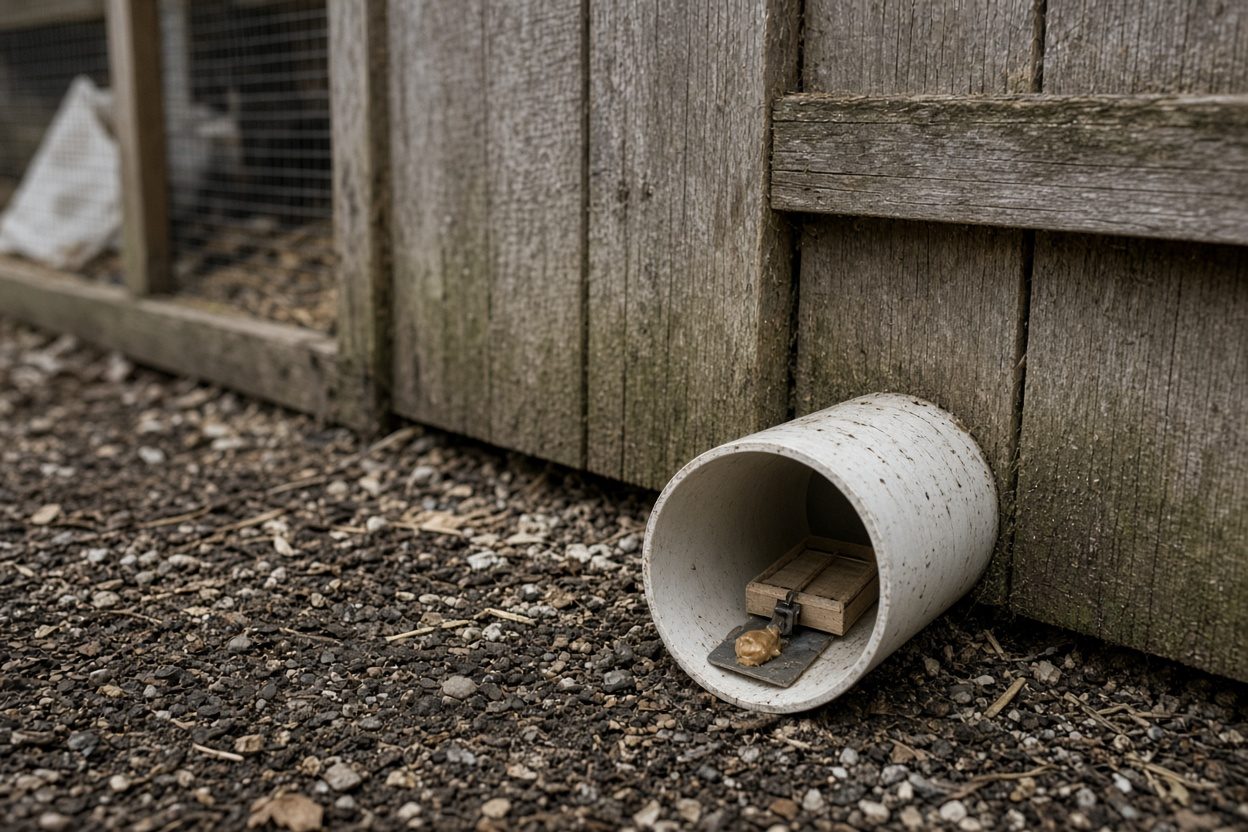
Once you’ve cut off food and water, you trap the ones that are left. I use plain wooden snap traps baited with a smear of peanut butter, set along the walls where the runs are, inside a box or a length of PVC pipe so the girls can’t get to them. Set traps at night after the flock is roosted and pull them in the morning before you open the pop door.
I do not use poison around chickens. Rat bait can poison the birds if they get into it, and it poisons whatever eats a dying rat: hawks, owls, our barn cat Pepper, and Biscuit the dog. Poisoned rats also tend to die in the walls, which you will smell for a week.
If you have a big infestation that traps aren’t touching, call a pest control service and tell them up front that you keep chickens and pets, so they choose methods accordingly.
How it went for us
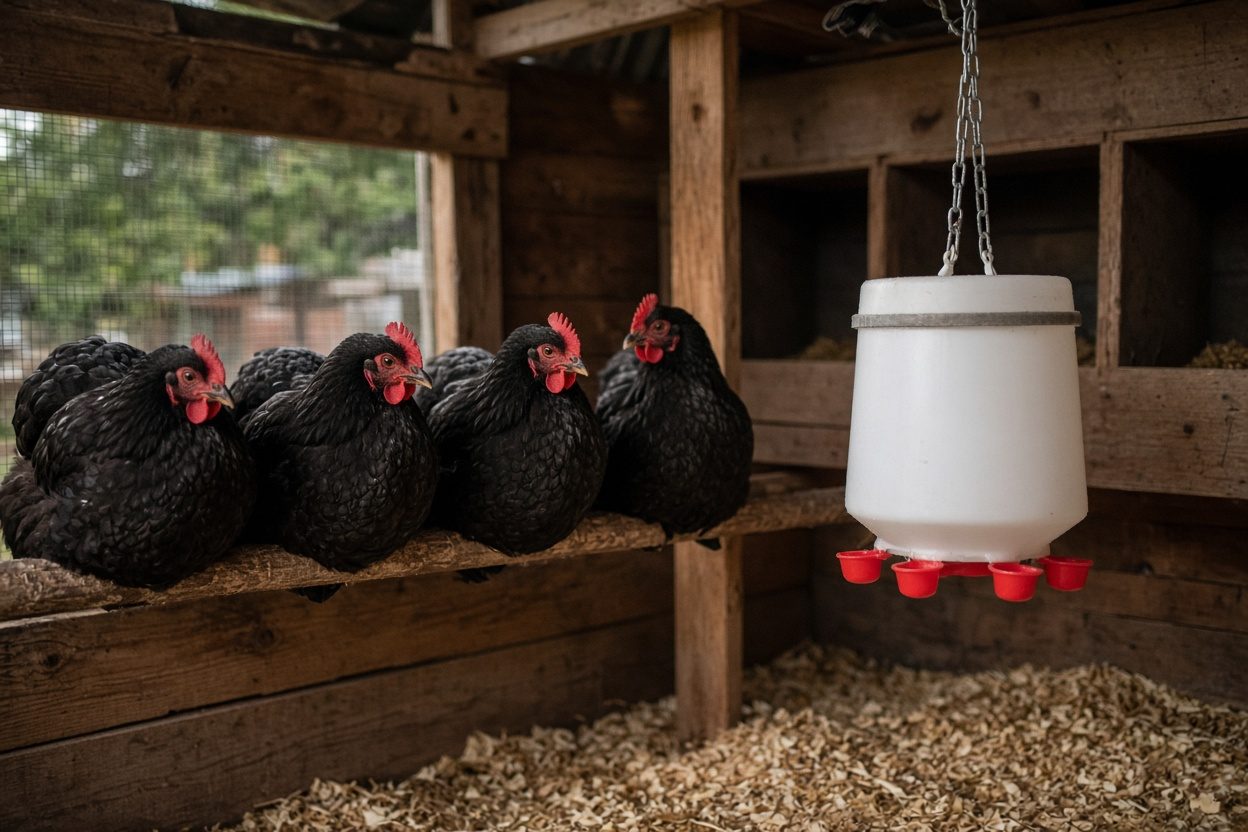
Within about three weeks of hanging the feeder, closing the water, sealing two gaps under the eaves, and moving that dog house, the droppings stopped. We trapped four. The feed bill dropped back to normal, which is about the only time a chicken bill has ever gone down.
I keep a whole chapter on predators and pests, rats included, in my book, Raising Backyard Chickens for Beginners. It’s the reference I hand neighbors when they call me about something chewing on their coop.
Know your girls.
