How to Render Tallow for an Old-Fashioned Mountain Salve
How to render beef tallow clean and make a tallow mountain salve the way my grandmother did, with plantain oil and beeswax, for winter hands. Step by step.
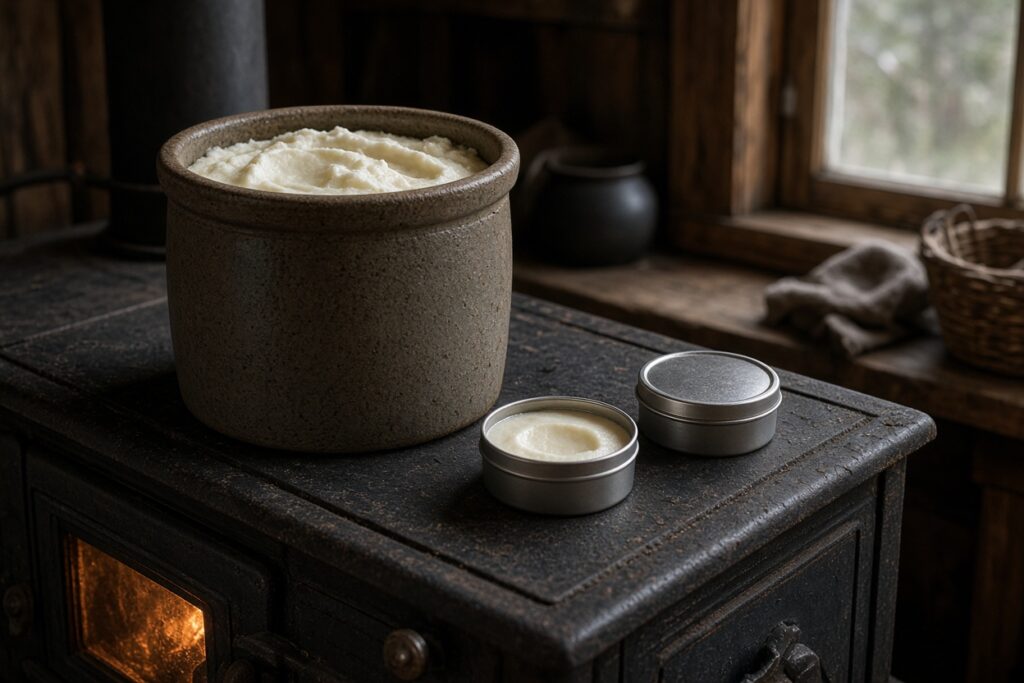
My grandmother kept a stoneware crock of rendered tallow at the back of the cookstove every winter, and when my grandfather came in from stripping tobacco with his knuckles split open, she warmed a spoonful between her palms and worked it into his hands without a word. Some winters she stirred dried plantain into it. Some winters it was plain. Either way it was on the shelf by Thanksgiving and gone by March.
Tallow salve is about as old as salve gets in these mountains. Before anybody up our hollow could buy a tub of hand cream, there was a hog or a steer every fall, and the fat was too good to waste. Rendered clean, it is firm, mild, and keeps a long time in a cool cupboard. I still make a batch every November, and it’s what I reach for when the wind comes down the gap and my own hands start to crack.
What follows is how I render the tallow, then how I turn it into a salve. This is a kitchen craft for chapped, work-worn skin, the way my family used it. It isn’t medicine, and I don’t treat it as such.
Getting the fat
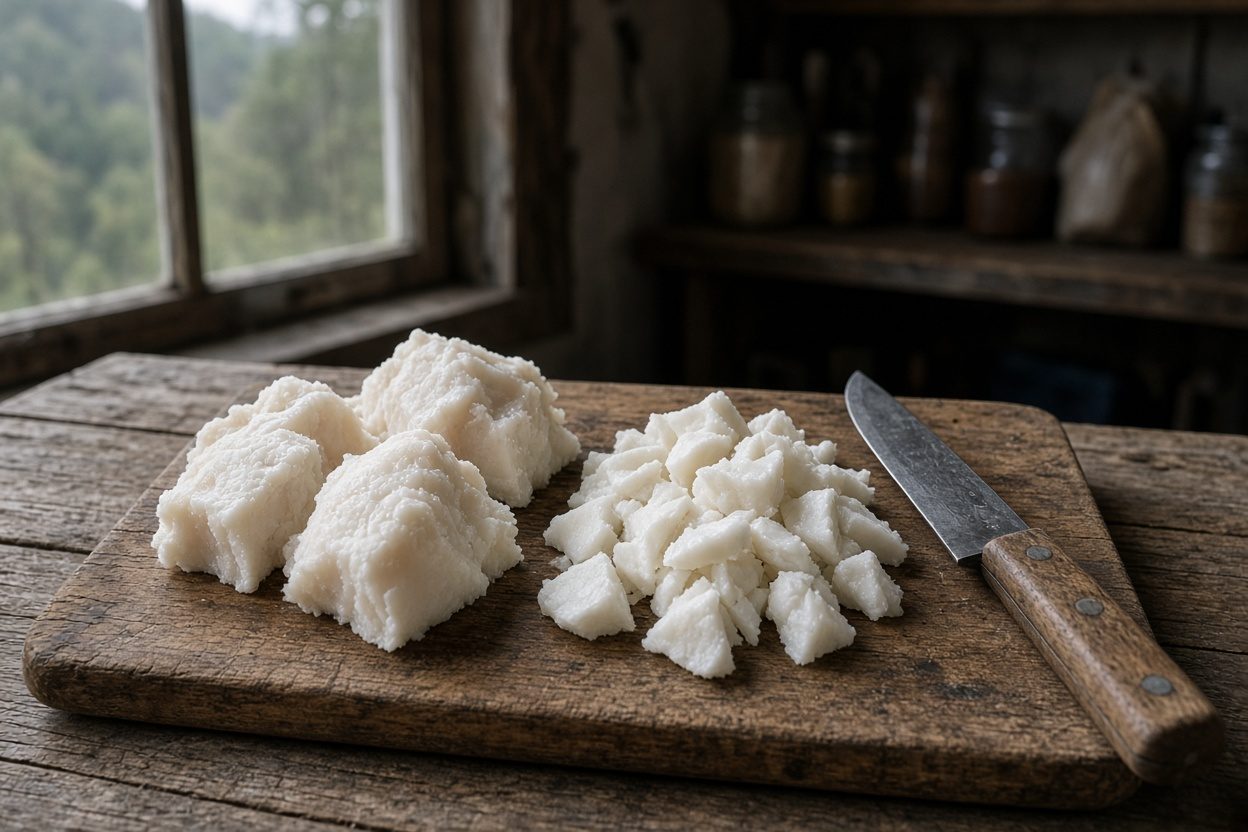
You want beef suet, the hard white fat from around the kidneys. It renders the cleanest tallow with the least smell. Ask the butcher or the meat counter; many will give it away or sell it cheap, especially from grass-fed animals in the fall. A local farm that sells beef by the quarter will usually have it if you ask ahead. I don’t have a product listing I’d send you to for suet, and I wouldn’t want one. This is a thing you get from somebody who raises cattle.
Deer tallow is the other old mountain choice, and plenty of hunters in Madison County still save it. It renders harder and drier. Mutton tallow is softer. Beef sits in the middle, and it’s the one I’d start with.
Two pounds of suet gives you about a pint and a half of tallow, which is more than you need for a season of salve. The rest keeps for cooking or the next batch.
Rendering it clean (the wet method)
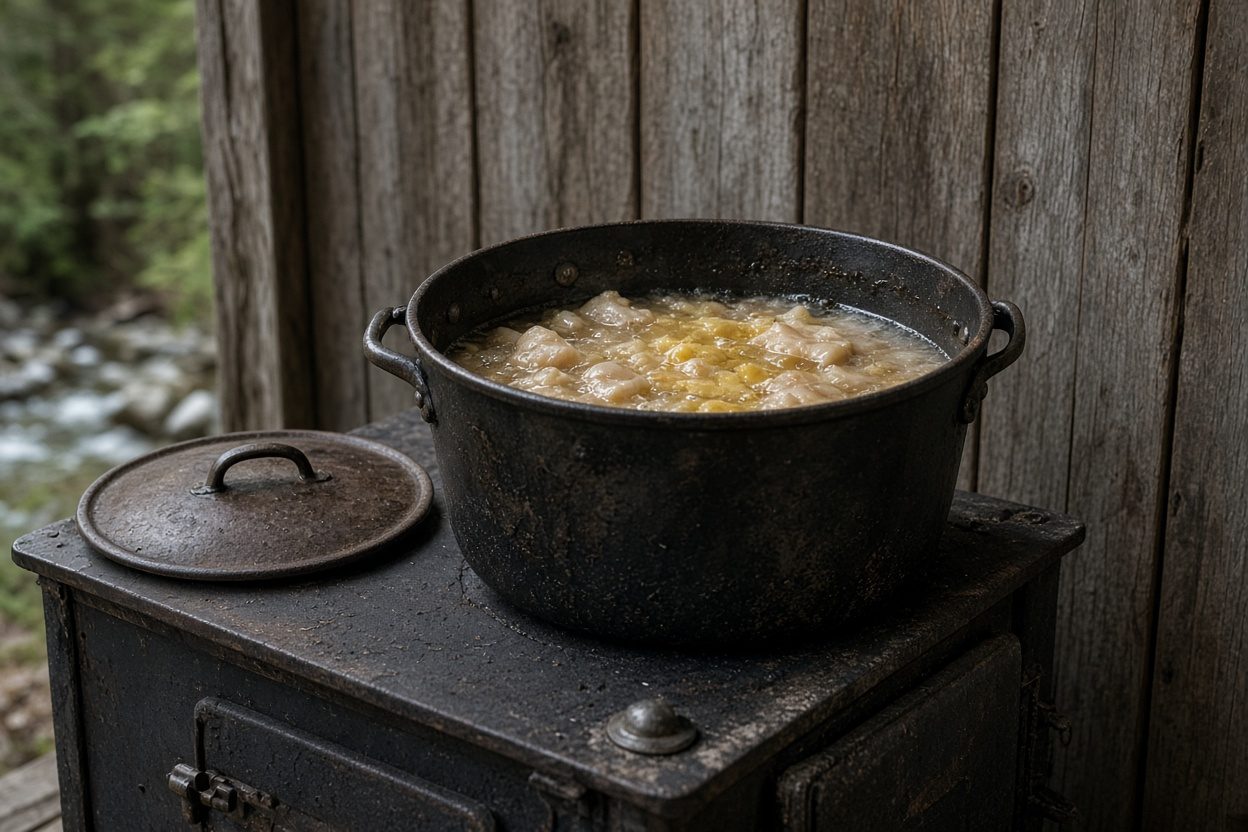
I render with water. It takes longer than dry rendering, but the water carries off the impurities and leaves you a whiter tallow with almost no beefy smell, which matters when it’s going on your hands.
1. Cut the suet small. Pick off any red meat or bloody bits, then chop it into pieces the size of your thumbnail, or run it through a grinder if you have one. Cold suet cuts easiest, so keep it in the refrigerator until you start.
2. Cover it with water. Put it in a heavy pot with a cup or two of water and a good pinch of salt. The salt helps pull out the impurities.
3. Simmer low, a long time. Keep it at a lazy simmer, uncovered, for three to five hours, stirring now and then. Never let it boil hard, and never walk off and leave it. Hot fat is a kitchen-fire hazard, and I keep a lid close by the whole time. The fat will melt out and the bits of tissue will go golden and shrink.
4. Strain it. Line a sieve with two layers of cheesecloth, set it over a heatproof bowl, and pour everything through, carefully. Wring the cloth if it’s cool enough to handle. The crispy bits left behind are cracklings, which my grandfather salted and ate standing up.
5. Let it set. Put the bowl in the refrigerator overnight. The tallow rises and hardens into a white cake on top of the water. In the morning, lift the cake off, turn it over, and scrape away the soft gray layer on the bottom.
For the whitest, mildest tallow, I melt the cake again with fresh water and repeat the whole thing a second time. It’s worth the extra afternoon for salve.
Melt the finished cake gently and pour it into clean mason jars. Pat it dry first, because any water left in it will turn it. Kept cool and lidded, it lasts a year or more in my cupboard.
Infusing the plantain oil
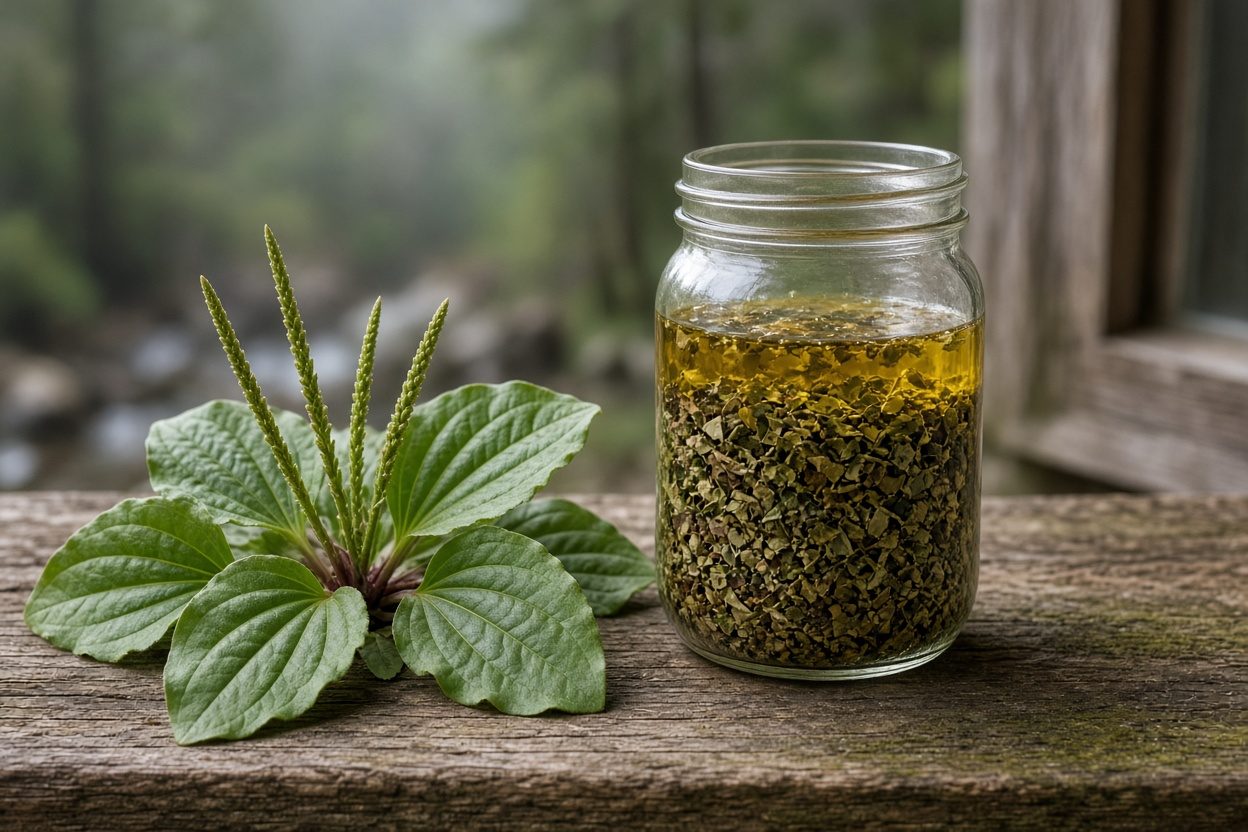
My grandmother used broadleaf plantain, Plantago major, the low, ribbed weed in every yard and path up the hollow. It was the plant she put on everything that scraped or chafed, and it’s the one I still use. If you don’t know it yet, I wrote about finding it in how to forage and use plantain. The usual rule stands: only use a plant you can name for certain, confirmed against more than one good guide.
Gather the leaves in summer and dry them well. Fresh leaves carry water, and water in your oil grows mold. Fill a pint jar halfway with the crumbled dry leaf and cover it by an inch with jojoba oil. Let it steep somewhere warm for four to six weeks, or set the open jar in a pan of barely simmering water for three hours if you’re short on time. Strain it through cheesecloth. The whole method is in how to make an herbal infused oil.
If you’d rather keep it plain, skip the herb. Plain tallow salve is what most of my family used, and it does its job.
Making the salve
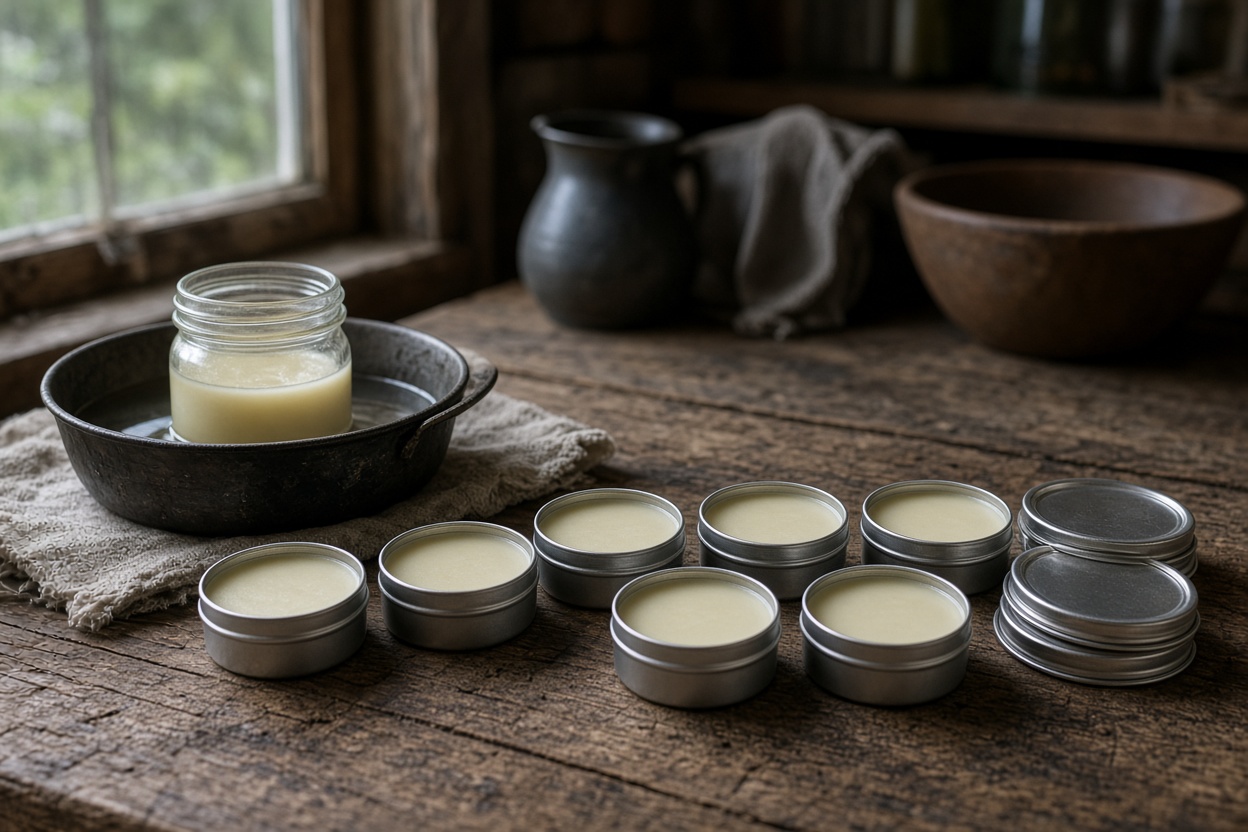
My ratio, for about six two-ounce tins:
– ½ cup rendered tallow
– ¼ cup plantain-infused jojoba (or plain)
– 1 tablespoon beeswax pellets
Tallow alone sets firm in a cold kitchen and goes soft in a warm one. The oil softens it so it spreads, and the little bit of wax keeps it from going greasy in a coat pocket. In summer I add a touch more wax.
Put all three in a clean jar and stand it in a pan with two inches of barely simmering water. Stir with a chopstick until everything is clear and melted. Take it off the heat and pour straight into tins. Leave the lids off until the salve has set completely, about an hour, so no steam gets trapped.
Tallow salve has a faint, clean smell, a little like a candle. If yours smells strong or beefy, the tallow wanted a second rendering. Still usable. Next time, render it twice.
Using it and keeping it
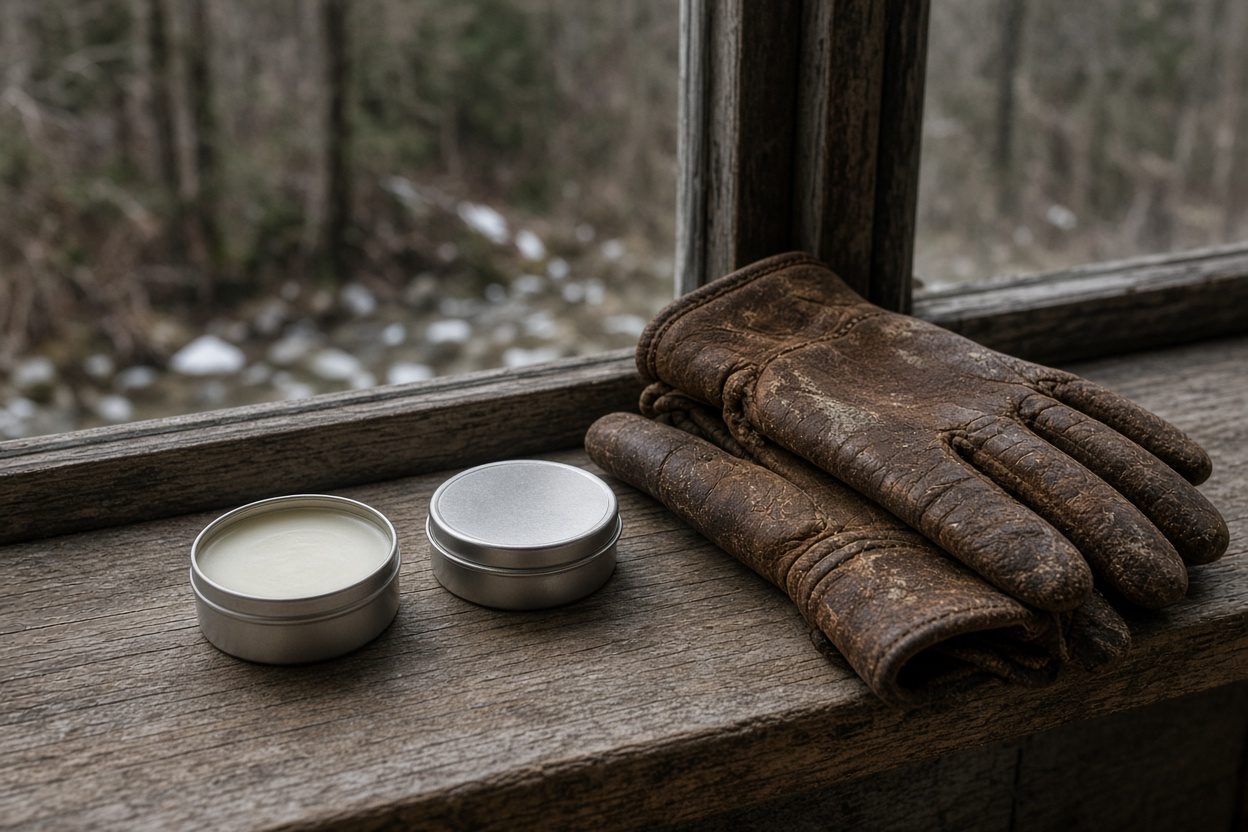
I rub a little into my hands at night, and into the cracked spots on my heels. A tin in the truck and one by the sink lasts me most of a winter. Test a new batch on the inside of your wrist first and give it a day. Don’t put it on a deep cut or a burn. Those need cleaning and proper care, and sometimes a doctor, not salve.
Label each tin with what’s in it and the date. A salve made with clean tallow and dried herb keeps a year in a cool, dark place. If it starts to smell sharp or sour, it’s turned. Make a fresh batch.
These make good gifts, too. I tuck a tin into the boxes I put together each December, which I wrote up in how to make mountain apothecary holiday gifts. If you’d rather a salve without the tallow, my mullein salve is made with oil and beeswax alone.
The deeper work

Rendering fat and pouring a tin is an afternoon’s work. Knowing which plants in these coves are worth the trouble, when to gather each one, which ones look like something you’d regret, and how the people here before us used them, Cherokee and settler both, is a lifetime’s. That’s what I set down in Appalachian Medicinal Plants: plant by plant, with how to identify each one and gather it without taking more than the hillside can spare.
