How to Keep Duck Water From Freezing (Without Flooding the Coop)
How I keep duck water from freezing all winter: a heated base under a metal fount, a dunking pan I refill twice a day, and a setup that keeps the coop dry.
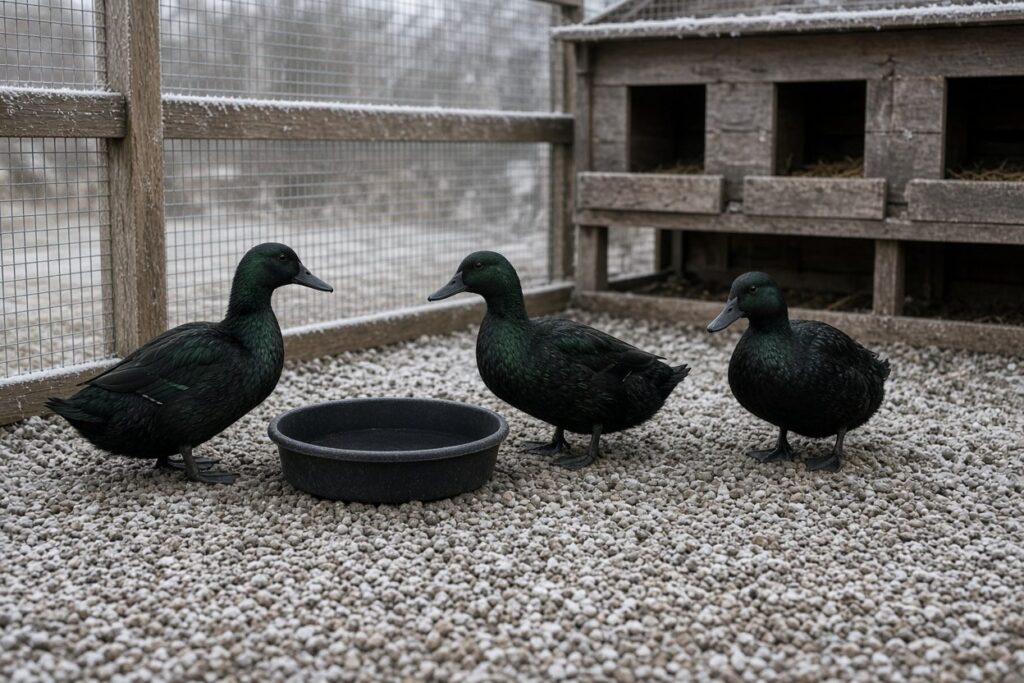
The first January we had the Cayugas, I walked out at twenty to seven on a nine-degree morning and found all four of them standing around a solid puck of ice in their rubber pan, staring at me like I had done it on purpose. I’d kept chickens through three Tennessee winters by then and figured ducks would be the same job. They are not the same job.
Chickens need water they can sip. Ducks need water they can dunk their whole bill into, past the nostrils, every time they eat. They use it to clear their nostrils and wash down food, and they will spill it, slosh it, and track it into every corner of the coop they can reach. So in winter you’re solving two problems at once: keeping the water liquid, and keeping it from turning the bedding into a skating rink. Here’s the setup I’ve used for three winters now with four Cayugas and twelve hens sharing a yard.
Why duck water is harder than chicken water
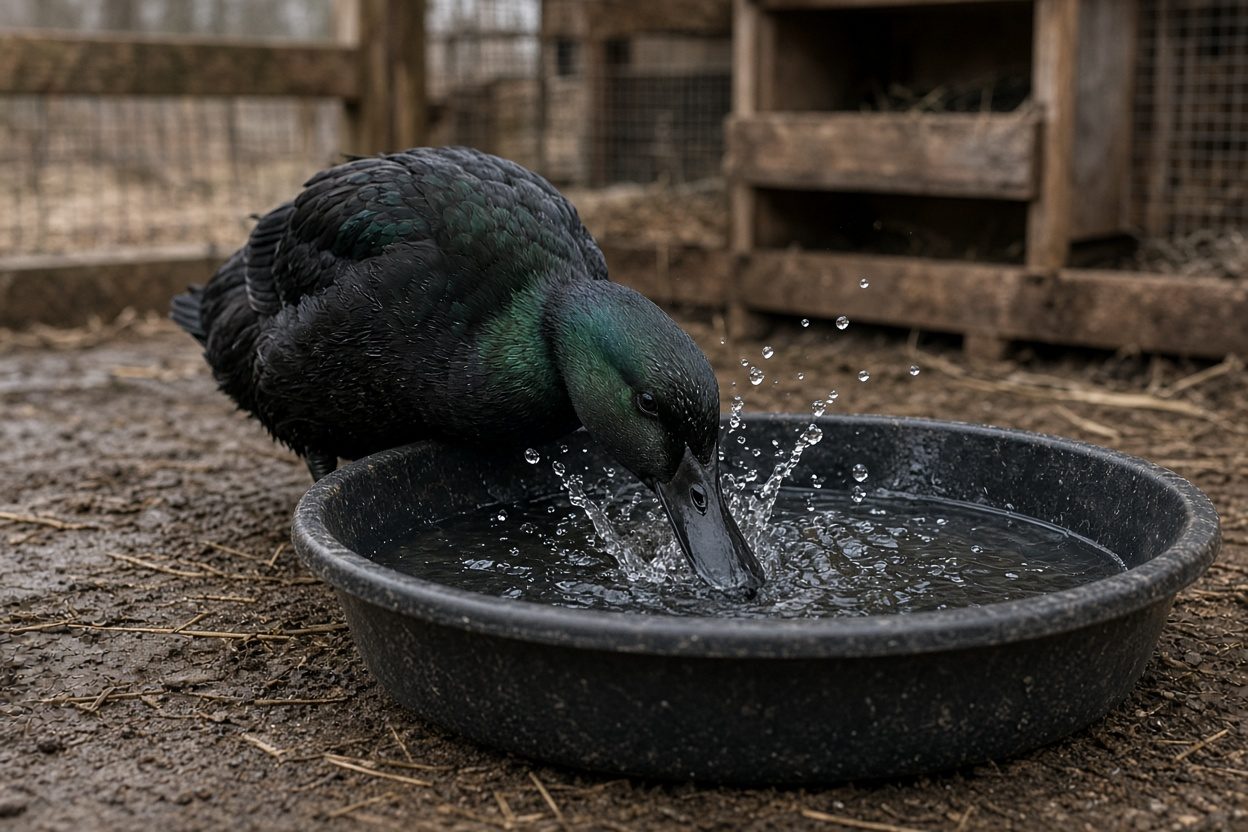
A nipple waterer is the best thing that ever happened to my chicken coop in winter. It’s useless for ducks. A duck can’t clear its nostrils on a nipple, and a duck that can’t do that after eating will end up with crusty, gummed-up eyes and nares. So whatever you set up, the girls need a trough or pan deep enough to get the bill in up past the nostrils.
Ducks also don’t care about cold water the way you’d think. My Cayugas will happily dunk their heads in water with ice floating in it. What they can’t handle is no water at all with their breakfast. That’s the rule I build everything around: if there’s feed out, there’s open water out.
The base and the fount, outside the coop
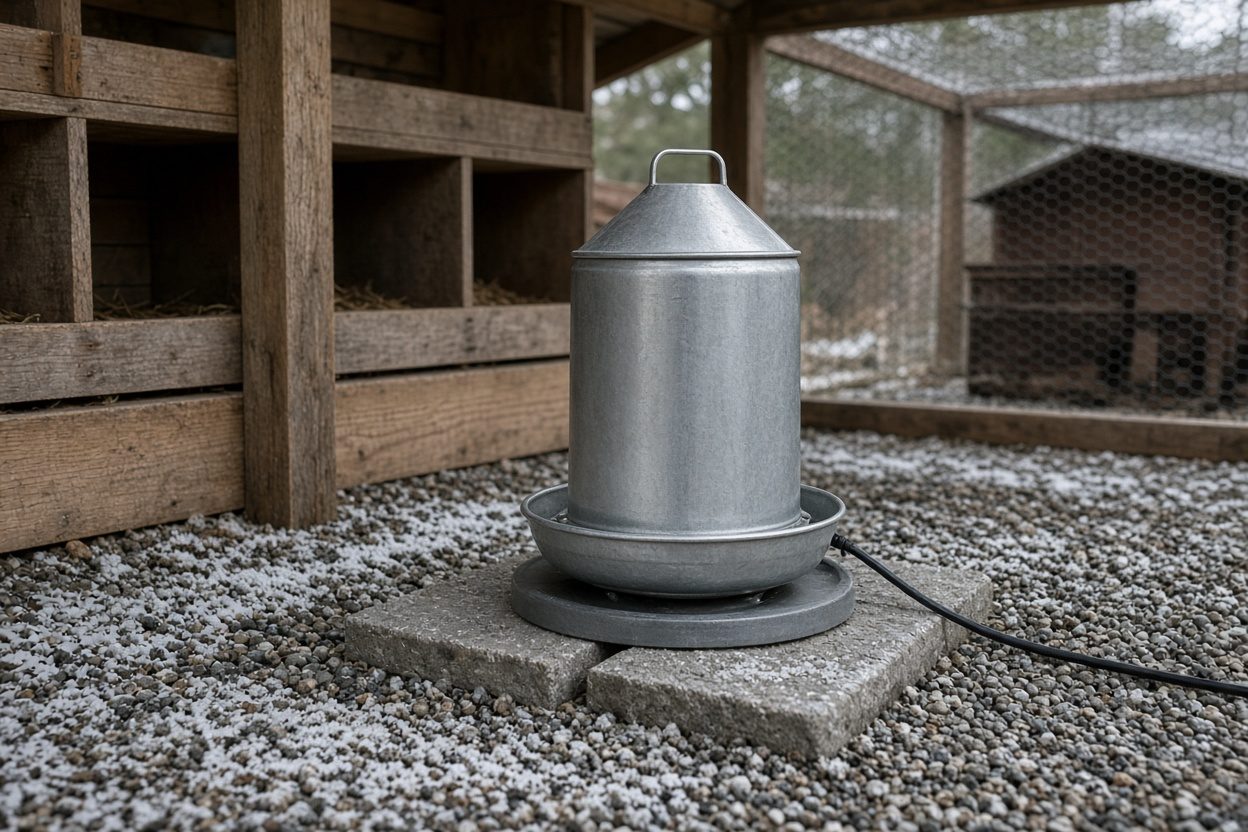
I keep the main duck water in the covered run, not inside the coop. That one decision fixed half my winter problems.
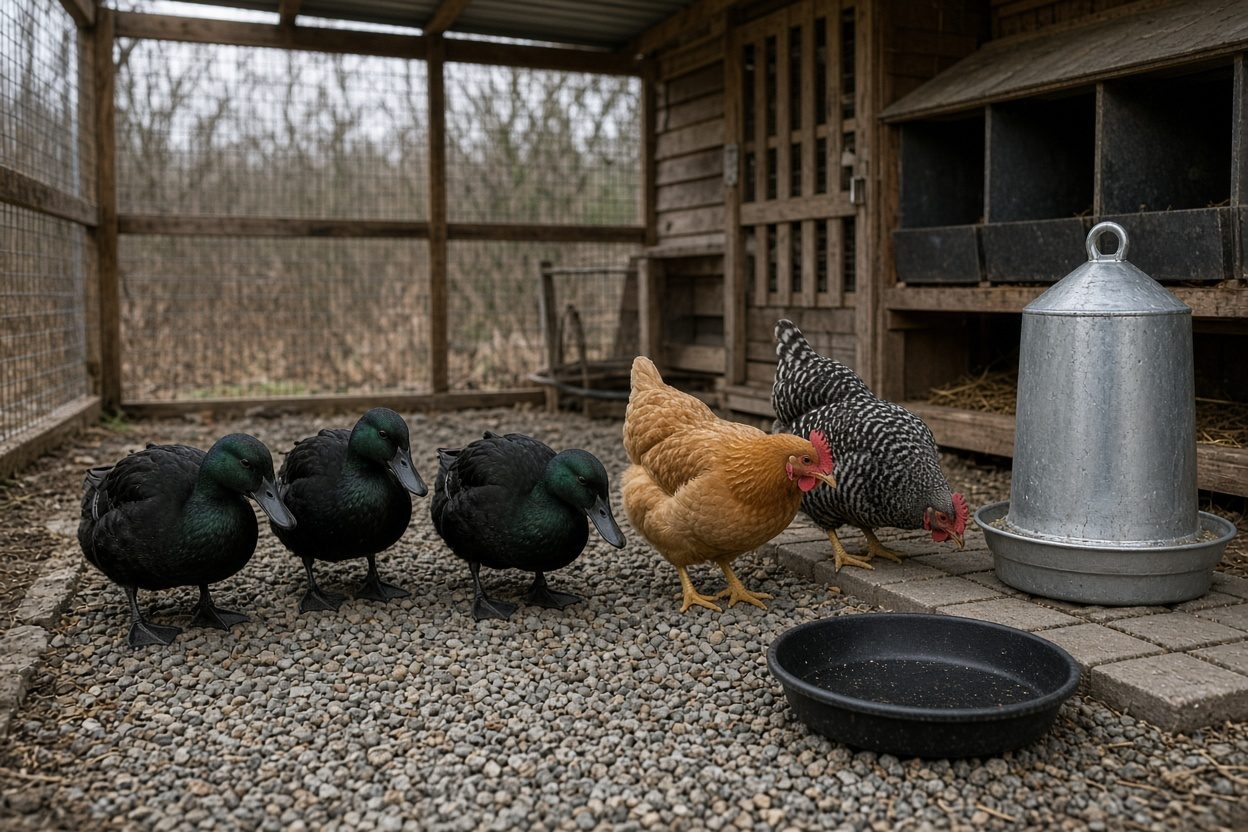
The heated base sits on two concrete pavers so it’s level and up off the mud, and the galvanized double-wall fount sits on top. The base is made for a metal fount, and it does exactly one job: keeps that fount from freezing solid on a cold night. On the coldest nights we’ve had, single digits in a January cold snap, it held. I wrote up the full setup, cord safety and all, in how to set up a heated waterer base for a metal fount.
Here’s the honest con. The fount’s trough is fine for drinking but shallow for a duck that wants to dunk past the nostrils. The ducks use it, and it’s the water I count on overnight and on the mornings I’m late. It isn’t the only water they get.
The dunking pan, refilled twice a day
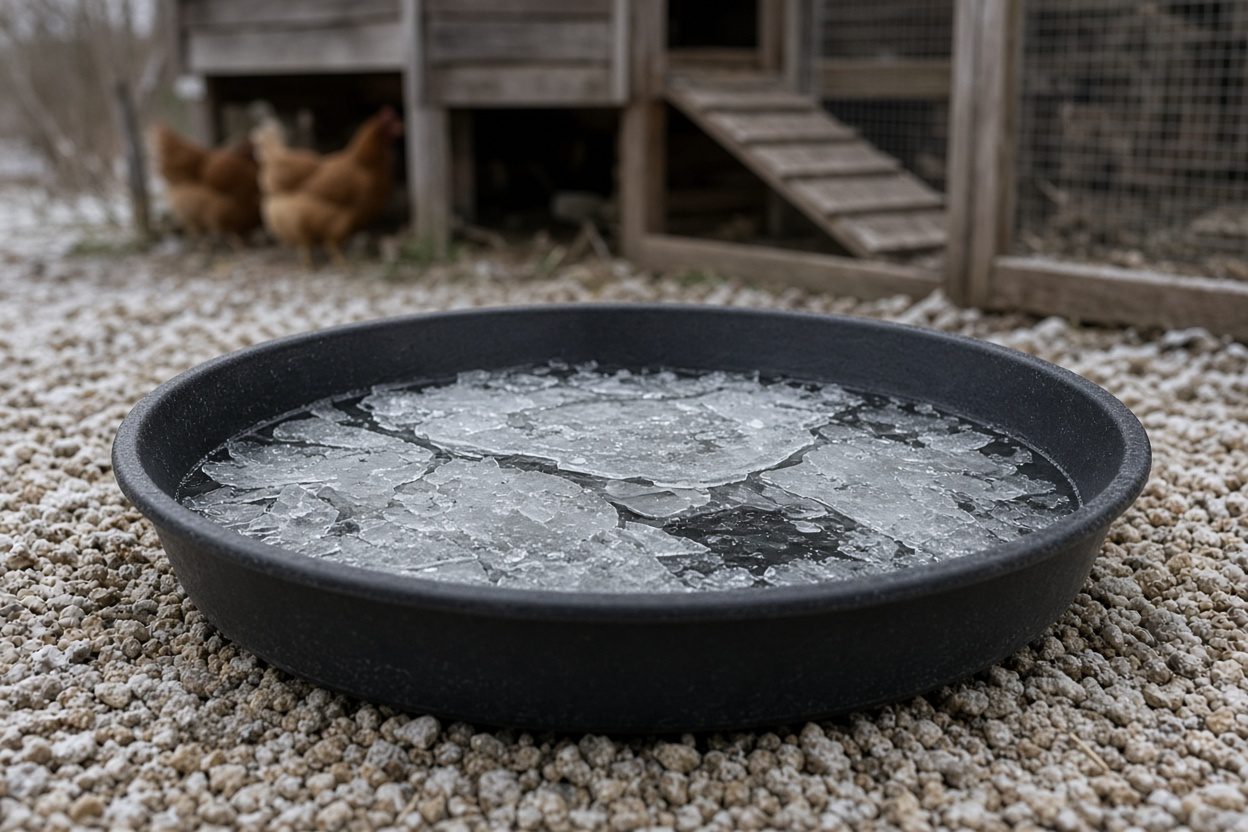
Alongside the fount I set a wide, shallow rubber feed pan, about four inches deep, on the gravel. I don’t have a verified listing to send you to for the pan, so any sturdy rubber pan from the feed store works. Rubber is the point. You can stomp on it frozen, pop the ice out in one piece, and it won’t crack the way plastic does.
That pan is the ducks’ real dunking water. I fill it with warm-from-the-tap water when I let them out in the morning and again when I do evening chores. In between, it may skin over with ice on a bad day. That’s fine. They break it.
At night the pan gets dumped and flipped. Water left out overnight at fifteen degrees is just a block of ice in the morning and a mess when it thaws.
Keep the water out of the coop at night
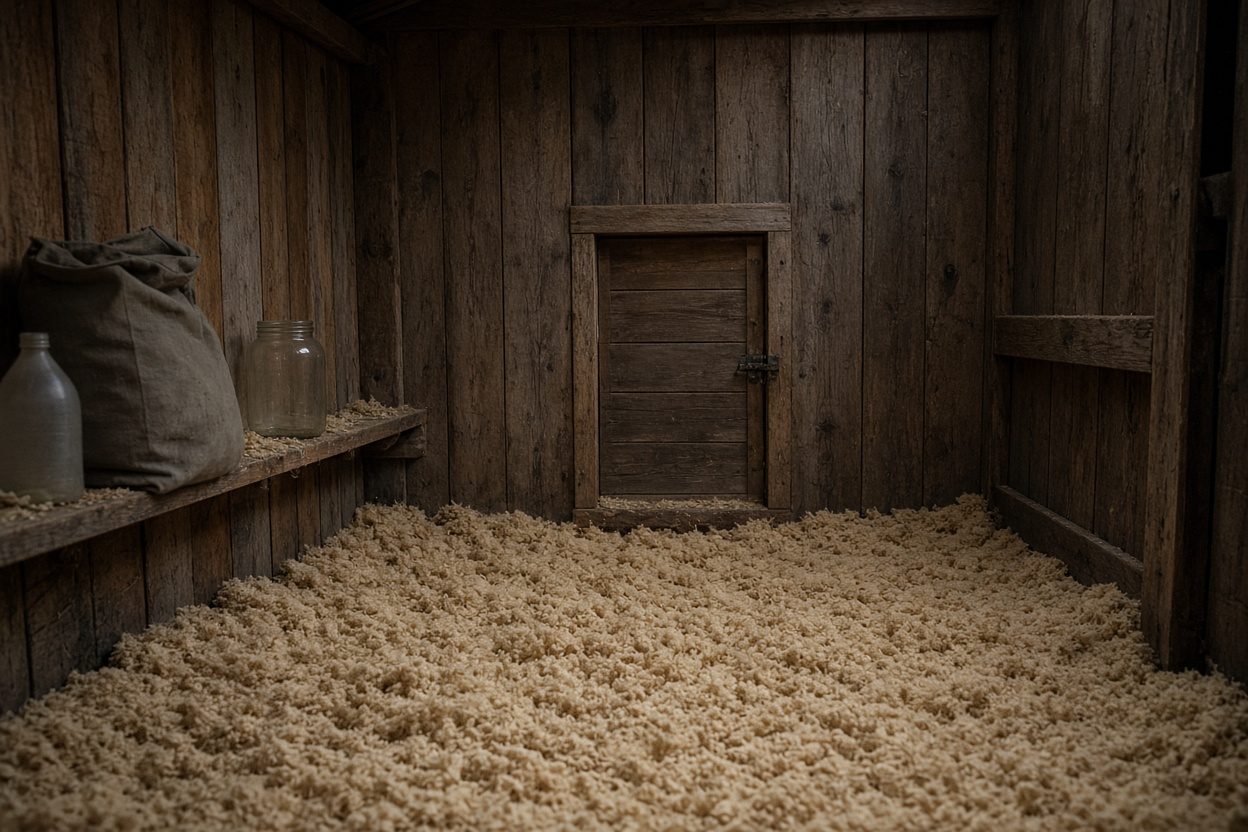
This is the part people argue about. I don’t put water in the duck side of the coop overnight, and I don’t put feed in there either. Ducks drink when they eat, and ducks without food overnight don’t need water overnight. They need it the minute the feed goes down in the morning, which is why I’m out there first thing with the warm water.
If your ducks are shut in longer than about ten hours, or you’re gone early, put the heated fount inside on a boot tray, and accept that you’ll be changing more bedding. Your call. I’ve done both, and the dry coop wins for us.
Bedding that forgives the splash
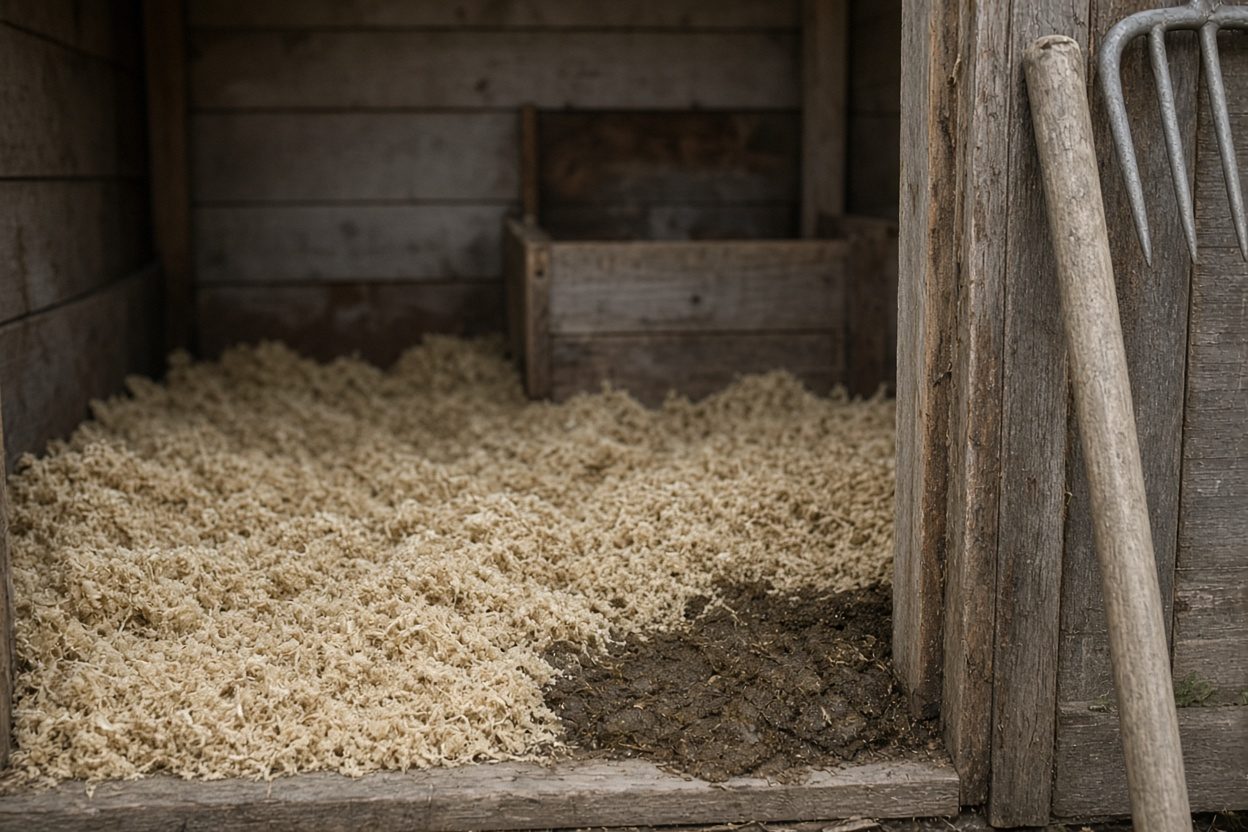
Even with water outside, ducks come in wet. They shake off in the doorway, and they carry wet feet into the bedding. Wet bedding in a cold coop is the real winter danger. It freezes, it stinks, and it holds ammonia.
I use hemp bedding on the duck side because it soaks up more and dries faster than pine shavings. I fork out the wet patch by the door every couple of days and top up with fresh. A full clean-out is about every three weeks in winter. I cover the reasons in how to use hemp bedding for a warmer winter coop.
When the power goes out

Heated bases only work with power. The winter we lost electricity for two days after an ice storm, I went back to the old way: haul warm water out in a bucket three times a day, break ice in the pan with my boot heel, and refill. Keep a couple of filled jugs in the house when a storm is on the way. My whole power-outage routine is in how to keep chickens through a winter power outage, and ducks fit into it fine. They’re tougher in the cold than chickens.
If you’re new to ducks, how to start keeping backyard ducks covers housing them with a flock of hens. The chicken side of the winter water problem has its own write-up in how to keep chicken water from freezing.
What I’d tell a first-winter duck keeper
– Water goes out with the feed, every time, deep enough to dunk past the nostrils.
– Keep the main water in the run, on pavers, off the mud.
– A metal fount on a heated base for overnight insurance, a rubber pan for the real dunking.
– Dump the pan every night.
– Fork out the wet bedding by the door before it freezes.
That’s it. It isn’t fancy, and it takes me about ten minutes a day in January. Mostly the ducks just stand there looking unbothered by weather that would have my hens sulking on the roost.
I go into first-year flock care month by month, winter water and all, in Raising Backyard Chickens for Beginners. It’s written for the keeper I was that first January: willing, a little overconfident, and about to learn something from four wet ducks.
