How to Forage and Use Pipsissewa in Appalachia, the Winter Way
Find pipsissewa in Appalachia in winter: telling striped wintergreen from its look-alikes, taking a few leaves without harming a colony, and drying them right.
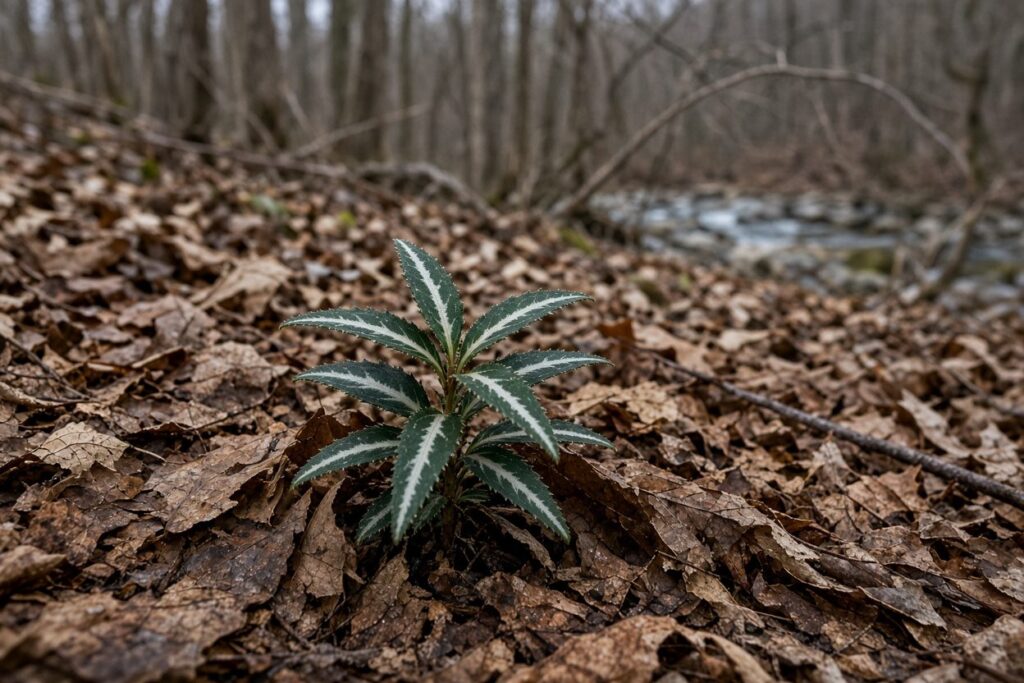
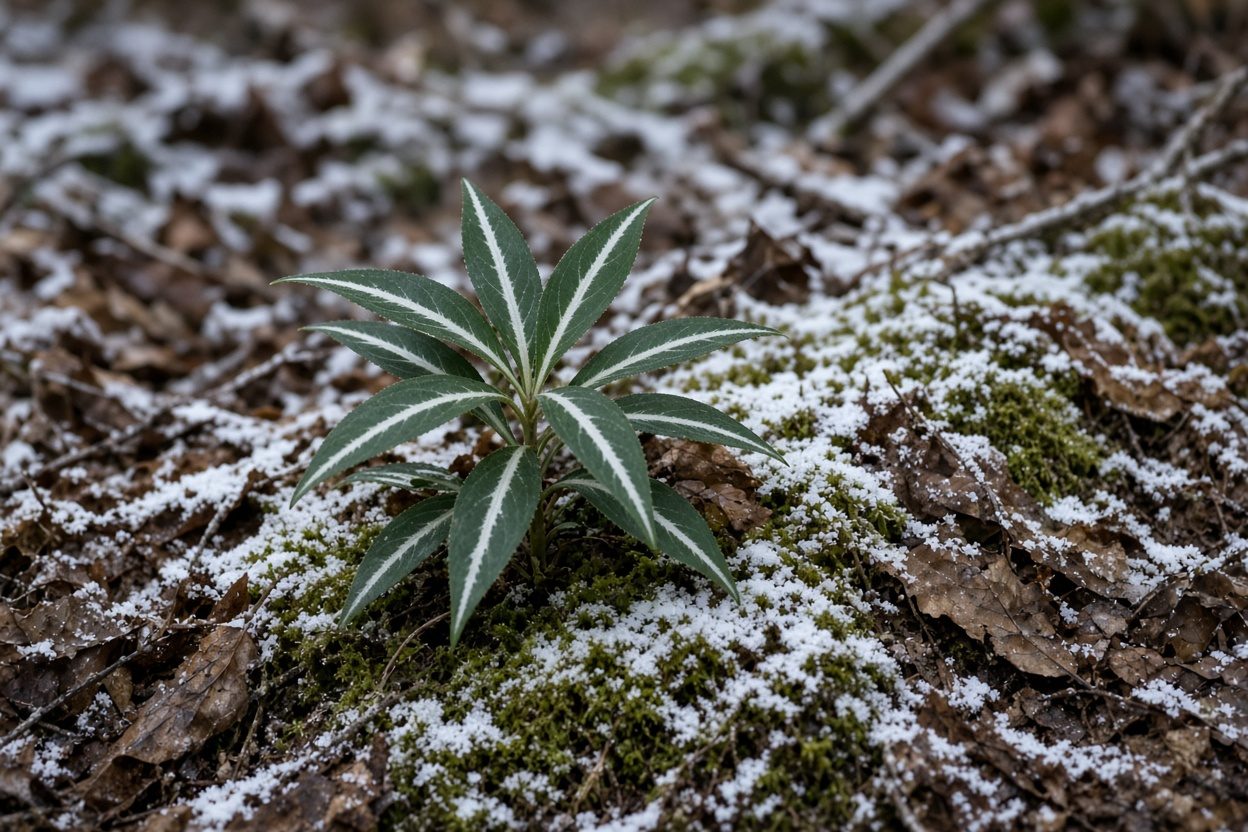
Once the leaves are down and the woods above our creek go brown, the little evergreen my grandmother called pipsissewa shows up along the old logging road like somebody took a brush of white paint down the middle of every leaf. You walk past it all summer. In January it is the greenest thing on the ground.
There are two plants that carry the name in these mountains. The one I grew up with is Chimaphila maculata, which most guides call striped or spotted wintergreen. Its cousin, Chimaphila umbellata, is the plant the books call pipsissewa or prince’s pine, and it is much scarcer this far south. Folks here use the one name for both, and the old herb buyers did too. This is how I find it, how I gather it without hurting it, and how I put it up.
A small paper sack for the walk home is all else you need.
Know it before you take it
I’ll say this once and plainly: never use any wild plant on the strength of one book, one app, or one article, this one included. Check it against more than one reputable guide and, better still, walk it with someone local who knows it. When there’s any doubt, leave it be.
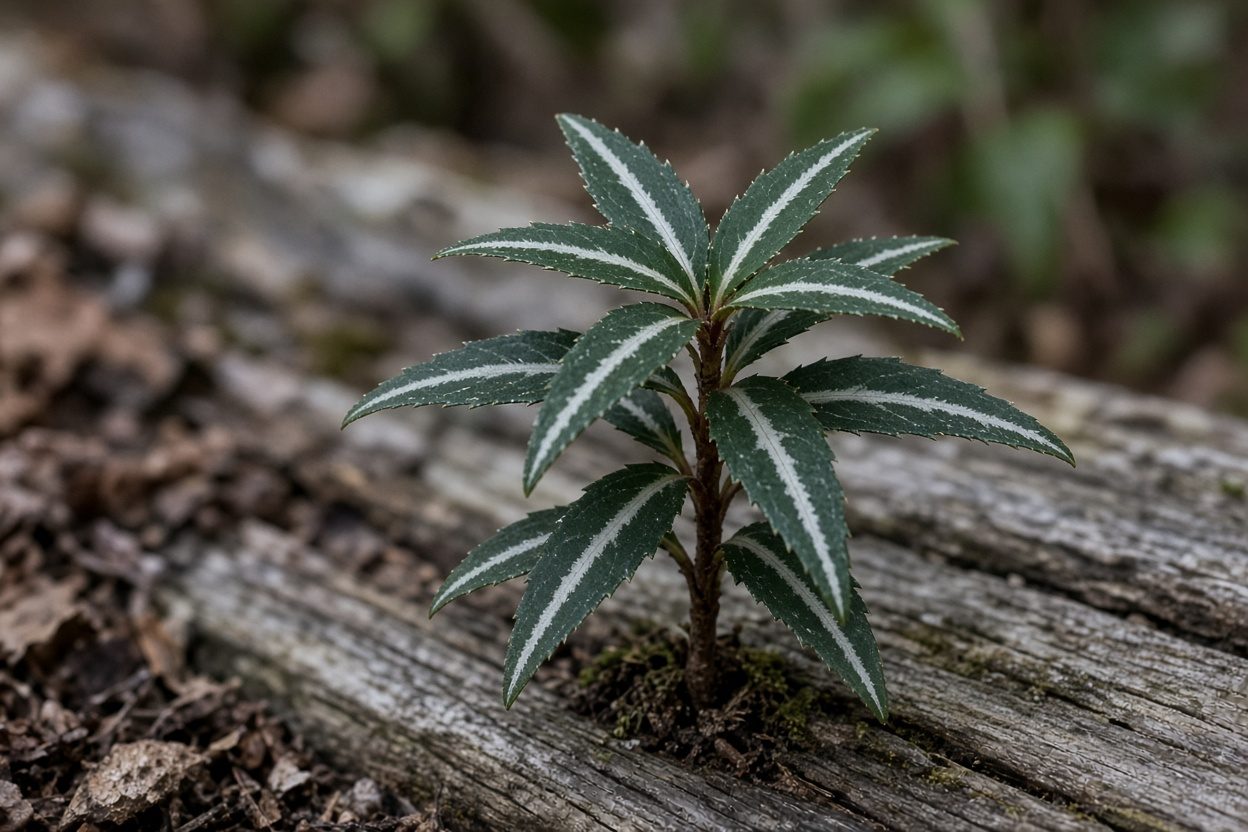
Striped wintergreen is a small plant, four to ten inches tall, that grows in loose colonies in dry oak and pine woods, along ridges, and on the cut banks of old roads. The leaves come in whorls of two or three tiers around a short woody stem. Each leaf is long, narrow, and stiff, pointed at the tip, with small teeth along the edges. The mark that settles it is the color: dark, glossy green with a pale, whitish stripe running down the midrib and along the main veins.
In June and July it sends up a short stalk with a few nodding, waxy white or pale pink flowers. By winter, a dried seed head is often still standing above the leaves, and that is a good second confirmation.
Chimaphila umbellata looks much the same but without the white stripe, and with broader, shinier leaves widest toward the tip. If you find it here, you’ve found something uncommon. I leave it alone, and I’d ask you to do the same.
The look-alikes worth knowing
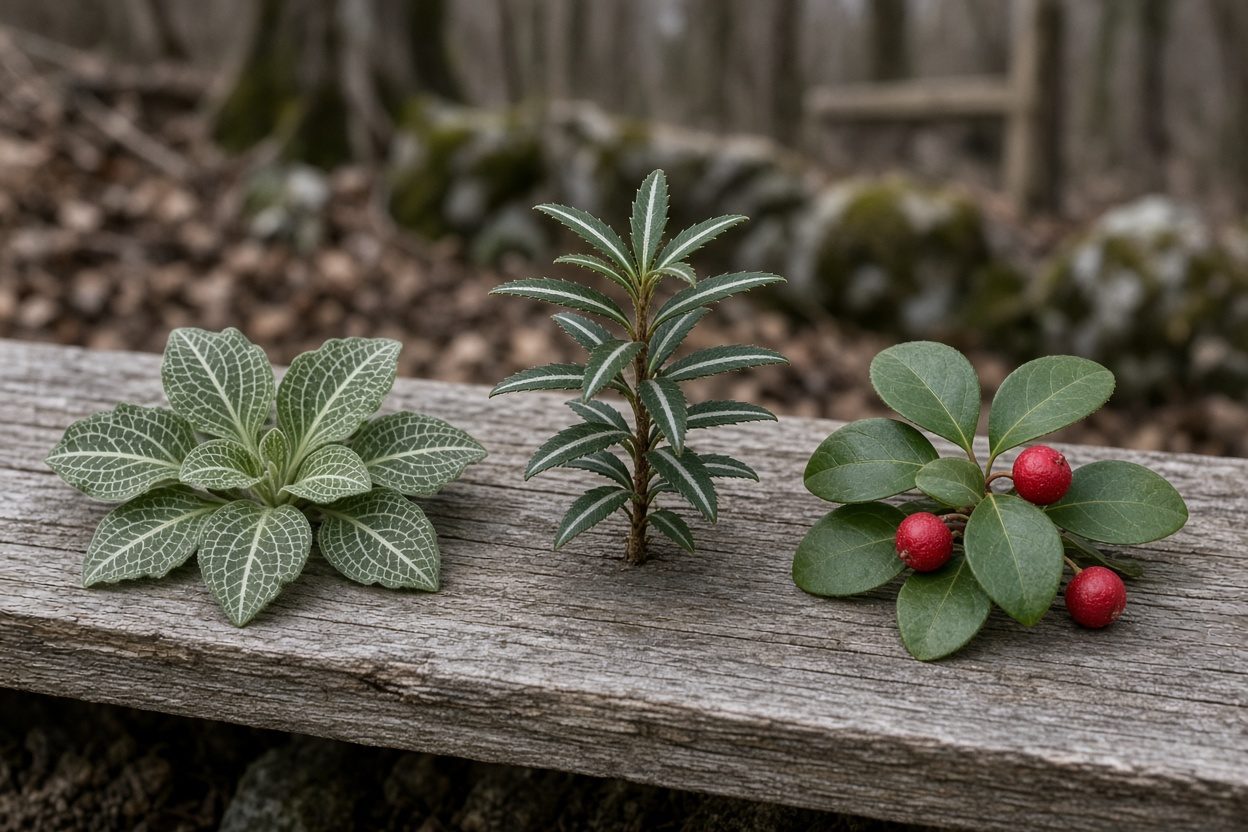
Two plants share these same dry woods and trip up beginners.
Downy rattlesnake plantain (Goodyera pubescens) has a flat rosette of dark leaves netted all over with white veins, like a snakeskin. It is a native orchid, it is slow to recover, and you should not pick it at all. The difference is easy once you’ve seen both: rattlesnake plantain lies flat in a rosette with white netting everywhere; striped wintergreen stands up on a little stem in tiered whorls with one main white stripe and toothed edges.
Teaberry (Gaultheria procumbens), the wintergreen of chewing gum, grows nearby too. Its leaves are rounder, plain green, and smell strongly of wintergreen when you crush one. Striped wintergreen does not.
When I take a grandchild out, I make them show me the stripe, the teeth, and the tiers before anything goes in the sack.
Gather a little, and gather it right
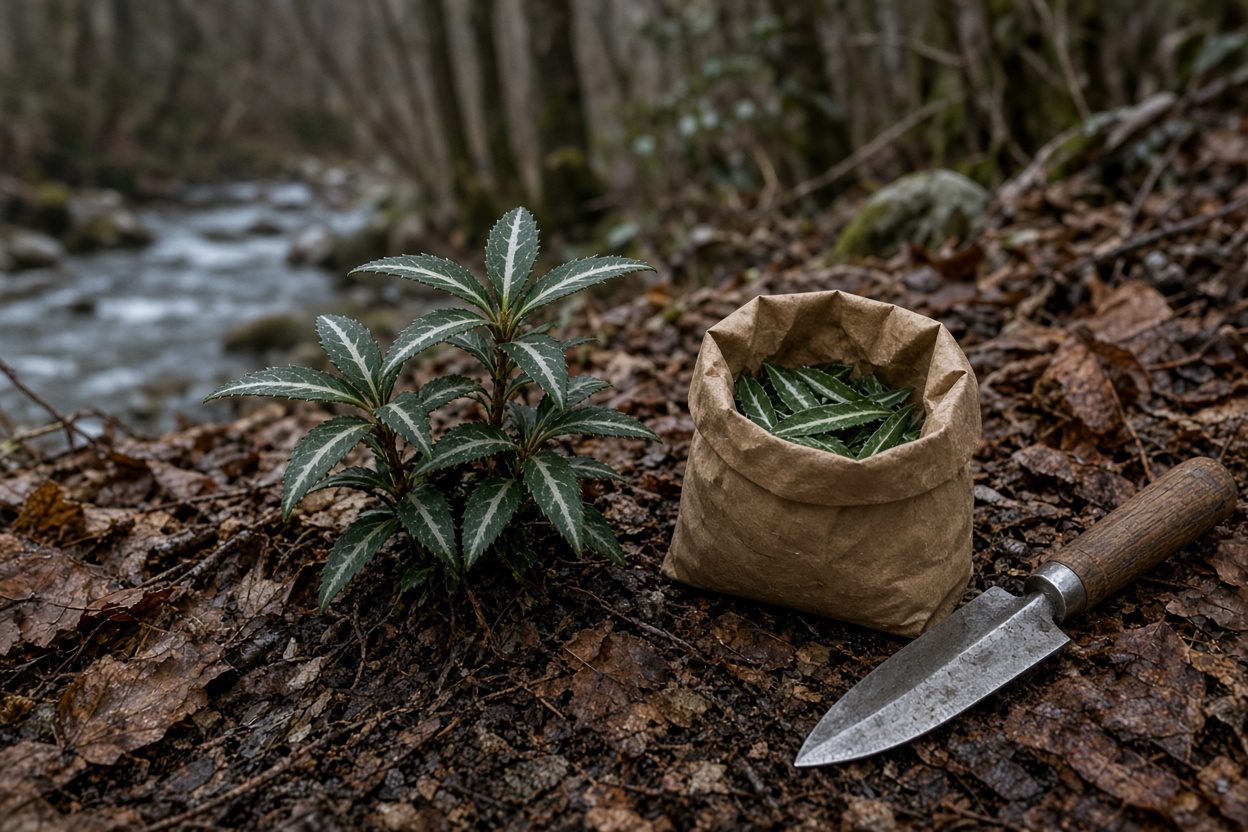
This plant spreads slowly by underground runners, and a colony that’s taken too hard can take years to come back. My grandmother’s rule was to take one leaf whorl from a plant and only from plants with three, and never take from a colony smaller than a kitchen table. I still go by that.
Winter is the easiest time to gather it, because it stands out against the brown woods and you can see the whole colony. On a dry day, snip a single tier of leaves with a clean blade. Do not pull the plant, and do not dig the root. You’ll want only a small handful in any case. This is not a plant you need much of.
Gather on land you own or have permission to walk. Collecting plants is not allowed on many public lands, including national parks, so check the rules before you take anything.
Drying and keeping it
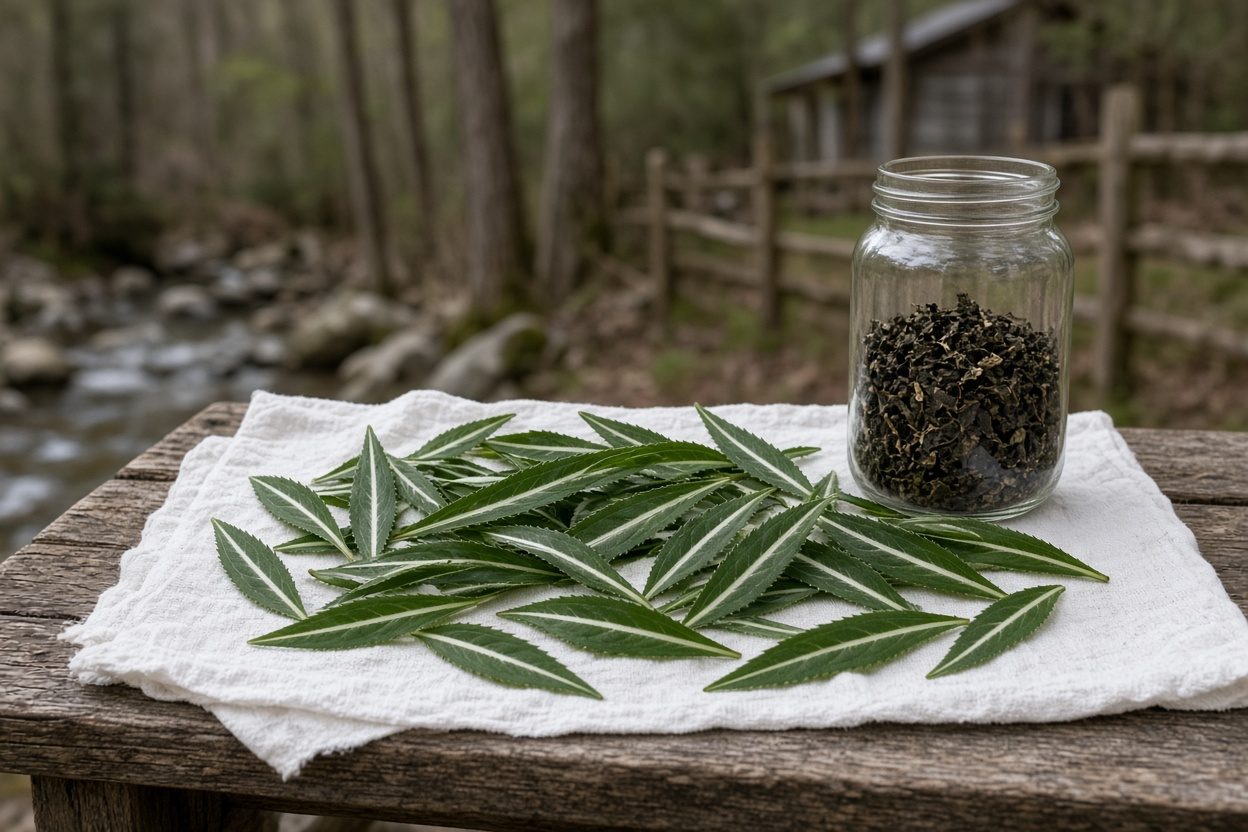
Spread the leaves in a single layer on a screen or a clean cotton towel, lay a sheet of cheesecloth over them to keep the dust off, and set them somewhere warm, dry, and out of the sun. In my drying shed that takes about a week in winter, a little longer in a damp spell. The leaves are tough and leathery, so make sure they snap rather than bend before you put them up.
Store them whole in a wide-mouth jar in a dark cupboard and label it with the plant and the date. Whole leaves keep their character longer than crumbled ones. I lost a jar to mildew one wet April because I put them up a day too soon, and I haven’t rushed it since.
How it has been used traditionally
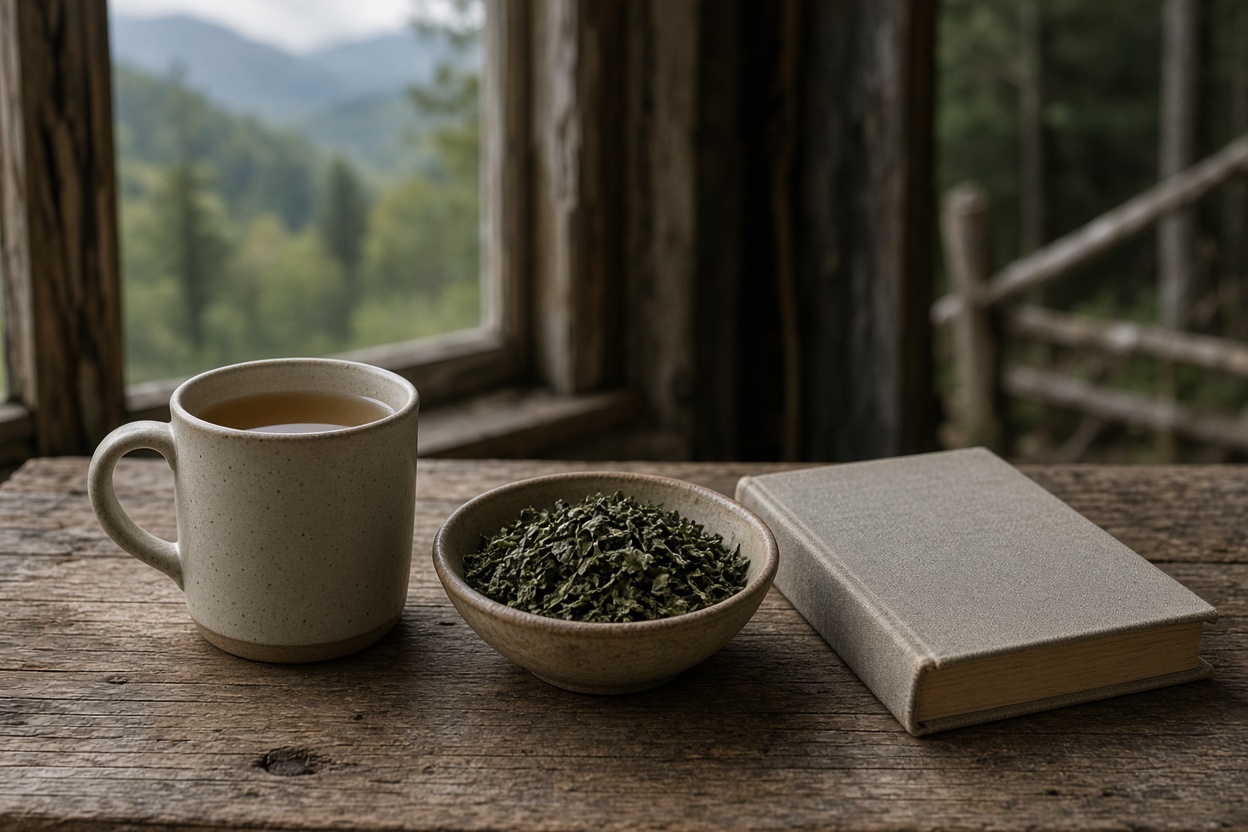
I’ll tell you how this plant has traditionally been used, and I’ll be plain about what that means. This is folk and traditional-use history, not medical advice, and nothing here treats or cures anything. I don’t give amounts or schedules for taking it, and I won’t.
Pipsissewa turns up in old American herbals and in the mountain folk tradition, where it was gathered by the herb buyers and was once one of the flavorings in old-time root beer. Cherokee uses of striped wintergreen are recorded in the ethnobotanical literature, collected in Daniel Moerman’s Native American Ethnobotany. I send readers to that record for what the Cherokee themselves passed down, rather than paraphrasing it. They knew these hills first, and I credit them.
In my grandmother’s kitchen it was steeped as a plain leaf tea: a few dried leaves in a cup of just-boiled water, covered, for ten minutes or so, then strained through cheesecloth. It is mildly bitter and a little astringent. The old herbals caution against heavy or long use of this plant, and against using it during pregnancy, and so do I. If you have a health concern, see a qualified practitioner.
What I like about it, and what I don’t
What I like is that it asks so little of you: a winter walk, a sharp eye, a small handful. What I don’t like is how often I find a colony torn up by somebody who pulled whole plants. That’s the whole reason I write about it the way I do.
Where the plant ends and the knowing begins
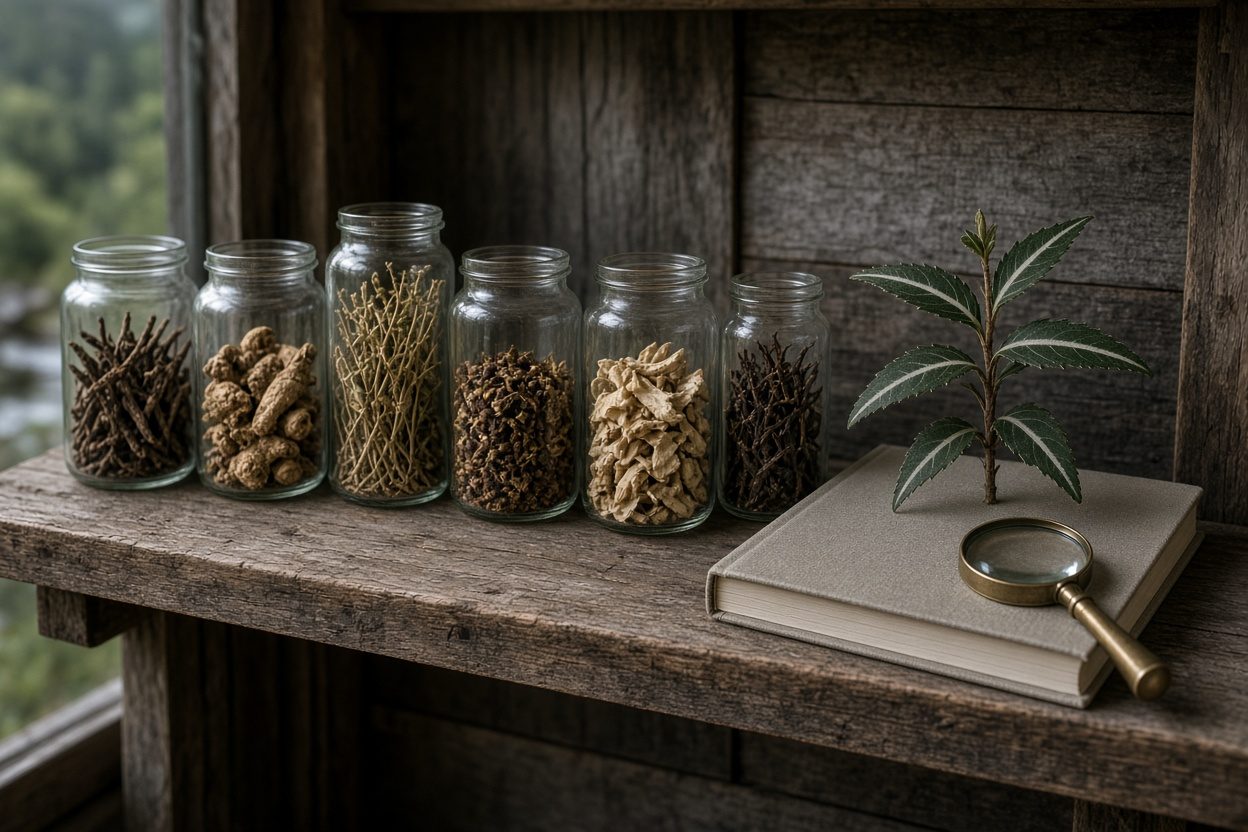
A jar of dried leaves is the easy part. Knowing this plant in every season, telling it from the orchid that lives beside it, and knowing how much a colony can stand to give, takes longer. I walk through it plant by plant in my book, Appalachian Medicinal Plants, along with how the mountain people gathered and prepared each one.
If you’re learning the winter woods, my notes on identifying Appalachian medicinal plants in winter and storing mountain herbs through a humid Appalachian winter are good next steps.
Take a little, and leave the colony better than you found it.
