How to Make Herbal Tea from Foraged Plants, Step by Step
Herbal tea from foraged plants is the easiest place to begin — the plants I gather, how I dry and blend them, how to strain a cup, and the one safety rule I never break.
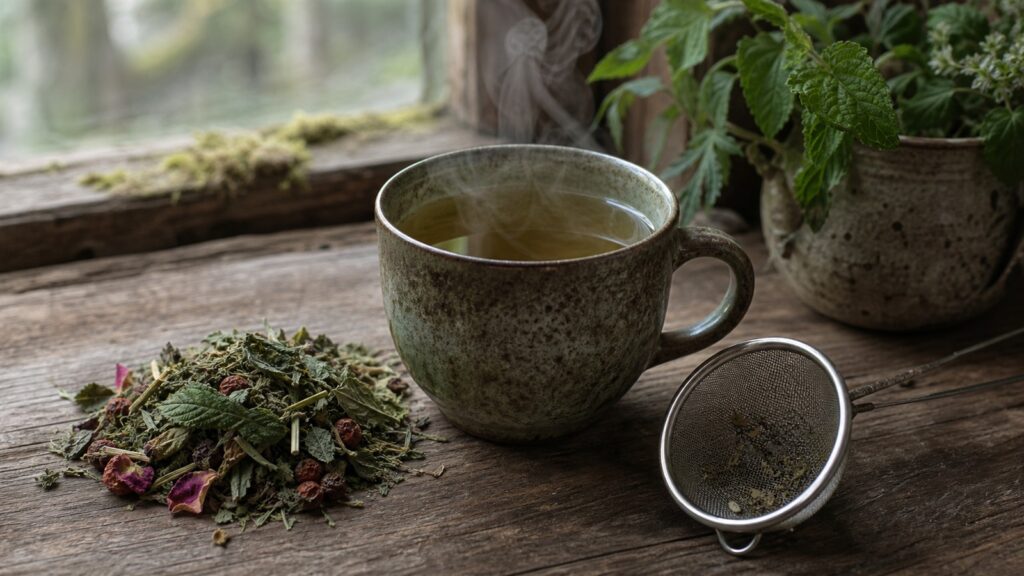
A cup of tea is the gentlest thing you can do with a wild plant, and it’s where I tell most beginners to start. There’s no alcohol to measure, no oil to warm, no six-week wait staring at a jar in the cupboard. You gather a handful of something safe and common, you dry it, and you pour hot water over it. That’s the whole craft. Everything else is refinement.
I’ve been drinking what grows around this place outside Sequim for most of thirty years — nettle in the spring, mint from the ditch below the hoop house, rose hips and Douglas-fir tips as the year turns. None of it is exotic. That’s the point. A good foraged tea is built from plants you can name in your sleep, gathered close to home, and dried well enough to see you through a wet Peninsula winter.
Start with plants you can’t get wrong
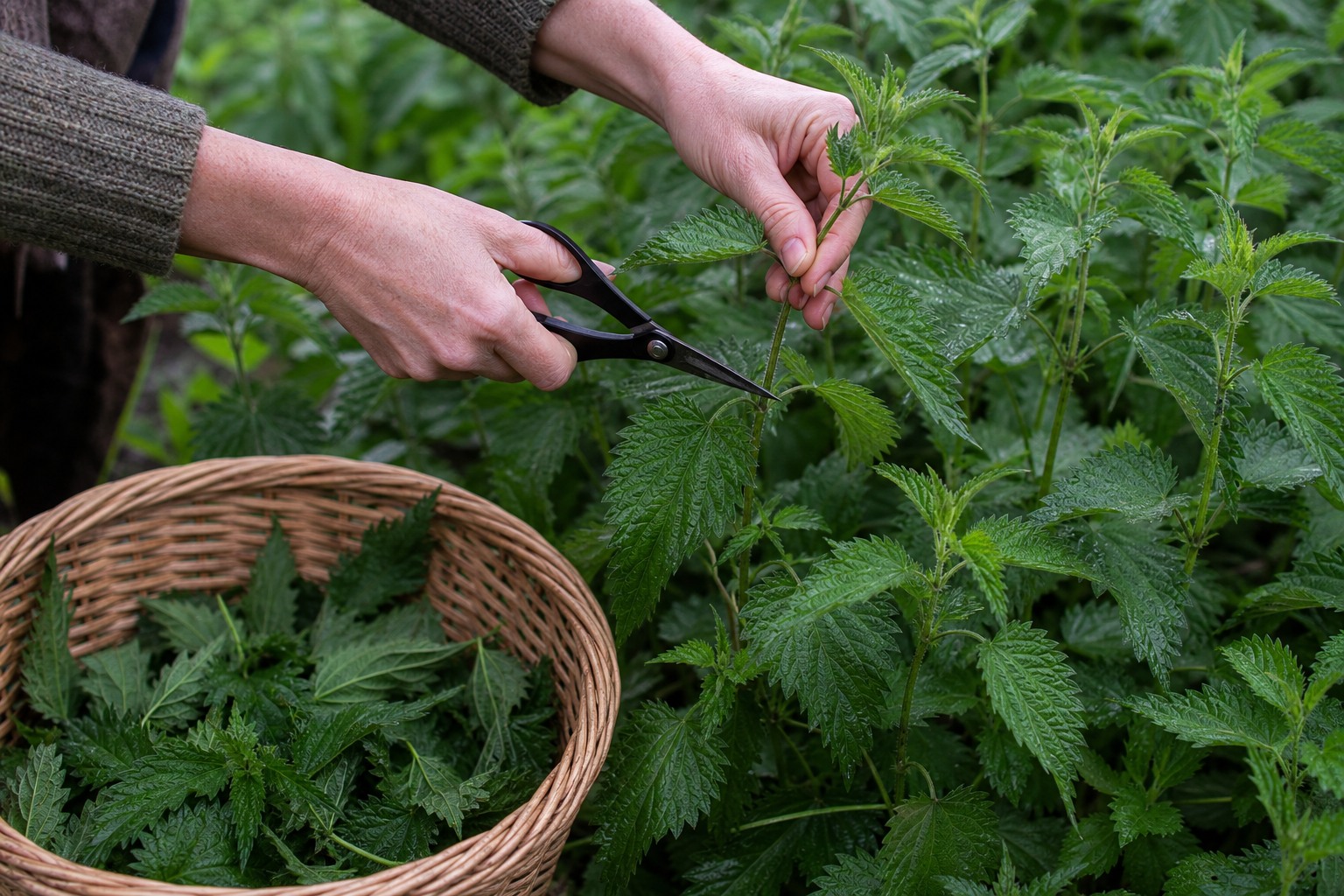
Before anything else, the rule I follow and won’t bend on: never brew a wild plant you can’t name with certainty, confirmed against more than one reliable source and, when it matters, an experienced local forager. Hot water pulls out whatever is in the leaf — the good and the bad both. When in doubt, throw it out. Said once, meant plainly, and I’ll trust you to carry it.
With that settled, the beginner’s shelf is short and forgiving. Stinging nettle (Urtica dioica) makes a deep green, mineral-rich tea; I cut the top few inches in March and April before it flowers, gloves on, and the sting cooks off the moment it hits hot water. Common dandelion (Taraxacum officinale) — leaf and root both — gives a slightly bitter, grounding cup. Wild mint and garden mint gone feral brighten any blend. Rose hips gathered after the first frost bring tartness and color. And Douglas-fir tips, the soft bright-green new growth in late spring, make a tea that tastes like the woods smell after rain.
Every one of those is easy to identify, hard to confuse with anything dangerous, and grows within a short walk of most homes on this coast. Learn those five and you’ll never want for a cup.
Fresh or dried — and why I mostly dry
You can absolutely make tea from a fresh-picked handful, and in nettle season I do. Fresh material makes a livelier, greener cup, and there’s something worth doing about drinking a plant the same afternoon you cut it.
But dried is what carries you through the year. Drying concentrates the flavor, and it lets you build a blend in July that you’re still drinking in December. My whole approach to foraged tea is really a drying-and-storing habit with a kettle at the end of it. Dry a little more than you think you need — the jar always empties faster than you expect, especially once a daughter in Portland starts asking you to mail her some.
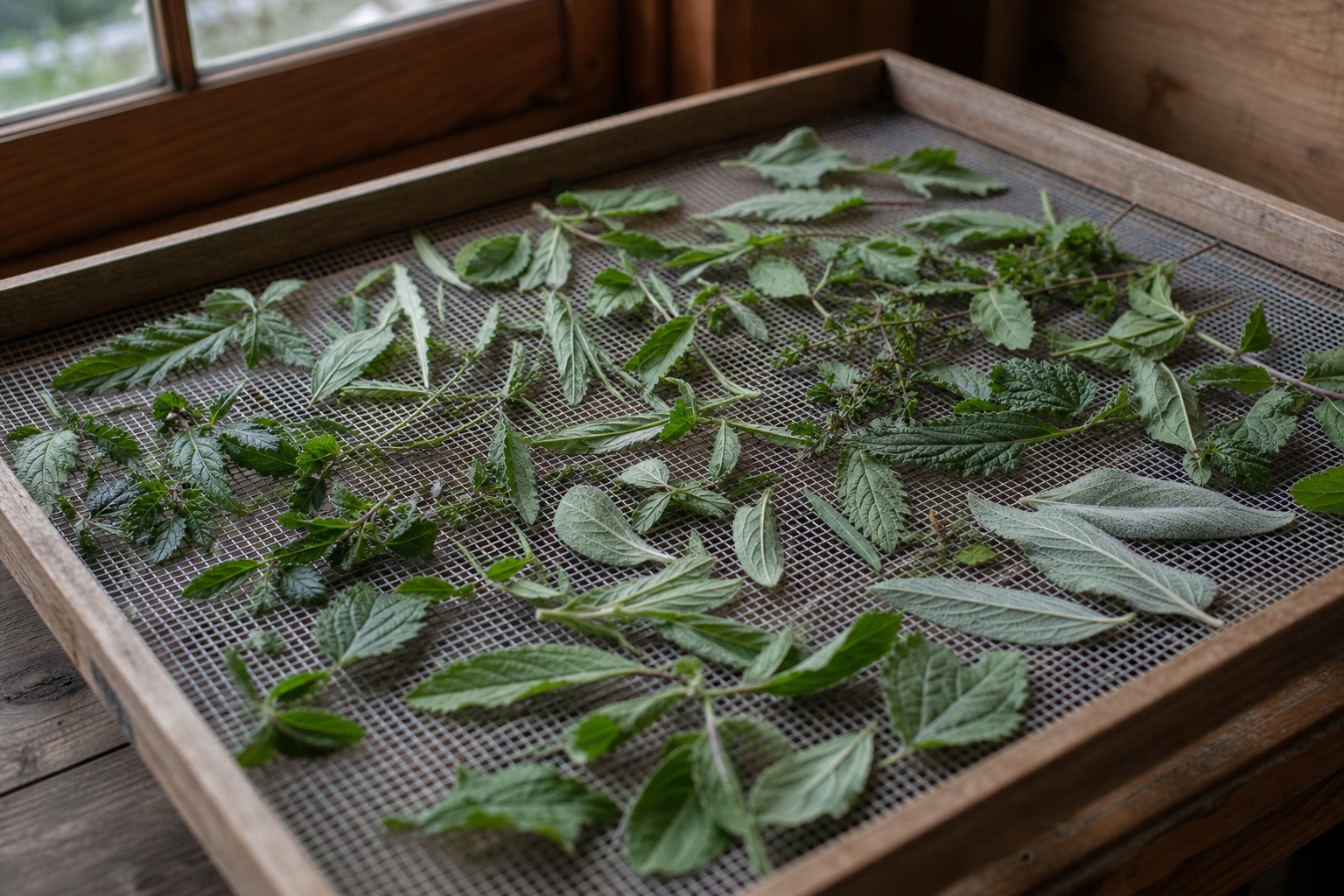
To dry, I spread leaves in a single layer on a screen in a warm, airy corner out of direct sun, or tie small loose bundles and hang them from the hoop-house rafters. Thick, wet bundles packed too tight are how you grow mold instead of tea; I lost a batch of mint that way one August, hung too dense in a humid stretch, and it went musty at the stems before it ever dried. A leaf is ready when it crumbles cleanly between your fingers rather than folding.
Blend by taste, not by formula
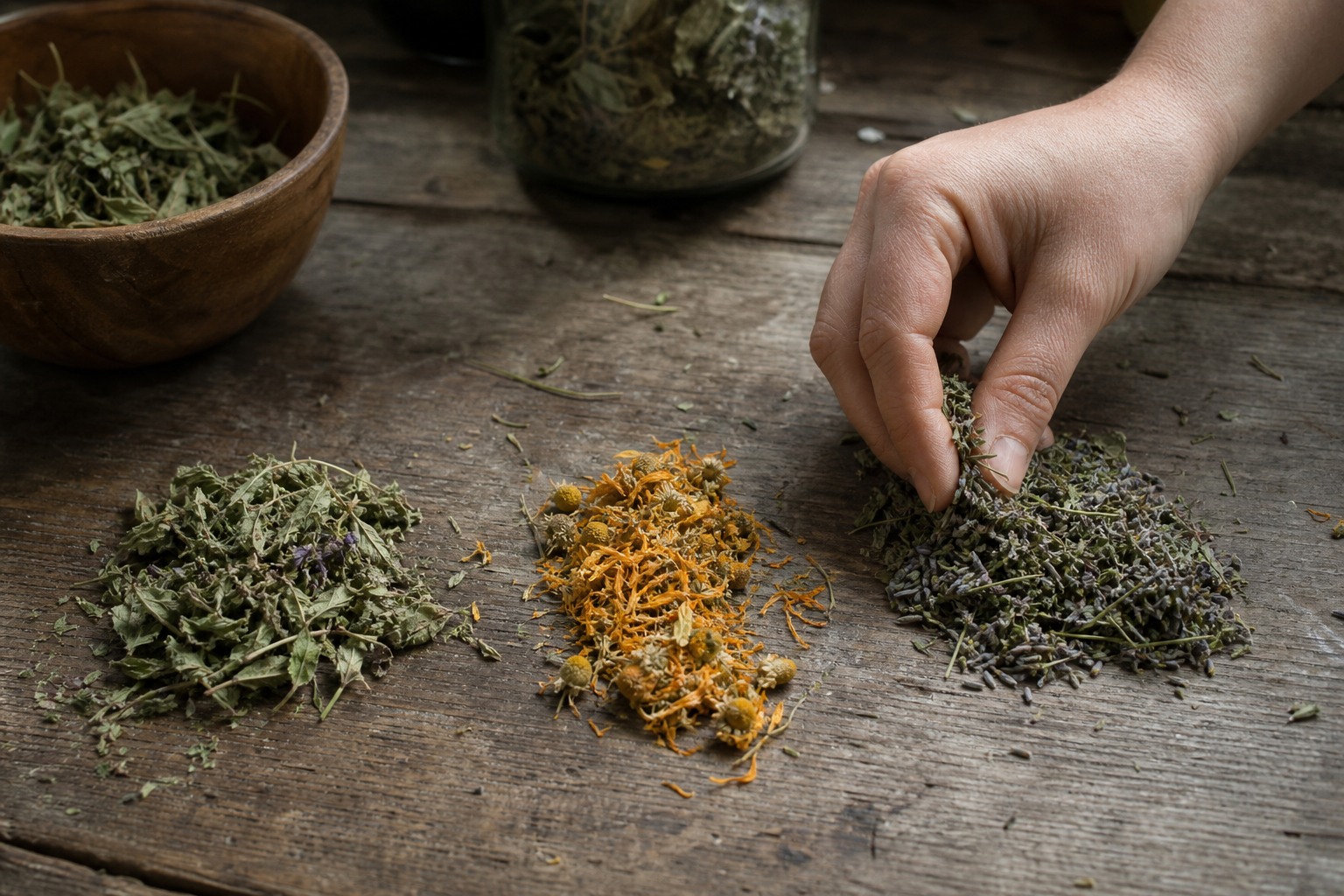
Here’s where foraged tea stops being a recipe and starts being yours. Once your single plants are dried, blending is just paying attention. I don’t measure. I build a blend on the counter a pinch at a time and taste it as I go, the way you’d salt a pot of soup.
A blend usually wants three jobs filled: a base that makes up the bulk (nettle and dried raspberry leaf are my usual workhorses — mild, green, easy to drink in quantity), an accent for brightness (mint, a little lemon balm, dried rose hip), and sometimes a small aromatic for lift (a few Douglas-fir tips, a pinch of dried elderflower). Heavy on the base, lighter on the accent, just a whisper of the aromatic. Write down what you did the first few times — you will not remember the ratio that worked, and there’s nothing more frustrating than a perfect cup you can’t make twice.
Keep the herbal-prep framing honest with yourself and your readers: this is a pleasant, traditional drink, not medicine. I share how these plants have long been used and enjoyed. What a cup does for you is between you and a qualified practitioner if anything serious is in play.
Brew it and strain it clean
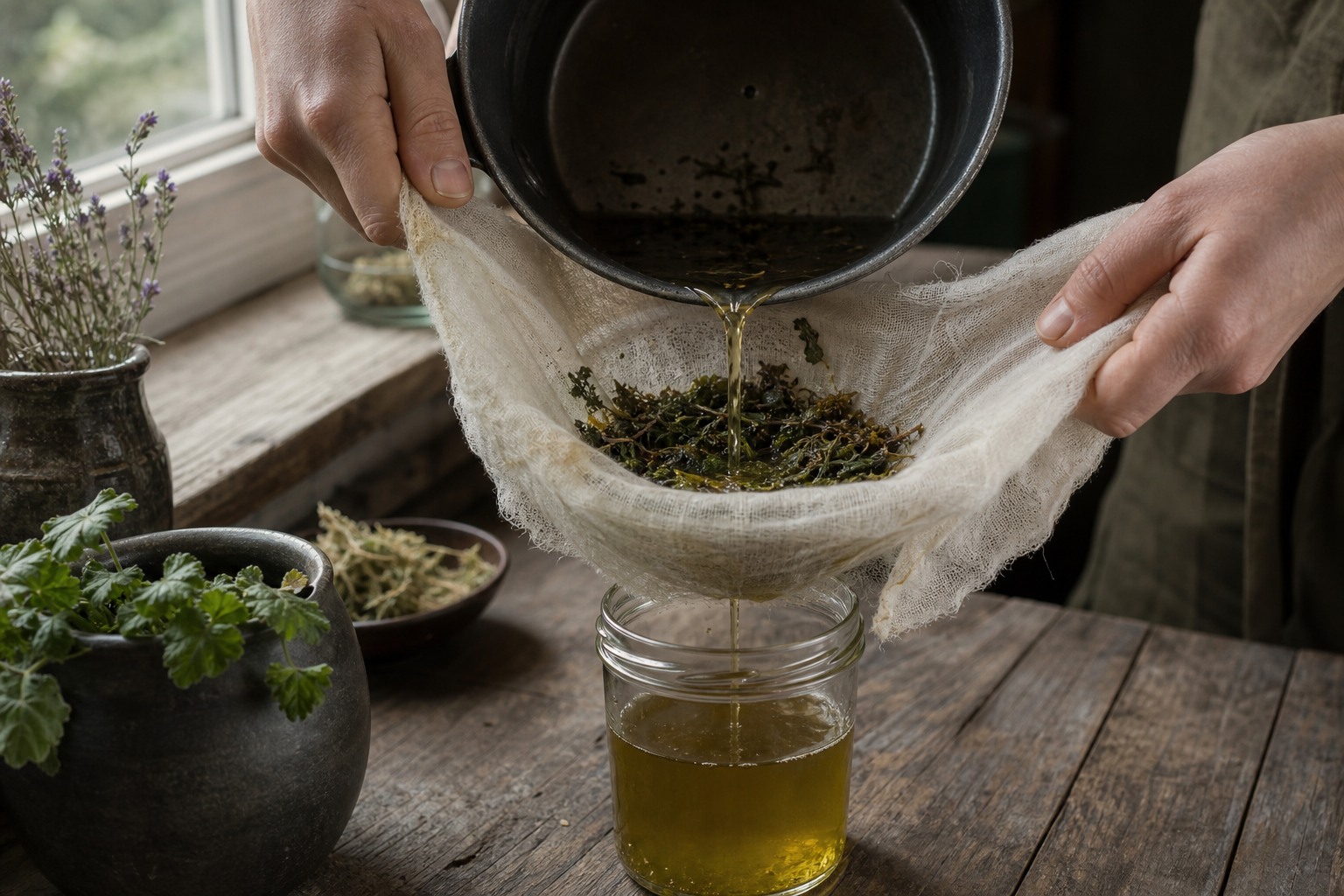
Loose foraged tea is coarser than the dust in a commercial bag, so it wants a slightly longer steep and a good strain. My method is plain: roughly a heaping tablespoon of dried blend per generous mug, water just off the boil, covered, for five to ten minutes. Covering matters more than people think — the volatile oils that make mint and fir smell alive will steam right out of an open cup.
Leaf and flower want that boiling-water infusion. Tough roots and rose hips do better with a decoction — a low simmer for fifteen or twenty minutes to coax out what a quick steep leaves behind. If I’m brewing dandelion root, it simmers; if I’m brewing nettle leaf, it steeps.
Then strain. A fine mesh works for a quick cup, but for a clean, sediment-free pot — or for a big jar of iced tea in summer — I pour the whole thing through a doubled layer of grade-90 cheesecloth. The tight grade-90 weave catches the fine grit a looser cloth lets slip through. You can also spoon a blend into a square of that same cheesecloth and tie it off into a rough tea bag if you’d rather not strain at all. It’s not elegant. It works.
Store it so winter tastes like June
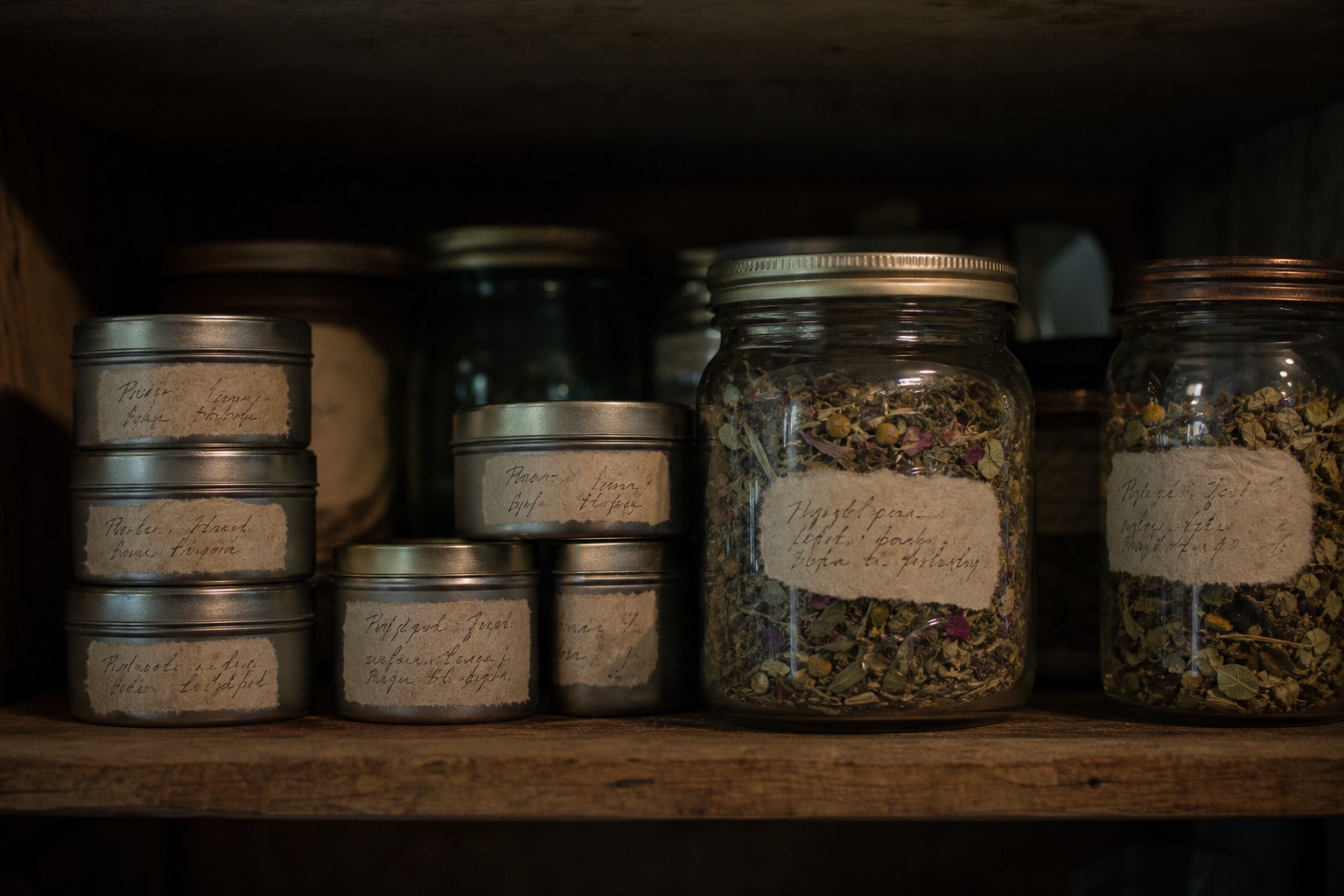
A dried tea’s enemies are light, heat, moisture, and air — in that order. Store your blends somewhere dark and dry, in something that seals. Wide-mouth glass jars are the classic choice for bulk storage (a good jar is worth buying if you don’t already have a shelf of them from canning season), and I keep single blends and gift batches in small lidded tins that fit in a drawer and keep the light out entirely.
Whatever you use, label it with the plant and the date. A dried tea holds its flavor for about a year — long enough that you’ll be starting next spring’s nettle before this year’s runs out, which is exactly how it should go. Kept in the dark, a jar you filled in June will still taste like June when the rain sets in.
Where the plants take you next
The kettle part of this is easy, and now you have it. The longer work — knowing which plants grow where on this coast, when each one is at its best, how the people here have gathered and used them for generations, and which ones don’t belong anywhere near your cup — is the part worth a lifetime.
That’s most of what I put into my book, Pacific Northwest Medicinal Plants: 115 wild plants of this region, how to identify each without guessing, when to gather it, and how the generations before us prepared it. The tea is the easy afternoon. The book is how you learn what to put in the pot — and, just as important, what to leave in the woods.
