How to Keep Chicken Bedding Dry in a Wet Spring (Coop and Run)
Wet spring weather turns coop and run bedding to mush. Learn where the moisture comes from, how to keep chicken bedding dry, and what to change first.
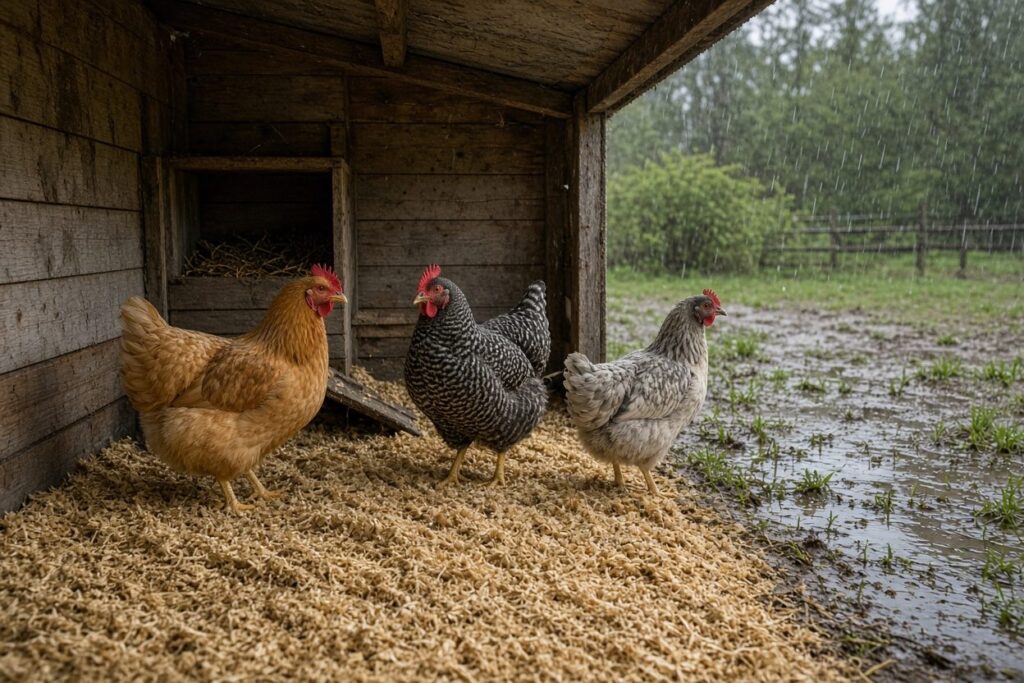
The March Hannah turned nine it rained eleven days straight, and I opened the run gate to find the low corner of the bedding packed down like wet cardboard. The girls were standing on the one dry board they could find, looking at me like I had personally ordered the weather.
East Tennessee springs are wet. If you keep chickens anywhere with a rainy March, you will meet this problem, and wet bedding is more than a mess. It breeds ammonia, mold, and foot trouble. Here is what I do now to keep the coop floor and the run from turning to soup.
You’ll also want a rake, a flat shovel, and a few pavers or cinder blocks. Those are easy to find in your own garage.
Where the wet really comes from

Most people blame the rain, and rain is part of it. But in my coop, the rain is rarely the biggest source of moisture. Hens breathe out a surprising amount of water, and they drop wet manure all night. A coop with poor airflow holds that moisture in, and the bedding takes the blame.
Here are the four sources I check, in order:
1. Spilled or splashed water. An open dish or a fount sitting on the bedding leaks a little every day.
2. Roof or wall leaks. Check the seams after a hard rain with a flashlight.
3. Runoff into the run. Water flows downhill, and it will pour straight through a run that sits at the bottom of a slope.
4. Poor ventilation. Damp air with nowhere to go ends up in the bedding.
Fix the source before you change the bedding. New bedding in a wet coop is wet bedding by Friday.
Move the water off the floor
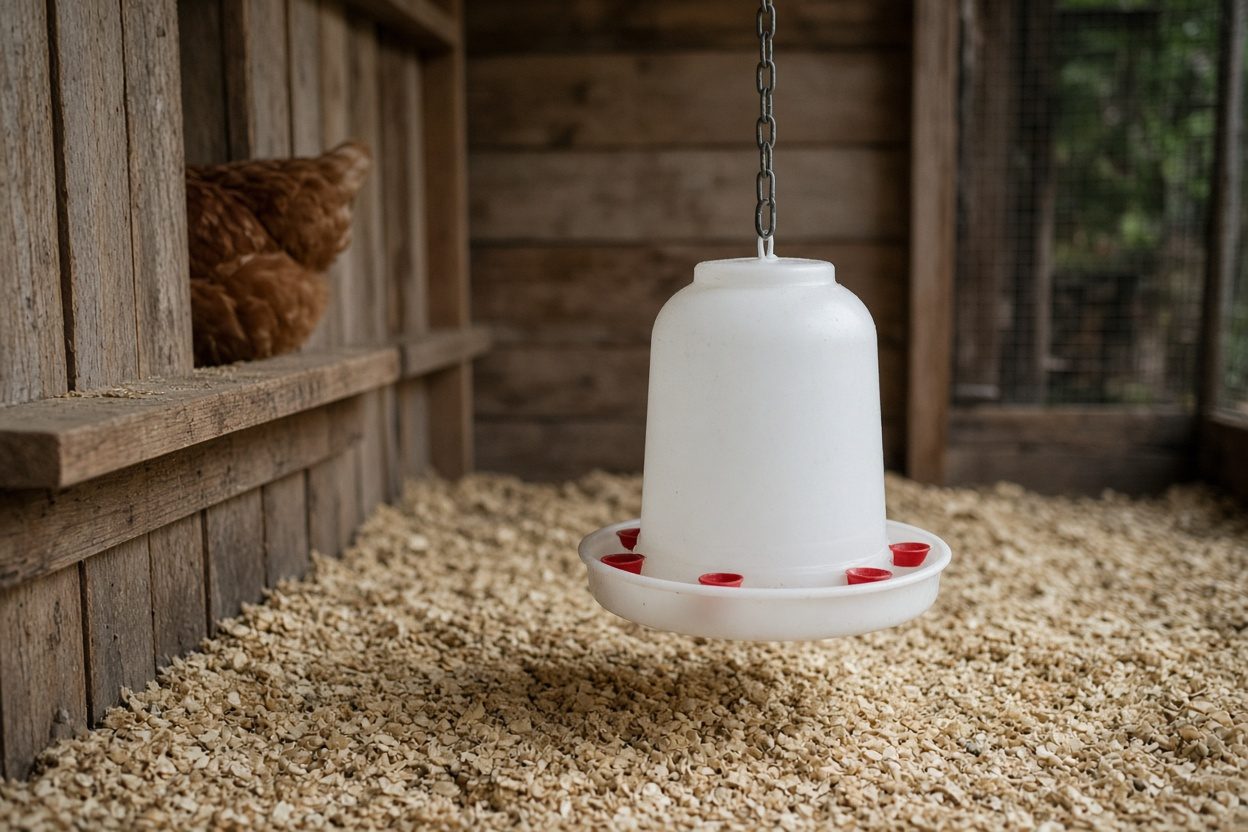
This one change made the biggest difference in my flock. I used to keep a plastic waterer sitting on the coop floor, and every hen who drank from it dripped on the bedding. A nipple-and-cup waterer hung at back height delivers water without the splash, and the bedding underneath it stays dry for weeks. Hens need a few days to learn it, and I wrote about that in how to train chickens to use a nipple waterer.
In the run, I keep a galvanized fount up on a paver so the hens drink from a dry spot, and I move it every few weeks so the ground under it doesn’t turn to a mud wallow. It’s heavy when full, and the base can dent if you drop it. It’s a good tool, not a cheap one to replace.
Pick the right bedding for the wet season
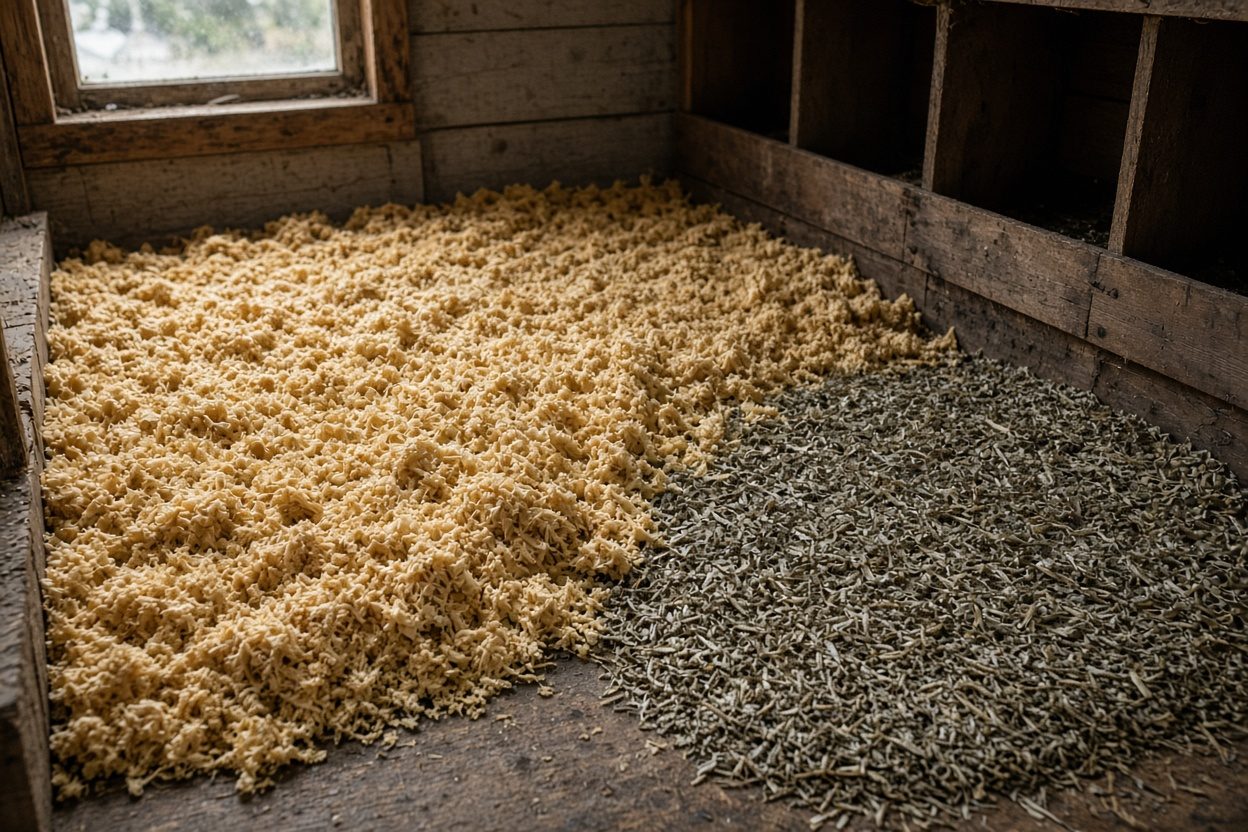
I use hemp bedding in the coop. It soaks up a lot of moisture, it doesn’t pack as hard as fine shavings, and it composts nicely in spring. The honest downsides: it costs more than pine shavings, and a very damp bag is useless, so keep it indoors off the floor. Straw looks pretty and holds moisture against the floor. I don’t use it in wet months.
In the run, a covered corner of dry bedding gives the flock somewhere to stand during a downpour. I put an inch or two of hemp over a tarp-covered patch under the run roof and rake it daily.
Turn it, top it, and spot-clean
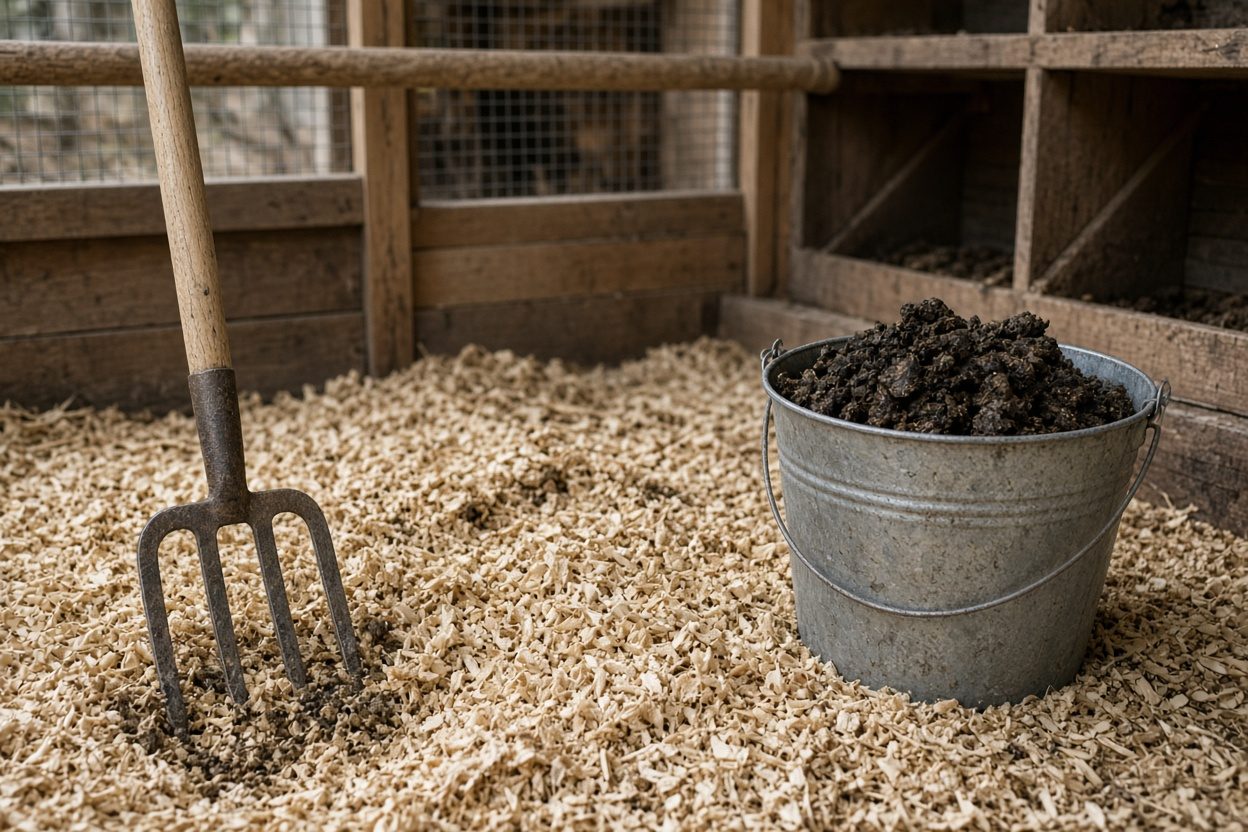
Deep litter works in the cold, and I wrote about it in deep litter method for a winter coop. In a wet spring, I change the routine. I fork the bedding every couple of days to break up crust and let air in, and I remove damp clumps by hand under the roosts and around the waterer. Don’t wait for the weekend. A damp spot the size of a dinner plate becomes a whole floor in a week.
A quick test: grab a handful from the bottom layer and squeeze. If water comes out, or it smells sharp like ammonia, take that layer out. If it falls apart in your hand, you’re fine.
Dry the run

For the run, drainage matters more than bedding. Dig a shallow channel to carry runoff around the run, rake the low corners high, and fill the worst mud patch with coarse gravel or sand. I wrote about the deeper fixes in how to keep a chicken run from turning to mud. If the entrance is the worst spot, how to manage a muddy coop entrance covers it.
Let the coop breathe

Open the vents high on the walls, above where the hens roost, and keep them open in rain. Wet weather does not mean a closed coop. It means moving air above the birds and out. If your coop smells strongly in the morning, it needs more ventilation, not less.
What I got wrong

My first wet spring, I piled fresh bedding on top of a damp base layer to “freshen it up.” Two weeks later the whole floor was black underneath and one of my Australorps had a swollen foot. Always remove the damp layer first. Fresh bedding on wet bedding is a sponge on a sponge.
A note on foot trouble
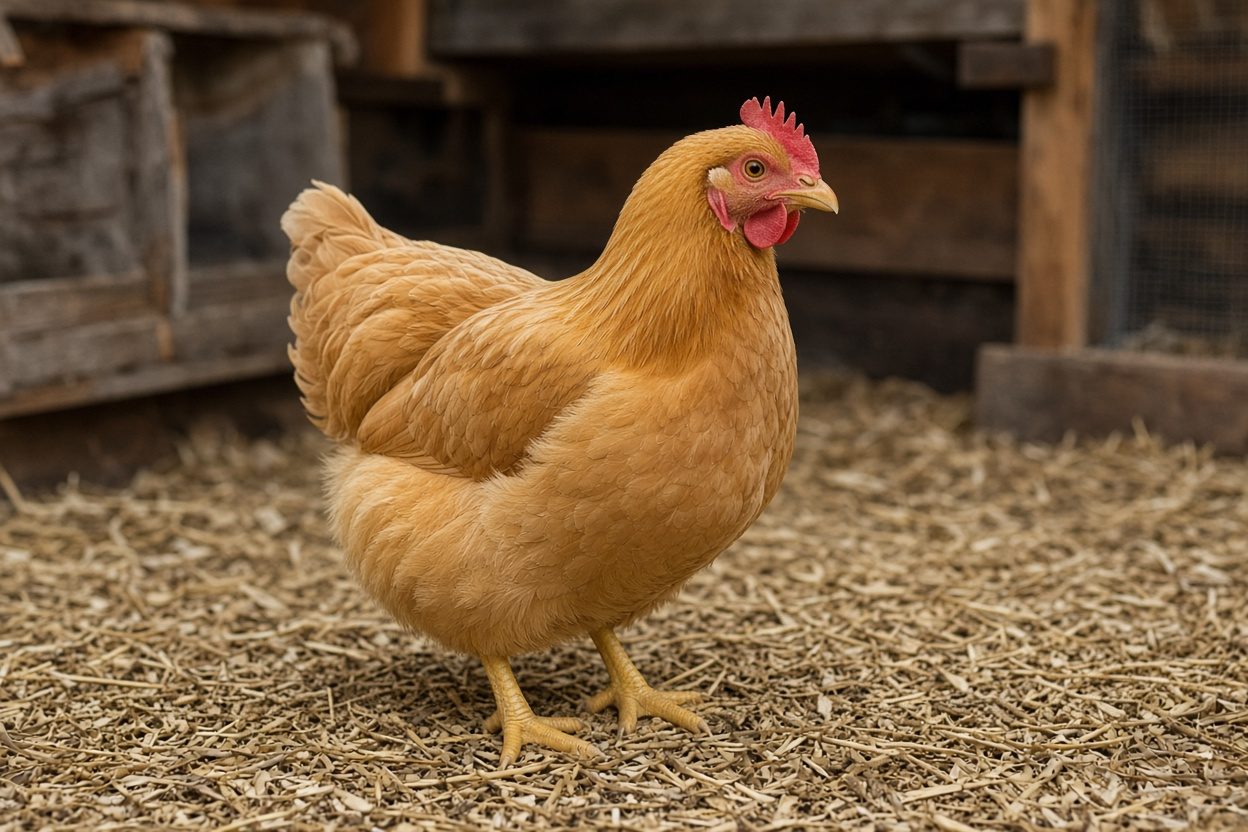
Chronic wet footing can lead to foot sores, and a hen that is limping or has a swollen foot needs a closer look. I’m not a vet, and I don’t give treatment advice here. If a bird has a swollen foot or won’t put weight on it, call a poultry-savvy vet.
Where the flock ends and the knowing begins
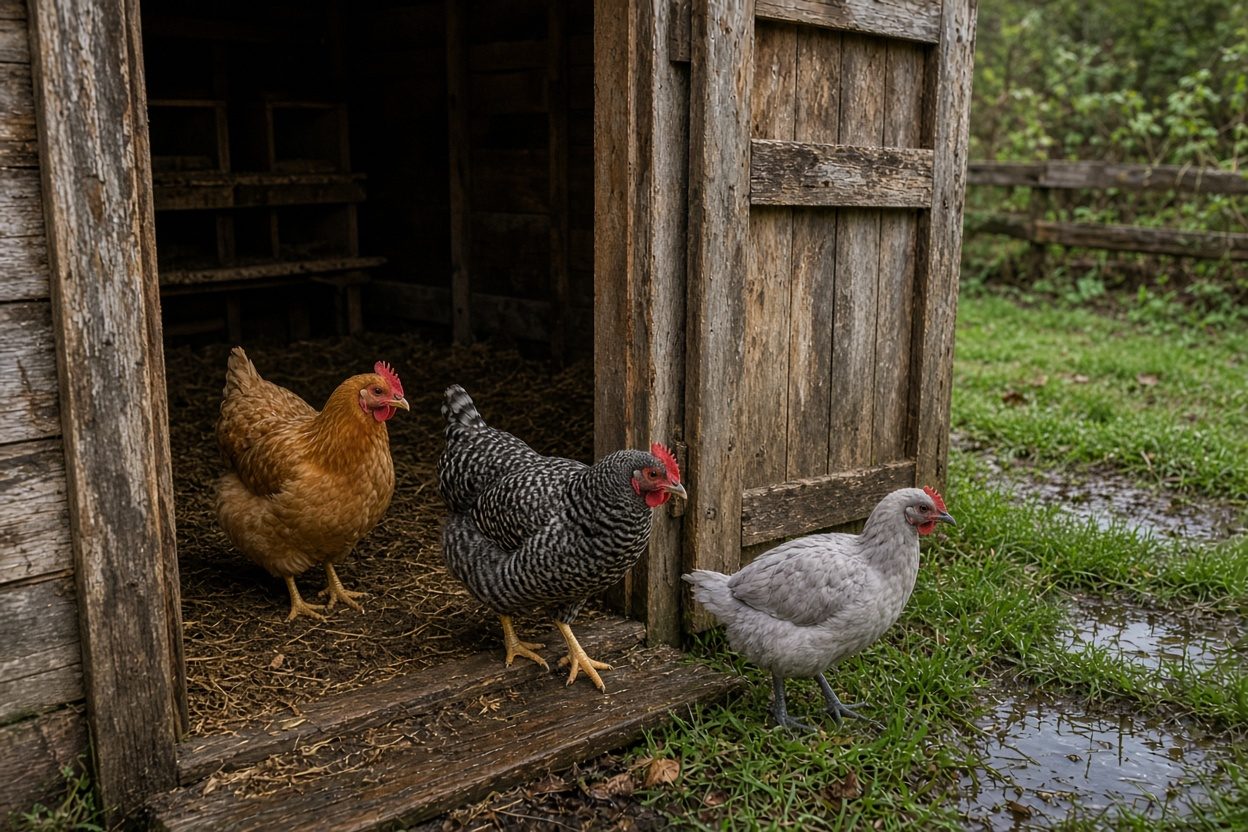
Bedding is the easy part. The slow work is learning to read your coop: the smell, the way the hens stand, what the floor looks like at 6 a.m. after a storm. I go deeper on coop setup, ventilation, and first-year troubleshooting in my book, Raising Backyard Chickens for Beginners, and it’s written for exactly the keeper who’s standing in the run in March wondering what went wrong.
The girls will forgive almost anything but a wet floor.
