The Best Ways to Shade a Chicken Run Before Summer Hits
The best ways to shade a chicken run before the heat hits — shade cloth, natural shade, shaded water, and the cooling tricks that keep my Tennessee flock safe in July.
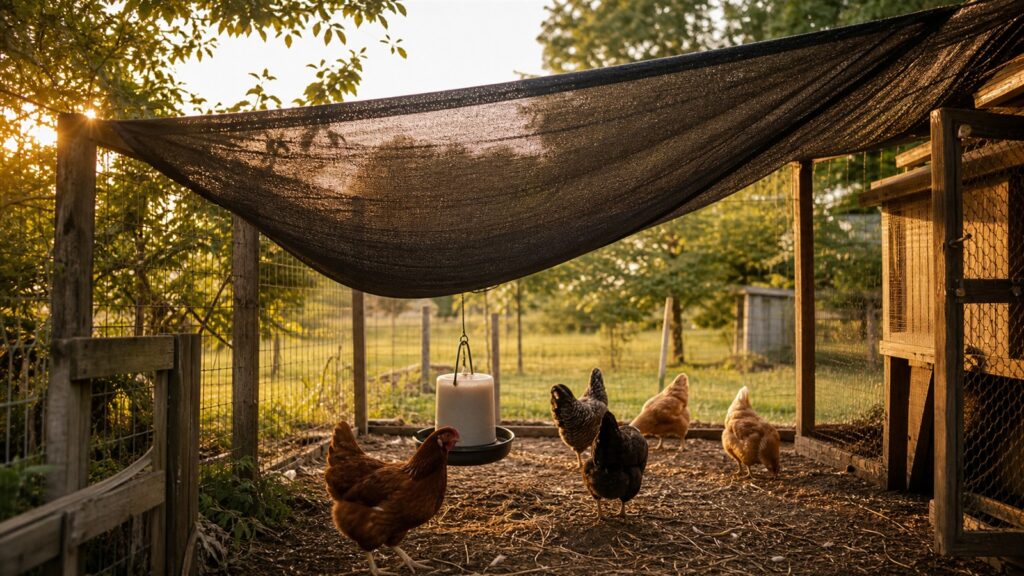
Chickens handle cold far better than they handle heat. A hen wears a down coat she can’t take off, and once the Tennessee thermometer climbs past the low 90s with our July humidity on top of it, a run with no shade turns dangerous fast. I learned that in my second summer when I found one of my Buff Orpingtons flat in the dirt at two in the afternoon, panting hard, in a run that got full sun from noon on. She pulled through. She was lucky.
Shade is the cheapest, most important thing you can add to a run, and most of the ways to do it cost either nothing or close to it. Here are the ways I’ve actually used on my own run outside Knoxville, in the order I’d reach for them, with the honest trade-offs of each.
Start with shade cloth — the workhorse
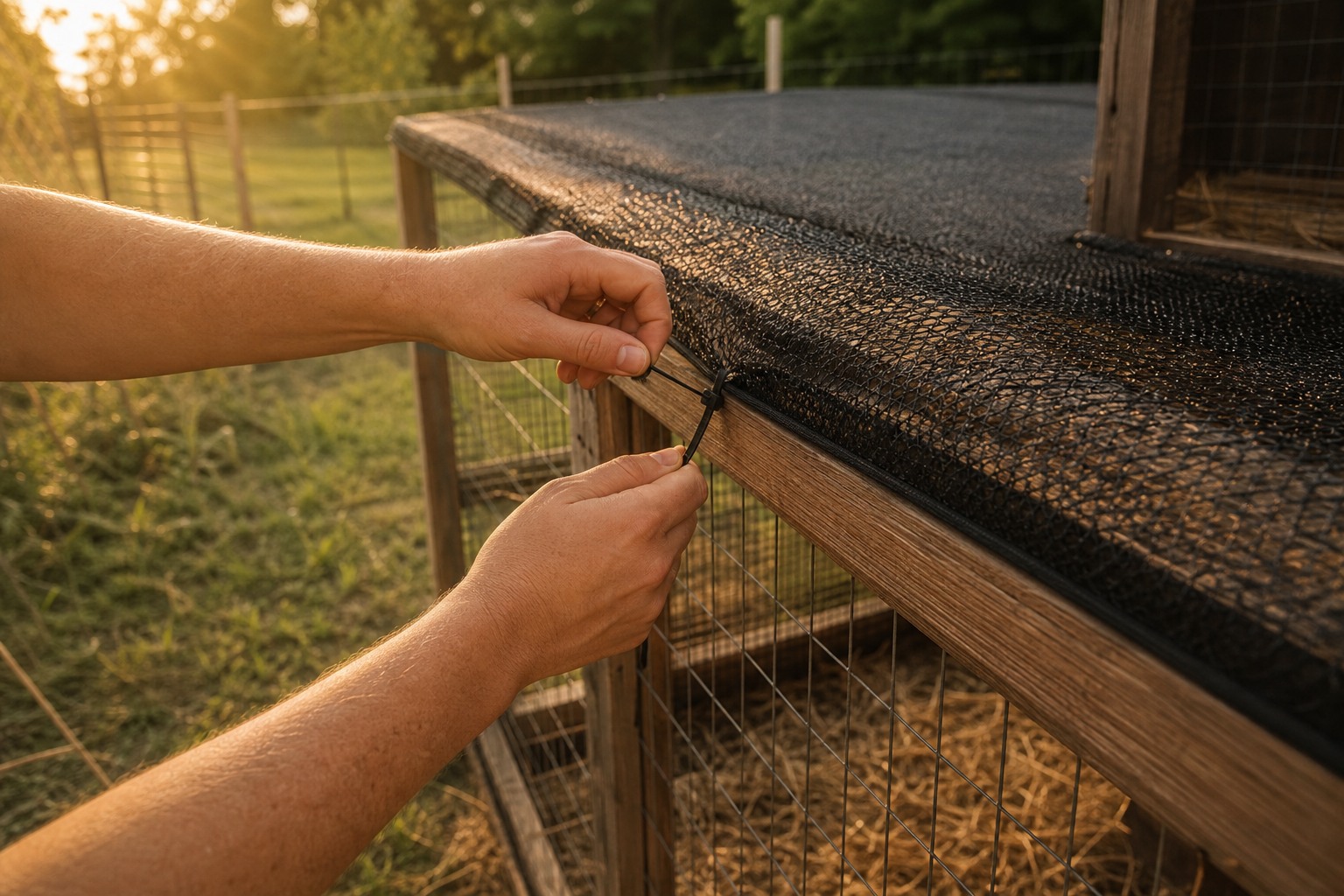
If you buy one thing for summer, buy shade cloth. It’s a woven fabric that comes in different densities — for a chicken run you want something in the 50 to 70 percent range, which blocks most of the sun while still letting air move through. Stretch it over the top of the run, or across the west and south sides where the afternoon sun comes in hardest, and zip-tie it to the frame.
The difference is real. On a bright afternoon the ground under my shade cloth runs noticeably cooler than the open patch beside it, and that’s where the girls pile up when the heat comes on. It’s the single upgrade that moved my flock from miserable to comfortable.
The honest downside: cheap shade cloth frays and the grommets tear out in a season, especially if you get the storms we get. Get a knitted (not woven-plastic-tarp) cloth with taped edges, tie it down at enough points that the wind can’t whip it, and it’ll last you years instead of one.
Don’t overlook natural shade
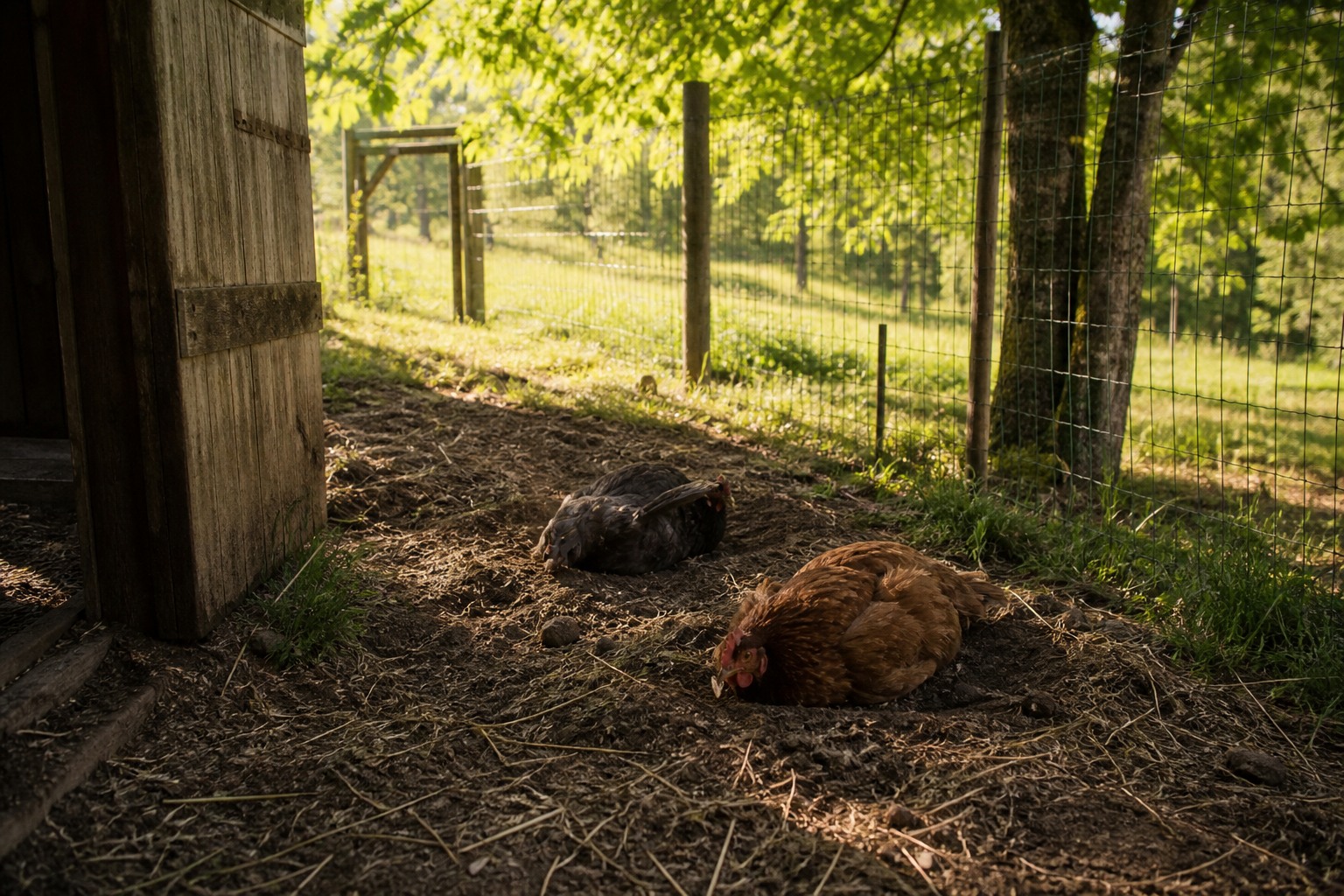
The best shade I have costs nothing and grows on its own. A run placed on the east side of the coop or a shed gets shaded through the brutal afternoon for free. A deciduous tree overhead is even better — full shade in summer, and it drops its leaves to let the winter sun back in.
If you’re still planning your run, this is the biggest free win available to you: put it where the afternoon shade already falls. If it’s already built, you can plant for it. A row of sunflowers or a fast climbing vine on a trellis along the sunny side throws real shade by midsummer, and the flock will nibble what grows through the wire as a bonus.
The catch is time — a tree or a vine won’t help you this week, and this week is when the heat’s coming. So natural shade is the long game you set up alongside the shade cloth, not instead of it.
Rig a temporary canopy for pennies
Between “buy shade cloth” and “plant a tree” there’s the quick fix, and I’ve used all of them. An old bedsheet, a canvas drop cloth, a cheap tarp, a patio umbrella wedged into a corner, even a sheet of plywood propped on the sunny side — anything that throws a shadow works in a pinch.
A tarp does the job for a weekend, but know that solid plastic traps heat and kills the breeze underneath, so leave the sides open so air can still move. A sheet or drop cloth breathes better than a tarp and won’t turn the run into an oven. This is the “the heat wave is tomorrow and I don’t have shade cloth yet” answer — it buys you time to do it right.
Shade the water, not just the birds
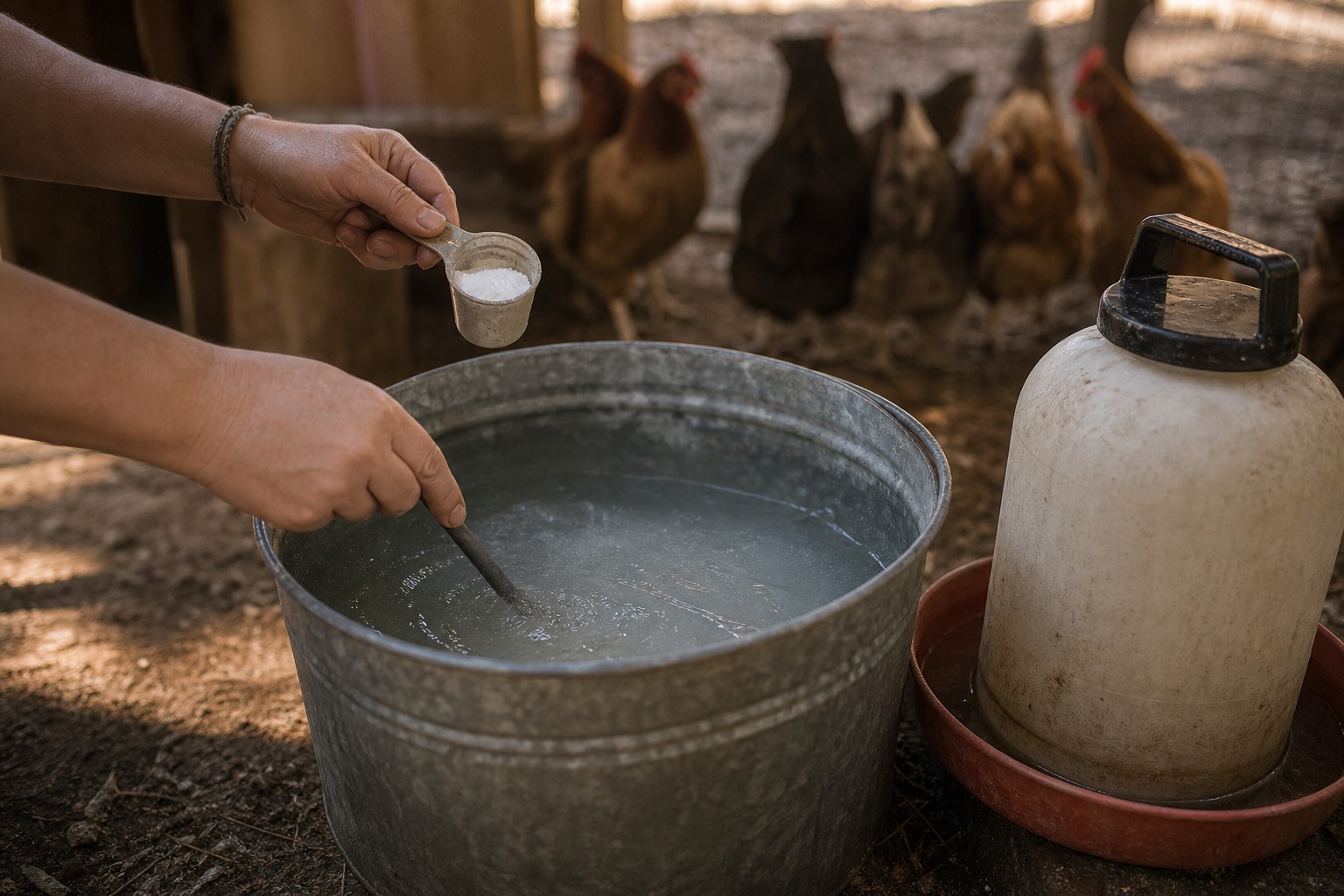
Here’s the one people forget: shade cools the birds, but it’s the water that actually keeps them alive in the heat, and hot water in the sun does neither. A hen won’t drink warm, fouled water even when she’s overheating, and dehydration is what turns a hot day deadly.
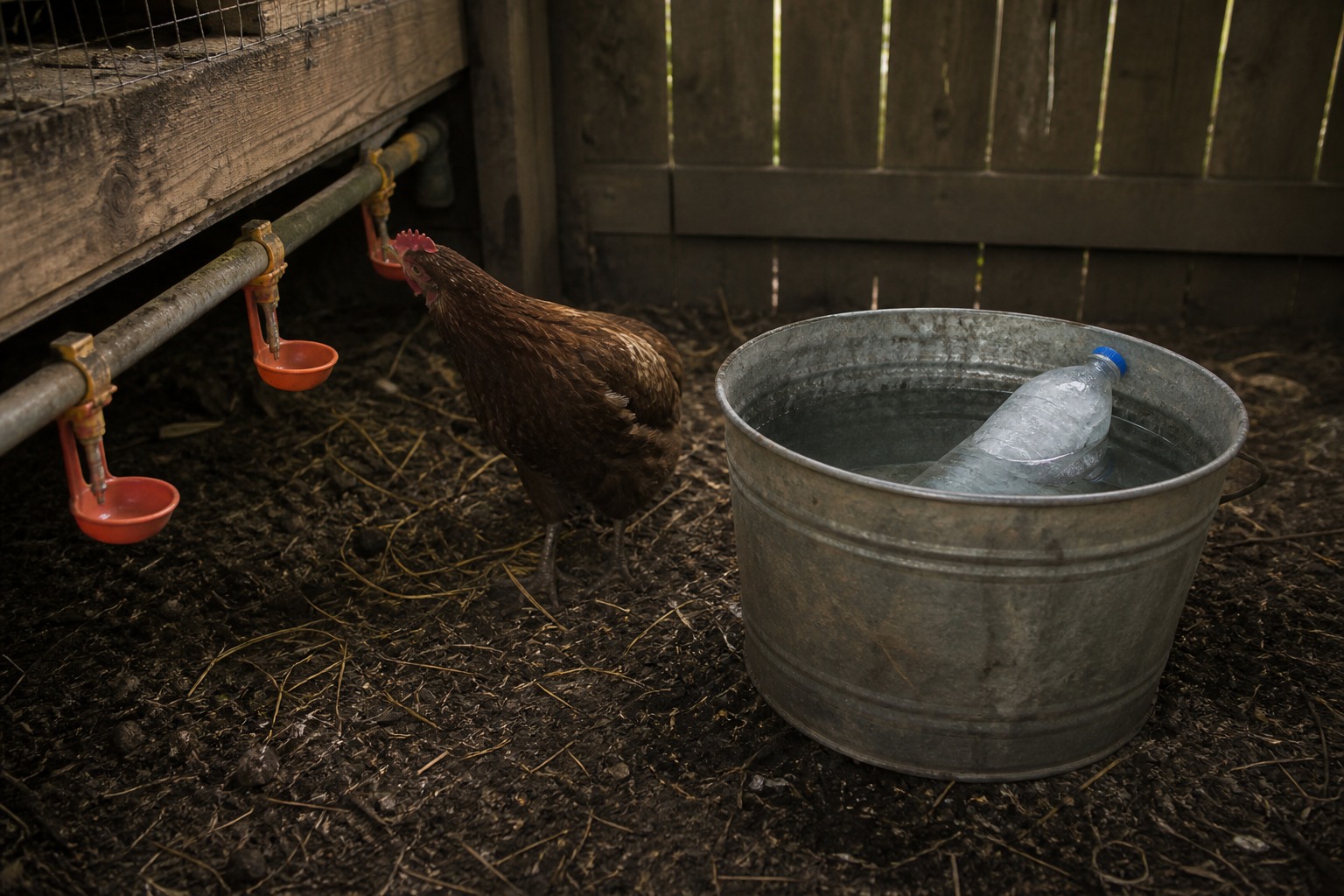
Keep the waterer in the shadiest spot in the run and out of the direct sun. A sealed nipple-and-cup waterer stays clean — no droppings, no shavings, no algae warming in the sun — so the water stays drinkable for days, and the girls drink more of it. If you run an open fount instead, a galvanized double-wall metal one holds its cool longer than a thin plastic one that heats through by noon. Set either in the shade, refresh it midday, and drop in a frozen water bottle to hold the temperature down through the worst of the afternoon.
For the worst afternoons: electrolytes and frozen treats
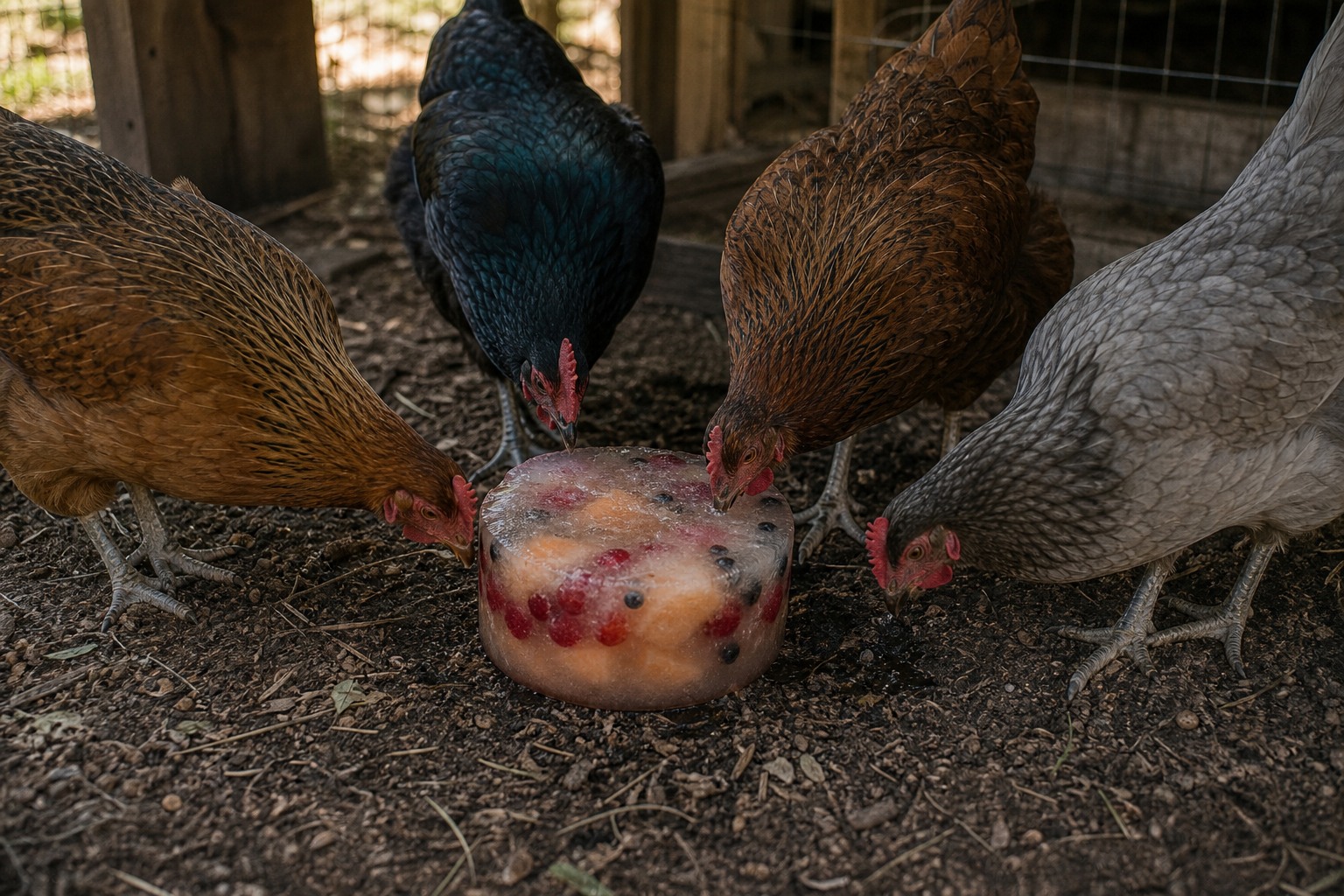
When the heat index climbs into genuinely dangerous territory — the string of upper-90s days we get in late July — plain shade and water sometimes aren’t quite enough, and I add a couple of things.
A scoop of Sav-A-Chick electrolytes in the water helps the girls hold onto the fluids and minerals they lose panting, the same idea as a person reaching for a sports drink in the heat. It’s an over-the-counter poultry electrolyte, nothing you need a vet for — just follow the packet and offer plain water alongside it too.
Frozen treats give them something cool to work at. I freeze berries or leftover melon in a block of ice and set it in the shade; a frozen milk jug of water for them to lean against helps too. These are the extras on top of shade and cool water, not a substitute — a bird that’s already in trouble needs to cool down and drink, not snack.
Air still has to move
One last thing that gets missed: shade without airflow only gets you halfway. A shaded run with no breeze still bakes, so make sure the coop’s vents are open for summer and that the run isn’t boxed in solid on every side. Shade blocks the sun; ventilation carries the heat away. You want both.
Put it together — shade cloth over the hot side, the water kept cool in the shade, the vents open, and a frozen jug for the brutal afternoons — and you’ve taken the single biggest summer risk to a backyard flock and handled it for the cost of a bag of feed. Get the heat plan right and the girls will be dust-bathing in the cool dirt while the neighbor’s flock hides in the coop.
I go deep on summer heat, winter cold, and the whole first stumbling year in my book, Raising Backyard Chickens for Beginners. This post is the shade plan. The book is everything else I wish someone had handed me my first July.
