How to Keep Chicken Water From Freezing in Winter
Here's how I keep chicken water from freezing through a Tennessee winter — the heated setup I trust, the no-electricity tricks that actually work, and the ones that don't.
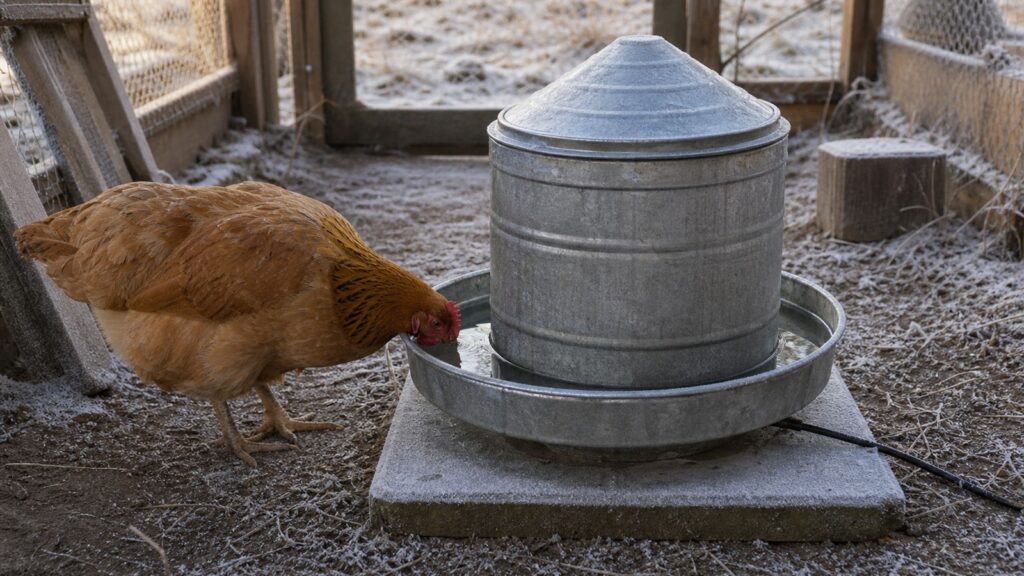
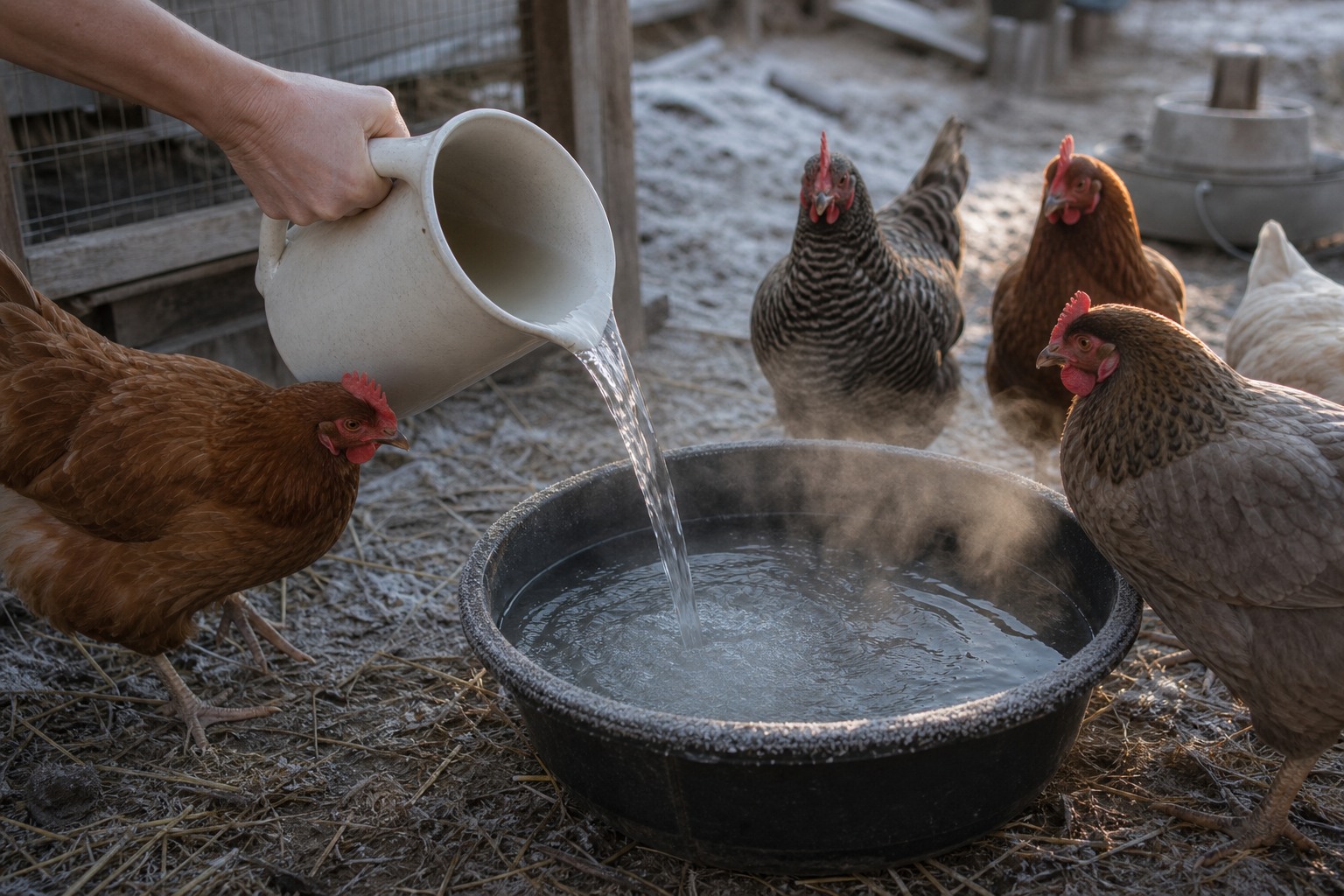
We don’t get Maine winters in Knox County, but plenty of mornings from December through February I walk out to the run and the water’s got a solid skin of ice on it. A hen can go a surprising while without food in the cold. She cannot go without water — and a hen who can’t drink because her water is a block of ice stops laying, and in a hard stretch gets into real trouble faster than people expect. Keeping liquid water in front of the flock is the whole winter job, and it’s the one new keepers underestimate.
My first winter I was hauling a steaming kettle out three times a day to thaw a cracked plastic fount, and I cracked two of them solid before I figured out what actually works. Six years in, I barely think about it. Here’s the setup I trust now, the no-electricity tricks that genuinely help, and the popular one that doesn’t — so you can skip the kettle-hauling winter I had.
Why winter water is its own problem
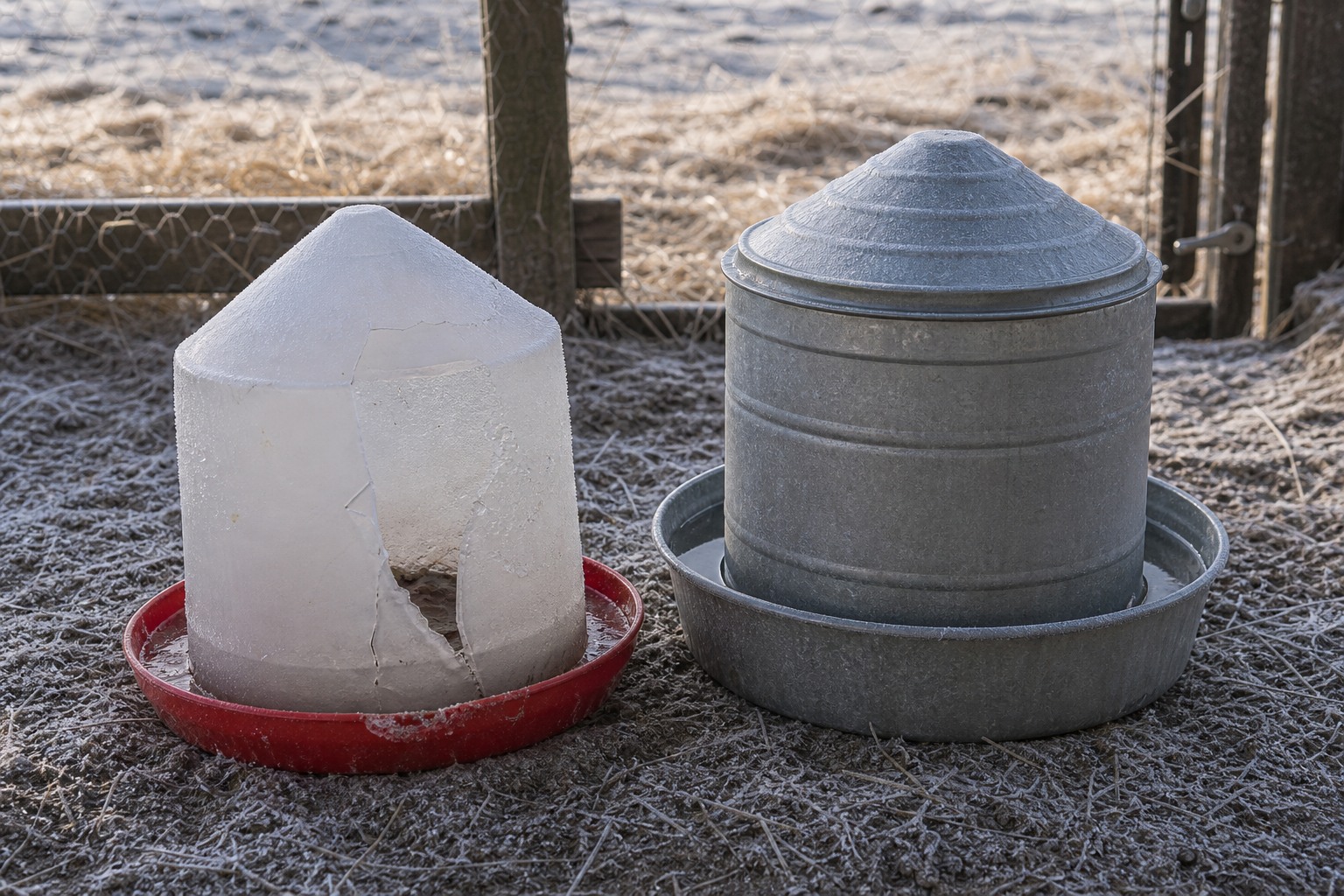
In summer my whole battle is keeping water clean and cool. In winter it flips: the water’s clean enough, it’s just frozen solid by 8 a.m. The trouble is that the easy summer answers all fail in the cold. Nipple waterers — my favorite warm-weather setup — freeze right at the little metal pin, so the hen pecks it and gets nothing. Thin plastic founts crack when the water inside expands. Even an open metal fount turns into a shallow ice rink overnight.
So you’ve really got two roads in winter: keep the water warm enough not to freeze (electric heat), or stay ahead of the freeze by hand (no electricity, more work). I use the first one. Plenty of good keepers use the second. Both work; they just cost you in different currencies — money and a little wiring, or time and attention.
The setup I trust: a heated base under a metal fount
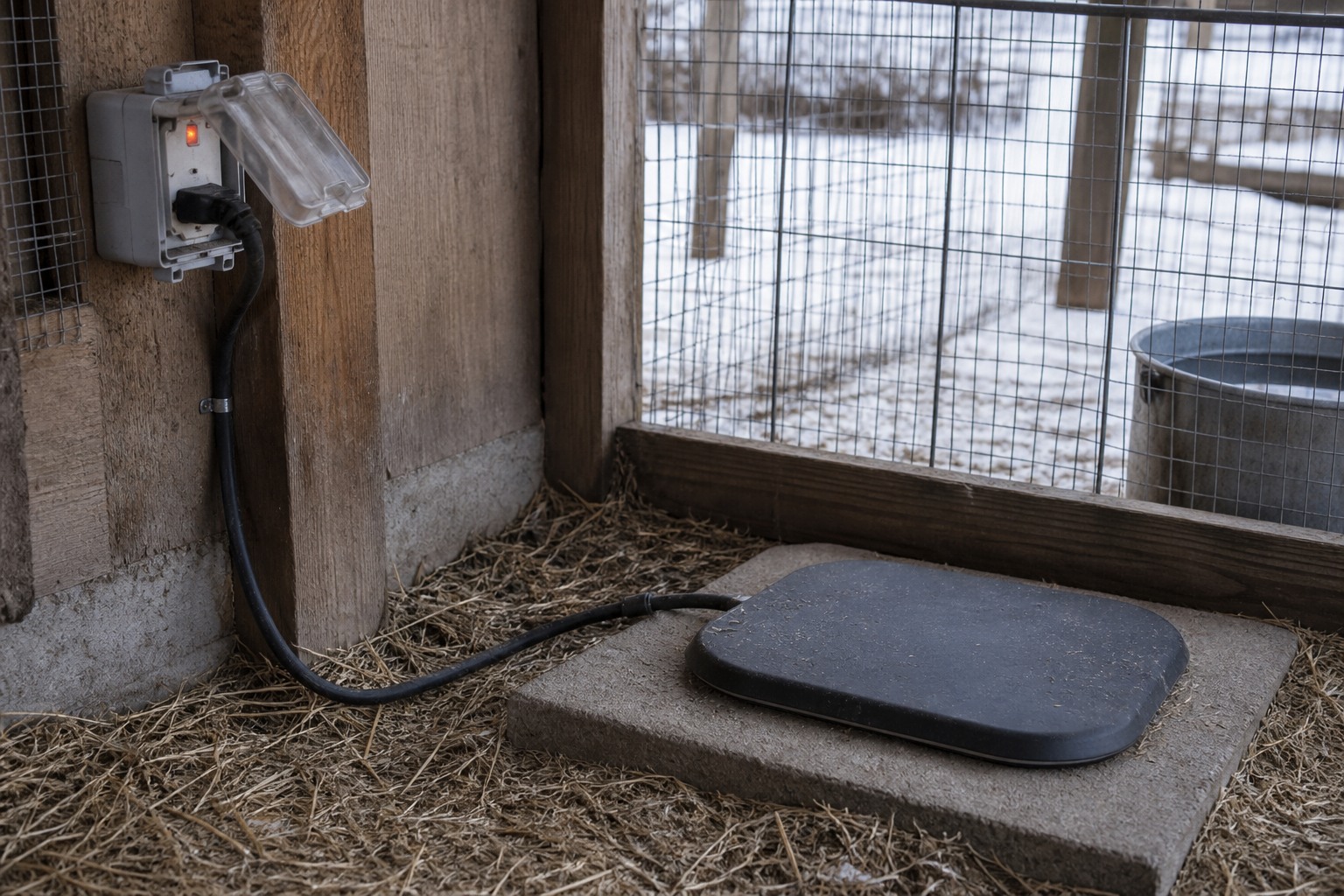
If you can run a safe outdoor-rated cord to your coop, a flat heated poultry base is the single best fix, and it’s what I switched to after my kettle winter. It’s a thermostatically controlled warming plate that sits under the waterer and only kicks on near freezing, so it sips electricity rather than running all day. You set a waterer on top and the water simply never freezes.
The key is to pair it with the right vessel. Set a galvanized double-wall metal fount on the base — metal conducts the gentle heat far better than plastic, and a good galvanized fount is nearly indestructible. Mine has taken six Tennessee winters and shows no sign of quitting. (Most heated bases are made for metal founts; check before you set a plastic one on top, because some will soften or warp it.)
A few safety things I will not skip, because this is electricity in a dusty, wooden, feather-filled building:
– Plug into a GFCI outlet. Always. Damp coop plus electricity is exactly what a ground-fault outlet is built for.
– Use a heavy outdoor-rated extension cord, run where the birds can’t peck it and where it won’t sit in water.
– Set the base on something nonflammable and keep deep bedding back from it. A warming plate is low-wattage, but I still don’t bury it in pine shavings.
Run it on a GFCI with a sound cord and a metal fount, and you’ll walk out most January mornings to liquid water and not think twice.
No outlet at the coop? The hand methods that actually work
My first coop had no power to it, and you can absolutely get a flock through winter without a heated anything. It’s just more trips outside.
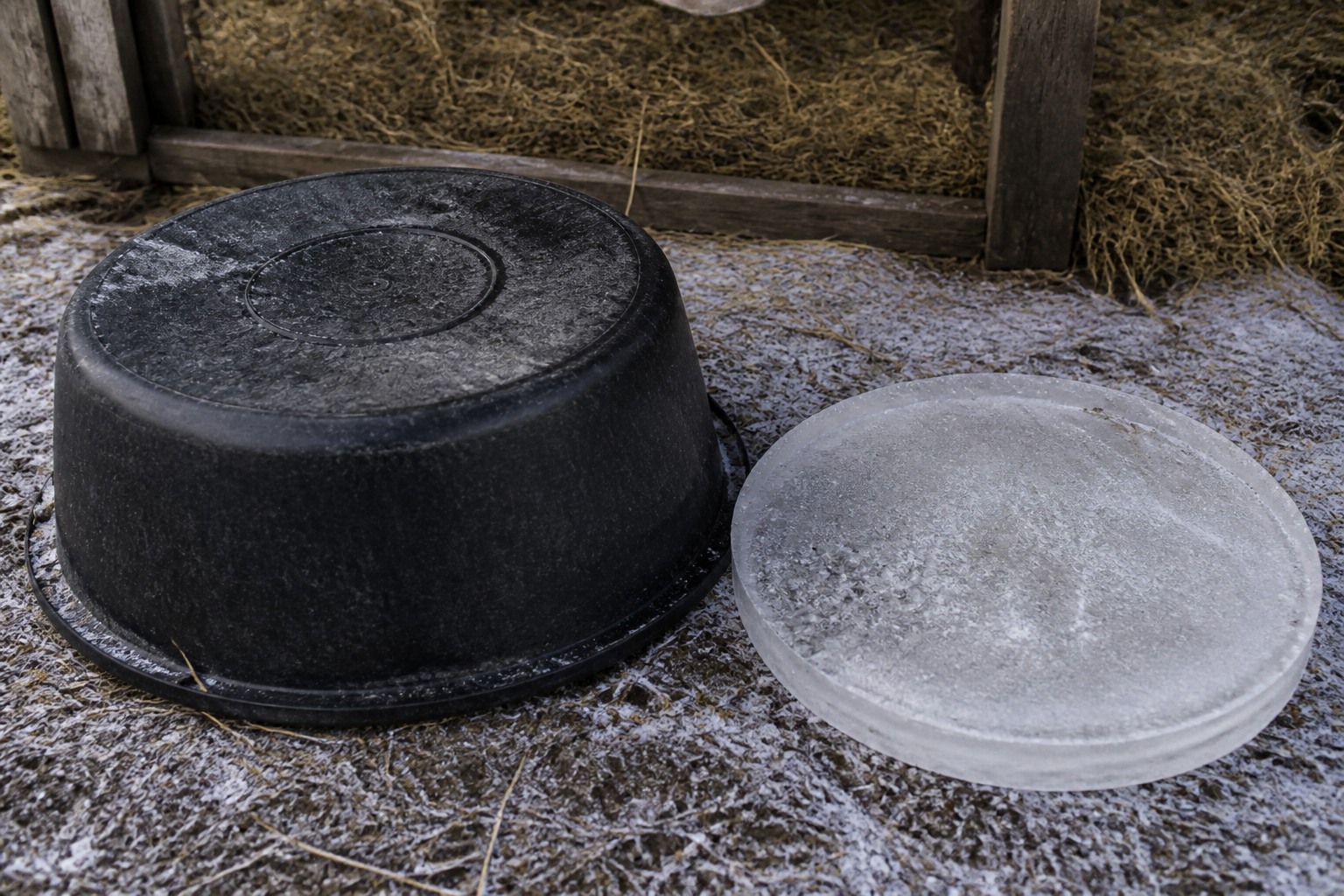
– Black rubber feed tubs. This is the trick I’d hand a no-electricity keeper first. A flexible rubber tub doesn’t crack when the water freezes — you flip it, step on it, and the ice pops right out, then refill. Set a dark one where it catches afternoon sun and it stays open longer than you’d guess.
– Swap, don’t thaw. Keep two waterers. Bring the frozen one inside to thaw on its own while the fresh one goes out. I rotate mine morning and midafternoon on the coldest days — far faster than standing there with a kettle.
– Smaller and more often. A big fount freezes into a big problem. In a hard cold snap I’d rather refill a couple of smaller tubs twice a day than fight one frozen five-gallon block.
– Go out at the right times. First thing in the morning (they’re thirsty after a long roost) and again midafternoon, so they tank up before the long freezing night.
None of this is clever. It’s just showing up. But it genuinely works, and it’s how my grandmother’s generation watered birds long before heated anything existed.
The trick that doesn’t work (skip it)
You’ll read all over the internet that floating a few ping-pong balls in the waterer keeps it open — the wind nudges them, the surface keeps moving, no ice. I tried it for a week one December out of pure curiosity. On a still, hard-freeze Tennessee night with no wind, the balls froze right into the ice with everything else. They might buy you a little on a breezy day above the mid-twenties, but for a real freeze they’re a gimmick. Don’t build your winter plan around them.
A saltwater bottle floated in the trough is the same story for a backyard fount — the science is thin and the risk of salt getting into your birds’ water isn’t worth it. Heat or hand-swapping. Those are the two honest answers.
Don’t forget they need to drink more than you think
One last winter thing that surprises new keepers: cold birds still need a lot of water, and dehydration is a quiet winter risk precisely because the water keeps freezing and nobody’s drinking. Warm-ish water also just goes down easier — on the bitter mornings I bring the first fill out lukewarm, and the girls crowd it like it’s a treat. It doesn’t have to stay warm; it just has to be liquid and there when they want it.
Get winter water right and you’ve handled the hardest part of cold-weather keeping. The rest — extra bedding, a draft-free but ventilated coop, scratch thrown down at dusk so they go to roost with full crops — is genuinely the easy part.
When the weather turns back warm, by the way, this is when I pull the heated base and go back to my nipple systems for clean, cool summer water — they’re two halves of the same year-round job.
I go deep on the whole seasonal rhythm — summer heat, winter water, the draft-free coop, and the stumbling first year — in my book, Raising Backyard Chickens for Beginners. This post is the winter-water piece. The book is everything else I wish someone had handed me my first cold December.
