How to Make an Herbal Infused Oil (Two Simple Ways)
An herbal infused oil is the base for half of what I make — salves, balms, simple kitchen oils. Here's the slow way, the warm way, and how to keep it from spoiling.
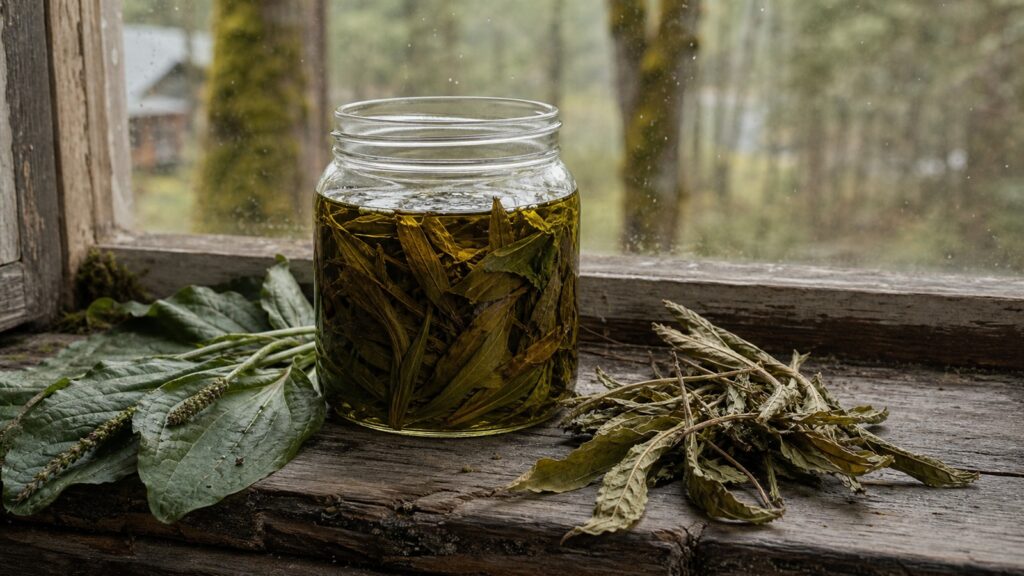
An infused oil is the first preparation I teach anyone who asks, because nearly everything else in a home apothecary is built on top of it. A salve is infused oil set firm with beeswax. A lip balm is the same with more wax again. A spoonful of calendula oil stirred into a winter soup starts in exactly the same jar. Learn this one quiet step and you’ve got the footing for most of what comes after.
I’ve been making infused oils the folk way — by eye, by the warmth at the back of the stove — for the better part of thirty years now. My grandmother kept a jar of plantain oil on the windowsill above her sink for most of the years I knew her, topped off and restarted every summer. What follows is exactly how I’d walk a neighbor through their first jar, standing in my kitchen outside Sequim with the kettle on. I’m an apprentice-taught herbalist, not a doctor; this is what’s traditionally been done with these plants and what I still do, and anything serious is a conversation for a qualified practitioner.
What “infusing” actually means
Infusing is nothing more than letting a dried plant sit in oil until the oil takes on the plant’s color, scent, and character. No heat is strictly required, no special equipment, no precision. You are simply giving the oil time to pull what’s fat-soluble out of the plant and hold onto it. Done right, a jar of pale oil goes deep gold or green over a few weeks, and that color is the plant moving in.
The two things you control are the oil and the plant. Get those two right and the method barely matters.
Pick your oil first
The oil is most of the finished product, so it earns a sentence. Plain olive oil from the cupboard works, and generations infused with nothing else — it’s still my pick for a kitchen oil I’ll use up quickly. But for anything that has to live on a shelf through a wet PNW winter, I reach for jojoba. It isn’t really an oil at all — it’s a liquid wax, close in makeup to the oil your own skin makes, and it keeps far longer than a kitchen oil without turning. Sweet almond and olive are fine stand-ins if that’s what you have.
Whatever you choose, the oil must go in dry and stay dry. Water is the enemy of a good infused oil, which brings me to the plant.
Pick your plant — and dry it well
For a first oil I point beginners toward calendula or broad-leaf plantain (Plantago major), the low weed in every lawn and trailhead from here to the coast. Both are common, both gentle, both used on skin far longer than anyone’s been writing it down. Calendula you can grow in a pot by the door; plantain you can find within ten feet of where you’re standing, most likely.
One honest word on identification, said once: infuse only a plant you can name with certainty, confirmed against more than one reliable source and ideally an experienced local forager. Steeping a plant in oil doesn’t tame it — it pulls the plant’s character into the oil, the helpful and the harmful both.
And dry your plant thoroughly before it goes anywhere near the oil. This is the rule people skip and regret. Fresh plant carries water, and water trapped under oil is exactly the airless, damp pocket that botulism favors — the real reason I infuse with dried plant only, never fresh. Well-dried plant, clean jar, and the oil keeps for the better part of a year.
The slow way — a windowsill and some patience
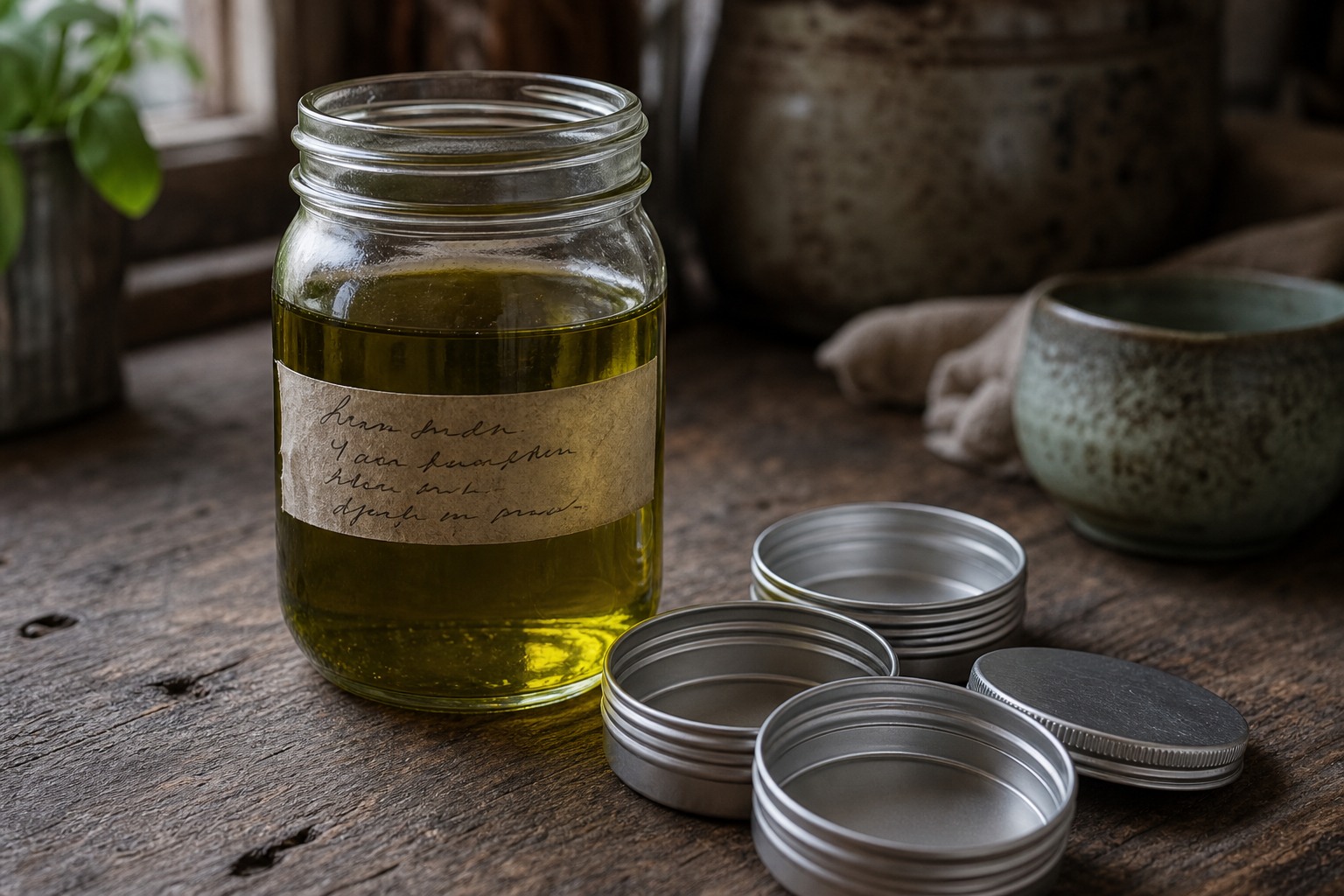
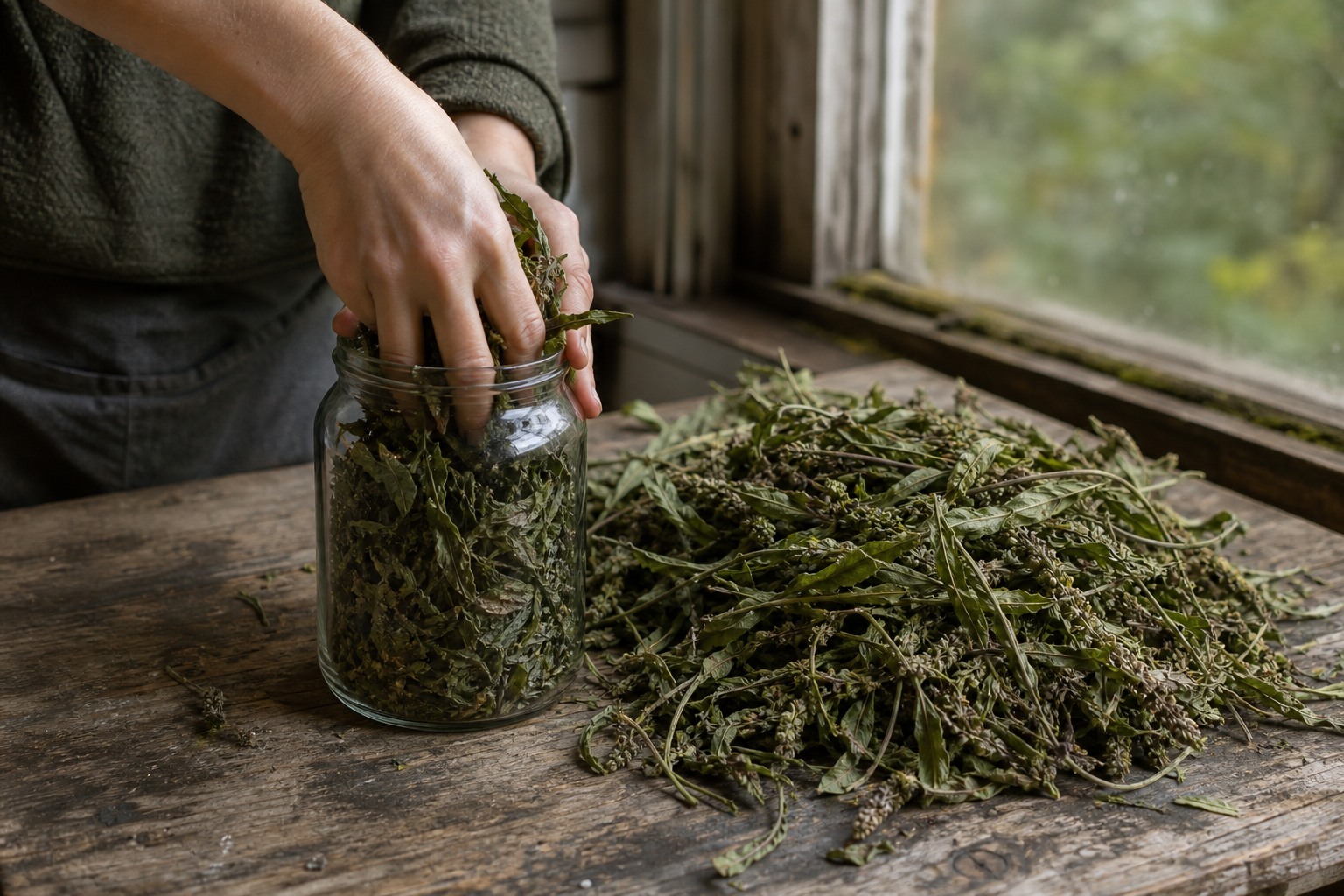
This is the method my grandmother used, and the one I still prefer when I’m not in a hurry. Pack a clean wide-mouth glass jar (a wide-mouth canning jar is ideal — easy to fill, easy to strain) about two-thirds full with your dried plant. Pour oil over it until the plant is covered by a full inch — any plant breaking the surface will mold, and a moldy patch ruins the jar. Cap it, set it on a warm windowsill, and give it a shake whenever you walk past.
Three to four weeks later, when the oil has taken on the plant’s color and smell, it’s done. I date a piece of tape on the lid the day I start it, because by week three I have invariably forgotten when that was.
The warm way — same character, same afternoon
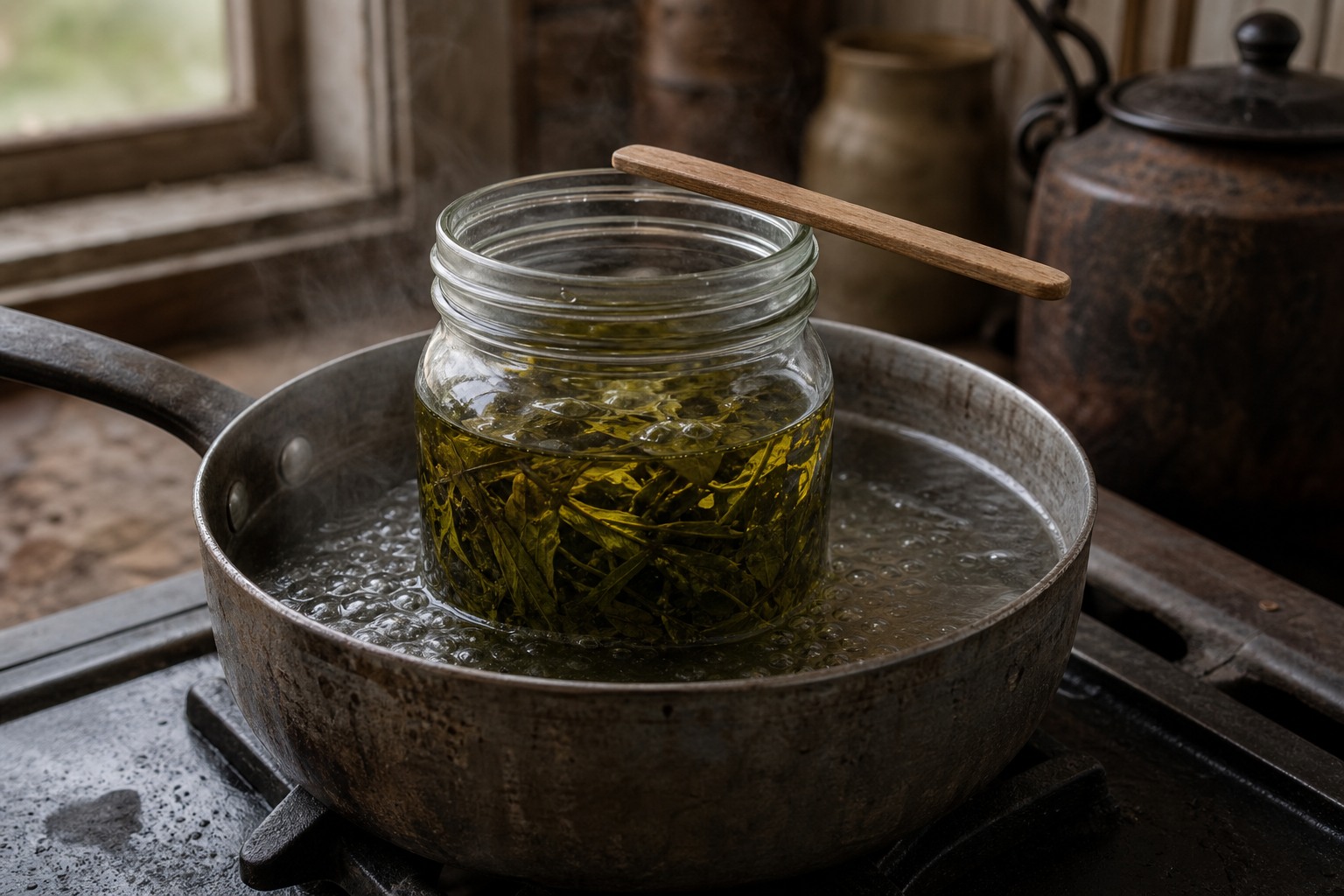
When you want oil today, use gentle heat. Set the uncapped jar in a small pan of barely-simmering water — a makeshift double boiler — and let it warm two to three hours. Keep the water at a bare tremble, never a rolling boil. Oil that gets too hot scorches, loses its virtue, and smells faintly of a frying pan, which is not what you’re after.
The slow way makes a slightly finer oil to my nose, but the warm way is honest and quick, and on a gray afternoon in February when the plantain oil ran out I’ll take quick every time.
Strain it clean
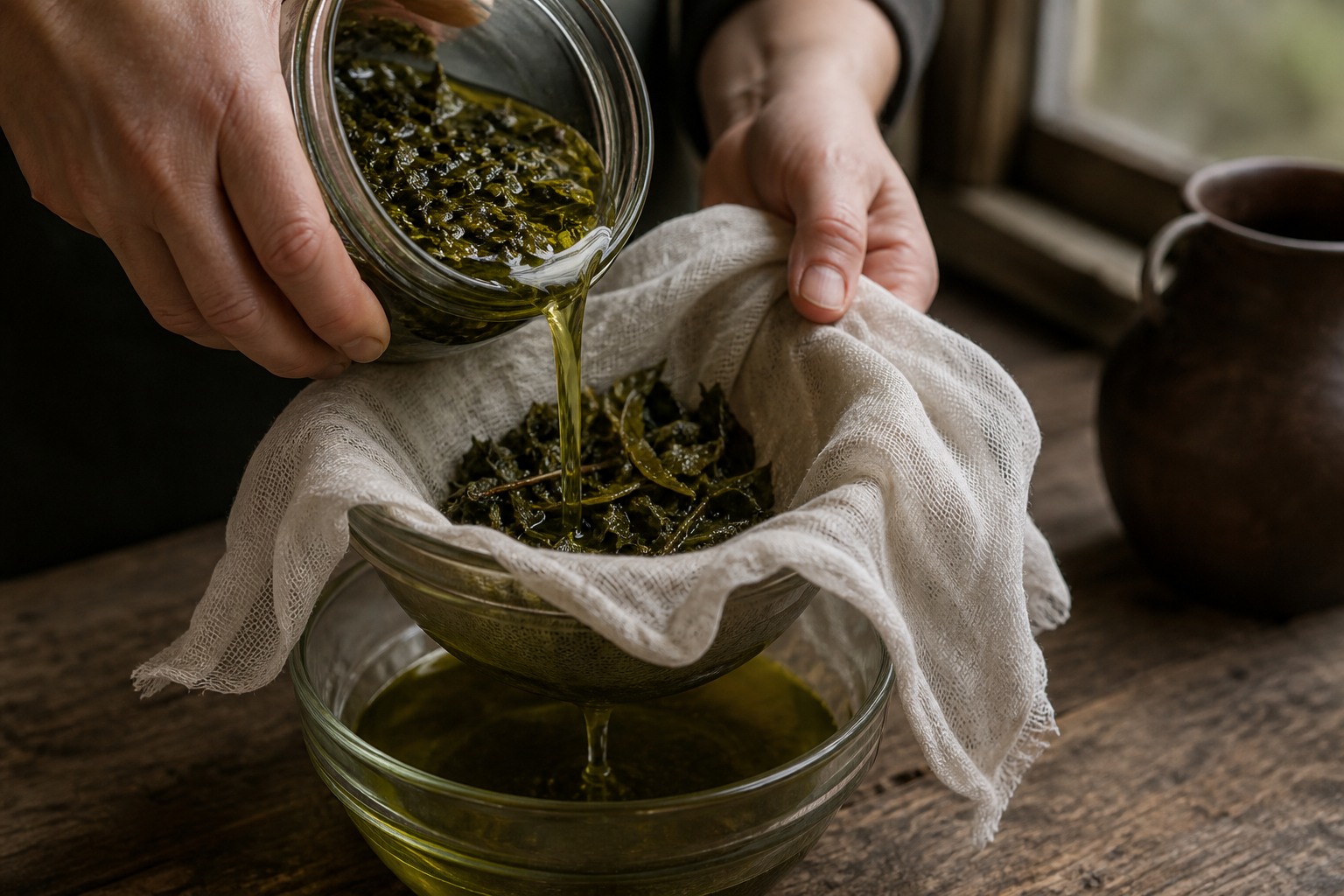
However you infused it, strain the finished oil through a doubled layer of grade-90 cheesecloth into a clean bowl. That tight grade-90 weave catches the fine grit a looser cloth lets straight through — and that grit, carrying its own trace of plant moisture, is what shortens an oil’s life. Gather the cloth and wring the soaked plant hard; there’s good oil hiding in there, and it’s the richest of the batch.
Pour the strained oil back into a clean dry jar, label it with the plant and the date, and keep it somewhere cool and dark. Heat and light age an oil fastest.
Where the oil leads
You now have the one preparation everything else stands on. Want a salve for cracked hands? Warm a portion of your oil and stir in beeswax pellets at about one part wax to four parts oil, then pour it into small tins to set. Want a lip balm? Same idea, more wax. The oil is the patient part; the rest is an afternoon.
Which plant to infuse, when to gather it, how each one was traditionally used and which have no business near your skin at all — that takes longer, and it’s the part I care most about. Most of that knowing is what I put into my book, Pacific Northwest Medicinal Plants — 115 wild herbs of this coast, how to identify each one without guessing, when to gather it, and how the generations before us prepared it. The oil is the easy part. The book is how you learn what’s worth steeping in it.
