How to Grow Zucchini in Containers on a Balcony or Patio
How to grow zucchini in containers: the right size grow bag, bush varieties, hand-pollinating, feeding, and picking small, all from a six-by-ten balcony.

Every August a neighbor two doors down leaves a zucchini the size of a baseball bat on my doormat. Every January I remember I have never grown a single one myself, not even on my six-by-ten balcony. So last spring I finally did, and I’m glad, because a container zucchini is one of the easiest big wins a small space can give you.
You don’t need a garden bed. You need one big bag, a sunny spot, and the patience to pick the fruit small. Here’s exactly how I did it, what went wrong, and what I’d change.
Pick a bush variety and give it a big home
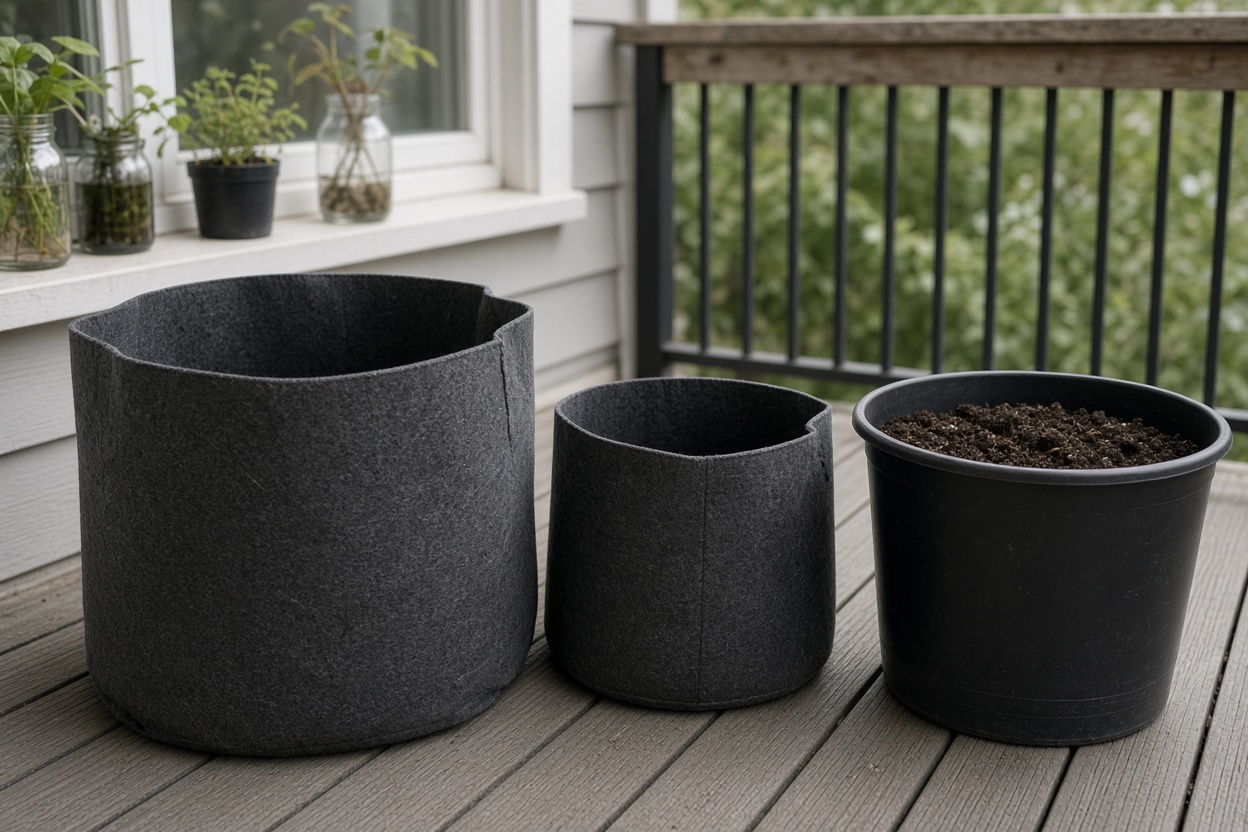
Zucchini comes in sprawling vining types and compact bush types. For a balcony, pick a bush or “compact” variety. Look for names like Astia or Patio Star on the seed packet, which are bred to stay tidy in a pot. One plant is plenty. I know it feels like too little. It isn’t.
Size matters more than anything else here. A zucchini has a big, thirsty root system and a very large plant above it. I use a fabric grow bag of at least ten gallons, and bigger is better, as much as your balcony will take. A smaller pot dries out by lunchtime and the plant sulks.
Fill it with a good potting mix to about two inches below the rim. Don’t use soil from the yard, which packs down hard in a container and drowns the roots.
When and how to plant

Zucchini hates cold. It won’t grow in cold soil, and a late frost will kill the seedling. Here in the Portland area I wait until the soil is warm, usually late May, and the nights are staying above fifty degrees.
Sow two seeds about an inch deep in the center of the bag. When they’ve both come up and have a couple of true leaves, snip the weaker one off at the soil line with scissors. Don’t pull it, because you’ll disturb the roots of the one you’re keeping. Water the whole bag gently until it’s evenly damp.
If you want a head start, you can sow in a pot indoors three weeks before your last frost, but zucchini resents root disturbance, so I just direct sow into the final bag and wait for the weather.
Sun, water, and the secret of even moisture

Give it at least six hours of direct sun. More is better, and a south-facing balcony is ideal. Mine gets about seven, and the plant did fine.
Water is where most container zucchini go wrong. The soil swings from bone dry to soaked, and the fruit rots at the tip or the leaves wilt in the afternoon sun. Aim for even moisture. Push a finger two inches into the mix each morning and water when it feels dry there. A soil moisture meter takes the guessing out of it; mine is in do you need a soil moisture meter.
Use a long-spout can and pour at the base of the plant. Wet leaves invite powdery mildew, the white dust that shows up on zucchini leaves by midsummer. A little mildew is normal late in the season, and I just snip off the worst leaves. Water in the morning so any splash dries by evening.
Feed it like it’s working hard
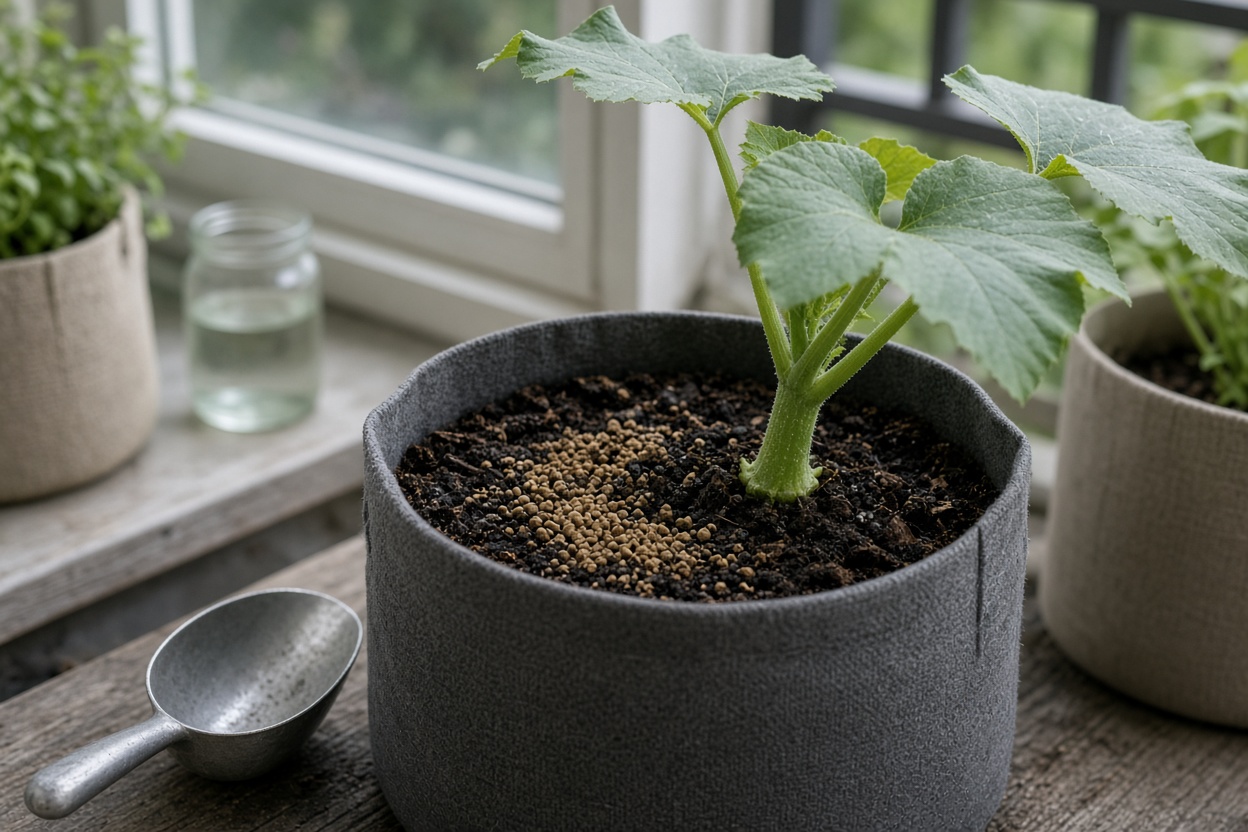
A zucchini plant is a fast, hungry grower. Work a few tablespoons of Garden-Tone into the top inch of soil when you plant, and again every three or four weeks once it starts flowering. Keep the granules off the stem. I cover them lightly with a bit of mix and water them in.
My honest warning: too much feeding gives you a giant, leafy plant and very little fruit. If you see a jungle with no flowers, ease off. For more on feeding container vegetables, read how to fertilize container vegetables.
Hand-pollinate if the fruit won’t set
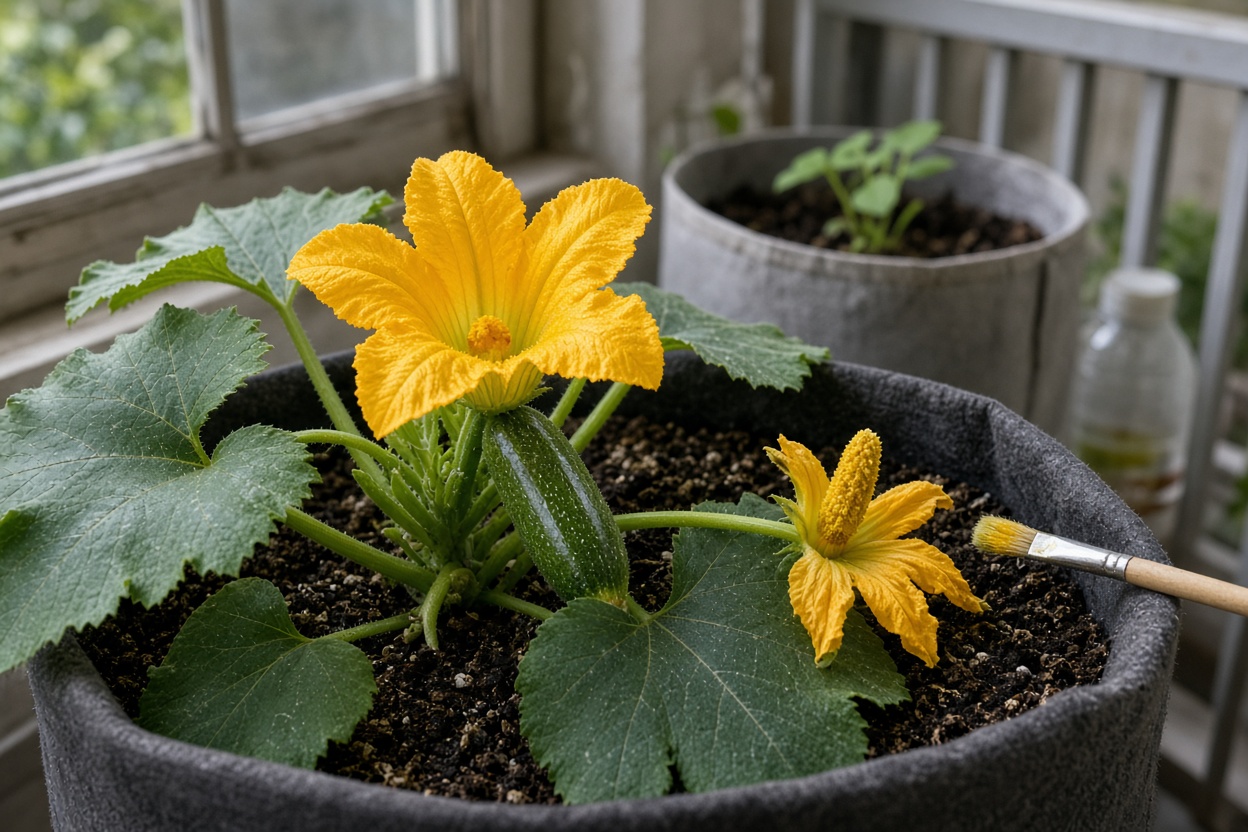
Here’s the part that surprised me. A zucchini plant makes separate male and female flowers. The female has a tiny baby zucchini right behind the bloom. The male sits on a thin plain stem. On a high balcony there often aren’t enough bees to carry pollen between them, so the baby fruit turns yellow and falls off.
The fix is easy. In the morning, pick a fresh male flower, peel back the petals, and dab the pollen inside against the center of an open female flower. Or use a small soft paintbrush. I did this for the first three weeks and then the bees found my balcony and took over.
Pick small, pick often

This is the rule that matters: pick the fruit at six to eight inches. At that size it’s tender and sweet. Leave one for a few days and it becomes that baseball bat. Check the plant every day or two in summer. Cut the fruit with a clean knife rather than twisting it off.
The more you pick, the more it makes. My one plant gave me a steady two or three a week for most of the summer, which was more than a household of two could eat. If you’re new to container vegetables, my tips for another summer favorite are in how to grow cucumbers in containers.
Related: how to grow bok choy in containers on a balcony or patio
What I’d do differently

I planted too early the first time, in mid-May, and a cold week stalled the seedling for ten days. I’d wait for warm soil. I also let the first fruit get too big. And I’d stake the plant’s heaviest leaves, because a big one snapped a stem in a windstorm.
If you want the whole container-vegetable method laid out in one place, from soil to harvest, that’s what I wrote Small-Space Big Harvest for: Small-Space Big Harvest. It’s the deeper resource, and a good place to start planning next spring’s balcony.
