How to Forage and Use Sourwood Leaves in the Appalachians
Sourwood in the southern Appalachians: how to know the tree in fall, gather leaves without harming it, dry them, and prepare a traditional leaf tea, safely.
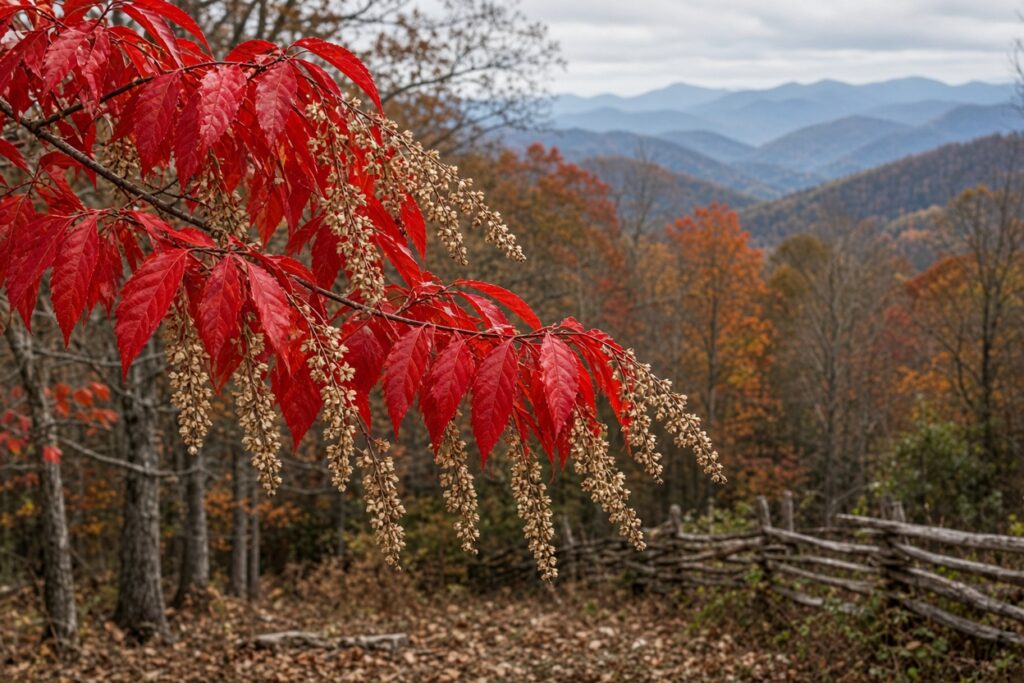
There is a sourwood at the head of my hollow that turns the red of a cardinal every October, and the bees that worked its blossoms in July are the reason my neighbor’s honey sells for twice what anybody else’s does. People up here will tell you sourwood honey is the best there is. I’ll tell you the tree is worth knowing for more than that.
I live up a creek hollow outside Marshall, in Madison County, North Carolina, and I have gathered from sourwood most of my life. Here is how I find it, take from it, and put it up, and where I think you ought to be careful.
You’ll also want a basket, a small pair of scissors, and a notebook. I’ll leave those to your own toolbox.
Know the tree first
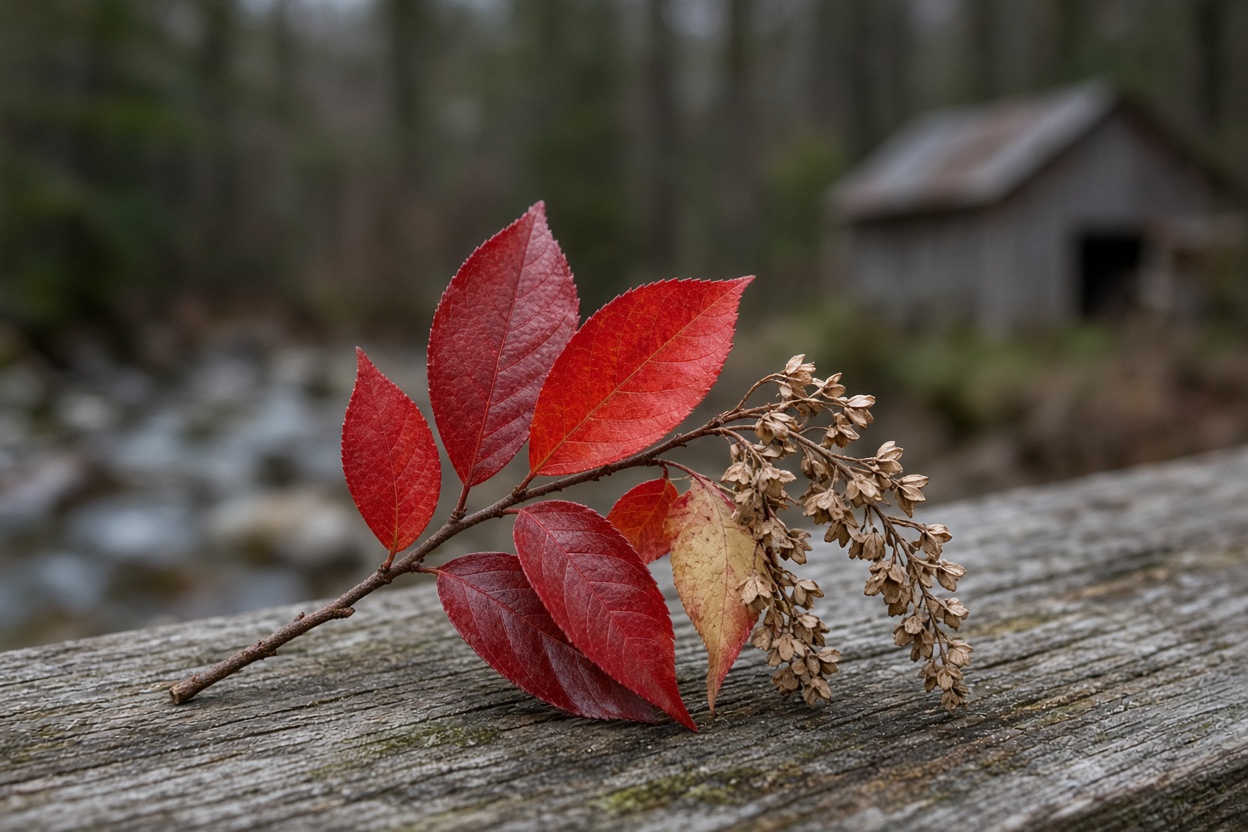
Sourwood (Oxydendrum arboreum) is a small to medium tree of the southern mountains, and it is one of the easiest to learn in fall, when it announces itself. Say this part with me, once: never use any wild plant on the strength of one book, one app, or one article, this one included. Confirm it against more than one reputable guide and with an experienced local forager, and when there’s any doubt, leave it where it stands.
October is the month to meet a sourwood. The leaves turn a deep scarlet before most of the hardwoods around them have started, and they hang on for weeks. The leaves are simple, alternate on the twig, long and narrow with a pointed tip and finely toothed edges, often five to eight inches from base to tip, shiny green in summer. Through the fall and winter the tree carries long, drooping clusters of tiny, gray, urn-shaped seed capsules at the ends of the branches, which look like pale fingers hanging from each twig tip. Those clusters are what I key on. When you see them against the sky on a bare tree, you know it.
The bark is gray and deeply furrowed into narrow ridges. It is not the blocky, nearly black bark of persimmon, and it is not smooth like a beech. If you want to compare, I wrote about persimmon in how to forage and use persimmon bark.
The most common confusion for a beginner is between sourwood and other trees with long, narrow leaves, such as black gum, persimmon, and some of the cherries and willows. A leaf alone is not enough. That is why I mark my trees in the fall, when the red color and the seed clusters leave no doubt, tying a strip of cloth on a low branch so I can return to the same tree.
Where and when to gather
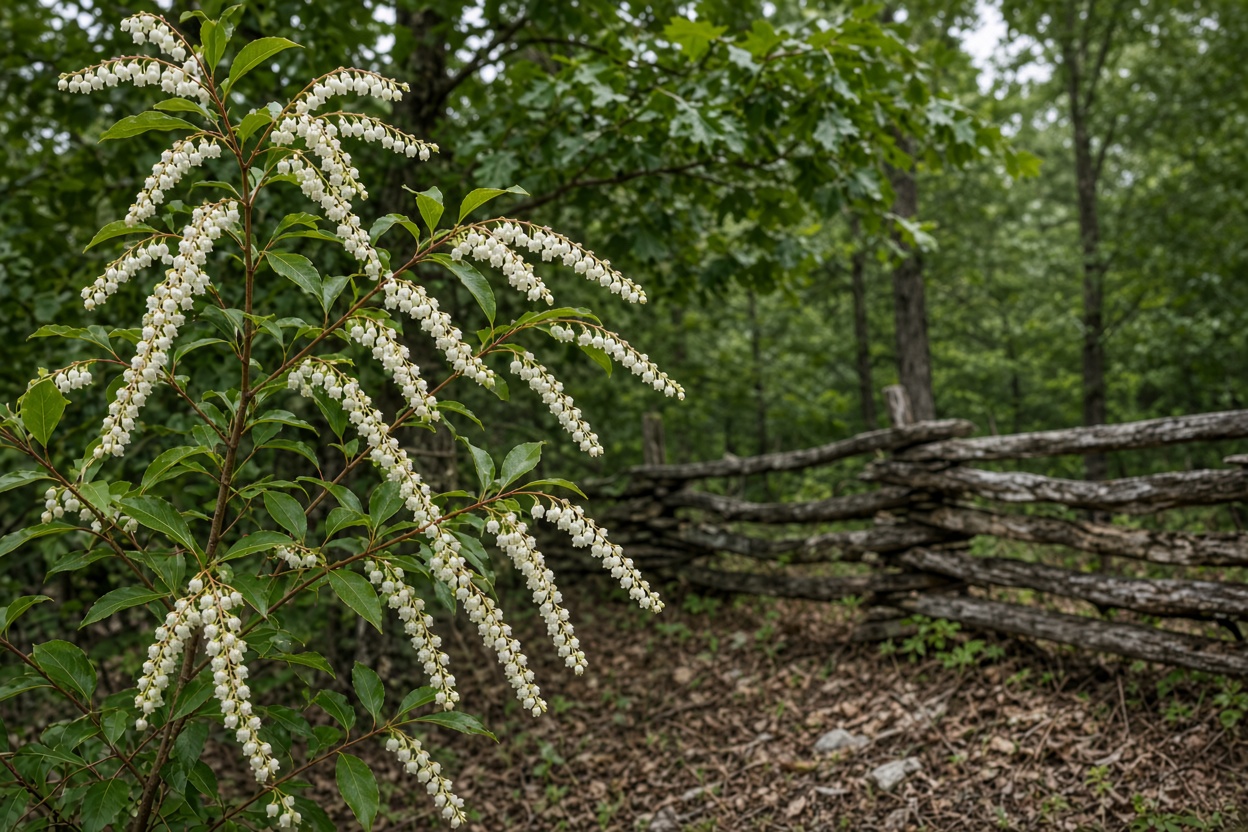
Sourwood likes the dry, acid slopes and ridges of the southern mountains, in open woods and along old field edges, mostly below about 3,500 feet. Pick a tree you have identified in fruit or fall color, on land you have permission to gather from. Public land rules differ from place to place. Many national forests and parks restrict or ban gathering, so call the ranger district before you take anything.
Leaves are best gathered in summer through early fall, while they are green and clean, or in the first weeks of color before they dry and drop. Choose healthy leaves, free of spots, galls, and chewing damage. I go in the late morning once the dew is off.
Take little, and spread it out
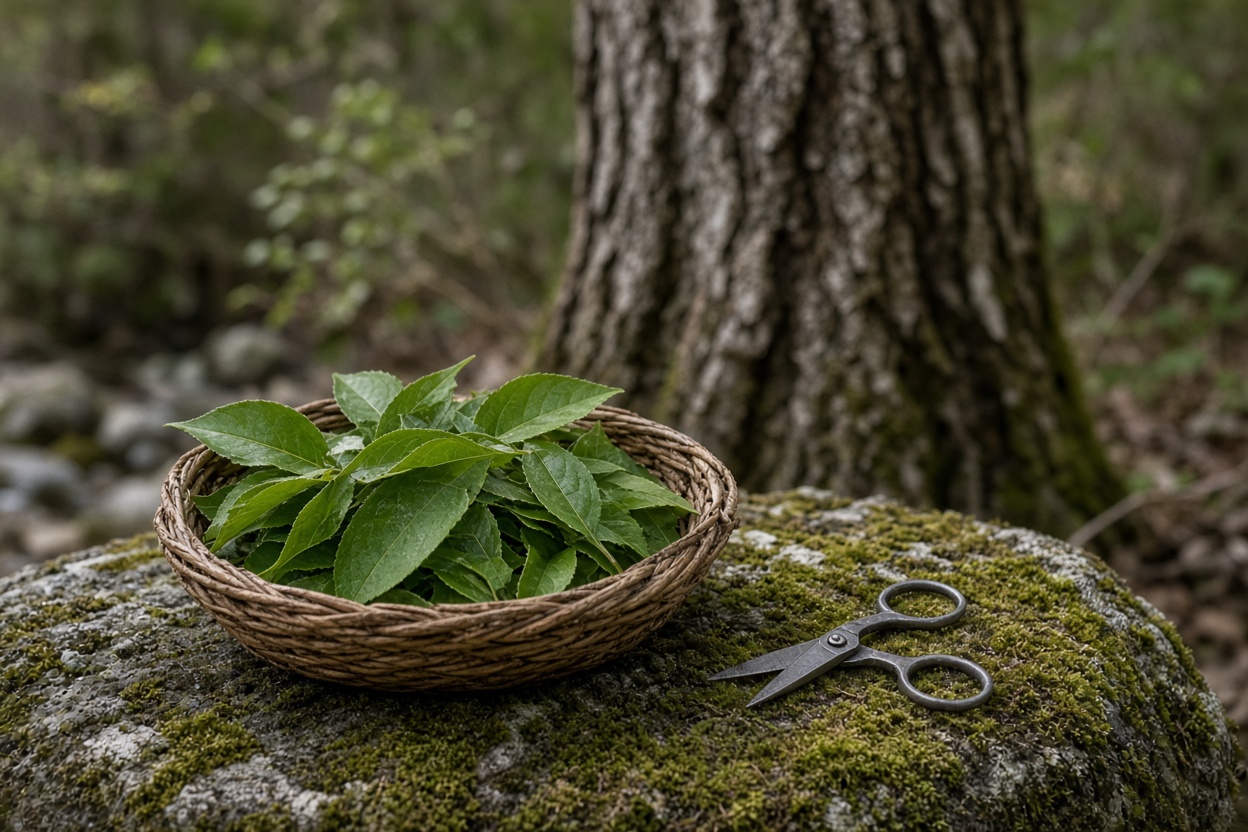
Sourwood is a slow tree, and the old ones up here have seen a great deal. Take a few leaves from many branches instead of stripping any one limb. Never take from a tree that looks stressed, and never pull down a branch to reach it. I figure on gathering no more than a handful from any single tree, then moving on.
Remember that the blossoms in July are what feed the bees, and bees feed a lot of mountain families. If you gather in summer, stay off the flowering clusters. I take only leaves.
Drying and storing the leaves
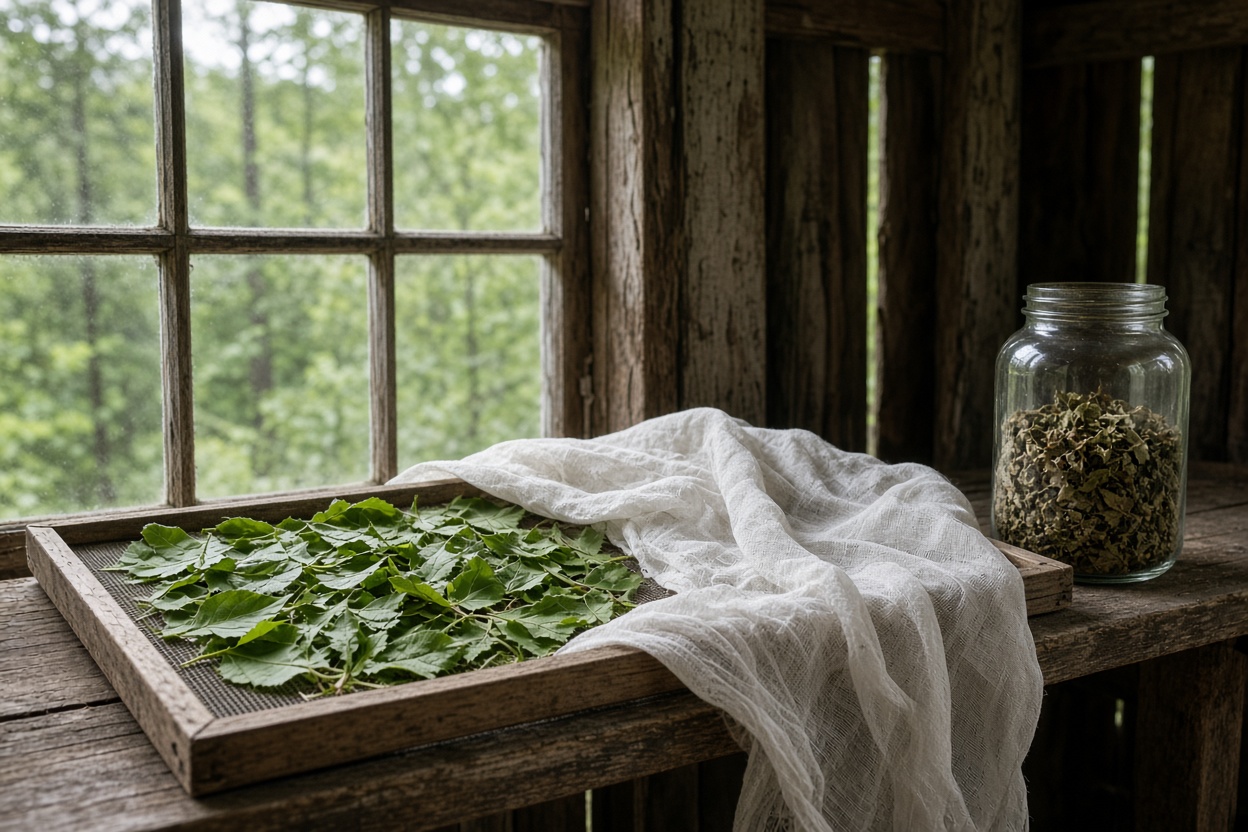
Spread the leaves in a single layer on a screen or a clean cloth in a warm, dry, shaded spot with good air, away from direct sun. Drape cheesecloth over them to keep dust and flies off. In my drying shed they take about a week in dry fall weather. They are done when they snap or crumble instead of bend. If your mountain air is damp, give them longer, and don’t stack them thick.
Pack the dry leaves loosely in a wide-mouth jar and keep it somewhere dark and dry. Label it with the tree, the place, and the date on a strip of masking tape. Dried leaves keep for a year or so if they stay dry.
A traditional leaf tea, described honestly
I’ll tell you how this tree has traditionally been used, and I’ll be plain about what that means. This is folk and traditional-use information, how mountain families have used it, not medical advice, and nothing here treats or cures anything. I do not give amounts or schedules for taking it, and I won’t. If you have a real health concern, see a qualified practitioner.
The leaves are tart, which is where the name comes from. Old-timers in these hills used to chew a leaf on a long walk for the sour, mouth-watering taste, and the leaves have been steeped as a household tea. The Cherokee knew sourwood long before any of us, and their uses are documented in the ethnobotanical record, including in Hamel and Chiltoskey’s Cherokee Plants and Their Uses. I send readers to that source for what the Cherokee themselves recorded, and I don’t try to paraphrase it. They knew these hills first, and I credit them.
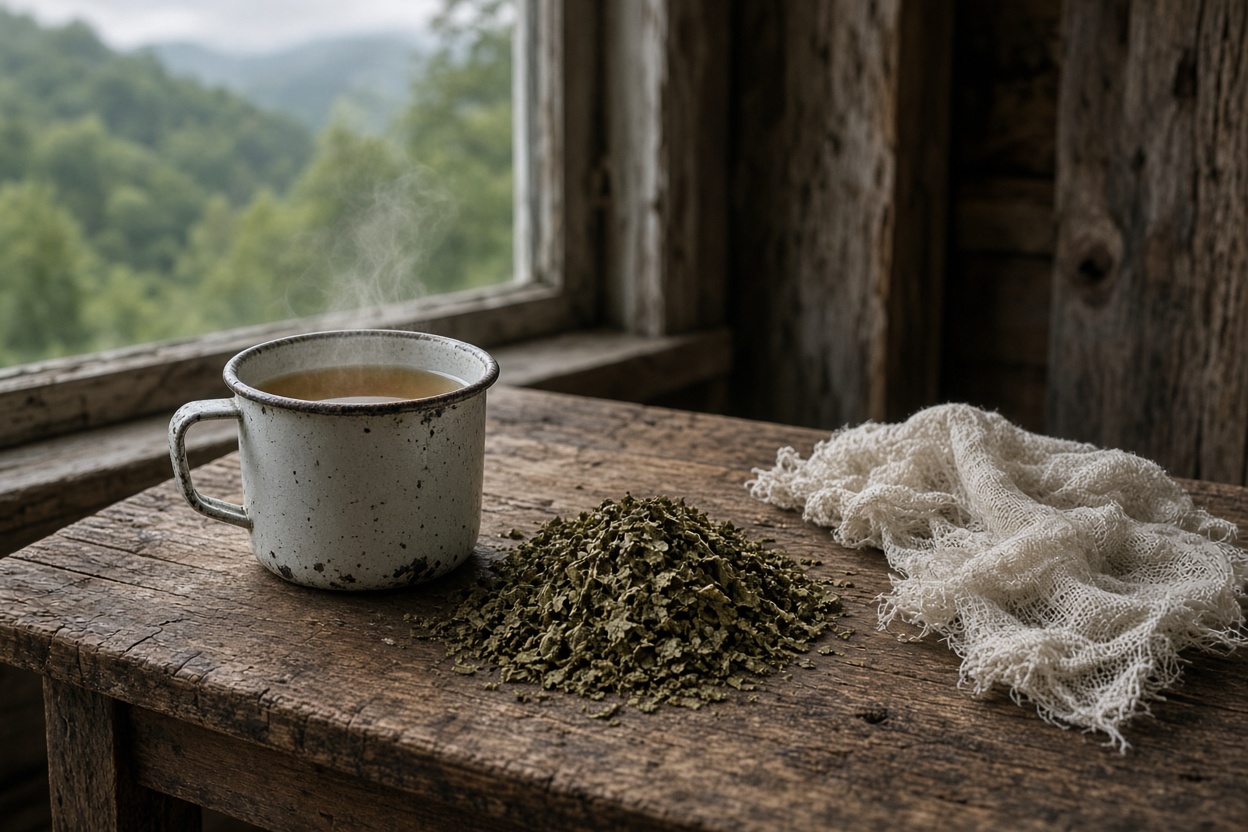
The traditional way to make a leaf tea is simple. Put a small pinch of crumbled dried leaves in a mug, pour on hot water, cover, and let it steep for five to ten minutes. Strain it through cheesecloth if you like it clear. It is sharp and a bit lemony. A little honey, ideally from the same hills, rounds it out. Keep it to a small cup, and don’t make a habit of any wild plant before you know how your own body takes it. If you want a gentler first leaf to learn, my notes on how to forage and use lamb sorrel are a good start.
What I got wrong
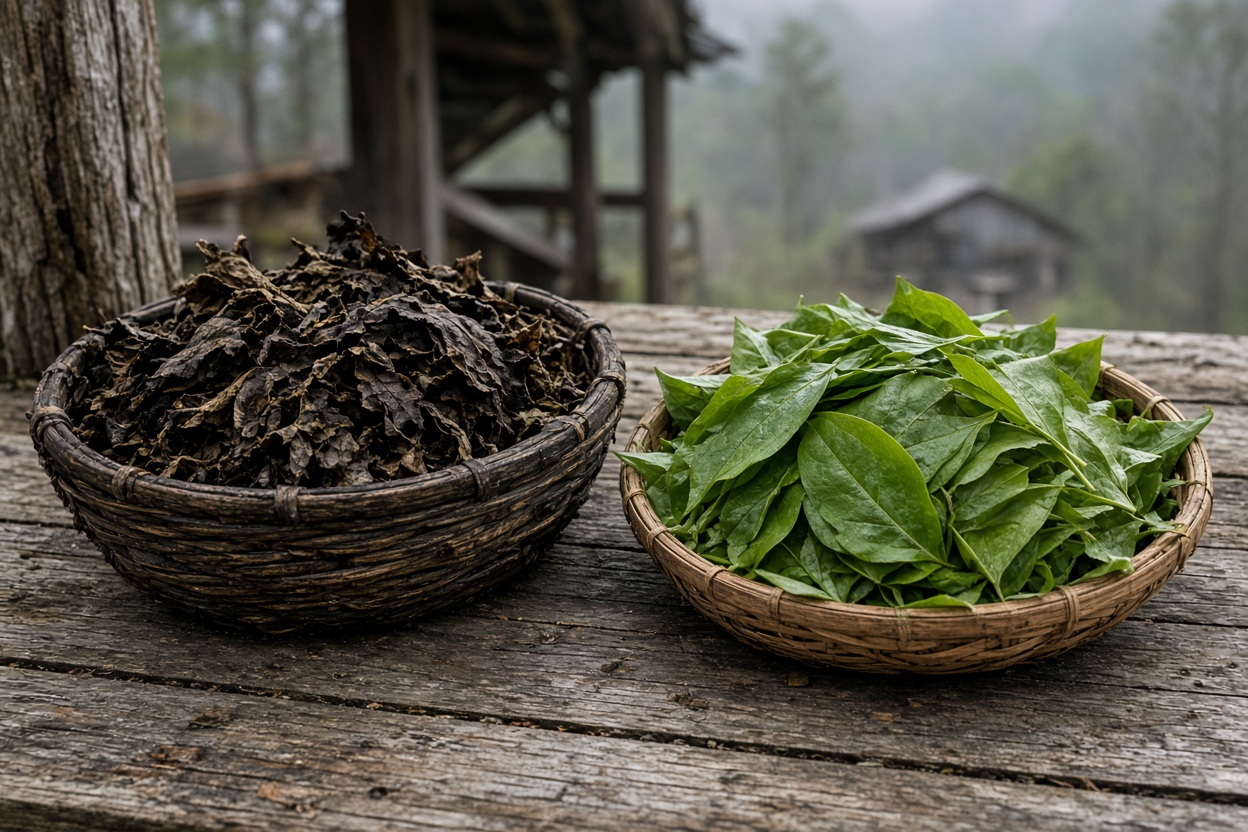
My first year I gathered green leaves on a damp morning and piled them in a basket, and by the time I got home they had gone dark and musty. Now I gather after the dew is off, carry them loose in a shallow basket, and dry them thin. I have also pulled the wrong leaf from a tree I thought was sourwood, which is the reason I tie that cloth in the fall and come back to the same tree.
Related: how to forage and use salmonberry shoots and blossoms
Where the plant ends and the knowing begins
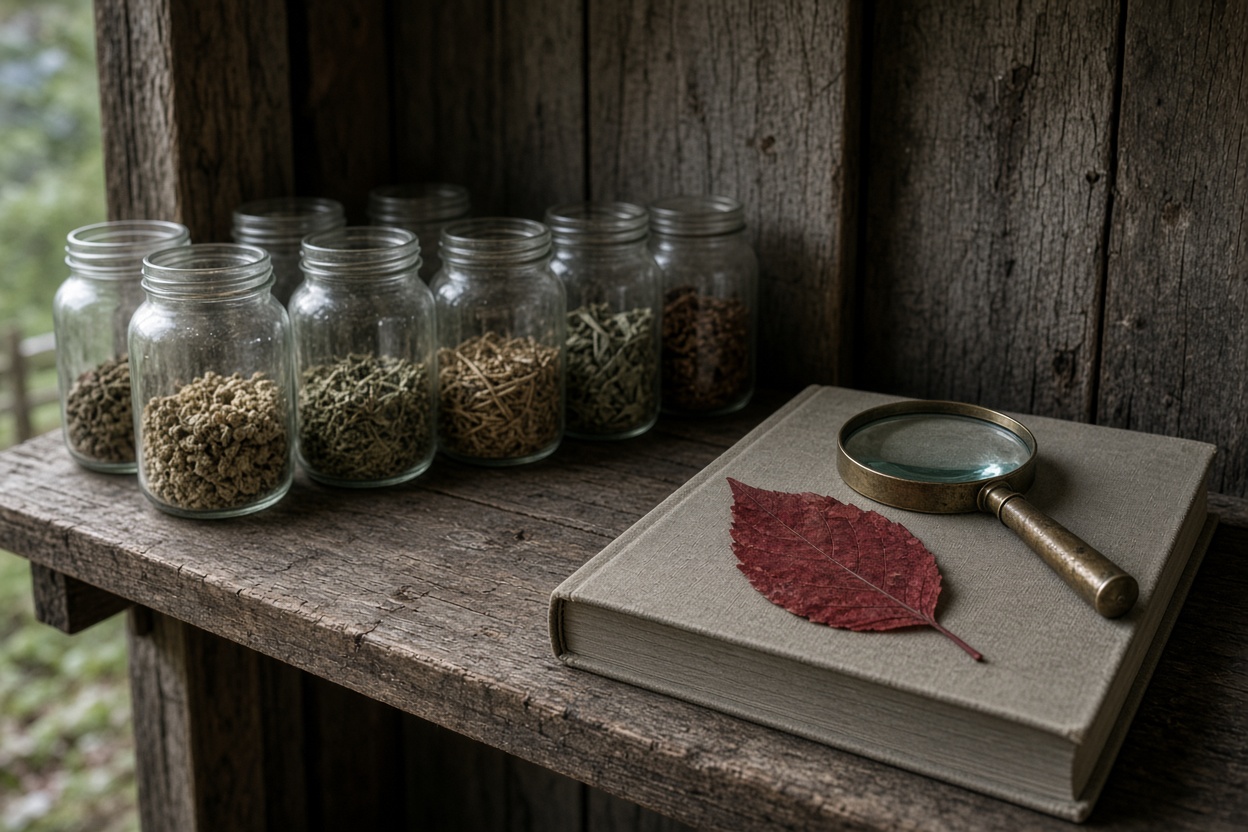
The jar and the cheesecloth are the easy part. The slower work is knowing the tree in every season, knowing what looks like it and isn’t, and learning when to leave a tree alone. I walk through all of it, plant by plant, in my book, Appalachian Medicinal Plants: how to identify each one without guessing, when to gather, and how to do it so the mountain still has it for the next person. If you want to start with something gentler, my notes on how to forage and use yellow dock root are a good next stop.
