How to Keep Chickens Dry in a Wet Winter: A Coop Guide
A cold dry hen is fine, a cold wet hen is not. Learn how to keep your coop, run, bedding, and waterer dry through a long rainy winter without a heat lamp.
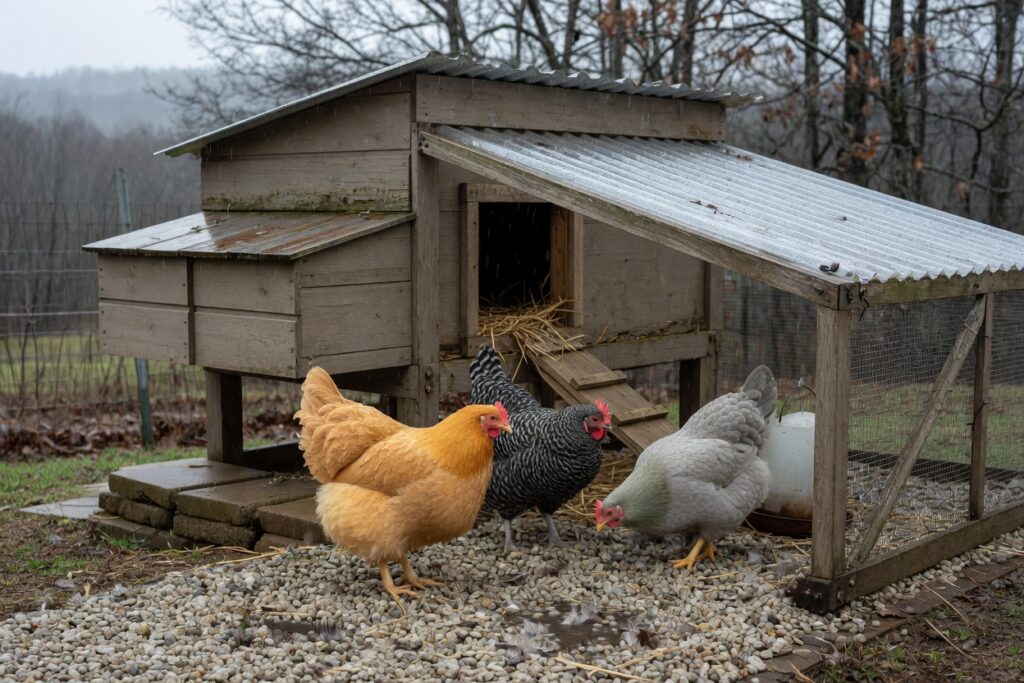
The January Hannah left the run gate open during a three-day Tennessee drizzle, I walked out to find twelve hens standing on the one dry patch under the coop, looking like wet laundry. That was the week I learned how much a flock hates being damp.
Here is what took me years to believe: chickens handle cold far better than they handle wet. A dry hen with fluffed feathers can ride out a freeze. A soaked hen standing in a muddy run with a drafty coop is the one who gets sick, goes off her feed, and loses toes to frostbite. If your winters run wet more than they run snowy, keeping everything dry matters more than anything you plug in.
You’ll also want a few pavers or cinder blocks, a roll of heavy clear plastic or a polycarbonate panel, and a bag of pea gravel. Those are building-supply items I’ll leave to you.
Start with the roof and the floor

Walk your coop in the rain once, with a flashlight, and look for drips. A leak over the roost is a bigger problem than any storm outside. Patch the roof, and check where walls meet the roof line. Water that comes in at a seam drips down all night.
The floor should sit above the ground. If your coop rests flat on dirt, damp wicks up through it. Mine sits on pavers, with an inch of air under the floor, and the floor has stayed dry since. If you cannot lift the coop, raise the bedding area with a thick layer instead.
Ventilation is not the same as a draft
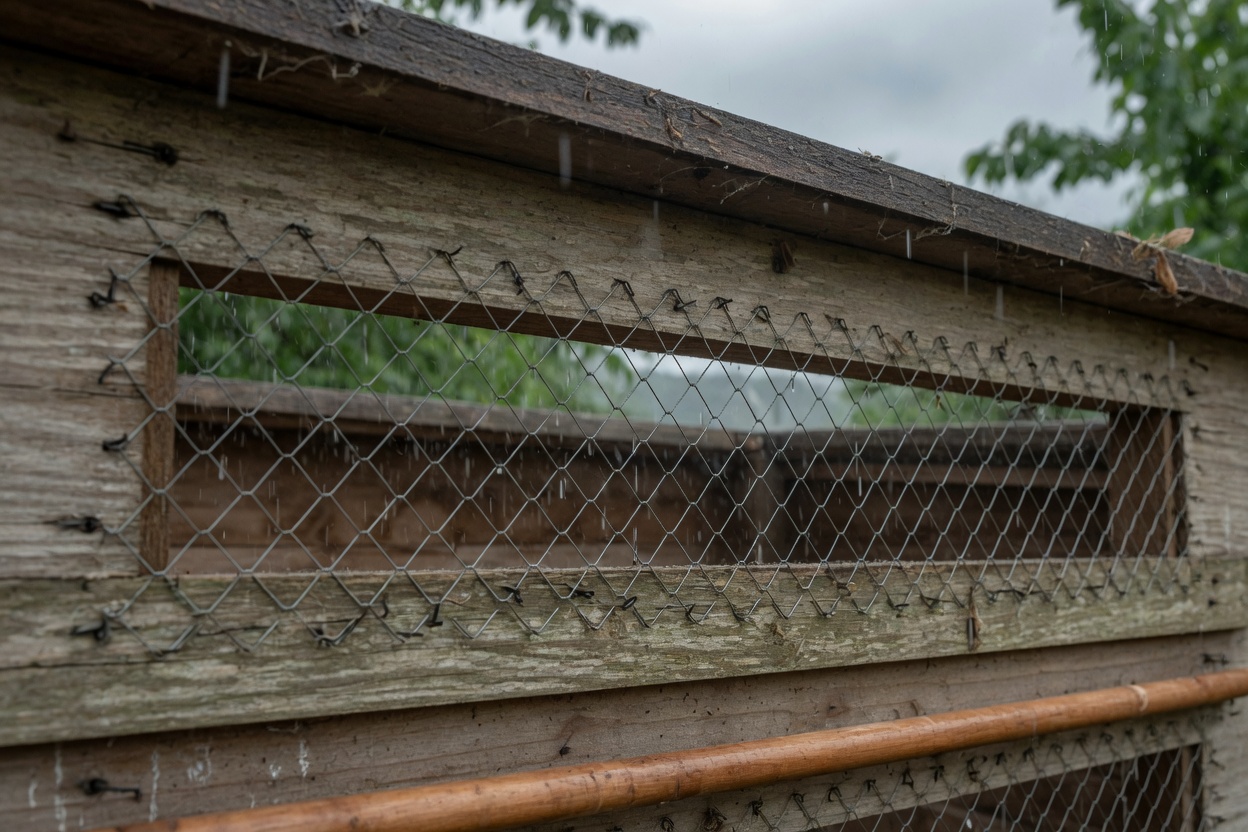
I used to close my coop up tight on wet nights, and every morning the inside walls dripped. A chicken breathes out a lot of moisture, and the coop droppings add more. That moisture has to go somewhere. Leave vents high up, above the roost, so damp air leaves without a breeze blowing across the birds. Think of it as a chimney, not a window.
If you can smell ammonia when you open the door, or see condensation on the walls, you need more air and less wet bedding. I wrote about the bedding side in the deep litter method for a winter coop.
Fix the run, because that’s where the mud lives
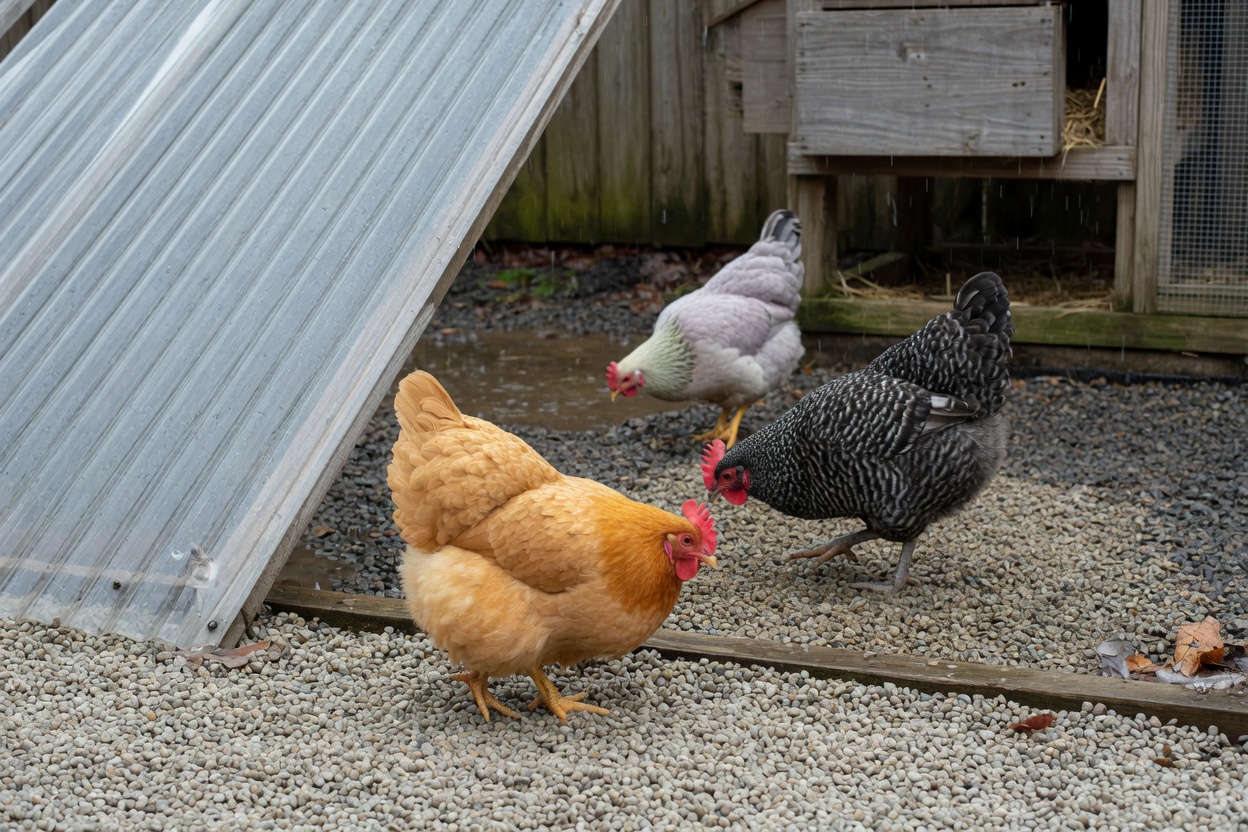
Most of the wet in my flock’s life comes from the run. Three things helped me more than any other:
– Cover part of it. A roofed corner, even a tarp or a polycarbonate panel stretched over a quarter of the run, gives the hens a dry place to stand and scratch. Mine head there the minute it rains.
– Lay gravel or sand. Pea gravel drains, and straw only turns to slop. Put it down thick at the gate and under the covered corner.
– Slope the water away. Shape the ground so runoff goes out of the run, not into it.
Plastic on the windward side keeps the rain from driving in. Leave the top gap open for air.
Keep the water off the floor

Water is the biggest source of wet bedding I have. A nipple-and-cup waterer is the fix I’d reach for first. The hens peck a nipple and water comes out, so nothing sloshes. It has downsides. It can freeze in a hard cold snap, and some hens take a few days to learn it, so I keep a second open source out until everyone has figured it out.
A galvanized fount set on a block works well too, as long as you keep it level and out of the traffic path. It won’t help when temperatures drop below freezing without a heated base, which I cover in how to winterize a chicken coop.
Bedding, and when to swap it

Hemp bedding is what I use. It drinks up moisture and stays fluffy longer than pine shavings did for me. It isn’t cheap, and it isn’t magic. Wet is wet, and if the bedding stays damp, swap the soggy spots out and don’t wait for a full clean-out. I spot-clean under the roost and by the door every few days in wet weather and turn the rest with a rake.
Check the birds, not just the coop

After a wet week, pick up a hen or two and feel the feathers at the base. Should they be damp to the skin, something is wrong with your setup. Look at combs and toes for white or gray patches, which are early frostbite. If a bird looks off after a stressful stretch, a little poultry electrolyte in the water, an over-the-counter product, helps some folks. For anything that looks like illness, call your vet or your county extension office.
Where to go from here

None of this is complicated. It’s mostly a matter of walking your own coop in a storm and fixing what you find. I walk through the whole season, from coop setup to cold-weather care, in my book, Raising Backyard Chickens for Beginners. And if you need a place to start, my post on how to keep chickens warm in winter without heat pairs well with this one.
Dry first. Warm second.
