How to Forage and Use Mugwort: A Pacific Northwest Guide
Learn to forage mugwort in the Pacific Northwest: how to tell it from its look-alikes, when to cut it, and how to dry, store, and use it the traditional way.
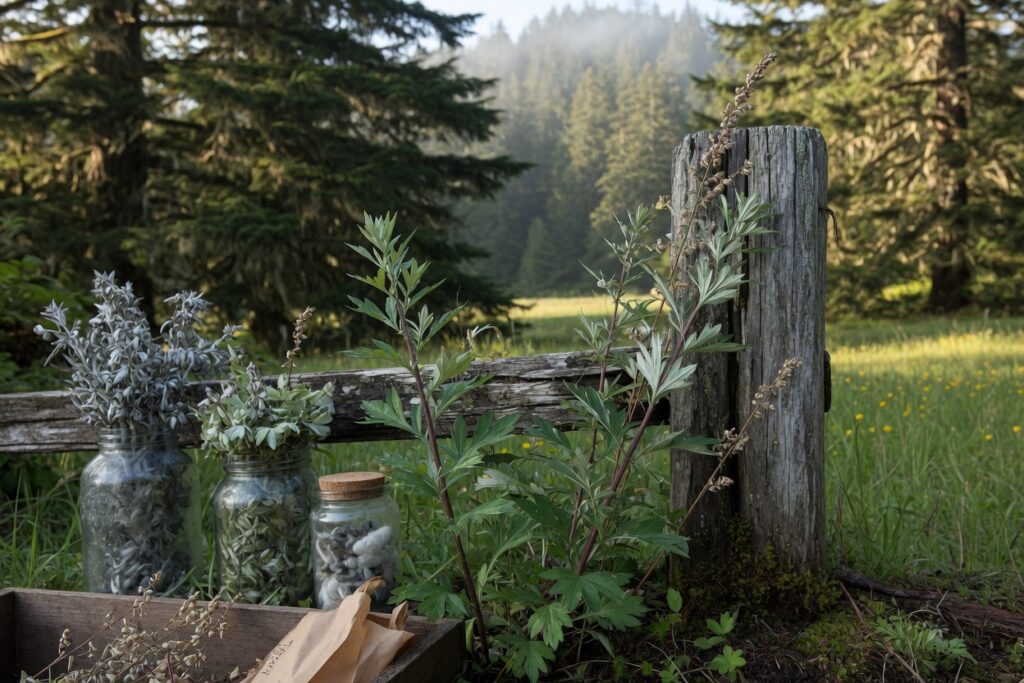
The gray-green plant along my cedar fence post came up on its own the spring after the neighbor’s bonfire, and when I brushed it, it smelled of sage and pencil shavings. It took me two seasons and three field guides to put a name to it. It was mugwort, and I had been mowing around it like a weed.
Mugwort is one of those plants that sits at the edge of the kitchen and the old herbal shelf. It is bitter, aromatic, and not for everyone, and it asks for more care than most of what I write about. Here is how I find it, cut it, and put it up, and where I think you should slow down.
You’ll also want sharp scissors or pruners, kitchen twine, and a paper bag. Nothing else is needed.
Know it before you cut it
Say this part plainly, once: never eat or prepare any wild plant on the strength of one book, one app, or one article, this one included. Check it against more than one reputable guide, and walk it with an experienced local forager if you can. When there is any real doubt, leave it standing.
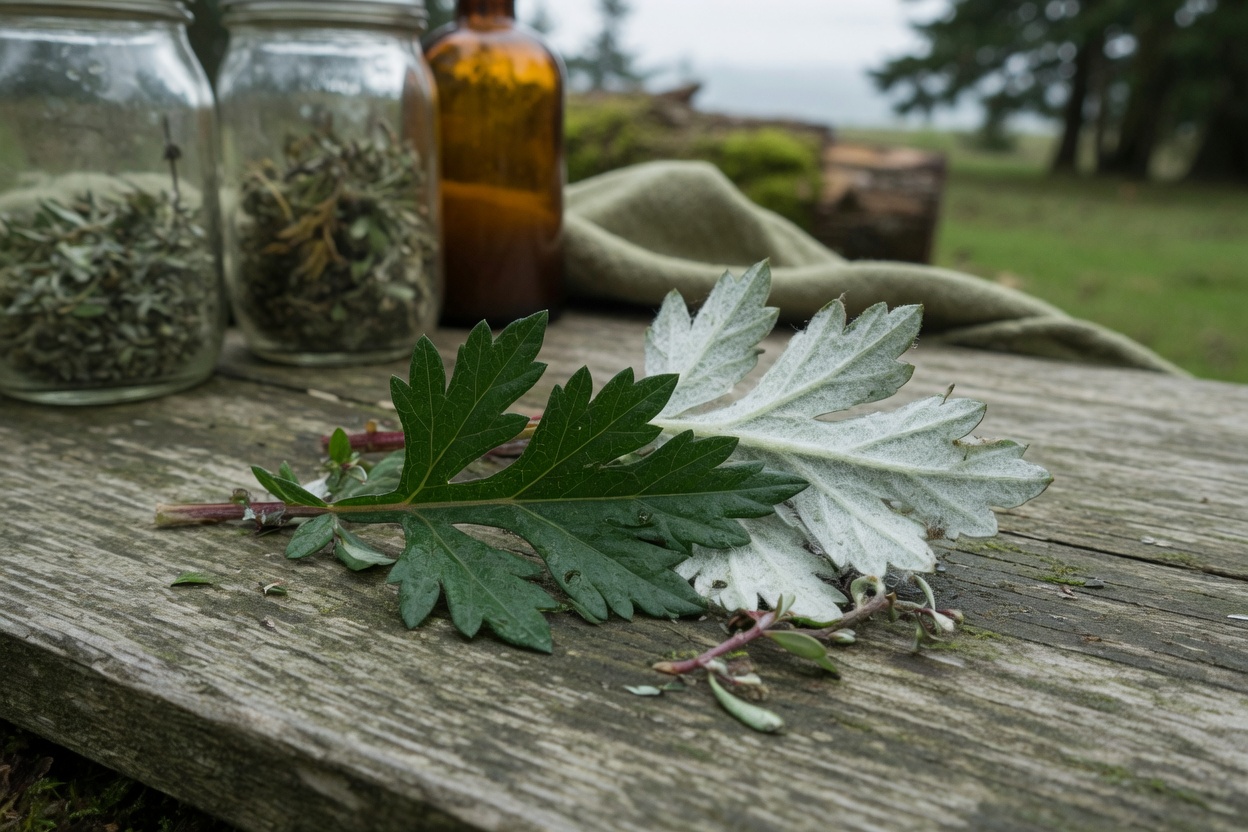
Out here on the west side of the Cascades the native one is Douglas’s mugwort (Artemisia douglasiana), and there is also an introduced common mugwort (Artemisia vulgaris) that has settled along roads and rail lines. They are close cousins and I treat them alike. Both stand two to five feet tall, with an upright, slightly reddish stem and leaves that are deeply lobed on the lower plant and simpler near the top. Turn a leaf over. The underside is pale, almost white, and felted like a soft cloth, while the top is a smooth, darker green.
The scent is the tiebreaker. Crush a leaf and you should get a sharp, sagey, slightly camphor smell. If you get nothing, or something rank and sour, put it down.
The look-alike that worries me most is ragweed (Ambrosia), which has similar lobed leaves but is green on both sides and has almost no fragrance. The other is wormwood and its relatives, which are silvery all over and much more bitter. If you cannot confirm the white underside and the scent together, you do not have mugwort.
Where and when to cut it
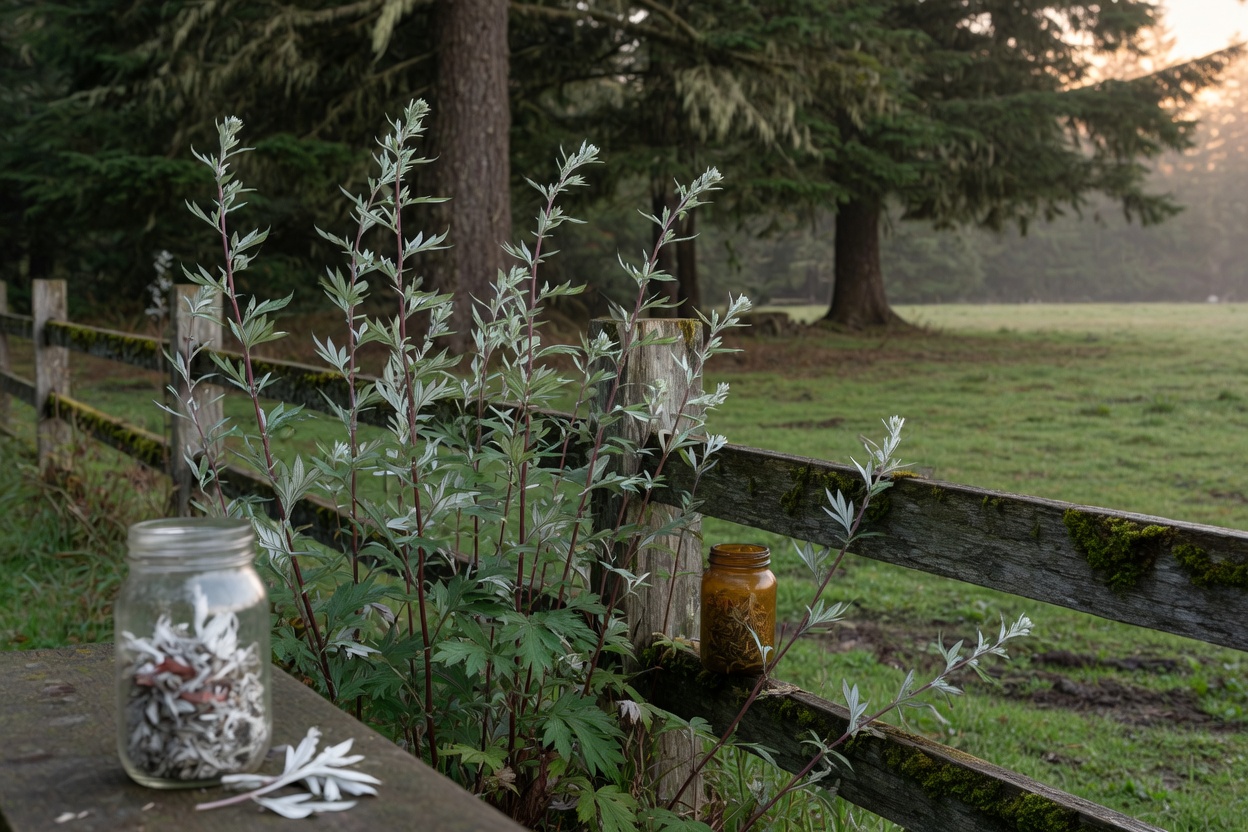
Mugwort loves disturbed ground, which is exactly why you should be fussy about where you cut. Skip road shoulders, ditches, rail beds, and any lot that might have been sprayed. I take mine from a back corner of my own property and from a neighbor’s pasture edge, with permission. Cut from the outer edge of a stand and leave most of it.
Spring is the time for tender young shoots and tops, when the plant is under a foot or so and the scent is mild. For drying, I cut leafy stems in early to mid summer, before the little brownish flower spikes open. After that the leaves toughen and the pollen starts to fly.
A word on pollen. Mugwort is in the daisy family, along with ragweed, and plenty of people react to it. If you get itchy eyes or a runny nose around it, that tells you something. Wear a long sleeve, cut on a still day, and go slow.
Drying and storing it
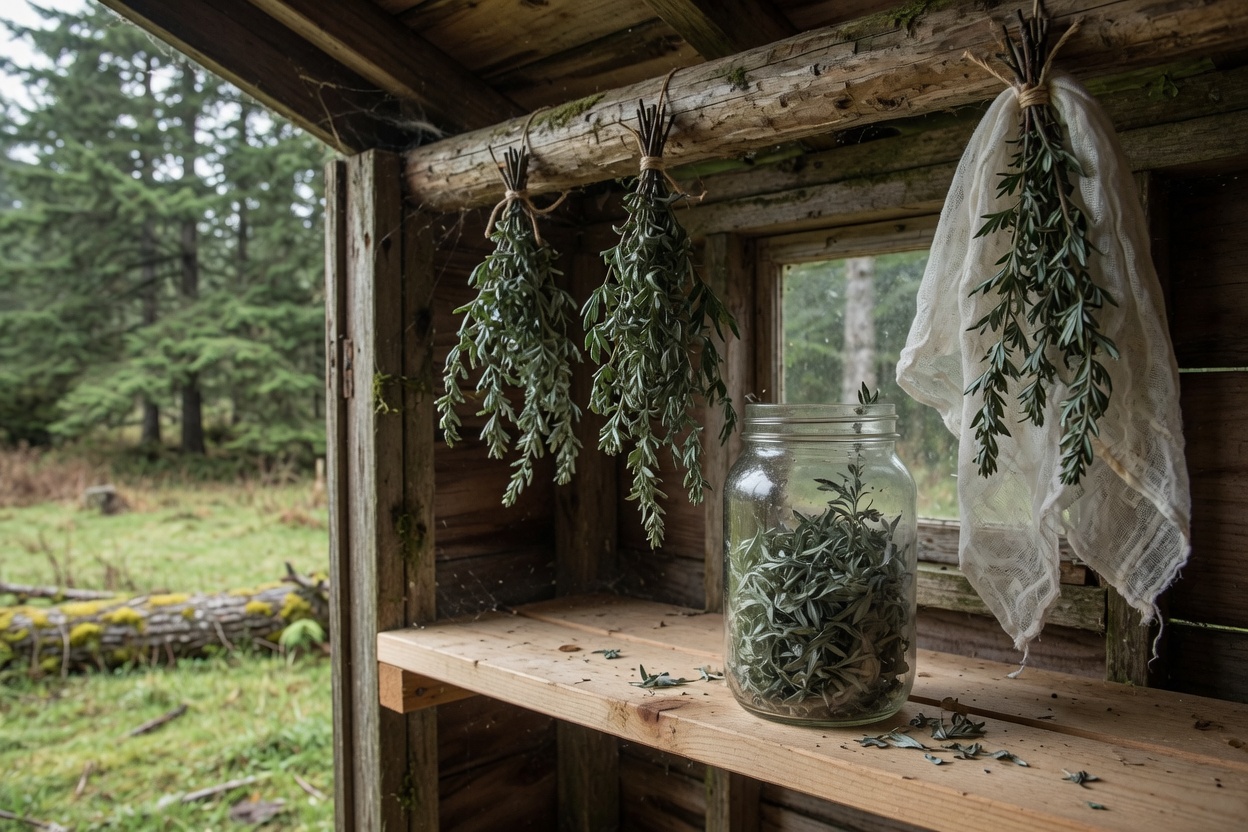
Tie five or six stems into a loose bundle with twine, slip it head-down into a paper bag, and hang it somewhere dry, shaded, and airy. I drape cheesecloth loosely over mine to keep dust off. It takes one to two weeks. The leaves are ready when they crumble without any give.
Strip them off the stems and pack them loosely, as whole as you can, in a wide-mouth jar. Crush it when you use it, not before. A strip of masking tape with the plant and the date saves a lot of guessing next spring. I’d rather point you to my notes in how to store dried herbs so they last than repeat them all here.
How it has been used

I’ll keep this to the traditional side, because that is all I can honestly offer. Mugwort has turned up for a very long time in European, Asian, and Native American practice, and the Pacific Northwest tribes knew the native plant long before my people arrived. I credit that and I do not claim it as mine.
In the kitchen, a few young leaves go a long way. It is strongly bitter, so people have used it much as one would use sage or bay, in a small amount, to flavor fatty meat, or in a spring rice cake in some Asian cooking. As a tea it is a bitter, aromatic cup that I find a little goes a long way.
Dried bundles are also burned as a smudge in some traditions, and tucked into pillows and sachets. I mention that as folklore. I do not make any claim that it treats or cures anything, and I do not give amounts. Traditional sources have long advised against it in pregnancy, so leave it alone if you are expecting, and talk to a qualified practitioner before using it for anything related to your health.
What I got wrong

My first batch was cut too late, in a wet August, and bundled too thick. It went gray and musty before it dried. Small bundles, a dry room, and an earlier cut fixed all of it. I also over-steeped my first pot of tea and drank about two sips. Bitter is not a polite word for it.
Learning the whole shelf
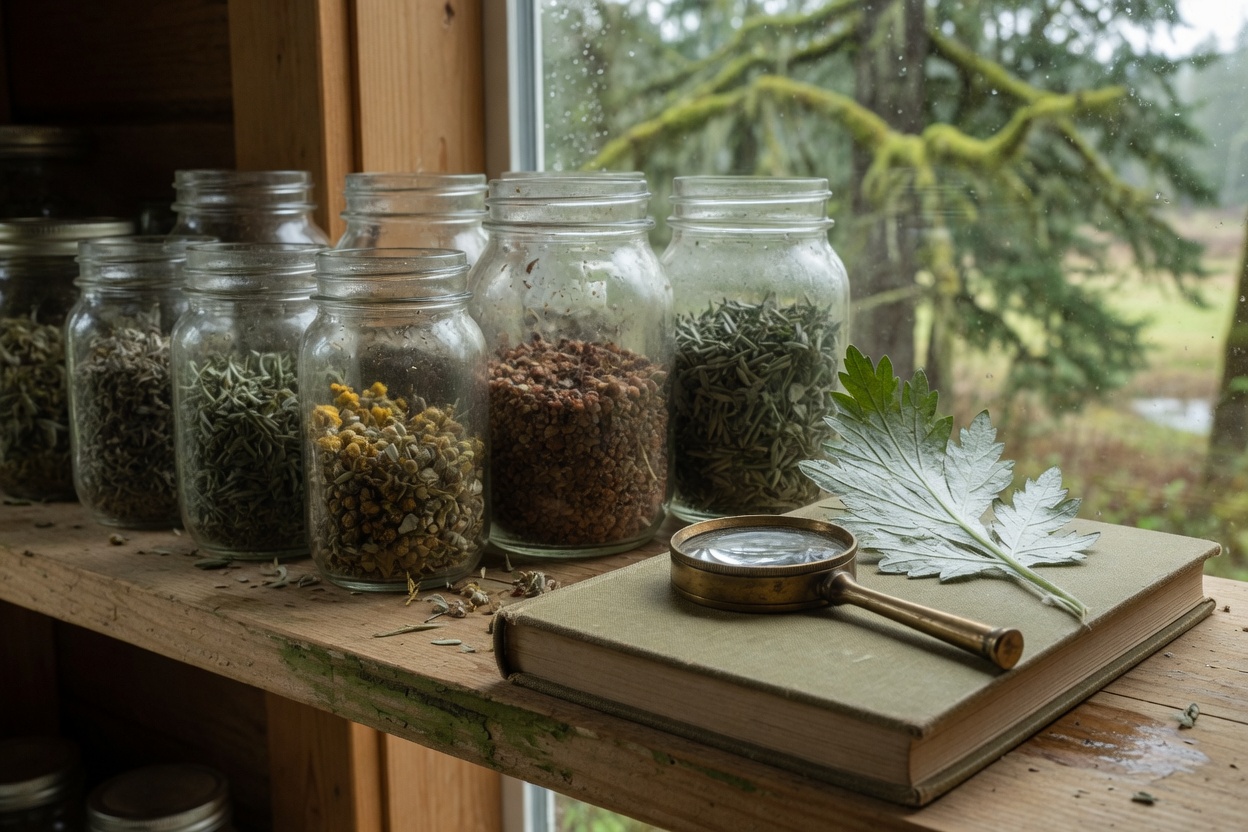
Mugwort is a small chapter. The larger skill is knowing a plant in every season, knowing which patch is safe and which only looks safe, and holding yourself to confirming before you use it. I go through that plant by plant in my book, Pacific Northwest Medicinal Plants: how to identify each one without guessing, when to gather, and how the people before us prepared it.
If this one interested you, my notes on how to forage and use thimbleberry leaf and how to make herbal tea from foraged plants make good next steps.
Learn it before you need it.
