How to Fish a Pond in the Wind: A Beginner’s Guide
A breezy day can be a good day to fish a pond. Learn where the fish go when the wind blows, how to rig and cast in it, and when to put the rod down safely.

Isaiah held his cap on with one hand and his rod with the other, squinting across a pond that looked like a hammered pewter plate, and asked me if we should go home. He was twelve, and he’d been waiting all week for that Saturday. The wind had come up out of the northwest right after breakfast, and to a boy, wind means the fish have quit.
I told him to put his cap in his pocket and walk with me to the other side. Twenty minutes later he had a bluegill on, and a grin I wish I could bottle. Wind is not the end of a fishing day. It just moves the day around, and once you know where it moves to, you’ll catch fish when other folks have gone home.
You’ll also want a cap that fits snug or a hat with a string, a jacket, and a few small hooks. The hooks live in your tackle box, and I’ll leave them there.
What the wind does to the water

A pond isn’t just still water. Wind pushes the top layer toward the downwind bank, and it carries along whatever is floating or drifting in it: bugs, seeds, tiny plants, and the little minnows that feed on them. That bank is where the food piles up, and where the bigger fish follow.
The wind also stirs the surface, which cuts the glare and hides you from the fish. A calm, bright pond is a hard place to sneak up on a bluegill. A rippled one is easier. The water mixes with air, too, and fish often feel more comfortable feeding in it.
So when the wind comes up, I do the opposite of what a beginner wants to do. I walk to the bank the wind is blowing toward.
Where to stand
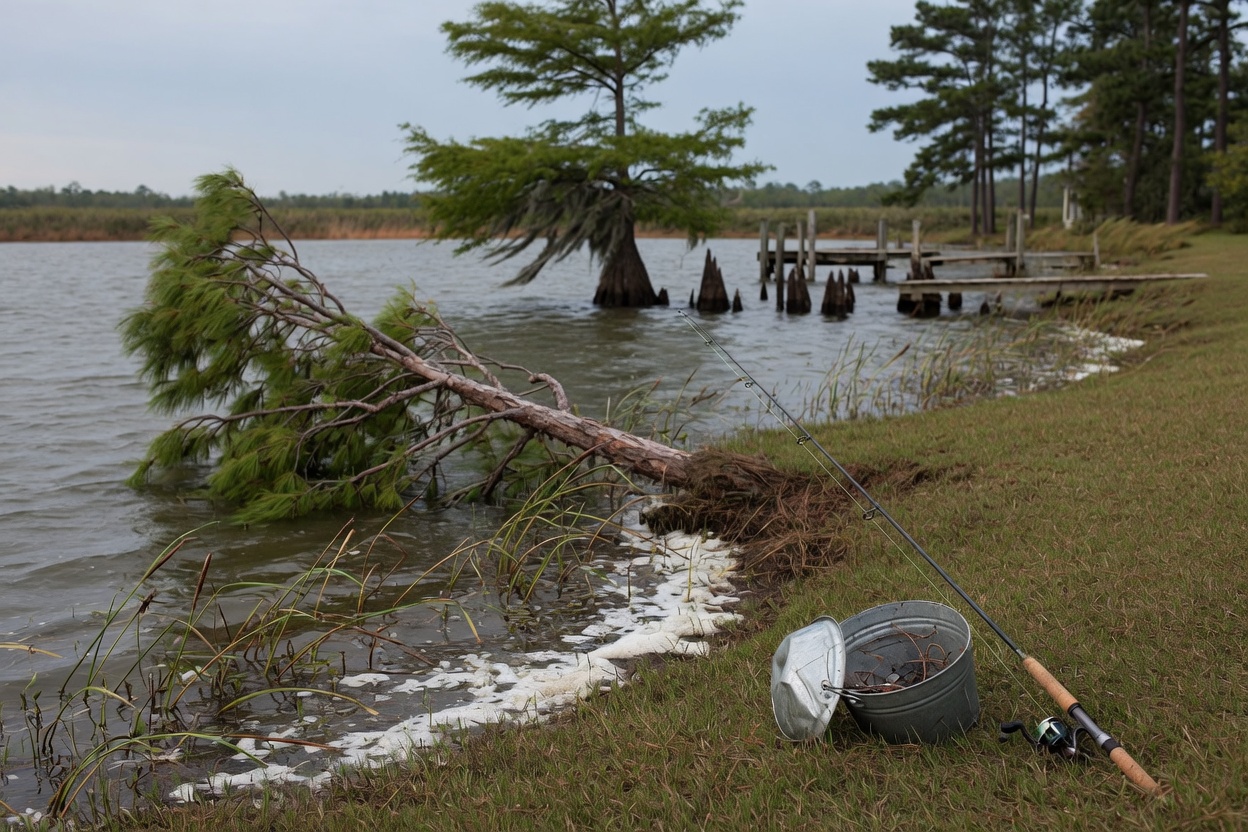
Find which way the breeze is going. Watch the ripples travel, or toss a bit of grass in. The shore those ripples are heading for is your downwind bank. That’s where I start.
Look for spots on that bank that give fish a reason to stay: a fallen limb, the edge of the weeds, a point sticking out, or a corner where leaves and foam collect. Foam and floating debris are signs of where the current is dropping food. I’ve caught more fish within sight of a foam line than almost anywhere else on a windy day.
If the wind is too strong to fish that bank comfortably, try a spot where the shore bends and gives you some shelter, like a cove or the lee side of a tree line. The fish may still be there, and you won’t be fighting your line.
How to rig for wind
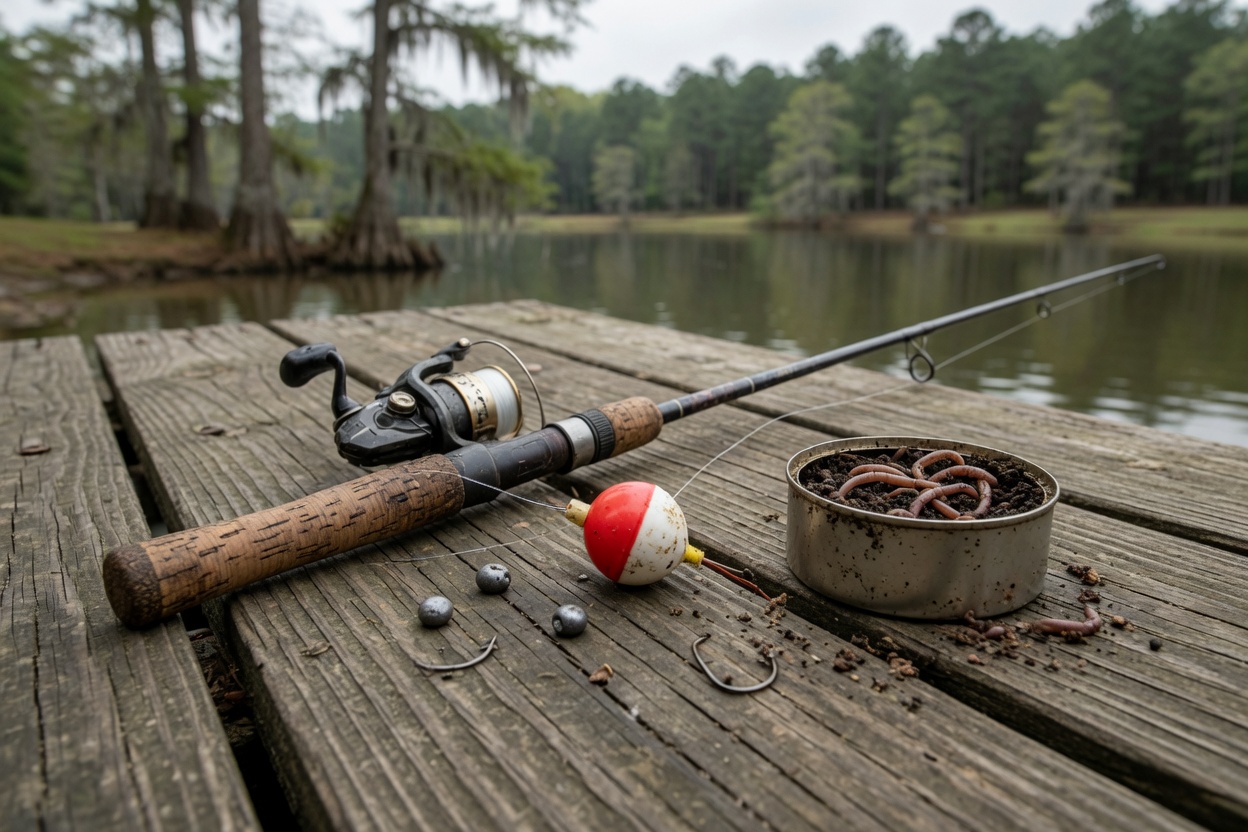
Keep it simple, and keep it heavy enough to hold. In a breeze, a light rig gets pushed around, and the bobber drags away from where you cast it.
Tie on a small hook, then clip a snap-on float a foot and a half to two feet above it. A small split shot on the line, a few inches above the hook, helps hold the bait down against the drift. If you’re not sure how to rig the bobber itself, I wrote the whole thing out in how to rig a bobber for bluegill and crappie.
A worm is still the best bait I know, and I’ve written about it in how to fish with worms for beginners. The wind blows worms and bugs into the water, so fish are watching the surface for something to eat.
The spincast combo I mentioned earlier handles a breeze better than an open-face reel, because the line stays inside the cover and doesn’t whip around. I’ll be honest about its limits: it won’t throw a long cast into a stiff headwind, and a more skilled angler will want something better in time. For a beginner on a farm pond, it’s what I’d hand a child. The snap-on floats can slide on a hard cast, so give each one a tug after you clip it on.
Casting in a breeze

Don’t fight the wind. Use it. Cast with the wind at your back or quartering across you, and let the breeze carry the bobber a little. A short, easy cast works better than a big one.
Keep the rod tip low after the cast, and watch your line. Wind will put a belly in it, a wide curve that makes it hard to feel a bite. Reel in the slack until the line is fairly straight to the bobber. When the bobber dips and stays down, lift the rod tip and reel.
If the bobber keeps drifting away from the bank where you want it, reel in and cast again a little upwind of the spot you’re aiming for. It’s a small thing, and it makes a difference.
Safety when it blows
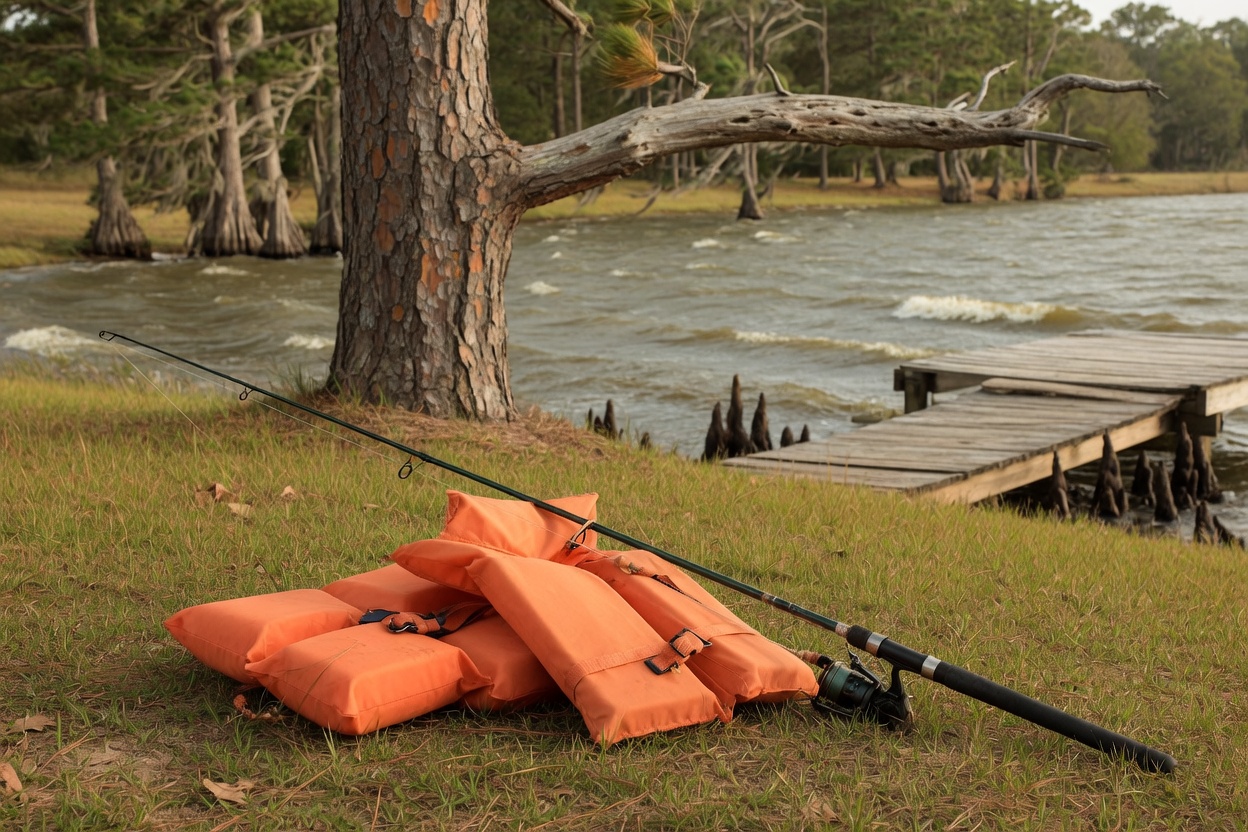
Wind brings its own hazards, and I take them seriously.
– Watch your hook. A gust can swing a rig into your face or your child’s. Keep the hook secured in a rod guide when you walk, and have everyone stand a good arm’s length apart when casting.
– Keep a child back from deep water. Wind makes for a slippery, uneven bank and a nervous boy. A life jacket near deep water is a good rule, and so is a short outing. My tips for teaching a young one are in how to teach a kid to fish.
– Look up. Dead limbs and old pines come down in wind. Don’t stand under a tree that is creaking, and don’t park under one.
– Know when to quit. If the wind turns violent or you hear thunder, you’re done. Pick up and go to the truck. No fish is worth a falling limb or a lightning strike.
Dress for it

Wind chills you faster than still cold. A windbreaker over a warm layer does more than a heavy coat alone. A cap that stays on, gloves you can work a knot in, and a thermos in the truck will keep a beginner out there long enough to catch something. A discouraged child leaves; a warm one doesn’t.
Know the rules and keep what you’ll eat

Know your state’s rules. Most require an adult license and set size and creel limits, and your wildlife agency’s website will tell you what applies on your water. Keep what you’ll eat and put the rest back gently. If you’re wondering what to do with a mess of bream afterward, I walk through the next step in how to clean a fish for beginners.
Reading the day the old way

My daddy watched the trees and the clouds, and he could tell you which bank would be good before we’d left the truck. Wind was one of the signs he read. If you’d like to learn that rhythm, I put it down in best days to fish: reading the signs.
If there’s a youngster in your life who’d like to keep track of what they catch, my journal My First Catch is made for them: My First Catch. And if you’d like to plan your trips by the moon and the weather, I put together a free guide. Grab the Best Days to Fish starter kit.
Read the signs.
