How to Add Electrolytes to Chicken Water (and When Not To)
When electrolytes help a backyard flock, how to mix them in chicken water the safe way, which waterers work best, and when to skip them and call a vet.

The first hen I ever truly worried over was an Easter Egger named Pumpkin, standing in the corner of the run one July afternoon with her beak open and her wings held out from her body. It was ninety-four degrees in Knox County. I did what most new keepers do. I panicked, ran inside, and typed “electrolytes for chickens” into my phone with wet hands.
I’ve kept a flock for years now, and electrolytes are one of those things people either overuse or have never heard of. They’re a useful tool for a few specific days a year and a bad habit the rest of the time. Here is how I use them, how I mix them, and when I leave them in the cupboard.
You’ll also want a clean one-gallon jug for mixing and a permanent marker to write the date on it. Nothing fancy.
What electrolytes are, in plain terms
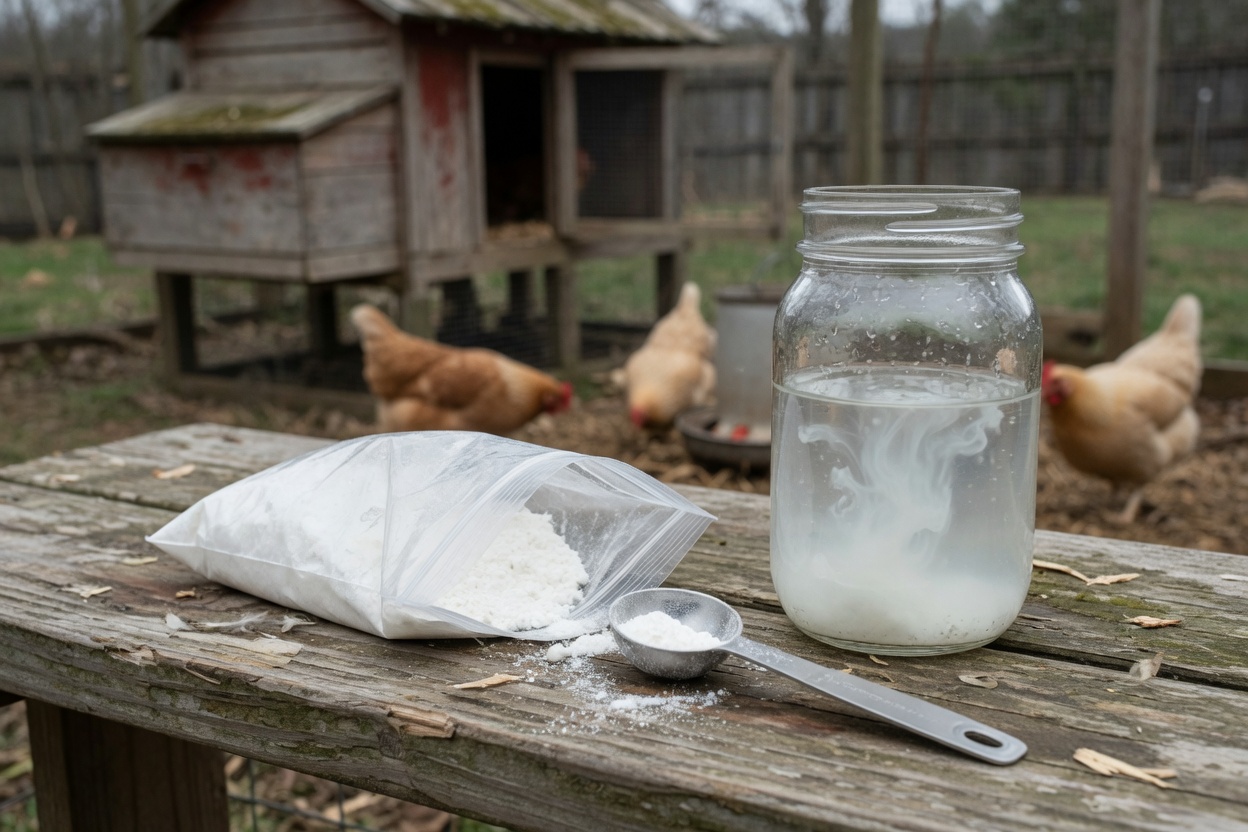
Electrolytes are salts and minerals, mostly sodium, potassium, and chloride, that a bird’s body uses to hold water and move it where it needs to go. A chicken that’s stressed, hot, or off her feed can lose them faster than she takes them in. A powder made for poultry puts some back in her water, usually with a little sugar to make it more appealing.
That’s all they are. They aren’t medicine, they don’t cure anything, and they don’t replace plain water. They’re a supportive step on a hard day, and the key word is supportive.
When I reach for them
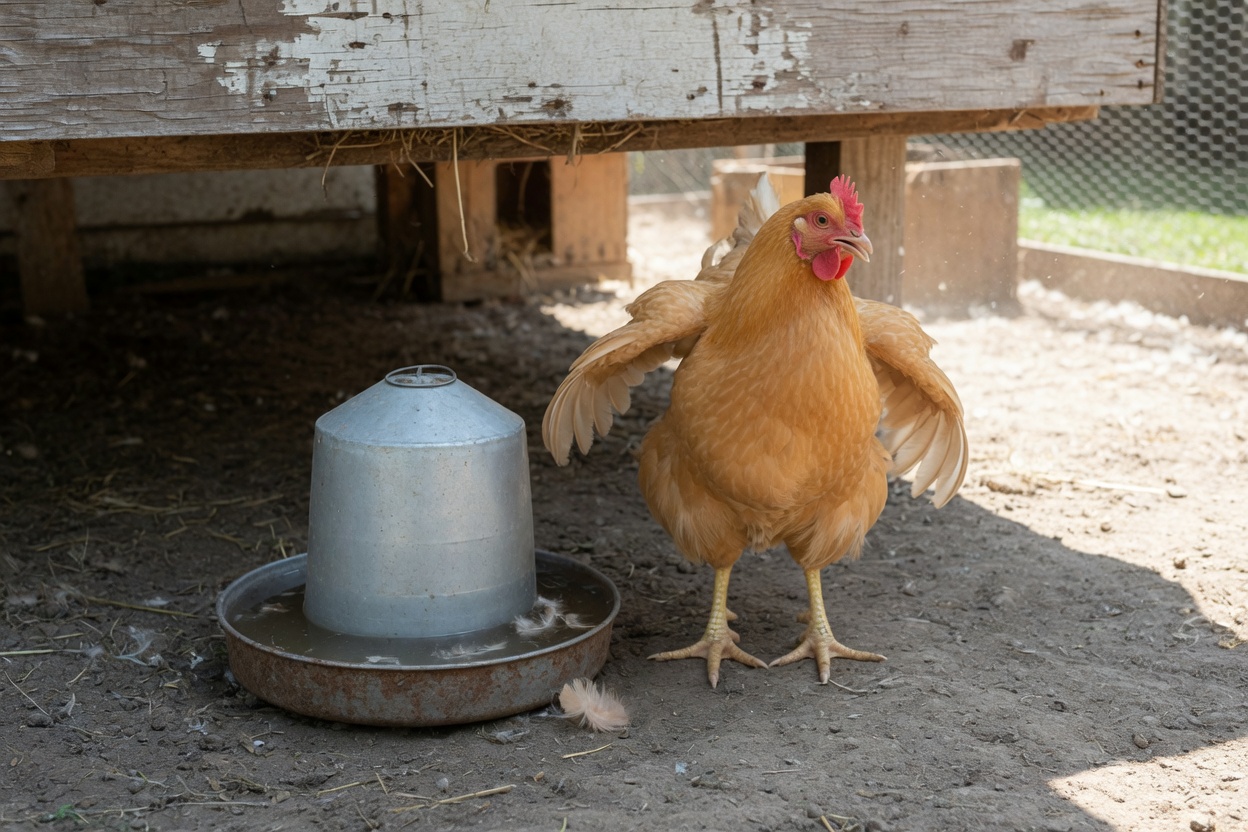
I use them in a handful of situations, and I use them for a day or two, not a season.
Heat. On the days when the forecast tops the mid-nineties, I put an electrolyte waterer out alongside the plain one. I wrote more about spotting trouble in 5 signs your hens are overheating, and the short version is panting, drooping wings, pale combs, and a hen who stops eating.
Shipping stress. Day-old chicks that arrive by mail have been through a lot. A mild electrolyte solution in the first day or two helps them start drinking. I go through the details in how to keep chicks hydrated in the first week.
After a stressful event. A move to a new coop, a bad scare from a hawk, a hen who’s recovering from a fight or a hard molt. A day of electrolytes can help get her drinking again.
Cold-weather water refusal. If a hen has gone off her water after an ice storm or a long freeze, a little electrolyte water can tempt her to drink.
How to mix it
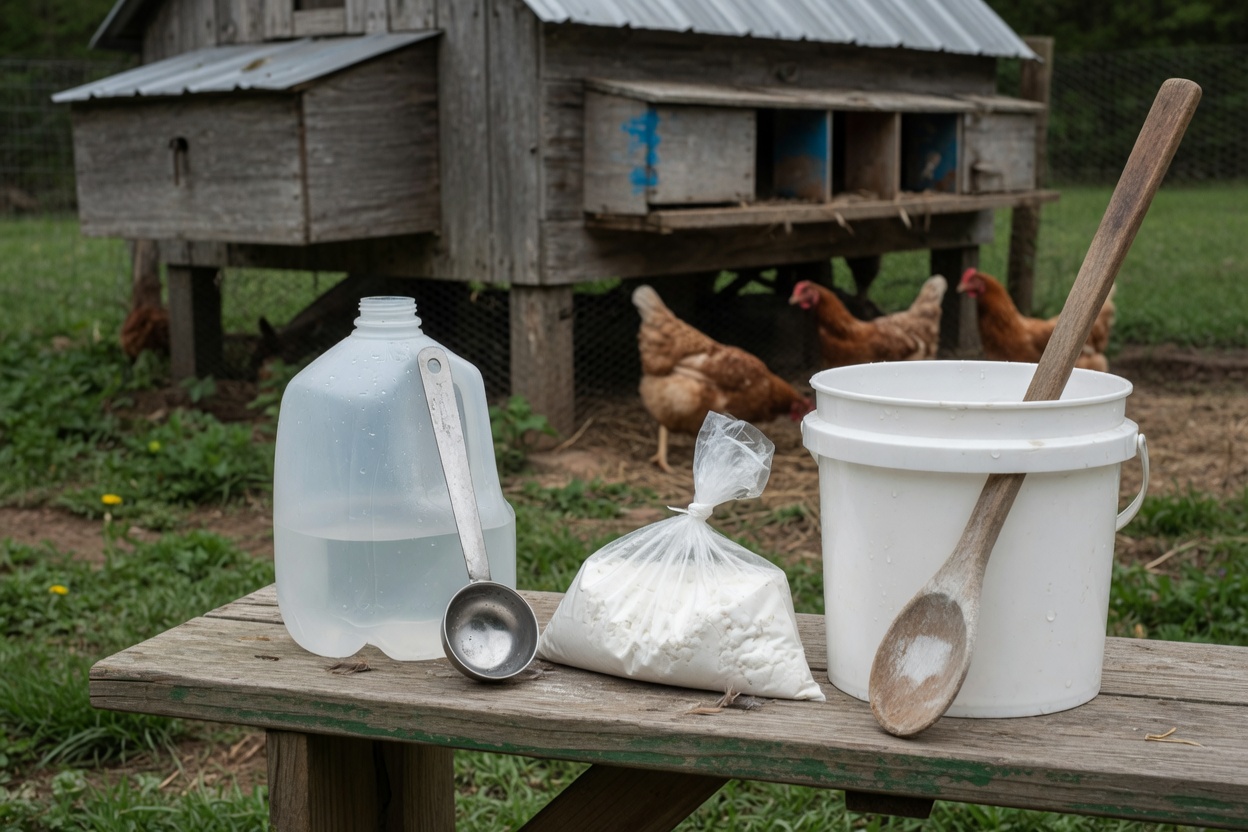
Read the label on your product and follow it. I say that because brands differ, and I’d be guessing if I gave you a number. Most powders are mixed into a gallon of clean, cool water. Mix it fresh in a clean container, stir until it’s dissolved, and pour it into a clean waterer.
A few rules I keep:
– Always offer plain water too. Put the electrolyte water in one waterer and fresh plain water in another. Birds that don’t want the salty taste need somewhere else to drink.
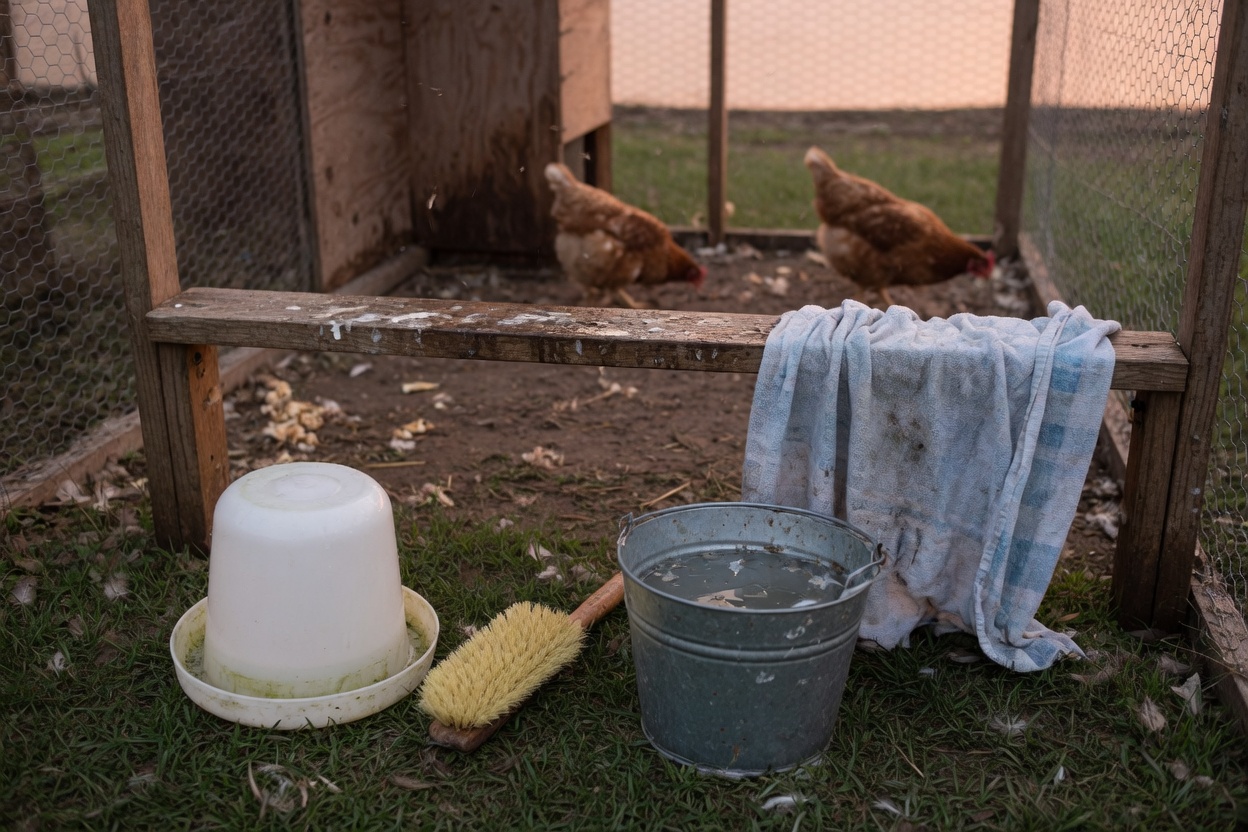
– Mix fresh each day. Sugary water goes slimy quickly, especially in the heat. Dump what’s left, scrub the waterer, and refill.
– Use a metal or smooth plastic waterer you can scrub. The galvanized fount wipes out in a minute. I only put electrolytes in a waterer I can get completely clean.
– Don’t stretch it. More powder isn’t better. Too strong a mix can make birds drink less, not more.
A note on waterers

Once you add sugar to water, bacteria love it. A nipple-and-cup waterer keeps droppings and bedding out of the water, which makes it the better choice for a mild electrolyte mix. The cup collects a small amount, and the hens learn to tap it. It does take chicks a day or two to figure out, so for brand-new chicks I use a shallow dish at first and move to the nipple style later. My comparison of several types is in best chicken waterers for summer.
I don’t love electrolytes in a waterer that can’t be scrubbed. Skip the jug with the narrow neck, and skip anything you can’t reach a brush into.
When not to use them

Here is the part nobody puts on the label. Electrolytes aren’t for every day. A healthy flock on a good layer ration with clean water doesn’t need them. Feeding them constantly can upset the balance of what a hen eats and drinks, and it makes the water a place for germs to grow.
Don’t use them as a fix for a sick bird. If a hen is lethargic, gasping, has a swollen crop, runny droppings that go on, or has stopped eating for more than a day, electrolytes won’t solve it. That’s the time to call a chicken-savvy vet or your county extension office. I’m a keeper with a lot of mud on my boots, not a veterinarian. I stick to over-the-counter products and I keep the list short, and you can see my full list in chicken first aid kit essentials.
And don’t give electrolytes to a bird that’s already struggling to swallow or is limp and unresponsive. A bird in that state needs help from someone with training, fast.
What I got wrong
That first July, I mixed Pumpkin’s electrolytes far too strong, because I figured more was kinder. She drank less, not more, and I spent the afternoon puzzled. A weaker mix and a second dish of plain water, plus shade and a cool, damp towel under the perch, did what the strong mix couldn’t. She was scratching in the dirt by dinner.
I’ve also forgotten to dump a sugary waterer overnight and found it slick and cloudy the next morning. Now I rinse every evening. It takes two minutes, and my hens are the better for it.
The short version

Electrolytes are a tool for hot days, hard arrivals, and bad scares. Mix them to the label, offer plain water alongside, keep the waterer clean, and stop after a day or two. When something looks truly wrong, ask a professional.
If you’re putting your own first-year kit together, I walk through the whole year of flock care, heat, cold, chicks, and all, in my book, Raising Backyard Chickens for Beginners. It’s the book I wish I’d had on that hot July afternoon.
Know your girls.
