How to Grow Tomatoes in Containers on a Small Balcony
You can grow tomatoes in containers on a balcony — really. Here's the pot size, the right variety, and the watering routine that gets you actual fruit, not just a plant.
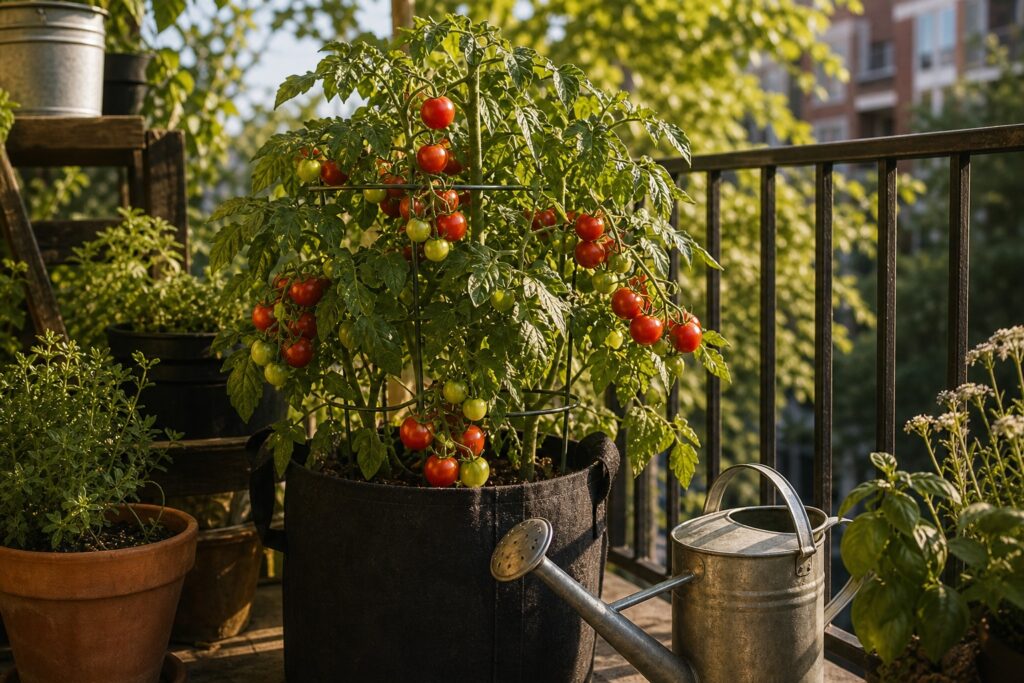
You don’t need a yard to grow a tomato. You need a pot, six hours of sun, and a little stubbornness about watering. My first real tomato came off a fire-escape railing in a cracked nursery pot, and it was one sun-warm cherry tomato that I ate standing up, and I was hooked. Six seasons on a Portland balcony later, I grow more tomatoes than my husband and I can eat, all of them in containers.
Here’s the thing nobody mentions when they hand a beginner a tomato seedling: tomatoes are thirsty, hungry plants, and a pot is a small, demanding world. Get a few things right at the start and they’re genuinely easy. Get them wrong and you’ll spend the summer nursing a sad yellow stick. Let me save you my first two summers.
Pick a variety that wants to live in a pot
This is the single biggest decision, and it happens before you ever touch soil. Tomatoes come in two habits. Determinate (also sold as “bush,” “patio,” or “dwarf”) varieties stay compact, set most of their fruit in a few weeks, and are happiest in a container. Indeterminate varieties are vines — they keep growing and fruiting until frost, they get tall and unruly, and they need a big pot and serious support.
For a balcony or a railing, start with a determinate or dwarf type. Look for names like ‘Patio,’ ‘Bush Early Girl,’ ‘Tiny Tim,’ or any cherry tomato labeled “bush” or “container.” Cherry and grape tomatoes are the most forgiving of all — they fruit early, fruit heavily, and shrug off the little stresses that make a big beefsteak sulk. If you only have room for one pot, make it a bush cherry. You’ll get a hundred little tomatoes off a single plant on a sunny rail.
You can grow an indeterminate vine in a container too — I do, in my biggest pots — but save it for your second season, once watering is a habit.
Give the roots more room than you think
Tomatoes fail in containers more from cramped roots than from anything else. A tomato in a one-gallon nursery pot will flower, set two sad fruits, and quit. Go bigger than feels reasonable.
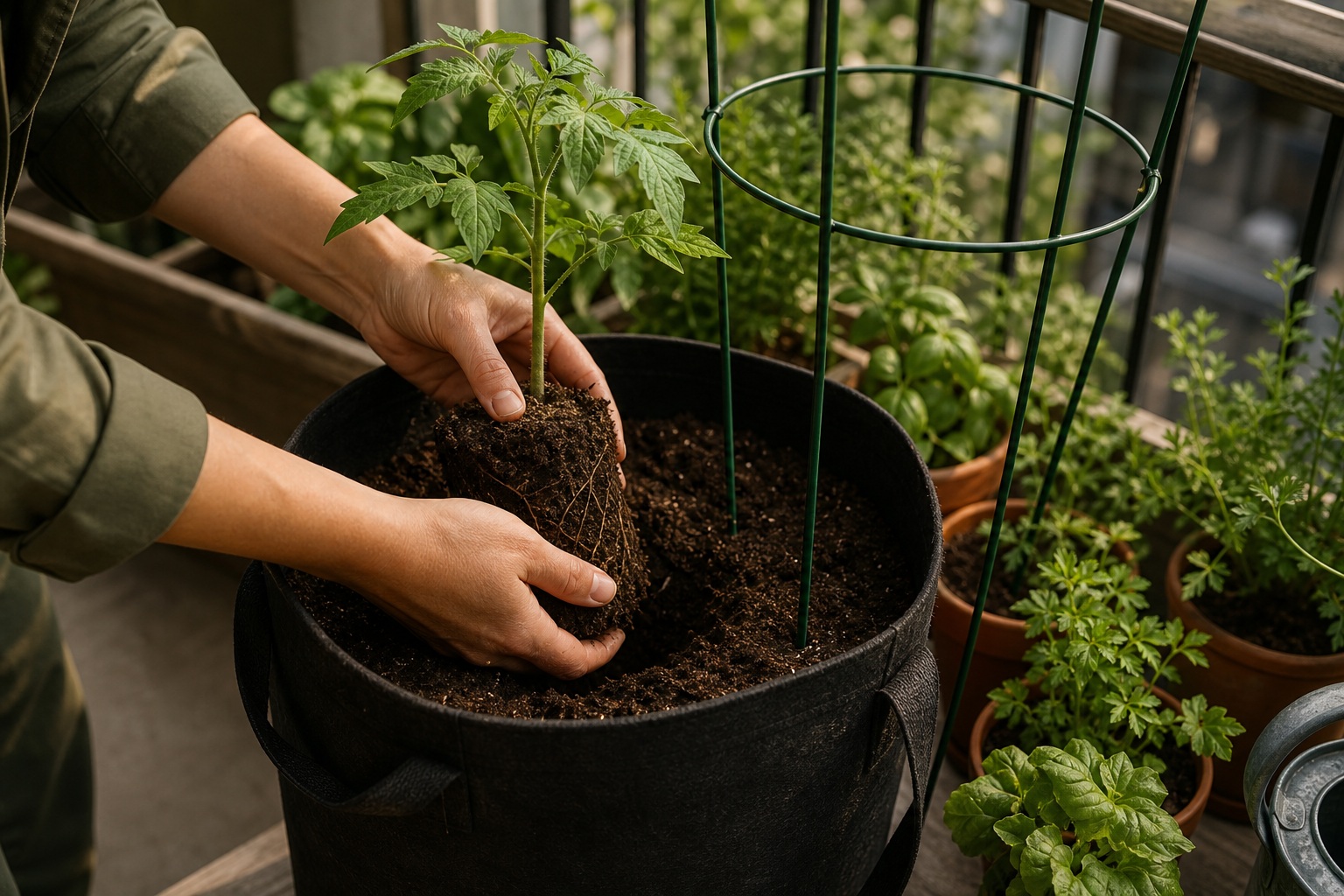
My rule: five gallons minimum for a dwarf or bush variety, ten or more for an indeterminate vine. That’s a pot at least 12 inches across and as deep, and bigger is genuinely better — more soil holds more water and more nutrients, which means fewer crises in a heat wave. This is exactly where I reach for fabric grow bags. They’re light enough to move, they fold away over winter, and the breathable sides “air-prune” the roots into a dense, healthy mass instead of letting them circle the wall of a hard pot. A 7- or 10-gallon bag is a near-perfect tomato home.
Fill it with potting mix, never garden soil or topsoil — bagged garden soil packs down hard in a container, suffocates roots, and drains terribly. A good light potting mix is the difference between a thriving plant and a struggling one, every single time.
Sun is not negotiable
Tomatoes are sun gluttons. They want at least six hours of direct sun a day, and eight or more is better. This is the one thing you can’t fix with technique. Before you plant, actually watch your balcony for a day and count the hours the spot gets real, direct sun — not bright shade, sun.
If you’ve got six-plus hours, you’re in business. If your space tops out at four, grow leafy greens and herbs instead and save yourself the heartbreak; a tomato in too little sun grows tall and leafy and never gives you fruit. South- and west-facing rails are gold. Put your tomato in the sunniest spot you have and don’t be precious about it.
Water consistently — this is where pots are won or lost
Here’s the part that takes real attention: containers dry out far faster than the ground, and tomatoes punish inconsistent watering. Let a pot swing from bone-dry to soaked and back, and you get cracked fruit and blossom-end rot — that ugly sunken brown patch on the bottom of the tomato. It looks like a disease. It’s almost always a watering problem.
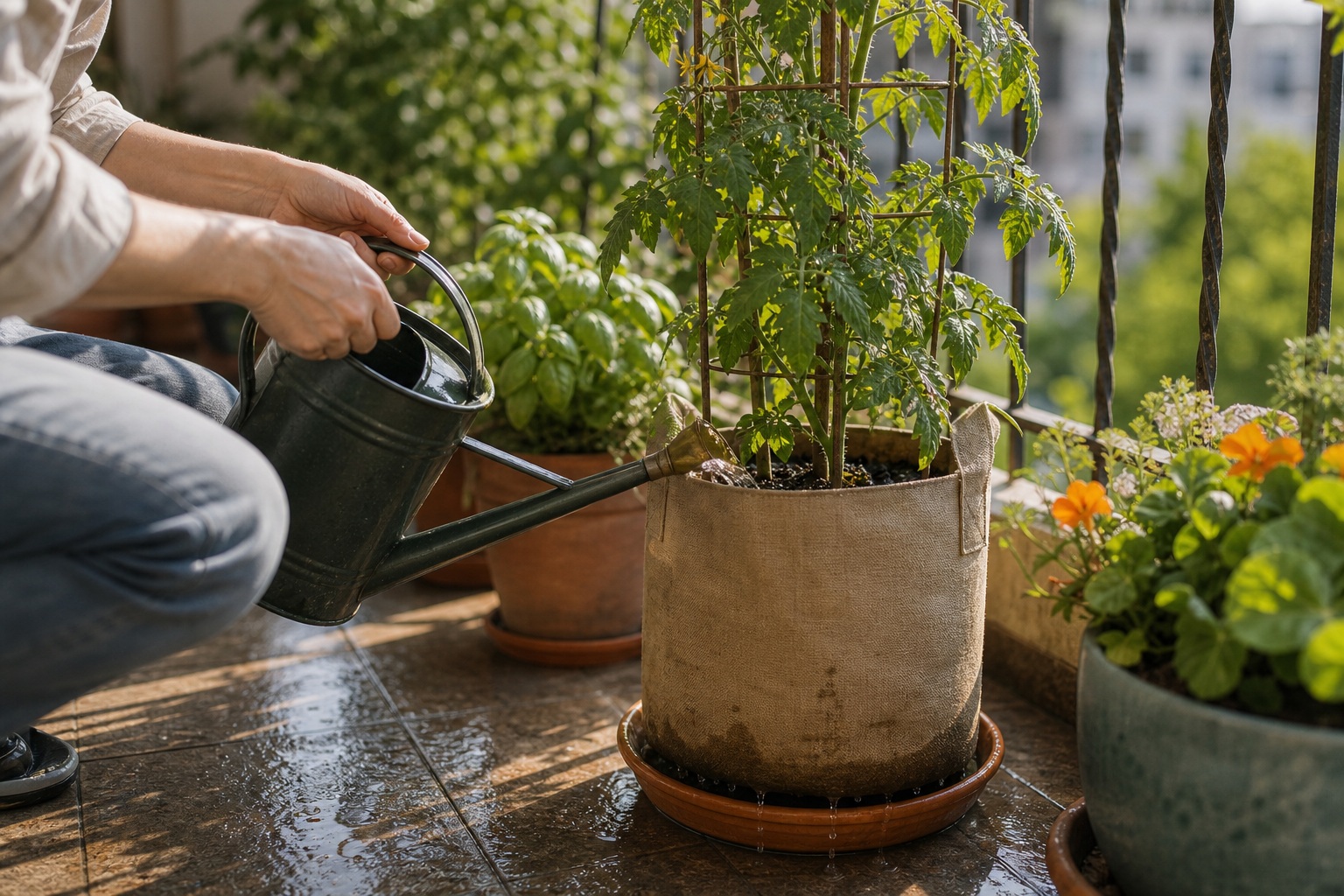
So water deeply and regularly. In summer that means every morning, and often again in the late afternoon during a hot stretch, until the water runs out the bottom. A long-spout can lets you put water right at the soil line under the leaves and reach the back pots without soaking the foliage (wet leaves in the evening invite disease).
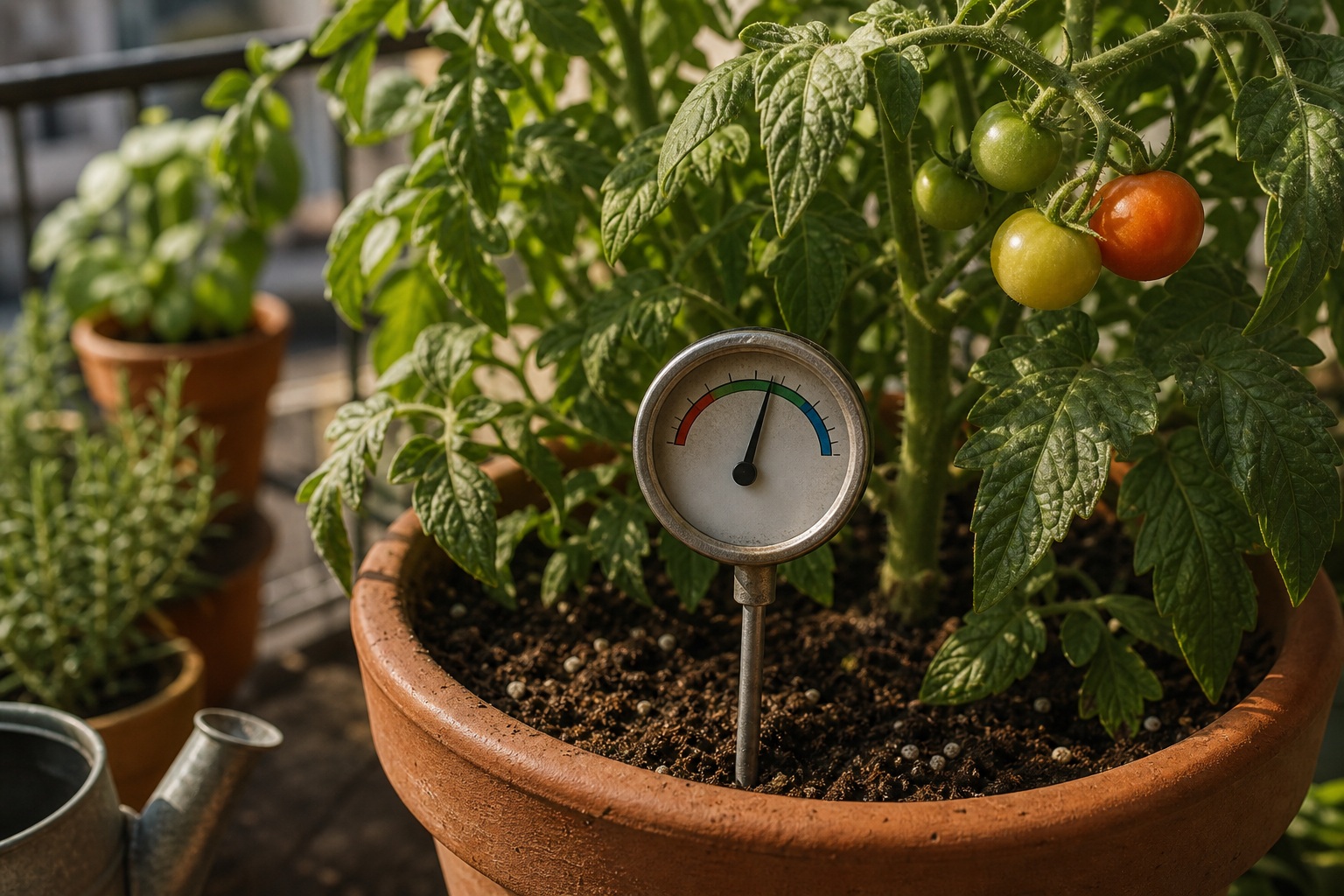
Two pieces of gear make consistency much easier on a working schedule. A soil moisture meter settles the daily question of whether a deep pot is actually dry at root level or just hot on top — I overwatered far more tomatoes than I ever underwatered before I started using one. And for the pots I can’t babysit, a self-watering planter with a reservoir in the base keeps moisture steady from below, which is exactly the even supply a tomato wants. It won’t carry a big vine through a four-day heat dome on its own, but it smooths out the daily ups and downs that cause most of the trouble.
Feed them, and hold them up
A tomato in a pot eats through the nutrients in its mix in a matter of weeks, because every watering washes a little out the bottom. Mix a slow-release organic fertilizer into the soil at planting, then start a regular liquid feed — a tomato or all-purpose food, diluted, every week or two — once the first little fruits set. Hungry container tomatoes go pale and stop producing; a fed one keeps cranking until the weather turns.
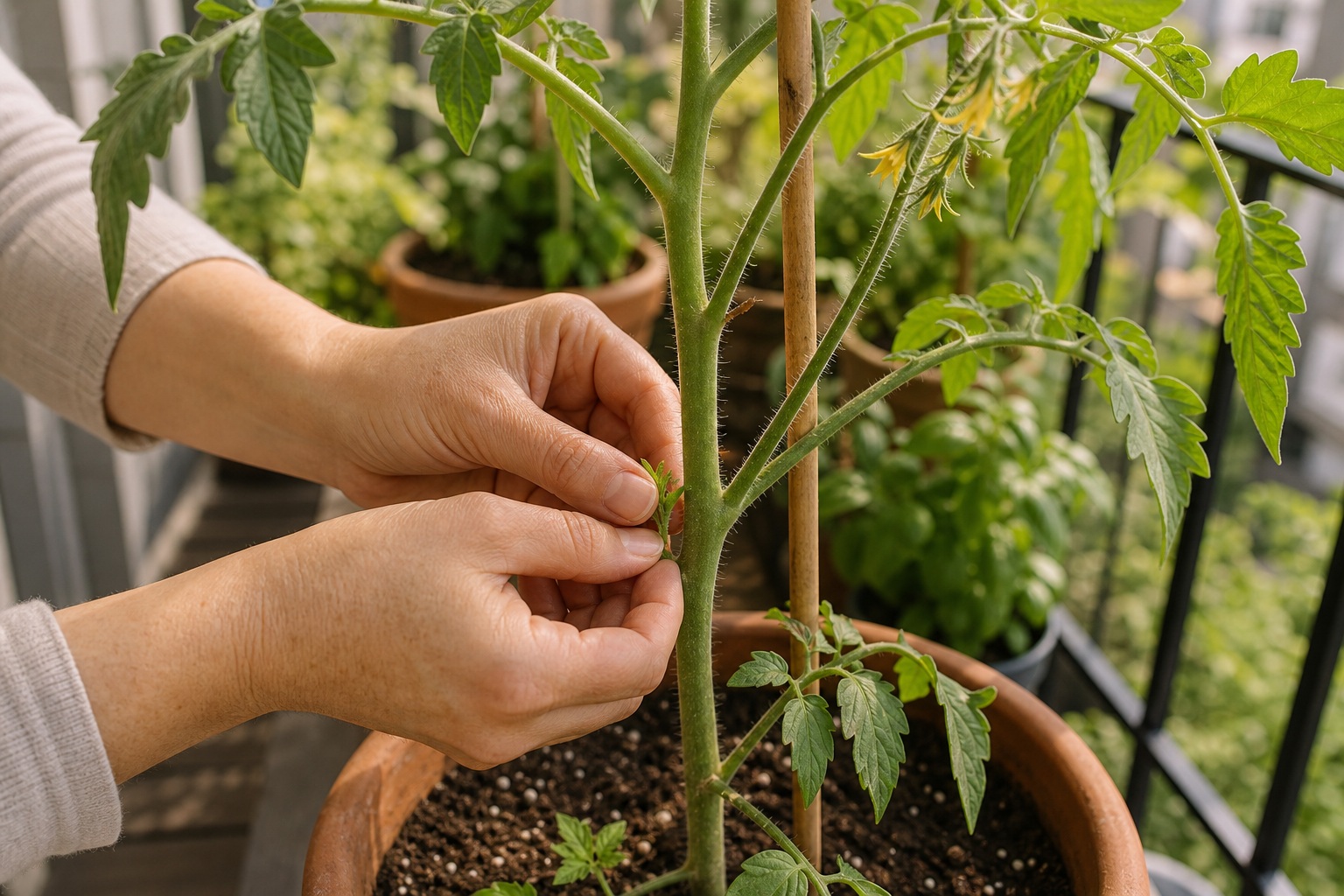
And give it support from day one. Even a bush tomato gets top-heavy and sprawls once it’s loaded with fruit. Set a cage or a sturdy stake into the pot when you plant, while you can still do it without tearing roots — putting it in later, around an established plant, always damages something. Tie the main stems loosely as they grow. If you planted an indeterminate vine, also pinch out the little “suckers” that sprout in the crook between the main stem and a branch; it keeps the plant manageable and the energy going into fruit.
You’ll get there
Right variety, big enough pot, full sun, and steady water — that’s the whole game. Do those four things and a balcony tomato is honestly hard to mess up. Skip one and the others can’t save it. Start with a bush cherry in a 7-gallon grow bag in your sunniest corner this summer, and you’ll be eating sun-warm tomatoes off your own railing in a couple of months.
I go deeper on building a small-space garden that actually feeds you — what to grow, in what size container, and how to keep it all alive through a hot Northwest July — in Small-Space Big Harvest. This post gets you one good tomato plant. The book gets you a balcony full of them. (Otto, who is convinced every ripening cherry tomato is owed to him, fully endorses this plan.)
