How to Make Your First Herbal Salve, Step by Step
A step-by-step guide to making your first herbal salve the old folk way — infusing the oil, the beeswax ratio I use, and how to store it so it keeps for a year.
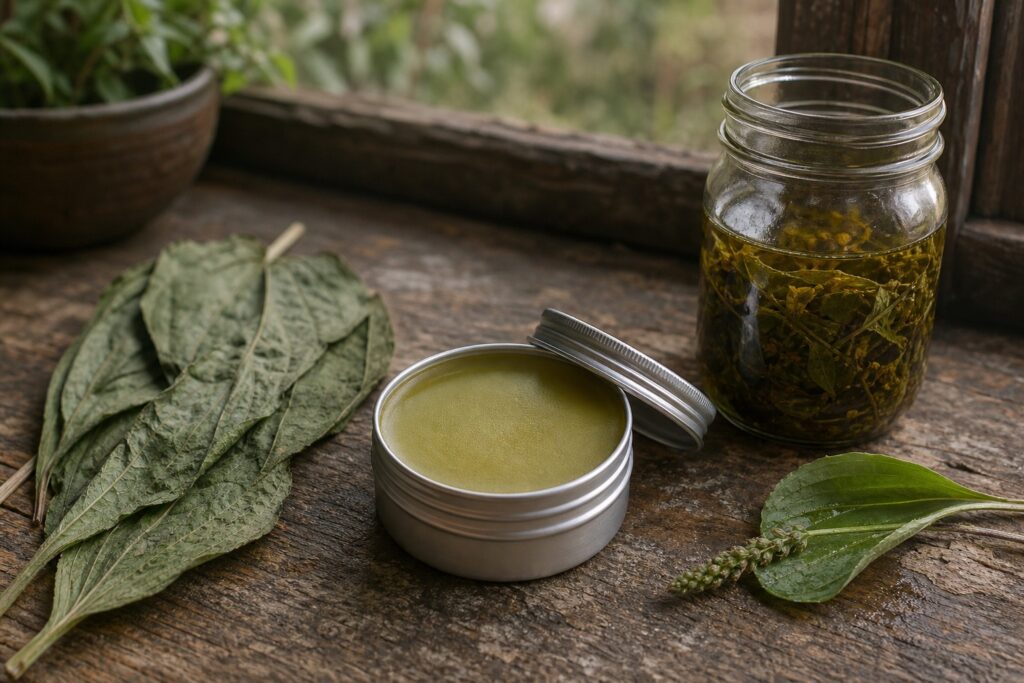
A salve is nothing more than oil that’s had a plant steeped in it, thickened with a little beeswax so it stays put on your skin instead of running off. That’s the whole of it. If you can make a cup of tea and melt butter without burning it, you already have every skill a salve asks of you.
I learned this at my grandmother’s elbow on the Olympic Peninsula, where the damp gets into everything and a tin of plantain salve lived on every windowsill. I’ve been making it the folk way — by eye, by the warmth of the back of the stove — for most of thirty years now. What follows is exactly how I’d walk a neighbor through their first batch standing in my kitchen. No promises about what it’ll do for you; that’s not my lane, and it isn’t the law’s either. Just the old method, the way it’s been done a long time.
Start with the plant and the oil
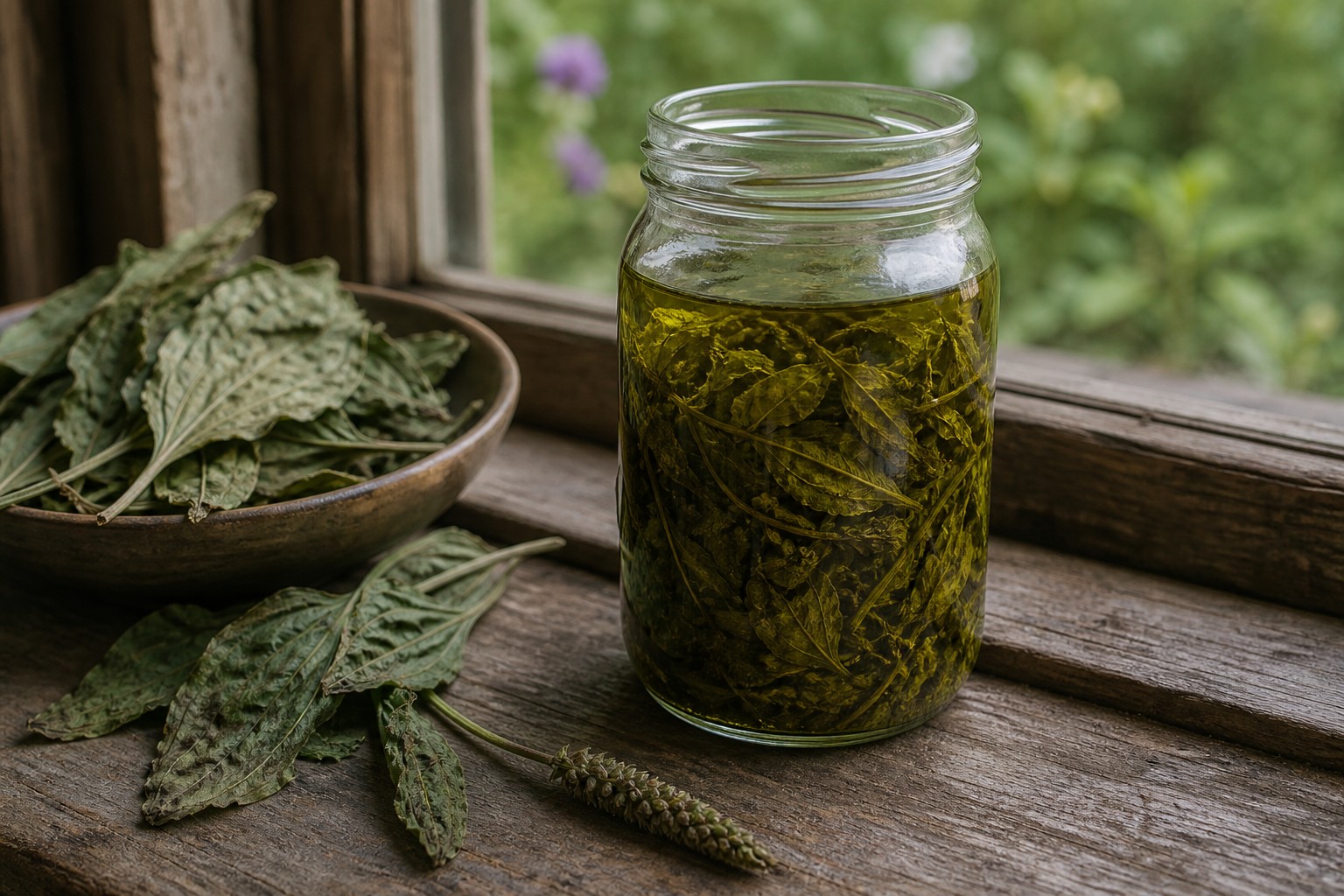
For a first salve I’d point you toward plantain — not the banana, but the low broad-leaved weed (Plantago) growing in every lawn, sidewalk crack, and trailhead from here to the coast. It’s easy to know, impossible to confuse with anything dangerous, and it’s the plant the old hands have reached for as a skin salve longer than anyone’s been writing it down. Yarrow and calendula make fine first salves too. Whatever you choose, dry it well first — fresh plant carries water, and water in your oil is what turns a salve rancid before its time.
For the oil, plain olive oil from your kitchen will make a perfectly good salve. I often reach for jojoba instead, because it isn’t really an oil — it’s a liquid wax, and it keeps far longer than olive without turning, which matters in a tin that might sit on a shelf for a year. Either is right. Don’t let the choice stop you.
One honest word on identification, said once: make salve only from a plant you can name with certainty, confirmed against more than one reliable source and ideally an experienced local. Steeping a plant in oil doesn’t tame it — it pulls the plant’s character into the oil, the helpful and the harmful both.
Infuse the oil
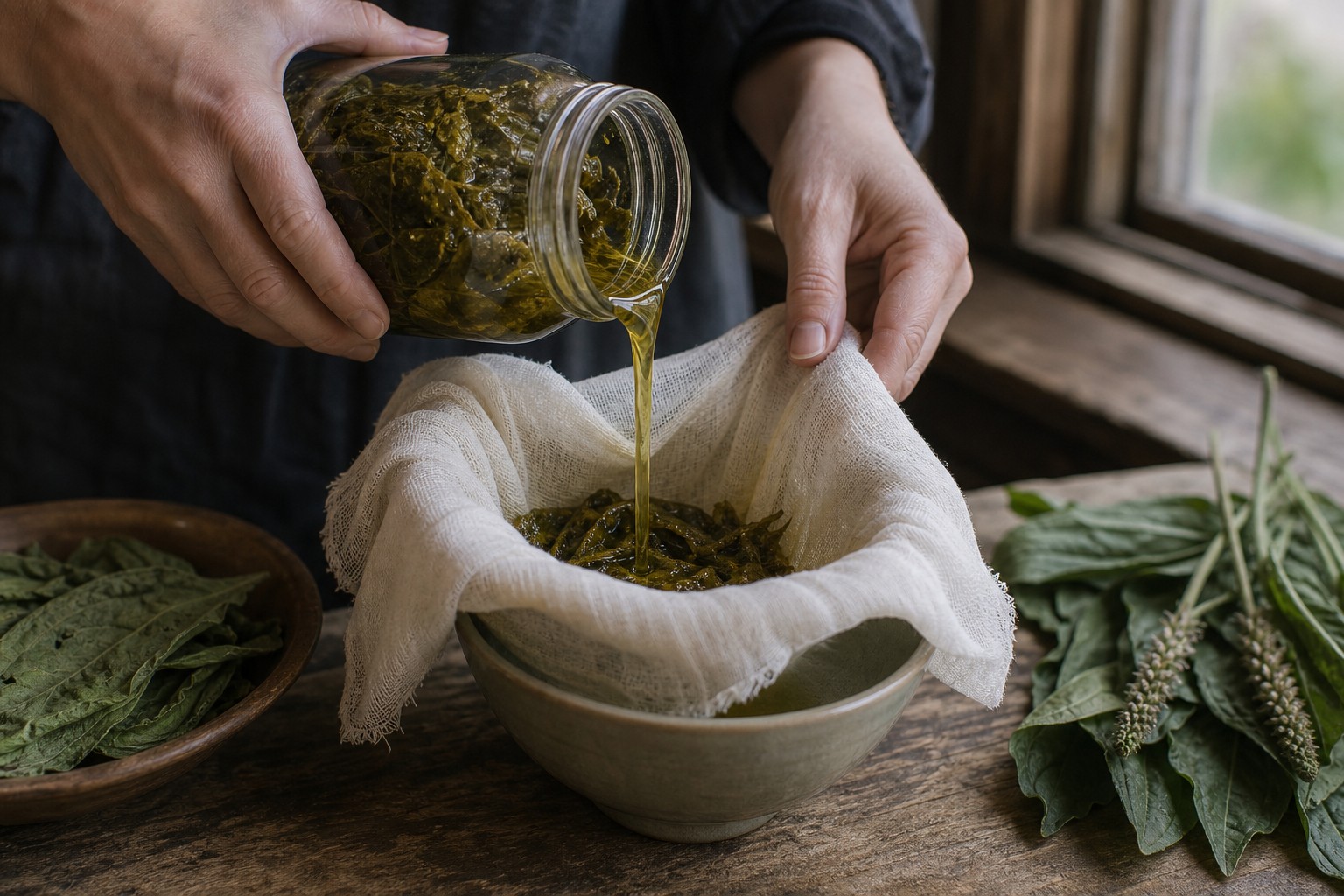
This is the heart of it: you’re letting the oil sit with the dried plant until it takes on its color and character. There are two ways, and I use both depending on my patience.
The slow way is the one my grandmother used. Pack a clean jar two-thirds full with dried plant, pour oil over until the plant is covered by an inch, cap it, and set it on a warm windowsill for three to four weeks, giving it a shake when you walk past. Slow, gentle, and the surest.
The warm way is for when you want salve this afternoon. Set the same jar, uncapped, in a small pan of barely-simmering water — a makeshift double boiler — and let it warm for two to three hours. Keep the water at a bare tremble, never a boil; oil that gets too hot scorches and loses its virtue. Either way, you’ll know it’s ready when the oil has taken on the green or gold of the plant and smells of it.
Strain it clean
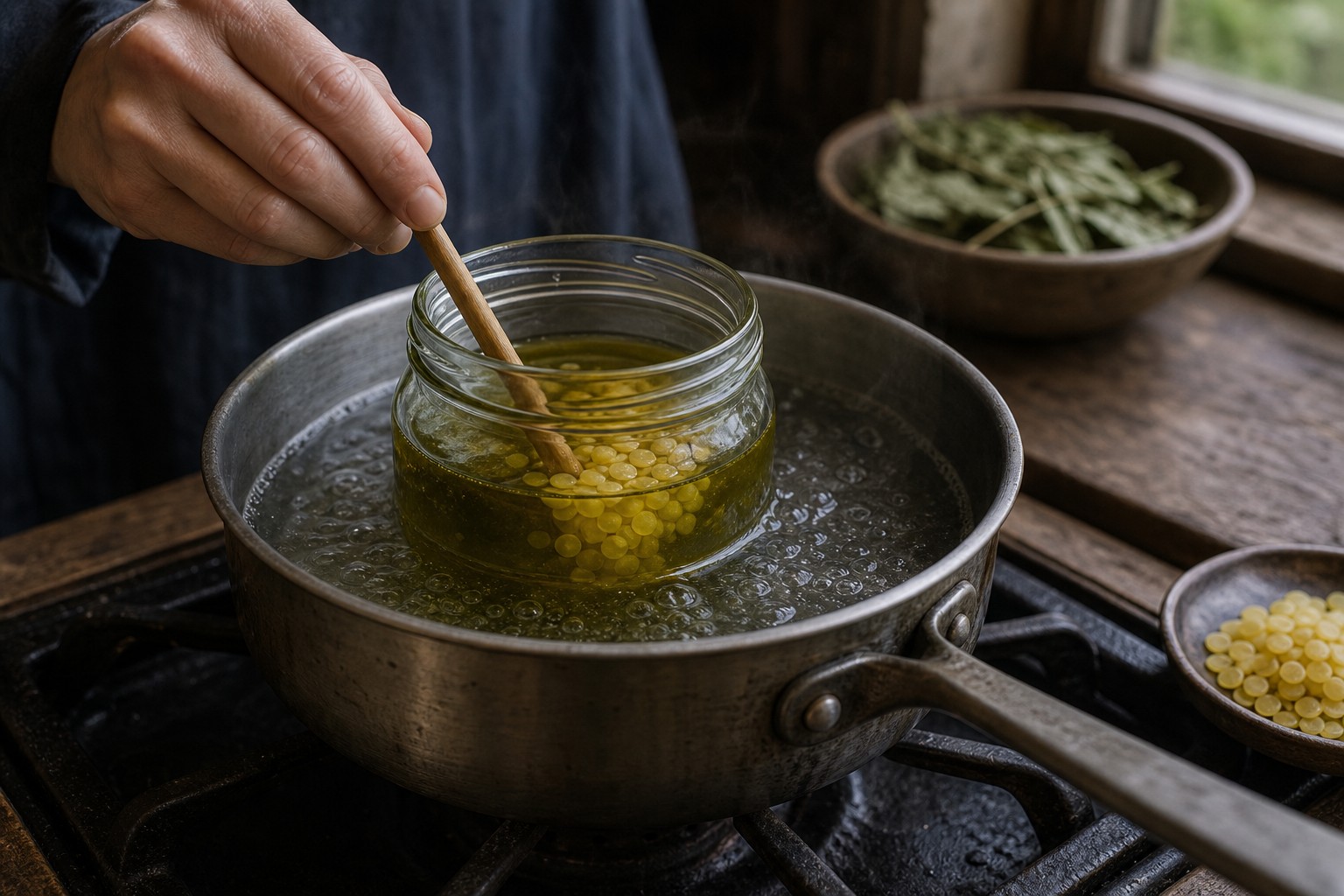
When the oil’s infused, line a wide-mouth funnel or a bowl with a doubled layer of grade-90 cheesecloth and pour the whole jar through. The grade-90 weave is tight enough to catch the fine plant grit that a looser cloth lets slip — and that grit is exactly what will sit in the bottom of your tin and shorten the salve’s life. Gather the corners and wring the soaked plant hard. There’s a surprising amount of good oil still hiding in there, and the last squeeze is worth the mess.
You want clean, clear infused oil and no plant left behind. Compost what’s in the cloth.
Melt in the beeswax
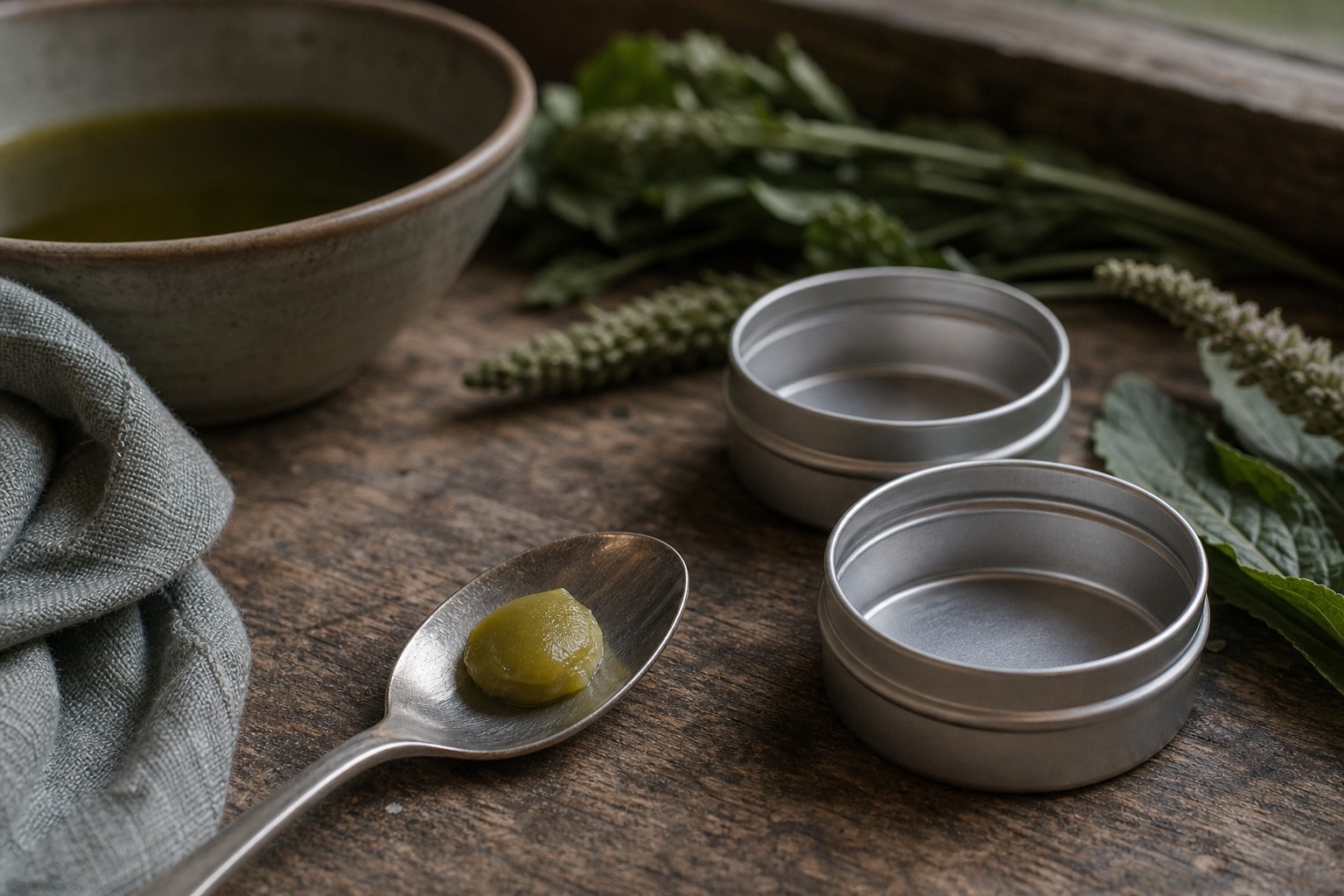
Now you turn oil into salve. Warm your strained oil gently — back in that pan of hot water is easiest — and stir in beeswax pellets until they melt clear. The folk ratio I use is about one ounce of beeswax — a rounded couple of tablespoons of pellets — to one cup of oil. That gives a soft salve that melts at a fingertip’s warmth. Want it firmer, for a tin that rides in a pocket? Add a little more wax.
Here’s the trick that saves a whole batch: before you pour, drop a half-teaspoon of the melted mix onto a cold spoon and set it in the freezer for a minute. That cooled dab tells you exactly how firm the finished salve will be. Too soft, stir in a few more pellets; too hard, splash in a little more oil. Adjust now, while it’s liquid — you can’t fix it once it’s set.
Pour, cool, and label
Pour the warm salve into your two-ounce tins and leave them undisturbed on the counter to set — twenty minutes or so. Don’t put the lids on while they’re warm, or you’ll trap steam and invite the very moisture you worked to keep out. Once they’ve gone opaque and firm, cap them and label each one with the plant and the date. You will not remember in six months, I promise you.
A salve made from well-dried plant and clean oil, kept somewhere cool and dark, will keep its character for a year and often longer. Sunlight and heat are what age it fastest, which is the whole reason for the metal tin over a clear glass jar. When it finally smells flat or faintly of old crayons, it’s done — make another.
Where the method ends and the knowing begins
The making of a salve takes an afternoon to learn, and you’ve just learned it. Which plant to choose, when to gather it, how each one was traditionally used and which ones have no business near your skin at all — that takes longer, and it’s the part I care most about. A patch test on the inside of your wrist before you use any new salve is plain good sense, the same as my grandmother taught me.
Most of that knowing is what I put into my book, Pacific Northwest Medicinal Plants — 115 wild herbs of this coast, how to identify each one without guessing, when to gather it, and how the generations before us prepared it. The beeswax and the oil are the easy part. The book is how you learn what’s worth putting in them.
