How to Forage and Use Shepherd’s Purse, a Humble Spring Green
Learn to forage shepherd's purse: how to spot the rosette and heart-shaped seed pods, where it is safe to pick, and how to cook, dry, and store the greens.
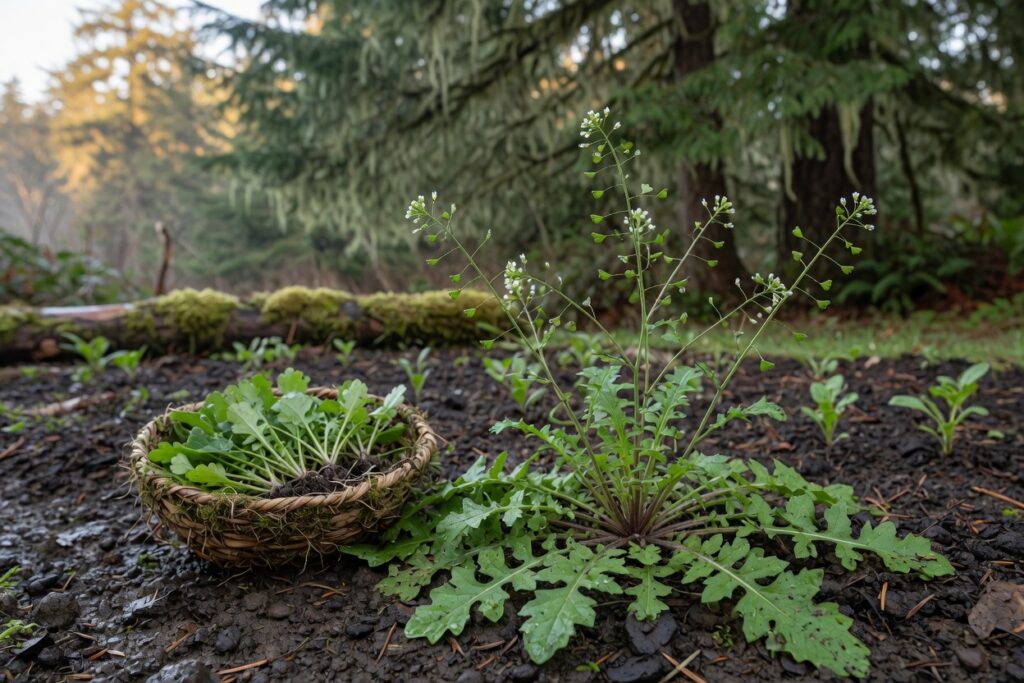
Every February the gravel shoulder at the end of my road outside Sequim turns green with a flat little rosette that looks like a dandelion that lost an argument. For my first ten years I walked right over it. It took a neighbor with a bucket and a better memory than mine to point out that I was stepping on shepherd’s purse, one of the most common wild greens on this continent and one of the easiest to learn.
Capsella bursa-pastoris grows on every disturbed patch of ground I know: garden beds, field edges, the cracks of a gravel yard. That is both its charm and its catch, and I will come back to the catch. Here is how I find it, pick it, and put it up.
You’ll also want a basket and a pair of scissors. Nothing about this plant calls for fancy gear.
Learn to know it before you pick it
Say this part plainly, once: never eat or prepare any wild plant on the strength of one book, one app, or one article, this one included. Check it against more than one reputable guide and, better, walk it with an experienced local forager. When there is any real doubt, leave it where it is.
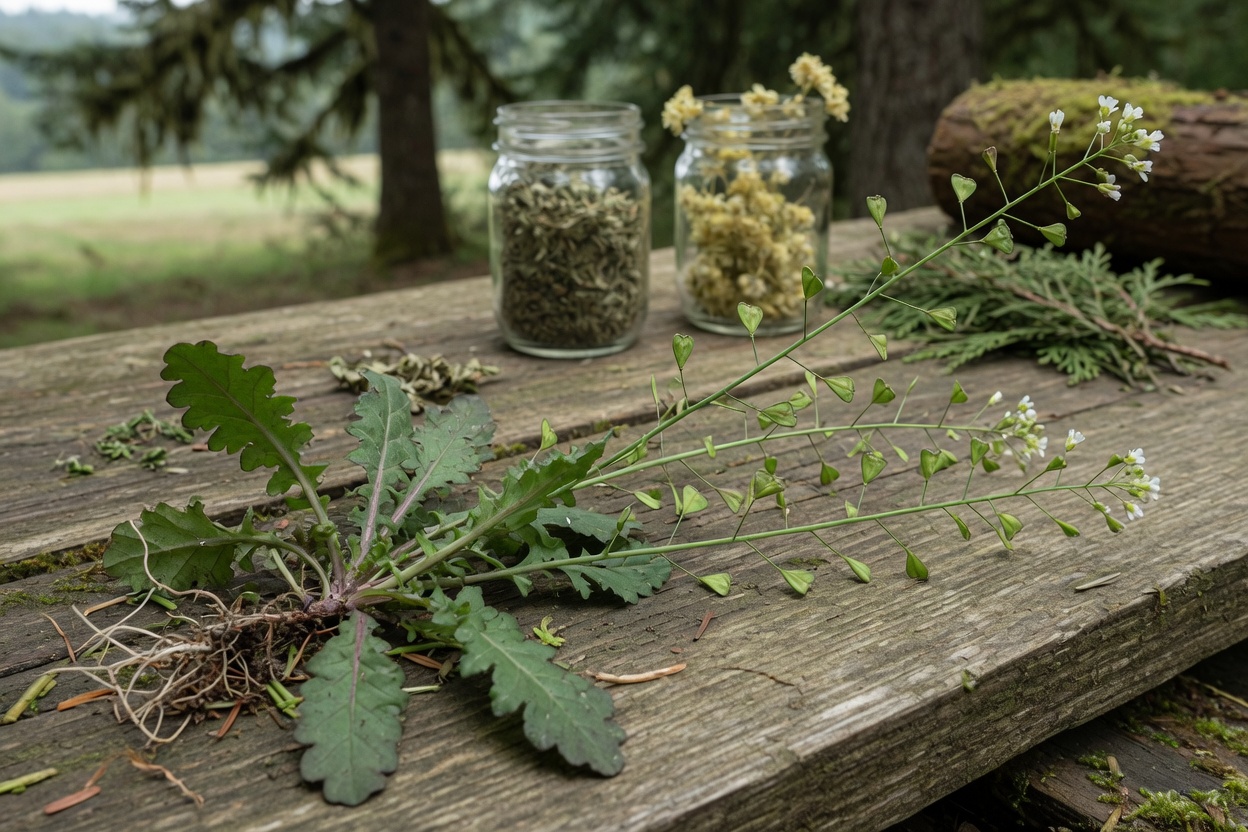
Shepherd’s purse is a member of the mustard family, and it shows up in two stages. In late winter and early spring you will find a flat rosette of leaves lying close to the ground. The leaves are deeply lobed, a bit like a dandelion’s but thinner, and they often have a rough, slightly hairy surface. As the weather warms the plant throws up a slender stem, a foot or two tall, with small white four-petaled flowers at the top.
The feature that settles the identification is the seed pod. Along the lower stem you will find flat, triangular, heart-shaped pods, each one on its own thin stalk. They look like tiny purses, which is where the common name comes from. Pinch one and it splits open to show small seeds. If the plant has no flowers or pods yet, wait or find one that does, and match the rosette to it.
The mustard family has a few similar-looking members, such as pennycress and various cresses, and most are edible but taste different. The heart-shaped pods are your tell. When I’m teaching someone, I make them find a podded stem first, and only then do we go looking for rosettes.
Where to pick, and where not to
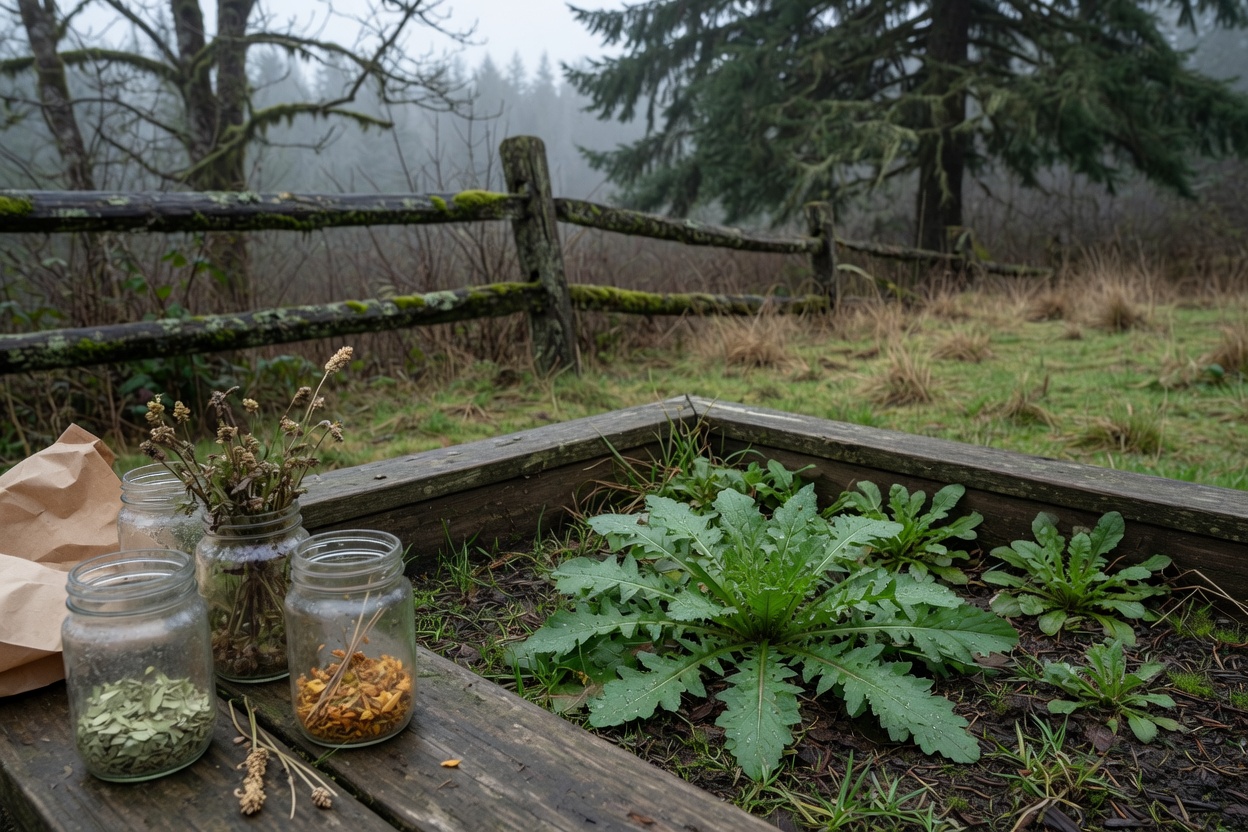
Shepherd’s purse loves disturbed ground, and disturbed ground is often where the trouble is. Do not pick beside a road, along a ditch that takes runoff, or in a lot that may have been sprayed. The patch at the end of my road is for looking at. I harvest from the edges of my own vegetable beds and a field corner I know has never seen a sprayer.
Ask yourself two questions before you pick: what has this ground had put on it, and who owns it? Get permission on private land. Take only a portion of any stand, and leave the pods that are already forming so it can seed again. This plant will not run out on you, but the habit of leaving some is worth keeping.
Picking the young leaves
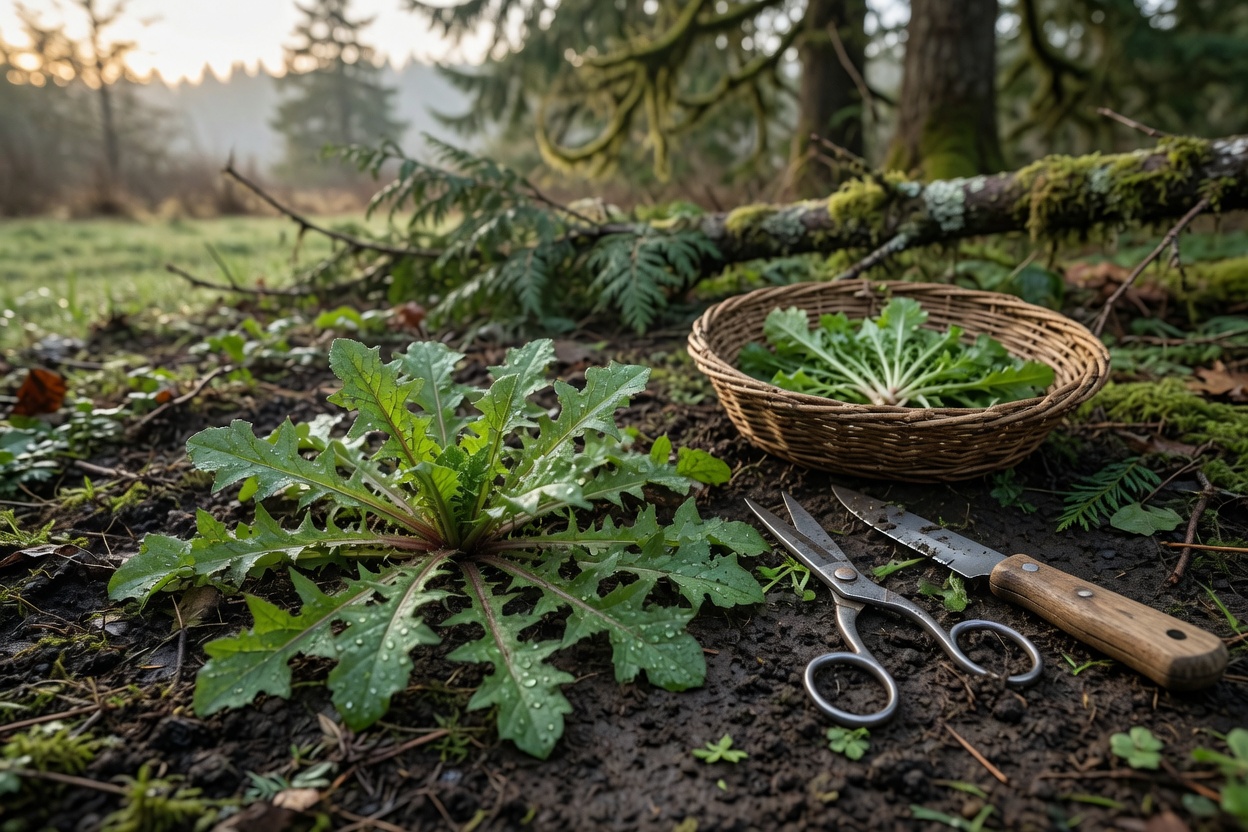
Spring is the season, and in our mild maritime climate that can mean February through April. Pick the basal rosette while it is young and tender, before the flower stalk shoots up. Snip the leaves above the root, or lift the whole small plant with the hori-hori if you want the root as well.
Once the plant bolts, the lower leaves toughen and turn bitter, and the stem gets stringy. I still pick the tender tops of flowering stems for the kitchen, but the best eating is the rosette.
Wash it well. The leaves hold grit, and a plant from a garden bed is always dirtier than you expect. Two dunks in a bowl of cold water is usually enough.
In the kitchen
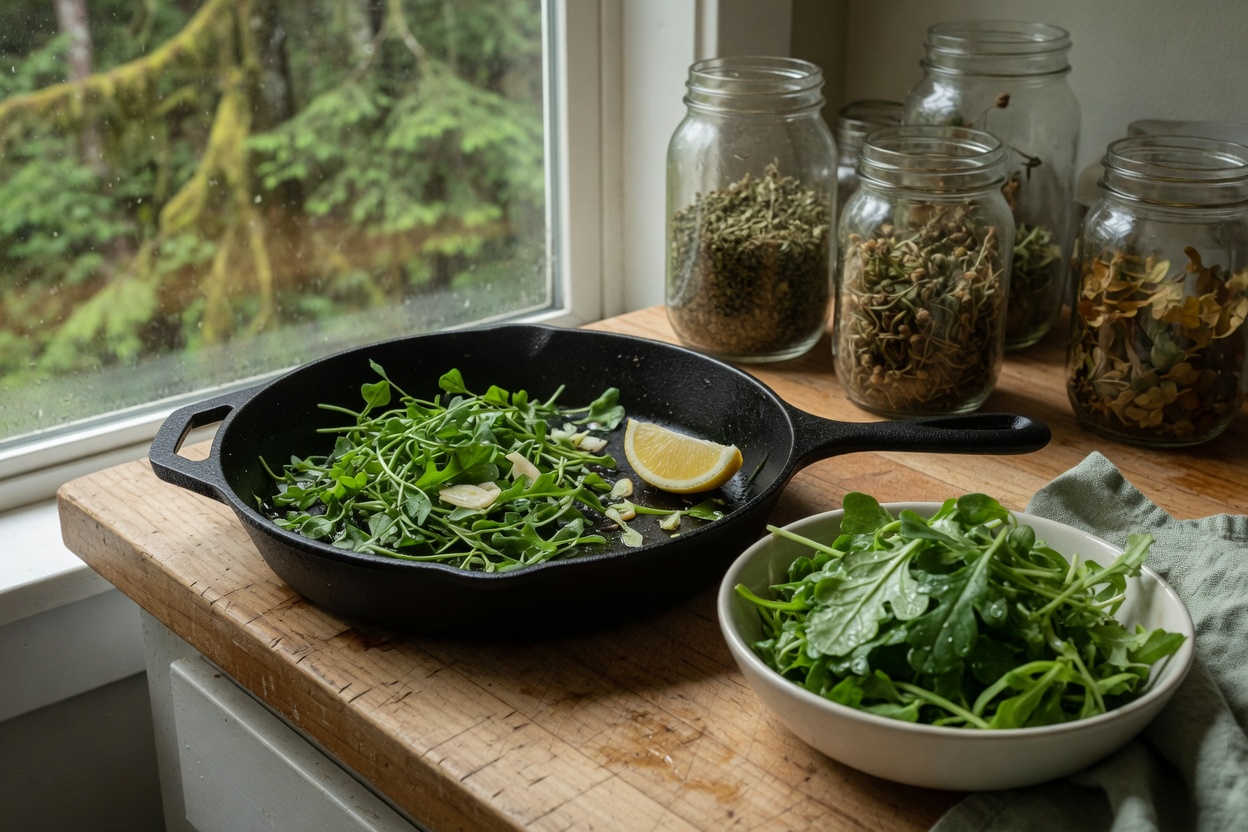
The flavor is mild and peppery, somewhere between arugula and cabbage, with a green bite that gets softer when cooked. It is not a showy plant. It is a good one.
Raw in a salad. Use the youngest leaves, a small handful at a time, mixed with milder greens so the peppery edge reads as a seasoning and not the main event.
Wilted or sautéed. This is how I eat most of it. A quick wilt in a hot skillet with a little oil, garlic, and a squeeze of lemon turns it into a side dish in two minutes. Fold it into eggs or a pot of beans at the end.
In soup. Tossed into a pot of broth in the last few minutes, it adds a clean, green note, much like a handful of watercress.
I won’t tell you it will change your life. It is a plain spring green that costs nothing and grows where you already walk, and that is its whole recommendation.
Drying and storing it
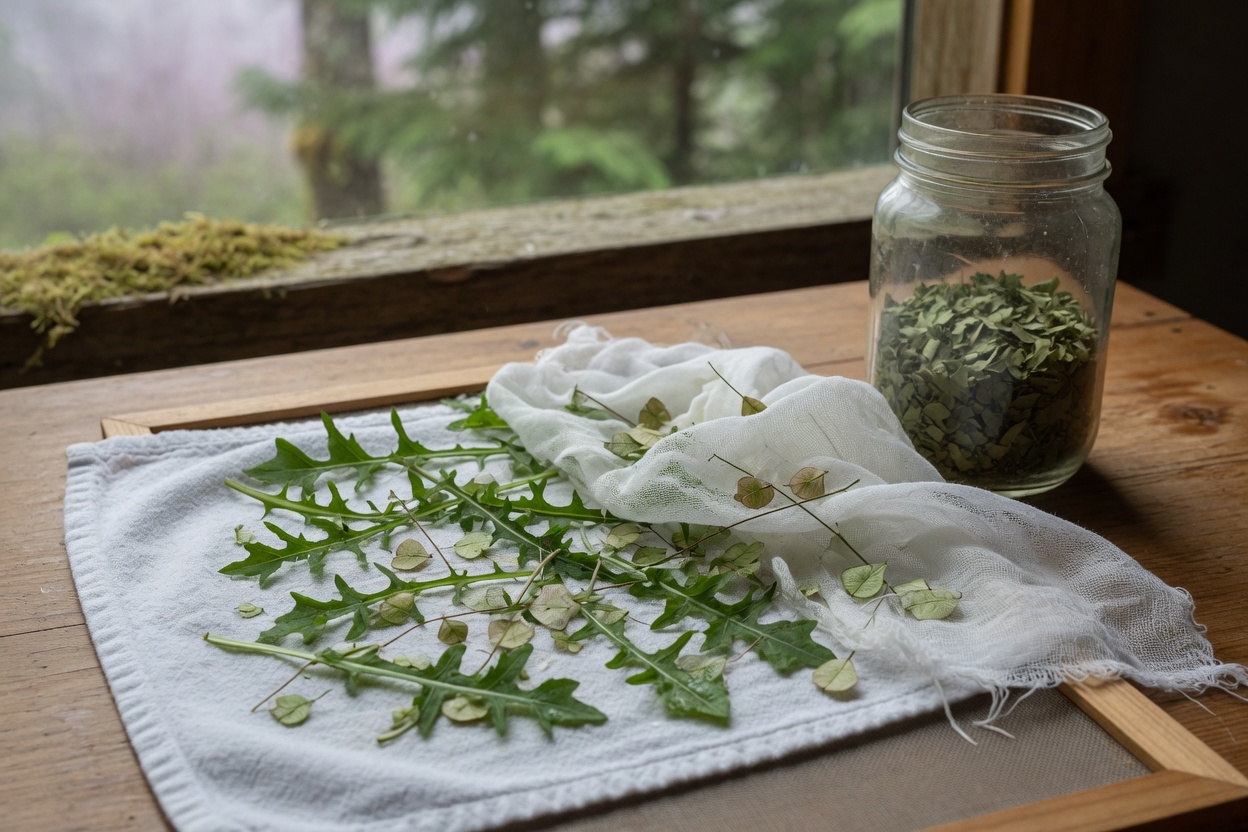
If you pick more than you can eat, dry the leaves. Spread them in a single layer on a screen or a clean cotton towel and drape them with cheesecloth to keep dust and flies off. Give them a few days in a warm, dry, shaded room until they crumble when you crush them. The seed pods can be dried the same way and stored whole.
Pack the dried leaves loosely in a wide-mouth jar and keep it somewhere dark. Write the plant and the date on a strip of masking tape. Last year’s jar, kept out of the sun, still smelled green in October, and I use dried leaves crumbled into soups and pot liquor through the winter.
How it has been used traditionally
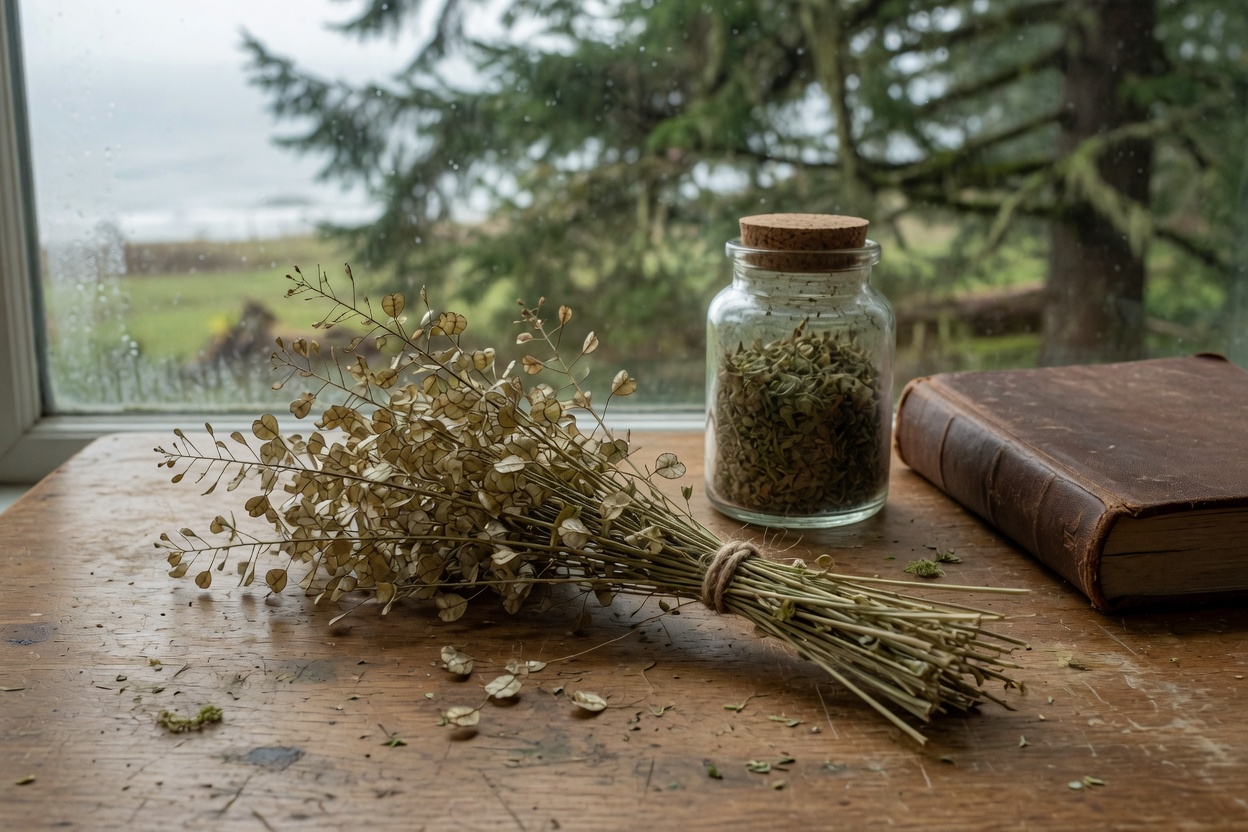
Shepherd’s purse has a long history in European and North American folk herbalism, and you will find it in old herbals as a plant used to staunch bleeding, which is the source of the “purse” lore. I will tell you that as history, not as advice. I do not make any claim that it treats anything, and I do not give amounts. If you are pregnant, folk sources traditionally advised caution with this plant, so I leave it out of my own kitchen during those months and suggest you do the same. For anything that involves a real health concern, see a qualified practitioner.
What I have gotten wrong
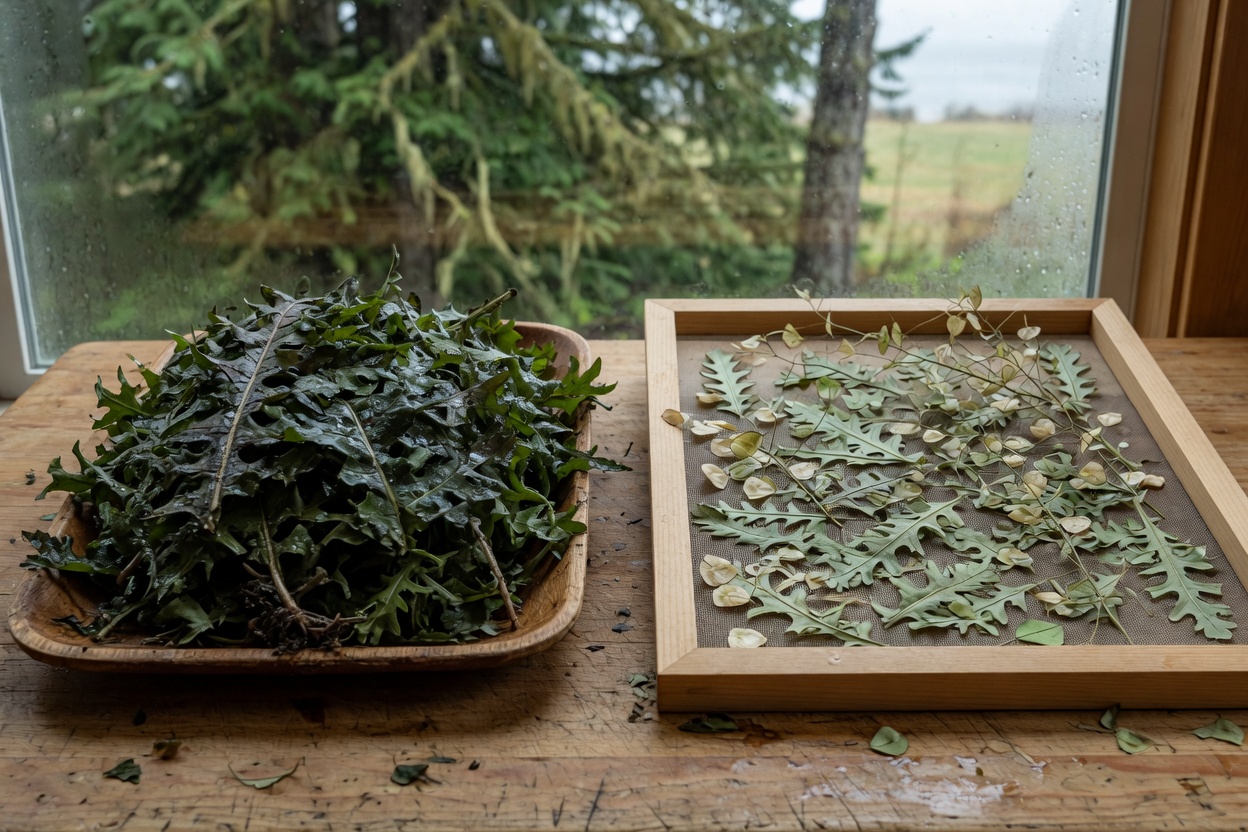
I once dried a whole tray in a damp March and found it musty a month later, because I stacked the greens too thick. Spread them thin, give them air, and make sure they are brittle before they go into a jar.
Where the plant ends and the study begins
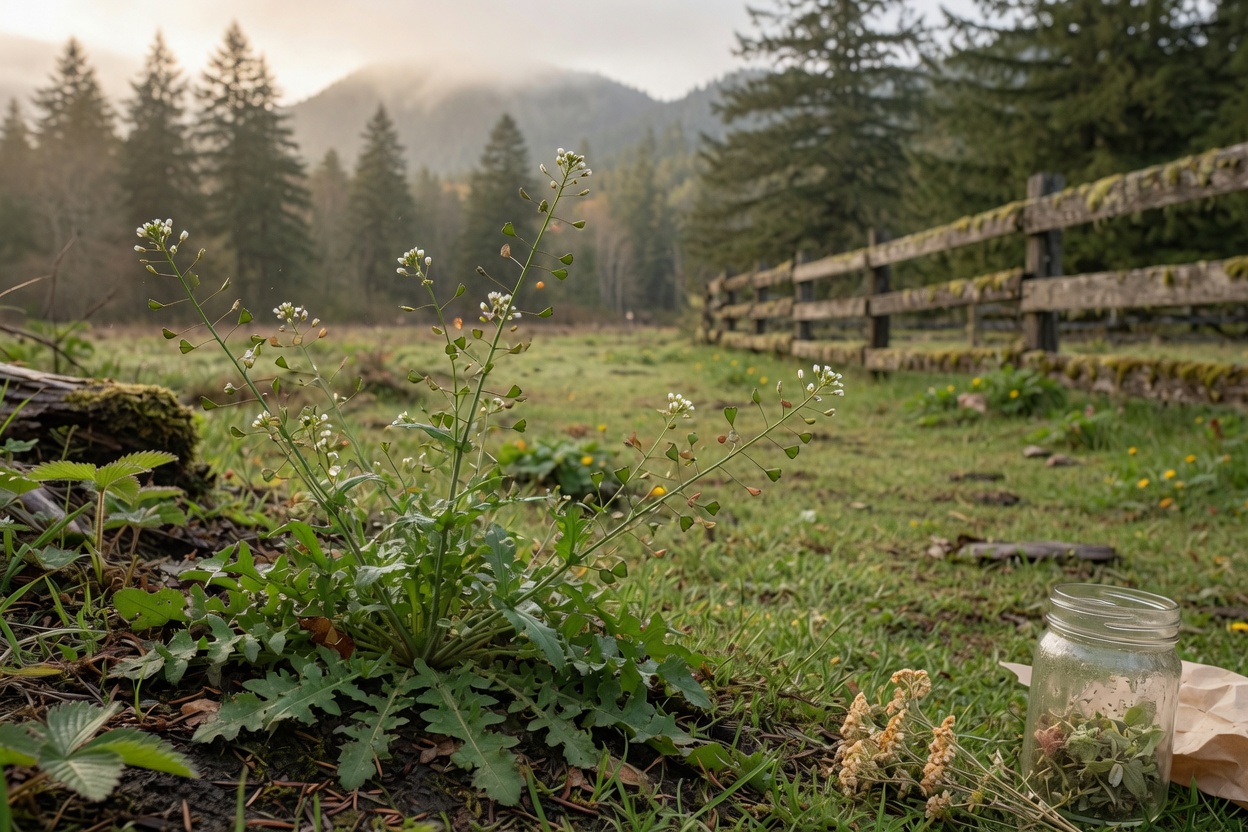
A pantry of dried greens is the easy part. Knowing shepherd’s purse apart from its relatives in every season, knowing which patches are safe and which look safe and aren’t, and building the habit of confirming before you eat, takes longer. It is the study I care most about.
I walk through all of it, plant by plant, in my book, Pacific Northwest Medicinal Plants: how to identify each one without guessing, when to gather it, and how the people before us prepared it. If you’ve enjoyed this plant, my notes on how to forage and use thimbleberry leaf and how to store dried herbs so they last are good next steps.
Learn it before you need it.
