How to Clean a Chicken Coop in Winter Without Freezing Your Flock
How to clean a chicken coop in winter: pick the right day, spot-clean without a hose, handle frozen droppings, refresh bedding, and keep the hens warm and dry.
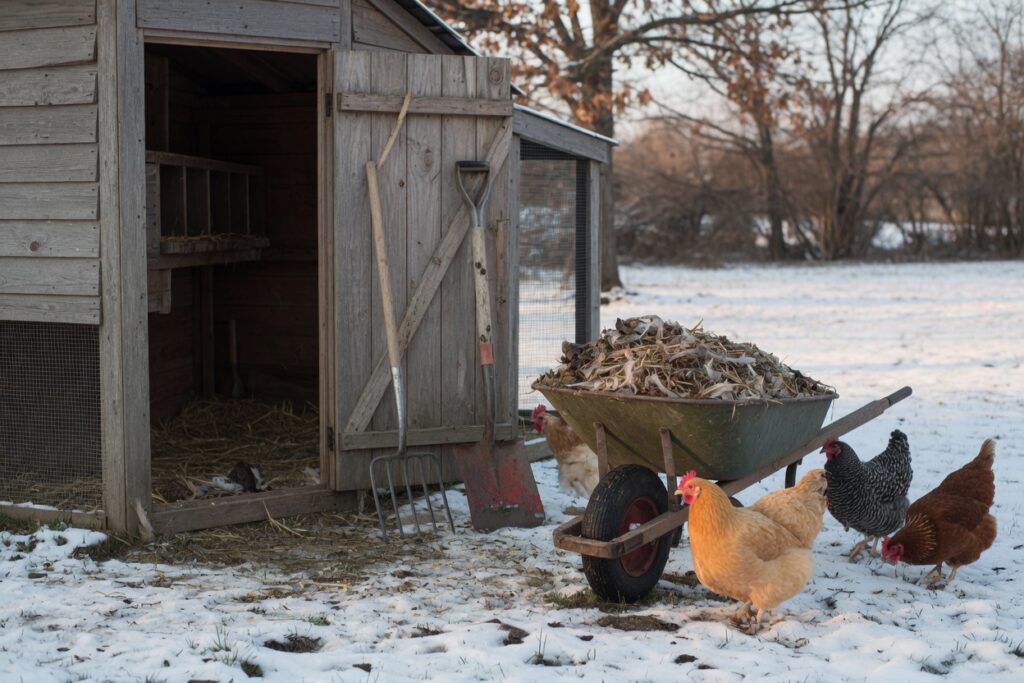
The worst coop clean-out I ever did was on a January Saturday when I decided to hose the floor “just this once.” It was forty degrees when I started and twenty-six by the time I finished, and I spent the evening chipping a skating rink out of the coop with a paint scraper while twelve hens stood on the roost bars looking at me like I’d lost my mind.
I had. Winter is not the season for a scrub-and-spray. But a coop still has to be kept clean, because damp bedding and built-up droppings are what cause the ammonia smell, the frostbite risk, and the sour air that sets hens coughing. Here is how I handle it in East Tennessee, where winter swings from fifty to ten in a week, and what I’d change if you live somewhere colder.
Pick the day, not the date
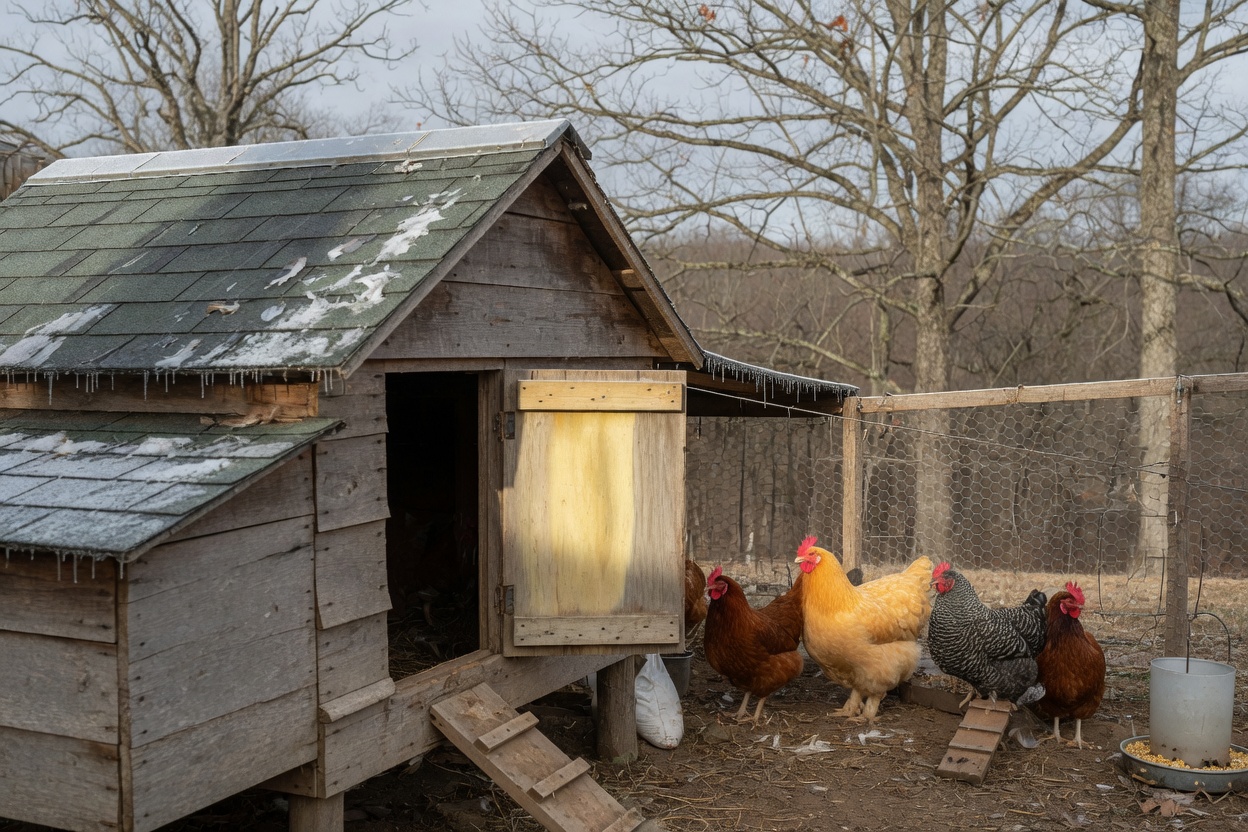
I don’t clean on a schedule in winter. I clean on a good day. That means a dry, still afternoon above freezing if I can get it, with sun on the coop door, so I can leave things open for an hour and let the damp air out.
A cleaning needs two things to go well: the hens out of the coop, and the coop dry enough afterward to keep them warm. If it is raining or sleeting, wait. If a hard cold snap is coming that night, don’t pull out all your bedding the afternoon before it, because the bare floor will hold the cold and your hens will sleep on it. I’d rather live with a messy coop for a few days than put clean, cold litter under a roost on a ten-degree night.
Spot-clean most weeks, deep-clean rarely
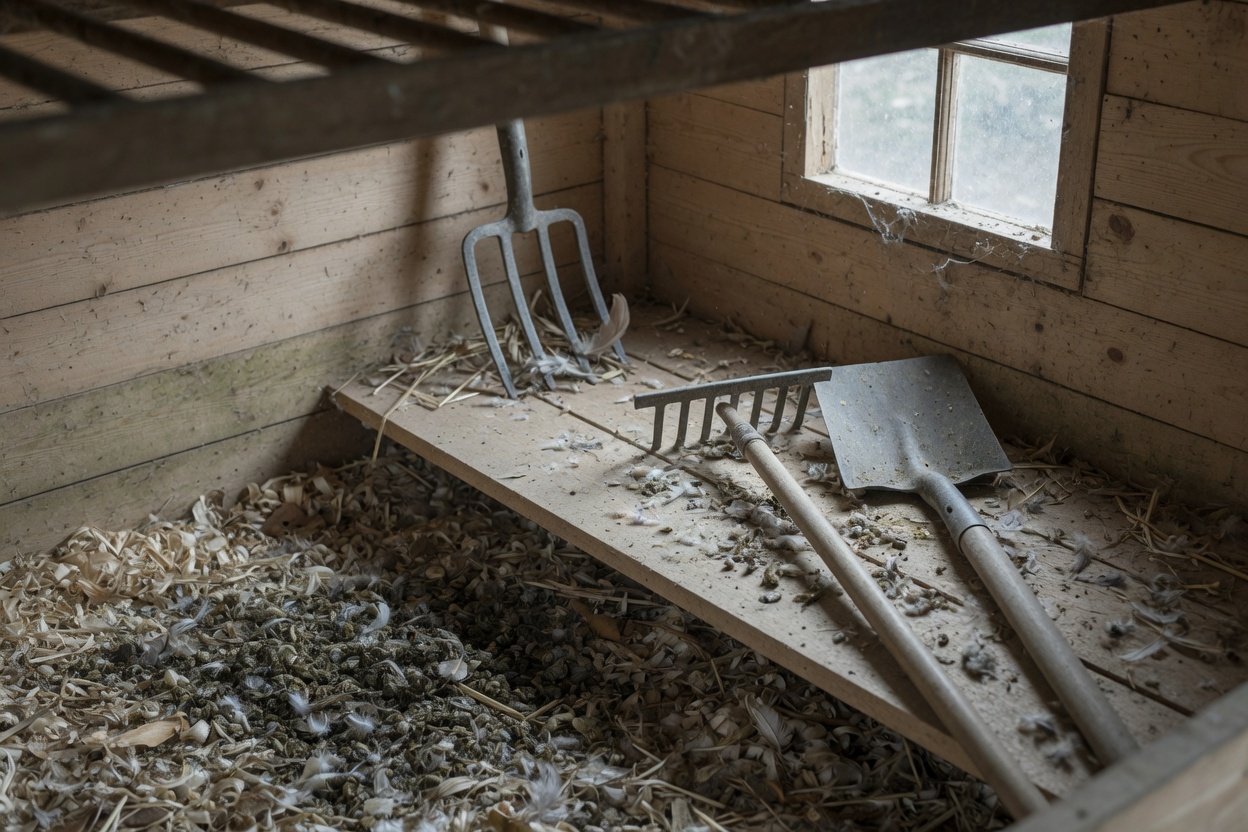
Most of the work is small. Under the roost bars is where droppings pile up overnight, and I scoop that area with a small rake or a flat shovel every two or three days. A coop with a droppings board under the roost makes this faster. Then I stir the rest of the bedding with a fork to break up crusts and bring dry material to the top.
If you run a deep litter system, you will not be doing a full clean-out in winter at all. The bedding builds, you turn it, and the layers work as insulation. I covered how I run that in the deep litter method for a winter coop. The one rule is that deep litter must stay dry. If it is damp, smells sharp, or has begun to mat, it is not working and it needs attention.
When to pull everything out
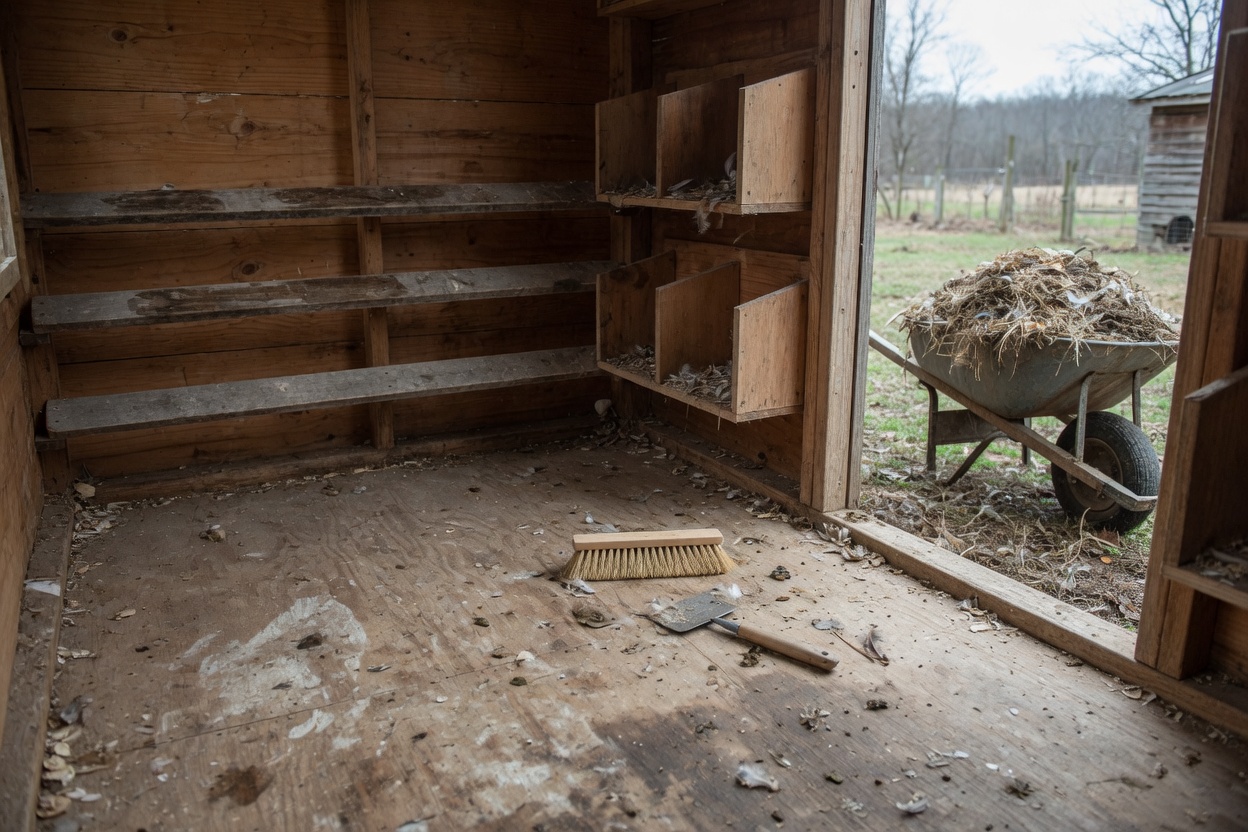
I do one full clean-out in late winter, usually the last warm week of February, and another in fall. If your bedding has gone wet in a corner under a leak or a spill, or if the coop smells of ammonia the moment you open the door, it can’t wait. That smell means the bedding is breaking down badly, and the gas can irritate a hen’s lungs and eyes. I wrote about that in how to reduce ammonia in a chicken coop.
For a full clean:
1. Move the hens to the run, or to a safe, dry spot, for the afternoon.
2. Shovel out the old bedding into a wheelbarrow or a tarp. Don’t skip the corners.
3. Scrape the floor and the roost bars with a stiff putty knife or a paint scraper. Frozen droppings come up easily when you tap them, and stuck-on ones need a bit of work.
4. Sweep, and let the bare floor air out until it is fully dry.
5. Lay down fresh bedding, deeper than you think you need.
Wear a dust mask and gloves for this. Coop dust is not something you want in your lungs, and old bedding stirs up a lot of it. I keep a box of masks hanging by the door.
Frozen droppings and water

Frozen manure is actually the easy kind. It lifts off in chunks. What you don’t want is thawed, slushy manure mixed into the bedding, which is how a cold coop gets damp. So scoop frozen droppings while they are hard, and leave the stuff that has thawed until you can lift it clean.
Keep water off the floor. This is the biggest dampness mistake I see new keepers make. A spilled waterer in winter soaks the bedding and then freezes, and then the whole corner is a block of ice. I use a galvanized double-wall fount sitting on a heated waterer base so it stays liquid without a heat source inside the coop. It’s a pairing I covered in best heated chicken waterers for winter. When I scrub the fount, I do it outside the coop, on a bench, and carry it back full.
Never hose the coop in winter. Not even a little. If you need to disinfect a bad spot, scrub it with a stiff brush and a small amount of vinegar-and-water solution, then let it dry completely before the hens go back in.
Bedding: what I use and what I’d tell you straight
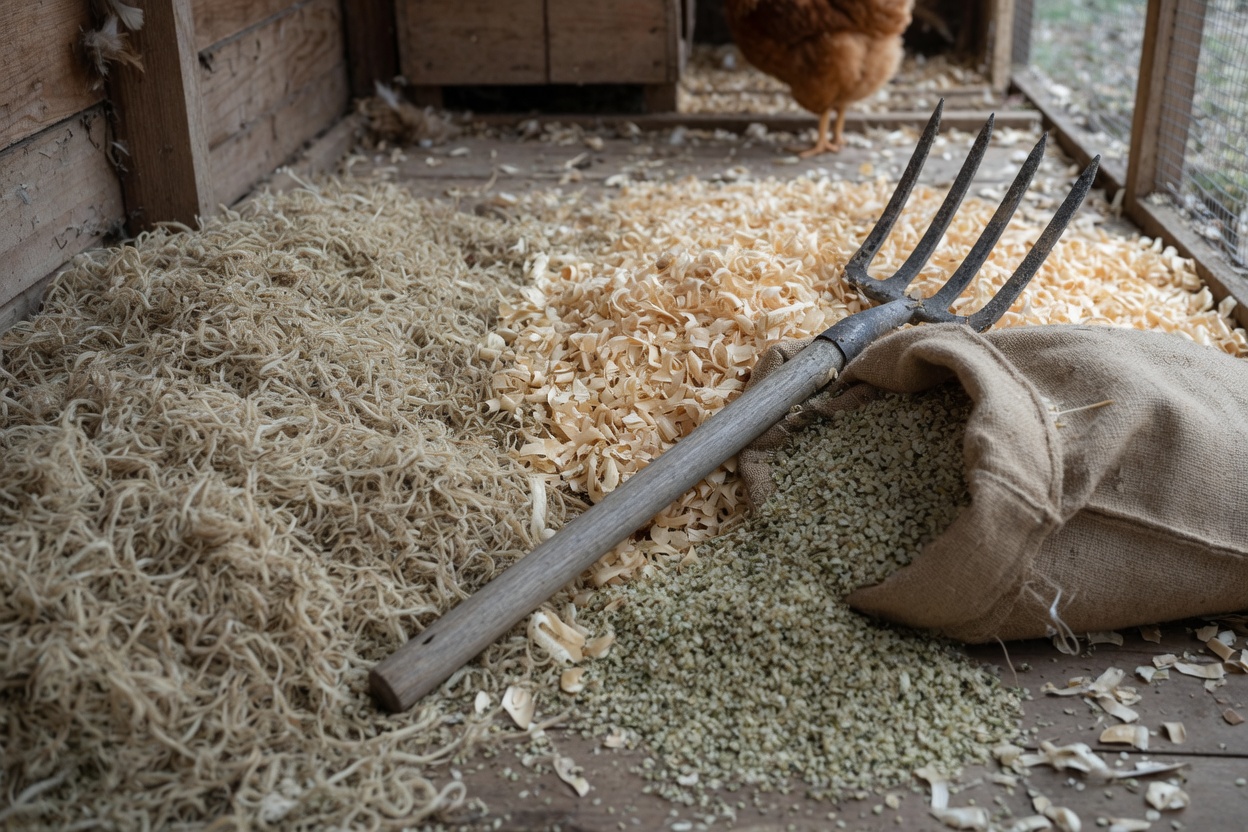
For the past two seasons I’ve used hemp bedding in the coop. It absorbs well, stays fluffier than my old shavings, and breaks down quickly in the compost pile. The tradeoff is that it takes a bit more work to stir, and it is not cheap. If your budget is tight, plain pine shavings will do the job. Just use plenty and keep it dry. Avoid cedar shavings, which put out strong oils, and never use newspaper or hay as bedding, because both hold moisture.
Don’t forget the ventilation
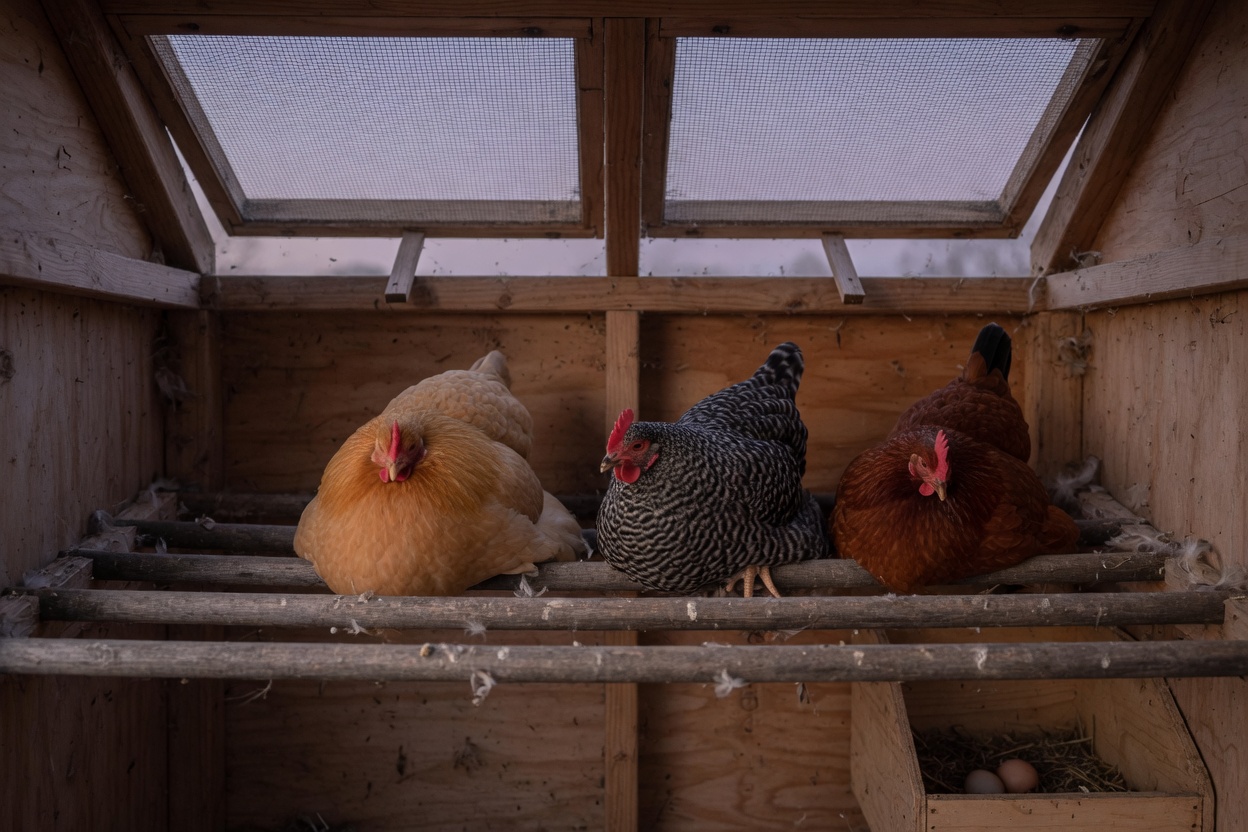
A coop that feels stuffy after cleaning is a coop that will go damp again by Tuesday. Keep vents open above roost height, even in winter. You want moving air up high and no drafts at hen level. A closed-up coop with 12 birds in it makes enough moisture in a night to frost every surface, and moisture is what turns cold into frostbite. If you want the full winter setup, my checklist is in how to winterize a chicken coop.
Where to go from here
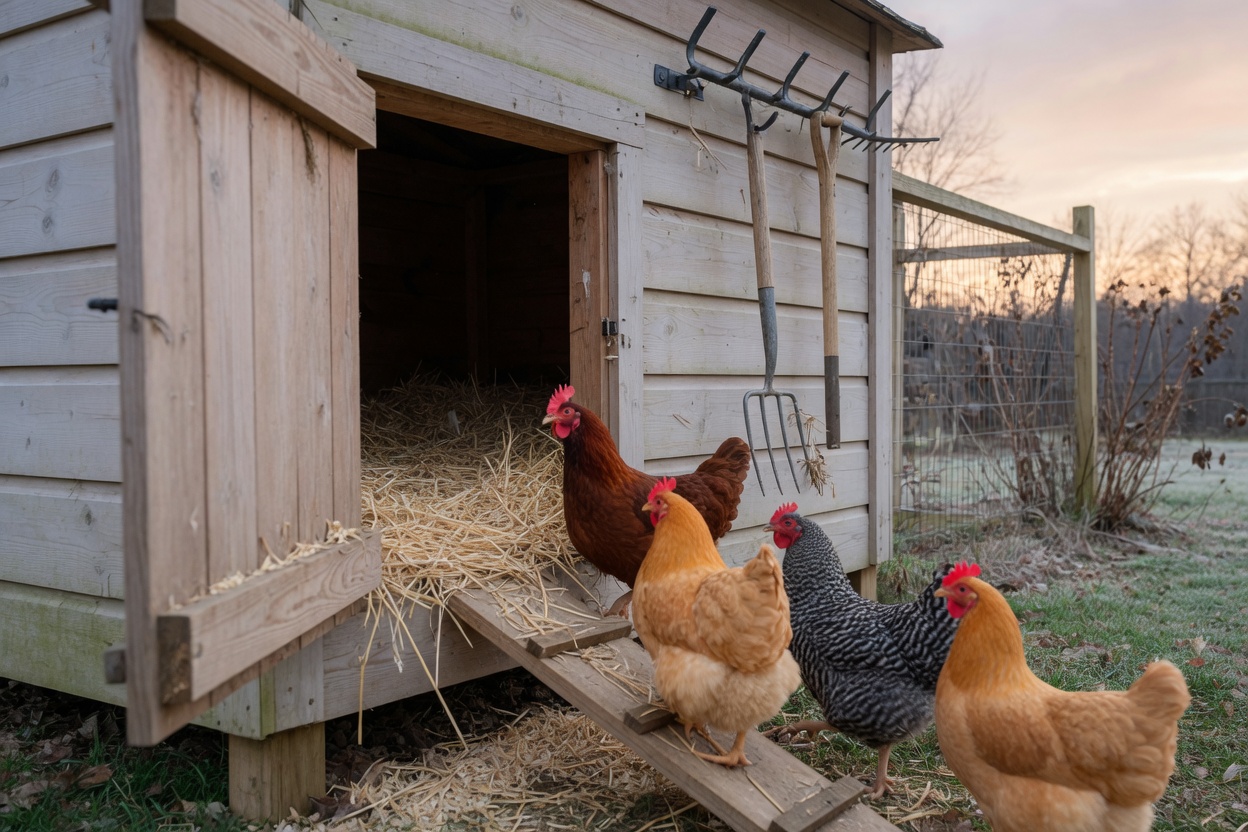
Pick the next dry afternoon, scoop under the roost, stir the litter, and check the corners for damp. Do that every few days and your big clean-out in late winter will be a small job instead of a bad one.
Everything about managing a coop through the year, from bedding to ventilation to the cleaning schedule I keep, is in my book, Raising Backyard Chickens for Beginners. It is written for keepers who are just starting out and want straight answers: Raising Backyard Chickens for Beginners.
Know your girls.
