How to Make an Herbal Body Butter With Beeswax and Jojoba
A simple herbal body butter from beeswax, jojoba, and a soft butter, whipped in one afternoon. The ratio, the steps, and how to jar it for gifts.
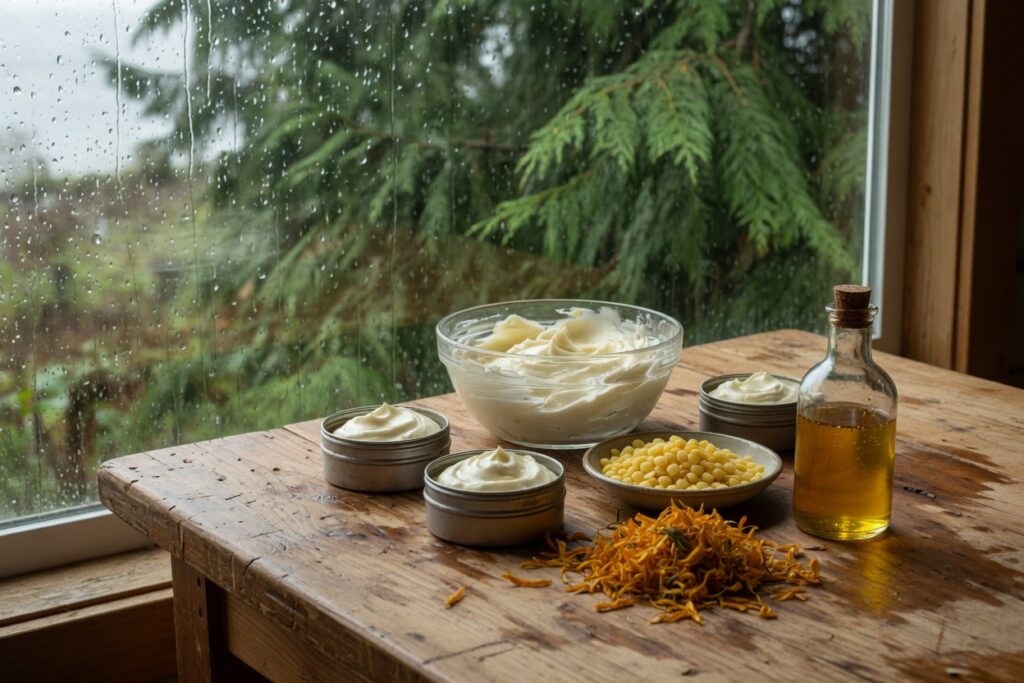
The winter my husband’s knuckles split open from a month of stacking and splitting kindling, I went to the pantry for something, anything, and found a block of beeswax and half a bottle of jojoba. That was the first body butter I ever made. It was lumpy, it was too stiff, and he used every bit of it anyway.
I’ve made it a good deal better since. A body butter is the soft, spreadable cousin of a salve: oil and wax for hold, plus a creamy solid butter so it whips up light and sets just firm enough to scoop. It makes a good gift too, which is why I’m writing it up now, with the holidays about six weeks off and still time to make a few jars properly. Everything here is a kitchen craft, nothing medical, and it takes an afternoon.
What a body butter actually is
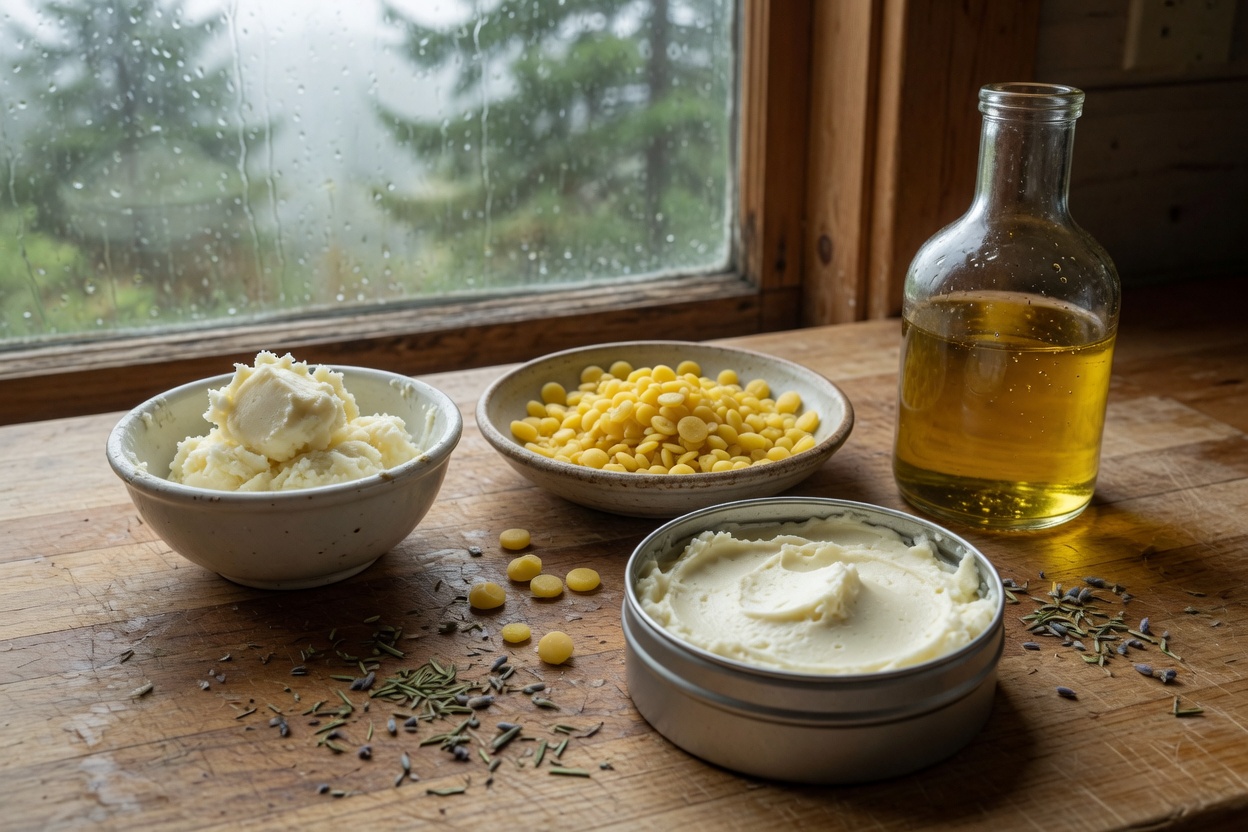
Three parts, and you can taste the logic in each. A liquid oil keeps it spreadable. Beeswax gives it enough structure to hold its shape in the jar. A soft solid butter, shea or cocoa, is what makes it whip into something that feels creamy instead of waxy. Leave out the butter and you have a salve; I covered that one in how to make your first herbal salve, and it’s a fine thing to start with. If you want something firmer and tidier for a coat pocket, the herbal lotion bar is the same idea pressed into a mold.
I buy the shea or cocoa butter from the baking-and-body aisle, unrefined, in a plain tub. I don’t have a verified source I’d send you to for it, so I’ll leave that choice to you and say only that the cheap refined stuff works and the unrefined smells better.
Infuse the oil first, if you want the plant in it
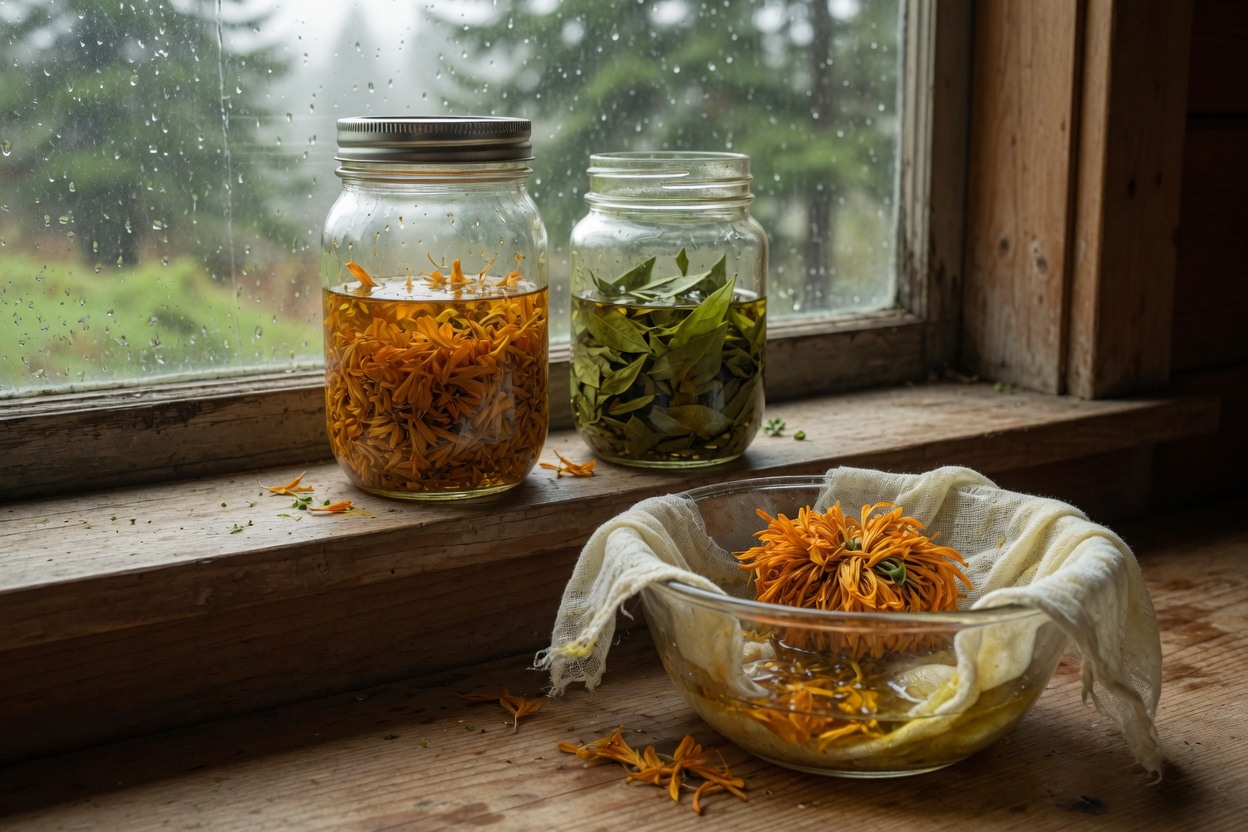
You can skip this and make a perfectly good plain butter. If you want an herb in it, infuse the jojoba ahead of time, the same way I describe in how to make an herbal infused oil. For a body butter I stay with gentle, familiar plants: calendula petals or dried plantain leaf, both dried well before they go near any oil. Fresh plant carries water, and water in your oil is what ruins a batch in a month.
A single safety line, once: infuse only a plant you can name with certainty, confirmed against more than one good source. Oil pulls the plant’s character out, the harmful as well as the good. Dry your own with care, and store it the way I do in how to store dried herbs so they last.
Pack a pint mason jar two-thirds full of dried herb, cover it by an inch with jojoba, and let it sit on a warm windowsill three to four weeks, or set the jar in a pan of barely-simmering water for two to three hours if you’re in a hurry. Strain through doubled cheesecloth and wring the herb out hard.
The ratio I use
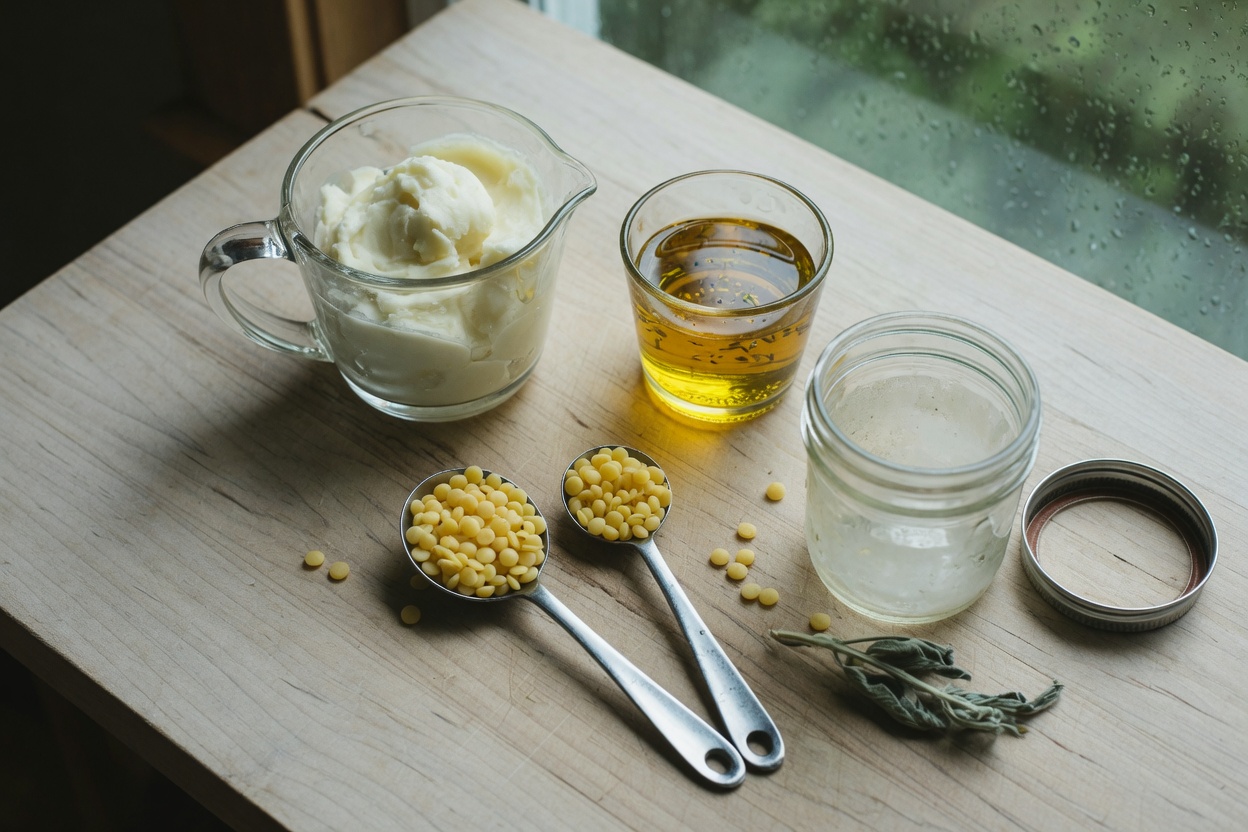
For about one cup of finished butter:
– ½ cup shea or cocoa butter
– ¼ cup infused jojoba oil (or plain jojoba if you skipped the infusion)
– 2 tablespoons beeswax pellets
The wax is the number to watch. Two tablespoons gives a butter that holds its shape but still scoops. Go to three and you’re back to a salve; drop to one and it slumps in a warm room. My first batch had a quarter-cup of wax in it and could have been used to prop a door.
Melt, chill, and whip
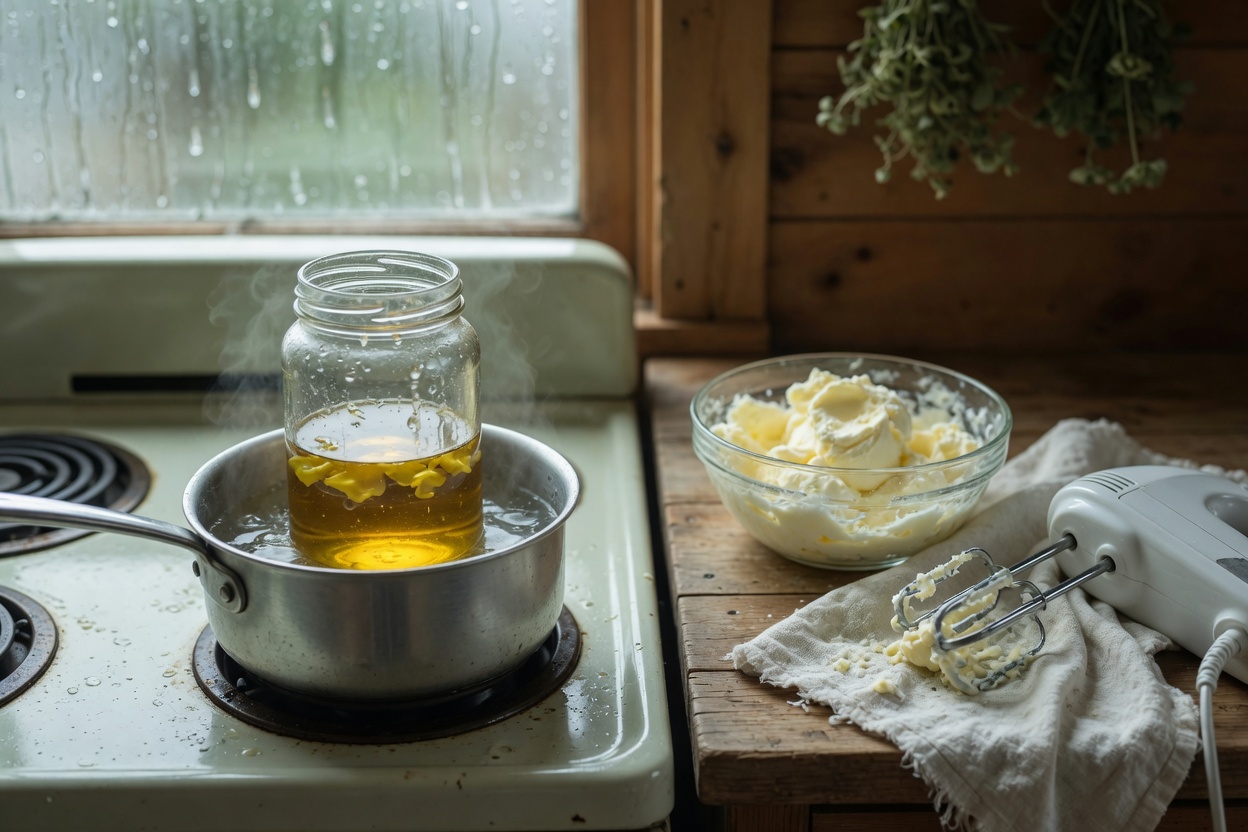
Set the shea butter, wax, and oil in a clean jar, and stand the jar in a pan with two inches of barely-simmering water. Stir now and then until everything is liquid and clear. Keep the water at a tremble, never a hard boil. Overheated oil scorches, and a scorched batch smells it.
Here is the step that separates a butter from a salve. Take the jar out and put it in the refrigerator, or the freezer if you’re short on time, until the edges have set and the middle is just starting to firm up, about twenty to thirty minutes. It should look like soft pudding with a skin at the sides. Then whip it with a hand mixer for two or three minutes, until it goes pale and holds peaks.
If you whip it while it’s still hot, it stays glossy and runny and never fluffs. I know because I did that twice before I believed the instructions I’d been given. Wait for the chill.
Scenting it, or not
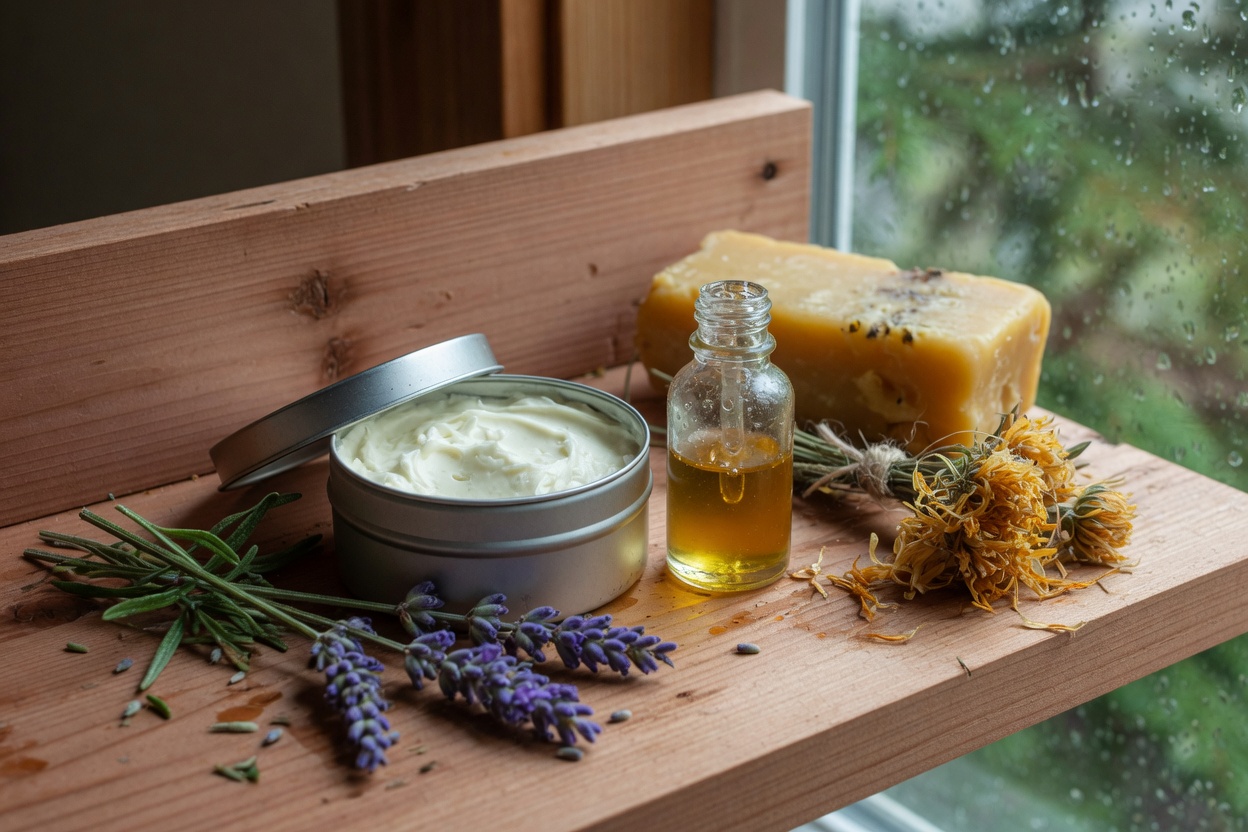
I leave mine unscented most years, since the beeswax and the infused oil already smell warm and faintly sweet. If you want a scent, a few drops of an essential oil goes a long way, and I’d keep it to a light hand, since a strong oil can bother skin. I skip it for anything I’m giving to someone I don’t know well. A plain butter has fewer ways to go wrong.
Jar it and label it
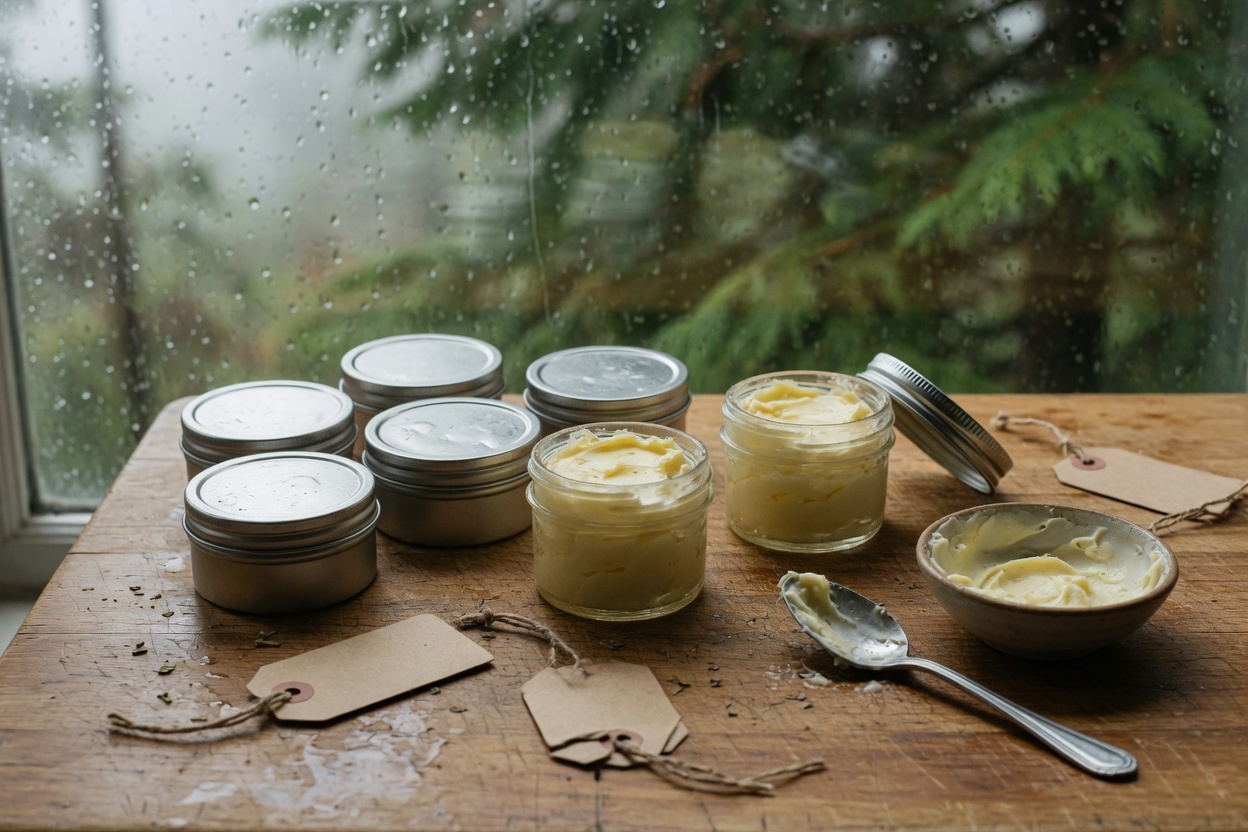
Spoon the whipped butter into your tins or small jars, working quickly because it firms up fast. Smooth the tops with the back of a spoon. Leave them open until they’ve cooled completely, then lid them so you don’t trap steam.
Label each one with the plant and the date. Kept cool and out of the sun, a butter made with dried herb and clean oil is good for six months to a year, and it’ll tell you when it’s done: a flat or crayon-like smell means make a fresh jar. If a batch grows a gritty texture, it just means the shea cooled unevenly. Remelt it gently and chill again before you whip.
Test a new batch on the inside of your wrist before you use it, and keep it away from anyone with a nut allergy if you use shea, since shea comes from a tree nut. Say so on the label if you give it away.
Making it a gift
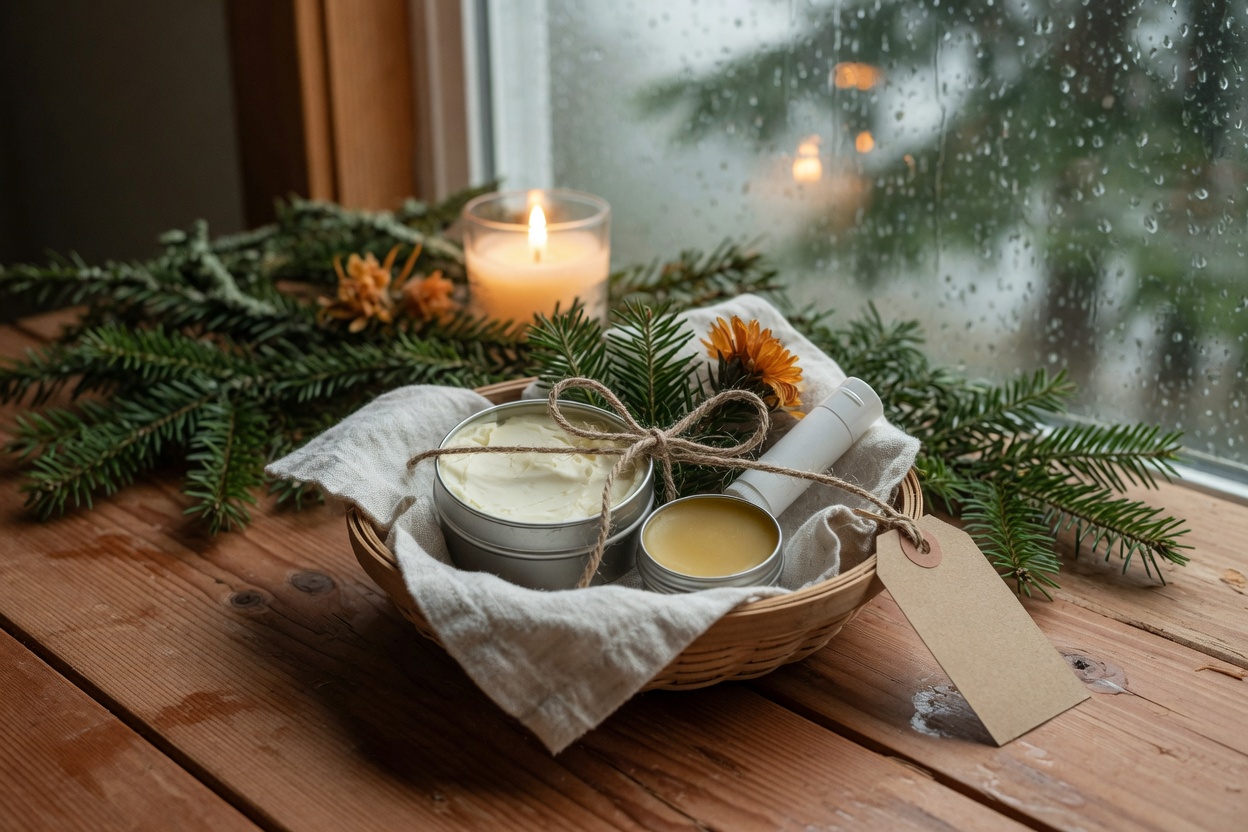
A wide-mouth jar with a ribbon looks fine, but a small tin with a handwritten label looks like something a person made, which is the whole charm. I put together a few of these with a salve and a lip balm each December; how to make herbal gift sets for the holidays lays out how I pack them.
The making takes an afternoon. Knowing which plants are worth steeping, when to gather them, and how the people before us used them is the longer study, and it’s why I wrote Pacific Northwest Medicinal Plants. It covers 115 wild herbs of this coast and how to identify each one without guessing. The wax and oil are the easy part. The book is where you learn what to put in them.
