How to Forage and Use Purple Dead Nettle in Appalachia
Purple dead nettle is among the first greens on a mountain hillside in late winter. Learn to identify it, gather it clean, and how it's traditionally used.
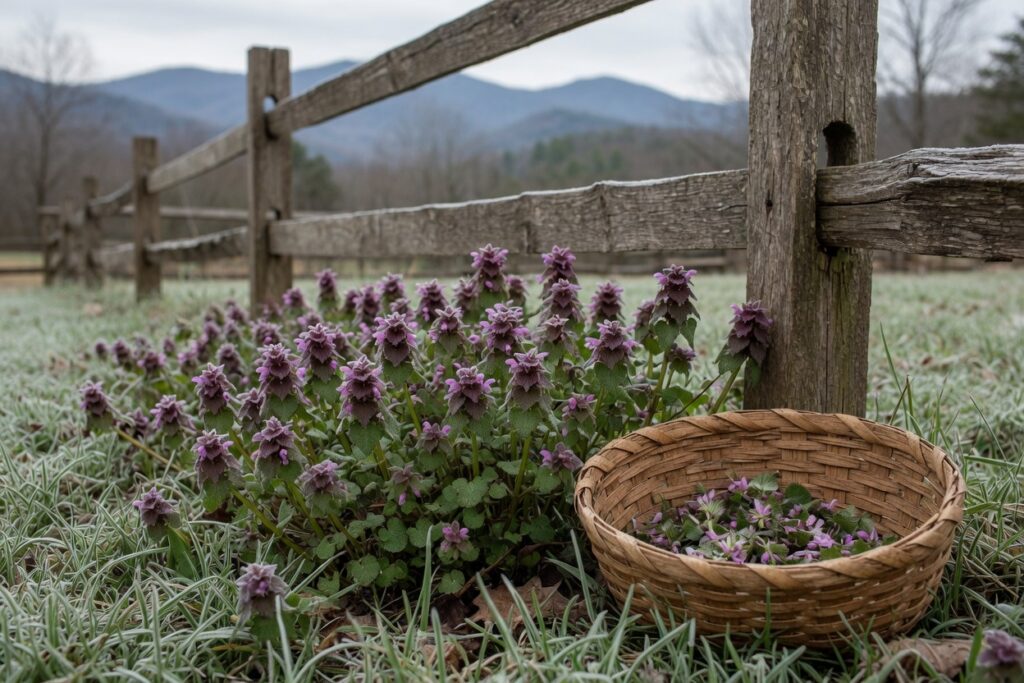
The first green thing I trust in a Madison County February isn’t a ramp. It’s a low purple-tinged carpet along the garden fence, coming up before the frost has finished with us. My grandmother called it a weed and picked it anyway, for tea and for the scrapes her grandchildren came in with, and she never thought those two things were at odds.
Lamium purpureum, purple dead nettle, is a small, soft, entirely unremarkable plant. That’s its virtue. It’s easy to identify, it grows where people live, and it shows up when nothing else has. I’ll take you through telling it apart, where it’s safe to gather, and how I’ve seen it used, so you’ll know it when the ground starts to wake in late winter.
Learn it first
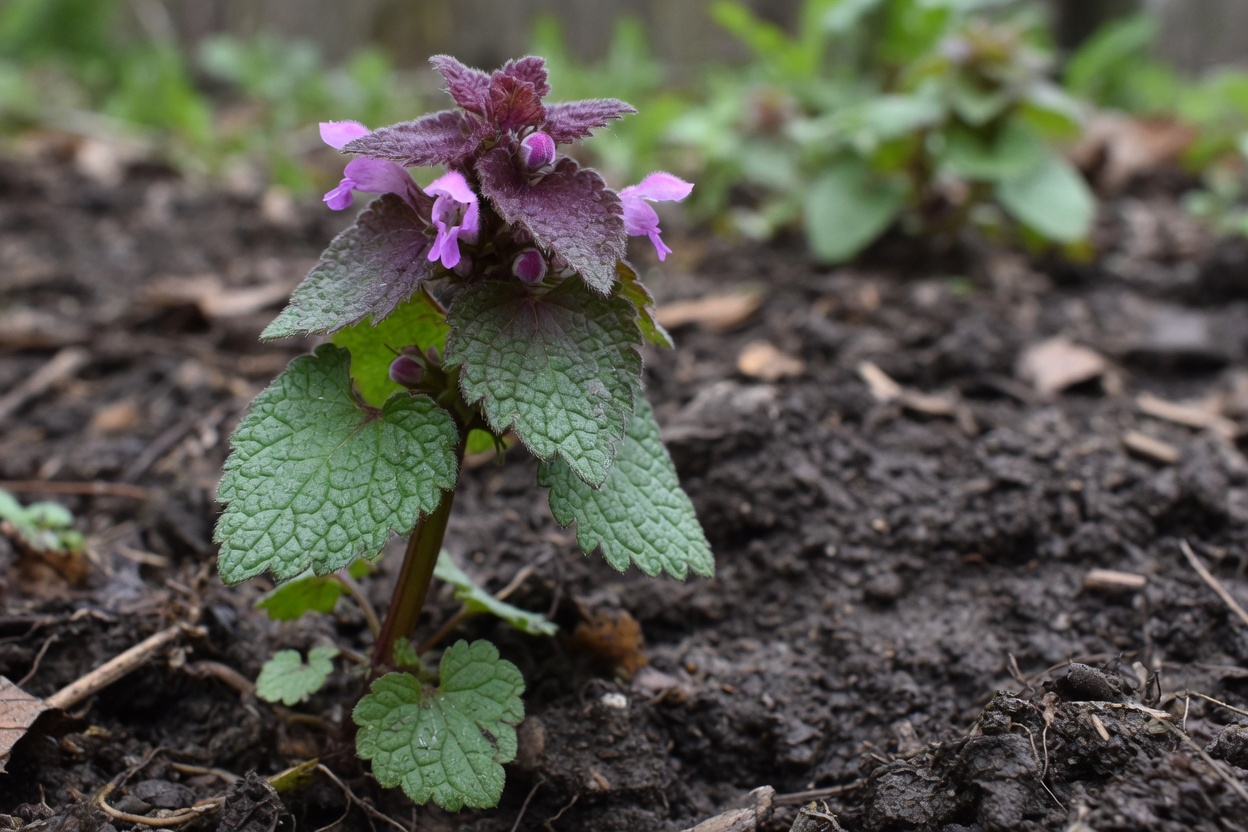
Never gather a plant you aren’t sure of. Purple dead nettle gives you a good set of features to check, and you should check every one.
The stem is square. Roll it between your thumb and finger and you’ll feel four corners. It’s a mint-family plant, and that trait runs through the whole family. A square stem alone doesn’t make a plant safe, though, so it’s only one of the things you check.
The leaves grow in pairs, opposite each other along the stem. They’re short-stalked, rounded to heart-shaped, with scalloped edges and a puckered, quilted surface, and they feel faintly fuzzy, like velvet.
The tops turn purple. The upper leaves, clustered at the tip, take on a reddish-purple tint, and that’s where the name comes from. Lower leaves stay green.
The flowers are small and pink-purple, tucked among the upper leaves, and they appear from late winter into spring.
Despite the name, it doesn’t sting. “Dead nettle” just means it looks a bit like stinging nettle but has no sting. If something stings, it isn’t this.
The plant most often confused with it is henbit (Lamium amplexicaule), a close relative that grows in the same places. Its upper leaves are rounded and clasp the stem directly with no leaf stalk, and the leaves tend to be greener. Folk use treats the two much alike, and I won’t pretend I can always tell them apart in a mat of both. If you’re unsure which you have, you have a mint-family plant you’re unsure about. Stop and ask someone who knows.
And I’ll say what I always say: never use a wild plant on the word of one book, one app, or one blog post, including this one. Confirm with several good guides and, if you can, someone who has gathered it before. When in doubt, leave it.
Where to gather it, and where not to
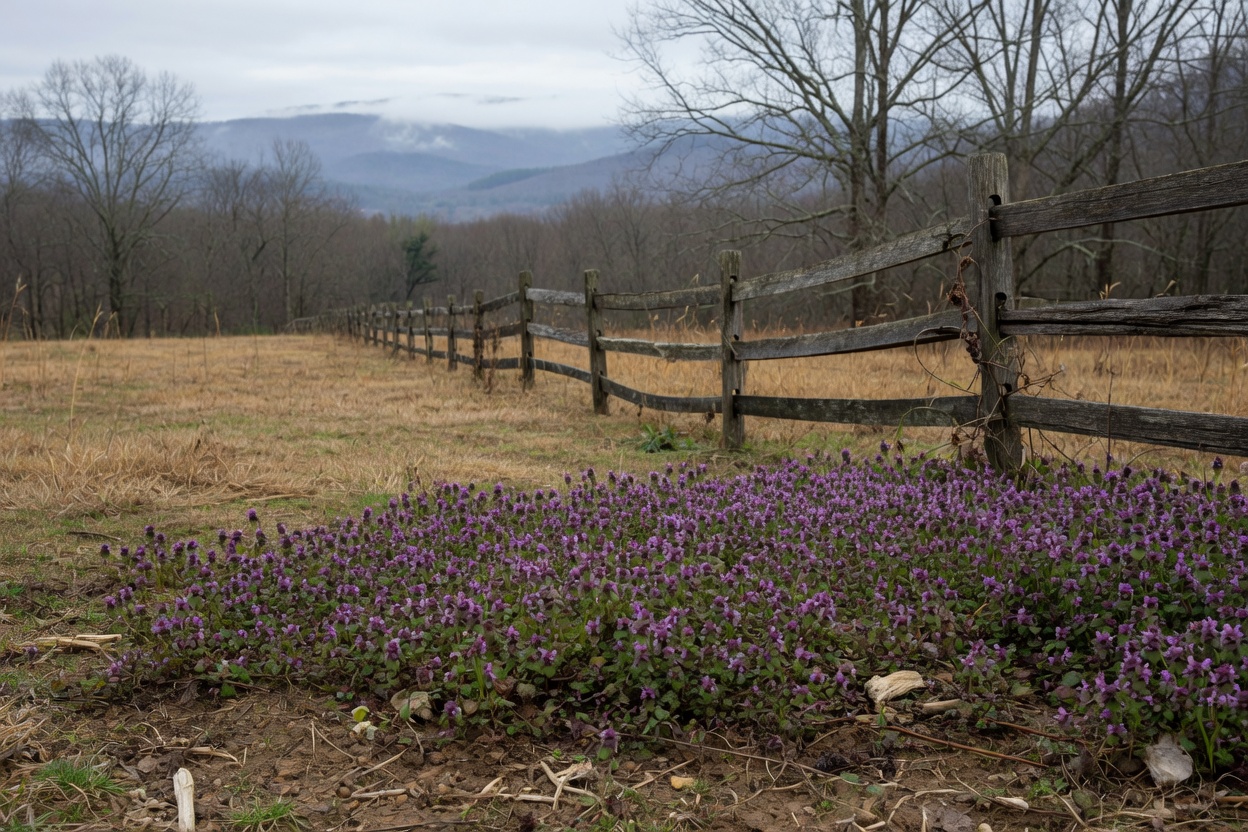
This is the part that matters most with a plant that loves disturbed ground. Purple dead nettle thrives in garden beds, field edges, and lawns, and lawns are the most likely places to be sprayed with herbicide or fertilizer. Don’t gather from a treated lawn, a roadside ditch, a parking lot edge, or a spot dogs use. The soil along a road carries what the road carries.
I gather from my own garden fence line and from a pasture edge whose owner I know. If you rent or you’re new to an area, ask. A plant that is common and a plant that is clean are two different things.
When and how to gather
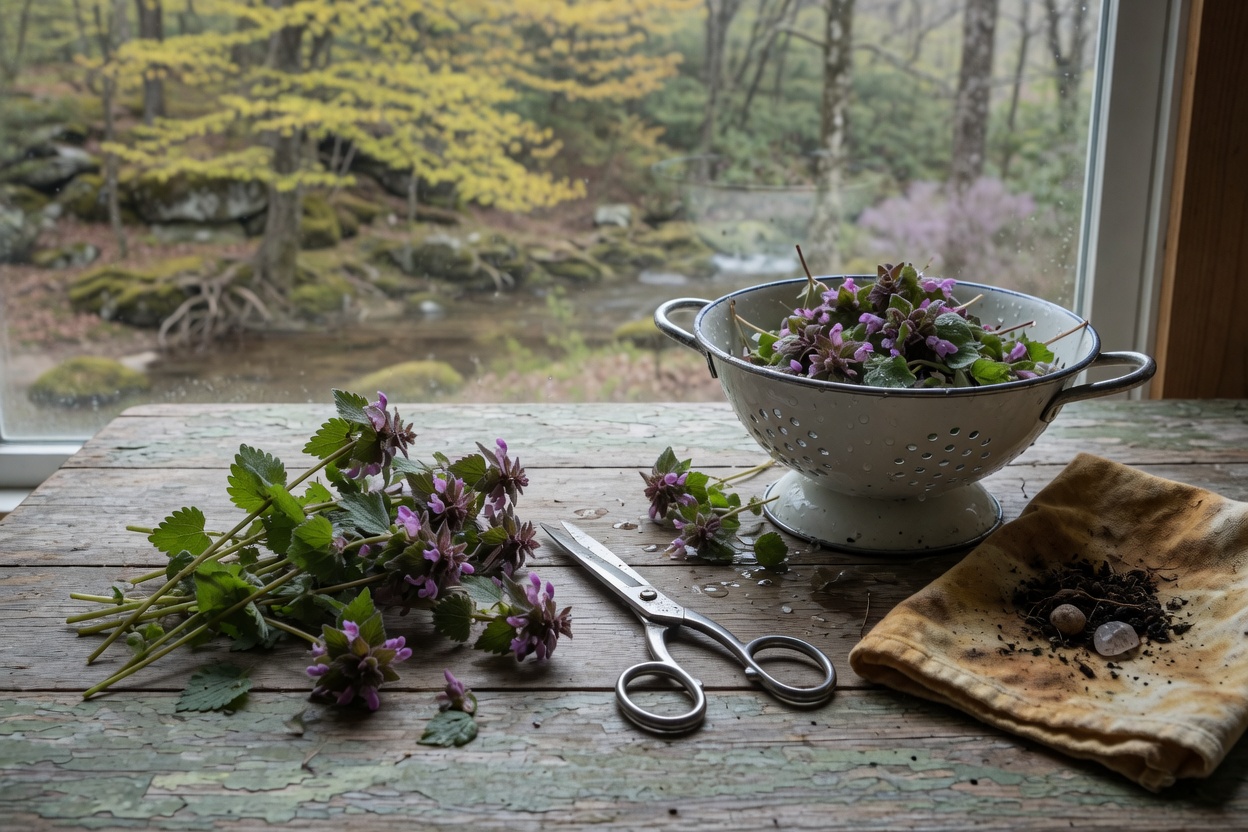
Cut the top four to six inches of the plant, the purple-tinged tips and the leaves just below them, with a pair of clean scissors. Leave the lower stem and the roots in place, and the plant will push out more. Because it spreads so freely, you can take a good handful from a healthy patch without hurting it. Still, I only take what I’ll use, because wilted leaves in a bag are a small waste.
Shake the plants out to dislodge insects and dirt, then rinse them in cool water and spin or pat them dry. Late winter plants come up muddy.
How it’s been used, traditionally
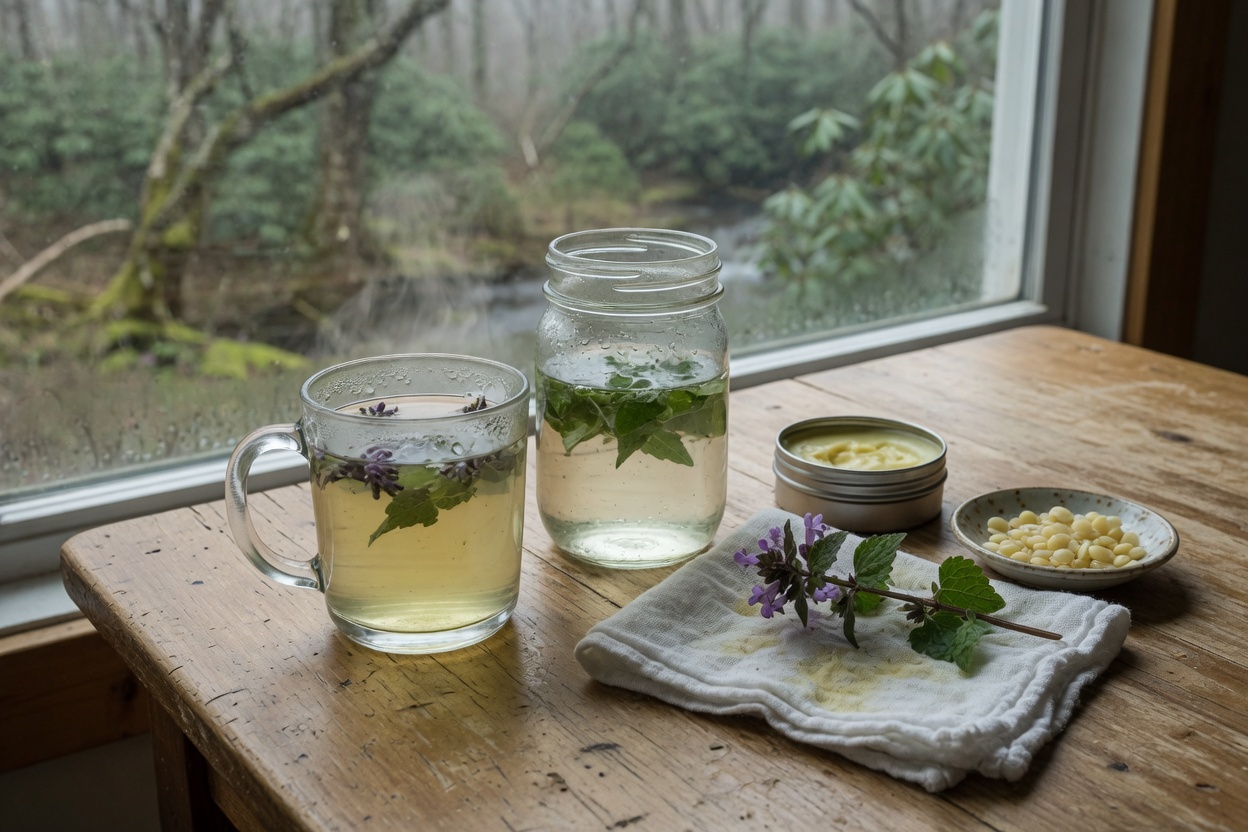
Folk herbalists in these mountains have long kept purple dead nettle as a gentle spring plant. I’m describing old practice here, not giving medical advice, and I’m not going to hand you doses.
As a tea. Steep a small handful of fresh leaf, or a teaspoon or so of dried, in a pint jar of hot water for ten minutes, and strain it through cheesecloth. It is mild and green-tasting, a little like a soft mint. That’s my grandmother’s way, and it’s how I make it for company who say they don’t like herbal tea.
As a fresh poultice on a minor scrape. The old practice was to crush a few clean leaves and lay them on a small, clean cut or scrape. I’d wash the wound with clean water first, and I’d say plainly that this is for the kind of scrape a child gets on a fence, not a deep cut. A deep or dirty wound needs real care. A poultice is no substitute for a doctor.
As a salve. Dry the leaf completely first, since fresh leaf in oil can mold or spoil. Then infuse it in jojoba oil, strain it, and set it with beeswax into small tins. The method is the same one I use in my yarrow salve, and you can follow that post start to finish.
I don’t have a Cherokee source on this particular plant to cite, so I won’t say anything about how it was used by the Cherokee. What I know of it comes from my grandmother’s kitchen and the mountain women around her, and I say so.
Drying and keeping it
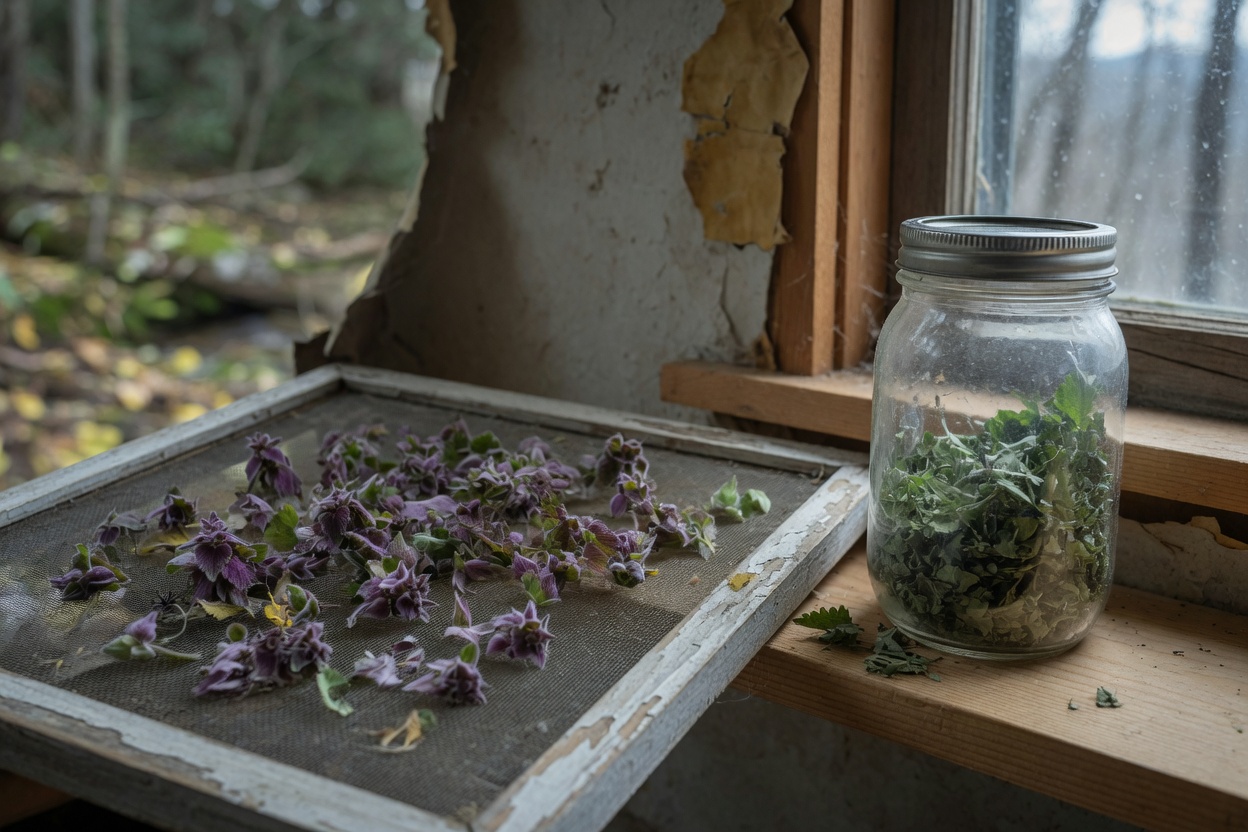
To dry, spread the clean leaves in a single layer on a screen or a clean cloth, somewhere dry and airy out of direct sun, and give them a week or so. Our winters are damp, so don’t rush it. Leaves should crumble, not bend. A damp leaf will mold in the jar. Pack the dried leaf loosely in a mason jar, label it with the plant and the date, and keep it out of the light. I covered the humidity side in how to store mountain herbs through a humid winter.
A small plant, a good first one
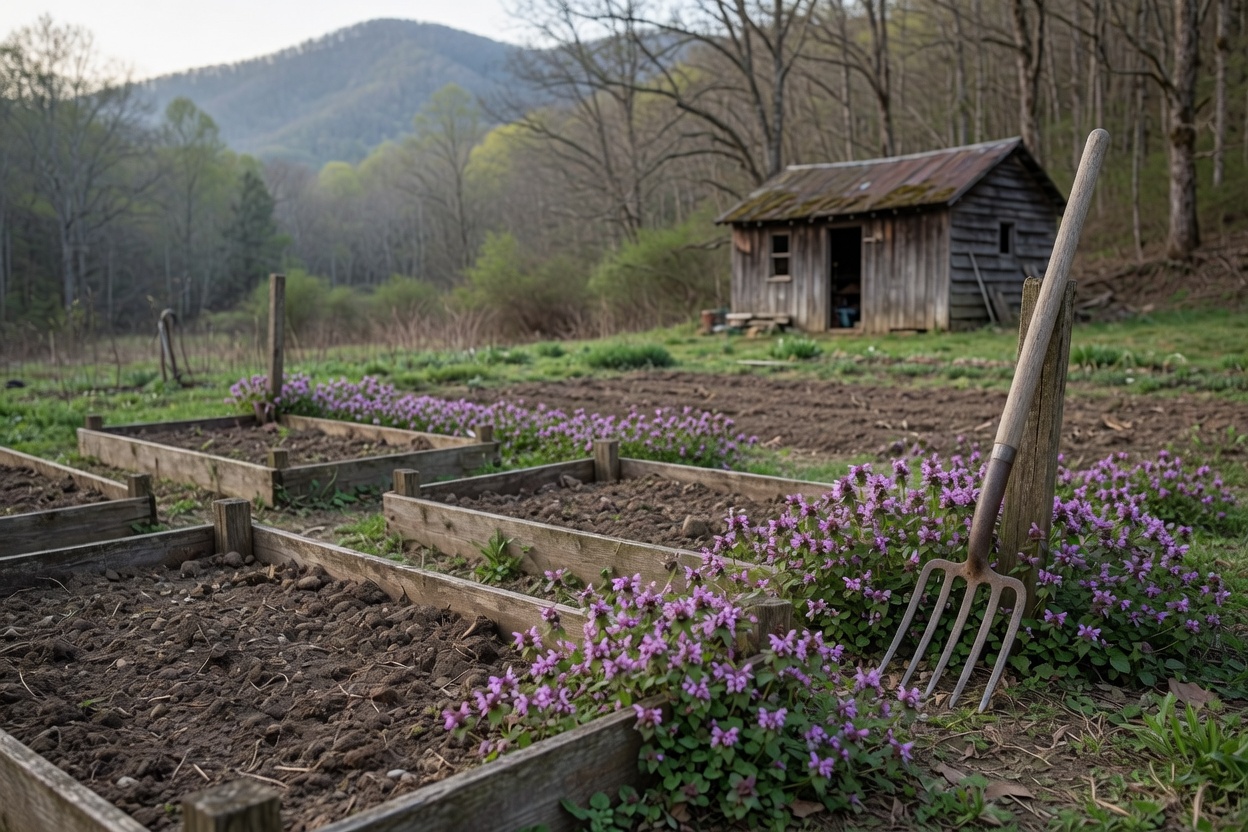
If you’ve never gathered a wild plant, this is a decent place to start. It’s common, it’s low-risk to identify with care, and there’s no conservation worry, since it isn’t a plant anyone is running short of. Learn it in the garden you already know before you go looking for it anywhere else. My longer notes on dangerous look-alikes of Appalachian medicinals are worth reading before you gather anything new.
I wrote up the plants I know best, the ones that grow in these hills and how the people here have used them, in Appalachian Medicinal Plants. It’s the deeper resource, with the identification and the stewardship notes that a single post can’t hold. Purple dead nettle is just where I start every year.
