How to Set Up a Chicken Quarantine Pen (and Use It)
A chicken quarantine pen protects your flock from new and sick birds. Here's how I set mine up on a small lot, what goes in it, and how long birds stay.
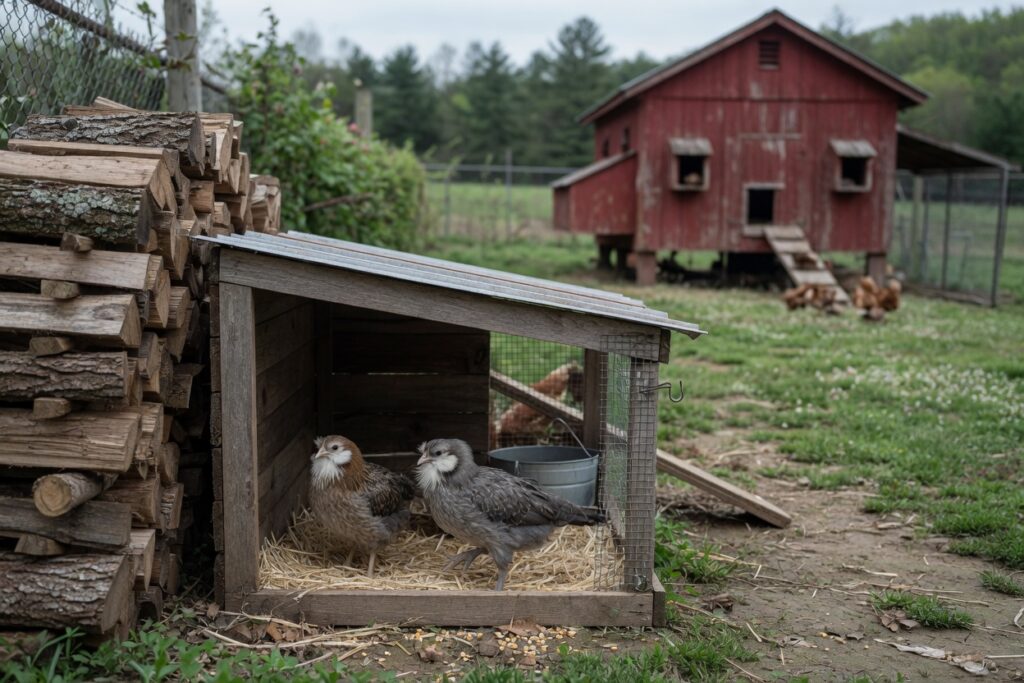
The year I brought home two Easter Egger pullets from a feed-store swap, I put them straight in with my flock because they looked fine. They were fine, for about nine days. Then the sneezing started, then a wet eye on one of my Australorps, and then I spent three weeks on the phone with a poultry vet in Knoxville wondering how many of the girls I’d lose. I didn’t lose any, but I came close enough that I built a quarantine pen that weekend and haven’t skipped it since.
It is the cheapest piece of insurance you can put on a small lot, and it does two jobs. It keeps new birds apart until you know they aren’t carrying something. It also gives a sick bird of your own somewhere to be while you figure out what’s wrong.
Where the pen goes
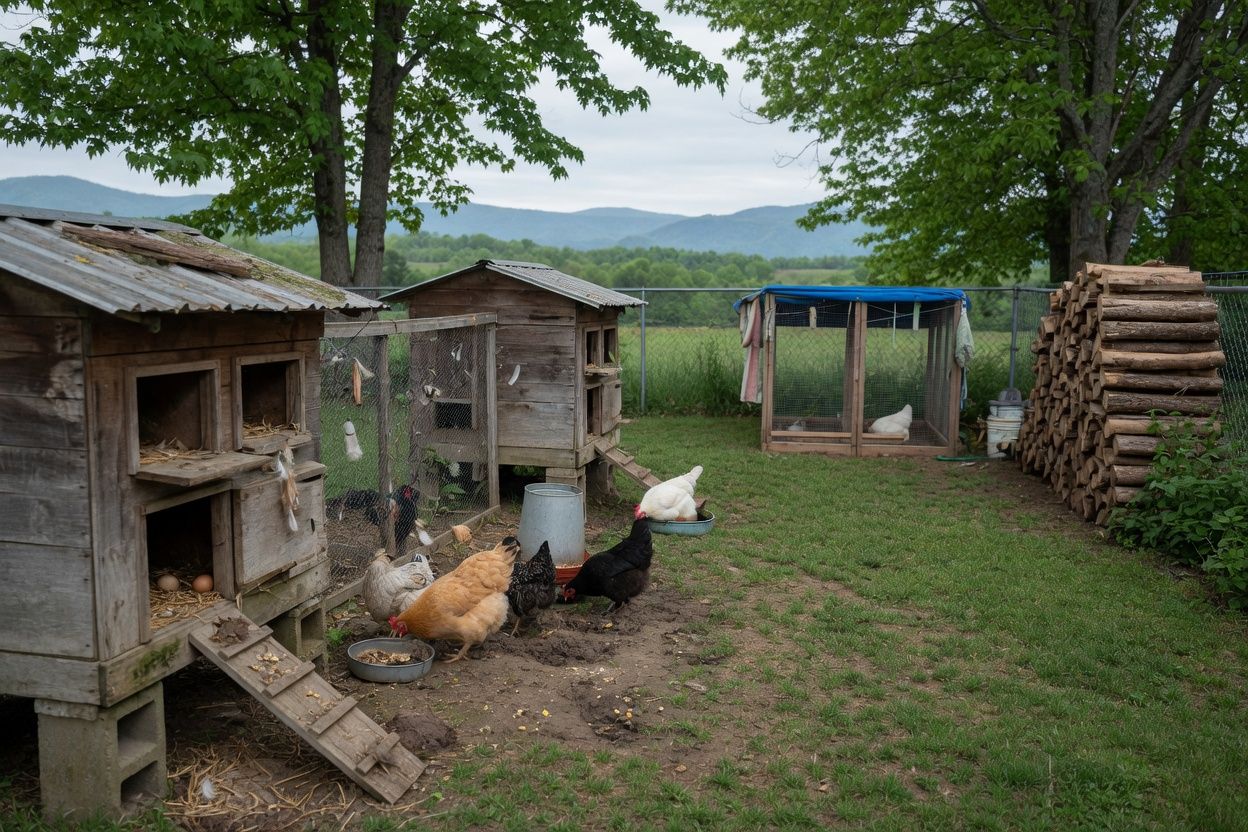
Put it far from the main coop. I mean it. Chicken respiratory germs travel on air, on shoes, and on hands, so a pen that shares a fence line with your flock isn’t much of a quarantine. Aim for at least 20 to 30 feet, and farther if your yard allows it.
On my one and a half acres that means the back corner by the woodpile, downwind of the coop. Check which way your prevailing wind runs before you choose, because that’s the direction the air will carry anything the new birds shed. If you have neighbors on three sides like I do, think about them too. A pen that smells in August is a conversation you don’t want to have over the fence.
You don’t need anything fancy. I’ve used:
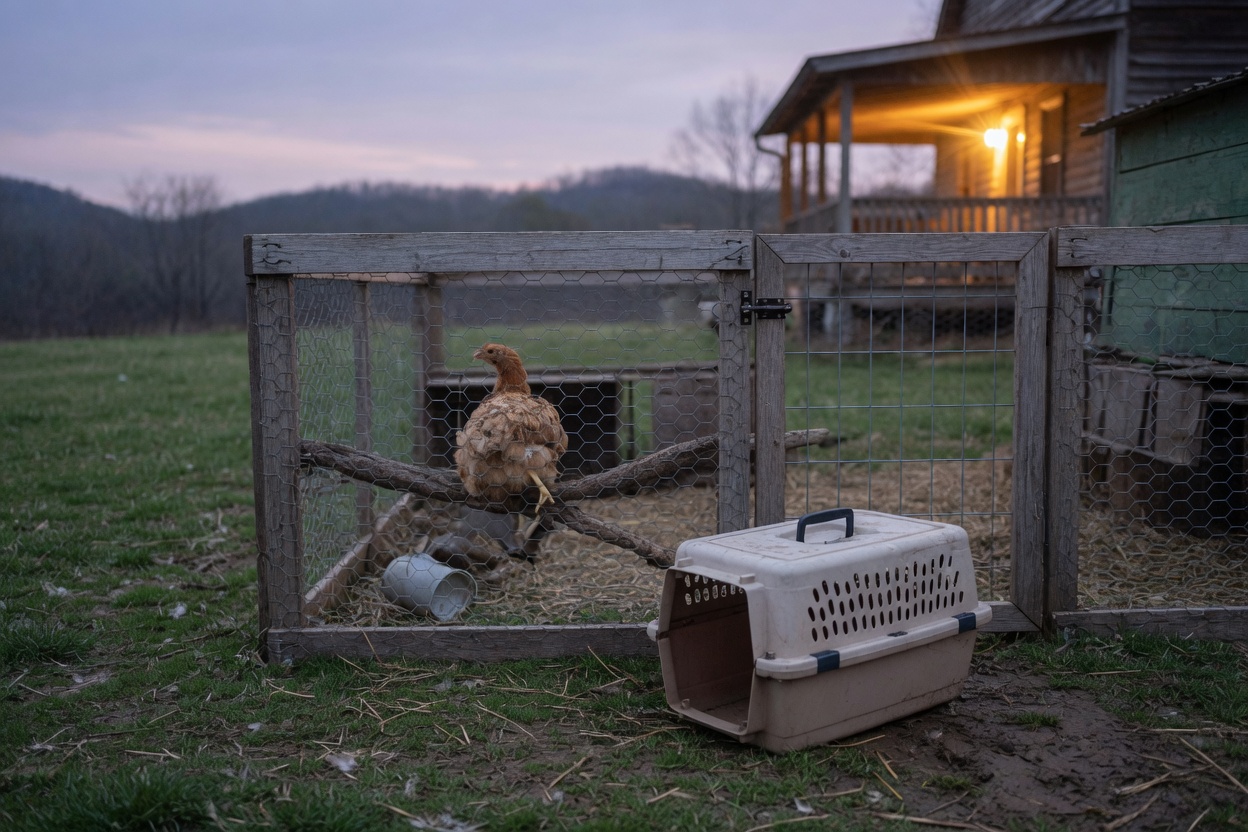
– A large dog crate with a tarp over the top, for one or two birds.
– A spare 4×4 rabbit hutch with hardware cloth sides.
– A small prefab run with a solid roof, which is what I use now.
Whatever you pick, it needs a solid roof or cover, hardware cloth (not chicken wire, which a raccoon will peel back in a few minutes), a dry floor, and shade. A sick hen in an exposed pen is an easy target for a hawk.
What goes inside
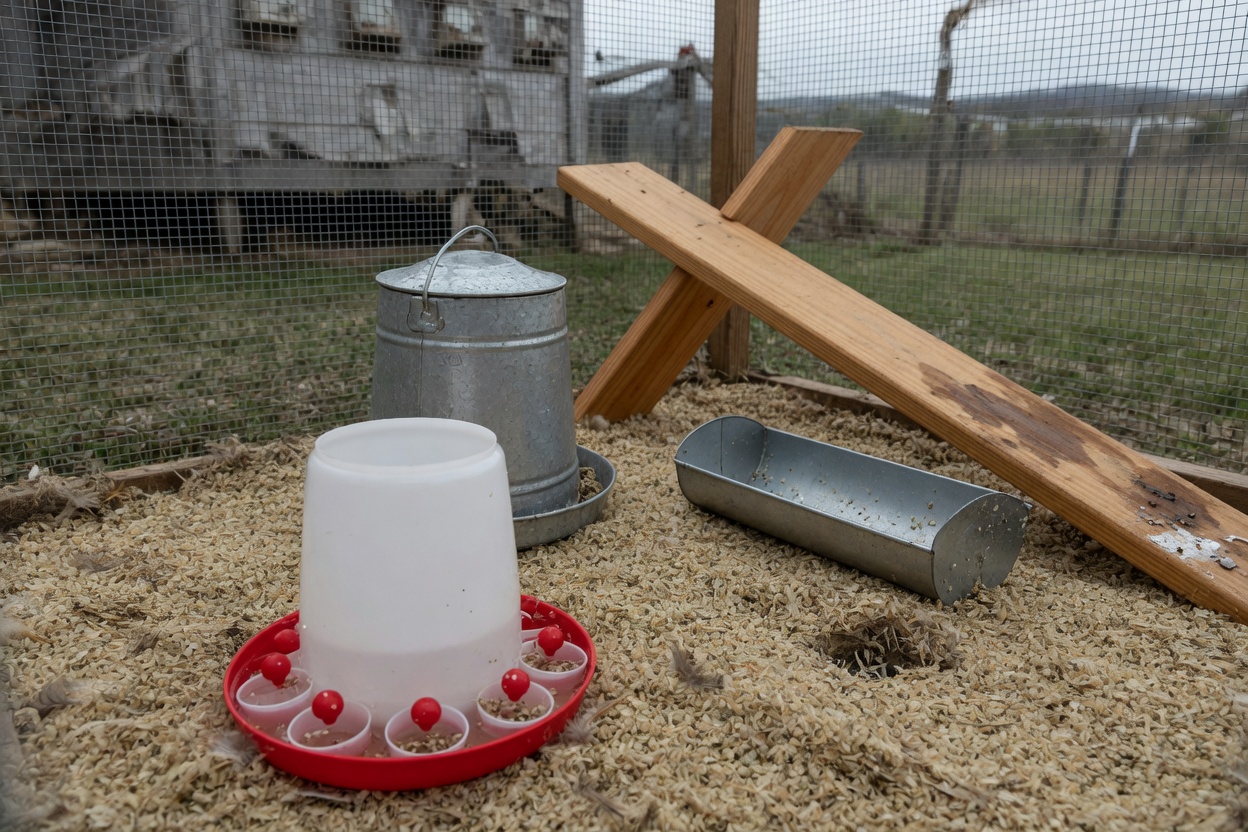
Keep it plain. Anything that goes in the pen should be something you can wash or throw away.
Bedding. I put down a thick layer of hemp bedding because it stays dry and it isn’t dusty, which matters if a bird already has a respiratory problem. When quarantine ends I bag it all and put it in the trash, not the compost pile. Do not spread it near the flock.
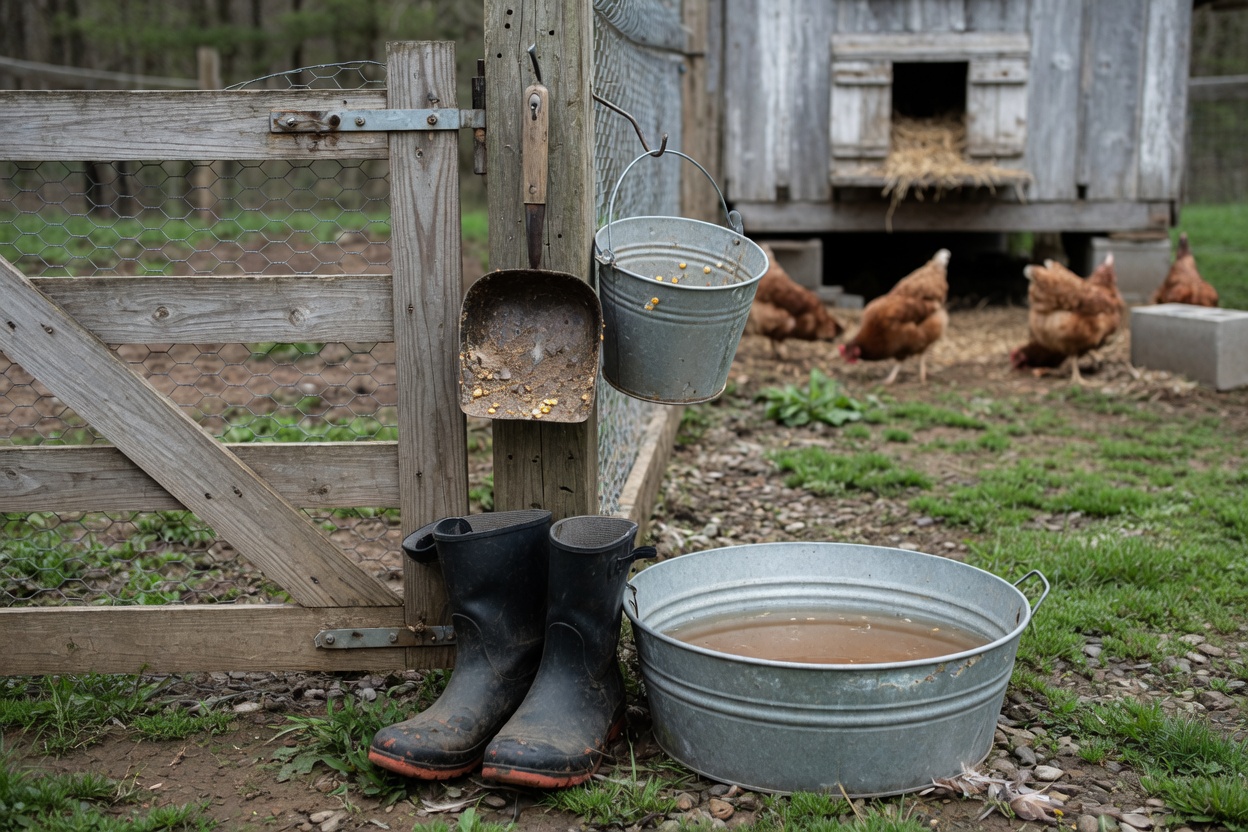
Water. Use a nipple-and-cup waterer if you can. Open water bowls spread sickness fast, and birds that are feeling poorly tend to stand in them. I keep a galvanized fount as a backup, because metal scrubs and sanitizes better than plastic. If you want a refresher on keeping water systems clean, I wrote up how to keep chicken waterers clean.
Feed. A separate feeder, a separate scoop, and a separate bucket. Nothing travels between the pen and the main flock.
A roost. A single branch or a two-by-two across a corner, low to the ground.
Electrolytes. A packet of poultry electrolytes is worth having in the cupboard. I add it to the water for birds that have been through a stressful trip, like shipping or a long car ride home from a swap. It is an over-the-counter supplement, not a treatment. If a bird is sick, a supplement is not the answer. A vet is.
How long to keep birds there
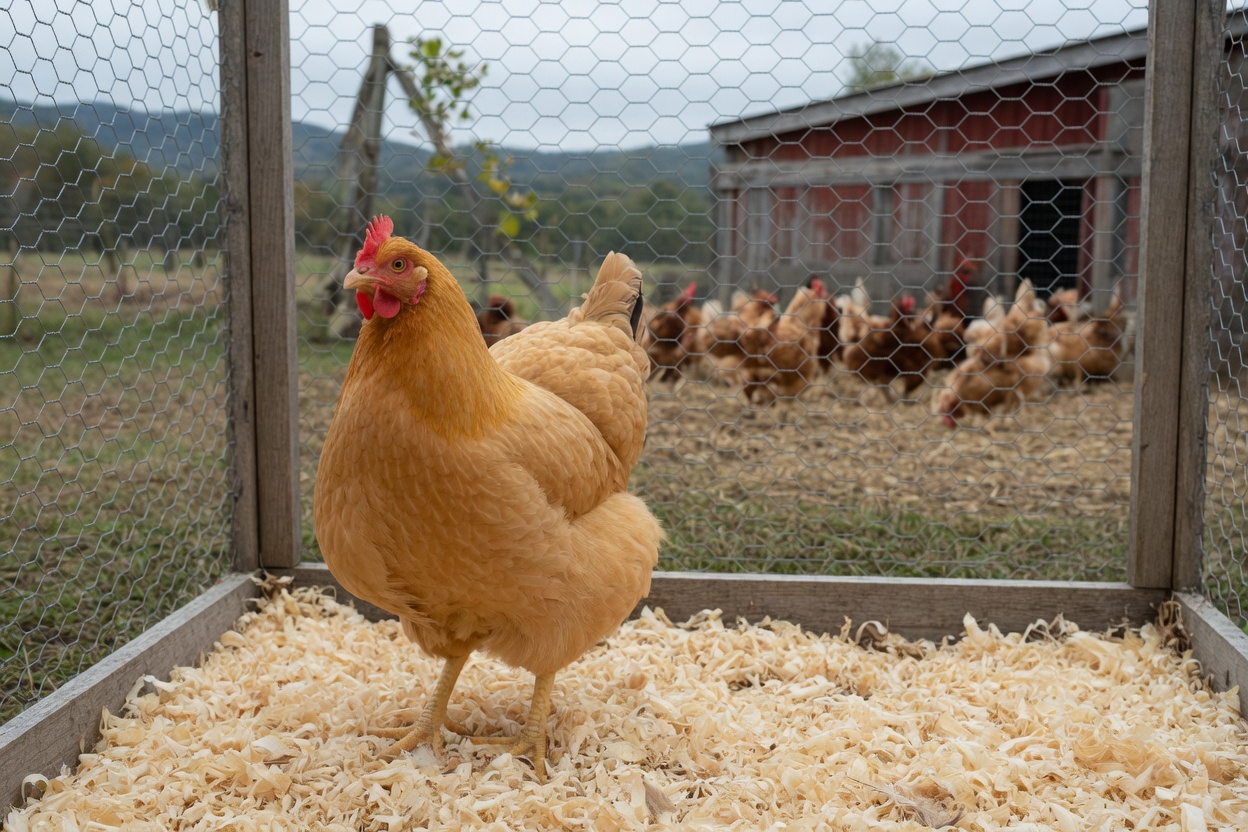
The number most people give is 30 days, and it’s the number I use. Some respiratory illnesses and mites don’t show up for a couple of weeks, and a bird can carry some diseases without looking sick at all. Thirty days is long enough to catch most of what a new bird might be hiding, though it isn’t a guarantee, and I won’t pretend it is.
For the whole month, watch for:
– Sneezing, rattly breathing, or a bird that holds its beak open.
– Watery, swollen, or bubbly eyes.
– Runny droppings that stay runny.
– Crusty scales on the legs, or itching and feather loss, which can mean mites.
– A bird that hunches in a corner and stops eating.
My piece on how to tell if a chicken is sick goes through those signs in more detail.
The part people skip: your own routine
A quarantine pen only works if you run it like one. This is where I’ve seen it fall apart.
Do the quarantine birds last. Feed, water, and collect from your main flock first, then the pen. If you work in the other direction, you’ve just carried whatever’s on the new birds over to the girls.
Keep a pair of boots by the pen. I leave an old pair at the gate, and I change into them every time. A bucket of diluted disinfectant to dip them in is better still.
Wash your hands before you go back to the main flock. Yes, every single time.
Don’t share tools. If you must, wash and dry them first.
I know this sounds like a lot for three chickens in a backyard. It’s a few extra minutes a day, for a month. Compared with losing a flock, it’s nothing.
When quarantine isn’t enough
If a bird in the pen gets sick, I call a vet who sees poultry. I’m not a vet, and I’m not going to guess at a diagnosis from a photo or hand you a drug name. The American Association of Avian Pathologists has a directory, and your county extension office can usually point you to someone local. Here in Knox County, ours does.
If a bird dies, ask the vet or your state agriculture lab about a necropsy. It costs a little, and it tells you what you were up against, which is worth knowing before you add more birds.
When quarantine ends cleanly, you still need to introduce the newcomers slowly. I covered how I do that in introducing new chickens to your flock.
If you want the first-year version of all this, what to set up before the chicks arrive and what to expect month by month, I put it in my book, Raising Backyard Chickens for Beginners. A quarantine pen is a small weekend project. It might be the one that saves your flock.
