How to Grow Ginger in a Pot, Even Without a Yard or a Garden
Yes, you can grow ginger in a pot. Start a grocery-store rhizome indoors this winter, keep it warm, and harvest tender baby ginger by late summer or fall.
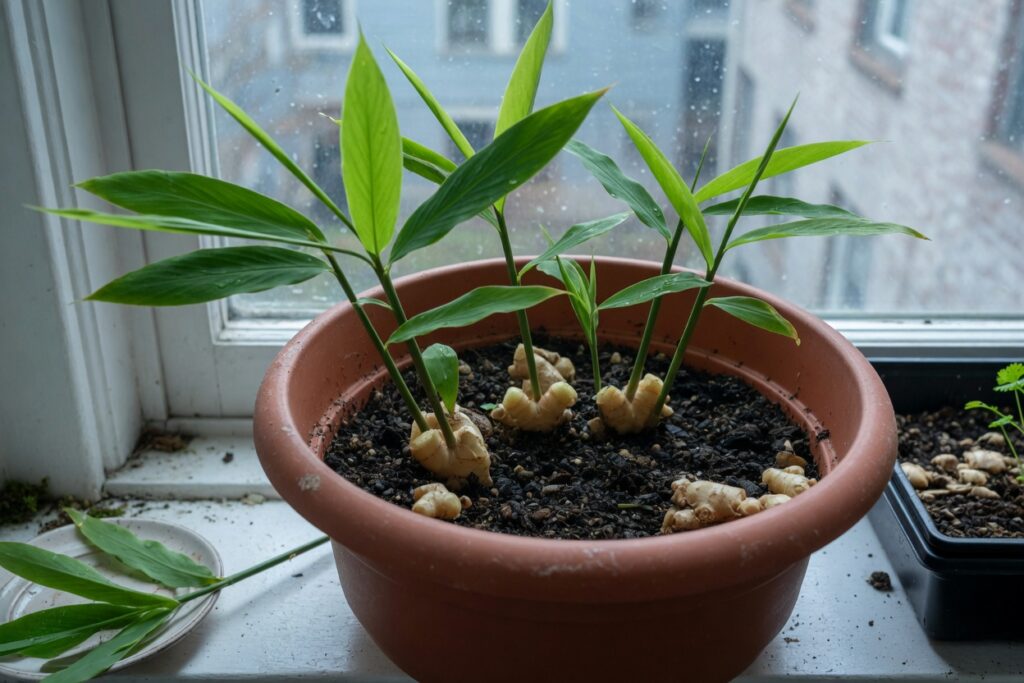
Ginger is a slow project, and I’ll say that up front so you don’t feel tricked at month three. The first piece I planted sat there for five weeks looking exactly like a lump of beige root. I was ready to dig it up and call it a grocery-store experiment gone wrong. Then a pale pink-green tip pushed out of the soil, and I’ve grown it every year since.
It’s a good plant for a small space because it doesn’t want much sun. It wants warmth, steady moisture, and time. You start it indoors in winter, move it out when nights are warm, and by late summer you’re pulling up fresh, thin-skinned ginger you can’t buy in a store.
You’ll also need a piece of ginger. That’s the whole shopping list for seed, and it comes from the produce aisle.
Pick the right piece of ginger
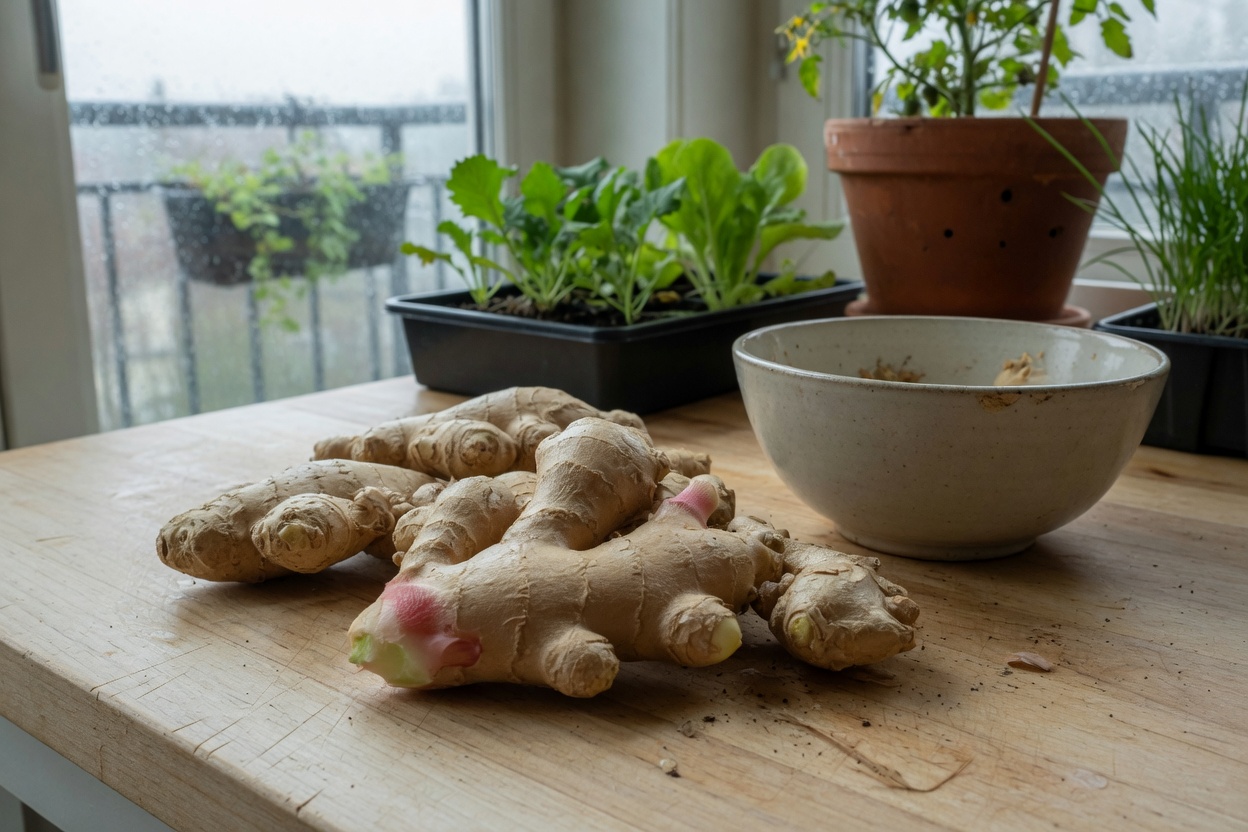
Look for a plump, firm rhizome with a few small knobby bumps at the ends. Those bumps are growth buds, sometimes called eyes. If the skin is shriveled or the pieces look dry, skip it.
Buy organic if you can. Conventional grocery ginger is sometimes treated with a growth inhibitor that keeps it from sprouting on the shelf. Organic is usually untreated. If all you can find is conventional, soak the piece in room-temperature water overnight before you plant it. It’s a cheap bit of insurance, though it doesn’t always work.
Cut or break the rhizome into pieces about an inch or two long, each with at least one or two buds. Let the cut ends dry on a plate for a day so they callus over. Planting a wet, freshly cut piece is an invitation to rot.
Start in winter, indoors
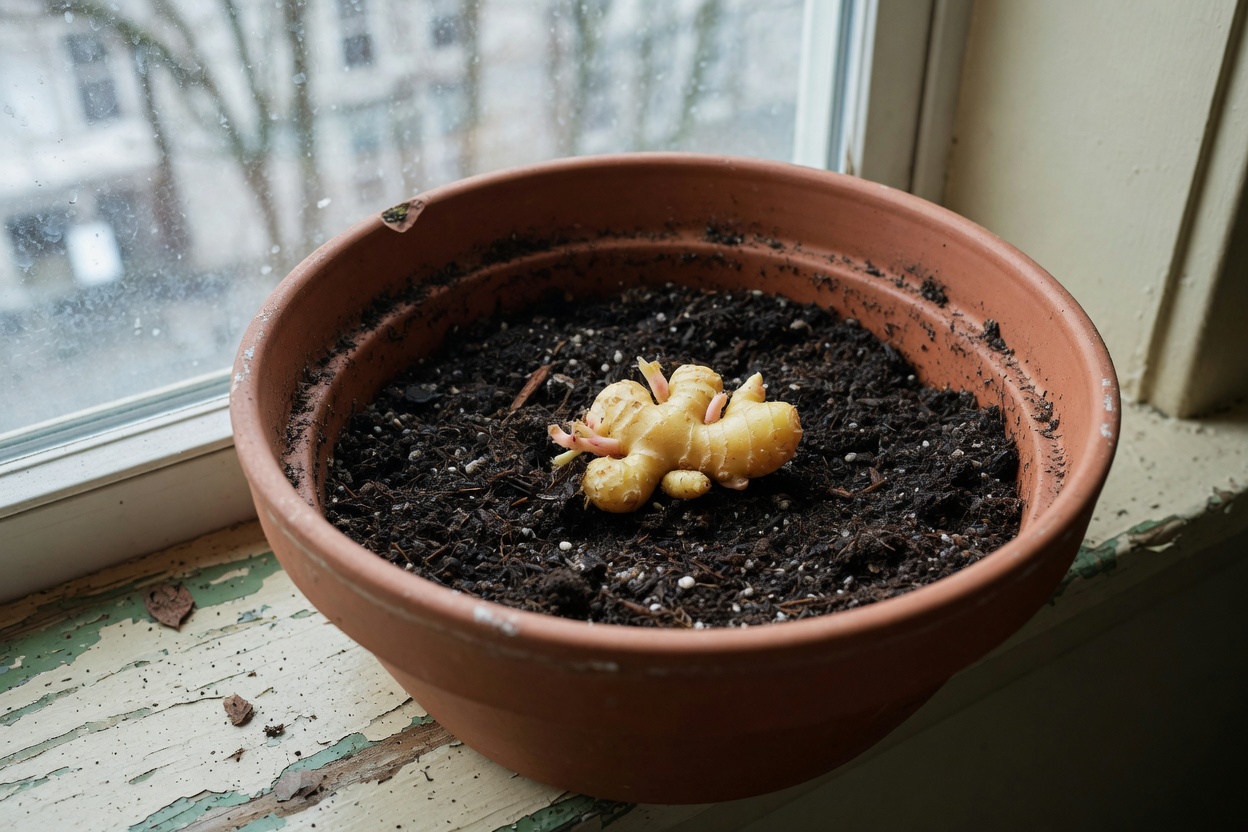
Ginger takes eight to ten months to reach full size, which is why the timing matters. If you start it indoors around January or February, you’ll have a plant ready to go outside once nights stay above 55 degrees, and enough summer left to build a real rhizome.
It wants warmth to sprout. Aim for room temperature or a little above, in the low 70s or warmer. A cool windowsill in a drafty apartment will slow everything down, and the soil just sits there. A shelf near a heating vent or on top of the refrigerator can help, as long as you keep an eye on it.
Planting it, step by step
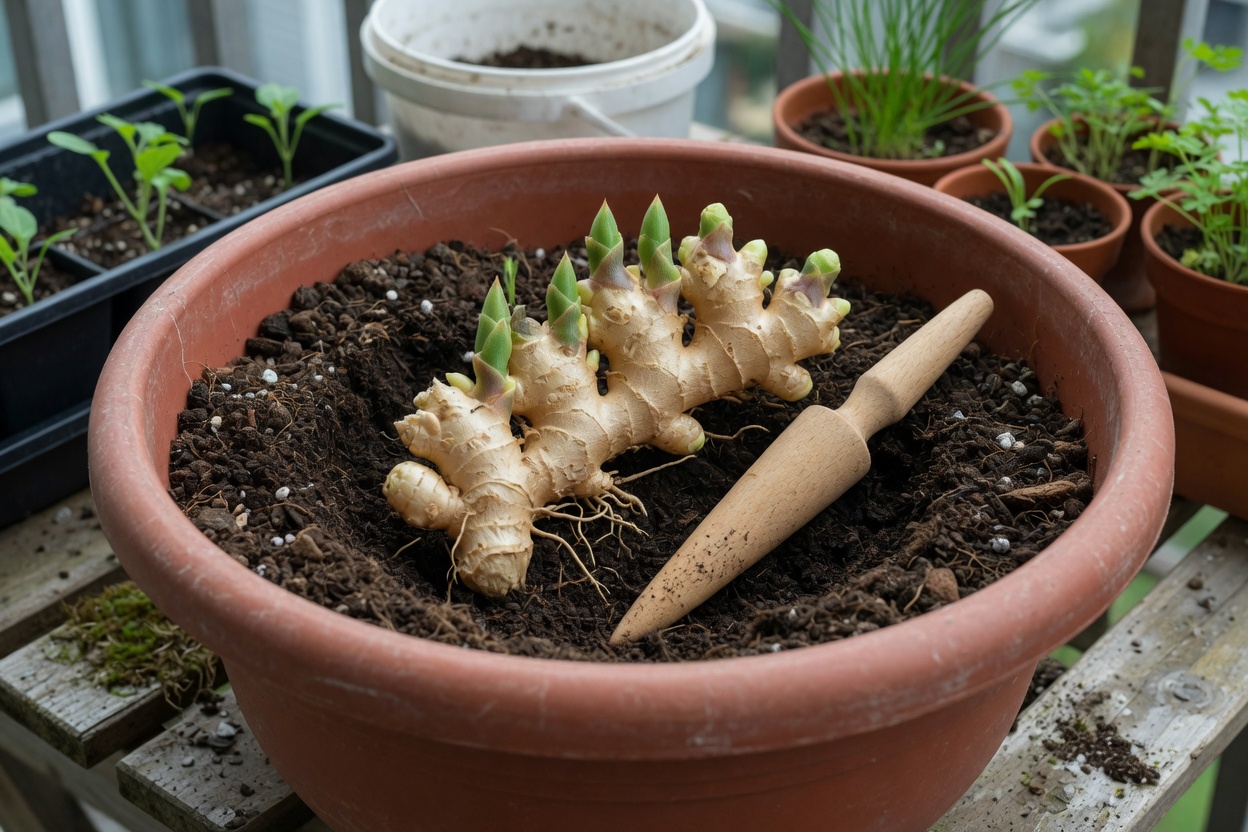
1. Fill your container. Ginger grows sideways, not down, so a wide, shallow container beats a tall, narrow one. I use a fabric grow bag and fill it about two-thirds full of potting mix, which leaves room to add more as the plant grows.
2. Set the pieces on top, buds up. Lay them a few inches apart and cover with about an inch or two of mix. Don’t bury them deep.
3. Water gently and wait. The mix should feel like a wrung-out sponge, damp but not dripping. This is where a moisture meter earns its keep. Push it down to the root zone before you water. Ginger sprouts slowly, sometimes three to eight weeks, and in all that waiting the temptation is to water again. Don’t. A rhizome sitting in wet soil with no leaves to use that water is what rots.
4. Give it bright, indirect light. Once green shoots appear, put the pot where it gets a lot of light without direct, scorching sun. An east window works. A west window with a sheer curtain works too.
Growing it on
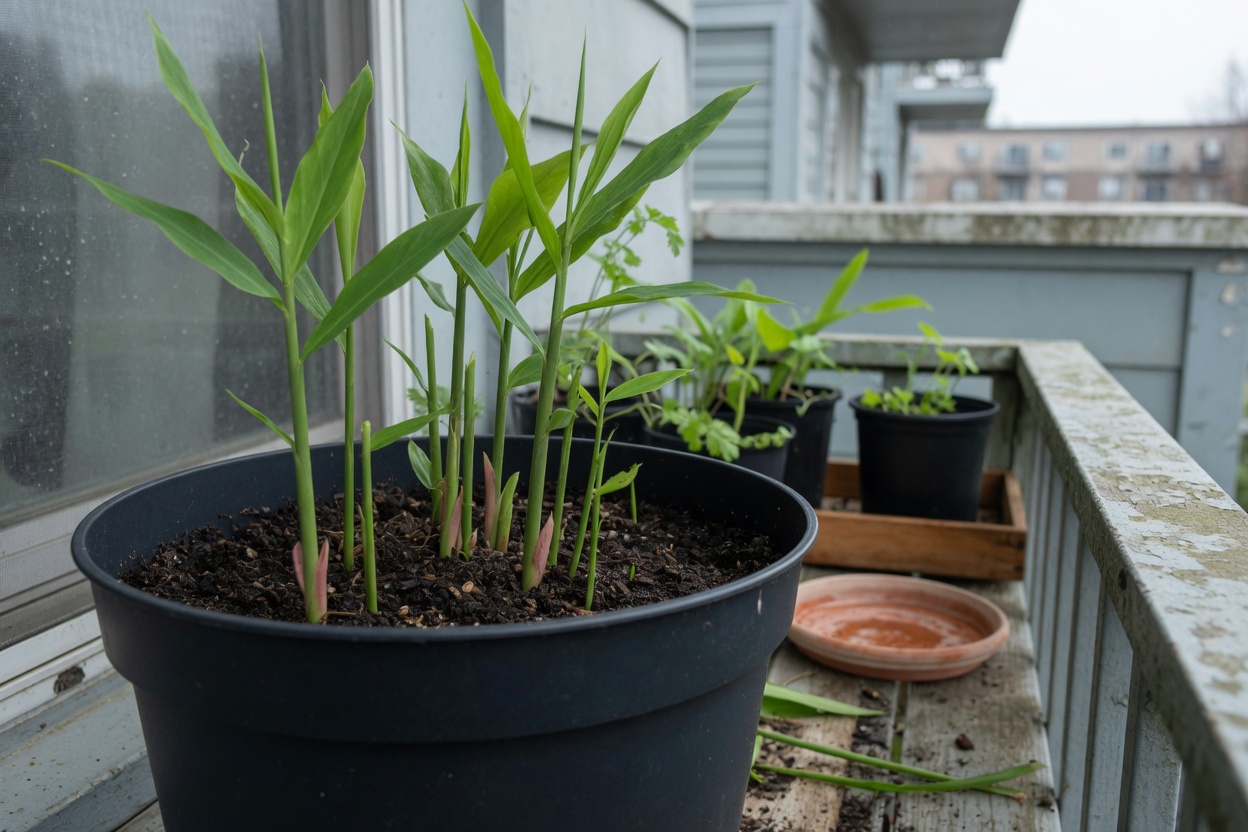
Keep the soil evenly moist and the plant warm. Ginger likes humidity, so a quick misting now and then helps if your home is dry from winter heating. Feed it every month or two with a gentle fertilizer once it’s growing strongly. I use the same organic garden fertilizer I use on my container vegetables.
When nights stay above 55 degrees, carry the pot outside. A balcony that gets morning sun and afternoon shade is ideal. Ginger leaves scorch in hard afternoon sun, and the plant is happier in part shade than the tomatoes next to it. If your balcony is hot, move it back from the railing.
Water more often once it’s outdoors. A fabric bag dries out faster than a plastic pot, and a plant in summer heat can go from fine to wilted fast. If your containers dry out quickly, my post on how to fix an overwatered container plant covers the flip side of that problem, which is just as common.
Harvesting
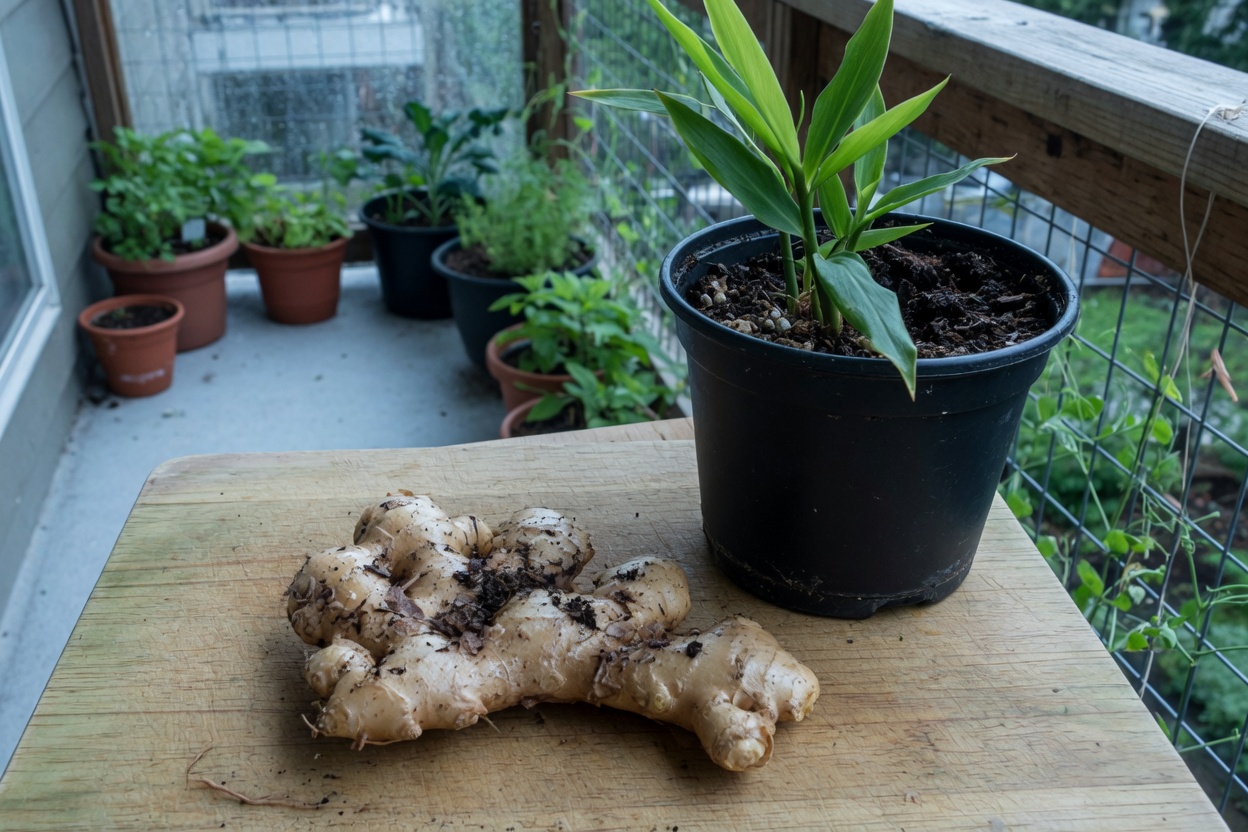
You have two choices, and both are fair.
Baby ginger. Around four to five months after planting, you can gently dig around the edge of the bag and take a small piece. This ginger is tender, with thin pink-tinged skin and a milder flavor. You don’t even need to peel it.
Mature ginger. Wait until the leaves start yellowing and falling over in fall, around eight to ten months from planting. Dig up the whole rhizome. The skin is firmer, the flavor is sharper, and you get more of it.
Save a couple of the fattest pieces to replant. That’s how you keep a ginger pot going year after year, and it’s a nice small loop that costs nothing.
What to expect, honestly
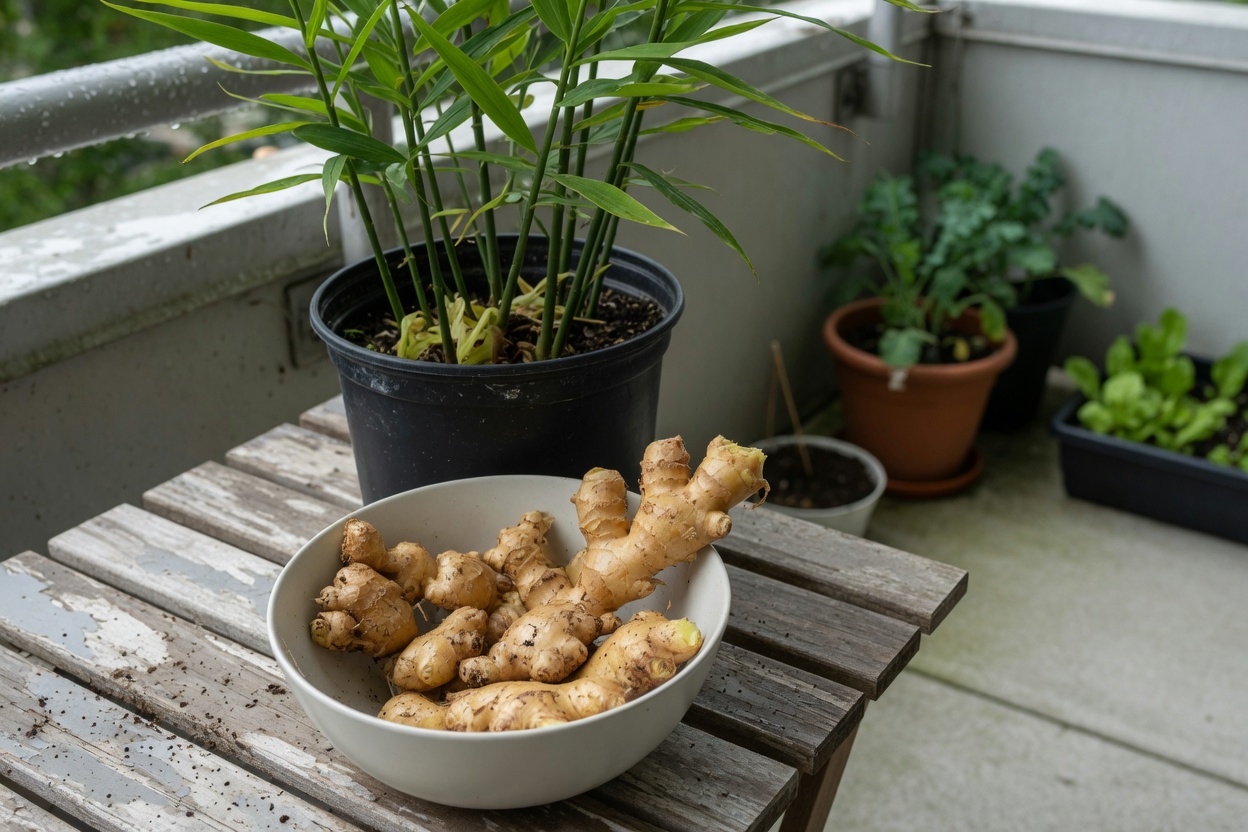
A single bag will not give you a year’s supply. My first bag gave me about as much as I’d buy in a couple of small grocery bags, and I was thrilled anyway. You’re growing this for freshness and for the satisfaction, not because it saves money.
If you’re short on windowsill space, ginger grows well alongside other kitchen plants. I wrote about how to regrow kitchen scraps on a windowsill if you want a few more things to try with what’s already in your fridge. And once the weather turns cold and you bring your pots inside, how to water container plants in winter will help you avoid the easy mistake of loving them too much.
A piece of ginger, a bag of soil, and a warm corner. It’s a small gentle pleasure to cook with something you started in January.
I go deeper on getting more out of a few pots in my book, Small-Space Big Harvest.
