How to Make an Herbal Decoction From Roots and Bark
An herbal decoction is how you get the most from tough roots and bark. Here's how I simmer, strain, and store one, with the mistakes that cost me batches.
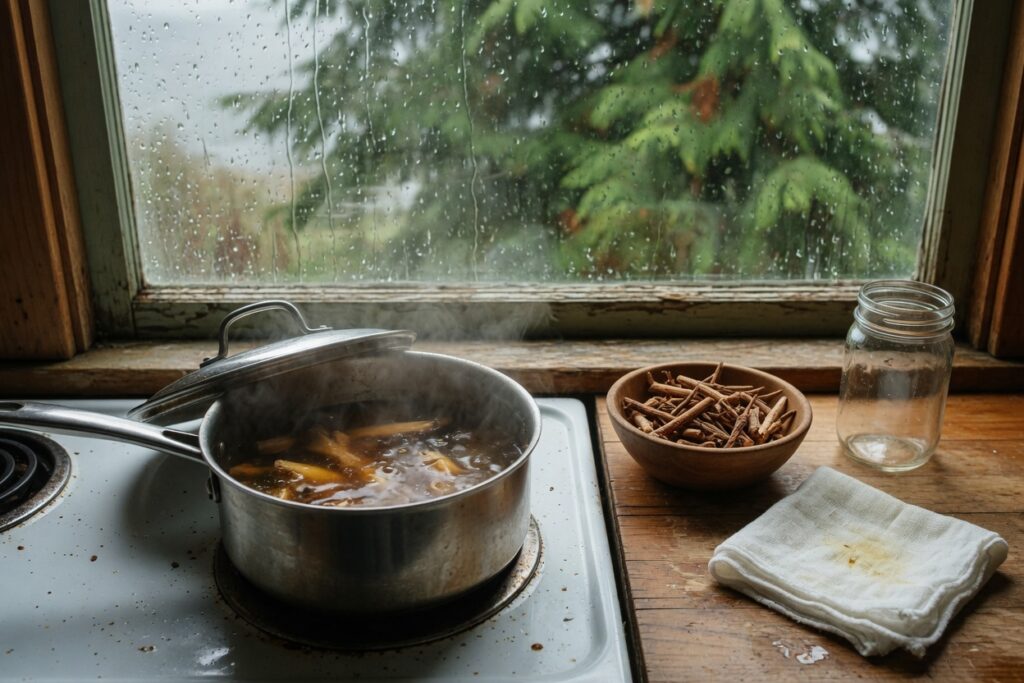
The first decoction I ever made, I made the way you’d make tea. I poured boiling water over a handful of dried root, put a saucer on top, and came back twenty minutes later to a cup of something that tasted like warm water with a rumor of dirt in it. Roots and bark don’t give themselves up to a steep. They are the tough, structural parts of a plant, and they want heat and time.
A decoction is the old answer to that. You simmer the material, you don’t steep it, and you do it gently and for long enough. I’ve been making them each fall and winter for close to twenty years, mostly from roots I dig and dry myself, and here is the method as I do it on the stove in my kitchen outside Sequim.
You’ll also need a stainless steel or enamel pot with a lid. I haven’t found an herb-specific pot worth pointing you to, and a plain saucepan you already own does the job. Skip aluminum. It reacts with plant acids and I won’t cook herbs in it.
What a decoction is, and when it’s the right tool
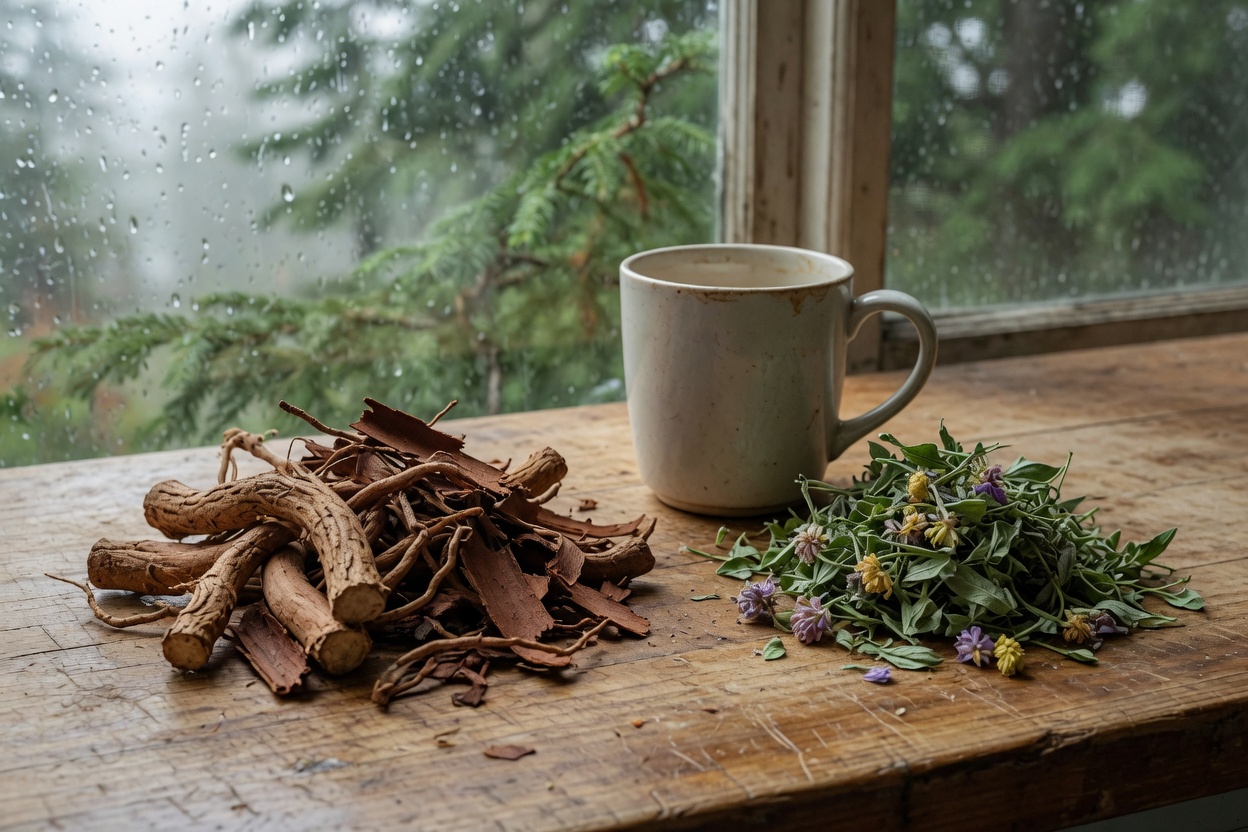
A decoction is a water extraction made by simmering. It suits roots, bark, seeds, and dense dried berries, the parts that are woody or hard. It does not suit delicate leaves and flowers, which lose their aromatics when boiled. For those, an infusion is the better method, and I cover the difference when I write about making herbal tea from foraged plants.
This is traditional-use information about how a method works. It isn’t medical advice, and I won’t hand you doses. If you are pregnant, nursing, or on prescription medication, talk to someone qualified before you take any plant preparation. That goes double for Oregon grape root, which contains berberine, and which herbalists have long steered pregnant women away from.
Choose your material
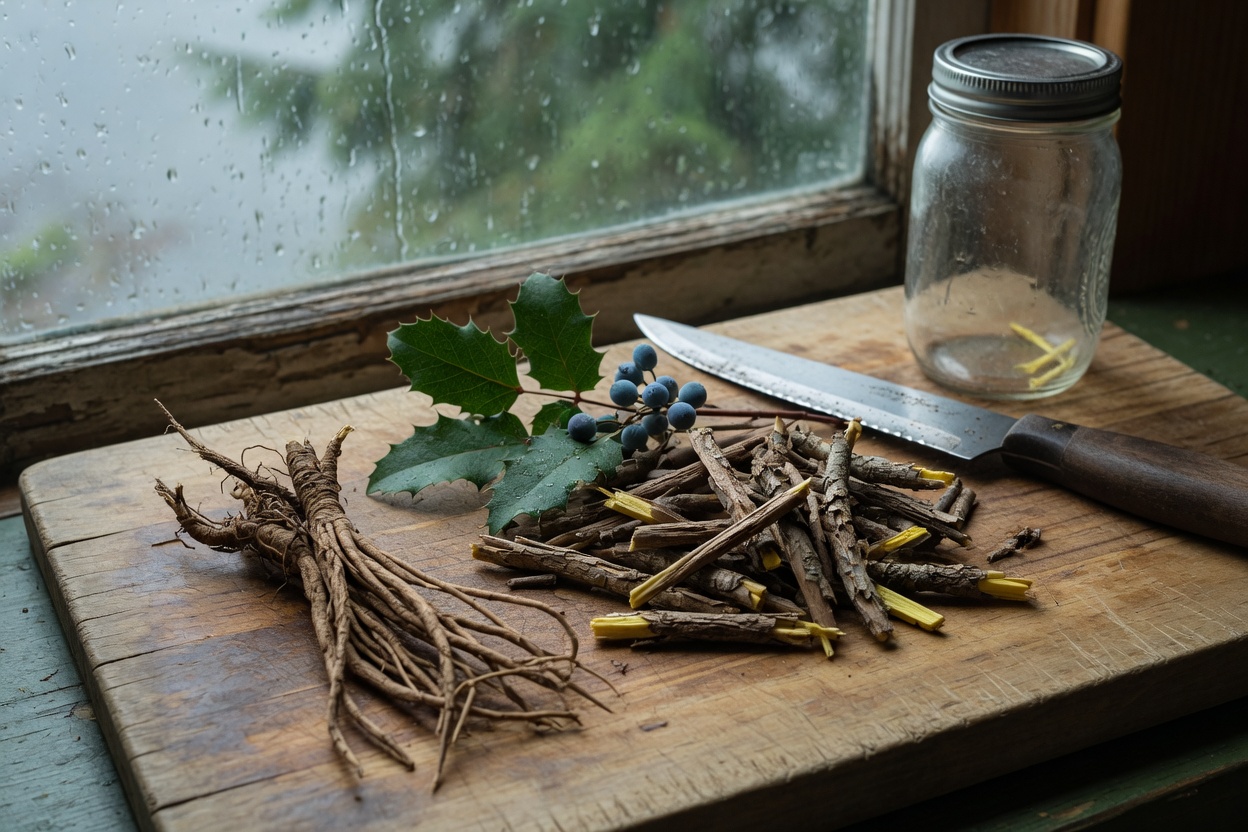
For a first decoction, use a root you can identify without a flicker of doubt, dried, and ideally from a source you trust. Dandelion root is forgiving and easy to find. Oregon grape root, Mahonia aquifolium, is another PNW staple, and I wrote up how I find and harvest it in how to forage and use Oregon grape. Dandelion has its own page in how to forage and use dandelion.
If you dig your own, fall through early spring is the window, when the plant’s energy is down in the root. Take a small share, keep your cut clean, and use a hori-hori to lever the root up rather than yanking it. I cover the digging in how to harvest medicinal roots in fall. Dry the root until it snaps, not bends. A damp root in a jar is a jar of mold, and I’ve thrown out more than one batch to prove it. How to store dried herbs so they last covers the signs.
The method, step by step
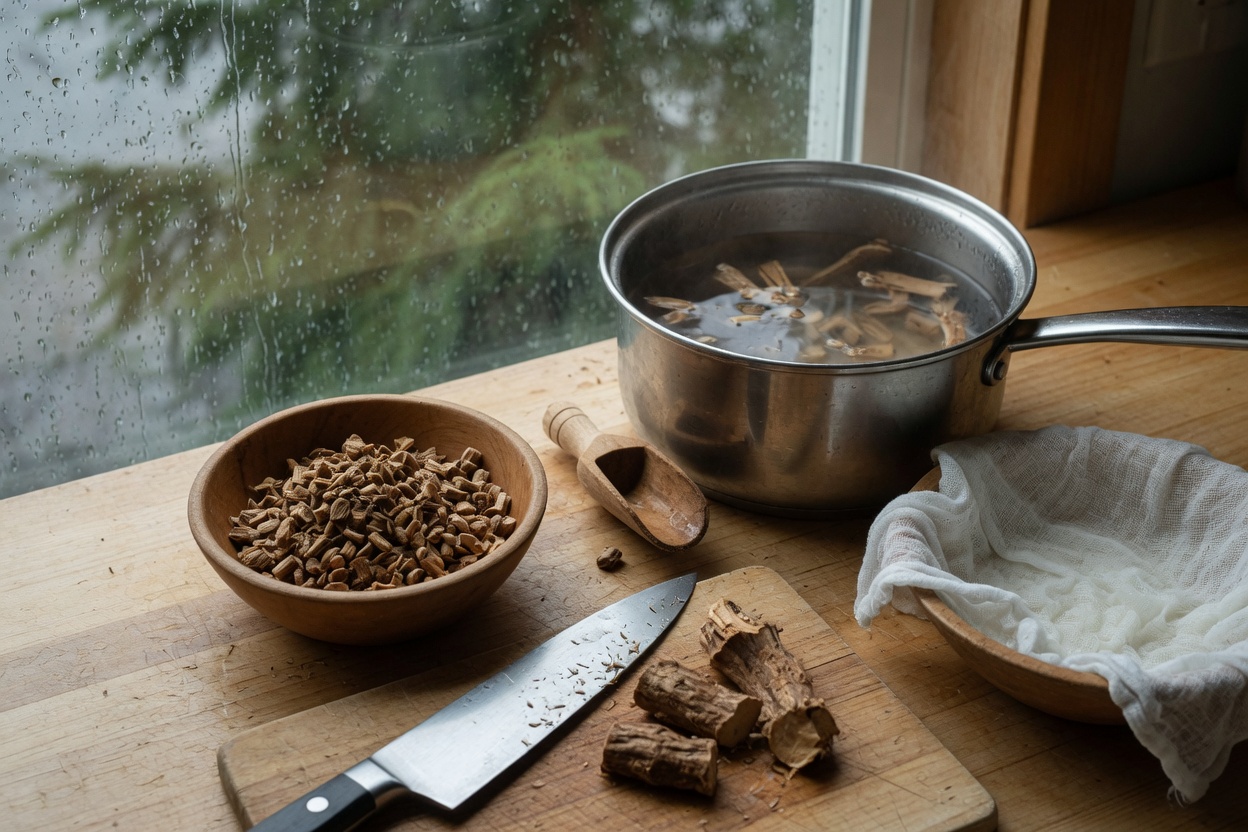
1. Chop the root small. A dried root is hard as a pencil. Cut it into pieces about the size of a grain of rice or a lentil, or crack it with the flat of a heavy knife. More surface area means a better extraction.
2. Measure by ratio, not by guess. My working ratio is about two tablespoons of chopped dried root to a pint of cold water. It is a preparation ratio, not a dose.
3. Start in cold water. Put the root and the water in the pot together before any heat goes on. Let it sit for twenty minutes if you have the time. The soak softens the root before it hits the heat.
4. Bring it to a boil, then turn it right down. You want a bare simmer, small bubbles at the edge and a little movement in the middle. A hard boil drives off aromatics and scorches the bottom of the pot.
5. Lid on, twenty to thirty minutes. The lid keeps the volatile parts from escaping, and the water level from dropping too fast. For very woody bark I go closer to forty-five. The liquid should reduce by about a third and turn dark.
6. Strain while it’s hot. Pour it through doubled cheesecloth set over a bowl, then gather the corners and give it a gentle squeeze. A decoction left sitting on the root keeps pulling out bitter material, and it clouds as it cools.
Where batches go wrong
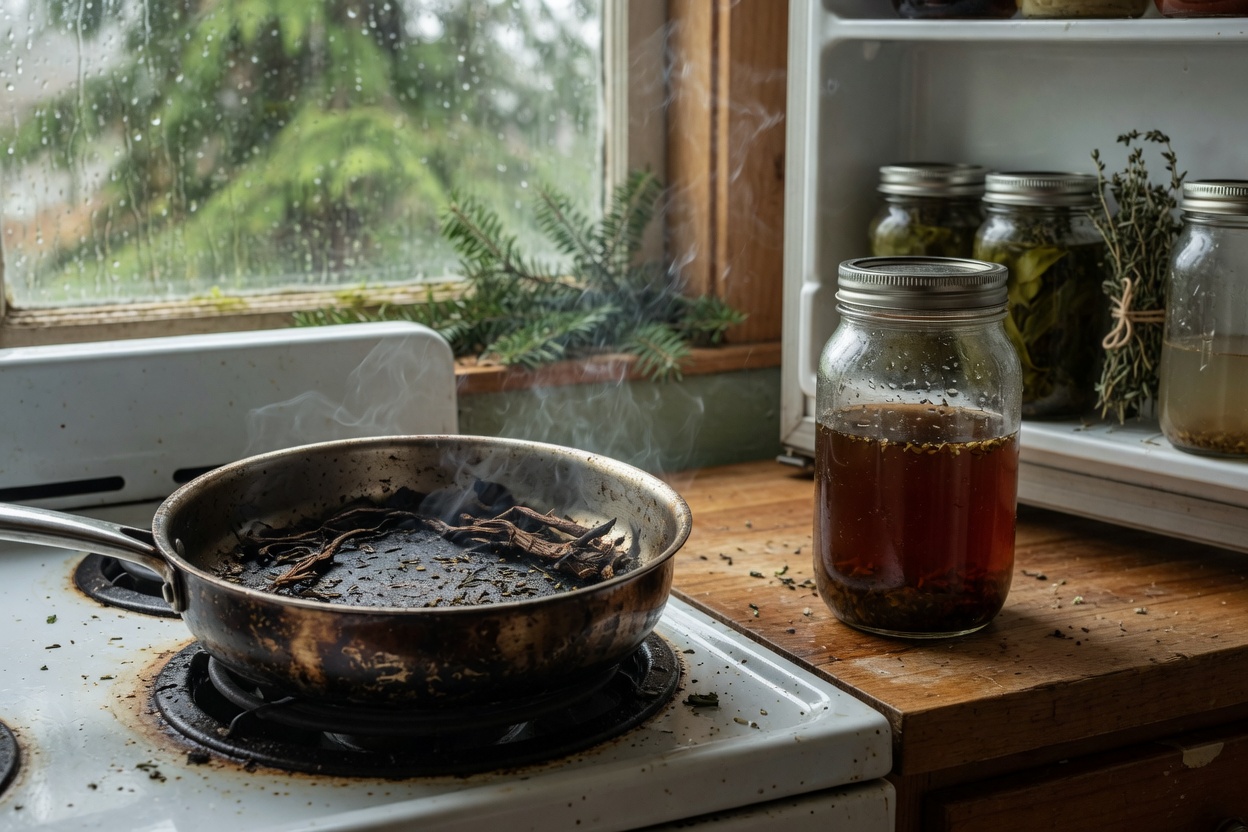
I scorched my first honest attempt by walking away from a pot at a rolling boil. The water dropped to nothing, the root stuck, and the whole kitchen smelled like burnt licorice for a day. A decoction wants your attention in the first ten minutes, and then you can leave it.
The second mistake is storing it badly. A decoction is just flavored water, and it spoils like it. Pour it into a clean mason jar, cap it, and keep it in the refrigerator. I use mine within two or three days and throw out anything that smells sour or looks cloudy and stringy. Don’t try to rescue it.
The third mistake is expecting it to taste good. A root decoction is earthy and often bitter. That’s honest, and it’s why people traditionally sweetened it with a spoon of honey or blended it with a gentler tea. If it tastes wrong in a way that isn’t just bitter, if it’s harsh, soapy, or burning, stop and reconsider the plant.
What I’d tell a beginner
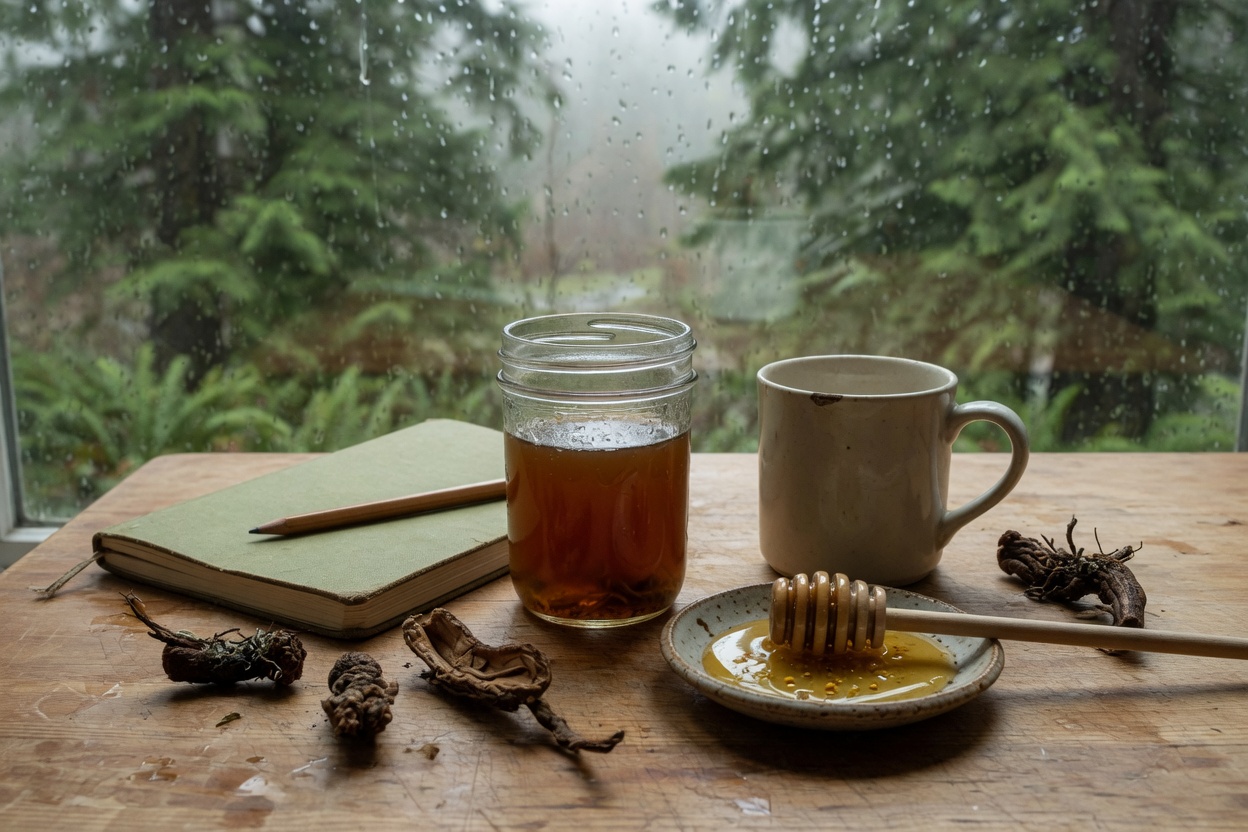
Make one small pint first, with one root, and write down what you did. A decoction is cheap to learn on because the worst outcome is a pot of brown water down the drain.
And don’t ever prepare a wild plant on the word of a book, an app, or a single source, including this page. Confirm every identification with several reputable guides and, when you can, an experienced local forager. When in doubt, throw it out.
If you’d like to know the plants themselves, which roots to gather, how to tell them from their neighbors, and how people here worked with them long before any of us wrote it down, that is what I put into my book, Pacific Northwest Medicinal Plants. The simmering is the easy part. The knowing is the work.
