How to Start Onions from Seed Indoors for a Balcony Garden
Start onions from seed indoors this winter: when to sow, how to light them, why to trim the tops, and how to grow full-size bulbs in grow bags on a balcony.
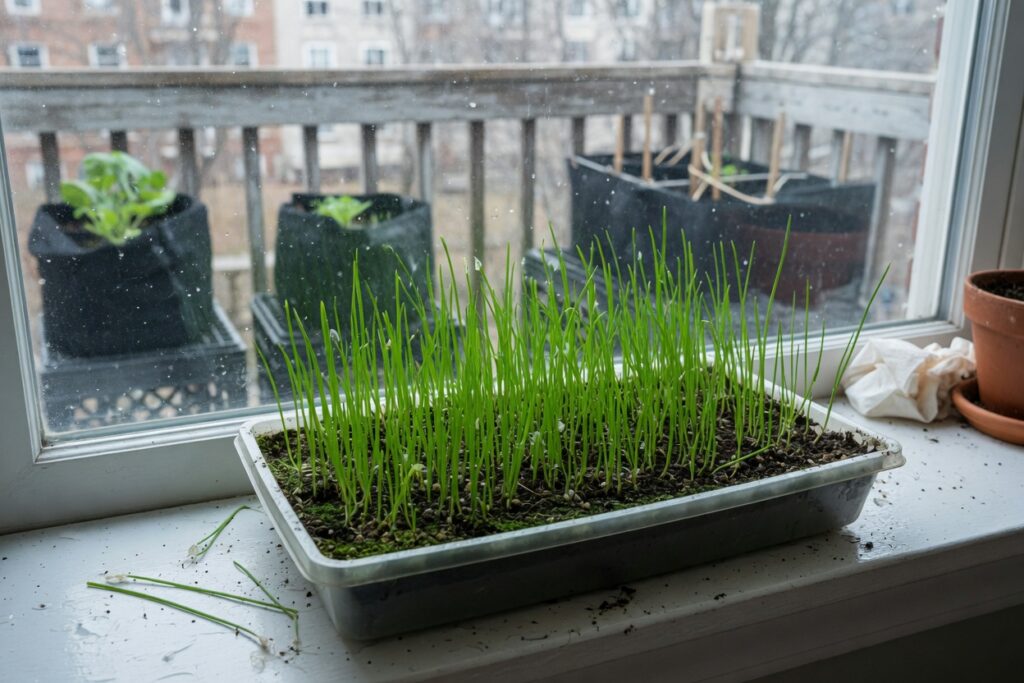
Onions are the vegetable I put off for years. They seemed like a yard crop, something that needs a long bed and a patient farmer. Then one January I sowed a pinch of seed into a tray on the windowsill, mostly out of boredom, and by May I was pulling sweet onions out of a grow bag on the balcony.
You don’t need a yard for this. You need a tray, some light, and a willingness to give a row of tiny green threads a haircut. Here’s how I do it.
Why start onions from seed at all
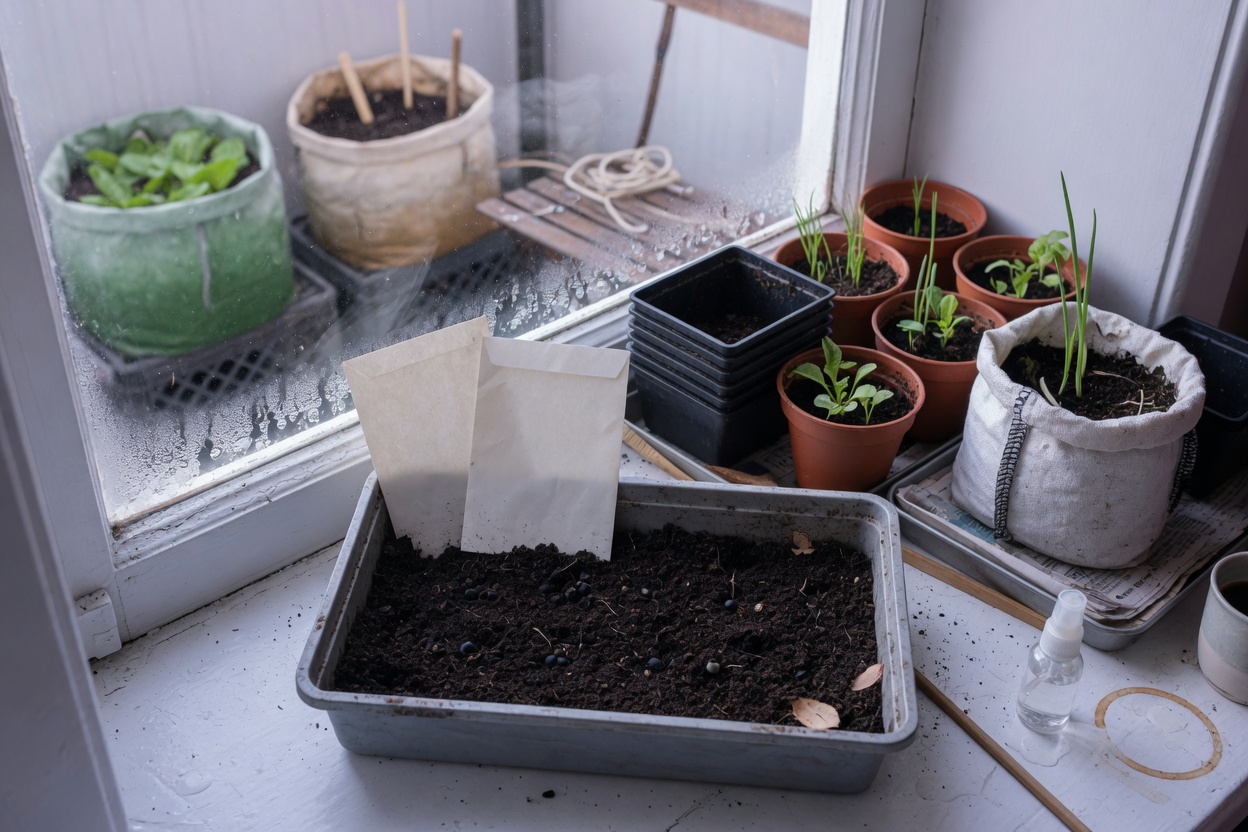
Most beginners buy onion sets, those little dry bulbs sold in a mesh bag in spring. They work. But sets limit you to a short list of varieties, and a lot of the best sweet onions are only sold as seed or as bare-root plants.
Seed gives you choice. I grow Walla Walla, a sweet, juicy onion named for the town in Washington where it came from, and I can’t find it as a set at my local garden center. A packet costs about what a single onion costs at the store, and you’ll end up with dozens of seedlings. That’s more than any balcony needs, so share the extras.
Pick the right type for where you live
Onions form bulbs in response to day length, and this is the one piece of onion science worth knowing. Long-day types need around fourteen to sixteen hours of daylight to bulb up, so they suit the northern half of the country. Short-day types bulb at about ten to twelve hours and suit the South. Intermediate or day-neutral types fall in the middle.
I’m in the Portland area, so I grow long-day onions. If you’re in Texas or Georgia, check which type suits your latitude before you buy seed. Your state extension office publishes a variety list for your region, and it’s worth five minutes.
When to sow
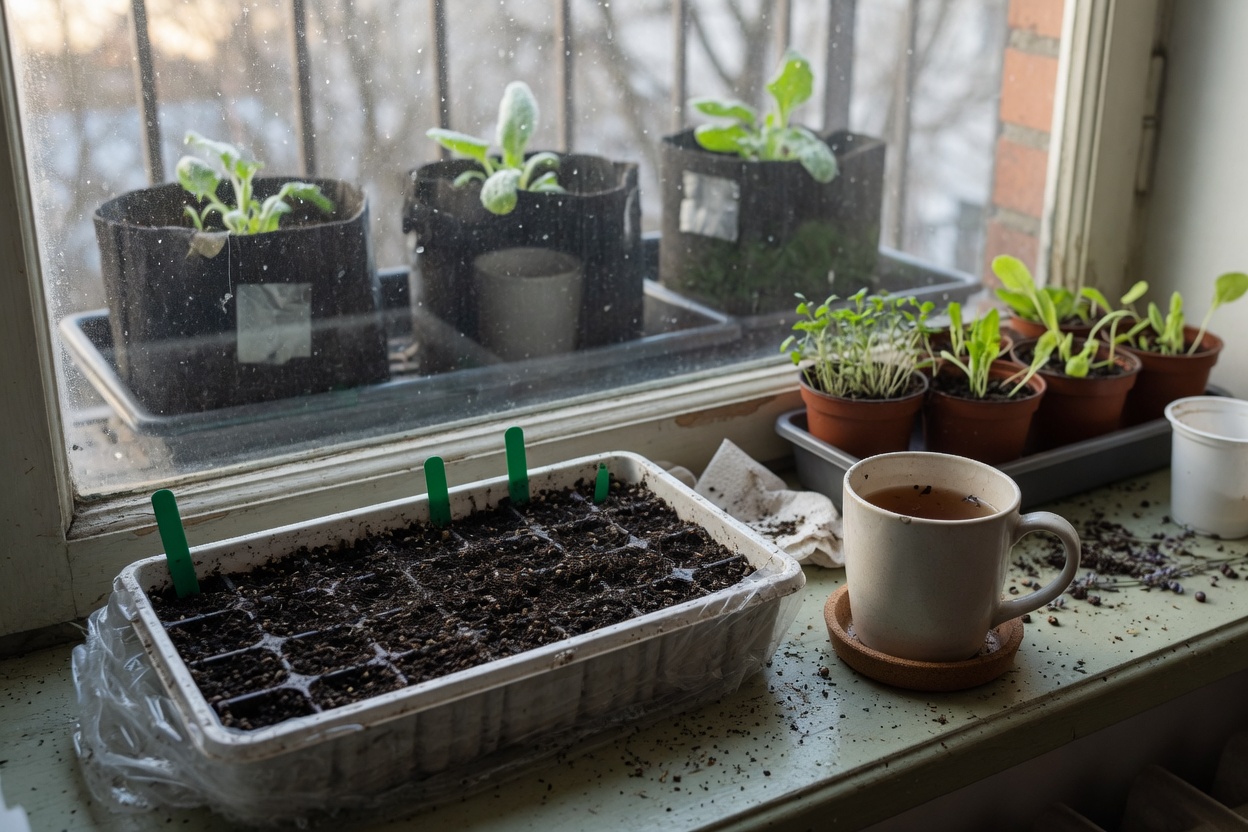
Start the seed about ten to twelve weeks before you can safely move seedlings outside. For me that means sowing in mid-to-late January for a late-March or April transplant. Onions tolerate cold, so you don’t wait for the last hard frost the way you would with tomatoes. That makes it a good January project, when there’s almost nothing else to sow.
Fresh seed matters more with onions than with most crops. The seed loses viability fast, and a packet left over from two years ago may sprout badly. Buy new each year. Onion seeds from SeedsNOW are raw and untreated, and the company supports the Safe Seed Pledge, so it’s one place to pick up a fresh packet.
Sowing, step by step
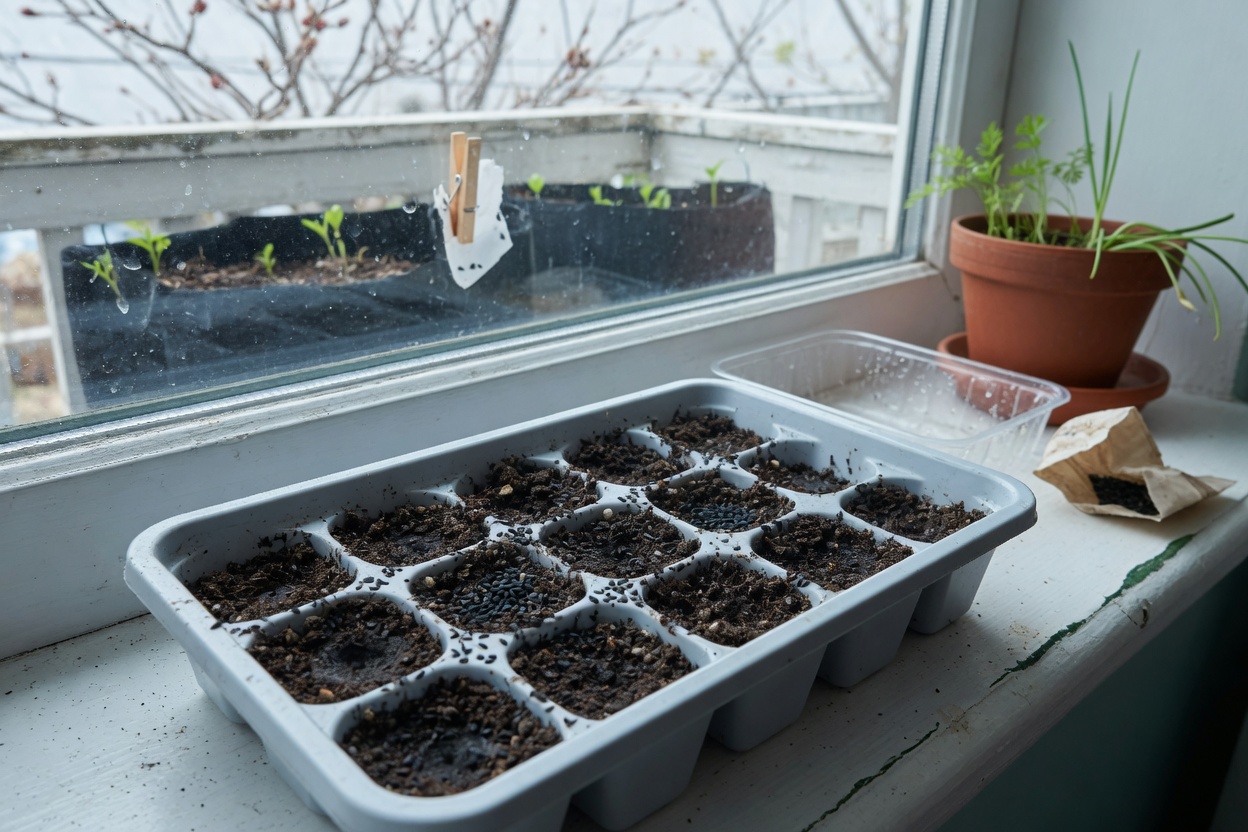
1. Fill a shallow tray or a few small pots with moistened seed starting mix. I use a tray about three inches deep so I can leave the seedlings in place for weeks. Press the mix level.
2. Sow thickly, about a quarter inch deep. I scatter a few seeds per inch in rows. They’ll be thinned, or not thinned at all, later. Cover lightly and mist.
3. Keep it warm for germination. Onion seed sprouts best around 65 to 75°F. I put the tray on top of the fridge for the first few days, then move it to the light the minute I see any green.
4. Light them right away. This is where most windowsill onions fail. A window in January gives you a handful of weak hours of light, and the seedlings go leggy and fall over. I clip a small grow light about two inches above the tops and run it fourteen to sixteen hours a day on a cheap outlet timer. As they grow, I raise it. One honest limit: a single clip light covers a small footprint, so I only keep one tray under it.
5. Water from below or gently from above. The seed starter should feel like a wrung-out sponge. I stick a moisture meter into the corner of the tray when I’m not sure. I’ve written about whether you really need one in do you need a soil moisture meter, and with onion seedlings it earns its keep.
The haircut

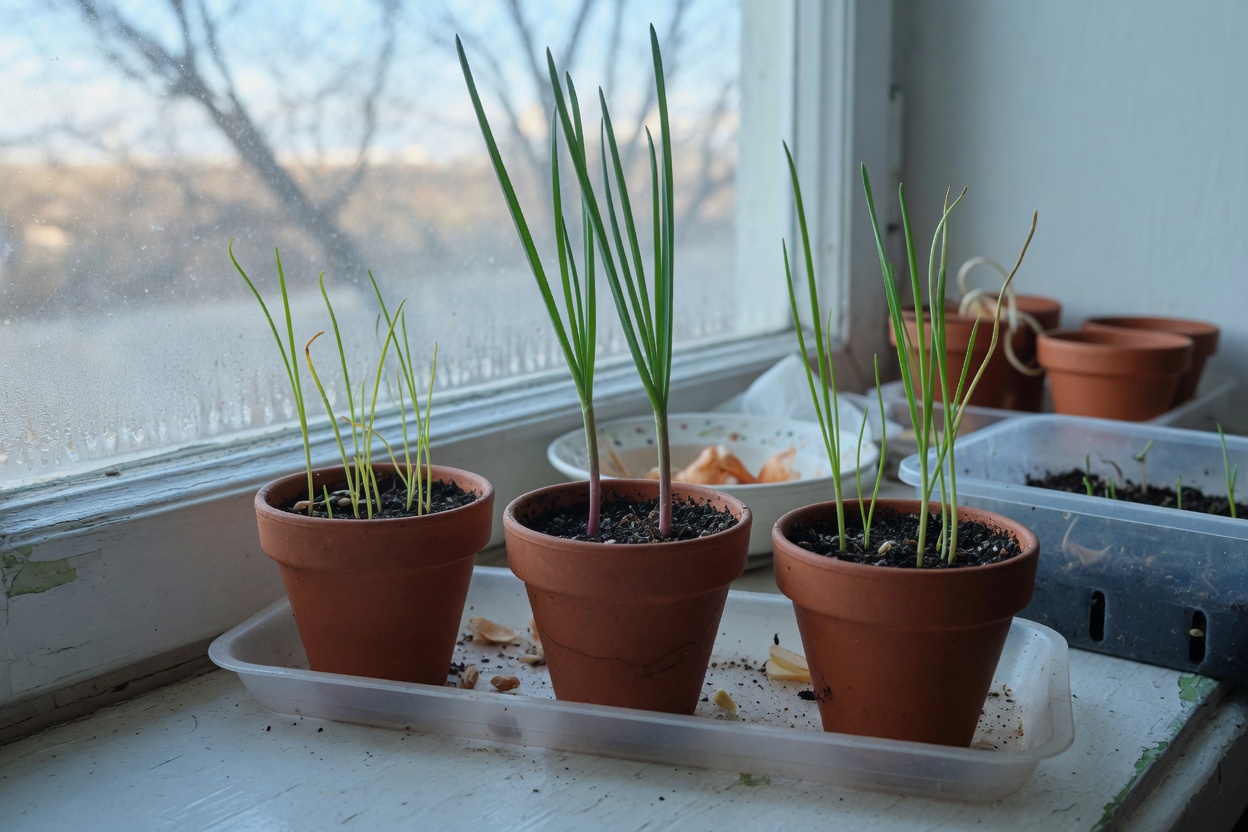
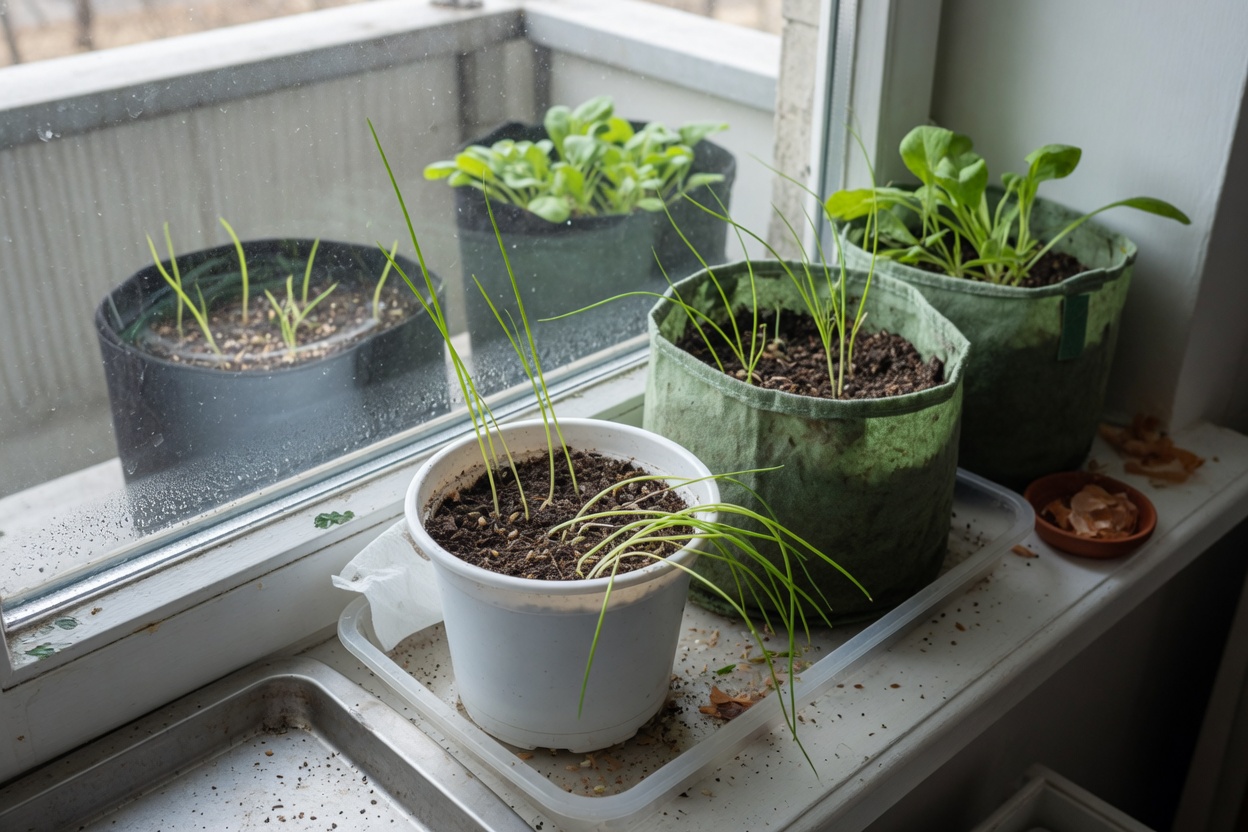
Onion seedlings come up as thin, bent green loops that straighten into little green threads. By week three or four they’ll flop over each other and look like a messy lawn. That’s normal.
Give them a haircut. When the tops reach about four or five inches, trim them to three inches with clean scissors. It sounds cruel. It keeps the seedlings sturdy and upright, and the old growers I’ve learned from do it every week or two. I snip and then eat the trimmings on eggs, which feels very thrifty.
Moving outside

About a week or two before you transplant, start hardening the seedlings off. They go outdoors for an hour or two on the balcony, away from wind, and then a little longer each day. I lean on the approach in how to start seeds indoors on a windowsill for the basics of setup.
When the seedlings are about the thickness of a pencil, they’re ready. Separate them gently and plant in a container.
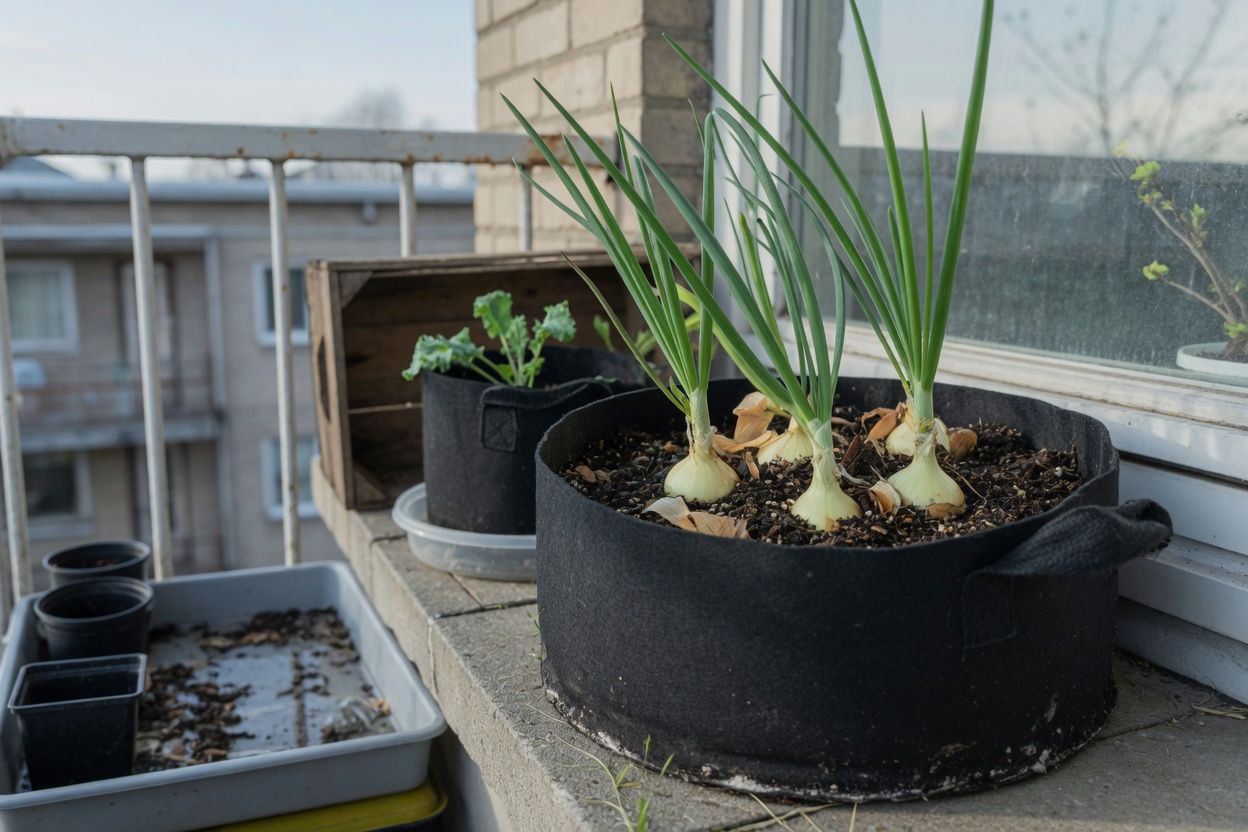
I grow mine in fabric grow bags. A ten-gallon bag holds about eight to ten onions spaced four inches apart. The bags drain well, and a downside of fabric bags is that they dry out faster than plastic pots, so I water more often in warm weather. Set the bulbs shallow, with the white base just at the soil surface. Burying them deep makes smaller bulbs. For more on how fabric compares to plastic, I wrote about it in fabric grow bags vs plastic pots.
Keep them evenly watered with a gentle can, because onions have shallow roots and sulk when they dry out completely. When the tops flop over and yellow in summer, stop watering and let them cure in the sun for a few days before storing.
What goes wrong
– Leggy seedlings: not enough light. Lower the lamp.
– Damping off, where seedlings collapse at the soil line: too wet and too cool. Water less and give them air.
– Thin, small bulbs: crowding, or the wrong day-length type for your region.
– Bolting, where onions send up a flower stalk: usually a cold snap after transplant. Pick the flower stalk and use that onion first.
Go deeper
Starting from seed is one of the most satisfying small-space skills, because you get to choose what you grow. If you want the whole seed-to-harvest picture for a balcony, Small-Space Big Harvest is where I put it all together: take a look here. Otto, for the record, has no opinion on onions. He is only interested in the calendulas.
