How to Ventilate a Chicken Coop in Winter Without Freezing
Chicken coop ventilation in winter keeps frostbite and damp at bay. Here's how much vent space you need, where to put it, and how to stop drafts on the roost.

My first winter with chickens, I did what every well-meaning new keeper does. A cold snap was coming, so I stuffed a feed sack in the vent, stapled a tarp over the pop door gap, and congratulated myself on a warm, snug coop. Three weeks later the walls were weeping, the bedding smelled like a wet basement, and two of my Buff Orpingtons had black tips on their combs.
The cold didn’t do that. The damp did. I had sealed a roomful of breathing, pooping birds into a box with nowhere for the moisture to go. Here’s what I do now, and what I’d tell a neighbor setting up for her first winter.
Why a cold coop beats a damp one

A hen puts out a surprising amount of water. Between breathing and droppings, a single bird adds a good deal of moisture to the air every night, and a dozen in a closed coop add up fast. Warm, wet air hits the cold walls and ceiling, condenses, and drips back into the bedding.
That moisture is what causes the trouble. Damp air and damp litter are how frostbite gets a grip on combs and wattles, because damp combs and wattles freeze far more readily than dry ones. They’re also how ammonia builds and how respiratory problems start. Chickens handle dry cold remarkably well. A fluffed-up hen on a roost with her feet tucked into her breast feathers is warmer than you are in a down coat.
So the goal isn’t warmth. The goal is dry air that moves out of the coop without blowing across the birds.
How much ventilation you need

The rule of thumb I started from, and one that most extension publications repeat, is about one square foot of vent opening for every bird in the coop. That sounds like a lot, and for a small coop in a mild climate you can get away with a bit less. But if you’ve been closing everything up, it’s the number to compare yourself against.
My coop is a walk-in, built with my dad on a long weekend, and I run twelve laying hens in it. I have roughly that amount of open vent area, split across two spots. In East Tennessee that works, and I’ve seen it work in colder places with the same principles. If you live somewhere much colder than I do, check what your state extension office recommends for your region before you start cutting holes.
Where the vents go
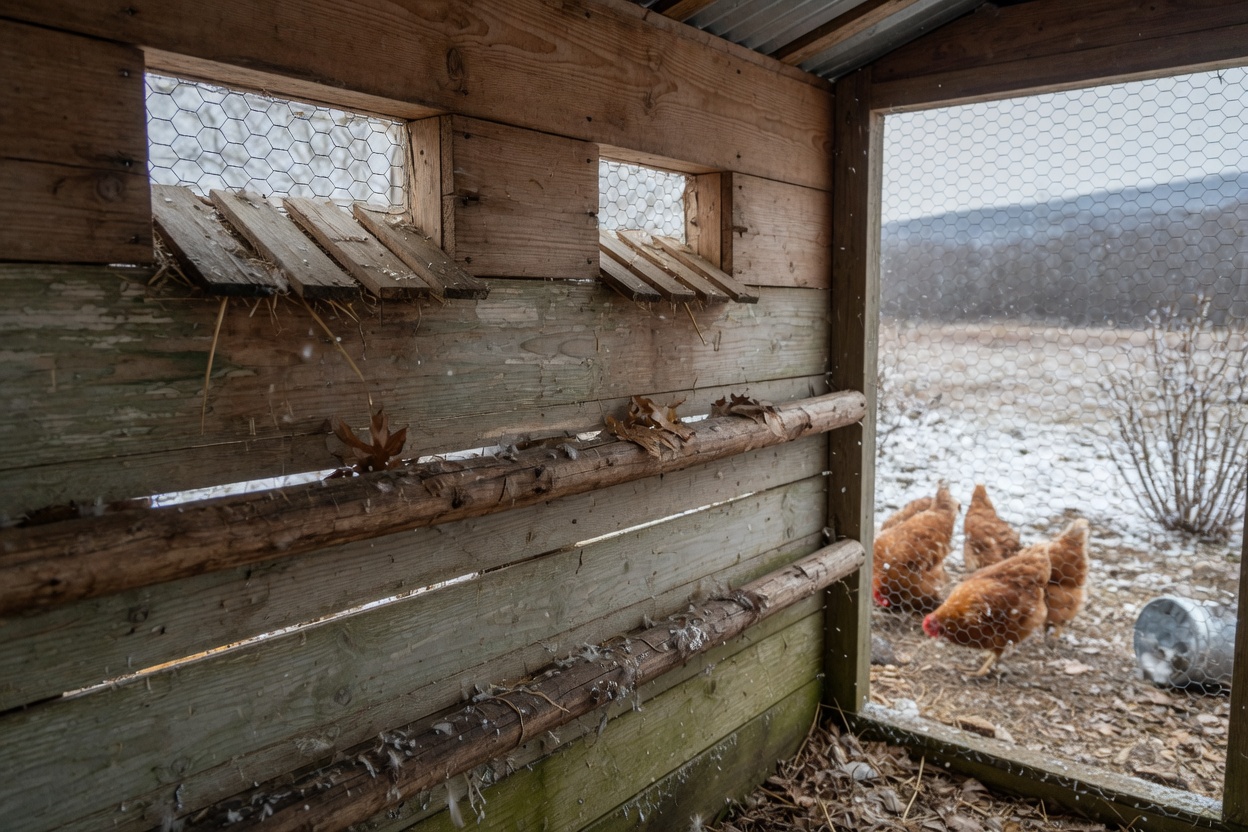
Placement matters more than size.
High, above the roost. Warm, moist air rises. Vents belong up near the roofline, at least a foot or so above the birds’ heads when they’re on the roost, so the damp air leaves over them and not through them.
On at least two sides. You want air to enter low-ish and leave high, with a path between. I keep a vent on the sheltered side and one up near the peak on the leeward side, so a winter wind isn’t pushing straight through the coop.
Never on the windward side of the roost. A draft is a stream of moving air that hits the birds directly. Ventilation is a gentle exchange of air overhead. They’re not the same thing. If you can feel a breeze at roost height with your hand, close that opening or baffle it.
Covered with hardware cloth, not chicken wire. I use half-inch hardware cloth over every vent opening, screwed down with washers. Raccoons will pull chicken wire apart, and a vent is a hole in your coop wall, so treat it like one. (I lost two birds in year one to a latch a raccoon opened in thirty seconds, so I’m particular about this.)
Stop making the moisture in the first place

Ventilation handles the damp. These habits make less of it.
Use a closed waterer. An open waterer in a closed coop is a humidifier. I switched to a nipple-and-cup waterer years ago, mostly to keep the water clean, and the dry-bedding benefit was a bonus I hadn’t expected. The birds learn it in a day or two. If your climate freezes water, a heated base under a metal fount is another approach, but then put the fount near a vent.
Keep the bedding deep and dry. I like hemp bedding in winter because it absorbs a lot and doesn’t kick up the dust that some shavings do. I’m honest about the downsides: it costs more than pine shavings and it’s less common at the feed store, so I order ahead. Turn it weekly, and pull out any wet patch, usually under the waterer or near the pop door. My deep-litter approach is in the deep litter method for a winter coop.
Don’t overcrowd. More birds per square foot means more moisture. If you’ve got a coop built for six and you’re keeping ten, ventilation will never keep up.
Clean the droppings board. If you have one under the roost, scrape it every morning in winter. Fresh droppings are mostly water.
Signs you need more ventilation
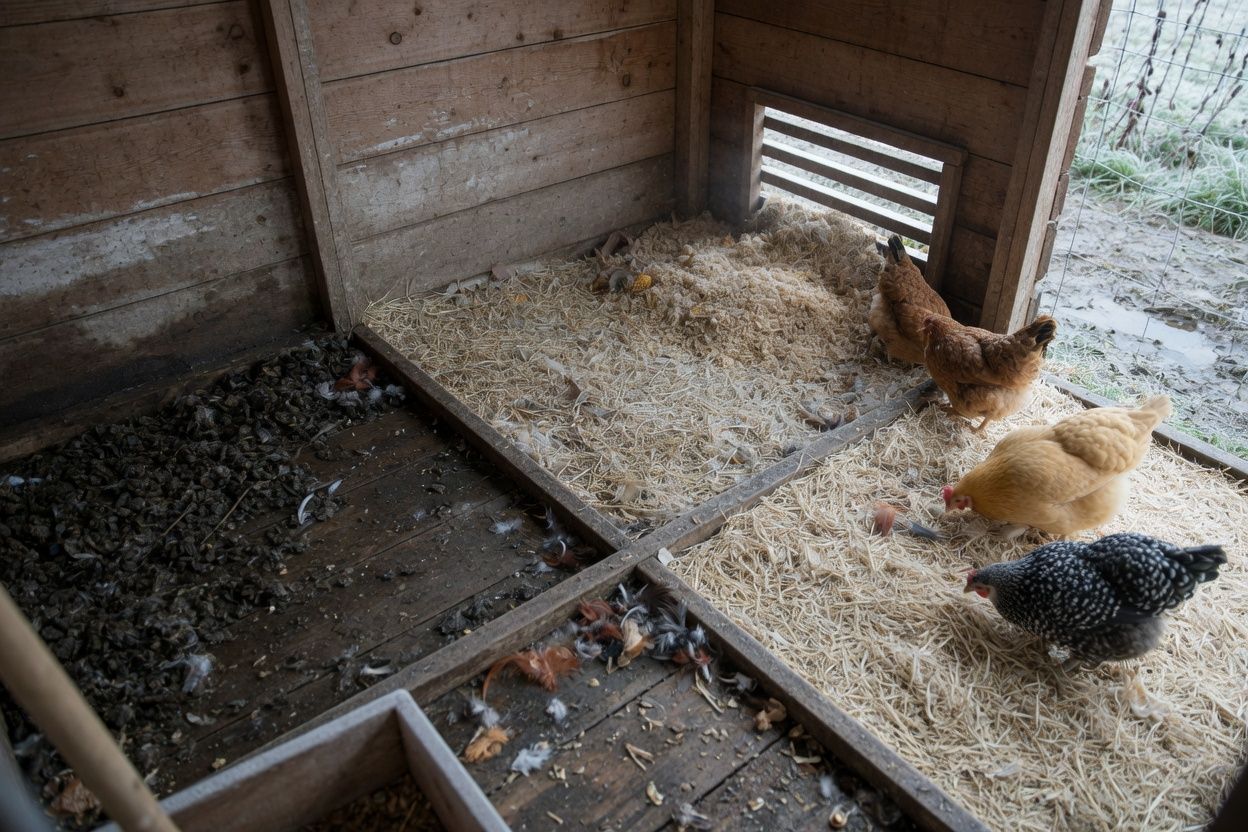
You don’t need a gadget. Use your nose and your eyes.
– Frost or condensation on the inside of the walls or ceiling in the morning
– An ammonia smell when you open the door, which you’ll notice before your birds do
– Bedding that stays damp or clumps in the corners
– Dull, pale combs or light frostbite tips on a hen that otherwise seems well
If you see any of these, open a vent a bit more and watch for a few days. If a bird seems truly unwell, not just damp, call a poultry-savvy vet or your local extension office rather than guessing.
What about the coldest nights?
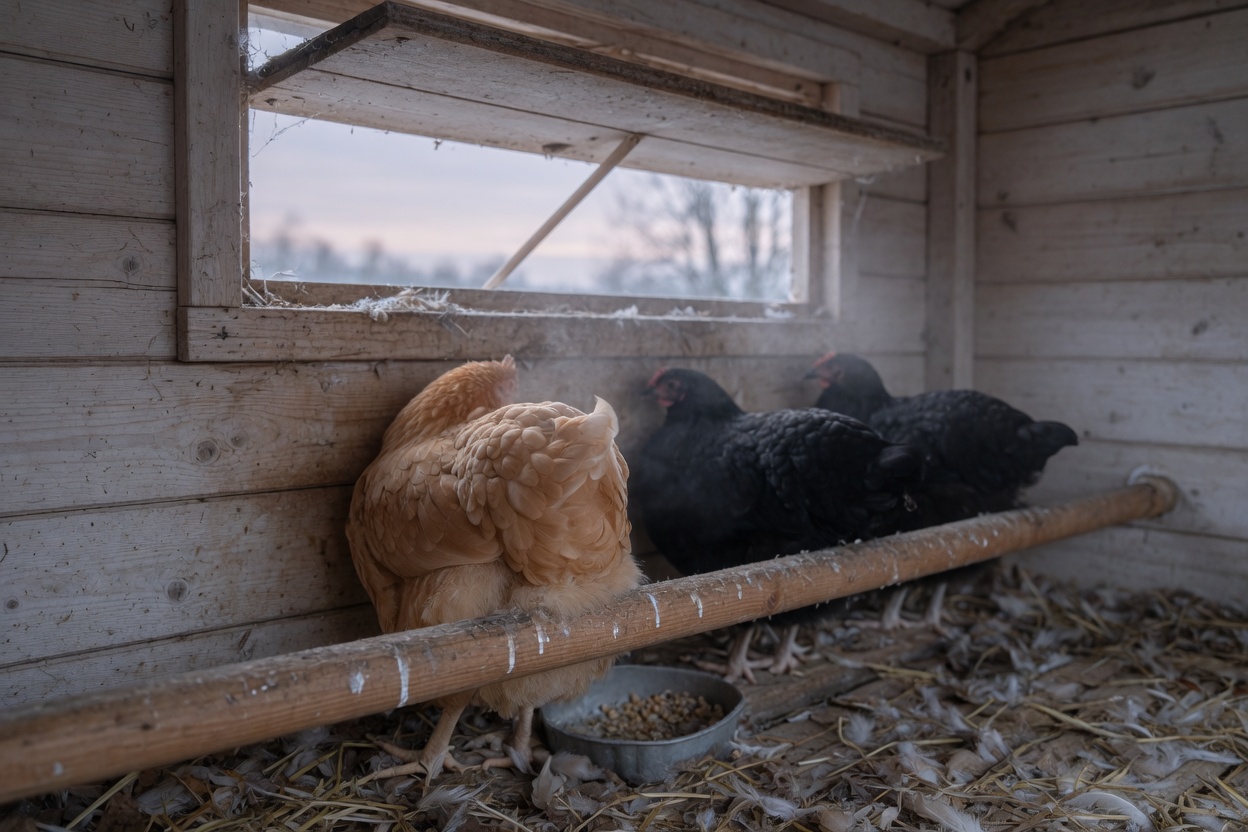
You can narrow a vent on a bitter night, but I never close one. I go down to a smaller opening high up, and I leave it. I do not add a heat lamp. Heat lamps are a fire risk, and a bird used to the cold is better off than one that’s been warmed and then hit with a power cut. For the rest of my winter routine, see how to winterize a chicken coop and how to keep chickens warm in winter without heat. If you’re worried about combs, how to prevent frostbite on chickens walks through what to watch for.
Go deeper

The first winter is the one that teaches you the most, and the cheapest lessons are the ones you read about first. In Raising Backyard Chickens for Beginners I go through coop setup, seasonal management, and the first-year mistakes I’d already made so you can skip them. Find it here. Know your girls, and let the damp out.
