How to Fish for Crappie Around a Dock in Winter
How to fish for crappie around a dock in winter — where they hold under the pilings, how deep to set your bobber, and the patience it takes to catch them cold.

A dock in winter looks like the emptiest place on the pond. No boats tied up, no kids jumping off the end of it, water dark and still under a gray sky. But underneath it, crappie are stacked up tighter than they’ll be most of the year, holding in the shade and structure the pilings give them, and a patient man with a light rod can do real business there when the rest of the water looks dead.
I’ve fished the docks on my own pond and a couple of neighbors’ for most of my seventy years, and winter dock fishing is some of the most productive, least-crowded fishing I do all season. It’s slow. It rewards a man who’s willing to sit still and let the fish tell him what they want instead of the other way around. That’s most of what I want to pass on here.
Why the fish hold under a dock in cold water

Crappie are structure fish in every season, but winter pulls them tighter to it than summer does. Cold water slows a crappie’s metabolism way down — he’s not chasing bait across open water the way he might in warm months, he’s conserving energy and holding somewhere he doesn’t have to work. A dock gives him three things at once: shade from what winter sun there is, a break from current or wind-driven surface chop, and vertical structure — the pilings themselves — that baitfish also use for the same reasons. Where the baitfish go, the crappie follow, and in winter, that’s mostly straight down along the dock’s legs and under the decking itself.
The depth matters more in winter than in any other season. In warmer months a crappie might suspend anywhere in the water column depending on where the bait is. In cold water, he’s usually going to be holding deeper along the same structure, often close to the bottom of the pilings if the water under the dock has any real depth to it. That’s the biggest adjustment I make this time of year — I fish deeper under the same dock than I would in April, sometimes considerably.
Rigging for it

I keep this simple, same as I do most of the year. A Zebco 33 loaded with light line and one of the Eagle Claw snap-on floats set well up the line does the job. The snap-on style is worth the small extra step over a plain slip bobber in cold weather, because you can adjust it by hand without threading anything — my fingers don’t want to work fine line-threading knots when it’s thirty-five degrees out, and a snap-on float lets me change depth in ten seconds without taking a glove off for long.
Set your float deeper than feels natural at first. If you’re used to fishing eighteen inches to two feet under a bobber in warmer water, try three to five feet under a dock in the dead of winter, and don’t be afraid to go deeper still if the water under that dock runs that deep. A small jig or a live minnow under that float, dropped right up against a piling and let to sit, is about as complicated as this needs to get.
Fish it slow, and I mean slow

This is the part beginners fight the hardest. Winter crappie don’t chase. They don’t hit a bait moving past them with any urgency, because urgency costs energy they’re not spending right now. Drop your rig up against a piling, let it sit, and give it real time — a full minute of stillness before you so much as twitch it isn’t too long. I’ve watched impatient fishermen work a dock for five minutes, decide it’s dead, and move on, ten feet from where I sat still and caught a limit an hour later.
When you do get a bite in cold water, it’s often barely a bite at all — the float might just tip a little to one side, or sink half an inch, rather than getting yanked under the way a summer crappie bite goes. Watch close. Set the hook on anything that looks different from how the float’s been sitting, even if it doesn’t look like much of a strike. A soft winter bite missed is a fish you never knew was there.
Work your way around the dock methodically rather than casting at random — pilings first, then the shaded water directly under the decking if you can reach it, then the drop-off just past the end of the dock where the bottom often falls away deeper. Crappie will move between these spots through the day as the light changes, so what’s holding fish at ten in the morning might be empty by two, and the water twenty feet away might have taken over.
Dressing for it matters as much as the rig
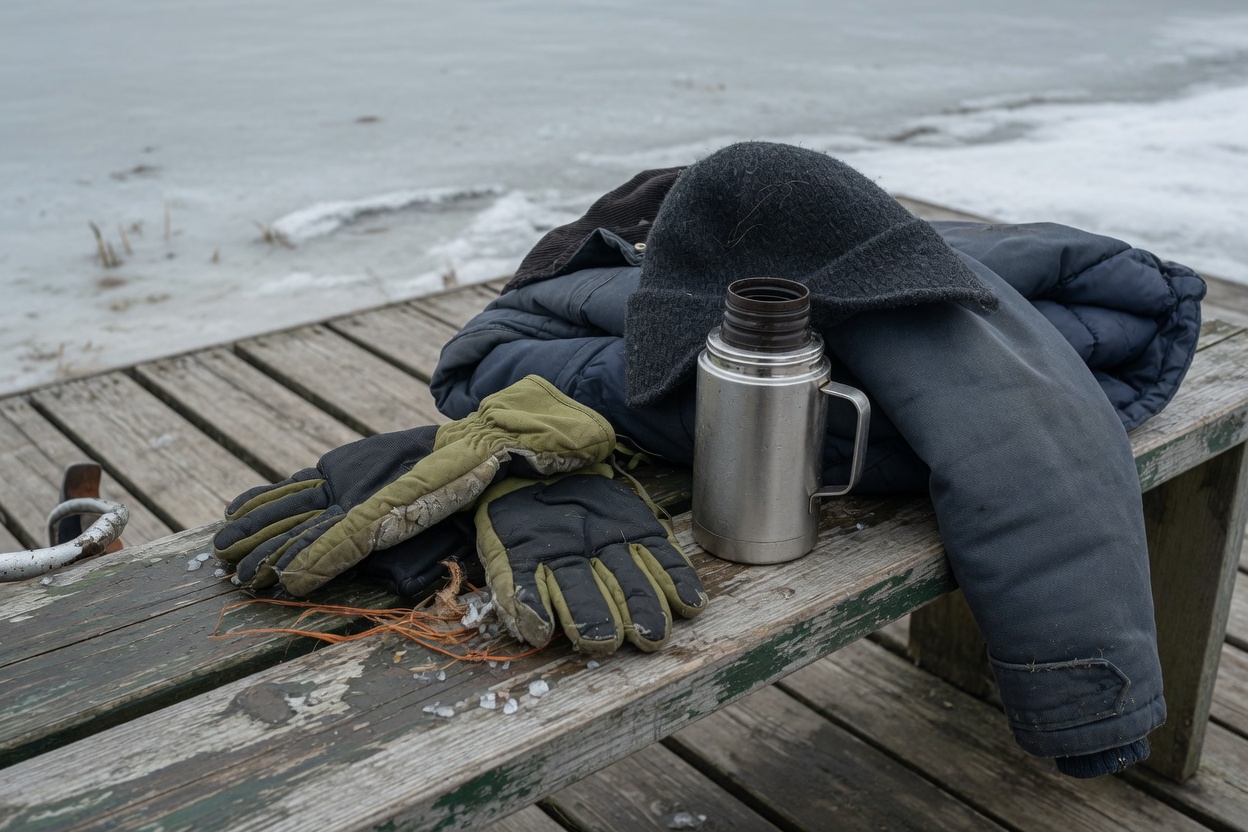
I’ll say this plain because it’s true: more winter fishing trips get cut short by cold hands and a cold body than by bad fishing. Layer up, keep a dry pair of gloves in your pocket for when the first pair gets wet handling fish or bait, and don’t fish so long past when you’ve stopped being able to feel your fingers that you can’t tie a knot or handle a fish safely anymore. A good winter dock trip is a couple of hours of patient, still fishing, not an all-day sit in weather that isn’t fit for it.
If you want the fuller picture — the almanac side of when to go, the signs I read before I ever leave the house — I put that together in the free Best Days to Fish kit, which is the best place to start if winter fishing is new to you. And if you’re teaching a grandchild to fish through the cold months the way mine learned from me, My First Catch is built to go along for the ride — a place for a young angler to keep their own record of it.
Read the signs, dress warm, and give the water time. That’s most of what winter dock fishing asks of you.
