Winter-Sowing Seeds in Containers for an Early Spring Start
Winter-sowing seeds in containers, explained for a balcony or patio — what to use instead of a milk jug, which seeds to start now, and why the cold is doing the work.
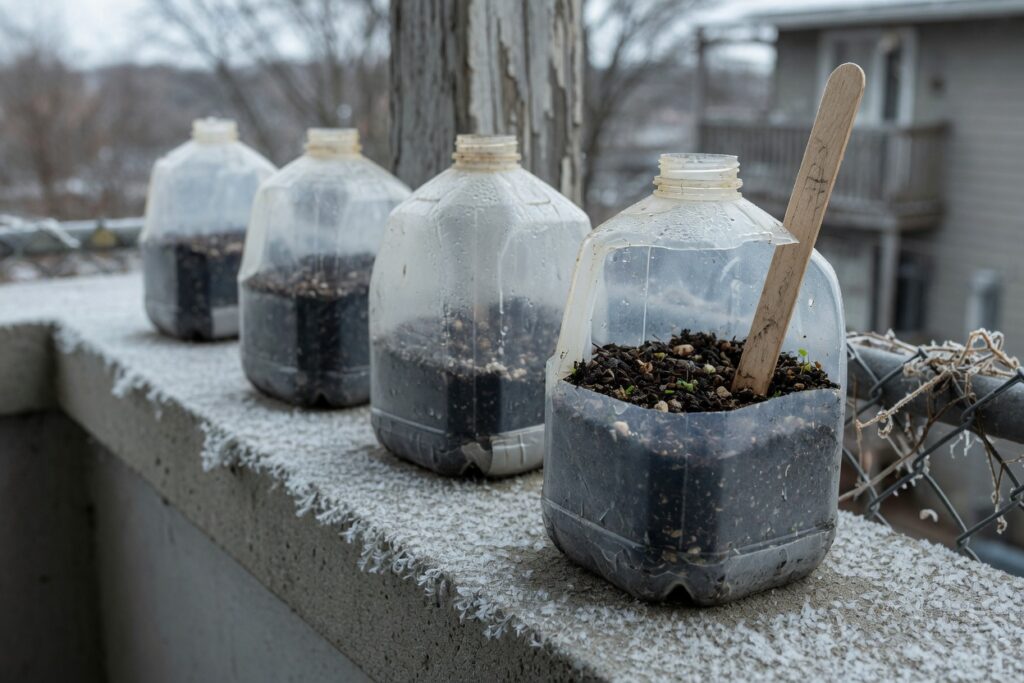
Every January I get some version of the same message: “Is it too early to start seeds?” And every year my answer surprises people, because the real answer is that outside, right now, in the cold, is exactly where a whole category of seeds want to be. Winter sowing is the trick — you plant now, seal the container, set it outside, and let the freeze-thaw cycle do the work a heated grow light usually gets credit for. No windowsill space taken up all winter. No leggy seedlings by March. I do a batch of it every year on a balcony that gets maybe five hours of direct winter sun, and it’s one of the lowest-effort things I grow.
If you’ve never heard of it, the method comes from gardeners with actual yards using gallon milk jugs as mini-greenhouses. I don’t have a yard, and most of us on a balcony don’t have a steady supply of milk jugs either — but the principle scales down fine. You just need something with depth, drainage, and a way to trap a little humidity.
That’s genuinely most of it. This isn’t a gear-heavy technique, and that’s a lot of the appeal.
What winter-sowing actually is
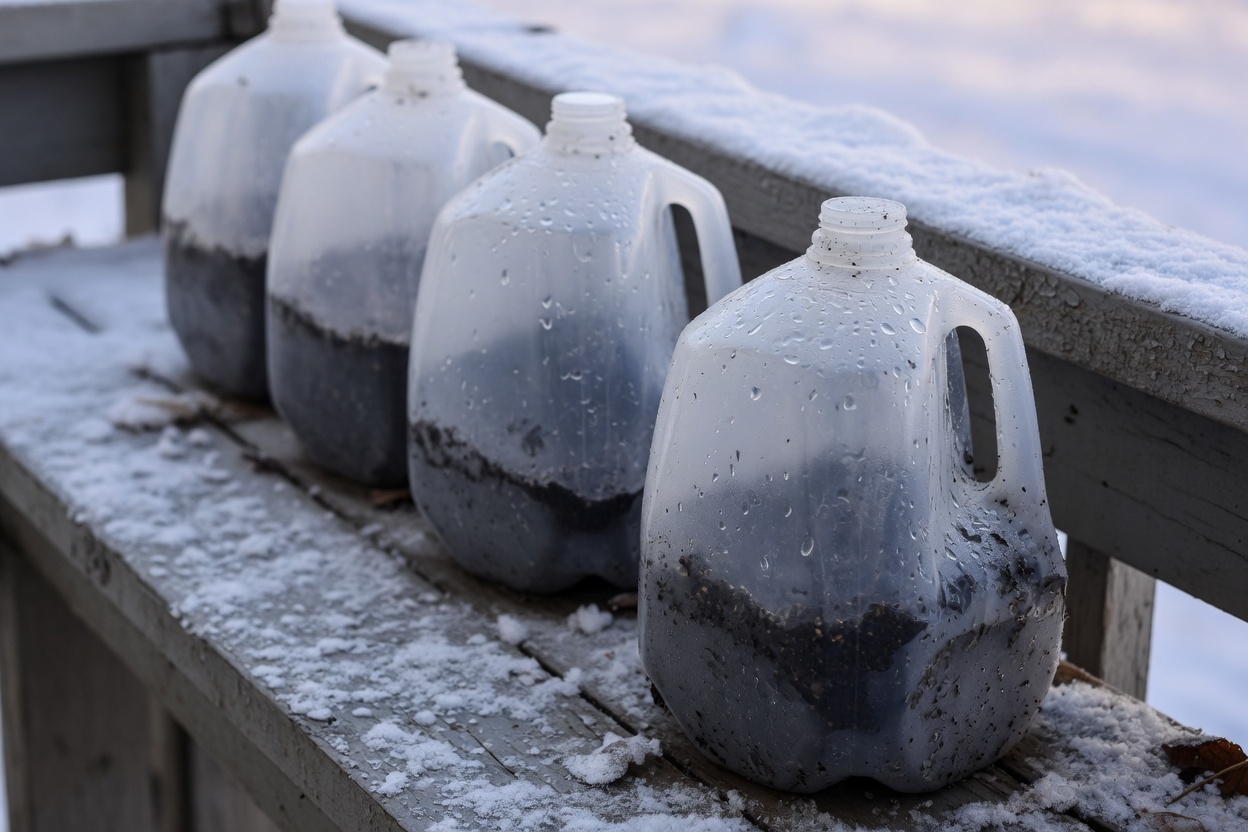
You fill a container with moist seed-starting mix, sow seeds at the depth the packet calls for, cover the container enough to hold humidity in but let some air and moisture exchange happen, and set it outside somewhere it’ll get direct exposure to freezing temperatures, thawing, snow, and rain. The seeds sit dormant through the hard cold, and as the days lengthen and temperatures climb even a little, they germinate on their own schedule — usually stronger and stockier than anything I’ve started under a grow light, because they’ve never known a heated room to get soft in.
The reason this works instead of just killing everything: a lot of the plants worth winter-sowing are ones that evolved to drop seed in fall and sit through a real winter before sprouting. You’re not fighting their biology. You’re recreating the exact conditions they’re built for, in a container small enough to fit at the end of a rail.
The container version, step by step
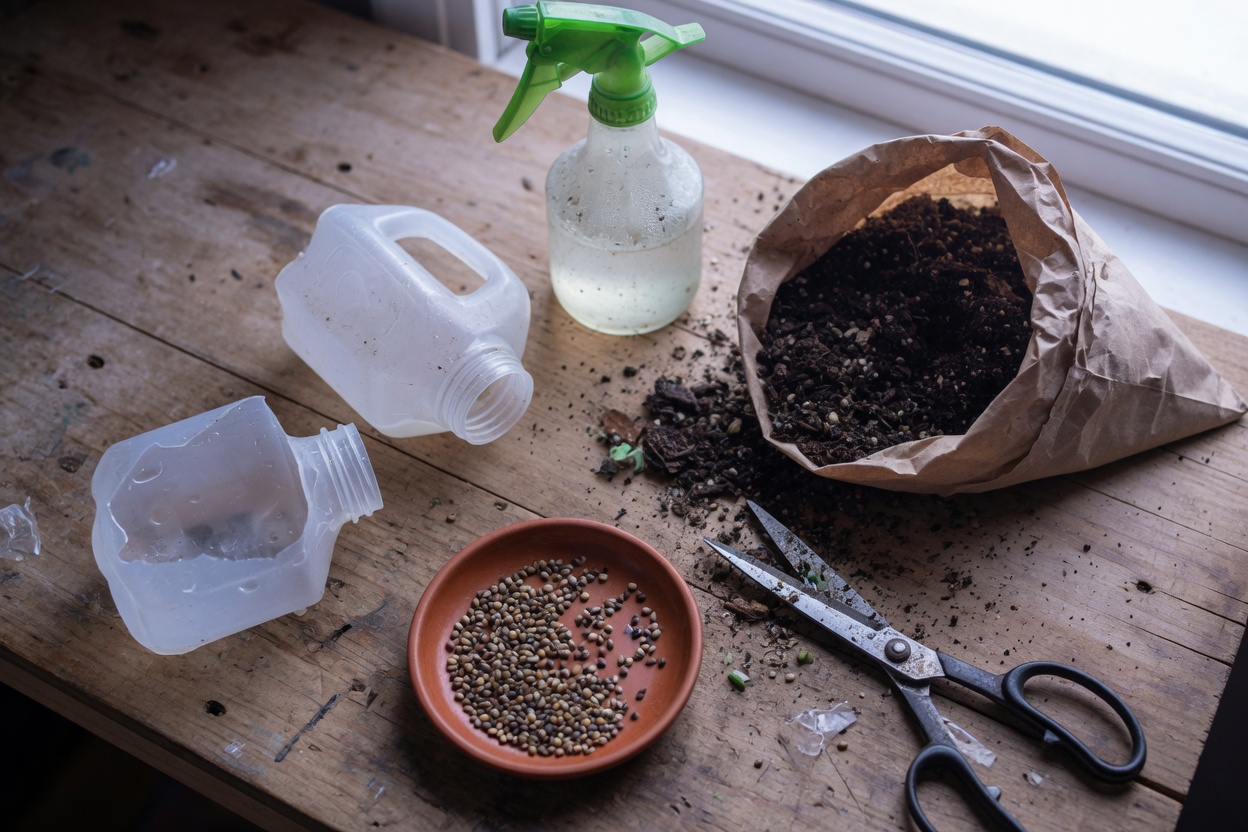
On a balcony, I use a couple of deep clear plastic storage bins with lids — the kind sold for under-bed storage — because I can drill drainage holes in the bottom and vent holes in the lid, and they’re rigid enough to stack two or three along the rail without babysitting them. A large nursery pot with a plastic bag loosely secured over the top works too, if bins aren’t your thing. What matters is depth of at least four inches, drainage in the bottom, and something clear enough to let light through.
Fill it with moistened seed-starting mix, not garden soil and not potting mix meant for established plants — you want something light that won’t compact into a brick after two months of freeze and thaw. Sow your seeds at the packet’s stated depth, water it in gently, and close the container up. Vent holes matter more than people think: too sealed and you get mold in a warm spell, too open and it dries out in a cold snap. I drill four or five holes about the size of a pencil in the lid and call it good.
Then it goes outside, somewhere it gets full exposure to the weather — not tucked under an overhang where it stays dry, not against a warm south wall where it might get fooled into sprouting during a January thaw. My rail gets snowed on and rained on all winter, which is the point.
What I actually start this way

Cold-tolerant and cold-loving things are the ones built for this. On my balcony, that’s meant good results with calendula, snapdragons, kale, and spinach — all things that either need a cold stratification period to germinate well, or simply don’t mind sprouting into cool weather. Raw, untreated, open-pollinated seeds for winter sowing from SeedsNOW are an easy way to stock up, and the company supports the Safe Seed Pledge. I don’t winter-sow tomatoes or basil this way; those are true warm-season plants that would just rot waiting for spring in a cold, damp container. Save those for indoor starts closer to your last frost date, under the clip grow light setup I’ve written about before.
The container method is at its best for the plants you’d otherwise be tempted to start too early indoors and end up with tall, pale, floppy seedlings by the time it’s warm enough to move them out. Winter-sown seedlings skip that stage entirely. They come up when conditions are actually right for them, already a little tougher than anything raised inside.
Checking on it without opening it constantly
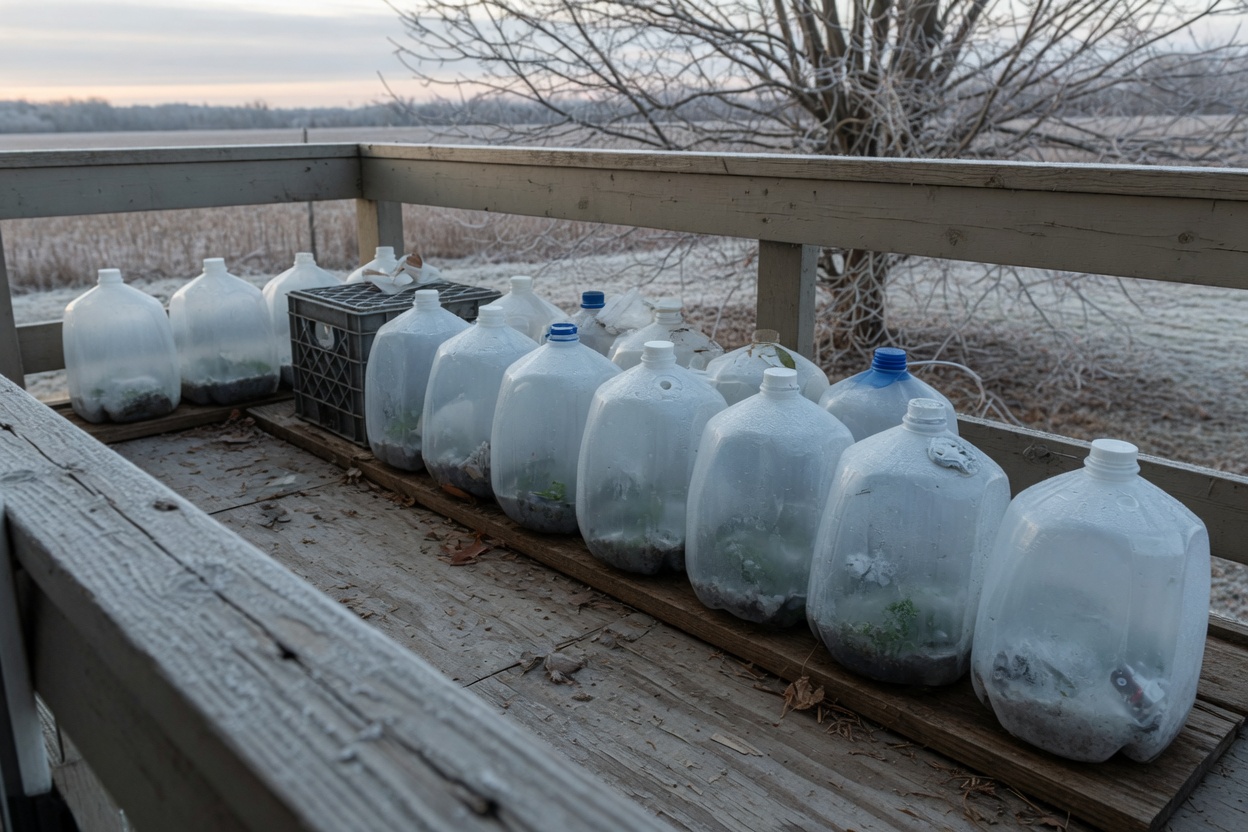
This is where the moisture meter earns its keep. Opening a sealed container to check soil moisture lets out the humidity you worked to trap, and doing it daily out of anxiety is the fastest way to dry things out or shock a fragile seedling. I push the probe down through one of the vent holes every week or so during a dry stretch, and if the reading’s dropped into dry territory, that’s when the container gets a slow pour from the long-spout can — enough to moisten it through, not enough to leave it sitting in water at the bottom.
Once real germination starts — usually a few weeks after the days start noticeably lengthening, which on my balcony is early-to-mid February — I prop the lid open a crack on mild days to start acclimating the seedlings before they ever need a formal hardening-off period. By the time I’m ready to pot them up into their permanent containers, they’ve already spent their whole lives outside. There’s no shock to manage.
It’s not a complicated system, and that’s exactly why I keep doing it every year. No lights to run, no counter space lost to trays, and a bench of stocky little seedlings waiting for me by the time everyone else is just starting to think about it.
I get into a full season’s worth of small-space techniques like this one in Small-Space Big Harvest — this post is one trick for the front end of the season. The book is everything else I’ve learned about growing real food on a balcony that never gets big enough to feel like a yard.
