Best Gifts for a Home Herbalist This Winter
The gifts I actually want as a home herbalist — real supplies I use every season, not another mug that says 'wild woman.' A short, honest list.

Every December someone in my family asks what I want, and every December I have to talk them out of the herbalism-themed candle. I don’t need a candle that smells like sage. I need beeswax, because I’m out again, and a friend gave me a five-pound block two winters ago that I still think about fondly.
That’s the thing about buying for a home herbalist — the good gift is almost never the cute one. It’s the consumable she’s already burning through, the tin she’ll fill within a week, the jar that finally matches the ones she has. After thirty years of drying, tincturing, and giving away half of what I make, here’s what I’d actually put on my own list.
The consumables win every time

If you take one thing from this list, take this: buy the thing she uses up, not the thing that sits on a shelf. Beeswax, carrier oil, cheesecloth, and jars are what actually get used in a working home apothecary. I have received more herb-print tea towels over the years than I know what to do with, and precisely zero of them have ever gone into a salve.
Beeswax is the one I’d flag first. It’s the base of nearly everything I make that isn’t a straight tincture, and it’s the ingredient I run out of at the worst possible time — usually the week I’ve decided to make a whole winter’s worth of cedar-tip salve at once. A block of beeswax pellets is the kind of gift that gets used within the month, which is a compliment, not a complaint.
A carrier oil that doesn’t spoil on her

Jojoba isn’t technically an oil — it’s a liquid wax, which is exactly why it doesn’t go rancid the way olive or sunflower oil eventually will sitting on a shelf through a slow winter. Jojoba oil is what I reach for as the carrier in most salves and infused oils, because I’d rather trust a bottle that’s been open for eight months than one I have to sniff-test first. It’s a small, practical gift that says you paid attention to what she actually uses.
Tins and jars, more than she’d buy herself

Every herbalist I know underbuys her own storage. I’ll make a big batch of salve, realize I’m three tins short, and improvise with whatever’s clean in the cupboard until the next supply order comes in. A dozen 2oz salve tins solves that problem for months, and they’re a genuinely lovely thing to give as a set — she’ll fill them and probably give a few back to you, full.
Mason jars are the other one nobody buys enough of. A case of wide-mouth pint jars covers tincture-in-progress, finished dried herbs, and infused oil all in one size, which matters more than it sounds like it should — matching lids and matching shelf space is its own small daily convenience.
The unglamorous roll of cheesecloth
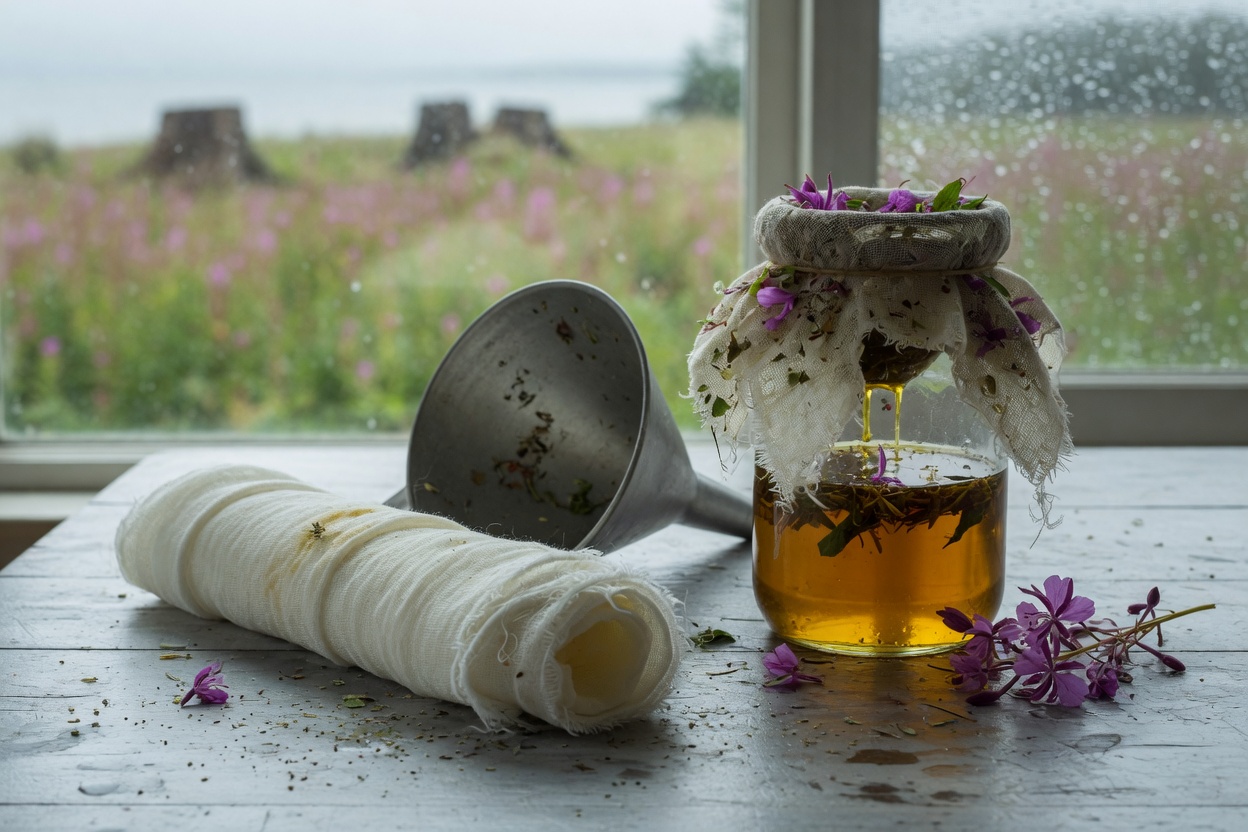
Nobody asks for cheesecloth. Everybody who strains a tincture or an infused oil needs a roll of the good grade-90 kind, not the flimsy stuff from the baking aisle that lets sediment through. A full roll instead of a single folded square is the difference between straining cleanly all winter and rationing a few squares until the next trip to the store. I go through more of it than I’d like to admit, mostly because I never buy enough at once.
What I’d actually skip

I’d leave the pre-made “herbalist starter kit” boxes on the shelf. They’re usually padded out with a handful of dried herbs of unknown freshness and a printed booklet nobody asked for, at a price that would buy twice the beeswax and jars on their own. A working herbalist would rather have the raw materials and pick her own plants — that part, she’s not outsourcing to a gift box.
If you want to go further than supplies, my first tincture guide is where I’d point a beginner who’s just been given this exact list and isn’t sure what to do with it yet, and storing dried herbs so they last is the companion piece for whatever she harvested this fall.
I write about the plants themselves, the ones growing in the woods behind most Pacific Northwest houses, in Pacific Northwest Medicinal Plants. Supplies get her through the winter. The book is what she’ll be doing with them come spring.
