How to Use Hemp Bedding for a Warmer Winter Coop
Hemp bedding outperforms pine shavings for winter insulation and ammonia control. Here's how I use it in my coop, how deep, and what it actually costs me.
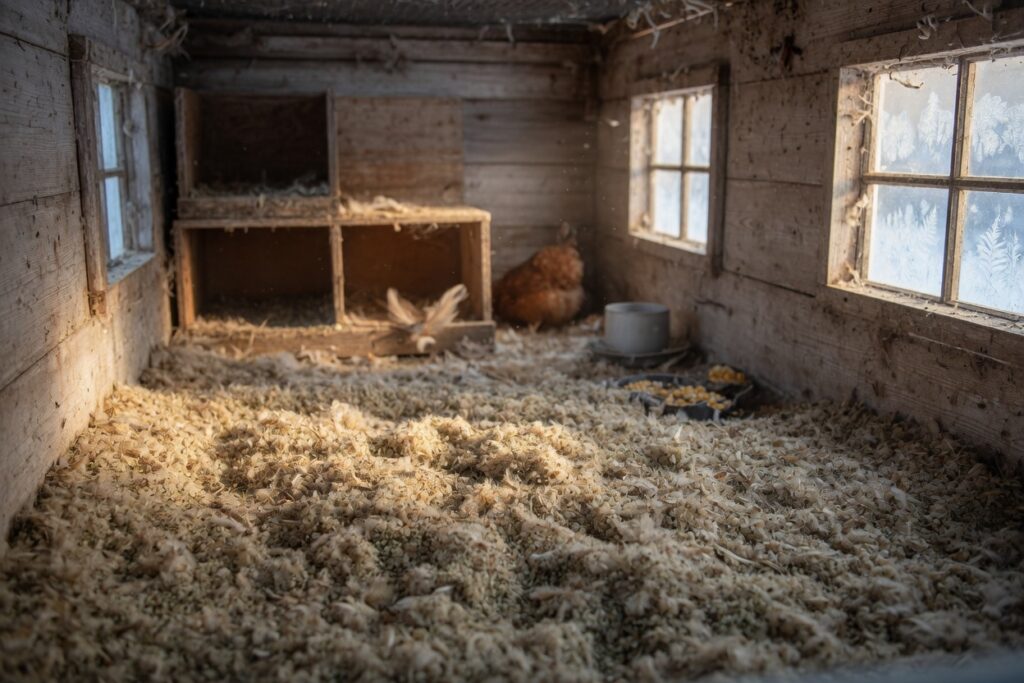
I ran pine shavings in my coop for the first three winters I kept chickens, because that’s what Tractor Supply had a whole aisle of and nobody told me there was anything else worth considering. Then a neighbor a few roads over — she runs a bigger flock than mine, twenty-some birds — mentioned she’d switched her coop over to hemp bedding and hadn’t looked back. I was skeptical. It’s not cheaper, and I don’t love change for its own sake. Two winters in, I’m not switching back.
Hemp bedding isn’t magic, and I want to be honest about that up front. It’s a different material with different properties, and for a cold coop it solves two problems pine shavings don’t solve nearly as well: it holds more moisture without turning to sludge, and it insulates better against the floor cold that pine shavings just sit on top of.
Why hemp holds up better than pine in the cold
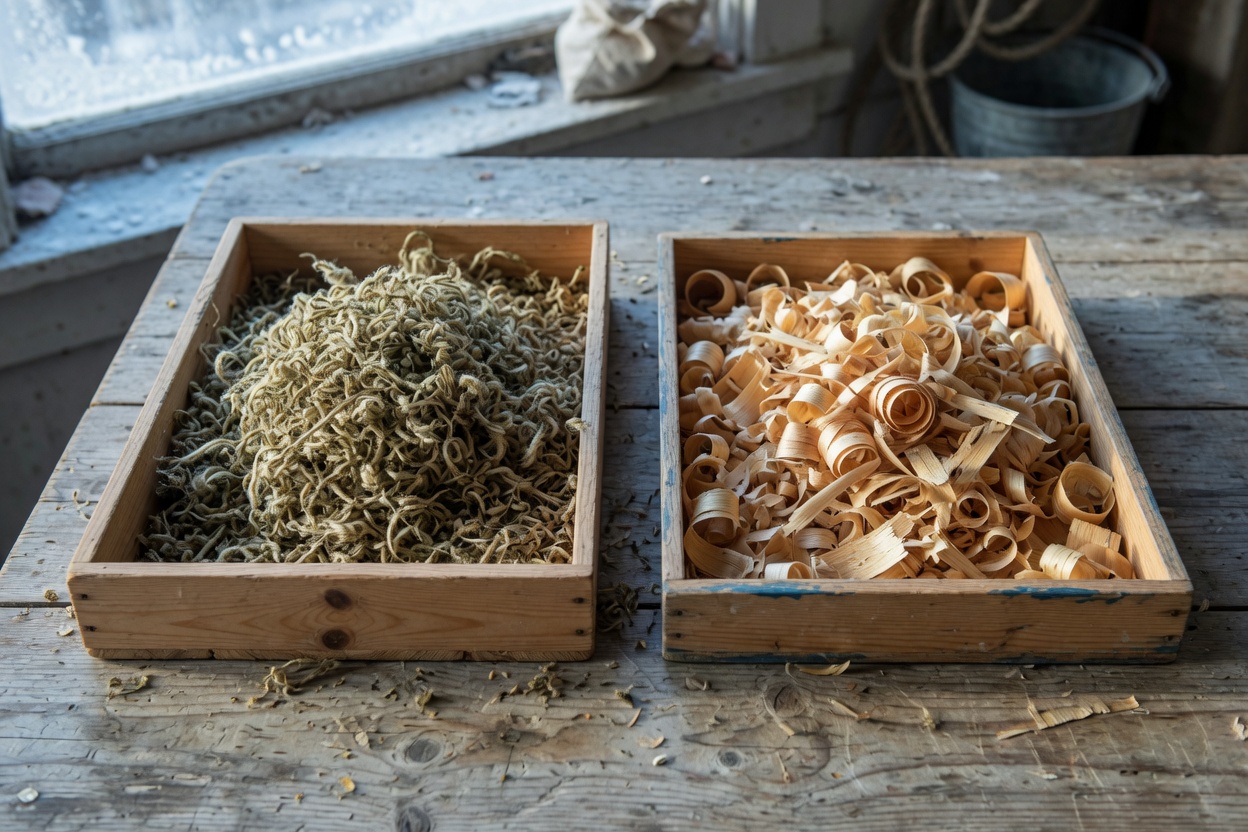
Pine shavings are light and fluffy, which is exactly why they compact fast under a flock’s weight and droppings. Once compacted, they stop insulating and start holding cold right at floor level — which is precisely where your birds are roosting near, or standing in, all night. Hemp is a coarser, hollow-stemmed fiber. It stays loose and springy under weight in a way pine just doesn’t, which means it keeps an air layer trapped in the bedding longer through a cold snap.
The other difference is moisture. Chicken droppings are wet, and a coop full of birds breathing all night adds humidity on top of that. Hemp absorbs roughly four times its weight in moisture compared to pine shavings, and it doesn’t turn slimy or matted the way overloaded pine does. Less matted, damp bedding means less ammonia smell building up overnight in a coop that’s sealed up tight against the cold — which matters more in winter than any other season, because winter is exactly when you can’t crack a window wide open to air the place out without chilling the flock.
How deep, and where I use it
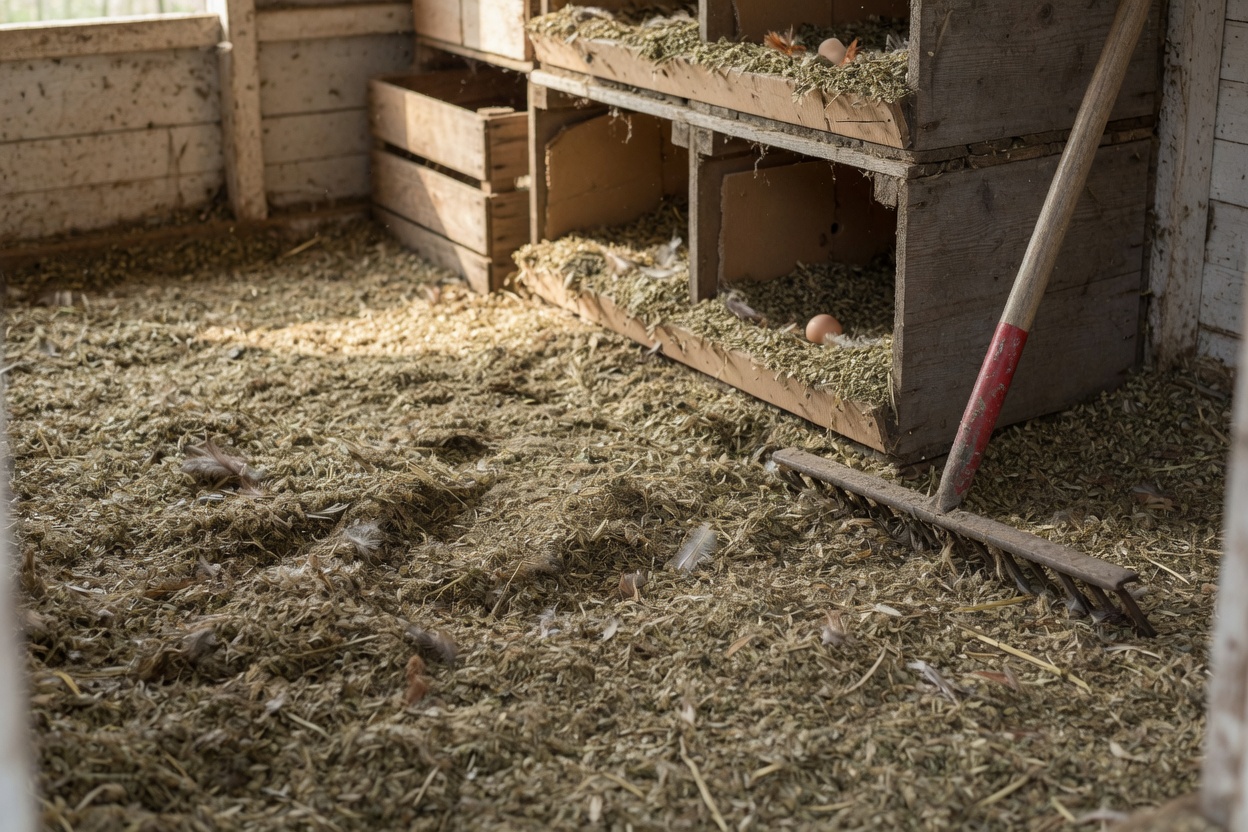
I run four to six inches of hemp on the coop floor going into winter, deeper than the two or three inches I’d use in summer. That extra depth is doing double duty — insulation against the cold floor, and enough volume to actually absorb what a flock produces overnight without needing a full clean-out every week.
In the nest boxes, I keep it a little shallower, an inch or two, just enough to cushion the eggs and give the girls something to settle into. I don’t run hemp in the run itself — out there I still lean on shade cloth and open ground management rather than bedding, since an outdoor run gets rained and snowed on in a way the coop interior doesn’t.
The deep-litter question
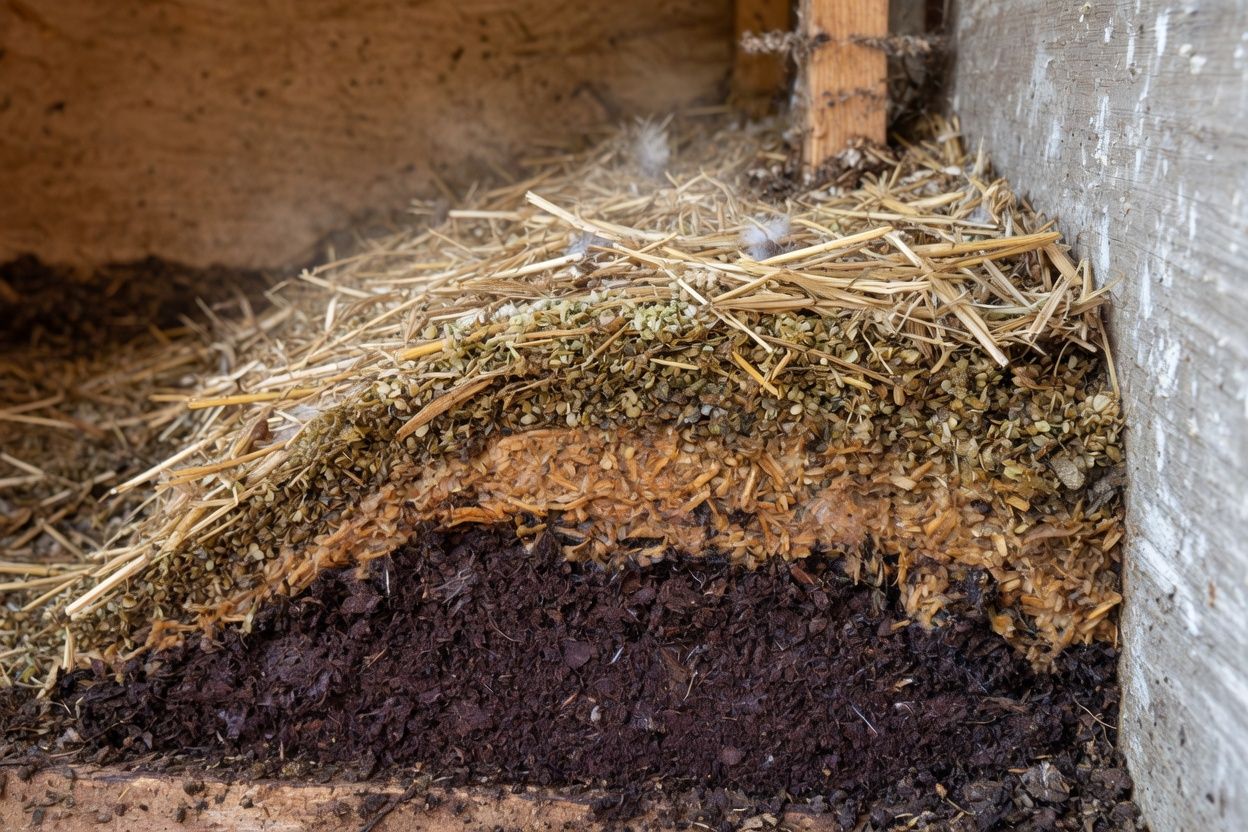
If you’re already running deep litter — building bedding up in layers over the winter instead of cleaning it out weekly, and letting the composting process at the bottom generate a little passive warmth — hemp works fine as your base material for that too. It composts down cleanly and doesn’t mat the way pine can when a deep-litter pile gets damp partway through. I’ve gone into the mechanics of the deep-litter method itself, layer timing and all, in a separate post — this one’s about the bedding material, that one’s about the whole system. You can run hemp as a straight clean-out bedding too, if deep litter isn’t your thing; it doesn’t require the method to earn its keep.
What it costs, honestly
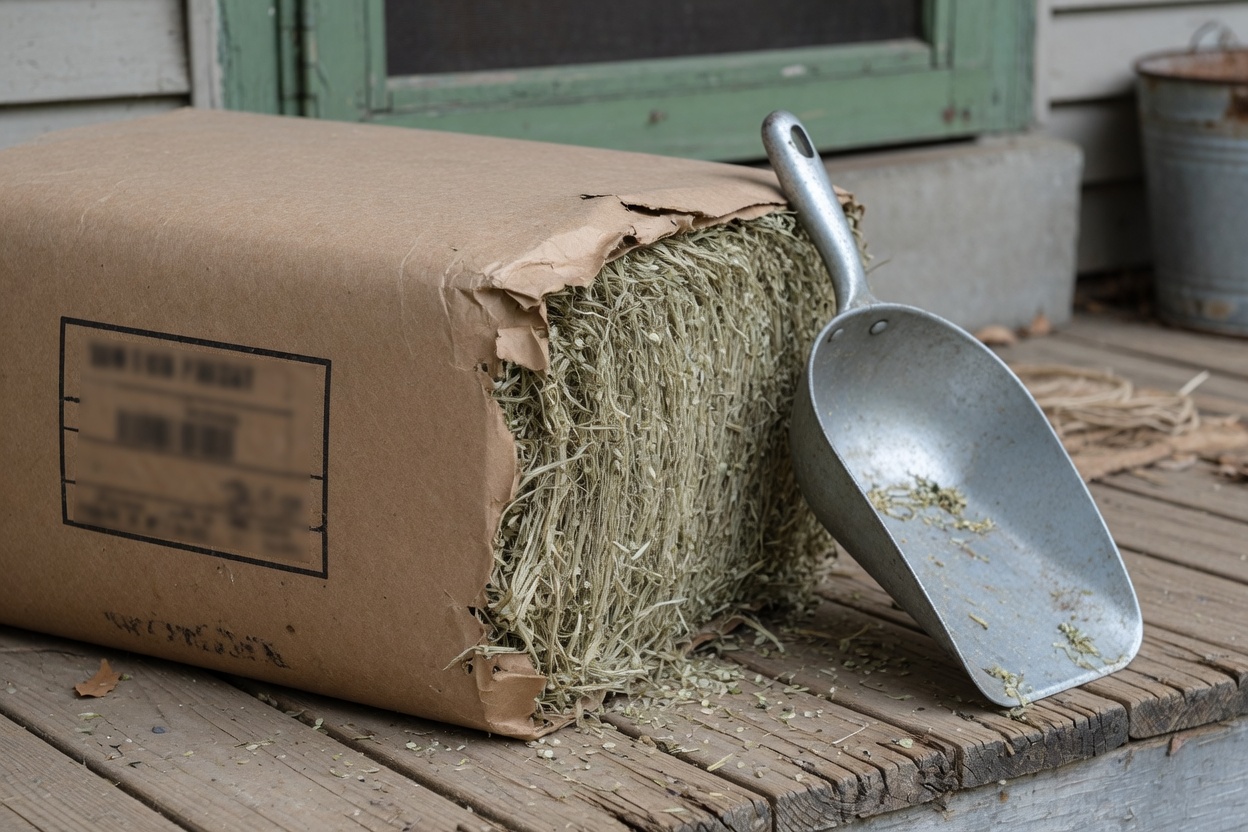
Hemp bedding costs more per bag than pine shavings — there’s no getting around that, and I’m not going to pretend otherwise to sell you on it. Where it evens out for me is frequency: because it doesn’t compact and mat the way pine does, I’m not cleaning the coop out nearly as often through the coldest months, which saves me both bags of replacement bedding and the actual labor of a full clean-out in fifteen-degree weather with the wind coming sideways across the run. For a small backyard flock like mine — a dozen hens, one coop — the trade nets out close to even by the time March rolls around, and the ammonia control alone is worth the difference to me.
If you’ve got a bigger operation than mine, run the numbers for your own coop size before you commit a whole winter’s budget to it. I’m not going to tell you it’s the right call for every flock — I’m telling you it’s been the right call for mine, two winters running.
One thing I learned the hard way
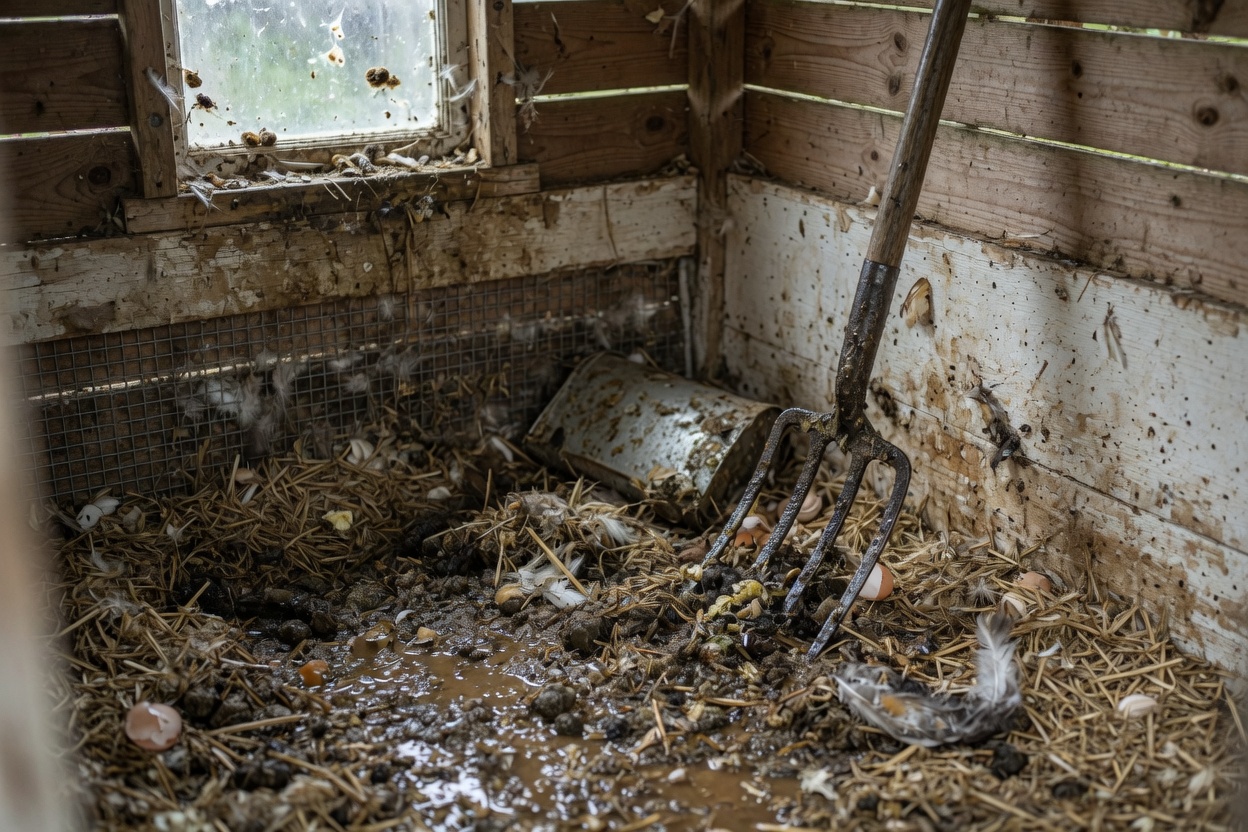
My first bag of hemp, I dumped it straight onto damp bedding I hadn’t fully cleared out first, thinking I was topping it off the way I always had with pine. It didn’t compost in cleanly — it sat in a slightly soggy layer on top of old, wet pine for a couple of weeks before I caught it and pulled everything out to start fresh. Hemp works best starting from a clean, dry coop floor, not layered cold onto whatever was already sitting there. Learn from that one; it cost me a Saturday afternoon with a pitchfork I didn’t need to spend.
Combine hemp bedding with the rest of your cold-weather prep — and I mean the whole list, not just the floor — and a winter coop gets a lot more forgiving. If you haven’t buttoned up drafts and ventilation yet, that’s the first thing to sort before bedding matters much at all; my winterize-your-coop checklist walks through it.
I go a lot deeper on winter coop management — bedding, ventilation, feed changes, the whole season — in Raising Backyard Chickens for Beginners. This post is one piece of the winter puzzle. The book is the rest of it, in order, before the first hard frost catches you flat-footed the way it caught me my first year.
