The Best Edible Flowers for Beginners to Grow in Pots
The best edible flowers for beginners to grow in pots — three forgiving, container-friendly picks, plus the simple safety rules that keep them safe to eat.
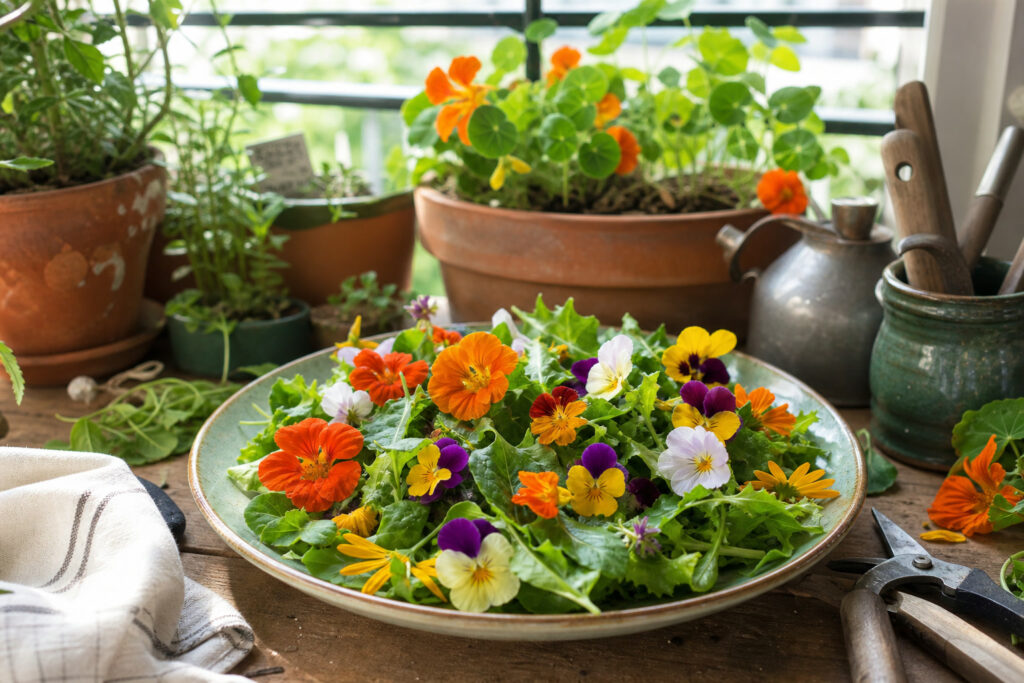
There’s a particular delight the first time you scatter your own flower petals over a salad and they taste like something. Peppery. Bright. A little sweet. And you grew them in a pot on a railing.
Edible flowers are one of the most forgiving places for a small-space beginner to start, because the three best ones for pots are also three of the easiest plants you can grow. They ask almost nothing. They bloom for months. And they hand you both color and flavor off a few square feet of balcony.
Here’s what I’d plant, what each one tastes like, and the short set of rules that keeps eating them safe.
One thing to settle before you eat a single petal
Eating flowers comes with a small set of rules, and they’re worth stating clearly once. Then I’ll trust you with them.
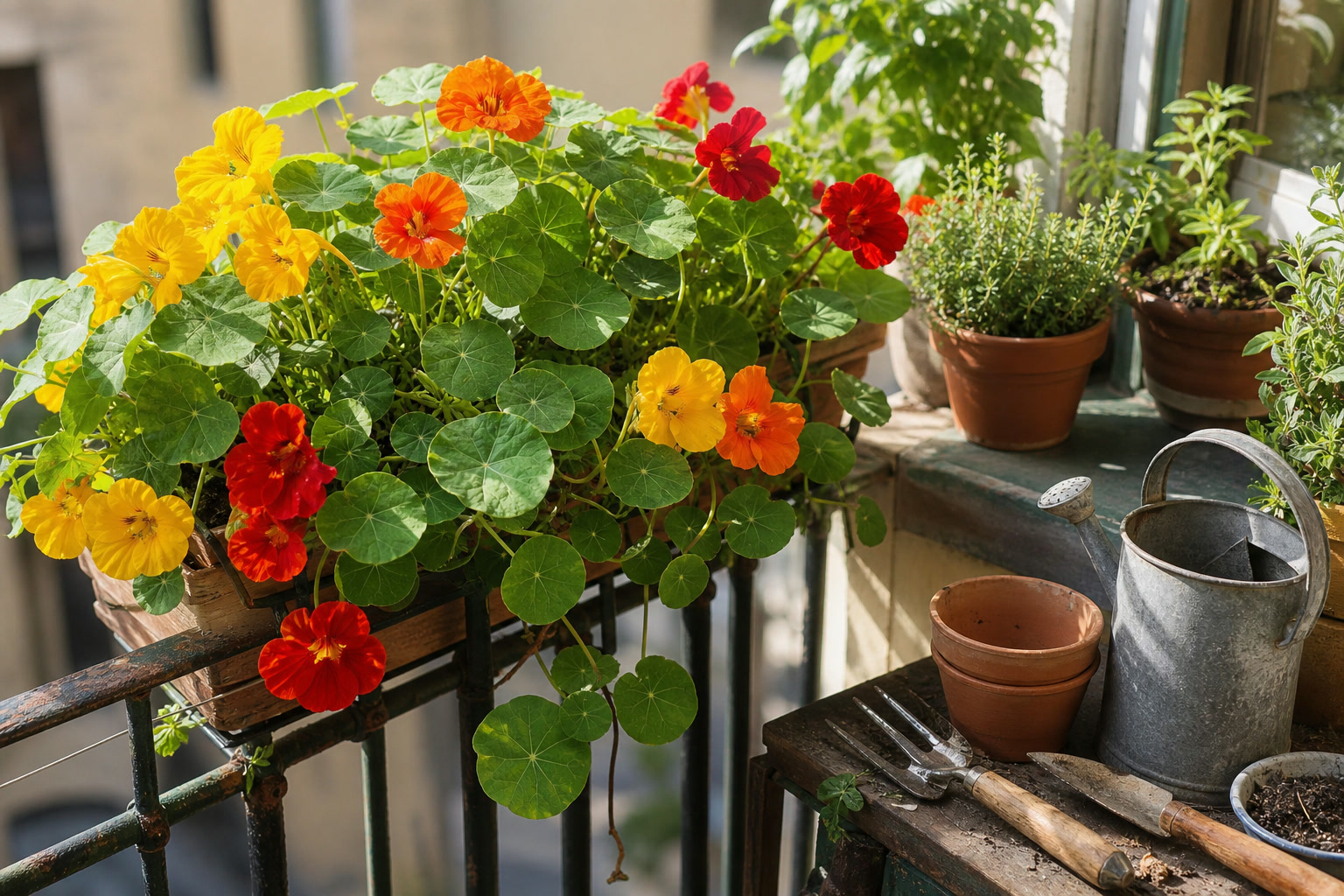
Know the plant by its scientific name, not just its common one. Common names are slippery — “marigold” covers an edible calendula and a marigold you shouldn’t eat. The three flowers below are safe and well-documented: nasturtium (Tropaeolum majus), calendula (Calendula officinalis), and viola (Viola species). Grow those, and you’re on solid ground.
Grow it yourself, or buy it labeled for eating. Never eat flowers from a florist, a supermarket flower department, an ornamental nursery, or a roadside — they carry pesticides that a rinse won’t remove. The whole point of growing your own in a clean pot is that you control exactly what touched them.
Eat the right part. With these three you eat the petals (and nasturtium leaves too), and you skip the bitter center and the green base. Start with a small amount the first time, the way you would with any new food.
That’s the floor. I go through the full safe-to-eat list, the look-alikes to avoid, and the never-eat ornamentals in proper detail in my book — but for these three forgiving beginners, the rules above are all you need to start.
Nasturtium — the one I’d plant first
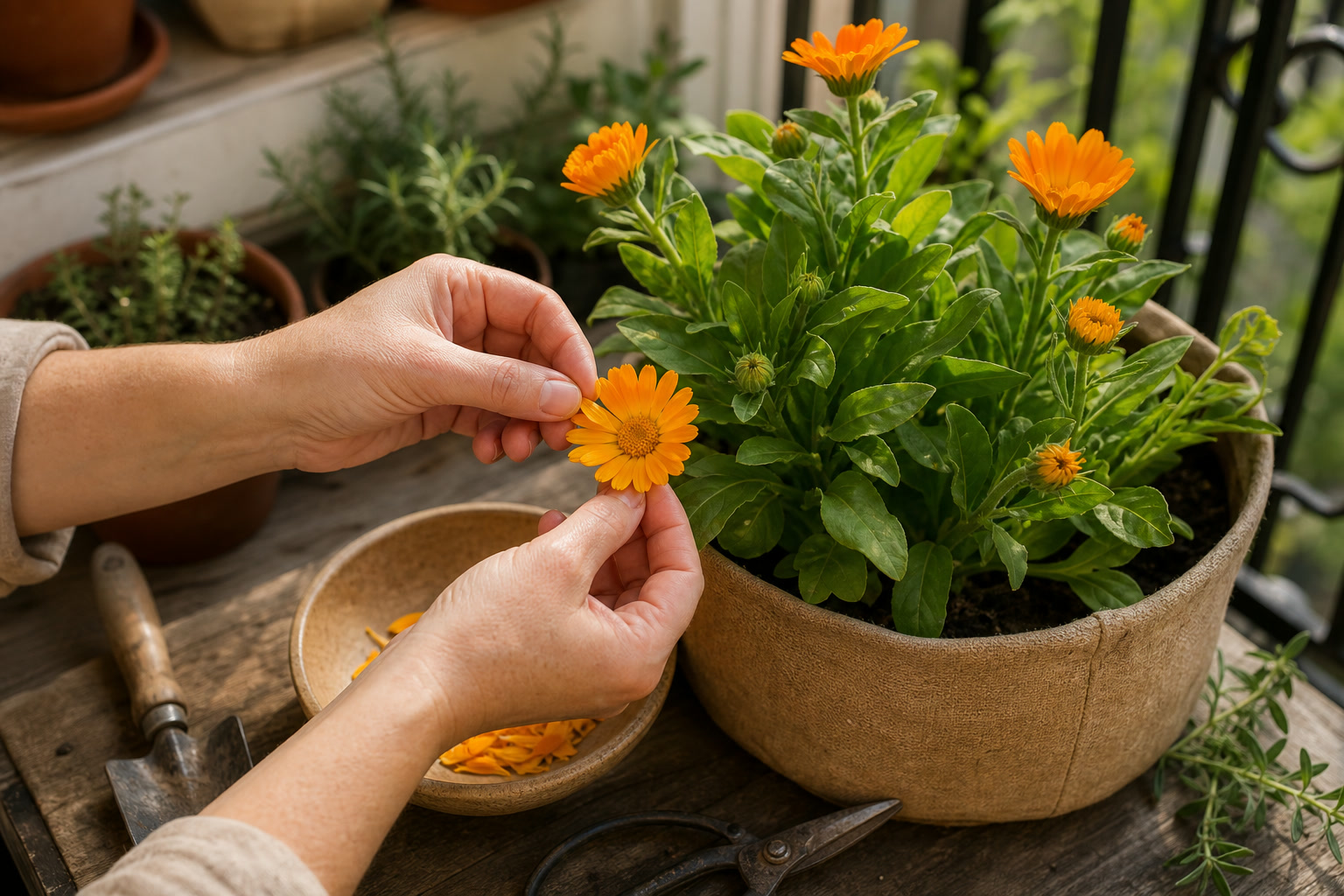
If you grow one edible flower, grow nasturtium. It’s almost impossible to fail with. You push the big seeds straight into a pot, they sprout within a couple of weeks, and by midsummer they’re spilling over the edge of a railing planter in red, orange, and gold.
The flowers and the leaves are both edible, and both taste peppery — a little like watercress with a bite. I tuck whole blossoms into salads and chop the young leaves into a soft cheese. The leaves are the surprise; most people don’t know you can eat them.
A small honest detail: nasturtiums actually bloom better in poor soil and bright light. Pamper them with rich mix and heavy feeding and you’ll get a jungle of leaves and few flowers. So an ordinary potting mix in a grow bag on a sunny rail is exactly right — don’t overthink it.
Calendula — the cheerful workhorse
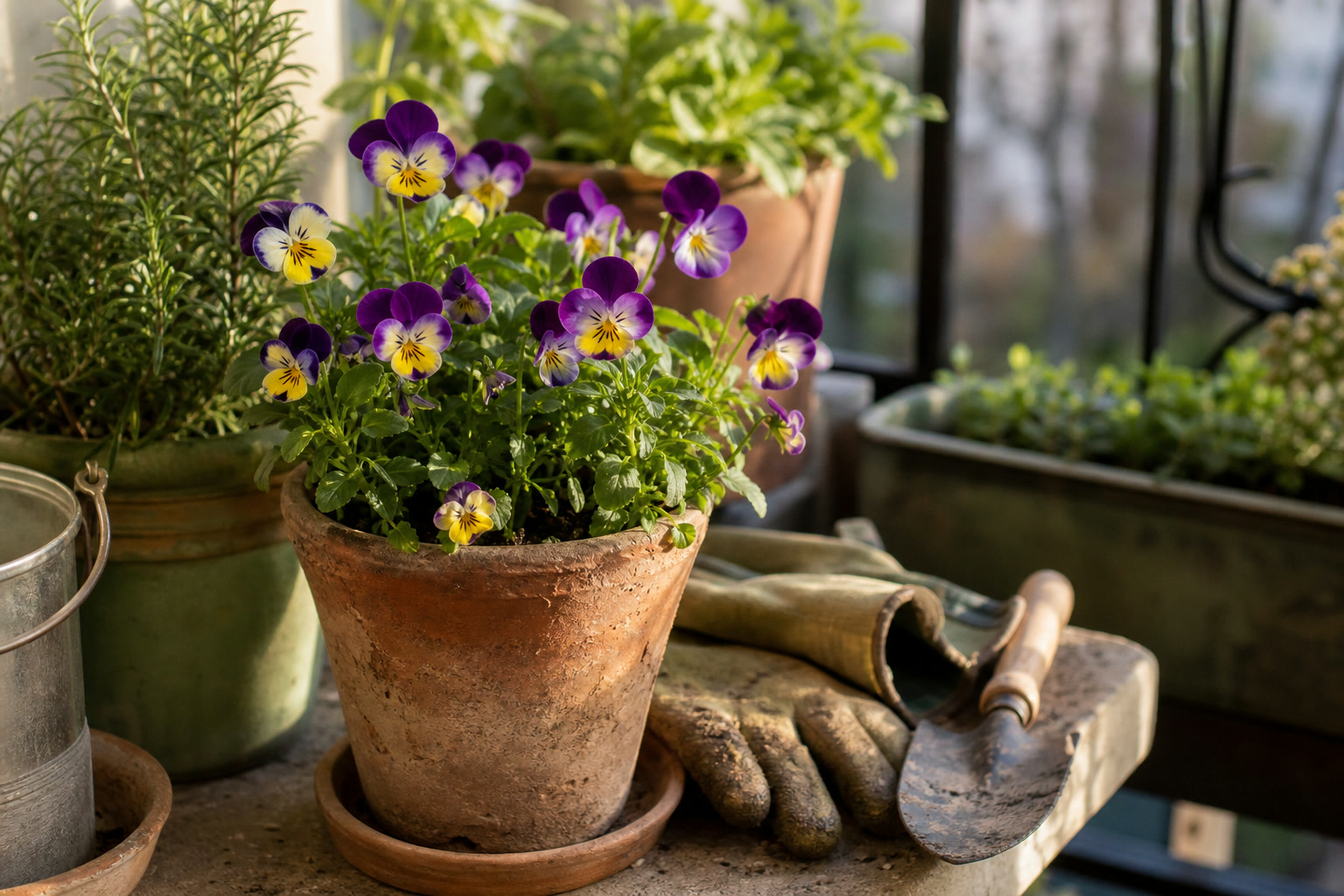
Calendula is the flower I’ve grown every single summer on this balcony, and it’s never once let me down. Direct-sow the seeds, give it sun, and it blooms in cheerful golds and oranges from early summer until frost. Deadhead the spent flowers and it just keeps coming.
You eat the petals, pulling them off the green base, which is the part you skip. They’re mild, faintly peppery, a little resinous, with a color that’s almost more useful than the flavor — calendula petals turn rice and butter and soft cheese a warm gold, which is why it’s sometimes called poor man’s saffron.
Forget to water it for two days in a heat wave? Calendula will sulk a little and bounce right back. That forgiveness is exactly what you want when you’re learning. It’s the plant I sow when I want to feel like a competent gardener again.
Viola and Johnny-jump-up — the tiny charmers
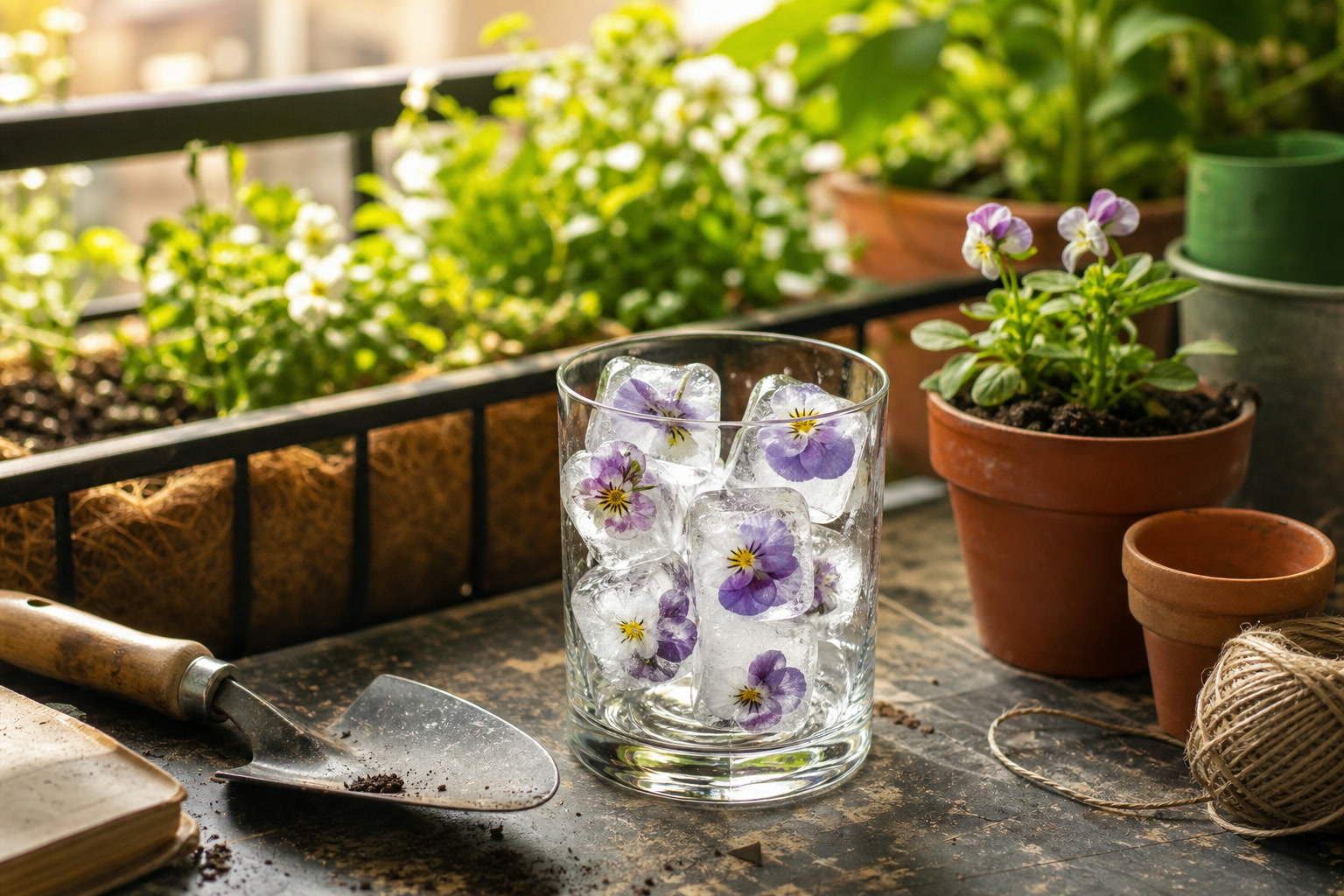
Violas and their wild cousin the Johnny-jump-up are the flowers that make people gasp a little — those tiny purple-and-yellow faces scattered across a plate. The whole small flower is edible, and it tastes faintly sweet and grassy, mild enough that it goes on everything from a cake to a green salad.
They’re small plants, which makes them perfect for the front of a windowbox or tucked around the base of something taller. Unlike nasturtium and calendula, violas actually prefer cooler weather and a little afternoon shade — they’re happiest in spring and fall and may take a rest in the hottest part of summer. On a balcony that bakes after noon, give them the shadier corner.
A small gentle pleasure I’ll admit to: I freeze whole violas into ice cubes for summer drinks. It’s pure decoration and entirely worth it.
How much pot, how much sun
None of these three need a big container, which is exactly why they suit a balcony. A single nasturtium or calendula is happy in a one- to two-gallon pot or a grow bag; violas are small enough that three or four fit in a windowbox. Give nasturtium and calendula the sunniest spot you’ve got — six hours or more if you can manage it — and tuck the violas somewhere with a little afternoon shade.
The forgiving truth of edible flowers is that you can crowd them more than the labels suggest and they’ll still bloom. I’ve grown all three in a single long railing planter and eaten from it all summer. If your balcony is small, plant a little tighter and harvest a little more often — picking the flowers actually makes the plants produce more, which is the happiest kind of feedback loop a beginner can get.
Pulling it together
Three flowers, three pots, one bag of mix, and a sunny rail — that’s a genuine edible-flower garden, and none of it needs a yard. Start with nasturtium for the near-guaranteed win, add calendula for steady all-summer color, and slip in violas for the cool-season charm. Keep the water steady, eat the right part, and know what you’re growing. Otto, of course, remains convinced the whole planter is a salad bar built for him.
I cover the full small-space edible-flower garden — every safe flower, every look-alike to avoid, how to grow each in a pot, and what to actually do with the harvest in the kitchen — in Edible Flowers for Small Spaces. This post is the easy three to start with. The book is the whole flowering balcony, done safely.
